
How do you start a padel club business in 2027?
 Curated byKory White · Fractional CRO · Maryland
 PULSEKNOWLEDGE LIBRARY
Quality
Certified
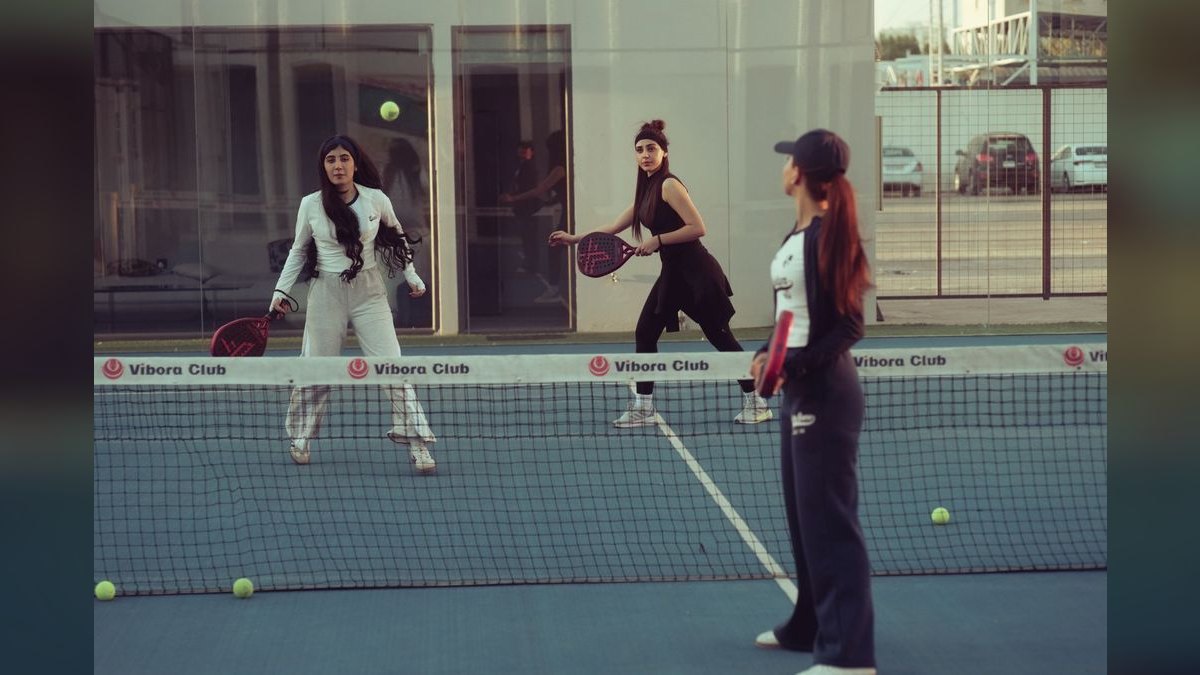
Starting a padel club business in 2027 means winning three things in order: an affluent, under-served catchment; a column-free, high-ceiling site at a workable basis; and enough capital to fund an 18-month ramp. Build 4-8 courts on a membership-plus-pay-and-play hybrid, program relentlessly, and target 55-70% prime-hour utilization.
The founder who fell in love with the building first
Picture a common 2027 scenario. A founder tours a gorgeous vacant big-box shell in a tier-1 metro, signs a lease inside a month, spends $4.2M on eight premium panoramic-glass courts and a beautiful lounge, and opens as the fifth padel club in the market. The facility is flawless. Eighteen months later it is stuck at 44% prime-hour utilization, cannot cover debt service, and the operating business sells for the depreciated cost of the courts.
Now the other version. A different founder spends six months qualifying catchments before looking at a single building. They find an affluent Raleigh suburb — roughly 110,000 people inside a 12-minute drive, $115K median household income, no competitor within 25 minutes — lease a $1.6M six-court warehouse fit-out, and open with 280 pre-sold founding members and two corporate leagues already signed. They ramp to 62% prime utilization by month 18, do $1.3M of revenue in Year 2, and hit a 30% EBITDA margin in Year 3.
Same sport, same year, opposite outcomes. The difference was not court quality, brand, or operational polish. It was the *sequence*: catchment and real estate first, everything else second. That sequencing is the entire game, because starting a padel club business is not really a sports project — it is a real-estate-leveraged community business that happens to sell court time. Get the first two decisions right and the rest is optimization. Get them wrong and no amount of programming, coaching, or F&B can rescue the deal. This is why the honest 2027 framing is not "is padel real?" (it demonstrably is — roughly 30 million players worldwide, second-most-played sport in Spain) but "is my specific catchment still open, and can I lock the real estate before someone else does?"
How the machine actually converts a curious local into recurring revenue
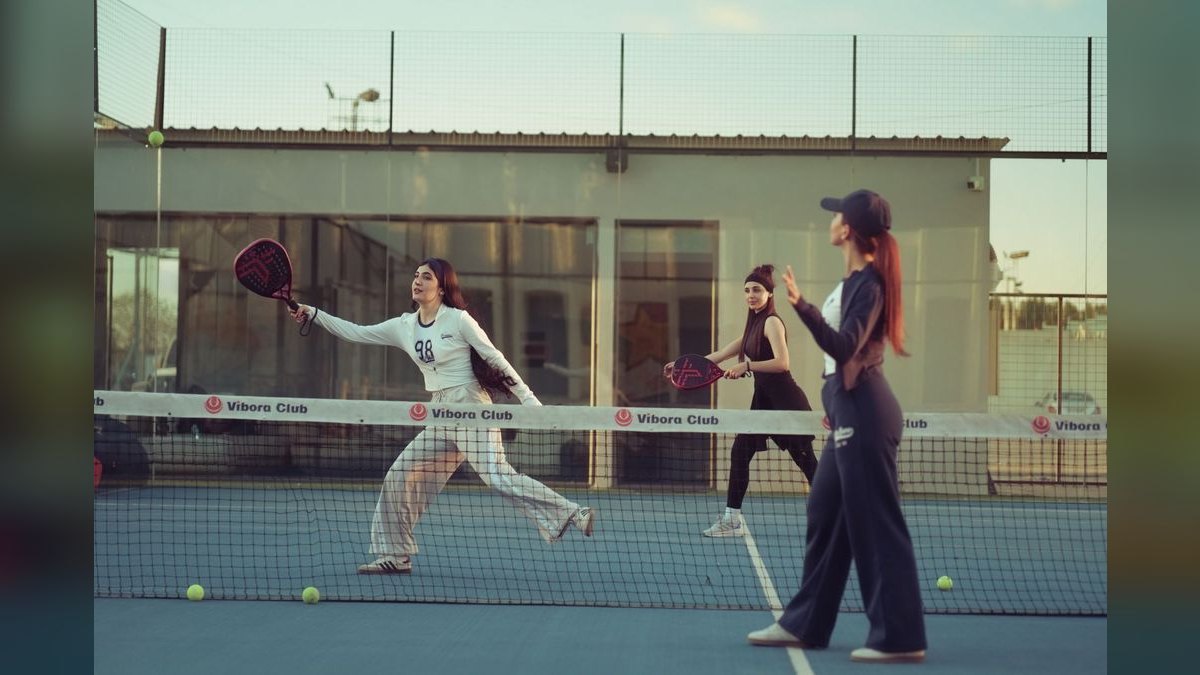
A padel club runs on one unit of inventory: the court-hour. Everything upstream exists to fill it, and everything downstream exists to monetize the person who filled it. The mechanism that makes the business work is a viral, doubles-only funnel — you literally cannot play padel alone, so every player is an acquisition vector for three others — combined with a habit loop that converts casual play into membership recurring revenue (MRR).
The flywheel has a specific shape. A local discovers the club through a friend's invite, a social clip, a corporate event, or a tennis crossover. Their first touch is low-friction: a "Padel 101" clinic, a pay-and-play booking, or a social mixer. If the first experience is good — quality coach, quality court, easy front desk, real social energy — they return within two weeks. That second visit is where you win or lose them: a beginner league, a punch card, or bringing three friends to fill a court turns a trial into a habit (three-plus visits a month). Habit converts to membership, private coaching, pro-shop gear, and food-and-beverage spend. A loyal, low-churn member then refers new players, joins a competitive ladder, and books their employer's team night — closing the loop and generating a lifetime value in the low thousands to well over ten thousand dollars.
The practical takeaway from the diagram is that utilization is *manufactured*, not inherited. A club with great courts and no one owning leagues, clinics, and events sits at 45% forever. A club with merely good courts and a relentless programming director sits at 65%-plus. That is why the programming/community director is co-equal in importance with the general manager and must be hired *before* opening — they are the engine that turns yellow and red cells green on the weekly utilization heatmap. Anyone who has run RevOps will recognize the discipline immediately: you are managing court-hours the way a revenue-operations team manages pipeline capacity and a hotel manages rooms — as perishable inventory that must be yield-managed by day-part, never sold flat.
Real numbers: what it costs, what it earns, and the ratio that decides everything
Padel club economics are dominated by one line — the courts and the structure protecting them — and every credible pro forma is built bottom-up from the court, not top-down from a national market number.
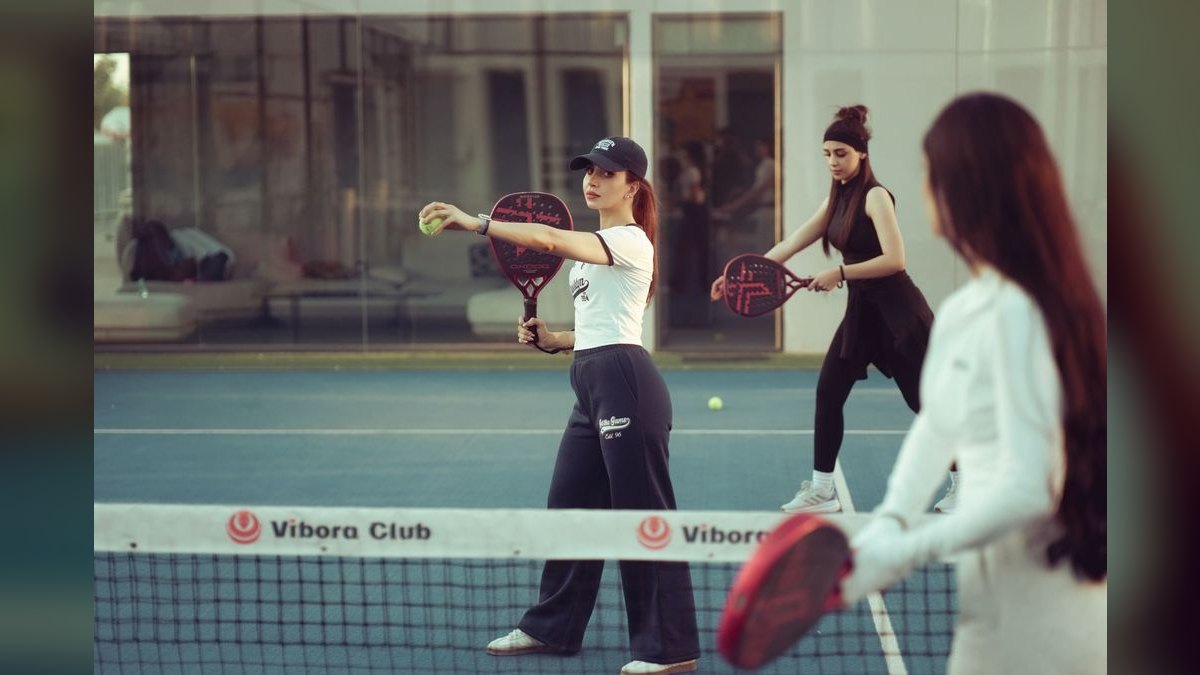
Court and build costs (all-in, delivered and playable). The court system itself — steel frame, tempered glass, artificial turf, integrated LED lighting — runs $22,000-$45,000, but that is only 20-35% of the true per-court cost once you add slab, structure, electrical, HVAC, and assembly. All-in per court:
- Outdoor uncovered (warm climates only): $55K-$95K
- Covered outdoor (roof, open sides): $90K-$150K
- Indoor in a leased shell (warehouse fit-out): $70K-$130K
- Indoor ground-up new construction: $160K-$280K
For a six-court club, that produces two headline scenarios. A lean leased-warehouse fit-out — courts, clubhouse build-out, FF&E, soft costs, and working capital — totals roughly $1.2M-$2.4M and opens in 4-9 months. A premium ground-up build with land runs $3.5M-$8M+ and takes 12-24-plus months, but you own an appreciating asset with a stronger exit. Turf is consumable: budget $4K-$9K per court to resurface every 3-6 years.
Catchment targets. Inside a 10-15 minute drive-time isochrone you want 60,000-150,000 people, median household income above $90K (ideally $110K+), an age skew of 28-55, and existing density of tennis clubs, country clubs, and boutique-fitness studios as leading indicators. A single club needs roughly 800-2,000 active players to sustain 4-6 courts, and with good programming you convert 1-3% of a qualifying catchment into regular players within 24-36 months. Run the math on 100,000 people: converting 1.5% at $900-$1,800 annual spend per active player yields $1.35M-$2.7M of catchment revenue potential — enough for one strong club, or enough to be split between two that both starve.
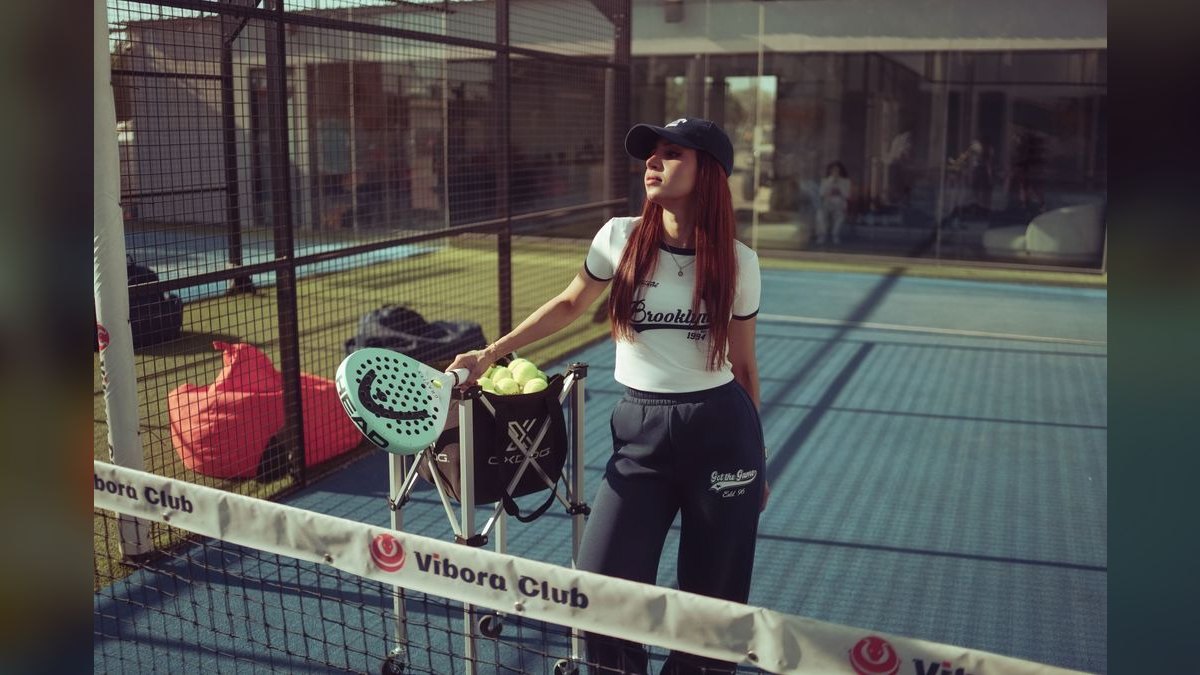
Pricing. The winning structure is a hybrid. Pay-and-play clears at $40-$70 per court-hour off-peak and $60-$110 peak (that is $10-$27.50 per player, split four ways). Memberships tier as Social ($80-$140/mo), Standard ($150-$240/mo), and Premium/Unlimited ($250-$420/mo), often with a $100-$500 initiation fee. The one hard design rule: never sell true unlimited peak-hour access — it cannibalizes your highest-yield inventory. Ancillary lines — private coaching ($60-$120/hr), group clinics ($25-$45/person), leagues ($120-$280 per player per 8-10 week season), pro shop (40-55% gross margin), and F&B (60-72% gross margin) — should reach 30-45% of total revenue at a mature club.
Unit economics and the make-or-break ratio. A well-run US club generates $70K-$160K of revenue per court per year at stabilization. Operating costs at a stabilized club run: rent or debt service 18-30%, all-in labor 28-38%, court maintenance/utilities/insurance 8-14%, marketing 4-8%, F&B and retail COGS 6-12%, and G&A/software 5-9% — leaving a target EBITDA margin of 28-42%. But the entire pro forma lives or dies on one number: prime-hour utilization. Below ~45% most clubs lose money; at 55-65% they earn solid returns; above 70% you should be building more courts. Every pricing, programming, and staffing decision is in service of that single metric.
Trajectory. A well-located six-court leased club realistically does $550K-$1.0M in Year 1 (EBITDA breakeven to -$250K during ramp), $900K-$1.5M in Year 2 (12-25% EBITDA as it turns cash-flow positive), and $1.1M-$2.0M by Year 3 at a 28-42% margin. The single club is a good business; a 3-8 club regional platform with owned or long-leased real estate is the venture-scale, PE-fundable outcome.
The trade-offs: lease versus build, indoor versus outdoor, and how to choose
Real estate is the highest-leverage decision, and it decomposes into a short decision tree you should walk before spending a dollar on design.
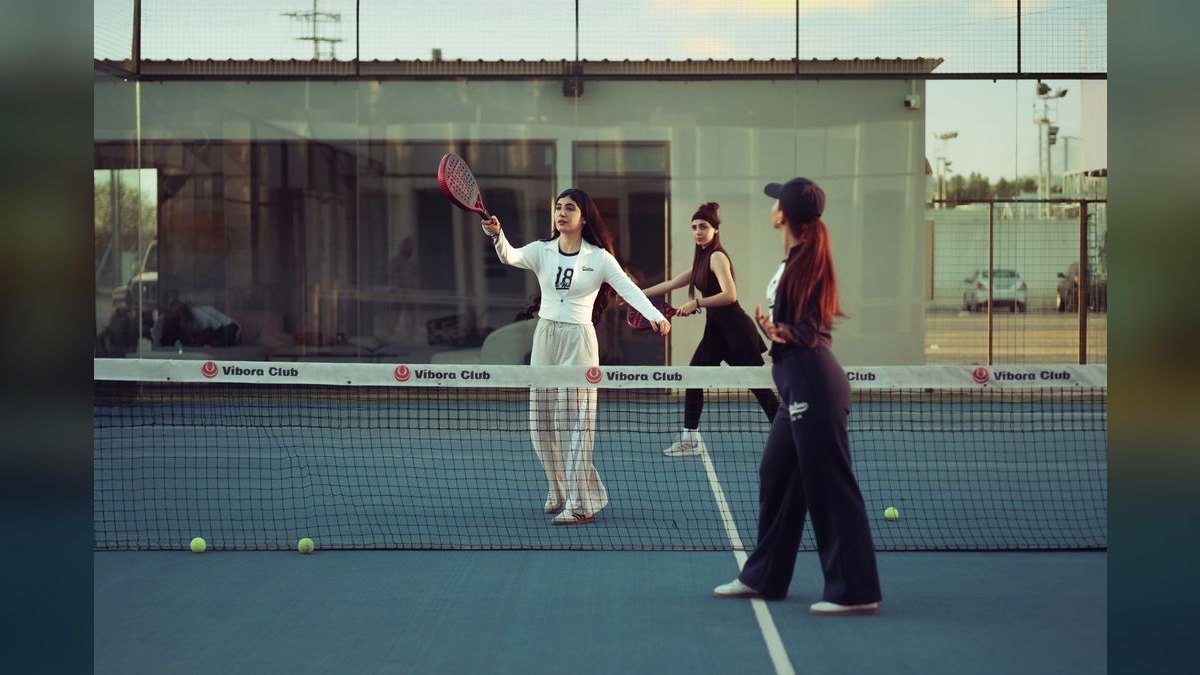
Lease versus own-and-build. Leasing an existing industrial or big-box shell is faster, cheaper to enter, and lower-risk for a first-time operator — but you build no real estate equity and carry renewal and escalation risk exactly when the club is most valuable. Owning or ground-leasing land and building gives you an appreciating asset, site control, and a cleaner exit (you can sell the operating business and the real estate separately, or do a sale-leaseback), at the cost of $3.5M-$8M and real development expertise. For most first-time operators in 2027 the recommendation is: lease a shell, prove the catchment and the concept, then build or buy for facility #2. The exception is when you can buy land cheaply in a fast-appreciating suburban corridor — there the real estate alone can carry the deal even while the club ramps slowly.
Indoor versus outdoor versus covered. Climate decides this more than preference. In Miami, Phoenix, San Diego, and parts of Texas and California, covered-outdoor (a roof for sun and rain, open sides) delivers near-year-round play at a much lower structure cost. In any four-season climate — Northeast, Midwest, Mountain West, Mid-Atlantic — indoor is mandatory for a financeable pro forma, because outdoor-only courts lose 30-45% of the playable calendar and revenue-per-court collapses. The most resilient configuration in mixed climates is a hybrid: a few indoor courts for guaranteed year-round revenue plus a few covered-outdoor courts that flex with the seasons.
The non-negotiable physical spec. Padel needs roughly 8 meters (26+ feet) of clear height and a column-free playing envelope. This single requirement kills most retail and office shells and steers you toward warehouses, distribution buildings, and vacant big-box stores. Add parking (3-5 spaces per court for peak arrival/departure overlap), commercial-recreation zoning, and sport lighting at 500+ lux. Many promising leases die on a ceiling-height or column check — verify it *before* design.
Walk this gate sequence honestly and fail-stop on any gate. The two gates that no downstream excellence can compensate for are Gate 1 (catchment) and Gate 4 (real estate). Everything past them — capital, programming, pre-sales, stress test — is recoverable if you catch it early; the first two are not.
Common pitfalls and how to avoid them
The failure modes in this business are remarkably consistent, and almost all of them are decided before opening day.
Choosing the catchment last. Founders fall for a building or a plot of land and then hope the demographics cooperate. Catchment is roughly 70% of the outcome; make it the first gate, not a rationalization. Avoid it by qualifying three to five catchments on population, income, age skew, and existing racquet/fitness density *before* touring a single building.
Under-raising and planning to "raise more once it's open." The build budget is the easy part. The 12-18 month ramp — during which the club runs at 25-50% utilization and loses money — is what kills under-capitalized operators in month 9, even when demand is fine. Raise for full project cost *plus* 18 months of working capital *plus* a 10-15% contingency in one round, before breaking ground. Raising into a club losing money at 30% utilization is nearly impossible.
Treating the clubhouse as the product. The lounge, recovery rooms, and F&B build-out are margin accelerators on top of court revenue, not the engine. Every dollar spent on a clubhouse that does not increase court bookings is a dollar that should have been a court, a coach, or working capital. Budget the building minimum-viable-premium and over-invest in the programming and coaching payroll instead.
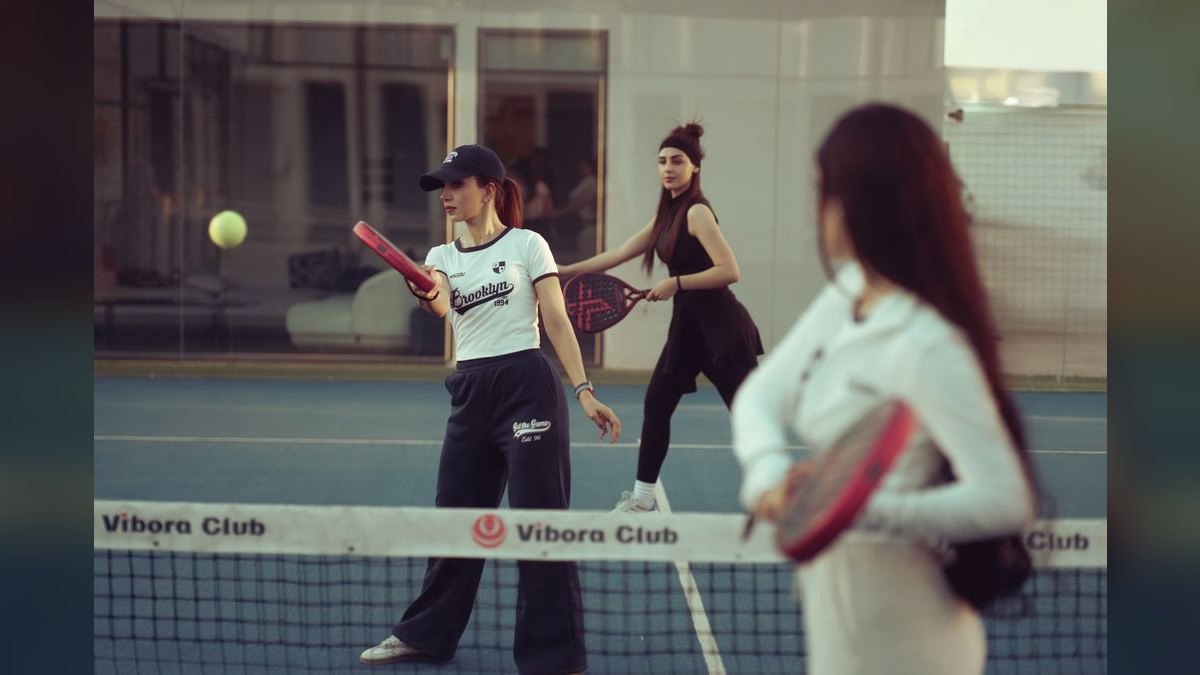
Opening cold. No founding members and no corporate anchors means the ramp starts from zero. Fix it with a pre-opening campaign that lands 150-400 founding members and 2-3 recurring corporate contracts (a law-firm league, a tech-company team night) before a single court is poured. A single recurring corporate league can be worth $30K-$80K a year and smooths your worst hours.
Building outdoor-only in a four-season climate to save capital, then discovering revenue-per-court is structurally too low to cover fixed costs. If you are anywhere with real winters, indoor is not optional.
Operational leaks that silently cap revenue. Selling true unlimited peak-hour memberships (cannibalizes your best inventory); running a static price sheet instead of yield-managing court-hours by day-part (leaves 15-25% of court revenue uncaptured); and not enforcing no-show and late-cancellation policies (destroys utilization one un-rebooked court-hour at a time). Under-budgeting acoustics and ventilation also churns members fast — padel is loud off the glass and generates heat and humidity indoors.
Signing a bad lease. A short term, steep escalators, no renewal option, or a weak tenant-improvement (TI) allowance can make an otherwise excellent club un-financeable and un-sellable. Negotiate hard on term (10+ years with options), TI allowance ($20-$80 per square foot from a motivated landlord is real, underused capital), capped escalation, and co-tenancy. The lease is the single most important legal document in the whole business.
Related questions
How much money do I need to start a padel club?
Plan for the full project cost plus 18 months of ramp working capital. A lean six-court leased fit-out is $1.2M-$2.4M all-in; a ground-up build with land is $3.5M-$8M+. Founders typically contribute 15-35% equity ($150K-$600K), with SBA 7(a)/504 loans and outside investors filling the rest.
Is padel or pickleball the better business to start in 2027?
They target the same "social racquet sport" dollar and compete for the same high-ceiling shells. Pickleball is further along the US adoption curve with lower court costs; padel has stickier economics (always doubles, always booked, membership-friendly) and less domestic saturation. Padel suits an affluent catchment; pickleball scales cheaper and broader.
How long until a padel club is profitable?
Expect roughly breakeven-to-negative EBITDA in Year 1 during ramp, 12-25% margin in Year 2 as the club turns cash-flow positive, and a stabilized 28-42% margin by Year 3 at 60-70% prime-hour utilization. The dangerous window is the first 12-18 months, which is why ramp working capital is mandatory.
Do I need to be on Playtomic?
Most US clubs run a hybrid: their own branded booking for members and direct traffic, plus Playtomic exposure to capture travelers and off-peak fillers from its existing player base. It drives discovery but takes a booking commission and can commoditize you. Budget $800-$3,500/month for the full software stack.
FAQ
What is the single most important factor for success? The catchment. You need 60,000-150,000 people with median household income above $90K within a 12-minute drive, ideally with zero or one existing club and no funded roll-up announced. It is roughly 70% of the outcome and is decided before you spend a dollar on courts. You cannot out-operate a bad catchment.
How much does one court actually cost? The court system alone — frame, glass, turf, integrated lighting — is $22K-$45K, but that is only a fifth to a third of the real cost. All-in and playable, expect $55K-$95K outdoor uncovered, $70K-$130K for an indoor leased-shell fit-out, and $160K-$280K for indoor ground-up construction.
Should I lease a building or build my own? For a first club, lease. A shell fit-out costs $1.2M-$2.4M, opens in 4-9 months, and lets you prove the catchment at lower risk — you just build no real estate equity. Build or buy land for facility #2, or immediately if you can acquire a fast-appreciating site cheaply.
How do you make money beyond court bookings? Ancillary revenue should be 30-45% of the total: private coaching ($60-$120/hr), group clinics, leagues ($120-$280 per player per season), pro shop (40-55% margin), F&B (60-72% margin), and corporate events. Court time and memberships anchor the business; the layered services are where much of the margin lives.
What utilization do I need to be profitable? Prime-hour utilization is the make-or-break metric. Below roughly 45% most clubs lose money; 55-65% produces solid returns; above 70% you should be adding courts. Manufacture it with relentless programming — leagues, clinics, women's nights, junior academies, and corporate contracts — not by assuming the courts fill themselves.
What is the biggest 2027-specific risk? Oversupply. US courts grew roughly 5x from about 150 in 2022 to an estimated 800-1,000+ by end of 2026, and capital is still pouring in. Tier-1 metros are crowding, so underwrite competitive entry: stress-test your pro forma at 50% prime utilization with a second club opening in your catchment within 24 months.
Sources
- International Padel Federation (FIP) — global participation, country court counts, competitive structure. https://www.padelfip.com
- Playtomic — the dominant global padel booking platform; court growth, utilization, and player-behavior data. https://playtomic.io
- Premier Padel — the global professional tour; indicator of the sport's commercial trajectory. https://www.premierpadel.com
- IHRSA / Health & Fitness Association — boutique-fitness membership and utilization benchmarks transferable to padel. https://www.healthandfitness.org
- IBISWorld — Gym, Health & Fitness Clubs industry report; labor, rent, and EBITDA cost-structure benchmarks. https://www.ibisworld.com
- Statista — global padel market size and growth forecasts. https://www.statista.com
- U.S. Small Business Administration — 7(a) and 504 loan programs, debt-service-coverage and working-capital guidance. https://www.sba.gov
- U.S. Census Bureau, American Community Survey — catchment population, median income, and age analysis. https://www.census.gov
- CBRE — retail and industrial real estate reports; big-box/warehouse availability and TI allowance benchmarks. https://www.cbre.com
- Sports & Fitness Industry Association (SFIA) — US racquet-sport participation tracking, padel and pickleball crossover. https://sfia.org
Related on PULSE
This page will be disappearing soon. Save it to your device for $1 — or read it free while it is here.
@Kory-White- · if Venmo asks, the last 4 of my number are 2012
This page is gone.
This one is off the shelf now. $1 keeps it on your phone for good — the whole page, pictures and diagrams included.
 pilates-studioHow do you start a pilates studio business in 2027?
 fitness-studioHow do you start a fitness studio in 2027?
 yoga-studioHow do you start a yoga studio business in 2027?
 boutique-fitnessHow do you start a boutique fitness studio business in 2027?
 airbnb-arbitrageHow do you start an Airbnb arbitrage business in 2027?
 vacation-rentalHow do you start a vacation rental business in 2027?
 short-term-rentalHow do you start a short-term rental management business in 2027?
 pool-serviceHow do you start a residential pool service business in 2027?
 bookkeepingHow do you start a bookkeeping business in 2027?
 property-managementHow do you start a property management business in 2027?