

How do you start a mobile car detailing business in 2027?
 Curated byKory White · Fractional CRO · Maryland
Quality
Certified
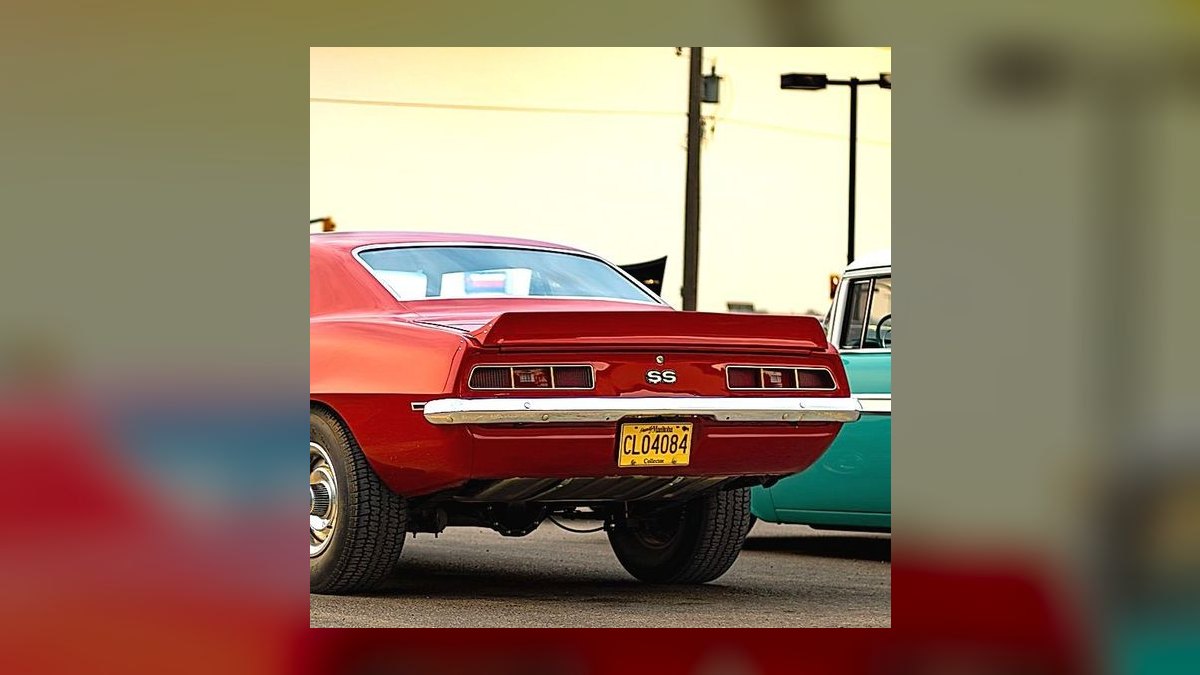
Start a mobile car detailing business in 2027 by registering an LLC, insuring it with commercial auto plus garagekeepers coverage, and equipping an existing truck or SUV with a trailer rig for roughly $12,000 to $22,000. Then win recurring revenue: tight service radius, tiered pricing, and monthly membership plans instead of one-off washes.
The outcome you should expect
A realistic first year for a committed solo operator lands between $55,000 and $120,000 in revenue, working 25 to 40 billable hours a week across 8 to 16 jobs. At a solo net margin of 55% to 70% — achievable because chemicals and consumables consume only 4% to 9% of revenue and your labor is your own — that translates to roughly $35,000 to $80,000 of owner income. Break-even on a bootstrap rig typically arrives in month two to month four. On a built-out trailer or cargo van financed with a note, break-even pushes to month four through month eight, because you carry $400 to $900 a month of debt service before you wash a single vehicle.
The shape of that first year matters more than the total. Months one through three are almost entirely acquisition: you are building a Google Business Profile review base from zero, learning that a job you quoted at two hours actually takes three and a half, and discovering that the drive between two customers eight miles apart eats 25 minutes in afternoon traffic. Months four through eight is where route discipline either takes hold or does not. By months nine through twelve, the operators who will succeed have 25 to 50 active membership plan members and one to three small fleet accounts on contract, which means January of year two starts with $3,000 to $8,000 of revenue already committed before the phone rings.
Year two, with a first technician hired around month twelve to sixteen and a second rig split off once that hire is proven, runs $130,000 to $250,000. Net margin compresses to 38% to 50% as W-2 labor comes onto the books, but total profit dollars rise and — more importantly — the business stops being a job. Year three, with two to four technicians and two to three rigs, targets $220,000 to $420,000 at 30% to 42% margin. Year five, for a well-run three-to-four-rig operation with a deep membership book, reaches $600,000 to $1.2 million. The practical ceiling for a mobile-only operation before you must add a fixed location, license the system, or expand metros sits around $800,000 to $1.4 million.

Set expectations honestly against the alternative outcome, because it is the more common one. An operator who buys a pressure washer, posts in local Facebook groups, prices below the shop down the road, and accepts every job within a 40-minute drive will earn $60,000 to $110,000 — and will still be earning that in year five, with a worn-out lower back and a business worth nothing because it cannot be sold or staffed. The gap between the two trajectories is not skill with a polisher. It is four decisions made in the first 90 days.
What drives that outcome
Four levers determine which trajectory you land on, and none of them are about detailing technique.
Route density is the hidden profit lever. The single largest uncompensated cost in this business is windshield time. An operator serving a 30-mile radius drives 22 minutes to a $90 job, then 31 minutes to the next, and burns roughly two unpaid hours a day. That is a 25% productivity haircut that never appears on an invoice. An operator who enforces a tight radius — three to five adjacent zip codes, or a 12-to-15-minute drive band — clusters three or four jobs on one street or one subdivision and moves jobs-per-route-day from two to four. Same eight-hour day, roughly double the billable output, identical fuel and identical you. This is why turning down out-of-zone work is a profit decision rather than a lost-revenue decision.

Recurring revenue is the asset. One-off detailing means every Monday starts at zero and every rainy week is a hole in the P&L. Membership plans convert that into predictable monthly cash flow, raise customer lifetime value by roughly four to eight times, and cluster naturally because plan members schedule in advance and can be routed. They also make the business financeable and sellable — a buyer purchases a recurring book, not a founder's calendar.
Segment selection determines whether the work compounds. There are five distinct customer types, and only two of them build a business. Busy dual-income suburban households with two to three vehicles buy plans and refer neighbors. Small commercial fleets of four to 25 vehicles sign contracts and invoice reliably. Enthusiast and exotic owners pay premium tickets but at low frequency. One-time transactional customers pay well once and never return. Price shoppers actively destroy value. The discipline to decline the last category is worth more than any marketing tactic.
Process documentation is what makes the business hireable. A business that lives only in the founder's hands cannot be staffed, cannot be scaled, and cannot be sold. Writing the job checklist from car number one costs nothing and is the difference between a craft and a company.

The diagram makes the branching explicit: the same starting skill and the same starting capital produce two completely different five-year outcomes depending on four decisions that cost nothing to make. The default path is not a failure of effort — operators on it work just as hard. It is a failure of structure.
Benchmarks and realistic ranges
Startup capital by rig tier. Entry Tier A, the bootstrap start, runs $12,000 to $22,000: you already own the truck, van, or large SUV, and you add an open utility trailer or bed setup. That covers a 35-to-65-gallon portable water tank, a gas pressure washer in the 1,800-to-3,200 PSI range, a quiet inverter generator of 2,000 to 3,500 watts or an equivalent lithium power station, a professional wet/dry extractor, a long-throw dual-action polisher plus a rotary backup, pad and backing-plate sets, a foam cannon, a steamer, an air tool and compressor, drill brushes, and a large microfiber inventory. Equipment lands around $4,000 to $9,000; initial chemical and consumable inventory adds $800 to $1,800. Add LLC formation, insurance, a Google Business Profile listing, a basic website, booking software, and $1,500 to $3,000 of working capital.
Entry Tier B, a dedicated enclosed cargo trailer or used cargo van professionally outfitted, runs $24,000 to $38,000 — the vehicle itself at $8,000 to $22,000 used, plus $10,000 to $18,000 of build-out for onboard fresh water of 50 to 100 gallons, onboard power, hot-water capability, racking, and a branded wrap. Entry Tier C, a turnkey box truck with reclaim and premium build, runs $40,000 to $70,000 and up. Tier C is over-capitalization for a first rig; it belongs as a second or third rig in year two or three, bought with revenue rather than debt.

Monthly overhead, solo. Insurance $180 to $450. Fuel $250 to $600. Chemicals and consumables $200 to $500. Software and subscriptions $80 to $200. Phone and marketing $150 to $500. Vehicle maintenance reserve $150 to $350. Equipment replacement reserve $100 to $250. Total: roughly $1,100 to $2,800 a month before you pay yourself. Annual insurance for a solo operator budgets at $1,500 to $5,000, rising once you add employees and workers' compensation.
Pricing benchmarks — three tiers, never hourly. Tier 1, the maintenance wash or express detail, prices at $45 to $95 for 45 to 75 minutes: exterior hand wash, wheels, dressed tires, glass, quick interior vacuum and wipe-down. This is the frequency product, thin as a standalone job and valuable only because it recurs. Tier 2, the full detail, prices at $175 to $350 for two and a half to four and a half hours: decontamination and clay, a one-step polish or sealant, interior shampoo and extraction, leather conditioning, trim restoration, glass polish. This is the acquisition product — the job that earns a customer and converts them onto a plan. Tier 3, paint correction plus a ceramic or graphene coating, prices at $800 to $2,500 and up across one to three days, delivering effective gross margin of roughly $90 to $180 per hour and the portfolio credibility that separates a professional from a hobbyist.
Membership benchmarks. Basic at $99 to $129 a month for one maintenance wash. Plus at $149 to $199 for two washes plus a quarterly upgraded interior. Premium at $199 to $299 for biweekly maintenance plus a semiannual full detail and coating top-ups. Multi-vehicle household discounts apply. Fleet pricing runs $45 to $85 per vehicle per visit under a signed contract — a 12-vehicle account at $65 biweekly is roughly $1,560 a month of recurring revenue from one relationship.

Customer economics. Blended average ticket across tiers and plans: $95 to $160. Residential customer acquisition cost: $30 to $80. Fleet account acquisition cost: $150 to $400, against an account worth $25,000 to $120,000 over its life. Google Local Services Ads run $25 to $90 per lead. Lifetime value for a suburban household retained on a plan: $3,500 to $9,000 over three to five years. Target five to 15 new reviews a month.
Market context. The US car wash and auto detailing market runs roughly $15 billion to $17 billion, of which dedicated detailing — labor-intensive reconditioning as opposed to a $12 tunnel wash — is about $11 billion to $13 billion. Mobile and on-demand detailing is the fastest-growing slice at an estimated 8% to 12% annually against 3% to 5% for the category. A single metro of 400,000 to 1.5 million people supports somewhere around $8 million to $35 million of annual mobile detailing demand, and a well-run one-to-four-rig operation captures a fraction of one percent of that. Household vehicle counts support the thesis: the average US household owns roughly 1.8 to 2.0 vehicles, and the dual-income suburban segment climbs to 2.5 to 3.2.
Risks, edge cases, and failure modes
Water discharge regulation is the defining 2027 compliance risk. Wash water carrying soaps, oils, and brake dust into a storm drain is a municipal stormwater and Clean Water Act exposure in a growing number of jurisdictions. Drought states — California, Arizona, Nevada, Texas, Colorado — and many individual cities increasingly require reclaim mats or full reclaim systems, restrict discharge, or cap water use outright. The failure mode is buying a rig with no reclaim capability, then finding the wealthy suburbs you most wanted to serve are exactly the ones enforcing the ordinance. The hedge is to build rinseless and waterless methods into your service menu from the start and to treat reclaim as a marketing advantage rather than a cost. Check the city ordinance and the county ordinance separately, and check the HOA rules in your target subdivisions — some restrict commercial activity in residential driveways entirely.

Insurance gaps produce business-ending claims. Three coverages are non-negotiable and each fills a hole the others leave. General liability covers damage to the customer's property — a scratched garage door, a chemical stain on a driveway. Commercial auto is mandatory because a personal auto policy excludes business use and the carrier will deny the claim outright when they learn what you were doing. The subtle one is garagekeepers or care-custody-and-control coverage: standard general liability specifically excludes damage to the vehicle you are working on, which is precisely the risk in this business. Burn through a customer's clear coat on an $80,000 SUV with only GL in force and you pay for the respray personally. Add workers' compensation the day you hire.
Over-capitalization is the most common early death. Financing a $62,000 turnkey box truck before landing a single customer means carrying a note plus insurance plus fuel against zero revenue while you learn that your service radius was too wide and your quoting was too optimistic. Operators in that position spend the first eleven months underwater and often quit. The rig does not generate revenue; routes and the membership book do. Start Tier A, prove you can fill a calendar profitably, and let revenue buy the nicer rig.
Quality drift after the first hire is a reputational event. A bad detail on someone's expensive vehicle does not produce a quiet complaint — it produces a one-star review attached to the Google Business Profile that generates most of your leads. The mitigations are a written checklist executed in a fixed sequence, quality inspection under proper swirl-finder lighting before handoff, and a founder who spot-checks technician work for the first several months rather than assuming it. Detailing is physical work with real turnover risk, so pay fairly at $18 to $28 an hour or a percentage-of-job structure, build a path, and treat the role as a career.

Ceramic coating commoditization compresses the premium tier. Better consumer DIY products and big-box installers are steadily eroding the pricing power of Tier 3 work. An operator whose entire business model rests on $1,500 coatings is exposed to a margin squeeze they cannot control. This is the structural argument for building on recurring maintenance and fleet contracts, with coating work as a high-margin supplement rather than the foundation.
The EV transition reshapes, rather than reduces, demand. Electric vehicles remove the engine bay service entirely, shift emphasis to interiors and large tech surfaces that need careful specialized cleaning, and may raise demand for paint protection film on expensive, hard-to-repair panels. Charging at home also creates a natural, predictable window for mobile service. In EV-dense metros this is a defensible niche with unusually strong plan retention, because EV owners tend to treat the vehicle as a maintained tech device. The failure mode is ignoring it in a market where EV concentration is already high.
Seasonality and weather are structural, not incidental. Most markets have a spring rush, a fall paint-protection season, and a slow deep winter. Memberships smooth this considerably but do not eliminate it. Build a rain reschedule protocol and communicate it proactively, bank cash reserves during peak months, and use slow periods for fleet contract selling, equipment maintenance, training, and pre-selling spring memberships.

Marketplace platforms are a trap as a primary channel. App-based on-demand detailing platforms deliver volume, but they take a cut, own the customer relationship, and deliver price-shoppers. Every job you complete through them builds their book, not yours. Useful as occasional fill-in during a slow week; dangerous as a foundation.
A practical rollout plan
Days 1 through 14 — legal and financial foundation. Form the LLC, obtain the EIN, open a dedicated business bank account, and start clean books immediately — commingling personal and business funds is the most common avoidable mistake and it makes the business unsellable later. Bind general liability, commercial auto, and garagekeepers coverage before the first paid job. Pull the general business license from your city, check whether a mobile vendor or itinerant business permit is separately required, and read the water discharge ordinance for every municipality in your intended radius.
Days 1 through 21 — rig and stack, in parallel. Buy Tier A equipment: professional-grade on anything touching paint or prone to catastrophic failure, mid-grade elsewhere, upgraded later with revenue. Build the chemical system deliberately rather than accumulating random bottles — pH-neutral soap, wheel and iron decontamination, dilutable all-purpose cleaner, degreaser, clay and decon, tire and trim dressing, glass cleaner, leather cleaner and conditioner, fabric cleaner, polish and compound, sealant. Skip the professional coating kit entirely until you have a paying coating customer. Stand up the back office: booking and CRM with online scheduling that enforces your service zones, automated reminders, invoicing and card payment, automated review requests, and bookkeeping. That stack runs $80 to $250 a month and pays for itself in reduced no-shows alone.

Days 7 through 30 — draw the radius and build the offer. Pick three to five adjacent zip codes and commit to them in writing. Publish the three-tier menu and the three membership plans before your first job, so every customer sees the plan offer from day one rather than being retrofitted later. Optimize the Google Business Profile fully — categories, service areas, photos — because the map pack wins "mobile car detailing near me" and that is the highest-ROI channel in the business.
Days 30 through 90 — first jobs and the review flywheel. Run every job on a documented sequence: arrival walk-around with photographs of pre-existing damage, setup, the fixed checklist, quality inspection under lighting, customer handoff, payment, review request, rebooking ask. Ask every single customer for a review via automated text. Work referral mechanics into the routine — a discount for both parties, a "while I'm in your neighborhood" text to nearby past customers, door hangers on the two adjacent houses. Film and write the process as you go; that manual is the asset that makes hiring possible.
Months 3 through 9 — fleet outreach and plan conversion. Reserve one slot weekly for business-to-business selling: real estate brokerages, HVAC and plumbing and electrical contractors, landscapers, pest control, medical couriers, property managers, independent used-car dealers. This is unglamorous phone-and-doorstep work, which is exactly why competitors skip it and why the contracts are underpriced. Target one to three fleet accounts and 25 to 50 plan members by month twelve. Only after reviews and radius are solid should you layer in Google Local Services Ads and paid search.
Months 9 through 18 — the first hire. Hire when the calendar is consistently full and the process is documented, not before. Start with the ride-along model for faster training and no second-rig cost, then split to a second rig once the technician is proven. Assign geographic zones to days so customers self-cluster into efficient routes when they book.
Years 2 through 4 — systematize, then choose. Add technicians and rigs as route density justifies, each rig owning zones. Around three to four technicians the founder exits daily detailing for dispatch, sales, and quality control — which is the point. Somewhere in year three to five, add a lead detailer or operations manager, then decide the path: scale mobile to three or four rigs, add a fixed-location hybrid, license the system, or position for sale at roughly two to three and a half times seller's discretionary earnings.
Review the numbers weekly — twenty minutes on jobs completed, average ticket, plan member count, jobs per route day, and cash position. That habit is what prevents the slow drift into being busy but broke. The same discipline any RevOps practitioner applies to a sales pipeline applies here: measure the few metrics that actually move the outcome, and act on them before the quarter closes.
Related questions
Do I need a business license to detail cars at customers' homes?
Almost always yes. Most jurisdictions require a general business license, and many add a mobile vendor or itinerant business permit. Check both city and county rules, plus HOA restrictions in target neighborhoods — affluent subdivisions often have the strictest rules on commercial activity in driveways.
Can I start with no water source at the customer's location?
Yes. A 35-to-65-gallon onboard tank handles two to four vehicles per fill, and rinseless or waterless wash methods reduce consumption dramatically. In drought states these methods are increasingly the compliant default rather than a fallback, and they double as a genuine marketing advantage.
How long before I can quit my job and do this full time?
Most operators bridge three to six months part-time while building reviews and a plan base. Break-even on a bootstrap rig typically hits month two to four, but a stable enough calendar to replace a salary usually takes six to nine months of consistent weekend and evening work first.
Should I offer ceramic coatings right away?
No. Coating work requires paint correction skill, a controlled environment, expensive vendor-certified products, and a portfolio that justifies an $800-plus ticket. Build maintenance and full-detail volume first, train deliberately, and add the premium tier once your work reliably passes inspection under proper lighting.
Is a franchise worth it over going independent?
Franchises supply brand recognition, training, and marketing systems, but fees and royalties permanently compress owner margin and the model is rigid. Local relationship-driven fleet selling — the highest-leverage channel — is something an independent executes faster and better. For most operators, independent wins.
FAQ
What is the single biggest mistake new mobile detailers make in 2027?
Trying to be a generalist who washes any car for any customer anywhere in the metro. The successful operators pick a specific wedge — suburban households with multiple vehicles, or small local business fleets — and shape their services, pricing, radius, and marketing around it. Without a clear target you end up competing on price with every other person who owns a pressure washer, and price competition in a labor-intensive service business has no floor.
How much money do I realistically need to start?
A lean start using a truck or SUV you already own with an open trailer and solid equipment runs $12,000 to $22,000, including roughly $4,000 to $9,000 of equipment, $800 to $1,800 of chemicals, insurance, licensing, software, and $1,500 to $3,000 of working capital. A fully built-out enclosed trailer or cargo van with onboard water and power costs $24,000 to $38,000. Begin at the lower end and reinvest profits into the better rig.
What should I charge, and should I price by the hour?
Never price by the hour — it trains customers to ration you and caps you at your physical throughput. Use tiers: maintenance wash $45 to $95, full detail $175 to $350, paint correction with ceramic coating $800 to $2,500 and up. The real profit engine is monthly membership plans at $99 to $299 per vehicle, which convert lumpy weather-dependent income into predictable recurring revenue and raise lifetime value four to eight times.
How many jobs can one person handle per week?
At 25 to 40 billable hours weekly, a solo operator completes 8 to 16 jobs, producing $55,000 to $120,000 of first-year revenue at a blended ticket of $95 to $160. The number that actually governs your income is jobs per route day: moving from two to four by tightening your radius roughly doubles output within the same working hours and the same fuel spend.
What insurance do I actually need?
Three coverages. General liability for damage to the customer's property. Commercial auto, because personal policies exclude business use and will deny the claim. And garagekeepers or care-custody-and-control coverage, which fills the standard general liability exclusion for damage to the vehicle you are working on — the exact risk in this trade. Budget $1,500 to $5,000 a year solo, plus workers' compensation once you hire.
Is the mobile detailing market still growing in 2027?
Yes. The overall US car wash and auto detailing market runs roughly $15 billion to $17 billion, with mobile and on-demand detailing the fastest-growing segment at an estimated 8% to 12% annual growth against 3% to 5% for the category overall. Rising household vehicle counts and persistent time scarcity among dual-income households keep convenience-priced service in demand.
Sources
- IBISWorld — Car Wash & Auto Detailing in the US — market size, segmentation, and category growth rates.
- International Carwash Association — consumer wash-frequency research and category trend data.
- Grand View Research — Car Wash Services Market — market sizing and CAGR estimates for detailing segments.
- US Bureau of Labor Statistics — Cleaners of Vehicles and Equipment (OES 53-7061) — wage and employment data for detailing labor costs.
- US EPA — NPDES Stormwater Program — regulatory basis for wash-water discharge restrictions.
- California State Water Resources Control Board — state-level mobile wash-water discharge and reclaim guidance.
- US Small Business Administration — business formation, licensing, and permitting baseline.
- Internal Revenue Service — LLC guidance — entity formation and self-employment tax treatment.
- OSHA — Hazard Communication Standard — safety data sheet and chemical storage requirements.
- Insurance Information Institute — commercial auto, general liability, and garagekeepers coverage structure.
Related on PULSE
- What Service Fees Should a Car Detailing Business Charge?
- How do you start a mobile detailing business in 2027?
- Should I open a mobile detailing business in 2027?
- How do you start a boat detailing business in 2027?
- How do you start a mobile car wash business in 2027?
- Should I open a car wrap business in 2027?
This page will be disappearing soon. Save it to your device for $1 — or read it free while it is here.
@Kory-White- · if Venmo asks, the last 4 of my number are 2012
This page is gone.
This one is off the shelf now. $1 keeps it on your phone for good — the whole page, pictures and diagrams included.
 mobile-detailingHow do you start a mobile detailing business in 2027?
 mobile-detailingHow many cars per day can a one-truck mobile detailer realistically do, and what's the per-car gross profit in 2027?
 backyard-chickensHow do you start a backyard chicken coop installation business in 2027?
 commercial-cleaningHow do you start a commercial cleaning business in 2027?
 hvacHow do you start a HVAC service business in 2027?
 pet-groomingHow do you start a pet grooming business in 2027?
 window-cleaningHow do you start a window cleaning business in 2027?
 mobile-tire-repairHow do you start a mobile tire repair business in 2027?
 mobile-oil-changeHow do you start a mobile oil change business in 2027?
 mobile-car-washHow do you start a mobile car wash business in 2027?