
How do you start a mobile detailing business in 2027?
 Curated byKory White · Fractional CRO · Maryland
 PULSEKNOWLEDGE LIBRARY
Quality
Certified
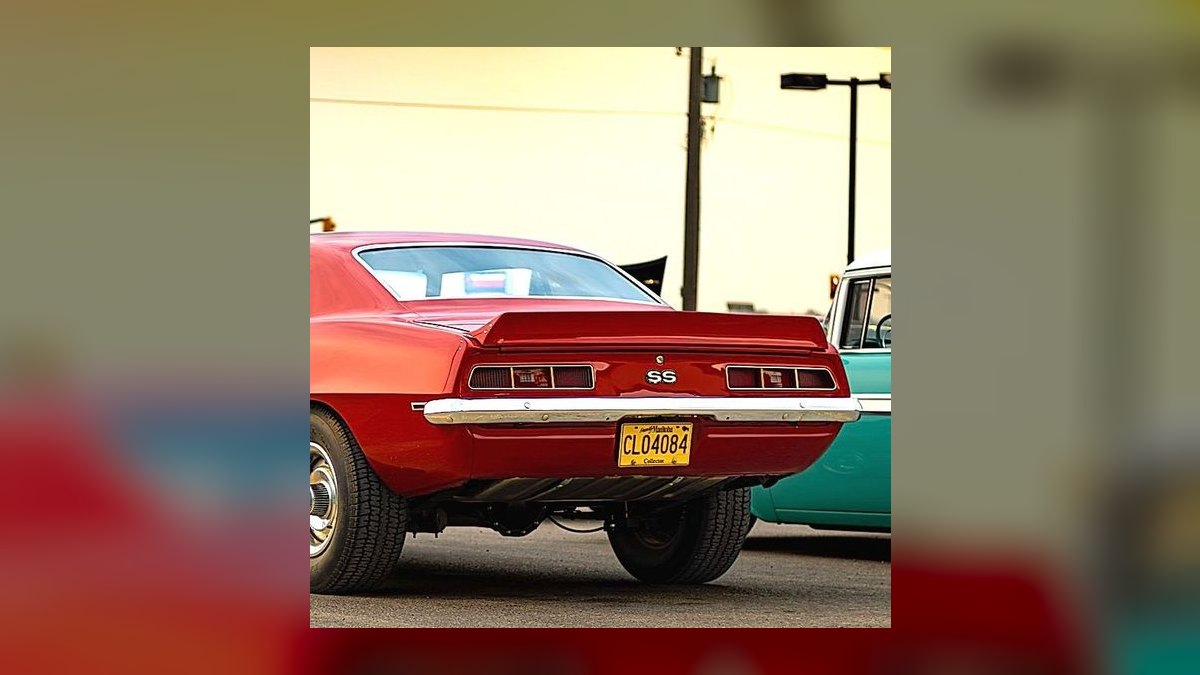
Start a mobile detailing business in 2027 by outfitting a van or trailer with your own water, power, and professional tools, registering an LLC with liability and garage-keepers insurance, then pricing for skill rather than speed. Budget $8,000–$35,000 to launch, and climb quickly from washes into paint correction and ceramic coatings.
The driveway that pays $32 an hour and the one that pays $171
Picture two Saturdays on the same street. On the first, you pull up at 8 a.m., unroll the hose, foam and rinse a family SUV, decontaminate the paint, shampoo and extract three rows of carpet, wipe down the leather, do the glass and the jambs, and hand over the keys at noon. You collect $180. Add the 45 minutes you spent driving there and setting up, and the 20 minutes packing out, and you have roughly 5 hours of your life against $180 — about $32 per occupied hour before chemicals, fuel, and the 3% the card processor takes. That is a wage. A decent one for a Saturday, but a wage, and it does not scale, because the only lever you have is working faster or working longer, and both of those have hard ceilings.
On the second Saturday you park in front of a two-year-old sedan whose owner has decided they want the paint protected. You spend an hour washing and decontaminating, an hour claying and taping, three hours machine polishing out the swirl marks the previous owner's automatic tunnel wash installed, an hour of panel wipe and inspection under a swirl-finder light, and an hour applying and leveling a ceramic coating. Seven hours of hands-on work plus 45 minutes of driving. You collect $1,200. That is roughly $154 per occupied hour, off the same van, the same generator, the same pressure washer, and the same pair of hands — the only difference being that those hands spent several months learning to run a polisher without burning through clear coat.
That gap is the entire business. Everything else — the rig, the chemicals, the software, the insurance, the marketing — exists to support the decision about which of those two Saturdays your calendar is full of. The mistake nearly every new operator makes is assuming that the path to more money is more customers, so they price low to fill the schedule, get busy, get exhausted, and discover eighteen months later that they have trained an entire customer base to expect $60 washes and cannot raise prices without losing all of them. The path to more money in mobile detailing is not more jobs. It is more dollars per occupied hour, and the way you get there is by climbing a skill ladder that most entrants never climb because the bottom rung is so easy to stand on.
A mobile detailing business brings professional vehicle cleaning and paint care to the customer instead of making the customer come to a shop. You load a van, box truck, or enclosed trailer with everything a fixed bay would have — a water tank and supply, a power source, a pressure washer, an extractor, polishers, vacuums, a steamer, chemicals, towels, and pads — and you drive to a driveway, an office lot, a dealership, or an apartment complex and detail the vehicle where it sits. You are not selling a clean car the way an automatic tunnel sells a clean car. You are selling two things bundled: the craftsmanship of a result the customer cannot produce themselves, and the convenience of not losing two hours in a waiting room. That bundle is why a good mobile operator charges *more* than a fixed shop for the same service, not less — despite the near-universal assumption among beginners that mobile means cheap.

How the service ladder and the revenue-per-hour math actually work
The single most useful framework here is the service ladder, because where you sit on it determines whether this is a low-wage hustle or a genuinely profitable trade.
Rung one — the maintenance wash and basic detail. Exterior hand wash, wheels, tires, glass, a quick interior wipe and vacuum. Typically $40–$120, one to two hours. This rung competes against an effectively infinite supply of side hustlers whose entire capital requirement is a consumer pressure washer and a social post. Prices here are low and stay low, permanently, because the barrier to entry is nearly zero.
Rung two — the full interior-and-exterior detail. The thorough version: chemical decontamination and clay, real interior shampoo and hot-water extraction, leather cleaning and conditioning, door jambs, glass, a spray sealant on top. Usually $150–$400, three to five hours. This is the bread and butter of a competent operator, and it is where most people who take the business seriously actually live for their first six months.
Rung three — paint correction. Machine polishing to genuinely *remove* swirls, scratches, oxidation, and etching rather than filling them temporarily with glaze. A one-step correction commonly runs $300–$800; a multi-stage correction $700–$2,500 and a full day or more. This is a real skill. Reading paint, matching pad to compound, controlling speed and pressure, knowing when to stop, using a paint thickness gauge to avoid polishing through the clear coat — it takes months of deliberate practice, and doing it wrong causes permanent, expensive damage to a customer's vehicle.
Rung four — ceramic coating and paint protection film. After correction, a long-life protective coating bonded to the paint, commonly $600–$2,500 on a typical vehicle and more on large or exotic ones. PPF — precision-cut film applied to high-impact panels or the whole car — is its own demanding specialty running $1,500–$8,000 and up. Major coating manufacturers run certification and authorized-installer programs; certification is often what lets you buy the professional-grade product at all and offer the manufacturer-backed warranty that justifies the price.

Running alongside the ladder are two recurring rungs that do not require climbing the skill tree: maintenance subscriptions (roughly $80–$300/month for a scheduled wash or light detail) and fleet and commercial contracts (dealership reconditioning, rideshare and delivery drivers, corporate and rental fleets).
The metric that ties the ladder to your bank account is revenue per service hour — dollars collected divided by hands-on hours *plus* the drive and setup time that job consumed. A fixed shop and a mobile operator both sell skilled labor, but the mobile operator pays a cost the shop never does: windshield time. Run it honestly and the pattern is unmistakable. A $120 wash at 1.5 hours of work plus 0.5 hours of drive earns $60 per occupied hour. A $250 full detail at 4 hours plus 0.75 earns about $53 — *worse* than the wash, because the bigger ticket consumed proportionally more time. A $600 one-step correction at 6 hours plus drive earns roughly $89. A $1,200 coating package at 8 hours plus drive earns about $137. Climbing the ladder does not merely raise the ticket; it raises the hourly, because high-skill work is priced for scarcity rather than for minutes.
The second lever on that same metric is route density. Drive time is dead time you cannot bill. Three jobs clustered in one neighborhood on one day produce dramatically better revenue per hour than three scattered across a metro, even at identical prices. This is why booking software with route awareness, and the discipline to offer a customer next Tuesday because you already have two jobs in their zip code, is not administrative overhead — it is margin.
The rig, the tool stack, and what launching honestly costs
The rig is your shop, and its configuration is the largest single startup decision.

A cargo van — Transit, ProMaster, Sprinter — is the premium path. Tools and chemicals stay enclosed, organized, and dry; you can work out of the back in rain; and the vehicle is a rolling billboard. It is the most expensive and the most credible-looking option. An enclosed trailer pulled by a truck or SUV you may already own is the cost-effective middle: nearly the same weather protection and organization without buying a dedicated vehicle, at the cost of maneuverability and parking headaches in tight driveways. An open setup — a pickup bed or open trailer with equipment strapped down — is the cheapest entry and viable for a wash-focused launch, but it is exposed to weather and theft and reads as amateur to exactly the premium customer you want.
Whatever the form, the same core systems go in: a water tank (typically 35–100+ gallons, so you are never dependent on a customer's spigot, and sometimes a runoff capture setup); a power source — a generator, a battery-and-inverter bank, or increasingly a quiet lithium power station — so you are not running an extension cord into someone's garage; a pressure washer and foam cannon; a wet/dry vacuum and hot-water carpet extractor; dual-action and rotary polishers with a range of backing plates; a steamer; shelving, lighting, and chemical storage.
Below the rig level, the working tool stack deserves real attention because tool quality drives both speed and result quality. Polishers are the heart of the skill work — a DA polisher is the forgiving workhorse, a rotary or forced-rotation machine is faster and far less forgiving. Pads are consumables bought in quantity and matched to compound. Compounds and polishes span heavy-cut through ultra-fine finishing. The extractor is what makes interior work professional rather than a wipe-down. Chemicals form a deep category: pH-neutral shampoo, wheel and tire cleaner, iron and fallout remover, tar remover, clay or clay alternatives, interior cleaner, leather cleaner and conditioner, glass cleaner, APC, tire dressing, trim restorer, sealant, and at the top of the ladder the coatings themselves. Towels are a shockingly large line item — a professional operation runs hundreds of microfiber towels in a color-coded system (paint, wheels, glass, interior) with a real laundry process, because dragging a wheel towel across paint installs the very swirls you get paid to remove. A swirl-finder light is what lets you see the defects you are correcting, and a paint thickness gauge protects you from polishing through thin or previously repainted panels — a genuine liability instrument, not a luxury.
The honest all-in launch numbers, line by line:
- Vehicle: $0 if you already own a truck to pull a trailer; $35,000–$60,000+ for a dedicated new or used cargo van.
- Build-out (tank, power, shelving, lighting, organization): $2,000–$12,000 depending on depth.
- Core equipment (pressure washer, foam cannon, vacuum, extractor, DA and rotary polishers, steamer, plates): $2,500–$8,000 for a setup capable of correction work.
- Initial chemicals and consumables (full lineup, pads, clay, towel arsenal): $800–$3,000.
- Insurance (general liability, garage-keepers / care-custody-and-control, commercial auto — first payments): $1,000–$4,000.
- Formation, licensing, permits (entity, local business license, any wastewater or environmental permit): $200–$1,500.
- Booking and CRM software setup and first months: a few hundred dollars.
- Marketing launch (website, portfolio photography, vehicle wrap or signage, initial local ads): $1,000–$5,000.
- Certifications (detailing fundamentals, manufacturer coating certification): $300–$2,500.
- Working capital cushion to cover fixed costs and living expenses through the slow ramp: $3,000–$15,000.

Totaled: a lean wash-focused launch using an existing vehicle lands around $8,000–$18,000. A solid enclosed-trailer build meant to climb the ladder runs $18,000–$35,000. A dedicated-van professional launch aimed at correction and coatings from early on runs $40,000–$80,000+. Financing the vehicle and sometimes the equipment is normal and sensible — they are productive assets — but you still need real cash for insurance, chemicals, certification, marketing, and the cushion. The capital requirement is genuinely lower than most service businesses, which is simultaneously the appeal and the trap: the low barrier is precisely what floods the bottom rung with competitors.
Build the rig for the rung you are climbing toward, not the one you are standing on. Someone launching to do washes does not need a $50,000 Sprinter. Someone who intends to be doing coatings by month eight should not cripple themselves with an open trailer that cannot do correction work in November.
The P&L, the first year, and the five-year arc
Gross margin in this business is genuinely high, and that is exactly what fools people. Take a representative $250 full detail. Direct costs: chemicals consumed, realistically $8–$20 depending on the menu; pad wear, towel wear, and laundry, a few dollars allocated per job and more for correction work; fuel to and from, a few dollars to $15+ depending on route density and metro size; generator fuel or battery wear, a small allocation; card processing at roughly 3%, so $7–$8 on that ticket. That stacks to roughly $25–$55 of direct cost, leaving gross margin commonly in the 55–75% range.
The surprise is the overhead underneath it. Insurance — general liability plus garage-keepers coverage plus commercial auto — is a real recurring cost. The vehicle carries payment, maintenance, registration, and depreciation. Polishers, extractors, and vacuums wear out and need replacing. Software, marketing, phone, accounting, licensing. And the largest hidden line of all: your own non-billable hours spent quoting, scheduling, driving, doing laundry, and restocking. Treating that 55–75% gross margin as though it were net income is the most common financial error in this trade, and it produces operators who feel busy and prosperous right up until the van needs a transmission.

A disciplined Year 1 solo startup — real rig, genuine intent to climb — realistically generates $55,000–$160,000 in revenue against $30,000–$95,000 in owner profit. That range is enormous, and it is not luck: it tracks almost entirely with how fast you climbed from wash work into correction and coatings, and how tightly you managed route density. Stay on the bottom rung all year and you land at the floor of that range having bought yourself a job. Be doing real correction and a steady flow of coating packages by the second half of the year and you land near the top.
Year 1 is skill-building and reputation-building mode, not peak-profit mode. The early months go into dialing in the rig, learning how long jobs actually take, discovering the real chemical and fuel burn, making the inevitable early mistakes on your own and friends' cars rather than a customer's, and building the first bank of reviews and before-and-after photos that every future customer will judge you by. The first slow season is the test of whether you built a recurring base and kept a reserve.
The five-year arc, assuming you actually climb and price with discipline:
- Year 2: correction and coating work is a real part of the calendar, referrals are compounding, a residential subscription base and possibly a first fleet contract are forming. Revenue commonly $90K–$250K, owner profit roughly $55K–$150K.
- Year 3: the strategic fork. A solo specialist deep in coatings and PPF can run $130K–$300K at strong margins; an operator adding a second van and a first employee is buying capacity and may push toward $200K–$400K with owner profit around $80K–$200K.
- Year 4: the chosen path matures — a regional coating-and-PPF authority, or a two-to-four-rig crew with the founder in dispatch, sales, training, and QC. Revenue commonly $180K–$500K, owner profit $90K–$280K.
- Year 5: a mature operation. A premium specialist or small hybrid with a bay at $200K–$350K with excellent margins, or a multi-van crew at $400K–$650K+ revenue and $150K–$320K owner profit, with a real decision about whether to add rigs, open a fixed flagship, or simply hold a comfortable high-margin book.
None of those numbers apply to the wash-only operator, whose trajectory flattens hard by month twelve.

The 2027 market backdrop supports this, with a sharp caveat. Demand is structurally healthy: vehicles are expensive, owners keep them longer, the average age of cars on the road keeps rising, and an owner with a $45,000-plus vehicle has real financial motive to protect the paint. The convenience economy trained people to pay for services that come to them. Consumer awareness of ceramic coatings and PPF, once niche, is now mainstream. But the competition is severely bifurcated: the bottom is permanently crowded and always will be, while the top — operators genuinely competent to be trusted with an expensive car's paint — remains thin, because correction and coating are real skills most entrants never bother to learn. The winning 2027 entrant treats wash work as a customer-acquisition channel and climbs as fast as competence allows into the tier where competition thins and margins are real.
Three business models, and the trade-offs between them
Past the launch phase there are three distinct ways to build this, and choosing deliberately shapes your capital, your hiring, and your daily life.
Premium solo. You stay the single skilled operator, climb the ladder deliberately, and price for skill rather than scaling headcount. The goal is a high revenue-per-hour, a tight route, and a loyal repeat-and-referral base. Advantages: simplicity, the highest margin per job, total quality control, no payroll. Ceiling: the finite number of hours one skilled person can bill, roughly $200K–$350K at the very top end with excellent pricing.
Multi-van crew. You hire and train additional detailers, run multiple rigs, and move yourself from the polisher to dispatch, sales, training, and quality control. Advantage: a far higher revenue ceiling, because you are multiplying billable hours beyond one body. Challenge: detailing quality is genuinely hard to systematize, and a single undertrained employee can destroy a customer's paint and your review bank in one afternoon. You also stop being a detailer and become a manager, which is a different job that many founders discover they dislike.
Specialist. You go deep on the top of the ladder — certified ceramic coating installer, PPF specialist, paint correction authority — and often graduate from purely mobile to a hybrid with a small fixed bay for work that genuinely benefits from a controlled, dust-free, temperature-stable environment. Advantage: the highest margins, real pricing power, and defensibility through skill and certification. Challenge: months or years of skill investment and a narrower menu.
Adjacent to those, several niche paths are worth knowing: fleet and commercial specialist (dealer reconditioning, rideshare and delivery, corporate and rental fleets — lower per-vehicle margin, but predictable, weekday-fillable, and route-dense); exotic and enthusiast specialist (valuable cars, knowledgeable and demanding owners, premium pricing, entirely reputation-driven); EV specialist (soft factory paint, large delicate glass roofs, protective owners — a growing, well-defined segment); and marine, RV, and motorcycle detailing as adjacent vehicle types with their own pricing and skill considerations.
Two constraints cut across all of these. Weather is a structural operating cost a fixed shop never pays: rain cancels jobs, cold makes coatings cure badly or refuse to cure, extreme heat wrecks flash times during polishing. Seasonality is real in most climates — demand surges in spring, holds through summer, pulses in fall, and collapses in deep winter in cold regions, while warm-climate metros run far more evenly year-round. The counter to both is deliberate: build a subscription and fleet base that holds a revenue floor through slow stretches, use the slow season for skill-building, equipment maintenance, and fleet outreach, price and reserve knowing the dip is coming, and secure access to indoor space for the high-ticket coating work that cannot happen in a driveway in November.
The pitfalls that end most of these businesses, and how to avoid each
The failure modes in mobile detailing are remarkably consistent, which means they are avoidable if you know them before you start.
Competing on price at the bottom rung. This is the single most common strategic error. You cannot win a price war against an infinite supply of people with a pressure washer and no overhead, and every dollar you shave trains a customer base that will never pay for the profitable work. *The fix:* price wash and basic detail work at a fair professional rate — not the lowest in town — and treat it explicitly as an acquisition channel that produces reviews, photos, and a customer list.

Never climbing the ladder. Correction and coating take months to learn, so most operators simply do not, and stay on rung one forever. *The fix:* budget practice time as a real line item. Buy junkyard practice panels. Correct your own car, then friends' cars, then low-risk older vehicles, under a swirl-finder light with a thickness gauge in hand, before you ever price the work.
Pricing correction above your actual skill. The inverse error — climbing the ladder commercially before climbing it competently, and burning through a customer's clear coat. *The fix:* do not sell a service you cannot yet perform to a standard you would accept on your own vehicle, and use the thickness gauge on every panel of every correction job.
Underpricing drive time, setup, and logistics. Pricing as though you were a fixed shop gives away the windshield time, the water-and-power setup, and the convenience that is the actual thing you sell. *The fix:* quote from revenue per occupied hour, set a service radius, use trip charges beyond it, and enforce job minimums so a small ticket never costs more in driving than it earns.
Treating gross margin as net income. *The fix:* reserve monthly against insurance, vehicle payment and maintenance, and equipment replacement before you count anything as owner pay.

Skipping garage-keepers coverage. General liability alone does not cover damage to the customer's vehicle while it is in your care. Working polishers and chemicals on $60,000 cars without care-custody-and-control coverage puts you one mistake from a business-ending loss. *The fix:* carry general liability, garage-keepers/CCC, and commercial auto from day one, before the first paid job.
Ignoring wastewater and environmental rules. Detailing runoff carries soaps, iron, brake dust, and solvents, and many municipalities regulate whether and how it may reach a storm drain — sometimes requiring capture or reclamation. *The fix:* research your local rules before launch, not after a neighbor's complaint, and build capture into the rig if required.
Neglecting reviews and photography. Customers handing over a valuable vehicle to someone coming to their home are buying trust, and in 2027 they buy it almost entirely from review depth and before-and-after photos before they ever call. *The fix:* make asking for a review and shooting the after-photos a fixed step in your job checklist, not an afterthought.
Running with no software spine. A paper calendar and a text thread leaks double-bookings, forgotten appointments, and un-rebooked customers. *The fix:* adopt a real booking-and-CRM platform early — online booking that captures jobs while your hands are wet, a customer-and-vehicle service history that drives rebooking reminders, on-site card payment and subscription billing, and route-aware scheduling. Retrofitting this onto a chaotic operation later is far more painful than starting with it.
Poor route density. Accepting scattered jobs across the metro drowns you in unbillable driving. *The fix:* cluster deliberately — offer the customer the day you are already in their area, and let subscription customers anchor geographic days.

No recurring base. An all-one-off calendar is rebuilt from zero every week and is fully exposed to weather and seasonality. *The fix:* pitch a maintenance plan to every satisfied detail customer (a coated car genuinely benefits from proper maintenance washing, so the high-ticket sale and the subscription reinforce each other), and pursue one or two fleet or dealer contracts to fill weekdays.
Getting the legal spine wrong. *The fix:* form an LLC so the entity — not your personal assets — holds the liability, contracts, and insurance; get local business licensing right; handle sales tax on services correctly for your jurisdiction; use written service agreements for high-ticket correction and coating work that set expectations and limit liability; separate business banking from day one; and hire an accountant comfortable with a vehicle-and-equipment-heavy small business.
Burning out the body. Detailing is hours of repetitive, full-body work, often in heat or cold, in driveways and lots. Overbooking low-margin jobs because each one pays too little is how operators wear out by year two. *The fix:* price well enough that you do not have to overbook, invest in good tools and ergonomics, and let the ladder — not volume — carry your income.
Practitioners who make it through year one generally did not avoid every one of these. They avoided the two that compound: they refused to compete on price, and they invested the months to learn polishing properly. Everything else on this list is recoverable. Those two are not, because both of them quietly determine what kind of customer base you have built by the time you notice.
Related questions
How much can a solo mobile detailer realistically make in year one?
A disciplined solo operator with a real rig typically generates $55,000–$160,000 in revenue and $30,000–$95,000 in owner profit. The spread depends almost entirely on how quickly you move from washes into paint correction and ceramic coatings, and on route density.
Do I need a fixed shop, or is mobile enough?
Mobile is enough for washes, full details, and most corrections. Ceramic coatings and PPF benefit meaningfully from a controlled, dust-free, temperature-stable space, so many specialists eventually add a small bay while staying mobile for everything else — a hybrid rather than a full move indoors.
What insurance does a mobile detailing business actually need?
General liability for injury and property damage, garage-keepers or care-custody-and-control coverage for damage to the customer's vehicle while in your care, and commercial auto for the rig and the equipment inside it. Garage-keepers is the one beginners most often skip and most need.
Is ceramic coating certification actually required?
Not legally, but major coating manufacturers restrict professional-grade products and warranty-backed installs to certified authorized installers. Certification is often what lets you buy the product, offer the warranty, and defend the price — and it signals competence to a customer handing over an expensive car.
How do I get my first ten customers?
Detail friends' and family vehicles at fair rates to build a portfolio, photograph every result before and after, ask for a review after each job, list a complete local business profile, and post the work consistently. Referrals cluster geographically, which improves route density too.
FAQ
How much does it cost to start a mobile detailing business in 2027?
A lean wash-focused launch using a vehicle you already own runs roughly $8,000–$18,000. An enclosed-trailer build meant to climb into correction work runs $18,000–$35,000. A dedicated cargo van with a full professional build-out aimed at coatings from the start runs $40,000–$80,000 or more. The vehicle and equipment are commonly financed; the insurance, chemicals, certification, marketing, and working-capital cushion need real cash.
What is the profit margin on a mobile detail?
Gross margin on a typical $250 full detail commonly runs 55–75% after chemicals, pad and towel wear, fuel, generator or battery cost, and roughly 3% in card processing — about $25–$55 of direct cost on that ticket. That is genuinely high, but it is gross, not net. Insurance, vehicle payment and depreciation, equipment replacement, software, and marketing come out of it before anything is owner income.
Can I start with just a pressure washer and my own car?
You can start washing cars that way, and plenty of people do. What you cannot do is build a business on it, because that rung of the market is permanently saturated and priced accordingly. If you start there, treat it explicitly as a temporary customer-acquisition and cash-flow phase while you invest months learning paint correction — otherwise you have bought a job with a depreciating pressure washer attached.
How long does it take to learn paint correction well enough to charge for it?
Washing and basic detailing to a professional, swirl-free standard is learnable in weeks. Paint correction takes months of deliberate practice — reading paint, matching pads and compounds, controlling machine speed and pressure, knowing when to stop, and using a thickness gauge to avoid polishing through clear coat. Practice on panels, your own vehicle, and low-risk older cars before pricing it as a service, because doing it wrong causes permanent, expensive damage.
Do I need permits for detailing runoff?
Often, and it varies sharply by jurisdiction. Detailing runoff carries soaps, iron, brake dust, and solvents, and many municipalities regulate whether and how it can reach a storm drain — some require capture or reclamation systems. This is the compliance trap most specific to mobile work and the one most frequently ignored. Research your local wastewater and environmental rules before launch rather than after a complaint.
Should I hire employees or stay solo?
Stay solo until you have personally mastered the work and can document a repeatable quality standard, because a crew that details badly is worse than no crew — one undertrained employee can damage a customer's paint and your review bank in a single job. Once the standard exists, hiring multiplies billable hours toward a $400K+ ceiling, at the cost of becoming a manager rather than a detailer. Many operators instead choose to go deep as a certified specialist, which raises income without payroll. The same discipline any RevOps practitioner would apply to a sales team applies here: systematize the process before you scale the headcount.
Sources
- https://www.sba.gov/business-guide/plan-your-business/calculate-your-startup-costs
- https://www.sba.gov/business-guide/launch-your-business/choose-business-structure
- https://www.irs.gov/businesses/small-businesses-self-employed/business-structures
- https://www.epa.gov/npdes/stormwater-discharges-municipal-sources
- https://www.bls.gov/ooh/installation-maintenance-and-repair/home.htm
- https://www.iii.org/article/business-insurance-basics
- https://www.score.org/resource/business-plan-template-startup-business
- https://www.consumer.ftc.gov/articles/how-buy-used-car
- https://www.osha.gov/chemical-hazards
Related on PULSE
- How do you start a pressure washing business?
- How do you price a home services business for profit?
- How do you build recurring revenue in a service business?
- How do you land your first commercial fleet contract?
- How do you decide when to hire your first employee in a service business?
- How do you use route density to raise field service margins?
This page will be disappearing soon. Save it to your device for $1 — or read it free while it is here.
@Kory-White- · if Venmo asks, the last 4 of my number are 2012
This page is gone.
This one is off the shelf now. $1 keeps it on your phone for good — the whole page, pictures and diagrams included.
 mobile-detailingHow many cars per day can a one-truck mobile detailer realistically do, and what's the per-car gross profit in 2027?
 mobile-detailingHow do you start a mobile car detailing business in 2027?
 paintless-dent-repairHow do you start a paintless dent repair (PDR) business in 2027?
 mobile-car-washHow do you start a mobile car wash business in 2027?
 pet-groomingHow do you start a pet grooming business in 2027?
 mobile-tire-repairHow do you start a mobile tire repair business in 2027?
 window-tintingHow do you start a window tinting business in 2027?
 motorcycle-repairHow do you start a motorcycle repair business in 2027?
 vinyl-wrapHow do you start a vinyl wrap shop business in 2027?
 mobile-oil-changeHow do you start a mobile oil change business in 2027?