

How do you start a mold remediation business in 2027?
 Curated byKory White · Fractional CRO · Maryland
Quality
Certified

To start a mold remediation business in 2027, you must first meet state licensing requirements, which typically include a contractor’s license and an EPA or state-specific mold certification (costing $300–$1,500). You’ll then need general liability and pollution liability insurance ($1,500–$4,000 annually), along with basic equipment like HEPA vacuums, air scrubbers, and moisture meters (initial investment $5,000–$15,000). Finally, register your business, secure a surety bond if required, and invest in marketing to local property managers and insurance adjusters.
TL;DR: To start a mold remediation business in 2027, you build a state-licensed (where required) IICRC-credentialed restoration company that responds to water-damage emergencies on a 1-hour-callback / 4-hour-on-site rhythm, performs containment-and-removal of microbial contamination per the IICRC S520 Standard for Professional Mold Remediation (with structural drying per IICRC S500 when water is the precursor), and bills primarily through homeowner property-insurance carriers via Xactimate or Symbility line-item pricing (typical job: $1,500-$30,000 with surface-mold sq-ft pricing of $10-$25/SqFt, HVAC mold $30-$45/SqFt, and water-mit emergency rates of $4-$7/SqFt for affected area) -- supplemented by commercial property-management contracts, real-estate transaction inspections, and cash-pay residential when a deductible is high or coverage is denied. The right model in 2027 is a single-truck owner-operator launch that scales to a 3-5 truck regional restoration company over 3-5 years, with the founder personally certified as AMRT (Applied Microbial Remediation Technician), WRT (Water Damage Restoration Technician), and ASD (Applied Structural Drying) within the first 90 days. The honest 2027 economics: a focused single-truck launch invests $58K-$135K in equipment (LGR dehumidifiers, HEPA AFD air scrubbers, air movers, negative-air machines, moisture meters, thermal-imaging camera, decontamination chambers, PPE), licensure where required (Florida DBPR, Texas TDLR, Louisiana, Maine, NY DOH/DOL, Tennessee, Virginia), insurance (general liability with mold endorsement -- most CGL policies EXCLUDE mold by default and require either pollution liability or a specific mold/fungus endorsement), bonding, IICRC certification, software (Encircle, MICA, Xactimate, DASH), and working capital for the 30-90 day insurance-claim payment cycle. Year 1 generates $180K-$420K in revenue at 30-80 jobs with $45K-$110K in owner net income as the founder runs both crew and estimating. By Year 3-5 a disciplined operation reaches $900K-$2.4M in revenue with $160K-$480K owner profit at 8-22 employees and 250-650 jobs annually, at which point the founder chooses between staying independent regional, joining a franchise (PuroClean, Servpro, Rainbow International, Steamatic, Paul Davis), pursuing insurance carrier preferred-vendor program designation (State Farm Premier Service, USAA STARS, Allstate Good Hands Repair Network, Travelers Pinnacle, Farmers ECN), or selling to a private-equity-backed restoration roll-up at a 5x-8x EBITDA multiple (BluSky, BELFOR, ATI Restoration, Cotton Holdings, FirstOnSite). The three things that kill mold-remediation startups: (a) buying equipment instead of building the insurance-channel relationship -- you can rent a $4,000 LGR dehu by the day; you cannot rent a State Farm preferred-vendor designation; (b) skipping the third-party industrial hygienist relationship -- in Florida, Texas, and several other states the SAME firm legally cannot both assess AND remediate (a hard conflict-of-interest rule), and an operator who learns this on Job 3 has structurally violated state law; and (c) underestimating insurance-billing AR -- restoration AR routinely runs 60-90 days from job completion to carrier check, and a thinly-capitalized founder with a five-truck weekend storm response and no credit line cannot make payroll Friday. Net: viable in 2027 as a 24/7 dispatched, IICRC-disciplined, insurance-channel-fluent service operation built on the structural certainty that water damage and mold growth happen every day in every climate -- a poor fit for anyone who wants 9-to-5 hours, predictable cash flow, or a business that does not require respirator-fit-tested PPE on the first job.
What A Mold Remediation Business Actually Is In 2027
A mold remediation business is a specialty restoration contractor that responds to water-damage and microbial-contamination events in residential and commercial properties, contains the contaminated area to prevent cross-contamination, removes affected building materials (drywall, insulation, carpet pad, baseboard, sometimes structural framing), HEPA-vacuums and damp-wipes remaining surfaces, treats with EPA-registered antimicrobials when appropriate, dries structural materials to documented moisture-content benchmarks, restores the structure to pre-loss condition, and documents the entire process for the property-insurance carrier and (where state law requires) for a third-party industrial hygienist who performs post-remediation verification. You are not a mold-testing lab, you are not a home inspector who reports the presence of mold, and in many states you are explicitly prohibited from being both the assessor who identifies mold and the remediator who removes it -- this is the foundational regulatory distinction in Florida (DBPR licenses Mold Assessor and Mold Remediator separately, with cross-licensure allowed only when the same client transaction does not span both roles), in Texas (TDLR licenses Mold Assessment Consultant and Mold Remediation Contractor separately), in Louisiana, in New York (DOH licenses Mold Assessor and DOL/DOH licenses Mold Remediation Contractor with a hard conflict-of-interest prohibition), in Maine, in Tennessee, in Virginia, and in a growing list of additional states. Operationally you are a 24/7 dispatched emergency-response service with a fleet of equipment (low-grain refrigerant dehumidifiers, HEPA air-filtration devices, axial and centrifugal air movers, negative-air machines, decontamination chambers, moisture meters, thermal cameras, borescopes, PPE), a roster of certified technicians (IICRC AMRT, WRT, ASD at minimum; OSHA 10 or 30 ideally; respirator-fit-tested annually under 29 CFR 1910.134), a software stack for documentation and insurance billing (Encircle, MICA, Xactimate, Symbility, DASH, Magicplan, Matterport), and a referral network that includes plumbers, insurance adjusters, real-estate agents, property managers, and homeowners who found you on Google after a 2 a.m. pipe burst. The entire business is one financial idea executed across hundreds of jobs per year: you respond to a water or mold event quickly, scope the loss accurately in Xactimate line-items the carrier will pay, execute the work to IICRC standard so the third-party hygienist passes clearance, document everything so the carrier supplements without dispute, and collect the check 45-90 days later -- at a margin large enough to cover technician wages plus equipment depreciation plus truck plus insurance plus office plus marketing plus owner profit plus the working-capital cost of the AR cycle. A starting single-truck operation that produces 50 jobs at a $6,200 average ticket grosses $310,000 annually, pays direct labor and disposal and consumables of roughly $135,000, equipment depreciation and truck of $35,000, insurance and software and overhead of $55,000, and contributes $85,000 to owner profit. That is the engine. Everything else in this guide -- IICRC certification, state licensure, equipment selection, insurance-channel positioning, third-party hygienist relationships, software stack, lead generation, pricing, AR management -- is the machinery that lets you run that engine while passing every clearance test, every state inspection, and every carrier audit.
The 2027 Market Reality You Are Building Into
A founder needs an honest read of why this sector is structurally durable in 2027 and where the competitive pressure actually comes from. Demand is structurally certain and weather-driven. The Insurance Information Institute (III) and the National Flood Insurance Program (NFIP) consistently rank water damage and freezing as the second-most-common homeowner insurance claim (behind wind and hail), with roughly 1 in 60 insured homes filing a water-damage or freezing claim each year and average paid claims of $11,000-$13,000 per the III's Facts + Statistics database. Mold remediation specifically is most commonly a downstream consequence of water damage -- a slow plumbing leak behind a kitchen wall, a roof leak that wet the attic insulation for two months, a sump-pump failure during a thunderstorm, a refrigerator water-line drip, an HVAC condensate pan overflow, a Category 3 sewage backup, a Hurricane Ian or Hurricane Helene flood-water ingress -- and the EPA's "Mold Remediation in Schools and Commercial Buildings" guidance (the bible for square-footage-based response triage) plus the IICRC S520 Standard for Professional Mold Remediation are the technical references the entire industry runs on. The competitive structure is bifurcated. At the top sit a small number of large national players: BELFOR Property Restoration (the largest, with hundreds of US offices and aggressive insurance-carrier preferred-vendor relationships), ServiceMaster Restore / ServiceMaster by Disaster Restoration, Servpro Industries (the franchise giant with 2,000+ US franchisees and the dominant "Like It Never Even Happened" brand), PuroClean (1,000+ franchisees), Rainbow International / Rainbow Restoration (Neighborly brand portfolio), Steamatic, Paul Davis Restoration, BluSky Restoration Contractors (large commercial-focused PE-backed roll-up), ATI Restoration (large commercial PE-backed), Cotton Holdings / Cotton GDS (commercial and large-loss focused), FirstOnSite Restoration (Canadian-headquartered with US presence), DKI Services (membership network of independent restoration contractors), and Restoration1 (DASH Software's franchise system). Below sit thousands of independent regional and local restoration contractors, ranging from single-truck owner-operators to $20M+ regional players, plus a long tail of carpet-cleaner-turned-restoration operators of varying quality. The opportunity for a disciplined 2027 entrant is the underserved professional middle -- being more reliable, more IICRC-disciplined, more insurance-channel-fluent, and more digitally-documented than the long tail without needing to become BELFOR. The 24/7 dispatch reality is the competitive moat. Insurance adjusters, plumbers, and homeowners who have water actively dripping through a ceiling at midnight choose the restoration company that answers the phone in under 60 seconds, commits to a 4-hour on-site arrival, and shows up with a truck full of equipment ready to mitigate. The "1-hour callback" and "4-hour on-site" service-level commitments are the table stakes; the contractor who routinely meets them captures the next call from that adjuster, that plumber, that homeowner.
Mold Remediation Vs Water Mitigation Vs Reconstruction: Pick Your Scope
This is the most consequential operational decision and the one most beginners get wrong. Water mitigation -- often abbreviated "water mit" -- is the IICRC S500-governed emergency response to a water-loss event: extract standing water, set air movers and dehumidifiers, remove non-salvageable materials, dry the structure to documented moisture benchmarks, and document the daily drying log. This is what 80%+ of restoration jobs are: a residential pipe burst, a dishwasher supply-line failure, a toilet supply-line failure, an upstairs-bathroom overflow, a water-heater tank rupture, an HVAC condensate pan leak, a roof leak from a wind event, a category 3 sewage backup. The work is fast (3-5 days typical), the equipment is standardized (LGR dehus, axial movers, extractors, moisture meters), the Xactimate codes are well-understood (WTRDMG, WTREXT, DRY, AIRMOV, DEHU, etc.), and the insurance carrier reimburses on standard line-items. Mold remediation -- IICRC S520-governed -- is the response to an existing microbial contamination event, which may or may not have an ongoing water source. The work is slower (often 5-15 days), requires containment construction (negative air, 6-mil poly barriers, decontamination chambers, ZipWalls), requires specialized PPE (P100 or PAPR respirators with annual fit-testing under 29 CFR 1910.134, Tyvek or Tychem suits, nitrile gloves), often requires a third-party assessor's protocol that the remediator must follow exactly, and ends with a post-remediation verification (PRV) clearance test by an independent industrial hygienist. The Xactimate codes are different (CONTAINMENT, HEPA, ANTIM, MOLDREM-prefixed line items), the pricing is higher per square foot, and the regulatory exposure is substantially greater. Reconstruction -- often abbreviated "build-back" or "repair" -- is the post-mitigation rebuilding of demolished materials: drywall replacement, insulation replacement, baseboard replacement, paint, flooring replacement, cabinet rebuild. This is general contracting work (often requiring a separate residential or commercial GC license depending on state) and is where many restoration companies make the bulk of their revenue (mit + mold remediation + reconstruction together can generate $15K-$50K on a single moderate water-loss claim, vs. $3K-$8K for mit alone). The 2027 strategic question: start with water mitigation only (lowest capital, fastest cash, fastest learning curve, broadest market), add mold remediation in Month 6-12 once IICRC AMRT is held by the founder and at least one technician (separate licensure required in some states; conflict-of-interest rules apply), and add reconstruction in Year 2-3 once cash flow supports the longer build-back AR cycle and the founder holds (or hires) the appropriate GC license. A founder who tries to launch all three on day one is structurally under-capitalized and structurally under-credentialed.

The IICRC Certification Stack: AMRT, WRT, ASD, And The Full Credential Map
The Institute of Inspection, Cleaning and Restoration Certification (IICRC), headquartered in Las Vegas, is the defacto standards body for the entire restoration industry, and IICRC certification is the table-stakes credentialing that every insurance carrier preferred-vendor program, every third-party industrial hygienist, and every meaningful commercial client expects. The IICRC publishes the ANSI-accredited industry standards that govern the work itself: the IICRC S500 Standard for Professional Water Damage Restoration (the reference document for water mitigation work, currently in its 5th edition), the IICRC S520 Standard for Professional Mold Remediation (the reference for mold work, currently in its 4th edition), the IICRC S540 Standard for Trauma and Crime Scene Cleanup, the IICRC S700 Standard for Professional Fire and Smoke Damage Restoration, and several others. The certifications a restoration founder needs, in priority order: WRT (Water Damage Restoration Technician) -- the foundational water-mit certification, typically 3 days of in-person classroom training plus a written exam, $700-$900; ASD (Applied Structural Drying) -- the advanced drying methodology certification covering psychrometrics, dehumidifier sizing, and structural drying calculations, prerequisite of WRT, typically 3 days plus exam, $850-$1,000; AMRT (Applied Microbial Remediation Technician) -- the foundational mold-remediation certification, prerequisite of WRT, typically 4 days plus exam, $1,000-$1,200; HST (Health and Safety Technician) -- OSHA-aligned safety training applicable across all restoration work, $400-$600; OCT (Odor Control Technician) -- relevant for fire-and-smoke and biohazard work, $400-$600; CCT (Carpet Cleaning Technician) -- relevant if expanding into carpet cleaning sidelines, $400-$600; CDS (Commercial Drying Specialist) -- advanced commercial-loss drying for larger projects; FSRT (Fire and Smoke Restoration Technician) -- expanding into fire restoration; SCRT (Senior Carpet Repair Technician) -- specialty carpet work; ASR (Applied Structural Repair Technician); TCST (Trauma and Crime Scene Technician) -- biohazard cleanup expansion. Beyond individual technician certifications, the IICRC Certified Firm designation requires the company itself to maintain certified technicians on staff, carry appropriate insurance, follow IICRC standards, and maintain an active complaint resolution process; this designation is required for many insurance carrier preferred-vendor programs and for most commercial clients. The total credentialing stack for a starting founder: WRT + ASD + AMRT + HST + IICRC Certified Firm in the first 6 months, with two additional technicians WRT-certified within Year 1. Continuing education credits (CECs) are required to maintain certifications. Training providers include IICRC-approved schools like Aramsco / Interlink Supply (the dominant restoration distributor that operates training centers), Jon-Don (national distributor with training schools), Restoration Sciences Academy, Kee Resources, The Experience Conference and Exhibition (the annual industry conference), and individual instructor-trainers. The Restoration Industry Association (RIA) -- restorationindustry.org -- is the industry trade association complementary to IICRC, with its Certified Restorer (CR) designation as an additional senior credential for experienced operators, and its Water Loss Specialist (WLS) and Mold Specialist advanced certifications. The American Society of Cleaning and Restoration (ASCR) is a smaller complementary association.
State Licensing Reality: The Map You Cannot Skip
| State | Licensing agency | License type | Fee (approx) | Key requirement |
|---|---|---|---|---|
| Florida | DBPR Division of Professions | Mold Assessor + Mold Remediator (separate) | $355 each | IICRC AMRT or equivalent + insurance + cross-conflict prohibition |
| Texas | TDLR | Mold Assessment Consultant + Mold Remediation Contractor (separate) | $500-$700 | TDLR-approved 24-hr training + MARCH/MRT exam + insurance + work plan |
| Louisiana | LSLBC State Licensing Board for Contractors | Mold Remediation Specialty | $100-$1,000 | Asbestos-Lead-Mold examination |
| Maine | DEP / Department of Professional and Financial Regulation | Indoor Air Quality / Mold Remediation Contractor | varies | Maine-specific application + bonding |
| New York | NY DOL Division of Safety and Health + NY DOH | Mold Assessor + Mold Remediation Contractor (separate) | $250-$450 | Mandatory training course + 5-year license cycle + COI prohibition |
| Tennessee | TN Commerce and Insurance | Asbestos-Lead-Mold Contractor | varies | Bonding + insurance + technician training |
| Virginia | DPOR (Department of Professional and Occupational Regulation) | Mold Inspector + Mold Remediator (separate) | $175-$300 | NIOSH-approved respirator training + COI prohibition |
| Most other states | None state-specific | Operate under general contractor or no license | varies | Local business license + IICRC + insurance |
State licensure for mold remediation is the most jurisdiction-specific piece of the regulatory map and the single most overlooked area for new founders. There is no federal mold-remediation license, and the EPA's "Mold Remediation in Schools and Commercial Buildings" document is technical guidance, not a licensing regime. Roughly 8-10 states require state-level mold remediation licensure; the rest either license under general contractor frameworks, license at the local level, or do not license at all. Florida is the most rigorous: the Florida Department of Business and Professional Regulation (DBPR), Division of Professions, separately licenses Mold Assessors and Mold Remediators under Florida Statutes Chapter 468 Part XVI; the same individual can hold both licenses but the same firm cannot legally perform both assessment and remediation on the same property for the same client (a hard conflict-of-interest rule that catches many operators). Both licenses require a state application, IICRC AMRT or equivalent training certification, professional liability and general liability insurance with mold endorsement, and renewal every two years with continuing education. Texas -- Texas Department of Licensing and Regulation (TDLR) under the Texas Mold Assessment and Remediation Rules (TMARR), Texas Occupations Code Chapter 1958 -- separately licenses Mold Assessment Consultants and Mold Remediation Contractors with a similar hard conflict-of-interest prohibition; the technician-level Mold Assessment Technician and Mold Remediation Worker credentials require TDLR-approved training (typically 24 hours minimum) plus the MARCH or MRT exam. Texas requires a written work plan and post-remediation assessment for projects exceeding 25 contiguous square feet. Louisiana -- the Louisiana State Licensing Board for Contractors (LSLBC) Mold Remediation specialty classification under the Asbestos-Lead-Mold examination framework. Maine -- the Maine Department of Environmental Protection and Maine Department of Professional and Financial Regulation jointly regulate indoor air quality contractors and mold remediation. New York -- under New York Labor Law Article 32, the New York Department of Labor (DOL) Division of Safety and Health licenses Mold Assessors and Mold Remediation Contractors separately, with the New York Department of Health overseeing certain aspects, with a mandatory 40-hour training course for assessors and 24-hour course for contractors, $150K minimum general liability insurance, and a strict conflict-of-interest prohibition that makes New York unusually demanding for solo operators. Tennessee -- the Tennessee Department of Commerce and Insurance regulates Asbestos-Lead-Mold contractors. Virginia -- the Virginia Department of Professional and Occupational Regulation (DPOR) separately licenses Mold Inspectors and Mold Remediators with NIOSH-approved respirator training requirements. The pre-launch rule: pull the actual statute and implementing regulations for your specific state from the relevant department website (DBPR, TDLR, LSLBC, DOL, DPOR, etc.), do not rely on franchise marketing materials or generic summaries, identify whether the conflict-of-interest prohibition applies (in licensed states it almost always does), and budget 60-180 days for licensure.
EPA, OSHA, And The Federal Regulatory Floor
Even in states without specific mold-remediation licensure, federal regulations apply and a founder who skips them accumulates substantial exposure. The EPA's "Mold Remediation in Schools and Commercial Buildings" guidance (originally published 2001, periodically updated, still the industry-standard reference for square-footage-based response triage) classifies remediation projects by contaminated area: Level I (less than 10 sq ft) -- can be cleaned by trained building maintenance staff with PPE; Level II (10-30 sq ft) -- requires trained mold remediator with minimal containment; Level III (30-100 sq ft) -- requires full containment, HEPA filtration, professional remediation; Level IV (greater than 100 sq ft) -- requires industrial hygienist oversight, full containment, and post-remediation clearance. The EPA's complementary document "A Brief Guide to Mold, Moisture, and Your Home" is the standard reference for residential context. OSHA Respiratory Protection Standard (29 CFR 1910.134) is the federal regulation governing respirator use, including the N95 disposable filtering facepiece (acceptable for most water-mit and minor mold work), the half-face P100 elastomeric respirator (for moderate mold work), the full-face P100 respirator (for heavier mold work and demolition), and the PAPR (Powered Air-Purifying Respirator) (for the heaviest contamination, asbestos work, or worker comfort). The standard requires: a written respiratory protection program, annual medical evaluation (questionnaire reviewed by a physician or other licensed healthcare professional, OSHA Appendix C), annual quantitative or qualitative fit-testing for tight-fitting respirators (typically saccharin, irritant smoke, Bitrex, or PortaCount QNFT), and annual training. Skipping respirator-fit-testing is the most common OSHA finding in restoration company inspections, and a single uncertified worker who develops occupational asthma or hypersensitivity pneumonitis from mold exposure is both a workers' comp claim and a regulatory citation. OSHA Hazard Communication Standard (29 CFR 1910.1200) requires a written hazcom program, accessible Safety Data Sheets (SDS) for all chemicals used, container labeling, and worker training -- a real obligation given the antimicrobial chemicals (Concrobium, Microban, Sporicidin, Foster 40-80, Benefect, Shockwave) used in remediation. OSHA Bloodborne Pathogens Standard (29 CFR 1910.1030) applies when remediation work intersects with sewage Category 3 water losses or biohazard scenarios. OSHA Confined Space Standard (29 CFR 1910.146) can apply for crawl-space work. The CDC's mold guidance (cdc.gov/mold) is the public-health complement to EPA guidance and often referenced in family member health-concern conversations. NIOSH (National Institute for Occupational Safety and Health) certifies respirators and publishes the periodic NIOSH-Approved Particulate Filtering Facepiece Respirators list. The federal regulatory floor is real even where state licensure does not exist; the disciplined operator builds the OSHA written-program stack from day one and trains every technician quarterly.
Mycology Basics: What Mold Actually Is And When Testing Matters

A founder needs working knowledge of mycology to communicate credibly with assessors, adjusters, and homeowners, and to recognize when professional sampling is appropriate. The mold genera that matter operationally: Stachybotrys chartarum -- the infamous "black mold," requires sustained moisture (typically chronic water intrusion), produces mycotoxins, often the source of high-profile homeowner concerns and litigation; Aspergillus (multiple species) -- common in HVAC contamination and basement environments, some species produce aflatoxins, can cause aspergillosis in immunocompromised individuals; Penicillium (multiple species) -- extremely common indoor and outdoor mold, found in damaged building materials and food, allergenic; Cladosporium -- the most common outdoor mold and one of the most common indoor allergens, often appears on cool surfaces with condensation; Chaetomium -- an indicator of chronic water damage, often found in drywall paper, often co-occurs with Stachybotrys; Alternaria -- common allergen; Fusarium -- chronic water damage indicator. Sampling methods: air sampling via spore-trap cassettes (Air-O-Cell, Allergenco-D, Micro-5) collected with a calibrated pump, sent to an AIHA-accredited laboratory (EMSL Analytical, EMLab P&K / Eurofins, Pro-Lab, Aerobiology Laboratory Associates) for direct microscopy with spore counts; surface sampling via tape-lift, swab, or bulk sample sent for direct microscopy or culture; ERMI (Environmental Relative Moldiness Index) -- a DNA-based dust sample analyzed for 36 specific mold species, expressed as a single index score, used in some health-concern scenarios; HERTSMI-2 (Health Effects Roster of Type-Specific Formers of Mycotoxins and Inflammagens version 2) -- a five-species subset of ERMI focused on water-damage indicator species, used in some clinical contexts. When professional sampling is appropriate: pre-remediation baseline (when health concerns or legal documentation are involved), post-remediation verification (PRV) for clearance (required by IICRC S520 for Condition 2 and Condition 3 areas in many scenarios; required by state law in Florida, Texas, and other licensed states for projects exceeding threshold sq ft), real-estate transaction inspections, indoor air quality investigations. When sampling is NOT appropriate: routine residential mold remediation where visible contamination is clearly defined and the IICRC S520 Condition assessment can be made by visual inspection -- the EPA, CDC, and IICRC all explicitly state that "if you can see or smell mold, you have a mold problem" and routine pre-remediation sampling is often unnecessary cost. The conflict-of-interest discipline (mandatory in licensed states): the same firm that performs assessment and writes the protocol cannot also perform the remediation that follows; the same firm that performs remediation cannot also perform the post-remediation verification clearance. The remediator works to a third-party industrial hygienist's protocol and submits to a third-party hygienist's clearance test.
Third-Party Industrial Hygienists And The CIH / IEP Network
Every serious restoration founder needs working relationships with at least 3-5 independent industrial hygienist firms in the local market, because the conflict-of-interest rule (in licensed states) and the insurance carrier preference (in most other states) means the third-party hygienist is the gatekeeper to project completion. The credentials that matter: CIH (Certified Industrial Hygienist) -- the gold-standard credential issued by the American Board of Industrial Hygiene (ABIH), requires a science degree, four years of full-time practice, and passage of a comprehensive exam covering toxicology, occupational health, ventilation, sampling methodology, ergonomics, and management; CSP (Certified Safety Professional) issued by the BCSP; CMI (Certified Microbial Investigator) issued by ACAC (American Council for Accredited Certification); CMR (Certified Mold Remediator) and CMC (Certified Mold Consultant) issued by ACAC; IEP (Indoor Environmental Professional) -- a generic industry term for the third-party assessor on a project. Notable assessor firms operate regionally and nationally: HHI Services, Building Health Check, Indoor Sciences, Building Performance Institute-affiliated firms, plus thousands of regional CIH-led practices. The relationship discipline: identify the active assessor firms in your service area (ask insurance adjusters, ask real estate agents, attend the local IAQ professional association meetings), introduce yourself professionally, demonstrate your IICRC S520 process knowledge, and become the remediation contractor those assessors trust to execute their protocols correctly. A founder with 5+ active CIH/IEP relationships gets called for the next project; a founder unknown to the local hygienist community gets passed over. The economic relationship: the homeowner or insurance carrier typically pays the assessor separately ($400-$1,500 for a residential mold inspection with sampling, $1,500-$5,000 for commercial), and the remediator's fee is separate; the assessor and remediator are professionally collegial but financially independent.
Equipment Economics: The Truck Stack You Actually Need
| Equipment category | Specific units | Cost new | Quantity per truck |
|---|---|---|---|
| LGR Dehumidifier | Dri-Eaz LGR 7000XLi, Phoenix R150, B-Air Vantage 6000 | $3,200-$4,800 each | 2-4 |
| Air Mover (axial) | Phoenix Axial AM, Dri-Eaz Sahara Pro X3, B-Air Vent | $200-$350 each | 8-16 |
| Air Scrubber / HEPA AFD | OmniAire 1200V, Phoenix Guardian R, BuildClean DCS | $1,400-$2,500 each | 2-4 |
| Negative Air Machine | Pred Engineering, OmniAire 600N | $1,800-$3,200 | 1-2 |
| Truck-mount extractor | Hydro-Force, Sapphire Scientific 870SS, US Products King | $8,000-$22,000 | 1 (truck-installed) |
| Portable extractor | Sandia Sniper 6, Hydro-Force EX-20 | $1,400-$2,800 | 1-2 |
| Moisture meter | Tramex MEP, Delmhorst BD-2100, Protimeter MMS3 | $400-$800 each | 2 |
| Thermal imaging camera | FLIR E8-XT, FLIR C5, Seek Reveal Pro | $500-$3,500 | 1-2 |
| Borescope | Milwaukee M-Spector | $200-$600 | 1 |
| HEPA vacuum | Pullman-Holt 86, Nilfisk GM80, MasterCraft HEPA | $700-$1,400 | 1-2 |
| Decon chamber materials | ZipWall, 6-mil poly, duct tape | $400-$1,200 | per project |
| Single truck stack total | $45,000-$95,000 |
The equipment stack determines what jobs you can run, how fast you can run them, and how many jobs you can run simultaneously. Low-Grain Refrigerant (LGR) dehumidifiers are the foundational drying equipment; the dominant manufacturers are Dri-Eaz (Legend Brands portfolio), Phoenix Restoration Equipment (Therma-Stor), B-Air, AlorAir, Drieaz LGR 7000XLi specifically being the workhorse residential LGR. A starting truck needs 2-4 LGRs ($3,200-$4,800 each new, $1,800-$2,800 used in good condition). Air movers -- axial fans that move large air volumes across wet surfaces -- are needed in volume; a typical water mit job uses 8-16 air movers ($200-$350 each new, $100-$200 used). Air scrubbers / HEPA AFDs (Air Filtration Devices) create negative-air containment and filter mold spores from the work area; the dominant units are OmniAire 1200V, Phoenix Guardian R, BuildClean DCS, Dri-Eaz HEPA 500, with 2-4 units per truck ($1,400-$2,500 each new). Negative air machines for active negative-pressure containment ($1,800-$3,200). Truck-mount extractors for water removal and cleaning -- Hydro-Force, Sapphire Scientific 870SS, US Products King Cobra, HydraMaster -- typically truck-installed with $8,000-$22,000 capital cost; portable extractors (Sandia Sniper 6, Hydro-Force EX-20) supplement at $1,400-$2,800. Moisture meters (pin-type and pinless) -- Tramex MEP, Delmhorst BD-2100, Protimeter MMS3 -- for documenting moisture content readings in drying logs ($400-$800 each, need 2). Thermal imaging camera -- FLIR E8-XT, FLIR C5, Seek Reveal Pro -- for finding moisture behind surfaces and documenting ($500-$3,500). Borescope for inspecting wall cavities. HEPA vacuums -- Pullman-Holt, Nilfisk GM80 -- for HEPA-vacuuming surfaces post-remediation. Containment materials -- ZipWall poles, 6-mil polyethylene sheeting, duct tape, decon chamber materials -- per-project consumables. PPE -- N95s, P100 cartridges, full-face respirators, PAPRs, Tyvek suits, nitrile gloves, eye protection, hard hats. Truck and trailer -- typically a Sprinter van, Ford Transit, or box truck plus optional trailer for the largest equipment ($35K-$75K used, $55K-$120K new). The total equipment-and-truck capital for a single-truck launch runs $58K-$135K. The buy-vs-rent discipline: buy the daily-use equipment (LGRs, air movers, extractors, moisture meters, thermal camera, basic HEPA AFDs, PPE inventory); rent the surge equipment for catastrophe response and large losses (additional LGRs, additional air movers, additional HEPA AFDs, large-loss desiccant dehumidifiers) from Aramsco / Interlink Supply, Jon-Don, United Rentals (catastrophe-response equipment), Sunbelt Rentals, and local restoration distributor rental fleets. The discipline that distinguishes professional operators: maintain a digital equipment-tracking system (often within Encircle or the home-care-platform-equivalent), document equipment cycle time per job, and rotate inventory to avoid mid-job equipment failure.
The Software Stack: Documentation, Estimating, And Operations
The 2027 restoration software stack is mature and a founder should choose a coherent stack rather than stitching together generic tools. Encircle -- the dominant restoration documentation platform, mobile-first photo and sketch capture with annotations, room-by-room loss documentation, daily drying logs with moisture-meter readings, equipment placement diagrams, technician time tracking, exports to Xactimate -- pricing typically $50-$150/user/month with project-based plans. MICA (Multifunctional Inspection Communication Application) -- the Insurance Services Office (ISO)-affiliated documentation platform widely used by carrier-preferred contractors. Xactimate by Verisk Xactware -- the dominant property-loss estimating platform used by 80%+ of US property insurance carriers, with the Xactimate price list (XACT) updated quarterly per geographic region (ZIP-3) and including all line-item codes for water mit, mold remediation, structural drying, demolition, reconstruction, contents cleaning, and ALE; pricing $99-$140/user/month for the basic Xactimate Mobile + Online combo, more for Enterprise; required by virtually every insurance-channel job. Symbility by CoreLogic -- the secondary property-loss estimating platform, used by Allstate and several other carriers as the primary or alternative to Xactimate. DASH by Restoration1Connect / RestorationManager -- restoration-specific operations management platform with job scheduling, technician dispatch, equipment tracking, AR management, reporting; pricing varies. RestorationManager -- alternative restoration operations platform. Albi -- modern restoration operations platform with strong UI. Restoration1Connect -- restoration franchise-focused platform. Magicplan -- mobile floor-plan creation app, exports to Xactimate sketches, used by virtually every restoration estimator who works in the field. Matterport -- 360-degree photo and 3D walkthrough documentation, increasingly required by carriers for large-loss documentation, hardware $3K-$5K plus subscription. Adjacent platforms in the stack: CRM and intake -- HubSpot, Pipedrive, or restoration-specific (DASH, Encircle modules); VOIP and 24/7 dispatch -- RingCentral, OpenPhone, with after-hours forwarding to on-call manager and answering service like AnswerConnect or Smith.ai; payroll -- Gusto, Paychex, ADP; accounting -- QuickBooks Online integrated with the operations platform's job-cost export; document management -- the operations platform's native plus Google Drive or Dropbox for overflow; e-signature for AOB (Assignment of Benefits) and work authorization forms -- DocuSign, Dropbox Sign; caregiver-equivalent technician communication -- the operations platform's mobile app plus group SMS via TextRequest or similar. The decision criteria: the operations platform must integrate with Xactimate (or whichever estimator the carrier requires), must support insurance-claim documentation standards (carrier-required photo formats, captioning, room-by-room organization), must enable real-time job-cost tracking against estimate, and must scale from one truck to multiple. The integration discipline: Encircle for field documentation + Xactimate for estimating + DASH or Albi for operations is the most common 2027 stack for the disciplined small-to-medium restoration company.
Insurance Channel: Xactimate, Carrier Preferred Vendor Programs, And TPAs
The single most consequential strategic decision for a 2027 restoration startup is whether and how to engage the insurance channel, because the channel both produces the majority of restoration revenue and imposes specific operational requirements that shape the entire business. The insurance-restoration economic flow: a homeowner experiences a covered water loss, calls their insurance carrier, the carrier dispatches an adjuster (employee or independent), the adjuster either calls a preferred-vendor restoration contractor or the homeowner selects their own contractor, the contractor mitigates the loss and writes an Xactimate estimate, the adjuster reviews and approves (or supplements / negotiates) the estimate, the contractor completes the work, the contractor submits final documentation, the carrier issues payment to the contractor (if AOB is in place) or to the homeowner (who then pays the contractor). Xactimate pricing methodology -- Xactware updates the Xactimate price list quarterly for every ZIP-3 in the US (and Canada), reflecting local labor rates, material costs, and equipment costs; the price list includes line-item codes (e.g., WTR EXT -- water extraction; DRY EQU -- drying equipment per day; DEHU -- dehumidifier per day; AIRMOV -- air mover per day; CONTAINMENT -- mold containment per linear foot; HEPA -- HEPA filtration per day; ANTIM -- antimicrobial application per sq ft; DMOLD -- mold demolition per sq ft) with per-unit pricing that the carrier-side adjuster references when reviewing estimates. Insurance carrier preferred-vendor programs -- the major carriers operate networks of pre-qualified restoration contractors who receive direct work assignments: State Farm Premier Service Program, USAA STARS / Preferred Contractor Network, Allstate Good Hands Repair Network (GHRN), Travelers Pinnacle Network / National Vendor Program, Farmers ECN (Emergency Contractor Network), Liberty Mutual Direct Repair Network, Nationwide Blue Ribbon Repair Program, Progressive Direct Repair Program (more auto-focused), Erie Insurance Preferred Vendor Network, Hartford Direct Repair Program. Qualification requirements typically include: minimum years in business (2-5 years often required), IICRC certifications, $1M-$5M general liability with mold endorsement, professional liability, workers' comp, vehicle insurance, background checks on technicians, response-time commitments, customer satisfaction score requirements, periodic audits, and quarterly performance reviews. The trade-off: preferred-vendor designation produces consistent inbound work flow but at compressed margins (carriers negotiate price-list adjustments, require fast cycle times, and audit aggressively); the contractor trades pricing power for volume. Third-Party Administrators (TPAs) sit between carriers and contractors for catastrophe response and overflow: Crawford & Company, Sedgwick, Pilot Catastrophe Services, Worley Catastrophe Response, Eberl Claims Service, JS Held. TPA work is typically catastrophe-driven (post-hurricane, post-tornado, post-major-storm) and requires deployment readiness. Public adjusters -- independent adjusters who represent homeowners (rather than carriers) -- often refer remediation work to contractors who treat homeowners well. Restoration networks / membership groups -- DKI Services, Authority Brands, and others -- provide marketing, training, and lead-flow infrastructure to independent contractors who join the network. The strategic question: Year 1 most independent restoration startups operate outside preferred-vendor programs (working insurance jobs but not as designated preferred vendors), build the operational base, accumulate customer satisfaction documentation, and pursue preferred-vendor designations in Year 2-3 when minimum-years-in-business and revenue thresholds are met.
Franchise Vs Independent: The Honest Comparison
A serious founder evaluating this business will encounter the franchise option and should run the comparison deliberately. The major restoration franchise systems and their 2024-2025 FDD economics: Servpro -- the dominant restoration franchise with 2,000+ US franchisees, initial franchise fee approximately $73,000-$93,000 depending on territory, royalty 3-10% of gross revenue (tiered), advertising fee 3%, estimated initial investment $202,000-$250,000+ for a starting territory; PuroClean -- 1,000+ US franchisees, initial franchise fee approximately $65,000, royalty 8% of gross revenue, advertising fee 2%, estimated initial investment $96,000-$203,000; Rainbow International / Rainbow Restoration (Neighborly) -- initial franchise fee approximately $35,000, royalty 6% of gross revenue, estimated initial investment $171,000-$284,000; Steamatic -- initial franchise fee $30,000, royalty 8%, estimated initial investment $61,000-$155,000; Paul Davis Restoration -- initial franchise fee $54,000, royalty 3-5%, estimated initial investment $217,000-$348,000; Restoration1 -- initial franchise fee $59,500, royalty 6%, estimated initial investment $94,000-$219,000; AdvantaClean -- initial franchise fee $41,000-$50,000, royalty 8% on first $750K then declining tiers, estimated initial investment $116,000-$181,000. Franchise advantages: brand recognition with insurance adjusters and homeowners, established operational playbook, IICRC training and ongoing support, vendor relationships (Aramsco, Jon-Don, equipment manufacturers) with group purchasing pricing, software platform included or discounted, marketing support including national advertising and Google presence, lead flow from corporate web presence, peer network of franchisees, and faster ramp to first jobs. Franchise disadvantages: territory restrictions, royalty payments perpetuating after the brand value is internalized, mandatory vendor and software requirements, less flexibility on pricing and service mix, franchise relationship dynamics, and the math that 8% gross royalty + 2-3% advertising fee on a $1.5M operation is $150,000-$165,000/year forever. Independent advantages: no royalty, complete operational flexibility, full pricing power, full vendor choice, full service-mix flexibility, lower long-run cost per dollar of revenue, and full equity at exit. Independent disadvantages: longer ramp because every system must be built from scratch, no brand recognition with adjusters and homeowners, no playbook, no peer network, harder insurance-channel positioning in the first year. The founder profile that fits franchise: first-time owner without a deep restoration or insurance-channel background, lower risk tolerance, willing to trade a perpetual royalty for faster ramp and ongoing support. The founder profile that fits independent: experienced restoration or trades operator with relationships in the local insurance and plumbing community, higher risk tolerance, longer time horizon. Both produce $1M-$3M+ operations; the path is different.
Insurance For The Mold Remediation Business Itself: The Coverage Stack
| Coverage line | Typical limit | Year-1 annual premium | What it closes |
|---|---|---|---|
| General Liability with Mold Endorsement | $1M-$2M occurrence | $3,500-$8,500 | Bodily injury / property damage at job sites; mold-specific claims |
| Contractors Pollution Liability (CPL) | $1M-$5M | $3,000-$9,000 | Pollution conditions including mold, fungi, bacteria |
| Professional Liability / E&O | $1M-$3M | $2,500-$7,000 | Faulty assessment, faulty remediation, missed contamination |
| Workers' Compensation | statutory | $14K-$45K (5-12% of payroll) | Technician injury (NCCI 5474 carpentry / 9014 building services) |
| Commercial Auto | $1M | $4,000-$12,000 | Trucks, vans, trailers used in business |
| Equipment Floater / Inland Marine | $50K-$250K | $800-$2,500 | Equipment theft, damage, loss in transit |
| Cyber Liability | $1M | $1,200-$3,500 | Data breach, ransomware on operations platform |
| Umbrella | $2M-$10M | $2,000-$8,000 | Catastrophic exposure layered over GL/Auto |
| Total Year-1 insurance load | -- | $30,000-$95,000 | Scales fast with payroll and job count |
Insurance for a mold remediation contractor is the second-largest annual fixed cost after equipment depreciation/lease, and the lines are non-negotiable because most standard commercial general liability policies EXPLICITLY EXCLUDE MOLD, FUNGI, AND BACTERIA via the "Pollution Exclusion" or a specific "Fungi or Bacteria Exclusion" -- meaning a contractor who buys a generic CGL policy and gets sued for a mold claim discovers their primary coverage does not respond. The lines a mold remediation contractor needs: General Liability (CGL) with Mold Endorsement -- the carve-back endorsement (sometimes called CG 21 67, CG 21 68, or carrier-specific equivalents) that adds back coverage for mold-related claims; $1M-$2M occurrence / $2M-$4M aggregate limits standard, $3,500-$8,500 annual for a starting single-truck contractor with carriers including Hiscox, Markel, Philadelphia Insurance Companies, CNA, The Hartford, Travelers, and the restoration-specialty market through brokers like Brown & Brown / HUB International, NSM Insurance Group, Kahn Carlin / Restoration Industry Insurance Specialists, Behr Insurance Services, and National Trust Insurance Services. Contractors Pollution Liability (CPL) -- the dedicated pollution-conditions coverage that responds to mold, fungi, bacteria, lead, asbestos, and other pollution exposures whether or not they are excluded under the CGL; $1M-$5M limits, $3,000-$9,000 annual for a starting contractor; carriers include Beazley, AIG, Zurich, AXA XL, and CPL-specialist markets. Many sophisticated carriers offer Combined CGL + CPL + Professional Liability "Contractors Environmental" packages that provide integrated coverage at $5,000-$15,000 annual for a small contractor. Professional Liability / E&O -- $1M-$3M limits, covers errors in mold assessment, remediation protocol design, missed contamination, or faulty post-remediation verification, $2,500-$7,000 annual. Workers' Compensation -- mandatory in every state, by far the largest insurance line at scale, with rates of $5-$12 per $100 of payroll depending on state and NCCI class code (commonly NCCI 5474 carpentry or 9014 building service contractors for restoration work, with experience modification factor adjusting up or down based on claim history); a $250K technician payroll book at a $7/$100 rate is $17,500/year, scaling to $45K+ at higher payrolls. Carriers include Travelers, AmTrust, Berkshire Hathaway Homestate, ICW Group, Pinnacol (Colorado), and state funds where applicable. Commercial Auto -- covers the trucks, vans, and trailers used in the business; $1M combined-single-limit typical, $4,000-$12,000 annual for a single-truck contractor scaling with vehicle count. Equipment Floater / Inland Marine -- covers the LGRs, air movers, HEPA AFDs, extractors, moisture meters, and thermal cameras against theft, damage, and loss in transit (a stolen trailer with $40K of equipment is the canonical claim); $50K-$250K limits, $800-$2,500 annual. Cyber Liability -- $1M limit, $1,200-$3,500 annual, increasingly important given customer PII handling and operations platform reliance. Employment Practices Liability Insurance (EPLI) -- $1M typical, $1,200-$3,500 annual, covering wrongful-termination, discrimination, and harassment claims. Umbrella Liability -- $2M-$10M layered over the primary GL/Auto for catastrophic exposure, $2,000-$8,000 annual. The total insurance stack for a starting single-truck mold remediation contractor runs $30,000-$95,000 in Year 1, scaling fast with payroll, vehicle count, and revenue. The shopping discipline: use a broker with restoration-vertical experience -- the lines are specialized, the mold endorsement language is non-standard, and a non-specialty broker will mis-cover the pollution exposure. Bonding -- many state mold remediation licenses require a $5K-$25K surety bond as performance protection; commercial-property work often requires payment-and-performance bonds for projects exceeding contract-size thresholds.
Pricing: How Mold Remediation Jobs Actually Bill

A founder needs to understand mold and water-mit pricing in detail because the entire insurance-channel business runs on Xactimate line-items, and the contractor who cannot scope, price, and document jobs to carrier expectations cannot collect on the work. Water mitigation pricing -- typical Xactimate line-items billed: water extraction (WTR EXT) $0.40-$0.90/sq ft of affected area; air mover per day (AIRMOV) $25-$45/day per unit; dehumidifier per day (DEHU) $90-$160/day per LGR unit; demolition non-salvageable materials by sq ft and material type (drywall demolition $1.10-$1.80/sq ft, carpet pad demo $0.40-$0.70/sq ft, wet insulation removal $0.60-$1.20/sq ft); content manipulation for moving furniture / contents during work; disposal fees by cubic yard ($45-$120/cy depending on material); ALE (Additional Living Expense) coordination and temporary repairs as needed. Total water mit invoice typical range: $2,500-$12,000 for residential, $8,000-$50,000+ for commercial, depending on affected sq ft, water category (Cat 1 clean, Cat 2 gray, Cat 3 black/sewage), and complexity. Mold remediation pricing -- typical Xactimate line-items: CONTAINMENT setup by linear foot or per-room ($15-$35/linear ft of containment); negative air machine per day $130-$220/day per unit; HEPA filtration AFD per day $90-$180/day per unit; PPE per day per worker $25-$45/day; mold demolition by sq ft (drywall mold demo $2.40-$4.50/sq ft, structural framing mold treatment by lf or sq ft); antimicrobial application $0.40-$0.90/sq ft; HEPA vacuuming $0.30-$0.70/sq ft; damp-wiping $0.40-$0.90/sq ft; post-remediation cleaning by hr or sq ft; decon chamber setup per project; disposal of mold-contaminated materials by cy ($60-$140/cy). Typical surface-mold remediation pricing: $10-$25/sq ft of affected area; HVAC mold remediation $30-$45/sq ft of HVAC interior surface plus duct cleaning fees; whole-house mold remediation following hurricane flood $15,000-$80,000+. Total mold remediation invoice typical range: $1,500-$30,000 for residential, $10,000-$200,000+ for commercial. Reconstruction pricing -- standard general-contracting line-items via Xactimate (drywall replacement $2.50-$4.50/sq ft installed, paint $0.95-$2.20/sq ft for prime + paint, baseboard installation $3.00-$6.00/lf, carpet installation by sq ft, vinyl plank installation by sq ft, tile installation by sq ft). Cash-pay pricing when the homeowner is paying out-of-pocket (deductible-shy, claim denied, or scope outside coverage): typically billed at standard market rates rather than Xactimate, with payment due on invoice or split 50% deposit / 50% completion. The pricing discipline: every line-item must be scoped accurately in the field (room dimensions, affected sq ft, equipment placements, demolition extent), photo-documented per carrier requirements, and entered in Xactimate before submitting to the adjuster; the contractor who under-scopes loses margin, and the contractor who over-scopes invites supplement disputes and audit risk.
Lead Generation: Where The Phone Calls Actually Come From
Mold remediation is a referral-and-emergency business, and the founders who win build deliberate, multi-channel lead generation rather than depending on any single source. The lead channels: water-damage lead resellers -- companies that buy clicks from Google Ads and other channels for water-damage queries and resell qualified leads to restoration contractors, with 33 Mile Radius (the largest restoration-specific lead provider, exclusive geographic territory model), Service Direct (pay-per-lead model for restoration), ContractorAppointments (qualified appointment generation), HomeAdvisor / Angi (Angi Inc.), Networx, Modernize, Thumbtack, all generating 5-30 leads/month at $30-$120/lead depending on geography and exclusivity; Google Local Services Ads (LSA) -- Google's pay-per-lead local search ads, requires Google Screened verification (background check, license verification, insurance verification, customer review minimums), typically $35-$95/lead for restoration; organic local SEO -- Google Business Profile optimization, Google Maps presence, location landing pages, review-acquisition discipline (target 100+ Google reviews with 4.7+ rating in Year 1), local citation building (Yelp, BBB, Angie's List, BringFido for pet-friendly restoration, etc.); plumber referral relationships -- water losses are typically discovered by plumbers (the plumber called for the burst pipe sees the water damage), and a contractor with 3-5 active plumber relationships gets 30-60% of inbound work via plumber referral; the discipline is monthly in-person visits, fast response, and a clear customer-handoff process; insurance adjuster relationships -- both carrier-employed (staff adjusters) and independent (independent adjusters working through Crawford, Sedgwick, Eberl), build named relationships through professional reliability and consistent execution; real estate agent partnerships -- agents encountering mold during home inspections need rapid response and clean documentation for transaction continuity; property manager and HOA relationships -- multifamily property managers (large local apartment management companies, condo associations, HOAs) generate consistent water-damage and mold work; home inspector referrals -- inspectors who identify mold or moisture concerns refer to remediation contractors; medical professional referrals -- physicians treating patients with mold-related health concerns occasionally refer; public adjuster partnerships -- public adjusters representing homeowners in claims often steer remediation work to trusted contractors; commercial property partnerships -- facility managers, building owners, and commercial property managers (SCJ Holdings, Cushman & Wakefield, JLL, CBRE locally) generate steady commercial work; direct-to-consumer marketing -- Google Ads (water damage, mold remediation, mold removal keywords with local geo-targeting at $8-$28/click depending on market and competition), Facebook and Nextdoor for community presence, billboard and direct mail for brand-building. The discipline: list your top 30 named referral sources by name and role, schedule recurring touchpoints (monthly in-person where possible), measure leads-by-source monthly, double down on sources producing qualified high-intent jobs, and prune sources producing tire-kickers.
The 24/7 Dispatch Reality And Emergency Response Window
Restoration is a 24/7 emergency-response business and the dispatch discipline is the operational moat. The expectations: inbound call answered within 60 seconds during business hours, within 3 rings after-hours via answering service or after-hours forwarding; dispatcher commits to a 4-hour on-site arrival for mitigation emergencies (some contractors commit to 1-hour or 2-hour as competitive differentiator); on-site within the committed window with a fully-stocked truck and certified technician; mitigation work begun within 60 minutes of arrival (extraction, equipment placement, containment); homeowner walk-through with documented scope and signed work authorization within 90 minutes of arrival; insurance carrier first-notice-of-loss (FNOL) coordination if homeowner has not yet filed a claim. The 1-hour-callback rule -- the contractor who calls back within 1 hour of an inbound inquiry captures roughly 3x the work compared to contractors who call back within 24 hours, per restoration-industry conversion benchmarking. The water-damage emergency response window: the IICRC S500 standard establishes water-damage Categories (1 clean, 2 gray, 3 black/sewage) and Classes (1-4 by saturation level), and the response time matters because Cat 1 water can promote to Cat 2 within 24 hours and Cat 2 to Cat 3 within 48-72 hours under typical conditions -- meaning the contractor who arrives in 4 hours rather than 48 hours can prevent material damage escalation, demolition extent escalation, and cost escalation. The on-call coverage discipline: rotate on-call duty among certified technicians (with on-call premium pay $50-$150/shift), use a professional answering service like AnswerConnect, PATLive, Smith.ai, or restoration-specialty answering services like Apple One Restoration Answering Service or Property Damage Appraisers to handle after-hours intake, route after-hours calls to the on-call technician via cell phone with backup escalation, and document every after-hours call in the operations platform. The Sunday-morning, holiday-weekend, and 2 a.m. test: the contractor who answers on Christmas morning when a pipe bursts wins both the immediate job and the next call from that homeowner, that plumber, that adjuster.
Health Risk Disclosure, Occupant Relocation, And ALE Coordination
Mold remediation involves health-risk disclosure and (often) occupant relocation, and the contractor who handles these conversations professionally differentiates from operators who hide the complexity. Health risk disclosure -- the contractor should provide written health-risk information at the start of every mold remediation project, pulling from EPA, CDC, and IICRC S520 guidance: mold exposure can cause allergic reactions (sneezing, runny nose, red eyes, skin rash), asthma exacerbation in sensitive individuals, hypersensitivity pneumonitis in some cases, and (less commonly) more serious health effects in immunocompromised individuals; immunocompromised, elderly, infant, and pregnant occupants warrant particular caution; the contractor is not a medical professional and cannot diagnose or advise on individual health concerns -- those questions belong to the occupant's physician. Occupant relocation -- for moderate-to-severe mold contamination (Level III/IV per EPA guidance, Condition 2 or 3 per IICRC S520), occupants typically need to relocate during remediation; the contractor coordinates with the homeowner on temporary lodging, works with the insurance carrier on Additional Living Expense (ALE) coordination (the policy typically covers reasonable temporary housing, food expense above normal, and pet boarding while the home is uninhabitable), and provides a clear timeline so relocation duration is predictable. Vulnerable-occupant coordination -- if the home has elderly residents, infants, immunocompromised individuals, or persons with active asthma, the relocation conversation happens earlier and with more emphasis. Pet considerations -- pets often need boarding during remediation; pet allergies to mold are real and pet-specific health concerns warrant veterinary consultation. Documentation discipline: every health-risk disclosure delivered must be documented in the project file with date, time, recipient, and version of the disclosure; every relocation coordination conversation must be logged; every ALE submission to the carrier must be supported with receipts and timeline documentation. The professional posture: matter-of-fact about the risk (neither minimizing nor catastrophizing), responsive to questions, deferential to medical and insurance professionals on their respective domains, and disciplined in documentation.
The Year-One Operating Reality

A founder should walk into Year 1 with accurate expectations, because the gap between the marketed version and the real version of restoration is where most quitting happens. Year 1 is certification-and-equipment-and-relationship mode, not profit-extraction mode. The first 90 days are spent on IICRC certifications (WRT, ASD, AMRT, HST), state licensure where required (Florida DBPR, Texas TDLR, etc.), entity formation, insurance binding (the GL with mold endorsement, CPL, workers comp, commercial auto, equipment floater), software platform selection (Encircle + Xactimate + DASH), equipment acquisition (the $58K-$135K truck stack), and starting the relationship-building outreach to plumbers, real estate agents, insurance agents, and property managers. Days 90-180 typically see initial state licensure granted, first 3-8 jobs run by the founder personally with a part-time helper, IICRC Certified Firm designation pursued, first plumber referral relationships producing inbound calls, and the on-call coverage rhythm establishing. Days 180-365 see steady job flow growing from 2-4 jobs/month to 8-15 jobs/month, the second technician hired and WRT-certified, the second truck added (often used Sprinter at $35K-$45K), the equipment fleet expanded to support concurrent jobs, the insurance-channel relationships maturing with adjusters becoming familiar with the company's documentation quality and execution. A disciplined Year 1 single-truck startup, launched with a real equipment-and-licensure budget plus working-capital reserve, can realistically generate $180,000-$420,000 in revenue with $45,000-$110,000 in owner net income -- meaningful but earned through hard operational work, with substantial founder time on jobsite execution, estimating, customer communication, AR follow-up, and adjuster relationships rather than just supervising. The first storm-week (regional thunderstorm or freeze event producing 8 simultaneous calls in a 24-hour window) is the operational test: a founder with rental-equipment relationships, on-call discipline, and crew expansion plans survives; one without burns the adjuster relationships that took six months to build. Year 1 is also when the founder discovers whether the insurance-billing AR cycle (45-90 days from job completion to carrier check) is fully appreciated -- a six-figure receivables balance with no line of credit and a $40K weekly payroll is a Year-1 catastrophe in the making.
The Five-Year Revenue Trajectory
| Year | Trucks | Technicians | Jobs/year | Revenue range | Owner net income |
|---|---|---|---|---|---|
| Year 1 | 1 | 1-2 | 30-80 | $180K-$420K | $45K-$110K |
| Year 2 | 2 | 3-5 | 80-160 | $450K-$850K | $90K-$210K |
| Year 3 | 2-3 | 5-9 | 150-280 | $750K-$1.4M | $145K-$340K |
| Year 4 | 3-4 | 8-14 | 220-450 | $1.0M-$1.8M | $180K-$420K |
| Year 5 | 4-5 | 12-22 | 320-650 | $1.5M-$2.4M | $260K-$480K |
Mapping a realistic five-year arc helps a founder size the opportunity honestly. Year 1: single-truck founder-led operation, $180K-$420K revenue, $45K-$110K owner net income, founder hands-on in field execution, estimating, customer communication, AR follow-up, and adjuster relationship-building, first storm event is the survival test, the insurance-channel relationships start producing repeat work. Year 2: the second truck arrives, the third-and-fourth technician is hired, the first dedicated estimator/dispatcher role emerges (often the founder's spouse or trusted first office hire); revenue climbs to $450K-$850K with owner net income around $90K-$210K. Year 3: the operation is a real business with 2-3 trucks, 5-9 technicians, an office team of 1-2, IICRC Certified Firm status held, possibly first carrier preferred-vendor designation pursued, defined recruiting and retention process; revenue lands around $750K-$1.4M with owner net income $145K-$340K. Year 4: continued growth to 3-4 trucks, 8-14 technicians, multi-channel revenue (water mit, mold remediation, reconstruction, contents cleaning), possibly first commercial-property-management contract; revenue roughly $1.0M-$1.8M, owner net income $180K-$420K. Year 5: a mature operation -- 4-5 trucks, 12-22 technicians, a defined office team of 2-4 including project managers and a controller, comprehensive insurance-channel and commercial mix; $1.5M-$2.4M revenue, $260K-$480K owner net income for a well-run regional operator, with the founder deciding whether to keep scaling regional, pursue carrier preferred-vendor tier upgrades, expand into adjacent disaster-recovery services (fire, biohazard, large-loss commercial), join a franchise system, or position for sale to a private-equity-backed restoration roll-up at 5x-8x EBITDA. These numbers assume disciplined operations, IICRC-grade execution, deliberate insurance-channel investment, real documentation, and a respected working-capital reserve through every storm cycle.
Five Named Real-World Operating Scenarios
Concrete scenarios make the model tangible. Scenario one -- Diego, the disciplined Texas single-truck operator: launches with $92K into a TDLR Mold Remediation Contractor license and a TDLR Mold Assessment Consultant license held by his cousin (separate firm to maintain conflict-of-interest compliance), a used Sprinter van plus equipment stack, IICRC AMRT/WRT/ASD certifications, and a methodical first-90-day plumber relationship build with three local plumbing companies; signs a Crawford & Company TPA contract for catastrophe overflow in Month 7 after Hurricane Beryl impact in his service area; hits $245K revenue in Year 1, reinvests into a second technician and a second truck, and reaches $1.2M by Year 3 because he treated plumber and insurance adjuster relationships as the actual business. Scenario two -- the cautionary tale, Brandon: spends $215K on a Servpro franchise opening, opens with corporate's playbook, but underestimates the AR cycle -- assumes carrier checks arrive in 30 days when actual cycle runs 60-90 days for non-preferred contractors -- misses payroll twice in Month 8, has to take a high-interest factoring deal that compresses margin for 18 months, and despite the franchise brand never recovers Year 1 economics; revenues stall at $580K in Year 2 and he sells the franchise back to corporate at a loss in Year 3 -- a textbook AR-management failure. Scenario three -- Rebecca, the Florida insurance-channel specialist: launches in Tampa with full Florida DBPR Mold Remediator licensure and immediately pursues State Farm Premier Service designation through a regional Premier Service program manager relationship she built over six months pre-launch (her prior career was as a State Farm independent adjuster); gets Premier Service designation in Month 14, captures 60% of her revenue from Premier Service direct-assigned work at compressed but reliable margins, runs a 4-truck operation with $1.6M in revenue in Year 3, and is invited to BluSky's strategic acquisition pipeline in Year 5. Scenario four -- the Nguyen brothers, Vietnamese-American community specialists: build a bilingual (Vietnamese/English) operation specifically serving the Vietnamese-American community in Houston, recruit technicians from the same cultural community, become the named restoration contractor for the regional Vietnamese Catholic parish network and Vietnamese-American business association; capture significant private-pay and Vietnamese-language insurance work from a culturally underserved community; Year 5 revenue near $2.1M with the cultural-community moat funding aggressive growth into a second territory. Scenario five -- Marcus, the regulatory casualty: launches in New York City without realizing the NY DOL mold remediation contractor licensure conflict-of-interest requirements and the strict 40-hour assessor / 24-hour contractor training mandates; performs three jobs as both assessor and remediator before a competing contractor reports him to NY DOL; receives a cease-and-desist, $25K fine, and 18-month inability to obtain proper licensure due to the violation history; the canonical illustration of skipping the state-specific regulatory map. These five span the realistic distribution: disciplined independent success, AR-management franchise failure, premium insurance-channel specialist, cultural-community specialist, and regulatory wipeout.
Common Year-One Mistakes That Kill The Business
A founder can avoid most failure modes simply by knowing them in advance, because the mistakes in this business are remarkably consistent. Buying equipment instead of building relationships -- spending the entire startup capital on the perfect equipment stack but having no plumber, no adjuster, no real estate agent, no property manager who will refer the first job. Underestimating the AR cycle -- assuming insurance carriers pay in 30 days when actual cycle for non-preferred contractors runs 60-90 days; running out of cash mid-job. Skipping IICRC certification -- attempting to bid jobs without the AMRT/WRT/ASD credentials means losing every meaningful opportunity to certified competitors. Skipping state licensure where required -- operating mold remediation work in Florida without DBPR licensure, in Texas without TDLR licensure, etc.; the discovery (often via competitor complaint to the regulator) is a license-suspension and fine event. Violating the conflict-of-interest rule -- in licensed states, the same firm performing both assessment and remediation on the same property is a structural regulatory violation. Buying a generic CGL policy without mold endorsement -- discovering after the first mold-related claim that the primary policy excludes the exposure. Misclassifying technicians as 1099 contractors -- the FLSA Final Rule, the IRS 20-factor test, and most state wage-and-hour laws make this an extreme liability. Underpricing to fill the schedule cheap -- being unable to raise prices on the same insurance adjusters later. Skipping daily moisture-meter readings and equipment-placement documentation -- losing the supplement-defense documentation that justifies the dehumidifier days and air mover days billed. Saying yes to every job regardless of equipment capacity -- accepting a fifth concurrent job when crew and equipment can only support three results in cycle-time blowouts and adjuster credibility loss. Failing to deploy proper PPE and respirator-fit-testing -- the OSHA finding plus the workers' comp claim plus the technician hypersensitivity pneumonitis lawsuit is a business-ending stack. Failing to diversify lead sources -- depending entirely on one plumber, one adjuster, or one lead reseller makes the pipeline fragile. Inadequate contract documentation -- missing AOB (Assignment of Benefits) documentation, missing direction-to-pay documentation, missing work-authorization documentation that can block the carrier check. Every one of these is avoidable; the founders who fail almost always made three or four of them.
Scaling Past The First Truck

The jump from a proven single-truck operation to a multi-truck regional restoration company is its own distinct challenge. The prerequisites for scaling: the first truck must be reliably booked at 60-80% capacity for at least two quarters, the operational systems must be documented well enough that a hired second technician can run a job without the founder, the recruiting and credentialing workflow must be standardized, and the cash flow plus reserve must absorb the next truck's equipment, insurance, payroll, and AR ramp. Scaling levers: add the second truck when the first is reliably booked and inbound demand exceeds capacity; hire the first dispatcher / estimator -- typically the founder's spouse or first non-technician hire -- to handle inbound calls, scheduling, estimating support, and AR follow-up; add a project manager at the third-truck stage to oversee jobsite execution and customer communication; add a controller / bookkeeper as multi-truck complexity demands centralized financial governance; invest in centralized call answering (in-house dispatcher during business hours, professional after-hours answering service); expand into adjacent service lines (reconstruction with separate GC license, fire and smoke restoration with FSRT certification, biohazard with TCST certification, contents cleaning, large-loss commercial). The constraints on scaling: capital is the first (each new truck requires $58K-$135K in equipment plus $20K-$40K in working capital), founder attention is the second (solved by dispatch and project management hires), technician supply is the third (the labor pool of IICRC-certifiable technicians is finite in any given metro), and insurance-channel relationship development is the fourth (each new truck and territory takes 6-12 months to build the adjuster relationships). The strategic decision around a mature multi-truck operation: keep deepening the regional footprint, pursue carrier preferred-vendor tier upgrades, expand into adjacent disaster-recovery services (fire, biohazard, large-loss commercial), join a franchise system, or position for sale to a PE-backed restoration roll-up.
Exit Strategies And The Long-Term Picture
Restoration companies can be exited, and a founder should build with the eventual exit in mind. Sell the operating business to a strategic acquirer or PE-backed roll-up -- the restoration sector has been a major target of private equity consolidation since 2018, with active acquirers including BluSky Restoration Contractors (acquired by Partners Group), BELFOR Property Restoration (large strategic), ATI Restoration (PE-backed), Cotton Holdings (PE-backed), FirstOnSite Restoration, Authority Brands (franchise platform owner), Neighborly (Rainbow International parent, PE-backed), DKI Services network, plus dozens of regional PE-backed restoration platforms. Valuations typically run as a multiple of stabilized EBITDA: 5x-8x for well-run regional restoration contractors in the $2M-$15M revenue range, with the multiple driven by revenue mix (commercial-heavy commands premium over residential), recurring property-management contract percentage, geographic concentration, technician retention, EBITDA margin profile, and growth rate. Larger commercial-focused contractors with proven catastrophe-deployment capability transact at higher multiples. Sell to another local restoration contractor as a smaller transaction -- regional operators frequently buy out retiring or exiting smaller contractors for territory and customer-list acquisition. Internal transition to a key employee or family member -- often structured as an installment sale or seller-financed deal. Asset sale -- even absent a going-concern transaction, the equipment, customer list, technician roster, and licensure (in some states transferable, in others not) have real value. The honest long-term picture: mold remediation is a durable, real business -- water damage and mold growth happen every day in every climate, the assets and relationships hold value, and a well-run operation produces real owner profit for years -- but it is an active operating business that demands ongoing recruiting, relationship work, regulatory compliance, and 24/7 dispatch readiness through every storm cycle.
The 2027-2030 Outlook: Where This Model Is Heading
Several trends are reasonably clear. Climate and weather drive structural demand growth -- NOAA's billion-dollar weather and climate disasters database shows the frequency and severity of major hurricanes, atmospheric rivers, freeze events, and severe storms increasing through the 2020s, with each major event producing multi-month restoration demand surge in affected regions. Insurance carrier consolidation around preferred-vendor networks continues -- carriers increasingly route claims through preferred-vendor programs to standardize cycle time, control quality, and compress costs; contractors outside preferred-vendor networks face competitive pressure but retain pricing power on cash-pay and non-program work. Xactimate dominance continues, with carrier-side AI-assisted estimating -- Verisk continues to invest in AI-assisted Xactimate features that adjusters use to evaluate and adjust contractor estimates faster, raising the bar on contractor estimating accuracy. EVV-equivalent documentation tightens -- carriers increasingly require photo-documented, GPS-stamped, time-stamped jobsite documentation via Encircle, MICA, or carrier-mandated platforms; contractors with weak documentation face supplement disputes and slow payment. Technician wages continue to rise -- restoration technician labor competes with construction trades, HVAC, plumbing, and other trades for the same labor pool; wages of $22-$32/hour for IICRC-certified technicians by 2027 in most markets, with $35-$45/hour for senior project leads. Private equity consolidation continues -- well-run regional operators absorb share from underprofessional smaller competitors, and PE-backed roll-ups acquire regional platforms; the multi-territory consolidator remains a major exit path. Florida insurance market disruption -- Florida's homeowner insurance market has been highly disrupted in recent years (carrier exits, Citizens Property Insurance Corporation as the insurer-of-last-resort, AOB litigation reform, tort reform); the regulatory market continues to evolve and Florida-based contractors must track the policy environment closely. HVAC mold and indoor air quality awareness grows -- post-COVID, residential and commercial occupants are more aware of indoor air quality, leading to more proactive HVAC mold inspection and remediation. The net outlook: mold remediation is viable and growing through 2030 in its disciplined, IICRC-grade, insurance-channel-fluent, 24/7-dispatched form. The version that thrives is a professional operation that masters certifications, builds insurance-channel relationships, runs comprehensive compliance, integrates appropriate technology, and serves a deliberate customer mix.
The Final Framework: Building It Right From Day One
Pulling the entire playbook into a single operating framework: a founder who wants to start a mold remediation business in 2027 and actually succeed should execute in this order. First, get IICRC certified personally -- WRT, ASD, AMRT, HST in the first 90 days; this is the credential floor that makes everything else legitimate. Second, do the state licensure map exhaustively -- pull your state's mold remediation statute and implementing regulations (Florida DBPR, Texas TDLR, Louisiana LSLBC, NY DOL, Virginia DPOR, etc.), confirm whether the conflict-of-interest prohibition applies, and budget 60-180 days for licensure. Third, choose your model deliberately -- water mit only for Year 1 is the right starting point for almost every founder; layer mold remediation in Month 6-12 once IICRC AMRT is held; layer reconstruction in Year 2-3 with appropriate GC license. Fourth, build the insurance stack correctly -- general liability with mold endorsement, contractors pollution liability, professional liability, workers comp, commercial auto, equipment floater; use a restoration-specialty broker. Fifth, build the equipment stack with buy-vs-rent discipline -- buy daily-use, rent surge equipment; the $58K-$135K single-truck capital target. Sixth, choose your operations platform -- Encircle for documentation, Xactimate for estimating, DASH or Albi for operations management. Seventh, build the third-party industrial hygienist relationships -- 5+ active CIH/IEP firms in your service area, professional and reliable execution. Eighth, build the lead-generation stack -- plumber relationships, insurance adjuster relationships, real estate agent partnerships, local SEO with Google Business Profile and 100+ reviews target, Google LSA participation, water-damage lead reseller account at 33 Mile Radius or Service Direct. Ninth, build the 24/7 dispatch capability -- in-house during business hours, professional answering service after-hours, on-call rotation, 1-hour-callback / 4-hour-on-site commitment. Tenth, document every job to insurance-carrier standard -- photo documentation per carrier requirements, daily moisture-meter readings, equipment placement diagrams, signed work authorizations, signed AOB or direction-to-pay, post-remediation verification when applicable. Eleventh, manage AR aggressively -- invoice within 48 hours of job completion, follow up at Day 30 / 45 / 60 / 75, escalate to public adjuster or attorney for stuck claims at Day 90, maintain a working-capital reserve or line of credit to bridge the cycle. Twelfth, respect the storm-week operational reality -- maintain rental-equipment relationships for catastrophe surge, train every technician quarterly on respirator fit-testing and IICRC standards, rotate on-call coverage with documented escalation, never compromise PPE and OSHA discipline regardless of schedule pressure. Do these twelve things in this order and a mold remediation business in 2027 is a legitimate path to a $1.5M-$2.4M asset-moderate restoration services business with $260K-$480K in owner net income against the structural certainty of water damage and mold occurring every day in every climate. Skip the discipline -- especially on certifications, licensure, insurance-channel positioning, and AR management -- and it is a fast way to own a depreciating equipment fleet, a stack of unpaid invoices, and a regulatory citation. The business is neither a passive water-damage goldmine nor a saturated dying industry. It is a real, moderately-capital, certification-and-relationship-driven, weather-tailwinded restoration services business, and in 2027 it rewards exactly one kind of founder: the disciplined, IICRC-grade, insurance-channel-fluent, 24/7-dispatched operator who treats it as the active emergency-response business it actually is.
The Operating Journey: From IICRC Certification To Stabilized Multi-Truck Operation
The Decision Matrix: Franchise Vs Independent Vs Insurance-Channel Vs Cash-Pay
Related on PULSE
- How Many Sales Reps Do I Need to Hire for My Mold Remediation Company?
- How do you start a concrete floor coating business in 2027?
- How do you start a laundry pickup and delivery service business in 2027?
- How do you start a medical weight loss clinic business in 2027?
- How do you start a defensible space and wildfire mitigation business in 2027?
- How do you start a dump trailer rental business in 2027?
FAQ
What licenses do I need to start a mold remediation business in 2027? Licensing varies by state; some require a specific mold remediation license, while others only need a general contractor license. You must check your state’s environmental or health department for rules. At minimum, you’ll need an IICRC AMRT certification within 90 days of starting.
How much does it cost to start a single-truck mold remediation business in 2027? The honest range is $58,000 to $135,000 for equipment like LGR dehumidifiers, HEPA air scrubbers, negative-air machines, moisture meters, and a thermal-imaging camera. This doesn’t include vehicle costs, insurance, or certifications.
How quickly must I respond to emergency calls? Industry standard is a 1-hour callback and 4-hour on-site arrival for water damage emergencies. Faster response builds trust with insurance carriers and property managers. Slower response can lose you repeat business.
How do I price mold remediation jobs in 2027? Most billing goes through insurance using Xactimate or Symbility line-item pricing. Typical surface mold runs $10–$25 per square foot, HVAC mold $30–$45 per square foot, and water mitigation $4–$7 per square foot. Total job costs range from $1,500 to $30,000.
Can I start without prior restoration experience? Yes, but you must become certified as AMRT, WRT, and ASD within the first 90 days. Many owners learn on the job with a mentor or by working for an existing company first. Experience with construction or water damage helps but isn’t required.
How do I get clients in the first year? Focus on building relationships with property insurance adjusters, real estate agents, and commercial property managers. Cash-pay residential work comes from high-deductible or denied claims. A single-truck owner-operator can grow to 3–5 trucks in 3–5 years with consistent referrals.
Sources
- IICRC -- Institute of Inspection, Cleaning and Restoration Certification -- The defacto standards body for the restoration industry, publishing ANSI-accredited standards (S500 Water Damage, S520 Mold Remediation, S540 Trauma, S700 Fire) and certifying technicians (WRT, ASD, AMRT, HST, OCT, CCT, FSRT, TCST). https://www.iicrc.org
- EPA -- Mold Remediation in Schools and Commercial Buildings -- The bible for sq-ft-based remediation triage (Levels I-IV), published by the US Environmental Protection Agency. https://www.epa.gov/mold/mold-remediation-schools-and-commercial-buildings-guide
- EPA -- A Brief Guide to Mold, Moisture, and Your Home -- The standard residential mold reference for homeowners and contractors. https://www.epa.gov/mold/brief-guide-mold-moisture-and-your-home
- CDC -- Mold Information and Health Effects -- The Centers for Disease Control and Prevention's mold guidance covering health effects, prevention, and remediation context. https://www.cdc.gov/mold
- OSHA -- Respiratory Protection Standard 29 CFR 1910.134 -- The federal regulation governing respirator use, fit-testing, and medical evaluation for restoration workers. https://www.osha.gov/laws-regs/regulations/standardnumber/1910/1910.134
- OSHA -- Hazard Communication Standard 29 CFR 1910.1200 -- Required hazcom program, SDS access, container labeling, worker training. https://www.osha.gov/hazcom
- NIOSH -- Approved Particulate Filtering Facepiece Respirators List -- The NIOSH-approved respirator listing maintained by the National Institute for Occupational Safety and Health. https://www.cdc.gov/niosh
- Restoration Industry Association (RIA) -- The industry trade association complementary to IICRC, with the Certified Restorer (CR) and Water Loss Specialist (WLS) advanced credentials. https://www.restorationindustry.org
- NADCA -- National Air Duct Cleaners Association -- The reference for HVAC mold work and air duct cleaning standards. https://www.nadca.com
- ASCR -- American Society of Cleaning and Restoration -- A complementary industry association. https://www.ascr.org
- IRMI -- International Risk Management Institute -- The reference for restoration insurance coverage including pollution liability, mold endorsements, and contractor risk management. https://www.irmi.com
- Verisk Xactware -- Xactimate Property-Loss Estimating Platform -- The dominant property-loss estimating software used by 80%+ of US property insurance carriers; quarterly XACT price list updates by ZIP-3. https://www.xactware.com
- CoreLogic -- Symbility Property Claims Platform -- The secondary property-loss estimating platform used by Allstate and several other carriers. https://www.corelogic.com
- Encircle -- Restoration Documentation Platform -- The dominant restoration field documentation app, mobile-first photo and sketch capture, exports to Xactimate. https://encircleapp.com
- DASH Software / Restoration1Connect -- Restoration Operations Management -- Restoration-specific operations platform with job scheduling, technician dispatch, equipment tracking, AR management. https://dashsoftware.com
- Florida DBPR -- Mold-Related Services Licensing -- The Florida Department of Business and Professional Regulation, Division of Professions, separately licenses Mold Assessors and Mold Remediators under FL Statutes Chapter 468 Part XVI. https://www.myfloridalicense.com
- Texas TDLR -- Mold Assessors and Remediators Program -- The Texas Department of Licensing and Regulation administers the Texas Mold Assessment and Remediation Rules (TMARR) under Texas Occupations Code Chapter 1958. https://www.tdlr.texas.gov/mld/mld.htm
- Louisiana LSLBC -- Mold Remediation Specialty Contractor License -- The Louisiana State Licensing Board for Contractors administers the Mold Remediation specialty classification. https://www.lslbc.louisiana.gov
- New York Department of Labor -- Mold Program -- NY DOL Division of Safety and Health licenses Mold Assessors and Mold Remediation Contractors under NY Labor Law Article 32. https://dol.ny.gov/mold-program
- Virginia DPOR -- Mold Inspector and Mold Remediator Licensing -- The Virginia Department of Professional and Occupational Regulation separately licenses Mold Inspectors and Mold Remediators. https://www.dpor.virginia.gov
- Insurance Information Institute (III) -- Facts + Statistics: Homeowners Insurance -- Water damage and freezing rank as the second-most-common homeowner insurance claim with average paid claims of $11K-$13K and 1-in-60 frequency. https://www.iii.org/fact-statistic/facts-statistics-homeowners-and-renters-insurance
- NOAA National Centers for Environmental Information -- Billion-Dollar Weather and Climate Disasters -- The federal database tracking the increasing frequency and severity of major weather events driving restoration demand. https://www.ncei.noaa.gov/access/billions
- Aramsco / Interlink Supply -- The dominant restoration distributor with national equipment supply, training centers, and rental fleet. https://www.aramsco.com
- Jon-Don -- Major restoration distributor with national equipment supply and training schools. https://www.jondon.com
- Dri-Eaz / Legend Brands -- LGR dehumidifier, air mover, HEPA AFD, and restoration equipment manufacturer. https://www.dri-eaz.com
- Phoenix Restoration Equipment / Therma-Stor -- LGR dehumidifier and HEPA AFD manufacturer. https://www.phoenixrestoration.com
- OmniAire / Abatement Technologies -- HEPA AFD and negative air machine manufacturer for the restoration industry. https://www.abatement.com
- B-Air -- Restoration equipment manufacturer (LGR dehus, air movers, HEPA AFDs). https://www.b-air.com
- Hydro-Force / Centaur -- Truck-mount and portable extractor manufacturer for water restoration. https://www.hydroforce.com
- Sapphire Scientific -- Truck-mount extractor manufacturer used in water mitigation and carpet cleaning. https://www.sapphirescientific.com
- Servpro Industries -- Restoration Franchise -- The dominant restoration franchise system with 2,000+ US franchisees. https://www.servpro.com
- PuroClean -- Restoration Franchise -- 1,000+ US franchisees. https://www.puroclean.com
- Rainbow Restoration / Neighborly -- Restoration franchise within the Neighborly brand portfolio. https://www.rainbowrestores.com
- 33 Mile Radius -- Restoration Lead Generation -- The largest restoration-specific lead provider with exclusive geographic territory model. https://33mileradius.com
- Service Direct -- Pay-Per-Lead For Restoration -- Pay-per-lead restoration lead provider. https://www.servicedirect.com
Numbers
Demand Reality (Insurance Information Institute, NOAA)
- Water damage and freezing rank as the second-most-common homeowner insurance claim (after wind/hail)
- Roughly 1-in-60 insured homes file a water-damage or freezing claim each year (III)
- Average paid claim for water damage and freezing: $11,000-$13,000 (III Facts + Statistics)
- NOAA-tracked billion-dollar weather and climate disasters: increasing frequency and severity through the 2020s
- Mold remediation specifically: most often a downstream consequence of water damage event
IICRC Certification Cost And Time (Per Technician)
- WRT (Water Damage Restoration Technician): 3 days classroom + exam, $700-$900
- ASD (Applied Structural Drying): 3 days + exam, $850-$1,000 (WRT prerequisite)
- AMRT (Applied Microbial Remediation Technician): 4 days + exam, $1,000-$1,200 (WRT prerequisite)
- HST (Health and Safety Technician): 1-2 days, $400-$600
- OCT (Odor Control Technician): 1-2 days, $400-$600
- CCT (Carpet Cleaning Technician): 1-2 days, $400-$600
- IICRC Certified Firm designation: company-level, requires staff certifications + insurance + standards adherence
- Continuing Education Credits (CECs) required to maintain certifications
- Total founder credentialing cost (WRT + ASD + AMRT + HST + Certified Firm): $3,000-$4,200
State Licensing Costs (Mold-Specific Licensure States)
- Florida DBPR Mold Assessor: $355 application + biennial renewal
- Florida DBPR Mold Remediator: $355 application + biennial renewal
- Texas TDLR Mold Assessment Consultant: ~$500
- Texas TDLR Mold Remediation Contractor: ~$700
- Louisiana LSLBC Mold Remediation specialty: $100-$1,000 (varies by classification)
- Maine DEP / DPFR Indoor Air Quality / Mold Remediation: variable
- New York DOL Mold Assessor: ~$250 + 40-hr training course
- New York DOL Mold Remediation Contractor: ~$450 + 24-hr training course
- Tennessee Asbestos-Lead-Mold Contractor: variable
- Virginia DPOR Mold Inspector: ~$175
- Virginia DPOR Mold Remediator: ~$300
- Most other states: no specific license, operate under general contractor or local business license
Equipment Stack Costs (Single Truck Build)
- LGR Dehumidifier (Dri-Eaz LGR 7000XLi, Phoenix R150, B-Air Vantage 6000): $3,200-$4,800 each new x 2-4 = $6,400-$19,200
- Air Mover (axial -- Phoenix AM, Dri-Eaz Sahara, B-Air Vent): $200-$350 each x 8-16 = $1,600-$5,600
- HEPA AFD / Air Scrubber (OmniAire 1200V, Phoenix Guardian R, BuildClean DCS): $1,400-$2,500 each x 2-4 = $2,800-$10,000
- Negative Air Machine (Pred Engineering, OmniAire 600N): $1,800-$3,200
- Truck-Mount Extractor (Hydro-Force, Sapphire Scientific 870SS, US Products King Cobra): $8,000-$22,000 (truck-installed)
- Portable Extractor (Sandia Sniper 6, Hydro-Force EX-20): $1,400-$2,800
- Moisture Meters (Tramex MEP, Delmhorst BD-2100, Protimeter MMS3): $400-$800 each x 2 = $800-$1,600
- Thermal Imaging Camera (FLIR E8-XT, FLIR C5, Seek Reveal Pro): $500-$3,500
- Borescope (Milwaukee M-Spector): $200-$600
- HEPA Vacuum (Pullman-Holt 86, Nilfisk GM80): $700-$1,400
- Containment Materials (ZipWall, 6-mil poly, duct tape) per project: $400-$1,200
- PPE Inventory (N95s, P100s, full-face respirators, PAPRs, Tyvek, gloves): $1,500-$4,000
- Truck/Van/Trailer (Sprinter, Transit, box truck, used to new): $35,000-$75,000 used / $55,000-$120,000 new
- Single truck stack capital total: $58,000-$135,000
Insurance Stack (Annual For Starting Single-Truck Contractor)
- General Liability with Mold Endorsement: $3,500-$8,500
- Contractors Pollution Liability (CPL): $3,000-$9,000
- Professional Liability / E&O: $2,500-$7,000
- Workers' Compensation: 5-12% of payroll (e.g., $17,500 on $250K payroll at $7/$100)
- Commercial Auto: $4,000-$12,000
- Equipment Floater / Inland Marine: $800-$2,500
- Cyber Liability: $1,200-$3,500
- Employment Practices Liability (EPLI): $1,200-$3,500
- Umbrella Liability: $2,000-$8,000
- Total Year-1 insurance load: $30,000-$95,000 (scales with payroll, vehicle count, revenue)
Bill Rates And Pricing (Insurance-Channel And Cash-Pay)
- Water mitigation typical invoice range: $2,500-$12,000 residential / $8,000-$50,000+ commercial
- Surface mold remediation: $10-$25 per sq ft of affected area
- HVAC mold remediation: $30-$45 per sq ft of HVAC interior surface plus duct cleaning fees
- Whole-house mold remediation following hurricane flood: $15,000-$80,000+
- Mold remediation typical invoice range: $1,500-$30,000 residential / $10,000-$200,000+ commercial
- Water mit emergency rates: $4-$7 per sq ft for affected area (combined extraction + drying + demo)
- Air mover per day (Xactimate AIRMOV): $25-$45 per unit
- LGR dehumidifier per day (Xactimate DEHU): $90-$160 per unit
- HEPA AFD per day: $90-$180 per unit
- Negative air machine per day: $130-$220 per unit
- Antimicrobial application: $0.40-$0.90 per sq ft
- HEPA vacuuming: $0.30-$0.70 per sq ft
- Mold demolition (drywall): $2.40-$4.50 per sq ft
- Disposal fees: $45-$140 per cubic yard depending on material
- Reconstruction (drywall replacement): $2.50-$4.50 per sq ft installed
P&L By Job Size (Representative Single-Truck Contractor)
| Job tier | Avg invoice | Direct cost | Equip+truck | Overhead alloc | Owner profit |
|---|---|---|---|---|---|
| Small water mit (residential pipe burst) | $3,200 | $1,150 | $400 | $550 | $1,100 |
| Mid-size water mit (Cat 2 multi-room) | $7,500 | $2,800 | $950 | $1,200 | $2,550 |
| Mold remediation (Level III residential) | $12,500 | $5,200 | $1,500 | $1,800 | $4,000 |
| Large loss (Cat 3 sewage backup commercial) | $32,000 | $14,500 | $3,800 | $4,500 | $9,200 |
| Whole-house post-hurricane mold | $45,000 | $20,000 | $5,200 | $6,200 | $13,600 |
Startup Cost Breakdown (Single-Truck Lean Independent Launch)
- IICRC certifications (founder personal): $3,000-$4,200
- State licensure application and fees: $355-$2,000 (state-dependent)
- Business formation, legal, contracts: $1,500-$4,500
- Surety bond ($5K-$25K bond, premium): $200-$800/year
- Insurance first payment (CGL+Mold Endorsement, CPL, Pro Liability, Auto, Equipment, Cyber, EPLI): $10,000-$28,000
- Workers' compensation deposit and first months: $2,500-$8,000
- Office space (small lease 400-800 sq ft) first months + deposit: $2,500-$8,000
- Office furniture, equipment, signage: $1,500-$5,000
- Operations platform (Encircle + DASH + Xactimate) implementation + first months: $2,500-$6,000
- Equipment stack (LGRs + air movers + HEPA AFDs + extractor + meters + camera + PPE + truck): $58,000-$135,000
- Recruiting platform (Indeed, ZipRecruiter sponsored postings): $1,500-$5,000
- Training program (in-house + IICRC additional CECs): $1,000-$3,000
- Marketing materials, website, branding: $4,000-$12,000
- Local SEO + Google Business Profile setup: $1,500-$5,000
- Working capital and AR-bridge reserve: $25,000-$60,000
- Total (lean independent single-truck launch): $115,000-$285,000 fully loaded
- Note: lean equipment-buy + heavy-rent strategy can reduce equipment line by $25K-$50K
- Total (full franchise launch): $96,000-$348,000+ (FDD Item 7 ranges)
Franchise FDD Reference (2024-2025 Item 5/6/7)
| System | Initial fee | Royalty | Ad fee | Estimated initial investment |
|---|---|---|---|---|
| Servpro | $73K-$93K | 3-10% tiered | 3% | $202K-$250K+ |
| PuroClean | $65K | 8% | 2% | $96K-$203K |
| Rainbow International / Restoration | $35K | 6% | -- | $171K-$284K |
| Steamatic | $30K | 8% | -- | $61K-$155K |
| Paul Davis Restoration | $54K | 3-5% | -- | $217K-$348K |
| Restoration1 | $59,500 | 6% | -- | $94K-$219K |
| AdvantaClean | $41K-$50K | 8% (tiered) | -- | $116K-$181K |
Five-Year Revenue Trajectory (Single-Truck To Multi-Truck Operation)
- Year 1 (1 truck, 1-2 techs, 30-80 jobs): $180K-$420K revenue, $45K-$110K owner net income
- Year 2 (2 trucks, 3-5 techs, 80-160 jobs): $450K-$850K revenue, $90K-$210K owner net income
- Year 3 (2-3 trucks, 5-9 techs, 150-280 jobs): $750K-$1.4M revenue, $145K-$340K owner net income
- Year 4 (3-4 trucks, 8-14 techs, 220-450 jobs): $1.0M-$1.8M revenue, $180K-$420K owner net income
- Year 5 (4-5 trucks, 12-22 techs, 320-650 jobs): $1.5M-$2.4M revenue, $260K-$480K owner net income
Operational Benchmarks
- Inbound call answer time target: under 60 seconds business hours, 3 rings after-hours
- On-site arrival commitment: 4 hours from dispatch (some 1-2 hours)
- Mitigation work begun: within 60 minutes of arrival
- Job cycle time water mit: 3-5 days typical
- Job cycle time mold remediation: 5-15 days typical
- AR cycle (insurance carrier check): 45-90 days from job completion
- Truck capacity utilization target: 60-80% Year 1+
- Technicians per truck: 1-2 typical
- Active jobs per dispatcher/coordinator: 15-30 typical
- Reviews target Year 1: 100+ Google reviews with 4.7+ rating
Exit Multiples
- Regional restoration contractors $2M-$15M revenue: 5x-8x stabilized EBITDA (2023-2024 transactions)
- Larger commercial-focused with catastrophe-deployment capability: 7x-11x
- Active acquirers: BluSky (Partners Group), BELFOR, ATI Restoration, Cotton Holdings, FirstOnSite, Authority Brands, Neighborly, DKI Services, regional PE-backed platforms
- Asset sale floor: equipment + customer list + technician roster + license (where transferable) retain real value
EVV-Equivalent Documentation Standards
- Photo documentation: per carrier requirements (typically before/during/after with captions and room labels)
- Daily moisture-meter readings logged in operations platform
- Equipment placement diagrams with daily verification
- Signed work authorization on Day 1
- Signed AOB (Assignment of Benefits) or direction-to-pay
- Post-remediation verification (PRV) clearance certificate when applicable
- 360-degree photo (Matterport) for large-loss documentation increasingly required
Counter-Case: Why Starting A Mold Remediation Business In 2027 Might Be A Mistake
The case above describes a viable business, but a serious founder must stress-test it against the conditions that make this model a bad bet. There are real reasons to walk away.
Counter 1 -- The insurance-channel AR cycle is brutal and undercapitalized founders fail in Month 6-9. Insurance carriers pay restoration contractors 45-90 days after job completion (sometimes longer for non-preferred contractors, longer still for disputed supplements), but technician payroll runs every 2 weeks, equipment leases run monthly, fuel and consumables and disposal fees run weekly. A founder who grows from 4 jobs/month in Month 4 to 12 jobs/month in Month 7 sees gross-billed revenue triple while collected cash lags by a quarter; the working-capital squeeze that results is the canonical restoration-startup death spiral. Without a real working-capital reserve ($25K-$60K minimum) plus a line of credit plus discipline on AR follow-up, fast growth literally bankrupts thinly-capitalized contractors. This is not a hypothetical -- it is the most common cause of restoration-startup failure in Years 1-2.
Counter 2 -- State licensing for mold remediation has a hard conflict-of-interest rule that catches the unprepared. In Florida, Texas, Louisiana, New York, Virginia, and a growing list of states, the same firm legally cannot perform both mold assessment (writing the protocol that diagnoses the contamination and prescribes the remediation) and mold remediation (executing the work). The discovery is typically: a competing contractor or a homeowner files a complaint with DBPR / TDLR / DOL, the regulator investigates, and the violator faces fines ($5K-$50K per violation), license suspension, and permanent regulatory record. An operator who sets up a "one-stop assessment-and-remediation" model in a licensed state is structurally violating state law from Day 1.
Counter 3 -- The standard CGL policy explicitly excludes mold, fungi, and bacteria. Almost every off-the-shelf commercial general liability policy includes a "Pollution Exclusion" or specific "Fungi or Bacteria Exclusion" that removes mold-related coverage. A contractor who buys a generic CGL policy and gets sued for a mold claim discovers the primary coverage does not respond, leaving the contractor personally exposed to settlement and defense costs. The proper coverage stack -- CGL with mold endorsement carve-back, Contractors Pollution Liability, Professional Liability E&O -- runs $9K-$25K annually in Year 1 just for the liability lines. Skimping on this stack to save $4K-$8K Year 1 has bankrupted real contractors when the wrongful-remediation lawsuit lands in Year 2.
Counter 4 -- IICRC certification, OSHA respirator-fit-testing, and OSHA HazCom compliance are real obligations not paperwork. A founder who treats certifications and OSHA compliance as a checkbox accumulates exposure that compounds: an uncertified technician performing mold remediation gets the company removed from carrier preferred-vendor consideration; a non-fit-tested technician who develops occupational asthma or hypersensitivity pneumonitis from mold exposure is both a workers' comp claim and an OSHA citation; an operator without written respiratory protection program documentation faces immediate citations on routine OSHA inspection. The compliance load is genuinely demanding and demands ongoing investment, not one-time setup.
Counter 5 -- Equipment economics tilt against beginners. A new LGR dehumidifier costs $3,200-$4,800; air movers are $200-$350 each; a single Sprinter van is $35K-$75K used. The total single-truck capital target of $58K-$135K is real and front-loaded -- a founder who buys all equipment new instead of mixing buy-and-rent is over-capitalized; a founder who under-equips and tries to rent everything per-job pays 2-3x retail rates and watches margin disappear. The buy-vs-rent discipline takes years to optimize, and many beginners get it wrong.
Counter 6 -- Lead-resellers underdeliver and the franchise route has hidden costs. Water-damage lead resellers (33 Mile Radius, Service Direct, ContractorAppointments, HomeAdvisor, Angi, Networx, Modernize) charge $30-$120 per lead with widely variable lead quality and high tire-kicker rates; a Year-1 contractor leaning entirely on lead-reseller volume often discovers conversion rates of 8-15% mean true cost-per-job runs $300-$1,400 in lead acquisition alone. Franchise routes (Servpro, PuroClean, Rainbow, Steamatic, Paul Davis) cost $30K-$93K initial fee plus 3-10% royalty plus 2-3% advertising fee on gross revenue forever -- on a $1.5M operation that is $75K-$195K annually in royalty and ad fees, perpetually compressing operator margin.
Counter 7 -- The 24/7 dispatch and storm-response demands wreck personal life. Restoration is a true emergency-response business and a founder genuinely on call 24/7/365 -- holiday weekends, 2 a.m. pipe bursts, hurricane response weeks where 8 simultaneous calls come in 24 hours -- is the operating reality. Founders without family support structures, without on-call rotation discipline, and without the temperament for emergency response burn out by Month 18. The romantic version of "running a restoration company" is very different from the reality of taking a Christmas-morning call from a homeowner whose finished basement is under 18 inches of water from a sump-pump failure.
Counter 8 -- The carrier preferred-vendor program trade-off is real and not always favorable. Joining State Farm Premier Service, USAA STARS, Allstate Good Hands Repair Network, Travelers Pinnacle, or Farmers ECN produces consistent inbound work flow but at compressed margins (carriers negotiate price-list adjustments, require fast cycle times, audit aggressively, and can suspend the contractor for any quality issue). A contractor who builds the entire business around preferred-vendor work is hostage to the carrier's program decisions -- a single audit finding, a single bad customer satisfaction event, or a single program rule change can collapse the revenue base.
Counter 9 -- Climate-driven demand is real but operationally lumpy. Storm-driven demand spikes mean a quiet quarter followed by a 30-day catastrophe response surge that requires immediate equipment-rental capacity, immediate technician staffing capacity, and immediate AR reserve (catastrophe response often runs longer collection cycles). Contractors who staff for the surge sit idle in quiet quarters; contractors who staff for steady-state cannot absorb the surge. The operational lumpiness is genuine and capital-intensive to manage.
Counter 10 -- Health-risk and litigation exposure are non-trivial. Mold-related litigation has produced multi-million-dollar verdicts in cases of negligent remediation, missed contamination, or aggravated occupant illness. The 2003 Texas Stachybotrys case (Ballard v. Fire Insurance Exchange, $32M jury verdict) is the cautionary precedent; current litigation patterns include claims for negligent assessment, negligent containment failure, post-remediation contamination return, and occupant health effects. Even with full insurance, the deductible-and-defense exposure on a mold liability claim is real, and a single uncovered judgment can wipe out the business.
Counter 11 -- Private equity consolidation creates competitive pressure on small independents. PE-backed platforms (BluSky, BELFOR, ATI Restoration, Cotton Holdings, FirstOnSite, regional roll-ups) have capital advantages, multi-state operational scale, vendor pricing power, and management depth that small independents cannot match. While the consolidation creates exit opportunities for mature independents, it also pressures independents on pricing, technician wages, equipment costs, and carrier preferred-vendor positioning in markets where multiple PE-backed competitors operate.
Counter 12 -- Adjacent businesses may fit better. A founder drawn to property services but not to emergency restoration might be better suited to: indoor air quality assessment (no remediation, no equipment, no AR cycle, just inspect-and-report at $400-$1,500 per inspection), home performance contracting (energy audits, weatherization, ventilation), or a fractional restoration management company. A founder drawn to disaster recovery specifically might find biohazard cleanup (TCST-certified specialty), fire and smoke restoration (FSRT specialty), or large-loss commercial-only operations a better match. Mold remediation specifically rewards the IICRC-disciplined, insurance-channel-fluent, 24/7-dispatched operator; for the founder who loves restoration but not the daily emergency-response and AR-management reality, an adjacent business is the better expression of that interest.
The honest verdict. Starting a mold remediation business in 2027 is a reasonable choice for a founder who: (a) has $115K-$285K of genuine launch capital plus a real working-capital reserve and access to a line of credit, (b) will get IICRC AMRT/WRT/ASD personally certified within 90 days and pursue IICRC Certified Firm designation in Year 1, (c) will exhaustively complete state licensure (FL DBPR, TX TDLR, NY DOL, etc.) where required and respect the conflict-of-interest rule, (d) genuinely will commit to a 24/7 dispatch operation with on-call rotation discipline and 1-hour-callback / 4-hour-on-site service-level commitments, (e) will build the proper insurance stack (CGL with mold endorsement, CPL, Professional Liability, Workers Comp, Auto, Equipment Floater) with a restoration-specialty broker, and (f) will manage AR aggressively with a working-capital reserve to bridge the 45-90 day insurance-carrier payment cycle. It is a poor choice for anyone who is undercapitalized, anyone who wants 9-to-5 hours, anyone who cannot tolerate the AR cycle, anyone who will skip IICRC certifications or state licensure or proper insurance, anyone whose family situation cannot support genuine 24/7 on-call duty, and anyone whose real interest in property services would be better served by indoor air quality assessment, home performance contracting, or another adjacent business. The model is not a scam, but it is more capital-intensive, more compliance-heavy, more relationship-driven, more emergency-dispatched, and more AR-management-demanding than its weather-driven-demand surface suggests -- and in 2027 the gap between the disciplined version that works and the certification-light, insurance-channel-naive, undercapitalized version that fails is wide. q1944 q1946 q1947 q1948 q1949 q1951 q1952 q1953 q1954 q2052 q2107 q2127 q2128 q2129 q2130 q2154 q9601 q9620 q9621 q9622 q9625 q9626 q9628 q9629 q9630
Related Pulse Library Entries
People also search for: start a mold remediation business · how to start a mold remediation business · start a mold remediation business guide
This page will be disappearing soon. Save it to your device for $1 — or read it free while it is here.
@Kory-White- · if Venmo asks, the last 4 of my number are 2012
This page is gone.
This one is off the shelf now. $1 keeps it on your phone for good — the whole page, pictures and diagrams included.
 start-a-businessHow do you start a residential radon mitigation business in 2027?
 adas-calibrationHow do you start a mobile ADAS windshield calibration business in 2027?
 carpet-cleaningHow do you start a carpet cleaning business in 2027?
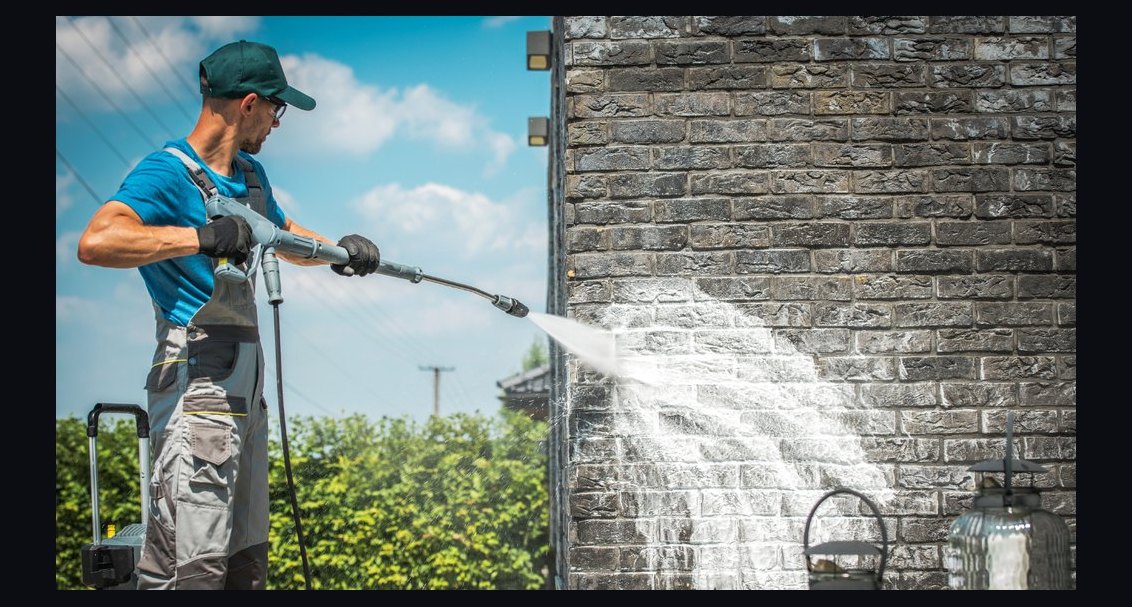 pressure-washingHow do you start a pressure washing business in 2027?
 upholstery-cleaningHow do you start an upholstery cleaning business in 2027?
 gutter-installationHow do you start a gutter installation business in 2027?
 window-cleaningHow do you start a window cleaning business in 2027?
 painting-contractorHow do you start a painting contractor business in 2027?
 gutter-cleaningHow do you start a gutter cleaning business in 2027?
 garage-door-repairHow do you start a garage door repair business in 2027?