


How do you start an optometry practice in 2027?
Quality
Certified

Starting an optometry practice in 2027 means picking a model — cold-start, acquisition, or corporate sublease — funding $250K–$800K through an eyecare-specific SBA lender, credentialing with vision plans and medical payers, and building optical capture above 60%. Chains hold roughly 30% share, so independents win on myopia management, dry eye, and medical billing.
The scenario that frames the whole decision
Picture two optometrists graduating the same year with roughly the same debt load — ASCO figures put OD-school debt in the $185,000 to $305,000 range at graduation. One signs with a corporate employer at $130,000–$170,000 base plus production bonus, starts servicing debt in month one, and owns nothing. The other spends eighteen months scouting a trade area, signs a 3,000-square-foot lease in a grocery-anchored center, borrows $600,000 on an SBA 7(a) note, and opens with three lanes and a chart of accounts full of red ink.
Year one, the employed OD is comfortably ahead. Year seven, if the owner has built optical capture past 70% and shifted a third of encounters onto medical CPT codes, the owner's practice is throwing off $300,000 to $450,000 of owner earnings on top of an asset worth several times annual net. That divergence is the entire economic argument for ownership, and it is also why the decision has to be made with eyes open: the gap only opens if the operating disciplines land. An owner who never fixes optical capture ends up working harder than the employed OD for less money and carrying a personal guarantee besides.

The framing matters because most new owners fixate on the wrong variable. They obsess over which OCT to buy and whether the phoropter should be digital. Those are five-figure decisions inside a seven-figure business. The variables that actually determine the outcome are payer mix, optical capture rate, and whether the practice has a clinical differentiator that a chain two miles away cannot replicate. Equipment is table stakes. The trifecta of capture, billing, and positioning is the business.
There is a useful parallel here to how a RevOps function inside any company thinks about growth: you do not fix a revenue problem by buying more tooling, you fix it by finding the leaky stage in the funnel and instrumenting it. In an optometry practice, the funnel is patient calls to booked exams to completed exams to optical purchases to annual contact lens supplies to recall visits. Each transition has a conversion rate, each rate is measurable in the practice management system, and each is coachable. Owners who treat the practice like a pipeline outperform owners who treat it like a clinic with a store attached.
Consider a specific case. A three-lane suburban practice sees 14 patients per doctor-day, works 4.5 days a week, and collects an average of $310 per comprehensive exam encounter including optical. That is roughly 3,000 encounters a year and about $930,000 in collections. Push the average encounter value to $380 through better lens tech conversion and annual contact lens supply attachment, and the same doctor-hours produce $1.14 million. No new lanes, no new staff, no new lease. That $210,000 delta flows almost entirely to the bottom line because the fixed cost base did not move. This is the single highest-leverage thing a new owner can work on, and it is almost entirely a training and workflow problem rather than a capital one.
How the practice actually generates money

An optometry practice has two revenue engines bolted together, and they behave completely differently. The professional engine bills for the exam and any diagnostic testing. The retail engine sells frames, lenses, treatments, and contact lenses. In a typical independent, the retail engine produces somewhere between 55% and 70% of gross collections, which is why the optical dispensary — not the exam lane — is where practices are made or broken.
The professional side splits again, and this split is the strategic fork. Routine vision encounters bill under vision plans using codes in the 92002/92004/92012/92014 family, generally reimbursing in the $45 to $95 range after plan allowances. Medical encounters — a patient presenting with a red eye, sudden floaters, headaches, diabetes-related monitoring, or dry eye symptoms — bill under medical insurance using evaluation and management codes 99213 through 99215, generally in the $75 to $170 range, plus ancillary testing. Retinal nerve fiber layer OCT (92133) and macular OCT (92134) each run around $45. Fundus photography (92250) runs around $50. Threshold visual fields (92083) run in the $60 to $80 range. Medicare's diabetic eye exam code G0117 sits near $53.

The arithmetic is unforgiving. A vision-plan-heavy practice writes off 45% to 60% of usual and customary charges and nets in the high teens to mid twenties as a percentage. A practice that has deliberately shifted toward medical encounters and specialty services writes off far less and can net in the 35% to 50% range. Same building, same lanes, same doctor. The difference is which chief complaints walk through the door and how the practice documents and codes them.
The retail engine has its own physics. Frames typically carry a 3x markup — an $80 cost frame retails around $240, a $200 designer frame retails around $600. Lens revenue depends almost entirely on what gets added: high-index material for strong prescriptions, premium anti-reflective coatings, photochromics, occupational progressives. A basic single-vision polycarbonate pair might collect $180. The same frame with a premium progressive, high-index material, and premium AR collects $700 or more. The optician's conversation, not the doctor's prescription, determines which one happens.
Contact lenses behave like a subscription business, which is why they deserve disproportionate attention. A patient converted to an annual supply generates $400 to $900 in a single transaction, comes with manufacturer rebates in the $75 to $200 range that improve the patient's perception of value, and reorders on a predictable cycle. Practices that convert 75% to 90% of contact lens wearers to annual supply have effectively built recurring revenue. Practices that let patients walk out with a three-month supply have handed the reorder to an online retailer.
mermaid flowchart TD M["Choose ownership model"] --> N["Solo independent"]

M --> O["Multi-OD group"] M --> P["Affiliate network member"] M --> Q["Corporate sublease or W-2"] M --> R["Sell majority to platform"] N --> S["High capital risk / full equity upside"] O --> T["Shared overhead / partnership complexity"] P --> U["Independence + buying power / monthly fee"] Q --> V["Low capital / low ceiling"] R --> W["Partial liquidity / reduced autonomy"] S --> X{"Exit path"} T --> X U --> X V --> X W --> X X --> Y["Traditional sale at pct of collections"] X --> Z["Platform recap at EBITDA multiple"] X --> AA["Associate buyout over 3-5 years"] </invoke>
The trade-off worth naming explicitly: the models that minimize downside also cap upside, and the models that maximize upside require you to be genuinely good at running a small business, not just at practicing optometry. Clinical skill is necessary and nowhere near sufficient. An excellent diagnostician who cannot hire, cannot delegate, and cannot look at a P&L will build a practice that pays worse than employment.
Where new owners lose money and how to avoid it

The dominant failure is weak optical capture. The gap between top-quartile practices capturing 70% to 85% of prescriptions and bottom-quartile practices capturing 35% to 45% is worth several hundred thousand dollars of annual revenue on identical doctor-hours. The fix is a scripted handoff: the doctor walks the patient to the optical floor and personally introduces the optician with a specific recommendation. Not "they'll take care of you" — an actual clinical handoff naming the lens technology the prescription calls for. Then the optician selects frames against face shape and lifestyle, explains lens materials, offers treatments, and positions price against insurance benefit and financing before the patient has had a chance to mentally leave. Practices that hand a patient a paper prescription and a smile have outsourced their retail revenue to whoever advertises hardest.
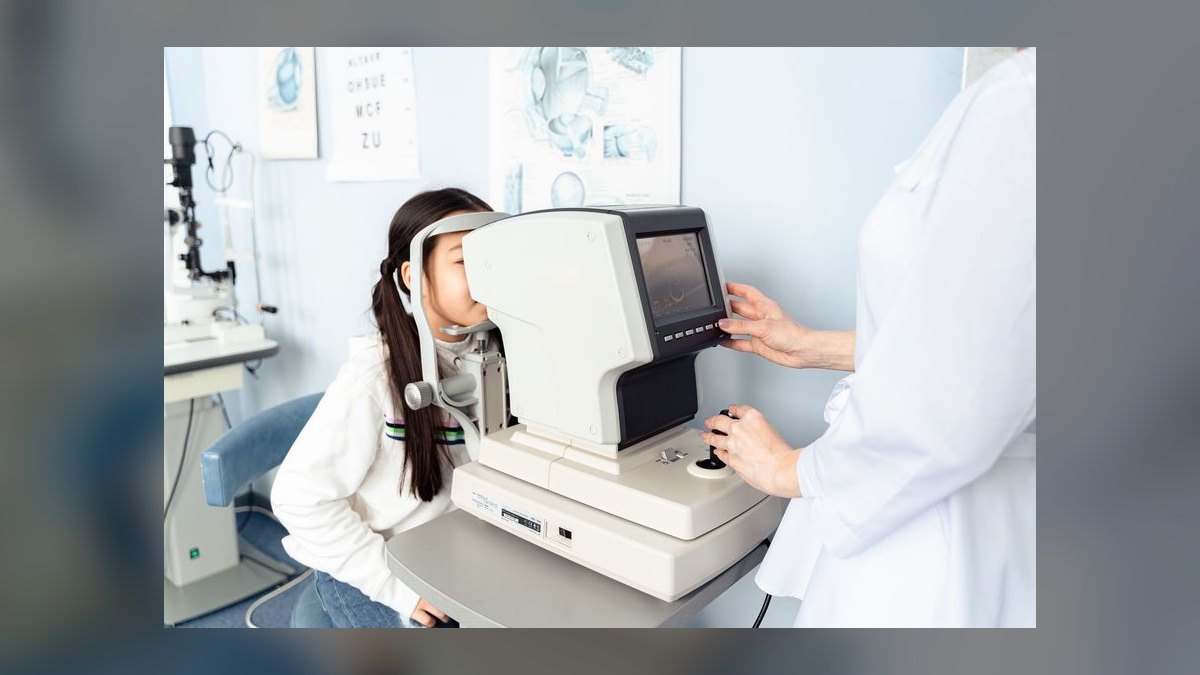
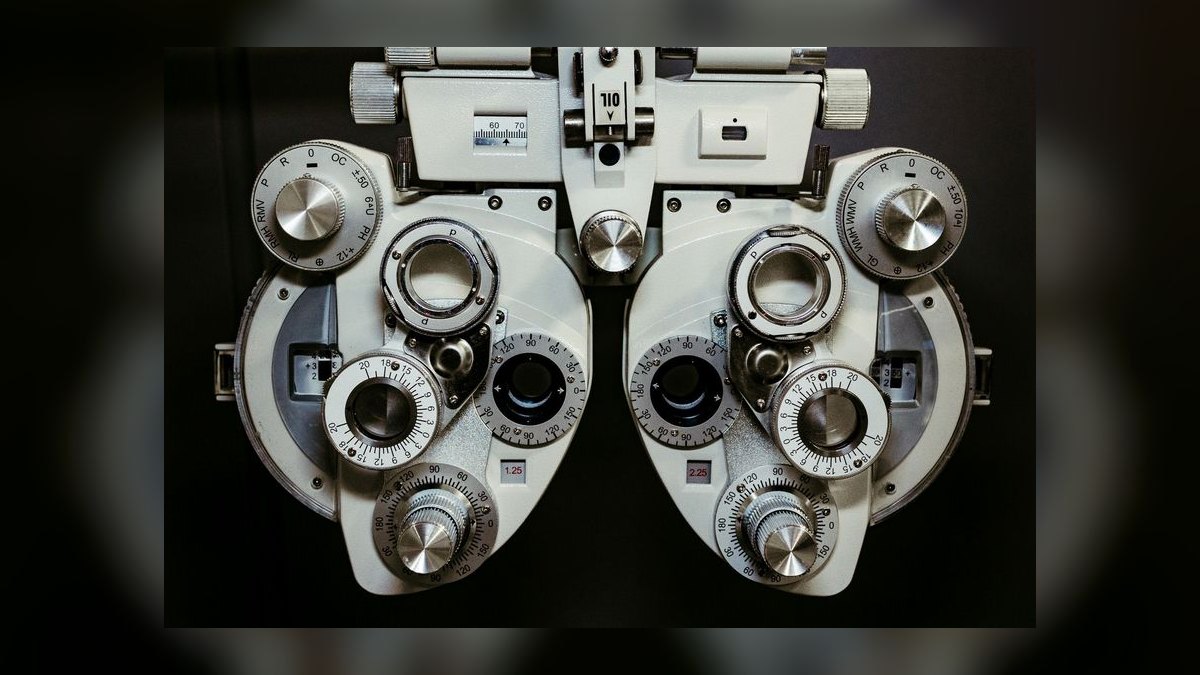
The second failure is over-buying equipment before the volume exists. A brand-new practice seeing eight patients a day does not need $200,000 of imaging. Buy the OCT when the glaucoma-suspect and diabetic panel justifies it, which for most practices is somewhere in year two. Leasing bridges the gap when a specific service line needs a specific instrument sooner. Every dollar in an underutilized instrument is a dollar not in working capital, and working capital is what keeps the doors open through a slow ramp.

The third failure is a passive recall system. Optometry is a twelve-month recurring business by clinical design, and a practice that does not systematically bring patients back is refilling the top of its funnel from scratch every year. Automated text and email recall with a live phone follow-up for high-value patients — contact lens wearers, medical patients, myopia management families — is the cheapest revenue in the business. Mature practices get 30% to 45% of new patients from existing-patient referrals, and that flywheel only spins if the existing patients keep coming back.
The fourth failure is compliance drift. Federal rules require releasing a spectacle prescription to the patient after the refraction at no charge and releasing a contact lens prescription after the fitting, with a verification obligation. Conditioning prescription release on an optical purchase is a straightforward violation and draws enforcement. HIPAA obligations mean an annual risk assessment, business associate agreements with every vendor touching patient data, encrypted storage and transmission, and a breach notification process. OSHA obligations cover instrument disinfection protocols and annual bloodborne pathogen training. None of this is difficult; all of it is expensive to fix retroactively.
The fifth failure is having no differentiator against the chain down the street. Chains compete on price, insurance volume, and convenience, and an independent practice competing on those axes loses. The defensible ground is clinical depth that requires capital, skill, and time a chain will not invest: myopia management with axial length monitoring and a structured multi-year program, dry eye care with in-office procedural treatment that sits outside vision insurance entirely, specialty contact lens fitting for irregular corneas and severe ocular surface disease, and chronic disease comanagement billed medically. Each of these is a service a patient cannot get at a discount optical retailer, each carries pricing power because it is not benefit-constrained, and each builds the kind of patient relationship that survives a competitor's coupon.

The sixth failure, and the quietest, is drifting without an exit thesis. A practice built for a traditional sale to a young optometrist looks different from one built for a platform recapitalization — the latter rewards EBITDA and systems, the former rewards collections and goodwill. A practice built for family succession looks different from either. Owners who never decide end up taking whatever offer appears when health, burnout, or a landlord's renewal terms force the question. Decide the end-state in year three and build backward from it, the same way any operator would reverse-engineer a revenue target into the activities that produce it.
Related questions
How long until a new optometry practice breaks even?
Most cold-start practices reach break-even between month 12 and month 24. Strong locations with high visibility, aggressive recall, and optical capture above 60% can reach it near month nine. Acquisitions typically cash-flow from month one because the patient base and collections already exist.
Is buying an existing practice better than starting cold?
Acquisitions cost more upfront — generally 60% to 80% of trailing collections — but come with revenue, staff, and payer contracts on day one. Cold starts cost less and let you design everything, but carry 12 to 24 months of negative cash flow. Most first-time owners are better served by acquisition.
How much does location actually matter?
Substantially. Target trade areas with 25,000-plus households within three miles, median household income above $60,000, visible signage, and 15 to 25 parking spaces. Heavy chain saturation within two miles makes patient acquisition two to three times harder and slower.
Do you need to join a buying group or affiliate network?
Optional. Networks charging roughly $750 to $1,200 monthly pay for themselves once lens and frame purchasing volume is high enough for rebates to exceed the fee — usually around year two or three. Startups with low purchasing volume should wait.
What is the single highest-leverage operational metric?
Optical capture rate. It typically drives 55% to 70% of gross collections, and the spread between top and bottom performers exceeds 30 percentage points, which on identical patient volume translates to a difference of several hundred thousand dollars in annual revenue.
FAQ
What is the minimum realistic capital to open an optometry practice?
A two-lane cold start needs roughly $250,000 to $500,000 including tenant improvements, lane equipment, opening frame inventory, and working capital. A corporate sublease arrangement drops that to $35,000 to $80,000 because you buy lanes rather than build a store, but you forfeit the optical revenue that drives independent profitability.
Should I buy diagnostic imaging on day one?
Buy the retinal camera early — it is affordable, improves documentation immediately, and supports medical billing. Defer OCT, topography, visual fields, and biometry until patient volume and the specific service line justify them, typically year two. Leasing bridges the gap when a service line needs an instrument before cash flow supports purchase.
How do vision plans affect profitability?
Vision plans write off roughly 45% to 60% of usual and customary charges, capping net margin in the high teens to mid twenties for plan-heavy practices. Practices that credential selectively and shift a meaningful share of encounters to medical billing routinely net 35% to 50%. Payer mix is the largest single margin lever.
What licensing and compliance steps come before opening?
State optometry board licensure with jurisprudence exam, DEA registration for therapeutic prescribing, an NPI for billing, entity formation and malpractice coverage, HIPAA risk assessment with vendor business associate agreements, OSHA bloodborne pathogen training, and — in roughly 22 states — licensed opticians on staff for dispensing.
How many patients per day does a practice need to be viable?
A three-lane practice generally needs 12 to 16 patients per doctor-day at an average encounter value of $300-plus to comfortably service debt and pay the owner. Below ten per day, fixed costs dominate. Raising average encounter value through lens technology and annual contact lens supply is usually easier than raising volume.
Can you compete with chains on price?
No, and attempting it is the most common strategic error. Chains win on price, insurance volume, and convenience through scale you cannot match. Independents win on clinical depth — myopia management, dry eye treatment, specialty contact lenses, chronic disease comanagement — where pricing is not benefit-constrained and relationships are durable.
Sources
- American Optometric Association — practice benchmarks, scope of practice, and profession-wide survey data
- Bureau of Labor Statistics — Optometrists Occupational Outlook — employment, wage, and job outlook data
- Association of Schools and Colleges of Optometry — accredited programs, graduate placement, and student debt figures
- National Board of Examiners in Optometry — licensure examination structure and requirements
- Association of Regulatory Boards of Optometry — state-by-state licensure and continuing education requirements
- FTC Eyeglass Rule — prescription release obligations after refraction
- FTC Contact Lens Rule — contact lens prescription release and verification requirements
- HHS Office for Civil Rights — HIPAA — privacy, security, and breach notification requirements
- OSHA Bloodborne Pathogens Standard — clinical disinfection and training obligations
- SBA 7(a) Loan Program — federal loan guaranty program terms and eligibility
Related on PULSE
- How Do I Budget an Optometry Office With an On-Site Lab?
- How do you start a dental practice in 2027?
- How do you start a chiropractic practice in 2027?
- How do you start a physical therapy practice in 2027?
- How do you start a pediatric dental practice in 2027?
- How do you start a direct primary care (DPC / concierge medicine) practice in 2027?
This page will be disappearing soon. Save it to your device for $1 — or read it free while it is here.
@Kory-White- · if Venmo asks, the last 4 of my number are 2012
This page is gone.
This one is off the shelf now. $1 keeps it on your phone for good — the whole page, pictures and diagrams included.
 starting-a-businessHow do you start a dental practice in 2027?
 starting-a-businessHow do you start an urgent care clinic in 2027?
 starting-a-businessHow do you start a plumbing business in 2027?
 starting-a-businessHow do you start a funeral home business in 2027?
 starting-a-businessHow do you start a physical therapy practice in 2027?
 starting-a-businessHow do you start an auto repair shop in 2027?
 starting-a-businessHow do you start an HVAC contracting business in 2027?
 boat-detailingHow do you start a boat detailing business in 2027?
 starting-a-businessHow do you start an electrical contractor business in 2027?
 starting-a-businessHow do you start a real estate brokerage in 2027?