


How do you start a chiropractic practice in 2027?
Quality
Certified
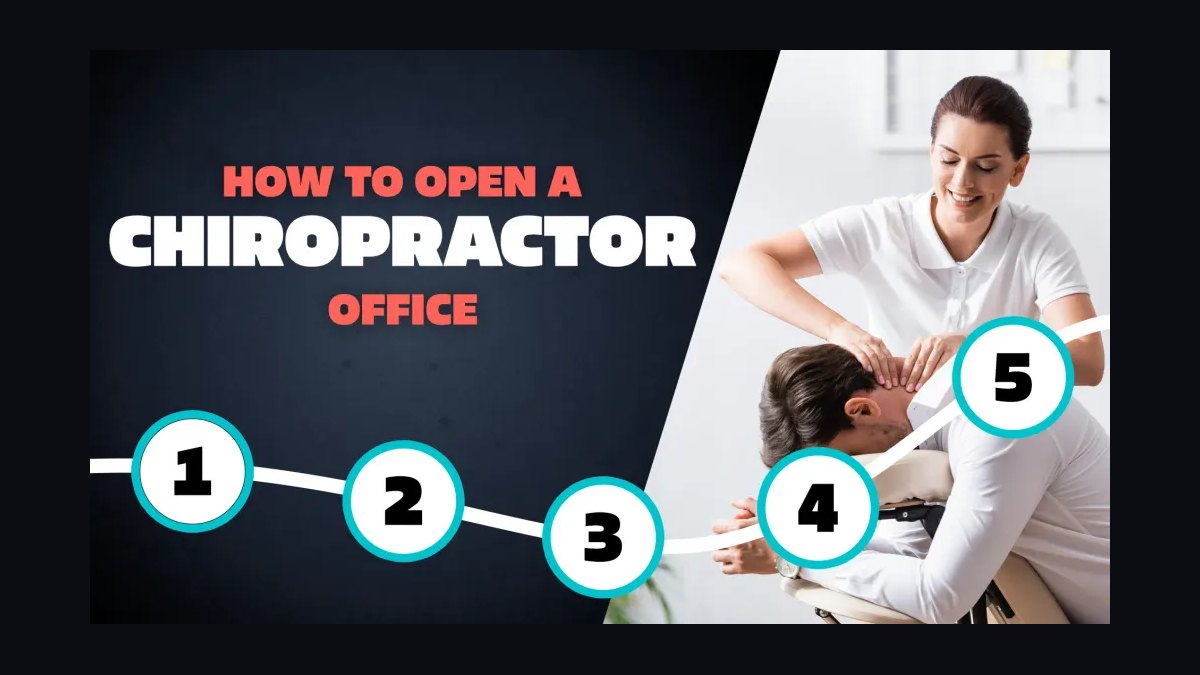
Starting a chiropractic practice in 2027 means clearing DC licensure, choosing one archetype — cash/wellness, personal injury, sports, family-insurance, membership, multi-DC, or decompression — and funding $150K–$450K for a solo de novo or 60–85% of trailing collections for an acquisition. Case acceptance, payer mix, and chain positioning decide profitability far more than capital does.
What a chiropractic practice actually is as a business
A chiropractic practice is a state-licensed clinic treating musculoskeletal and neurological complaints, and the legal core of it is narrow: spinal manipulation, billed under CPT 98940 (one to two spinal regions), 98941 (three to four regions), and 98942 (five regions), plus extremity adjusting. Everything else — therapeutic ultrasound, electrical muscle stimulation, intersegmental traction, spinal decompression, low-level laser, corrective rehab, soft-tissue work, and supplement retail — is a layer built on top of that core to raise per-visit value and stretch patient lifetime value.
Understanding that structure matters because it explains the economics. The adjustment itself is a commodity in reimbursement terms. Medicare's allowed amounts for the three manipulation codes sit in the low tens of dollars per visit, and Medicare will not pay a chiropractor for the exam, the X-ray, the therapy modalities, or nutritional counseling — those fall outside the chiropractic provider type's covered scope entirely. A practice built purely on adjusting Medicare patients is a practice built on the thinnest margin available in the field.
The market underneath is genuinely large. Chiropractic in the US is a multi-billion-dollar sector with roughly 70,000 active licensed DCs, the substantial majority of whom practice solo or in two-doctor arrangements. Demand has a hard floor: low-back pain affects a large minority of American adults in any given three-month window and the lifetime prevalence approaches universal. Public awareness of chiropractic runs far ahead of actual utilization, which means the addressable market is structurally larger than current volume — the constraint is conversion, not awareness.
The 2017 American College of Physicians low-back-pain guideline pushed non-pharmacologic care to the front line, and the NIH's pain-research work has continued to legitimize non-opioid approaches. That has meaningfully increased primary-care and mid-level-provider referrals into chiropractic over the last several years. If you are opening in 2027, that tailwind is real and worth building a referral strategy around — but it flows toward practices with credible documentation and outcome tracking, not toward practices that adjust and hand out a card.

The counterweight is consolidation. The Joint Chiropractic, a publicly traded franchise operator, runs on the order of a thousand clinics on a low-monthly-fee membership model with short visits, no insurance billing, and no on-site imaging. ChiroOne and similar corrective-care groups run corporate models with longer care plans. Franchise and corporate share of the cash market remains modest nationally but is climbing, and the mechanism is worth understanding: heavy student debt from DC programs pushes new graduates toward salaried employment at these operators, which supplies the labor that fuels their expansion. When a low-price membership clinic opens inside your service radius, it does not steal your existing plan patients so much as reset what a new prospect thinks an adjustment should cost.
This is where a RevOps lens earns its keep. A practice is a revenue system with a defined funnel — lead source, intake, exam, report of findings, financial conversation, care-plan enrollment, retention, reactivation — and the same discipline you would apply to a sales pipeline applies here. Measure conversion at each stage, know your cost per acquired patient by channel, know your lifetime value by payer type, and instrument the handoffs. Owners who treat the clinic as a revenue operation rather than a clinical hobby are the ones who survive a chain opening three miles away.
The step-by-step process from license to first patient
The sequence matters more than most first-time owners expect, because several steps have long lead times that only run in parallel if you start them early.

Credentials first. You need a Doctor of Chiropractic degree from a CCE-accredited institution — Palmer, Logan, Life, Sherman, Parker, National University of Health Sciences, Northwestern Health Sciences, Texas Chiropractic, Cleveland, SCU, University of Western States, Keiser, Northeast College, and D'Youville among them. Then the National Board of Chiropractic Examiners sequence (Parts I through IV, plus the physiotherapy exam where the state requires it), then state board licensure with a jurisprudence component. Budget three to six months from graduation to license in hand, longer if you are seeking licensure in a second state.
Scope research before site selection. This is the step people skip and regret. State scope varies dramatically: some states permit nutrition counseling, acupuncture certification, and a broad range of physiotherapy modalities; others restrict nutrition and physical-therapy services sharply. X-ray privileges, needle-based techniques, and dry needling authority all vary. Your scope determines your revenue mix, and your revenue mix determines your build-out. Read the actual state board publication, not a summary, before you sign anything.
Entity, insurance, and identifiers. Form the professional entity your state requires for licensed practitioners. Obtain an NPI — mandatory for any insurance billing. Bind malpractice coverage; the chiropractic-mutual carriers and specialty programs are the standard options. Add business owner's policy coverage, workers' comp if you will have employees, and personal disability insurance, which for a solo owner-operator is not optional in any meaningful sense.
Site selection and lease. Target residential density within a two-to-three-mile radius, a median household income that supports cash-pay or membership pricing, visible signage, adequate parking, and complementary co-tenants — grocery, pharmacy, gym, or other medical. Match the site to the archetype: personal-injury practices near accident corridors, sports practices near gyms and youth athletics, family practices near schools, decompression practices where the chronic-back-pain demographic actually lives.
Build-out and equipment install. Tenant improvement for a clinical space runs meaningfully more per square foot than general office because of medical-grade plumbing at the therapy bay, dedicated circuits for imaging and decompression equipment, ADA-accessible treatment rooms, and — if you are installing X-ray — a lead-lined suite with a control booth, warning light, and state radiation-health approval. Design and permitting typically run one to two months, construction two to three, equipment install and calibration another month.

Credentialing runs in parallel or you lose a quarter. Payer enrollment takes roughly three to six months from application to effective date. Start it the day you have an address, not the day you finish construction. Practices that sequence credentialing after build-out routinely open to an empty schedule and burn working capital waiting on effective dates.
Systems and staffing. Select practice management software — ChiroTouch, Genesis, Platinum System, Jane, PayDC, and ECLIPSE are the recognizable names in the category — and configure it before you see a patient, not after. Choose a clearinghouse. Stand up patient communications and recall. Hire and train the chiropractic assistant, who will carry the majority of operational throughput: insurance verification, scheduling, intake, room turnover, modality setup, report-of-findings preparation, and the financial conversation handoff.
Soft launch, then open. Run two to four weeks of friends-and-family and referral-source visits to shake out the workflow before you spend marketing dollars driving strangers into a clinic where the intake forms do not print correctly.
Costs, timelines, and the ranges you should actually plan around
A solo de novo practice generally lands between $150,000 and $450,000 all-in. A decompression-centered fit-out pushes toward $300,000 to $650,000 because the equipment and the larger footprint both cost more. Buying an existing practice typically transacts at roughly 60% to 85% of trailing twelve-month collections, which for a mature solo office commonly puts the enterprise value in the $300,000 to $800,000 range.
The line items break down roughly as follows. Tenant improvement is the largest single variable and scales with square footage and whether you are lead-lining an imaging suite. Adjusting tables run from a few thousand dollars for a basic stationary table to the low-to-mid five figures for a premium electric elevation table with drop sections and a flexion-distraction option; refurbished tables cut that cost substantially and are a legitimate way to open lean. Plan on two to three tables for a one-to-two-doctor office. A dedicated drop table and an intersegmental traction roller are standard additions. Therapeutic ultrasound and electrical stimulation units are comparatively inexpensive. Class IV or low-level laser is a mid-five-figure-per-unit decision at the high end and a lower-four-figure one at the entry level.

The imaging decision is the most consequential capital choice you will make. Digital radiography with a direct sensor is the highest-quality, fastest-workflow option and carries a five-figure-to-low-six-figure price tag, plus lead-lining, state radiation compliance, annual inspection, and ongoing maintenance. Computed radiography with cassettes costs less and is being phased out of new installations. Analog film is rarely chosen by new practices. Referring imaging out costs nothing in capital but forfeits the imaging revenue, delays the report of findings by days, and — this is the part owners underestimate — measurably reduces care-plan acceptance because you lose the ability to show a patient their own films in the same conversation where you ask them to commit.
Decompression equipment spans a wide band depending on brand and axis capability. Programs are typically sold as multi-session packages in the low-to-mid four figures, cash-pay or blended with personal-injury and commercial reimbursement. At one to two enrollments per month, the unit generally pays for itself inside a year to a year and a half — but that math assumes you can actually market to and convert the chronic-back-pain demographic, which is a marketing capability, not an equipment capability.
Software and infrastructure run a few hundred to low four figures monthly for practice management, plus patient communications, plus clearinghouse fees. Working capital is the line item that kills undercapitalized practices: hold enough to cover fixed costs and owner draw for six to twelve months, because collections lag and credentialing effective dates slip.
On timeline: three to six months for licensure, four to eight months from lease signature to first patient, and three to six months for credentialing running in parallel. From graduation to open doors, seven to fourteen months is a realistic plan. From open doors to break-even, six to eighteen months depending on archetype — cash and membership models reach cash-flow positive faster because there is no accounts-receivable lag; personal-injury practices take longest because lien cases settle in six to twenty-four months and you are financing that receivable yourself.

On the revenue side, industry practice surveys put average solo gross collections in the $350,000 to $550,000 range with owner net income commonly $98,000 to $160,000, and top-quartile owners considerably higher. Per-visit economics vary enormously by payer: cash-pay adjustments typically fall in the $50 to $110 range, commercial plans with chiropractic riders reimburse markedly less per adjustment and cap annual visits, Medicare pays the least of the professional payers, and personal-injury cases bill the highest gross per visit but collect only a fraction of billed charges after attorney negotiation and write-offs, on a delay.
Financing has a dedicated ecosystem. Specialty practice lenders and healthcare-focused lending arms at national banks underwrite chiropractic — Live Oak, Bank of America Practice Solutions, First Citizens, Provide, and others compete for this book — and equipment manufacturers and chiropractic-mutual finance arms offer leasing. Acquisitions commonly stack an SBA 7(a) loan with 10% to 20% owner equity and a seller note of 5% to 15% amortizing over five to seven years.
Where new owners get it wrong
They pick the location before the archetype. Signing a lease and then deciding what kind of practice to run is backwards. A personal-injury practice in a wealthy suburb with no accident corridor and a fully insured population is a mismatch. A cash-wellness practice in a low-median-income trade area with a discount membership chain two miles away is a mismatch. The archetype dictates the demographics, the build-out, the equipment, and the staffing — decide first.
They skip credentialing until construction is done. Payer enrollment is a three-to-six-month clock that starts when you apply. Practices that wait routinely open with a schedule they cannot bill for.
They over-buy equipment and under-buy working capital. A brand-new premium table and a Class IV laser feel like investments. They are, but they are the wrong investment if buying them leaves you four months of runway instead of ten. Refurbished tables and a phased modality rollout preserve the cash that keeps the doors open while the patient base compounds.
They ignore the report of findings. This is the single largest performance gap in the field. The report of findings is the fifteen-to-twenty-five-minute conversation after the exam and imaging where the doctor explains the findings, connects them to the patient's specific functional complaint, lays out a phased care plan, and hands off to staff for the financial conversation. Practices that execute it well convert a substantial majority of new patients to multi-visit care plans; practices that do not convert a fraction of that. Same doctor hours, same clinical skill, dramatically different revenue. If you fix one thing in your first year, fix this.

They treat Medicare as ordinary insurance. It is not. Medicare covers only the manipulation codes for chiropractors, requires documented active treatment with measurable functional outcomes and a PART examination, and requires an Advance Beneficiary Notice with the appropriate modifier when care crosses into maintenance. Routine billing of the five-region code without documentation supporting five regions, maintenance care billed as active treatment, and missing ABNs are precisely the patterns HHS Office of Inspector General audits target. Recoupment on a heavy-Medicare practice is an existential event, not an inconvenience.
They build the personal-injury book on one attorney. A single referring plaintiff firm can drive the majority of a PI practice's volume, which feels wonderful until the relationship ends, the firm changes its referral policy, or the state tightens its no-fault or cost-containment rules — as several large states have. Diversify across several referring firms from the start and treat referral-source concentration as the risk it is.
They compete with a discount chain on price. You will lose. The membership chains buy at scale, staff at salary, run short visits, and do not carry imaging or billing overhead. The independent counter is depth, not discount: longer visits, the same doctor every time, an actual examination, imaging on site, decompression, soft-tissue work, rehab, specialty certification. If you must have a membership product, price it as a premium tier with more included, not as a race to the bottom.
They never instrument the funnel. Most practices cannot tell you their new-patient conversion rate by referral source, their cost per acquired patient by channel, or their lifetime value by payer type. That is a solvable problem — the practice management system already holds the data — and solving it is what separates an owner who can diagnose a bad month from one who can only feel it.
They defer compliance infrastructure. HIPAA requires an annual risk assessment and business associate agreements with every vendor touching patient data — practice management, billing, IT, texting platforms. OSHA bloodborne-pathogen requirements apply if you do any needle-based work. State radiation-safety rules govern the imaging suite, the machine inspection cadence, and technologist registration. None of this generates revenue, and all of it generates catastrophic downside when neglected.
A decision framework for the choices that actually branch

Most of the early decisions collapse into four branches, and each one has a defensible answer depending on your situation rather than a universally correct one.
Buy or build. Acquisition buys you an existing patient base, trained staff, active payer contracts, and immediate cash flow, at 60% to 85% of trailing collections. Build gives you the exact layout, equipment, brand, and payer mix you want, at lower total cost but with a longer ramp and no revenue during build-out. If you have limited runway or want cash flow immediately, buy. If you have a specific clinical model — decompression-centered, sports-focused, membership-based — that an existing practice's patient base would not tolerate being converted into, build.
Imaging in-house or refer out. Install if you are running personal injury, decompression, or an insurance-heavy family practice, where imaging revenue is reimbursable and same-day films materially improve care-plan acceptance. Refer out if you are cash, wellness, sports, or membership-focused, where the capital, the lead-lining, the state radiation compliance, and the ongoing maintenance are pure cost against limited offsetting revenue.
Insurance or cash. Insurance-heavy practices get volume and referral legitimacy at lower net margin, heavier documentation burden, and exposure to reimbursement compression. Cash and membership practices get better margin, faster collection, and no credentialing dependency, but they require actual marketing competence and are the most exposed to discount-chain price pressure. Most durable practices run a blend and know precisely which segment funds which fixed cost.
Solo or scale. Staying solo at a healthy gross with a strong net and a thirty-five-hour week is the choice a large share of independent DCs make deliberately, and it is a legitimate end state — not a failure to grow. Scaling to a multi-doctor group means hiring associates, building a management layer, and accepting a lower net margin percentage in exchange for a larger absolute number and a more sellable asset.

That last point connects to the exit, which you should choose on day one even though you will execute it in year fifteen. The realistic paths are: sell to an associate at a percentage of collections, often as a staged multi-year buyout with seller financing; merge with an adjacent practice to share facility and administrative overhead; sell to a corporate consolidator or private-equity-backed platform at a multiple of EBITDA while retaining minority equity for a second liquidity event at the platform's next recapitalization; sell outright to a local multi-doctor group for a faster, simpler one-time payment; hand off to family; or run a lifestyle solo practice indefinitely and simply wind it down. The consolidator path is less mature in chiropractic than in dental or optometry — thinner buyer pool, lower multiples — but it is developing, and recurring-revenue membership models are what attract those buyers. A practice built with clean books, documented systems, a non-owner-dependent patient base, and real recurring revenue sells well into any of these paths. A practice where the owner is the entire product sells poorly into all of them.
One adjacent note worth carrying: the same structural forces reshaping chiropractic are visible across owner-operated healthcare — dental, optometry, physical therapy, veterinary. Consolidator roll-ups, membership models displacing fee-for-service, reimbursement compression on the core procedure, and specialty differentiation as the independent's defense all show up in each. If you want to see where chiropractic consolidation is heading, look at where dental service organizations went over the past two decades. The pattern rhymes, and the independents who thrived there were the ones who built a differentiated clinical offering and ran the business with real operational rigor rather than competing on the commoditized core.
Related questions
Do I need to buy an X-ray machine to open?
No. Referring imaging out is a legitimate choice that saves substantial capital, lead-lining cost, and state radiation compliance overhead. The trade-off is lost imaging revenue and a delayed report of findings, which measurably reduces care-plan acceptance. Install if you run personal injury, decompression, or insurance-heavy care.
How long before a new practice breaks even?

Six to eighteen months after opening, depending on archetype. Cash and membership models reach cash-flow positive fastest because there is no receivable lag. Personal-injury practices take longest — lien cases settle in six to twenty-four months and you finance that receivable yourself. Hold six to twelve months of working capital.
Can I open without becoming a Medicare provider?
Yes, and many cash practices do. But be careful: if you treat Medicare beneficiaries for covered manipulation services, opting out and privately contracting has specific rules that differ from other provider types. Verify your obligations with a healthcare attorney or your state association before deciding to skip enrollment.
Should I buy an existing practice instead of starting one?
Buy if you need immediate cash flow, want trained staff and active payer contracts, and can live with the seller's patient mix. Build if your clinical model — decompression-centered, sports-focused, or membership-based — would require converting an inherited patient base that will not follow you.
How do I compete with a discount membership chain nearby?
Not on price. Compete on depth: longer visits, doctor continuity, real examination and imaging, decompression, soft-tissue work, rehabilitation, and specialty certification. If you offer a membership, price it as a premium tier with substantially more included rather than matching the chain's rate.
FAQ
How much capital do I actually need to start a chiropractic practice in 2027?
Plan for $150,000 to $450,000 for a solo de novo practice, driven mostly by square footage, tenant-improvement scope, and whether you install imaging. A decompression-focused build pushes toward $300,000 to $650,000. Acquiring an existing practice typically transacts at 60% to 85% of trailing twelve-month collections. In every case, working capital covering six to twelve months of fixed costs and owner draw is part of the number, not an afterthought.
Which practice archetype should I choose?
The common models are solo cash/wellness, personal-injury lien, sports and post-surgical, family insurance-based, own-brand membership, multi-doctor group, and decompression-focused. Choose based on your trade area's demographics, your clinical interests and certifications, your tolerance for slow-paying receivables, and your capital. Decide before signing a lease — the archetype determines the demographics you need, the build-out, the equipment, and the staffing.

How long does the whole process take from graduation to first patient?
Roughly seven to fourteen months. Licensure runs three to six months after your degree and board exams. Site selection, lease negotiation, permitting, and construction add four to eight months. Payer credentialing takes three to six months and must run in parallel with build-out, not after it — sequencing it last is the most common scheduling mistake new owners make.
What equipment is genuinely essential versus optional?
Essential: adjusting tables (two to three for a one-to-two-doctor office), basic therapeutic modalities such as ultrasound and electrical stimulation, intersegmental traction, and core rehabilitation tools. Optional and archetype-dependent: digital radiography, spinal decompression, Class IV or low-level laser, instrument-assisted adjusting devices, and vibration platforms. Refurbished tables cut equipment cost substantially and are a sound way to preserve runway.
What is the single biggest driver of profitability?
Care-plan acceptance at the report of findings. The gap between practices that convert most new patients to multi-visit plans and those that convert a small fraction is the difference between a modest practice and a strong one on identical doctor hours. Payer mix is the second lever — the blend of cash, membership, commercial, Medicare, and personal-injury revenue sets your net margin more than any expense line does.
What compliance obligations should I have handled before opening?
HIPAA — an annual risk assessment plus business associate agreements with every vendor touching patient data. OSHA bloodborne-pathogen requirements if you perform needle-based procedures. State radiation-safety registration, shielding, and inspection if you install imaging. Medicare documentation standards including PART examination findings, measurable functional outcomes, and Advance Beneficiary Notices with correct modifiers when care becomes maintenance. And your state board's standard-of-care, advertising, and continuing-education rules.
Sources
- American Chiropractic Association — practice benchmarks, salary and expense surveys, professional standards.
- National Board of Chiropractic Examiners — Parts I–IV examination requirements and job analysis of chiropractic.
- Council on Chiropractic Education — accreditation standards and the accredited US college list.
- CMS Physician Fee Schedule — allowed amounts for CPT 98940, 98941, and 98942.
- HHS Office of Inspector General — chiropractic Medicare audit findings and maintenance-care recoupment reports.
- Bureau of Labor Statistics — Chiropractors — employment, wage, and outlook data.
- NIH National Center for Complementary and Integrative Health — low-back-pain prevalence and evidence reviews.
- American College of Physicians — 2017 clinical guideline on noninvasive treatment for low back pain.
- HHS Office for Civil Rights — HIPAA Privacy, Security, and Breach Notification requirements.
- OSHA Bloodborne Pathogens Standard, 29 CFR 1910.1030 — exposure control requirements for clinical settings.
Related on PULSE
- Should I open or buy a 100% Chiropractic franchise in 2027?
- Should I open or buy a HealthSource Chiropractic franchise in 2027?
- Should I open or buy a Joint Chiropractic franchise in 2027?
- How Do I Budget a Chiropractic Clinic Buildout?
- How do you start a physical therapy practice in 2027?
- How do you start a dental practice in 2027?
This page will be disappearing soon. Save it to your device for $1 — or read it free while it is here.
@Kory-White- · if Venmo asks, the last 4 of my number are 2012
This page is gone.
This one is off the shelf now. $1 keeps it on your phone for good — the whole page, pictures and diagrams included.
 gtm-playbookHow do you build the GTM playbook for a chiropractic practice in 2027?
 gtm-playbookGTM Playbook for Chiropractic Practices in 2027
 revopsHow does the .8 billion House v. NCAA back-pay settlement work in 2027?
 revopsHow should a 2027 GTM team test an ICP hypothesis?
 revopsWhat metrics matter most for renewal-driven SaaS sales in 2027?
 revopsHow do you benchmark against public B2B SaaS companies in 2027?
 revopsSigns you need a CRO (not just a VP of Sales)
 revopsWhat is Aircall and why is it a hot RevOps AI cloud-calling platform for 2027?
 revopsHow should a 2027 sales org design geographic pods?
 revopsWhat is dbt and why is it a hot RevOps data transformation tool for 2027?