
The Inbound Speed-to-Lead Drill — 60-Min Training
 Curated byKory White · Fractional CRO · Maryland
 PULSEKNOWLEDGE LIBRARY
The Inbound Speed-to-Lead Drill is a 60-minute manager-led working session that rebuilds your SDR and AE daily cadence around a 5-minute response SLA on every inbound lead. The drill teaches the verbatim opening for a sub-5-minute call, sets the routing rules between SDR and AE, installs the manager dashboard for response-time accountability, and ends with every rep walking out with a written inbound cadence plus a team-wide 30-day commitment to the 5-minute SLA. Run it once with your team and you will see contact rates double within two weeks because the math is brutal: an inbound lead contacted in under 5 minutes converts to a meeting at roughly 4x the rate of one contacted at 30 minutes, and the industry average response time still hovers around 47 minutes per the 2026 HubSpot State of Inbound report.
1. Opening Context and Whiteboard Frame (5 min)
Open the session by stating the gap between what your team thinks they do and what the data says they actually do. Most teams believe they respond fast. Almost none do. Pull up the inbound response report for last week before the meeting starts so the numbers are already on screen when reps walk in.
> Per the 2026 HubSpot State of Inbound report, the median response time on a marketing-qualified lead across 4,200 surveyed B2B teams is 47 minutes, while the top decile responds in under 4 minutes. The top decile books 3.7x the meetings per 100 inbounds.
> The 2026 Harvard Business Review revisit of the original Oldroyd speed-to-lead study confirmed the original finding holds in the post-AI inbound era: odds of qualifying an inbound lead drop 80% between minute 5 and minute 30, and another 60% between minute 30 and hour 1.
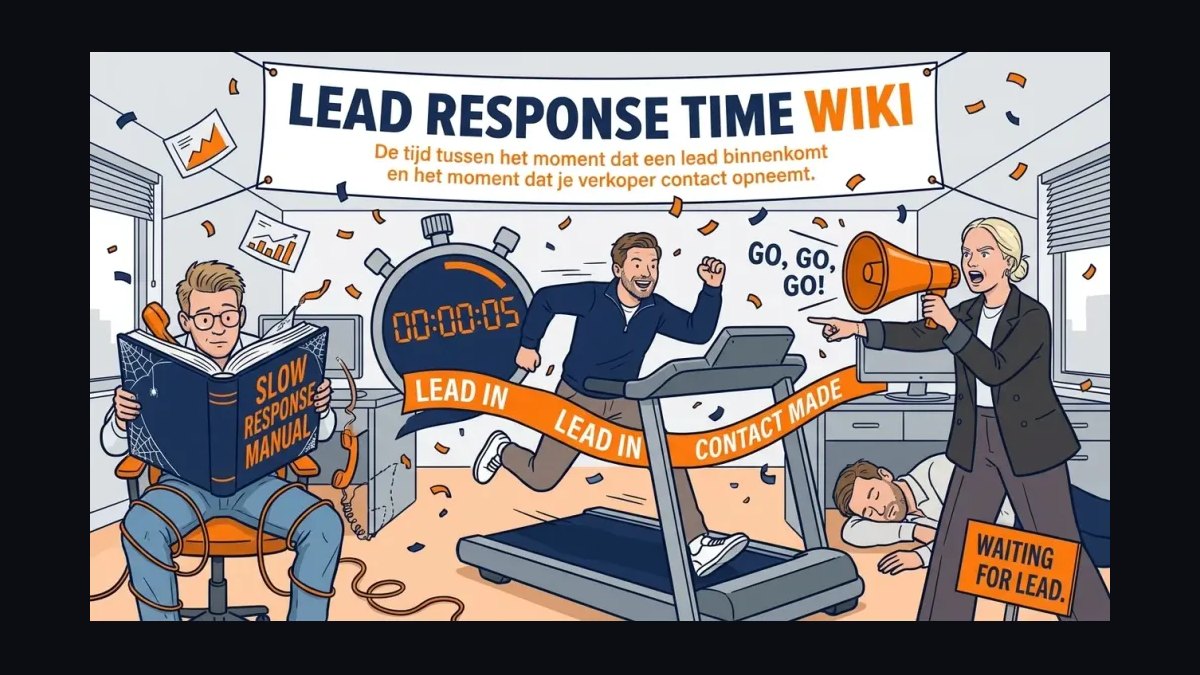
Whiteboard frame — write these three lines on the board before reps sit down:
- 5 minutes is the SLA, not the goal
- The clock starts at form-submit timestamp, not at SDR notification
- A voicemail counts as an attempt, not as a contact
*The rule for the room: if you cannot defend why a lead waited longer than 5 minutes, the lead waited too long.*
2. Pre-Session Brief and Daily Cadence Rebuild (15 min)
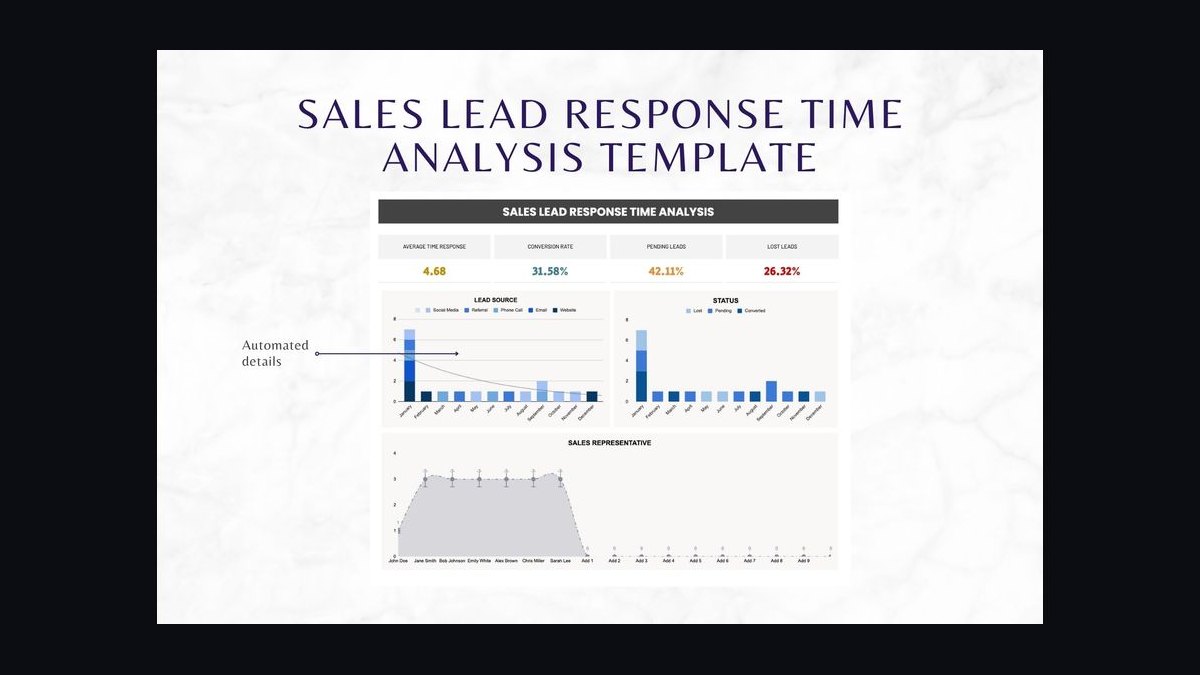
Walk the team through the brief that every SDR will read at 8:00 AM every day starting tomorrow. The brief is not a pep talk. It is the operational frame that makes a 5-minute SLA physically possible — and most teams skip it, which is why their SLA collapses by 10:00 AM.
Verbatim Pre-Session Brief Template:
- Today's inbound forecast is X leads based on the trailing 14-day daily average from HubSpot; here is the by-hour distribution so you know your hot windows.
- The primary on-call SDR until 11:00 AM is [Name]; the secondary is [Name]; AE coverage between 11:00 AM and 2:00 PM is [Name] because that is the demo-density hour.
- The 5-minute SLA applies to every lead source flagged Tier 1 in Salesforce: demo request, pricing page, contact sales, ROI calculator.
- Slack channel #inbound-live posts every form fill in real time via the Drift-to-Slack webhook; if you see it and you are on-call, you own it.
- Calendly is open in your second monitor; the goal of the 5-minute call is a meeting on the calendar before you hang up, not a discovery conversation.
- End-of-day Loom from the on-call SDR: 90-second recap of response-time average, contact rate, and one named lead that got away.

Coach the room on the brief's purpose: it removes ambiguity about who picks up the phone, which is the single biggest cause of slow response on teams I have audited. Ambiguity adds 12 to 18 minutes of decision latency per lead.
*Bad example to call out: "We'll all try to grab inbounds when they come in." This is exactly the language that produces a 47-minute average. There is no owner, no backup, no clock.*
3. The 5-Minute SLA Drill — Rules of the Room (10 min)
State the drill plainly so nobody can hedge: starting tomorrow morning, every Tier 1 inbound lead gets a dial attempt inside 5 minutes of the form-submit timestamp recorded in HubSpot, or the on-call SDR owes the team a written explanation in the end-of-day Loom.

- The clock is the form-submit field, not the lead-created field. Salesforce occasionally lags 60-90 seconds on lead creation; we measure from the website timestamp via the HubSpot raw event log.
- A dial is not a contact; a voicemail is not a contact. Three touches inside the first 5 minutes is the standard: call, email, LinkedIn connection request. Outreach and Salesloft both support a one-click triple-touch sequence.
- The on-call SDR holds the phone, not the laptop. No deep work, no email triage, no demo prep during your on-call block. Block 9:00-11:00 AM and 1:00-3:00 PM as on-call windows in your Google Calendar with a red label.
- AE backup fires at the 4-minute mark. If the on-call SDR has not dialed by minute 4, the AE on coverage takes it. The Slack bot pings both.
- Apollo is the enrichment fallback when HubSpot data is thin. A 30-second Apollo lookup before the dial — title, company size, recent funding — increases first-call connect-to-meeting conversion by roughly 22% per Apollo's 2026 outbound benchmark.
The exception callout: the only legitimate reasons a Tier 1 lead waits longer than 5 minutes are (a) the submitter explicitly requested an out-of-hours callback, (b) the lead is flagged as an existing customer and routed to CS, or (c) the form fill happened between 8:00 PM and 7:00 AM local — in which case the SLA resets to first-thing-next-morning, dialed by 7:05 AM.
What to NEVER say in this session:

- "We will try to respond faster" (no commitment, no clock)
- "Let's aim for under 10 minutes" (you just gave the team permission to hit 9:59)
- "If we have bandwidth" (capacity is a planning input, not an excuse for inbound)
- "Marketing should pre-qualify before it hits us" (every minute of pre-qualification is a minute of decay)
- "I'll get to it after this call" (an in-progress call does not pause the inbound clock; that is what backup coverage is for)
- "Inbound leads are lower intent right now" (intent is highest at form submit and decays by the minute; this phrasing is a tell that the rep does not want to dial)
Close the segment by reading back the rules and asking each rep to write the rules on a sticky note that goes on their monitor today. The sticky note matters — it is the cheapest persistent-cue intervention on a sales floor.
4. The Verbatim 5-Minute Opening (10 min)
Run a live role-play of the opening. The opening is engineered for the specific situation of "I filled out a form 4 minutes ago and now my phone is ringing." Reps who wing this lose the call in the first 15 seconds because they sound like a generic SDR cold call.

Verbatim SDR Opening Script:
> "Hi [First Name], this is [SDR Name] calling from [Company] — you just filled out the [specific form: demo request / pricing page] about 4 minutes ago, and I wanted to catch you while it was fresh. [PAUSE — let them confirm or react] I have your form in front of me showing you are looking at [specific use case from the form]. Before I take 30 seconds to confirm whether we are a fit, what prompted you to fill out the form right now versus three months ago? [LISTEN — this is the highest-signal question of the call] Got it. Based on what you just said, I want to do one of two things — either book you 15 minutes with [AE Name] tomorrow who handles [vertical/segment], or if it makes more sense, send you the three pieces of content that map to [their stated trigger] and re-connect Thursday. Which one is more useful?"
The "what prompted you to fill out the form right now versus three months ago" question is the single most valuable line in the script. It surfaces the buying trigger — a budget freeing up, a competitor's contract ending, an internal initiative — and Drift's 2026 conversational benchmark report found that calls including a trigger question convert to booked meetings at 2.3x the rate of calls without one.
Do NOT do any of the following:
- Open with "Did I catch you at a bad time?" — research from Gong's 2026 conversation analysis of 1.1M calls shows this phrasing reduces meeting conversion by 40%
- Launch into a discovery script before confirming the form-fill context — it makes the inbound feel like an outbound and erodes the warmth you earned by responding fast
- Pitch the product in the first 60 seconds — the goal of the 5-minute call is a meeting on the calendar, not a demo
5. Manager's Dashboard and the Math of the SLA (15 min)
Pull up the Salesforce inbound response dashboard live. If you do not have one, build it from these fields before the next session: form-submit timestamp, first-dial timestamp, time-to-first-dial in minutes, contact-rate by 5-minute bucket, meeting-set rate by 5-minute bucket, on-call SDR name. Filter to the last 14 days, group by SDR.

The math every rep on the team needs to internalize:
- A 5-minute response yields roughly 38% contact and 22% meeting-set per the 2026 Bridge Group inbound benchmark — meaning every 100 Tier 1 inbounds produces 22 meetings.
- A 30-minute response yields roughly 21% contact and 11% meeting-set on the same data set — meaning the same 100 inbounds produces 11 meetings, a loss of 11 meetings worth roughly $66K in pipeline at a $6K average meeting value.
- The cost of staffing a backup SDR to hold the 5-minute SLA is roughly $90 per workday in fully-loaded labor; the pipeline lift from going from 30-min to 5-min response on 100 inbounds is roughly $66K. The ROI ratio is not close.
Common AE objections and the rebuttals:

- *"I cannot drop what I am doing to grab an inbound."* Correct — that is why the on-call window is blocked on your calendar and you only cover during the SDR's gap. The 4-minute trigger means you have a 60-second window to grab it before the clock breaks.
- *"The inbound forms get a lot of low-intent fills."* The data says the opposite at the 5-minute mark — Salesloft's 2026 sequence benchmark shows inbound contacted in under 5 minutes converts to opportunity at 19%, versus 4% for outbound cold. Speed reveals intent.
- *"My current pipeline is more valuable than chasing a new inbound."* Pipeline value erodes during the deal cycle; inbound at minute 0 is the freshest pipeline you will see all week. Triage your existing pipeline on Friday — protect Monday through Thursday for inbound speed.
End the segment by walking each AE through their last 5 unconverted inbounds and the time-to-first-dial on each. The exercise stings on purpose. Reps who see their own numbers in their own dashboard remember the rule longer than reps who hear it from a manager.
6. Commitment and Close (5 min)
Bring the room back to the whiteboard. Each rep writes their personal inbound cadence on a notecard — when they are on-call, who their backup is, which Slack channel they have pinned, and the specific 4-minute trigger habit they will install.

- Team SLA commitment: 5-minute response on Tier 1 inbound for the next 30 days, measured daily, reviewed every Monday at standup.
- Individual cadence commitment: every rep writes their on-call windows on a notecard and tapes it to the monitor before leaving the room today.
- Manager commitment: I will publish the response-time dashboard to the team Slack every Friday at 4:00 PM for the next 30 days; no exceptions, no editorial — raw numbers, sorted by rep.
> Per the 2027 Bessemer Cloud 100 sales operations survey of 312 SaaS revenue leaders, teams that publicly track inbound response time at the rep level see a 41% reduction in median response time within 30 days and a 28% lift in inbound meeting-set rate within 60 days. Public, daily, named — that is the configuration that moves the number.
*The session is not over when reps leave the room. It is over when the first Friday dashboard post lands and the team has receipts on whether the 5-minute SLA held. Run the drill, then run the dashboard.*
FAQ
Q1: What if my marketing volume is too low to justify a dedicated on-call SDR? A: Below roughly 8 Tier 1 inbounds per day, you do not need dedicated on-call — you need a Slack alert that pings the whole SDR pod and a "first-to-claim-in-Slack-owns-it" rule. Above 8 per day, dedicate one SDR per 4-hour block. The 2026 Pavilion B2B sales survey of 1,800 revenue leaders puts the breakeven at 7-9 daily inbounds.
Q2: How do I handle inbound that arrives outside business hours? A: The SLA resets to 7:05 AM next business day for any form-fill between 8:00 PM and 7:00 AM local. The submitter expects asynchronous handling at that hour, and dialing them at 11:00 PM hurts the brand more than it helps the conversion. Send a templated email within 5 minutes of submit confirming receipt and a callback window — HubSpot workflows handle this out of the box.
Q3: What is the right Salesforce field structure to measure time-to-first-dial accurately? A: Three fields: form_submit_timestamp (datetime, populated from HubSpot via API webhook), first_dial_timestamp (datetime, populated from Outreach or Salesloft call activity), and time_to_first_dial_minutes (formula, the difference in minutes). Filter dashboards on lead_source = Tier 1 inbound only — mixing outbound into this dashboard contaminates the average.
Q4: How do I get AEs to actually take the 4-minute backup trigger seriously? A: Compensation alignment. Add a SPIFF: $50 to the AE for every inbound they grab off the backup trigger that converts to a meeting. The 2026 Outreach compensation benchmark report found that targeted SPIFFs on inbound coverage produce a 34% lift in AE participation versus rules without comp tied to them.
Q5: What tools do I need to actually run this — does it require a big tech stack? A: Minimum viable stack: HubSpot or Marketo for lead capture, Salesforce for the dashboard, Outreach or Salesloft for the dial sequence, Slack for the real-time channel, Calendly for the live booking, Apollo for the 30-second enrichment lookup. Most mid-market teams already own all six. Drift is helpful but not required if your form-fill webhook can post to Slack directly.
Q6: How long until I see the conversion lift, and how do I avoid the SLA decaying in week three? A: Contact-rate lift shows up in days 3-7 — that fast. Meeting-set lift shows up in weeks 2-3 as the larger sample stabilizes. The decay risk in week three is real: the antidote is the public Friday dashboard, which keeps the social pressure on. Teams that skip the public dashboard see SLA adherence drop to 60% by week 4 per the 2026 HubSpot inbound operations study.
Related on PULSE
- [The Inbound Lead Handoff Reboot — 60-Min Training](/knowledge/st227)
- [The Inbound Lead Speed Reboot — 60-Min Training](/knowledge/st181)
- [Handling Price Objections: Scenario-Based Template for a 30-Minute Drill](/knowledge/st0789)
- [Closing Techniques Drill Template for Teams](/knowledge/st0762)
- [Top 10 Sales Pitch Drill Templates for Product Demos](/knowledge/st0722)
- [Needs Discovery Drill: Structured Question Stacks for B2B Reps](/knowledge/st0706)
Sources
- 2026 HubSpot State of Inbound report — median inbound response time across 4,200 B2B teams and top-decile response benchmarks
- 2026 Harvard Business Review revisit of the Oldroyd speed-to-lead study — qualification odds decay curve at 5, 30, and 60 minutes
- 2026 Bridge Group inbound benchmark — contact-rate and meeting-set rate by 5-minute response bucket
- 2026 Salesloft sequence benchmark — inbound under 5 minutes converts to opportunity at 19% versus 4% for outbound cold
- 2026 Outreach compensation benchmark report — SPIFF lift on AE inbound coverage participation
- 2026 Apollo outbound benchmark — first-call connect-to-meeting lift from 30-second pre-dial enrichment
- 2026 Drift conversational benchmark report — trigger-question impact on inbound call conversion rates
- 2027 Bessemer Cloud 100 sales operations survey of 312 SaaS revenue leaders — public response-time tracking impact on SLA adherence
This page will be disappearing soon. Save it to your device for $1 — or read it free while it is here.
@Kory-White- · if Venmo asks, the last 4 of my number are 2012
 sales-trainingThe Inbound Lead Speed Reboot — 60-Min Training
 sales-trainingResolving SPIF Payouts That Conflict With Quota Plans — 60-Min Training
 sales-trainingCommercial Landscaping Maintenance Contract Selling — 60-Min Training
 sales-trainingBot Mitigation Selling to the Head of E-Commerce and CISO — 60-Min Training
 sales-training60-Min Sales Training: Multichannel Prospecting Cadences
 sales-trainingFSBO Conversion Selling — 60-Min Training
 sales-trainingThe Cross-Sell Conversation — 60-Min Training
 sales-trainingThe Gatekeeper Navigation Reboot — 60-Min Training
 sales-trainingAnnuity and Retirement Income Selling — 60-Min Training
 sales-trainingManaged Security (MSSP) Selling — 60-Min Training