
Mastering the Discovery Call: A 30-Minute Ready-to-Run Sales Meeting Template
 Curated byKory White · Fractional CRO · Maryland
 PULSEKNOWLEDGE LIBRARY
Quality
Certified
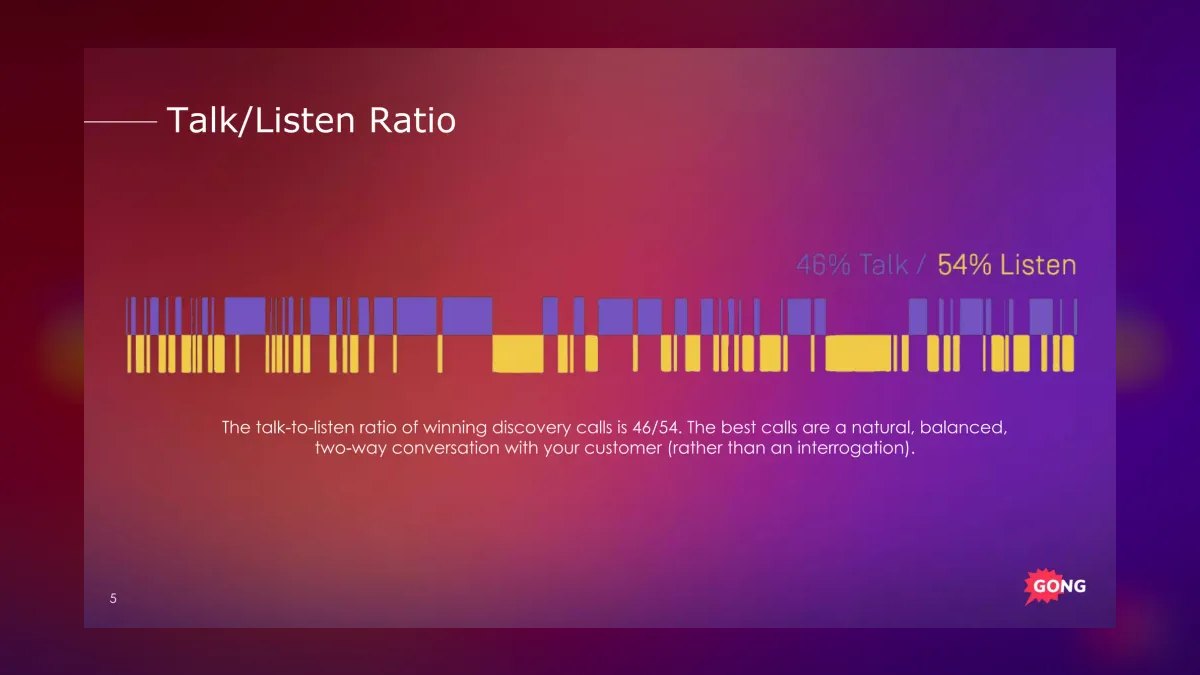
Mastering the discovery call means running a tight, repeatable 30-minute sales meeting template that moves through three phases — a 2-minute Frame, a 20-minute MEDDIC-driven pain and vision exploration, and an 8-minute close with a booked next step. Reps who follow this structure quantify pain, identify the economic buyer, and leave every call with a specific commitment instead of a vague "I'll follow up."
A Rep Walks Into a Call With No Plan
Picture a mid-market account executive dialing into a 30-minute discovery call with a VP of Operations at a logistics company. The rep has a CRM tab open, a list of eleven qualifying questions, and no plan for how the conversation should flow. Minute one: "Can you tell me a bit about your company?" Minute four: "What CRM are you using today?" Minute nine: "Is there a budget allocated for this?" By minute fifteen the VP is giving one-word answers, glancing at another window, and the call ends with "send me some information and I'll loop in my team."
This is the single most common failure mode in B2B sales, and it isn't a talent problem — it's a structure problem. The rep never had a meeting template. Without a fixed allocation of time to specific outcomes, every discovery call becomes an improvised information dump where the rep collects data points instead of building a business case. The prospect never feels understood, the rep never uncovers a quantified cost of inaction, and the deal drifts into a slow, information-gathering purgatory that rarely closes.

Contrast that with a rep using a real template. In the first two minutes, they deliver a Frame — a point-of-view statement that says, in effect, "I have a hypothesis about a problem you're facing, and I want to test it with you." That single move changes the entire tone of the meeting: the rep is no longer an order-taker asking permission to ask questions, they're a peer testing a diagnosis. Everything that follows — the pain exploration, the vision-building, the qualification, the close — happens inside a structure the prospect can feel, even if they can't name it. That structural difference, repeated across a sales team's entire pipeline, is the difference between a 15% and a 35% call-to-next-step conversion rate.
How the 30-Minute Structure Actually Works
The mechanism behind an effective discovery call is time-boxing combined with a fixed sequence: Open, Explore, and Close. Each phase has a specific job, and the job never changes even though the words used to do it should vary call to call. The Open (roughly the first two minutes) exists purely to set a collaborative frame and earn the right to ask direct questions. The Explore phase (the middle stretch, typically 18-20 minutes) is where the MEDDIC qualification elements — Metrics, Economic buyer, Decision criteria, Decision process, Identify pain, Champion — get surfaced through a natural, cascading question sequence rather than a checklist. The Close (the final 5-8 minutes) converts everything uncovered into a single, specific, mutually agreed next step.

What makes this a mechanism rather than a script is the cascade logic: each question is designed to unlock the next one. You don't ask about budget in minute three — you ask about the metric the prospect is measured on, which naturally surfaces who cares about that metric, which naturally surfaces who has authority to fund a fix. Skipping ahead (asking for budget before pain is quantified) is what makes discovery calls feel like interrogations. Following the cascade in order is what makes them feel like a diagnosis.
Reading the diagram left to right: nothing in the Explore phase happens without the Frame first, and nothing in the Close phase happens without a quantified pain and an identified decision process first. If a rep tries to close on commitment without having surfaced a specific cost or a specific decision-maker, the close collapses into "let me think about it" — because there's nothing concrete to act on. The mechanism only works when every phase feeds the next.

Time Ranges, Benchmarks, and What Good Looks Like
Concrete time allocation is what separates a template from a philosophy. A workable 30-minute split looks like this: 2 minutes for the Frame, 10 minutes for pain and impact (the "Problem Stack" — last incident, cost, who was affected), 5 minutes for vision and future-state exploration, 5 minutes for MEDDIC qualification (economic buyer, decision criteria, compelling event), and 5-8 minutes for the close and commitment. Some teams compress the Frame to 90 seconds and extend pain exploration to 12 minutes when the prospect is talkative; the ratios matter more than the exact minute marks, but the Explore phase should never consume less than 60% of total call time, and the Close should never consume less than 15%.
A useful benchmark for call quality is whether the rep can answer four questions immediately after hanging up: What is the quantified cost of this problem (in hours, dollars, or a specific business metric)? Who is the economic buyer, and what do they personally care about? What is the compelling event or timeline driving urgency? What specific next step is on both calendars? If a rep can't answer all four, the call didn't reach discovery — it stayed at information-gathering, regardless of how many questions were asked.

On response pacing: reps should expect roughly 60-90 seconds of prospect talk time for every well-asked open-ended question in the pain-exploration phase. If prospects are answering in under 15 seconds consistently, the questions are too closed or too generic ("What are your biggest challenges?" instead of "Walk me through the last time this happened"). A good rule of thumb for self-assessment is a talk-time ratio: the rep should be talking no more than 30-40% of the total call, with the heaviest rep talk time concentrated in the Frame and the Close, and the lightest in the middle of the Explore phase where the prospect should be doing most of the talking.
For qualification density, a strong 30-minute call surfaces at minimum three of the six MEDDIC elements in enough detail to write a one-sentence summary of each — Metrics, Economic Buyer, and Identify Pain are the non-negotiable three; Decision Criteria, Decision Process, and Champion can sometimes wait for a second call. Trying to fully qualify all six elements in a single 30-minute first call is usually a sign the rep is rushing and sacrificing depth for checklist completion.

Trade-offs: Scripted Frames vs. Improvised Discovery
There is a real trade-off between using verbatim scripts (like the Frame and the Problem Stack language) and letting reps improvise based on feel. Verbatim scripts have a clear advantage for new or underperforming reps: they remove the cognitive load of inventing language in real time, which frees up mental bandwidth to actually listen to the answer. The cost is that scripted language can sound robotic or over-rehearsed if delivered without adaptation, especially to a sophisticated buyer who has heard a hundred sales pitches. Improvised discovery, by contrast, feels more natural in the hands of an experienced rep who has internalized the cascade logic, but it's inconsistent across a team — some reps will improvise brilliantly and others will drift back into information-dump habits within a week of training.
The practical resolution most sales organizations land on is a hybrid: mandate the structural skeleton (the phase order and time allocation) as non-negotiable, but treat the exact wording as a starting scaffold that reps are expected to adapt to their own voice and to the specific prospect within the first month of using it. New hires use the verbatim scripts word-for-word for the first 20-30 calls; tenured reps are expected to have internalized the cascade and dropped the script by the time they've run it 40-50 times.

A second trade-off sits inside the Close phase: pushing hard for a specific calendar commitment on the spot (the "Earned Right" close) versus accepting a softer commitment like "let me check my calendar and get back to you." The hard close produces a much higher show-rate for the next meeting because the prospect committed in the moment, under social pressure, with the rep still on the line to handle objections live. The soft close feels less pushy and may preserve rapport with risk-averse buyers, but it introduces a follow-up gap where deals silently die — the prospect gets pulled into other priorities and simply never replies. Most experienced sales leaders accept the slightly higher discomfort of the hard close because the alternative (a "ghosted" soft commitment) kills far more pipeline than an awkward moment of pushing for a date.
Common Pitfalls That Sink Discovery Calls
The most common pitfall is skipping the Frame entirely and opening with a generic rapport question like "How's your week going?" followed immediately by "Tell me about your company." This wastes the first two minutes — the highest-attention minutes of the entire call — on information the rep could have gathered from research beforehand, and it signals to the prospect that this is a generic, unprepared call rather than a targeted conversation. The fix is mechanical: every rep should walk into the call with a one-sentence hypothesis about the prospect's likely pain, based on public information (funding announcements, job postings, industry trends), and deliver that hypothesis as the Frame.

A second pitfall is asking for budget too early, before pain has been quantified. Asking "What's your budget for this?" in minute five produces a defensive, often dishonest answer, because the prospect has no anchor for what the problem is costing them. The fix is to always establish a quantified cost of inaction first — hours wasted per week, dollars lost per delayed deal, customers churned per quarter — and only then explore who controls spend and what their approval process looks like.
A third pitfall is treating discovery as a checklist rather than a cascade — firing off a list of unrelated questions ("What CRM do you use? How many reps do you have? What's your sales cycle length?") without letting one answer inform the next question. This produces exactly the "information dump" feeling that kills trust. The fix is to always ask a follow-up that digs deeper into the previous answer before moving to a new topic: "You mentioned long sales cycles — walk me through the last deal that took longer than expected. What caused the delay?"

A fourth pitfall is failing to end with a specific, dated commitment. Ending a call with "I'll send over some information" or "Let's touch base next week" is not a commitment — it's a placeholder that lets deals die quietly. The fix is procedural: never end a discovery call without a specific next meeting on both calendars, agreed upon live, ideally with the next meeting's attendees and purpose already named (for example, a technical deep-dive with a solutions engineer).
A fifth pitfall is over-scripting the delivery so heavily that the rep sounds robotic and stops actually listening to the prospect's answers. A rep reciting a memorized paragraph while mentally rehearsing the next line will miss the moment a prospect reveals an unscripted, higher-value pain point. The fix is to treat every script in this template as a scaffold, not a script to be read verbatim once the rep has run it more than a dozen times — the goal is internalized structure, not memorized words.

Related questions
How long should a discovery call actually be?
Thirty minutes is the standard default for a first meeting because it's long enough to complete a full Open-Explore-Close cycle but short enough that prospects will agree to it without much friction. Complex enterprise deals sometimes extend to 45 minutes.
What is MEDDIC and why does it matter for discovery calls?
MEDDIC is a qualification framework covering Metrics, Economic Buyer, Decision Criteria, Decision Process, Identify Pain, and Champion. It matters because it gives reps a consistent checklist of what "qualified" actually means, preventing deals from being pursued based on enthusiasm alone.
What's the difference between a discovery call and a demo call?
A discovery call's purpose is to understand the prospect's problem, quantify its impact, and identify who has authority to fix it — no product is shown. A demo call assumes discovery is already done and tailors a product walkthrough to the specific pain uncovered.
How do I get a prospect to open up instead of giving one-word answers?
Use open-ended, specific questions anchored to a real incident ("Walk me through the last time this happened") instead of abstract questions ("What are your biggest challenges?"). Silence after asking is also critical — resist the urge to fill it.
Should the same discovery template be used for cold calls and scheduled meetings?
The core Frame and Problem Stack language works for both, but a cold call should compress the Explore phase significantly since the goal of a cold call is usually to earn a longer, scheduled discovery meeting rather than complete full qualification.
FAQ
What if the prospect stays silent or gives short answers after a Problem Stack question? Count to five silently before speaking again — most prospects will fill a genuine pause with more detail than they originally offered. If silence doesn't work, ask directly: "Is that a fair summary, or am I missing something?"
How should I handle a prospect who says they're "just exploring"? Be direct rather than backing off: propose a specific, low-commitment next step tied to a real cost ("If this problem is costing you X, would a focused 30-minute conversation be worth it?"). This either produces a genuine next step or honestly disqualifies a prospect who isn't a real opportunity.
Can this same meeting template work for a cold call instead of a scheduled discovery call? Yes, with modification — keep the Frame nearly identical, but shorten the Explore phase substantially since a cold call's realistic goal is usually booking a full discovery meeting rather than completing qualification in one pass.
What should I do if the prospect wants to jump straight to a product demo? Resist the urge to comply immediately. Ask for a short amount of time first to understand their current process, framing it as necessary to tailor the demo rather than delay it — a demo built on real discovered pain converts far better than a generic walkthrough.
How do I know if a discovery call actually succeeded? You should be able to state, in one sentence each, the quantified pain, the economic buyer, and the specific next step booked on both calendars. If any of those three is missing, the call fell short of real discovery regardless of how long it ran.
Is it acceptable to deviate from the time allocations in the template? Yes — the phase order (Open, Explore, Close) and the requirement to end with a specific commitment are non-negotiable, but the exact minute allocations should flex based on how talkative the prospect is and how quickly pain surfaces.
Sources
- The Challenger Sale: Taking Control of the Customer Conversation - Harvard Business Review
- MEDDIC Sales Qualification Framework Overview - Winning by Design
- Gong.io: What Makes a Great Discovery Call
- Salesforce: How to Run an Effective Sales Discovery Call
- HubSpot Sales Blog: The Discovery Call Framework
- Harvard Business Review: Sales Conversation Structure and Buyer Psychology
Related on PULSE
- [Top 10 sales training workshops for B2B SaaS teams](/knowledge/st0635)
- [Top 10 multi-threading training drills for B2B sales reps](/knowledge/st0555)
- [Top 10 Challenger Sale sales training drills for AEs](/knowledge/st0503)
- [Top 10 prospecting training drills for B2B sales reps](/knowledge/st0543)
- [Top 10 Miller Heiman sales training drills for AEs](/knowledge/st0527)
This page will be disappearing soon. Save it to your device for $1 — or read it free while it is here.
@Kory-White- · if Venmo asks, the last 4 of my number are 2012
 pulse-sales-trainingsObjection Handling Roleplay Session Blueprint
 pulse-sales-trainingsTop 10 SPIN Selling training exercises for sales managers in 2027
 pulse-sales-trainingsSales Negotiation Tactics: Step-by-Step Meeting Script for Trainers
 pulse-sales-trainingsProduct Knowledge Quick-Start Training Kit
 pulse-sales-trainingsTop 10 closing role-play scenarios for sales teams in 2027
 pulse-sales-trainingsTop 10 CSM workshop agendas for 2027
 pulse-sales-trainingsCold Calling Script Practice Session Guide
 pulse-sales-trainingsAccount Planning Sprint: 90-Minute Deep Dive into Top 5 Accounts in 2027
 pulse-sales-trainingsEmotional Intelligence in Sales: Guided Discussion Template for Team Meetings
 pulse-sales-trainingsTop 10 templates for running effective morning sales huddles in 2027