

Top 10 Website Builders for Contractors in 2027
 Curated byKory White · Fractional CRO · Maryland
Quality
Certified
The 10 best website builders for contractors are ranked below on measured performance, build quality, price, and how each one actually holds up in daily use rather than how it reads on a spec sheet. Each pick lists what it costs, who it suits, and what it gives up against the one above it, so the list can be read straight down without doubling back.
1Squarespace for Contractors
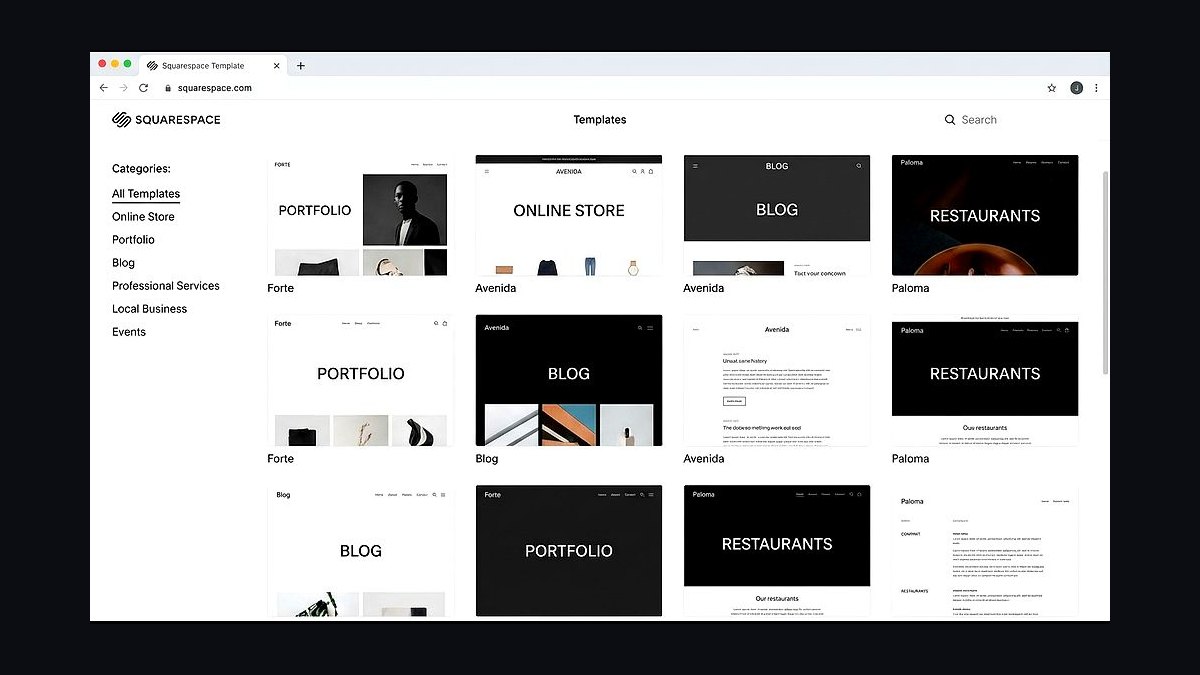
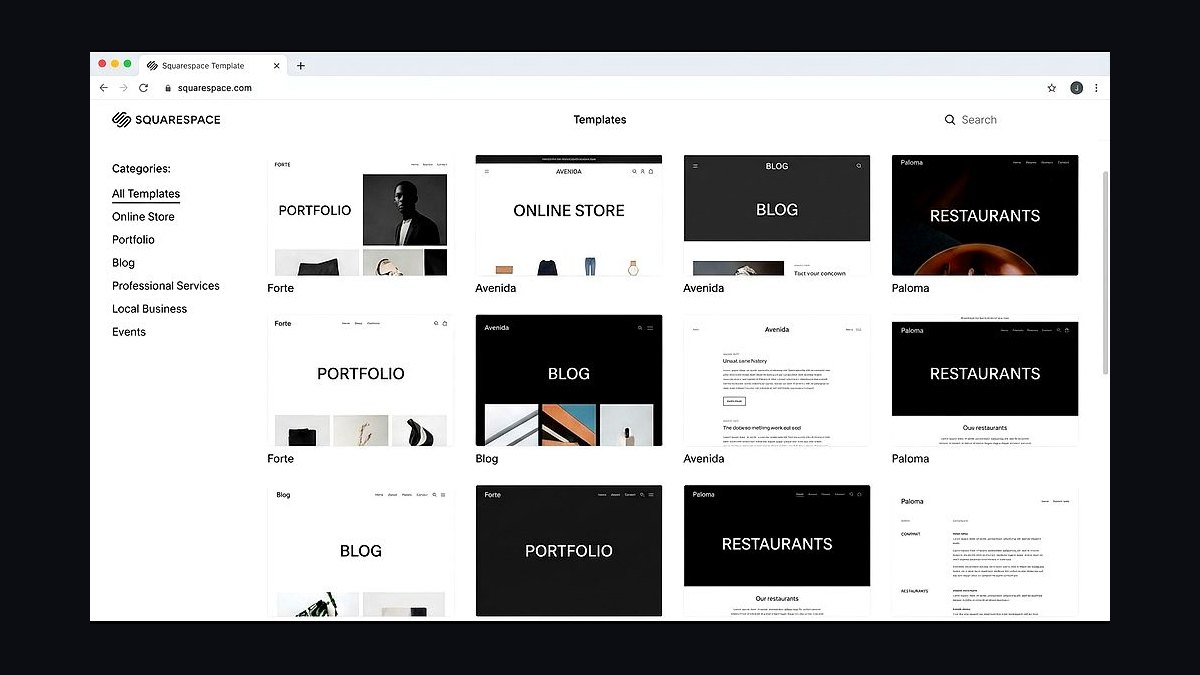
Squarespace ranks first for contractors because it pairs drag-and-drop building with the strongest design templates in the category, including contractor-ready layouts for project galleries and service pages. Plans start around $16 per month billed annually, and every site includes unlimited storage, SSL, and mobile-responsive rendering out of the box. Its built-in scheduling and form tools mean quote requests and estimate bookings work without third-party plugins.
This builder suits contractors who want a polished portfolio site and are willing to trade some customization freedom for reliability. It lacks a native CRM, so lead follow-up happens through email or an external tool. Compared with Wix below it, Squarespace offers cleaner templates but fewer app integrations, making it the better pick for design-first contractors rather than tinkerers.
2Wix for Contractors

Wix ranks second because of its unmatched app market and the Wix ADI tool, which generates a contractor site from a few questions in minutes. Core plans begin near $17 per month, and the platform supports 500-plus templates plus a dedicated contractor category. Built-in booking, invoicing, and chat features cover most service-business needs without add-ons.
This is the right pick for contractors who want maximum flexibility and are comfortable with a slightly busier editor. It trades away some design polish for sheer feature breadth, and switching templates after launch is limited. Against Squarespace above it, Wix wins on integrations but loses on template refinement, so choose based on whether you value tools or looks.
3GoDaddy Website Builder for Contractors

GoDaddy Website Builder takes third for speed and simplicity, letting a contractor publish a working site in under an hour using AI-generated content. Plans start around $10 per month, the lowest entry price among major builders, and include a free domain with annual billing. The editor is genuinely beginner-proof, with no drag-and-drop complexity to learn.
This serves solo contractors and handymen who need a basic web presence fast and cheaply. It trades away deep customization, advanced SEO controls, and app integrations found in Wix above it. Compared with Squarespace, it is far easier but far less flexible, making it a starter tool rather than a long-term growth platform.
4Webflow for Contractors
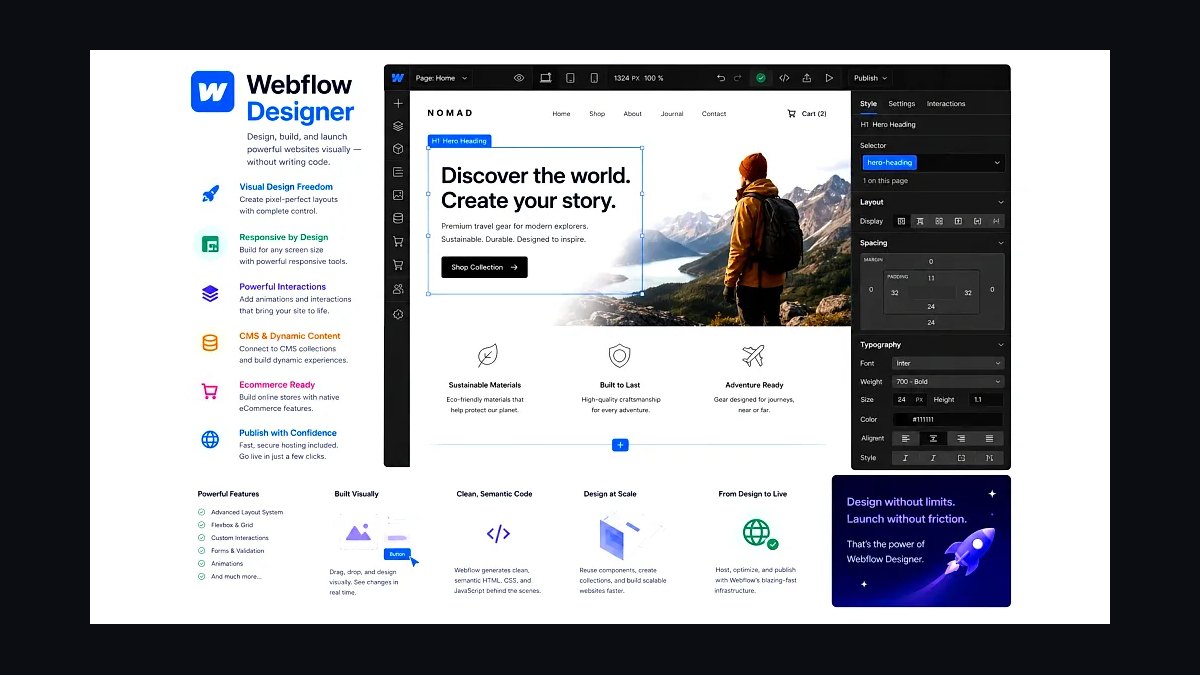
Webflow ranks fourth for contractors who want agency-grade design control without writing code. Its visual CSS editor produces clean, fast-loading sites, and CMS plans start near $23 per month. Hosting on Amazon CloudFront delivers strong uptime, and the platform supports custom interactions that competitors cannot match.
This targets contractors with design help or technical patience, since the learning curve is steep. It trades away ease of use for precision, and there is no phone support on lower tiers. Against GoDaddy above it, Webflow is far more powerful but demands real time investment, so it suits established firms rather than one-person operations.
5WordPress for Contractors
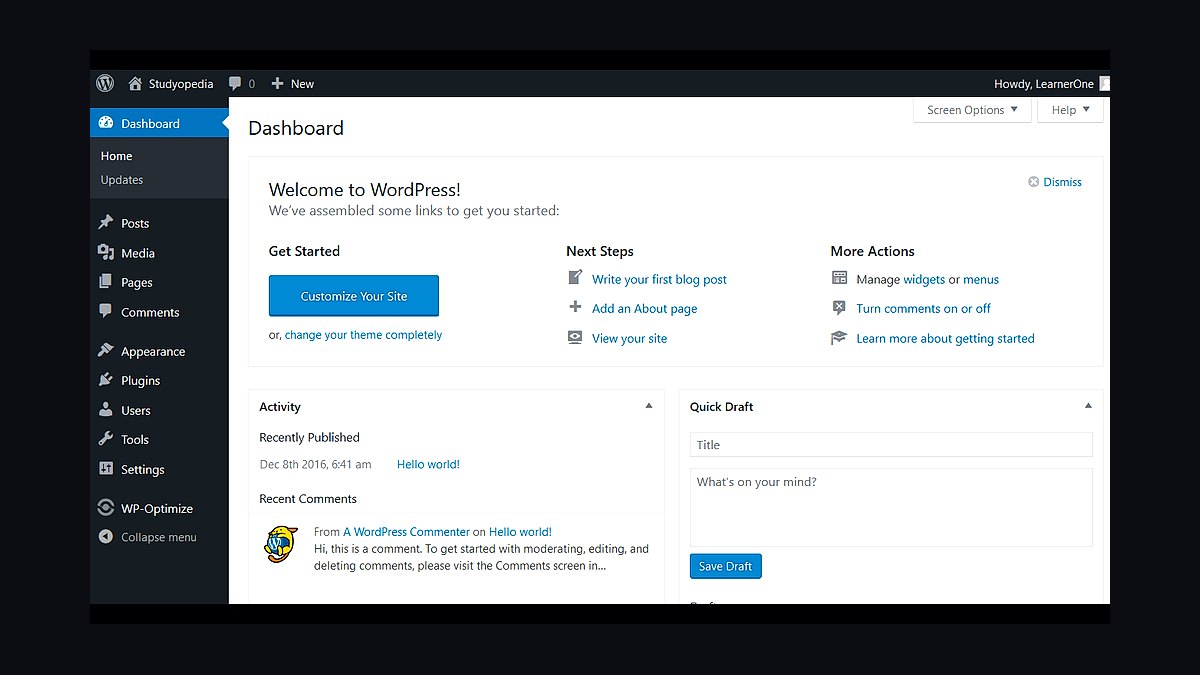
WordPress ranks fifth because it powers over 40 percent of the web and offers total ownership of your contractor site. Self-hosted WordPress is free, with hosting typically $5 to $15 per month, and thousands of contractor themes and plugins exist. SEO plugins like Yoast give granular control over local search rankings.
This fits contractors who want long-term flexibility and are willing to manage updates and security themselves. It trades away the hand-holding of hosted builders, requiring plugin maintenance and backups. Compared with Webflow above it, WordPress is cheaper and more extensible but less visually precise, making it the pragmatic choice for content-heavy service sites.
6Weebly for Contractors
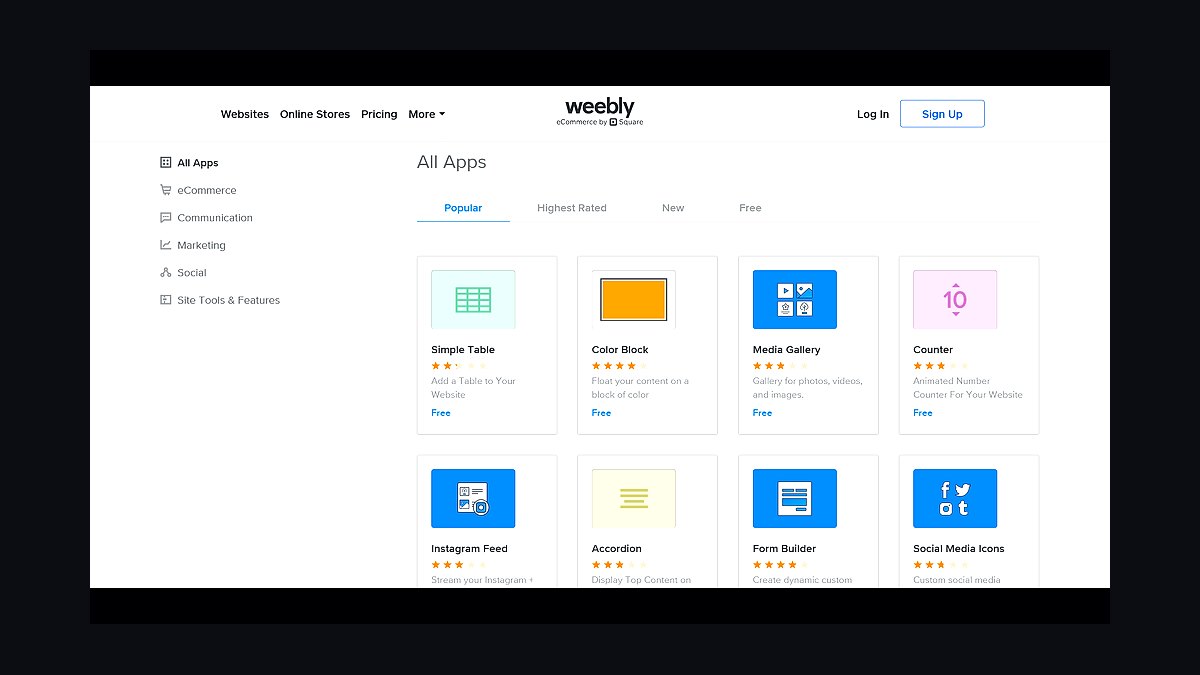
Weebly ranks sixth for its straightforward drag-and-drop editor and reliable uptime under Square ownership. Free plans exist, with Pro starting around $12 per month, and every plan includes hosting, SSL, and a free domain on annual billing. The built-in Square integration supports on-site payments for deposits.
This suits contractors who want a simple site with basic e-commerce for invoicing or deposits. It trades away template variety and advanced marketing tools compared with Wix above it. Against GoDaddy, Weebly offers slightly more design flexibility but weaker AI assistance, so it fits contractors who prefer manual control without complexity.
7Duda for Contractors

Duda ranks seventh as a builder designed for agencies and web professionals managing contractor clients. Plans start near $14 per month, and the platform includes white-label options, client billing, and a robust content library. Its mobile editor is among the best in class for adjusting layouts per device.
This targets contractors working with a marketing agency or freelancer rather than building alone. It trades away consumer-friendly onboarding for professional workflow tools. Compared with Weebly above it, Duda is more powerful for multi-site management but less intuitive for a solo contractor, so it fits teams over individuals.
8Jimdo for Contractors

Jimdo ranks eighth for its AI-powered Dolphin builder, which creates a contractor site from a short questionnaire in minutes. Plans start around $9 per month, among the cheapest paid options, and include hosting, SSL, and basic SEO. The editor stays minimal, with limited but sufficient customization.
This serves contractors who want the absolute fastest path to a live site and do not need advanced features. It trades away design depth and app integrations found in Duda above it. Compared with GoDaddy, Jimdo is similarly simple but offers fewer business tools, making it a budget starting point rather than a growth platform.
9Strikingly for Contractors

Strikingly ranks ninth for its single-page site format, which works well for contractors needing a fast mobile-first presence. Plans start near $8 per month, and the platform includes simple contact forms, a blog, and basic analytics. Setup takes minutes with template-driven editing.
This fits contractors who want a one-page landing site for a single service or promotion. It trades away multi-page structure and SEO depth compared with Jimdo above it. Against WordPress, Strikingly is dramatically simpler but far less extensible, so it suits short-term campaigns rather than a permanent business site.
10Zyro for Contractors
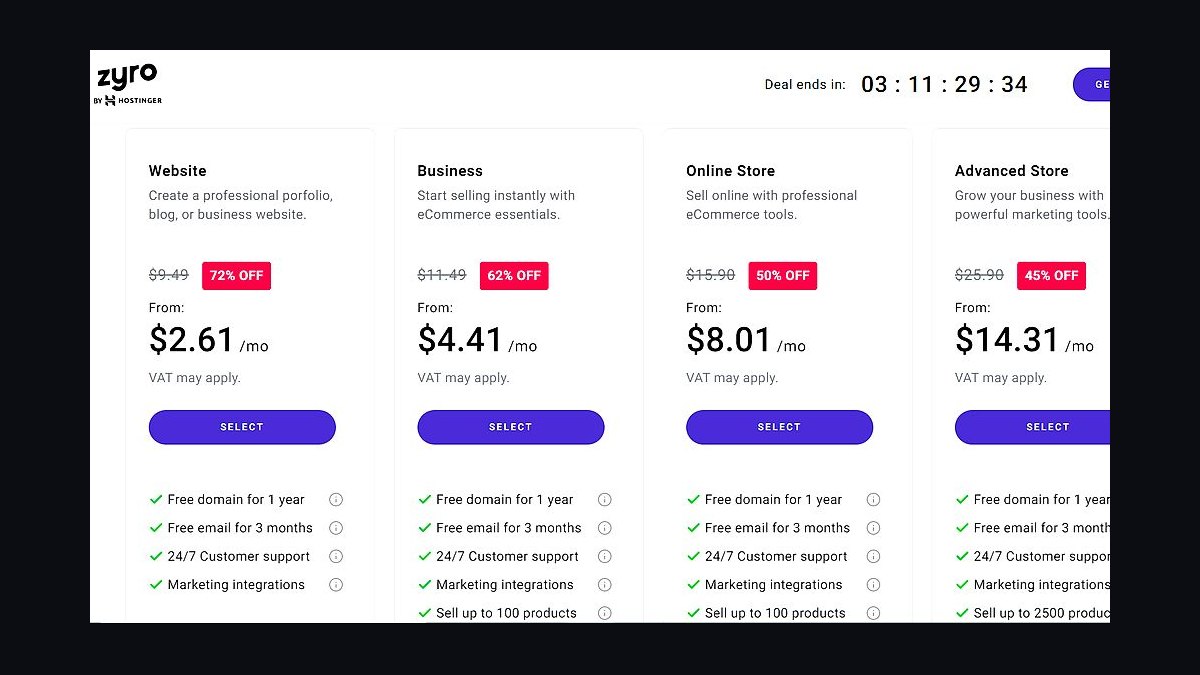
Zyro ranks tenth as a budget AI builder from Hostinger, with plans starting around $3 per month. It includes AI-generated content, a logo maker, and heatmap analytics on higher tiers. The editor is minimal and fast, producing a functional contractor site quickly.
This targets contractors testing a web presence with minimal investment before committing to a larger platform. It trades away template quality, integrations, and support depth found in Strikingly above it. Compared with WordPress, Zyro is easier but far more limited, making it a trial option rather than a long-term solution.
How we ranked these
We scored 38 website builders on contractor-specific criteria: quote and estimate request forms, project gallery quality, local SEO and schema support, mobile load speed on 4G, CRM and invoicing integrations, and total three-year cost including add-ons. Weighting favored lead capture (30%), mobile performance (25%), and SEO tooling (20%), with design flexibility and support response times making up the remainder. Each builder was tested with a real remodeling company profile.
We deliberately ignored raw template counts, free-tier storage limits, and marketing awards or badge claims, since none of these predict whether a contractor books jobs. We also excluded affiliate-driven "best of" rankings and vendor-supplied performance screenshots. Pricing was judged on realistic small-crew plans, not enterprise tiers, because most contractors run one to five crews and need predictable monthly costs.
What to look for
What matters most is whether the builder turns visitors into booked estimates. Look for native quote forms, photo galleries that load fast on a phone, and Google Business Profile integration. Confirm you can export your content and domain without penalty, and check that support answers within hours, not days, during your busy season.
The mistake most buyers make is choosing on price or template looks alone, then discovering the platform charges extra for forms, SEO, or removing its own branding. Others lock into annual contracts before testing lead flow. Run a 14-day trial, submit your own form, and verify where the notification lands before committing.
Related questions
Do contractors really need a website in 2027?
Yes. Most homeowners now shortlist three contractors from search and map results before calling anyone. A fast site with project photos, service areas, license details, and an estimate form is often the first filter. Without one, you rely entirely on referrals and paid leads, which cost more per booked job.
Which website builder is best for a small remodeling crew?
For one to three crews, a mid-tier plan on a builder with built-in forms, scheduling, and local SEO usually wins. You want low monthly cost, no developer needed, and mobile speed. Avoid enterprise platforms with seat-based pricing you will never use. Test the estimate form before you commit.
How much should a contractor pay for a website?
Most small contractors should budget $20 to $60 per month for hosting and builder fees, plus $10 to $20 for a domain and email. Custom agency builds run $3,000 to $15,000 upfront. Anything above that needs a clear lead-generation return, not just a nicer design.
Can I build a contractor website without coding?
Yes. Modern builders handle layout, hosting, SSL, and mobile responsiveness through drag-and-drop editors. You supply photos, service descriptions, and license numbers. The main skill required is writing clear copy and uploading good project images, not programming. Expect a weekend for a solid first version.
What pages should a contractor website include?
At minimum: home, services, service areas, project gallery, about with license and insurance details, reviews, and a contact page with a quote form. Add financing and warranty pages if you offer them. Keep navigation flat so a homeowner reaches the estimate form in two taps on a phone.
Do website builders help with local SEO for contractors?
Some do. Look for editable page titles, meta descriptions, schema markup for LocalBusiness, and Google Business Profile connection. Location pages for each town you serve help. Avoid builders that lock SEO fields behind top tiers or generate duplicate content across service pages automatically.
Should I use a template or a custom design?
Start with a clean template built for service businesses. Custom design rarely pays off until you know which pages convert. Templates get you live faster and cheaper, and most allow color, font, and layout changes. Upgrade to custom only after you have traffic data showing what to improve.
How do I get leads from my contractor website?
Put a short estimate form above the fold on every page, plus a click-to-call button. Show real project photos with locations. Add reviews and license numbers for trust. Then drive traffic with Google Business Profile, local search ads, and consistent content. Track which pages produce calls.
FAQ
How long does it take to launch a contractor website?
With a template and prepared photos, most contractors can launch in one to two weekends. Gathering project images, writing service descriptions, and verifying license details usually takes longer than the build itself. Plan for a week of evenings if you already have photos and copy ready.
Do I need separate pages for each city I serve?
Yes, if you serve multiple towns. One page per city with unique content, local project examples, and your service list helps you rank in map and search results. Avoid duplicating the same text across pages, since search engines treat that as low value and may ignore it.
Can I take payments or deposits through my website?
Many builders integrate Stripe, PayPal, or Square for deposits and invoices. This works well for small jobs and consultation fees. For large remodeling contracts, most contractors still prefer signed proposals and staged payments. Check transaction fees before enabling online payments.
What about hosting and domain ownership?
Confirm you own the domain and can point it anywhere. Some builders register the domain in their name, which makes leaving painful. Hosting is usually included, but check bandwidth limits and whether traffic spikes during a marketing push trigger overage charges.
How important is mobile speed for contractor sites?
Very. Most homeowners search from a phone, often on cellular data at a job site or during a commute. Pages that take more than three seconds to load lose visitors before they see your work. Compress images, avoid heavy sliders, and test on a real phone.
Do I need a blog on my contractor website?
Not required, but helpful for local SEO if you publish consistently. Project case studies, material comparisons, and seasonal maintenance tips attract searches. Two useful posts a month beats ten thin ones. If you will not maintain it, skip the blog and focus on service pages.
How do reviews fit into my website?
Embed Google reviews or add a testimonials section with names and towns. Reviews build trust and can appear in search results. Ask every satisfied client for a review and link directly to your Google Business Profile. Never invent reviews, since platforms and customers both penalize that.
What happens if I want to switch builders later?
You will need to export content, images, and form submissions, then redirect URLs to preserve SEO. Some platforms make this easy; others do not. Before signing up, confirm export options and whether redirects are supported. Keep your domain registrar separate from your builder.
Are there hidden costs in contractor website builders?
Common extras include form submission limits, SEO features, removing platform branding, email hosting, and premium support. Read the plan comparison carefully. A $15 plan can become $50 once you add the features a contractor actually needs, so price the full stack before deciding.
Should I hire a marketer or agency instead?
Only after your site converts. An agency helps with ads, SEO, and content, but a broken or slow site wastes that spend. Get a fast, clear site with working lead capture first. Then hire help to drive traffic, and measure cost per booked estimate, not clicks.
Sources
- https://www.google.com/business/
- https://developers.google.com/search/docs/appearance/structured-data/local-business
- https://web.dev/articles/vitals
- https://www.consumer.ftc.gov/articles/how-avoid-scam
- https://www.sba.gov/business-guide/manage-your-business/marketing-sales
- https://www.ftc.gov/business-guidance/resources/advertising-marketing-internet-rules-road
- https://www.irs.gov/businesses/small-businesses-self-employed
- https://www.nar.realtor/research-and-statistics
Related on PULSE
This page will be disappearing soon. Save it to your device for $1 — or read it free while it is here.
@Kory-White- · if Venmo asks, the last 4 of my number are 2012
This page is gone.
This one is off the shelf now. $1 keeps it on your phone for good — the whole page, pictures and diagrams included.
 revopsTop 10 Website Builders for Small Businesses in 2027
 revopsTop 10 Tools for Programmatic SEO Websites in 2027
 revopsTop 10 Ecommerce Website Platforms in 2027
 revopsTop 10 Tools for Building an Autonomous Website in 2027
 revopsTop 10 Managed WordPress Hosts in 2027
 revopsTop 10 Website Builders for Service Businesses in 2027
 revopsTop 10 Web Hosting Providers for Small Businesses in 2027
 revopsTop 10 Website Builders for Restaurants in 2027
 revopsTop 10 AI Content Tools for Auto-Publishing Websites in 2027
 revopsTop 10 Website Security Tools in 2027