

What to Wear to a Kid's Birthday Party in 2027
Wear elevated casual: a soft-knit polo, breathable button-down, or washable midi dress in forgiving mid-tone neutrals, paired with broken-in closed-toe sneakers or flats. Add one light layer for AC swings and a crossbody bag so your hands stay free. Skip heels, white silk, and dangling jewelry — you will be sitting on the floor.
What "party-appropriate" actually means for a kid's birthday
The trap in this question is that people read "party" and reach for the wrong mental file. A kid's birthday party is not a party in the adult sense — it is a two-to-three-hour supervised event where the guest of honor is under twelve, the floor is a legitimate seating option, and at least one liquid will end up somewhere it should not. The dress code is closer to "weekend brunch that might turn into a hike" than to anything cocktail-adjacent.
Three forces set the bar. First, the venue. A backyard party, a trampoline park, a children's museum, a bowling alley, and a rented rec-center room impose wildly different physical demands. Trampoline and climbing venues almost universally require grip socks and forbid loose jewelry, zippers, and belts with hard buckles — a rule that quietly kills half the outfits people plan. Bowling alleys mean rental shoes, so your socks become visible. Museums and rec centers mean hard floors for two hours, which is a shoe problem, not a shirt problem.
Second, your role. There are three distinct guest types and they call for different calibrations. The *host parent* is on their feet the whole time, cutting cake, refilling cups, and appearing in every photo — they need the most durable and the most photographable outfit simultaneously. The *drop-off-and-stay parent* is a spectator with light supervision duty and can dress a notch more relaxed. The *grandparent or extended family guest* is usually seated more, photographed deliberately, and can afford softer, dressier fabrics because they are less likely to be crawling under a table retrieving a balloon.
Third, the photo layer. Nearly every kid's party now generates dozens of phone photos that circulate to family group chats and sometimes to social feeds. That is the only real argument for polish. You are not dressing for the four-year-old — you are dressing for the group text your aunt will forward on Monday. This is why "just wear whatever" underperforms: a plain gray hoodie photographs as an absence, while a sage crewneck and stone chinos photograph as a person who showed up.
The synthesis of those three forces is the operating principle: elevated casual with a durability floor. Every piece must pass two tests — would I be comfortable kneeling on a floor in this, and would I be fine if this appeared in a photo I did not approve? Anything failing either test is out. That single filter resolves most of the specific decisions below without needing a rulebook.
A useful adjacent comparison: this is roughly the same brief as dressing for a family reunion, a school open house, or a casual outdoor engagement party — occasions where you are simultaneously a participant, a helper, and a photographic subject. If you have a go-to outfit for a Saturday farmers-market-then-lunch, you are already 80 percent of the way there. Push it about one notch more intentional and you have landed it.
How to build the outfit, step by step
Work outward from constraints, not from inspiration. Starting with "what do I feel like wearing" produces outfits that fail on the floor test; starting with the venue produces outfits that work and still look considered.
Step one: read the invitation for hard constraints. Look for the venue name, the words "outdoor," "bounce house," "pool," "socks required," or a stated theme. A theme is a soft constraint — you nod to it with a color, never a costume, unless the invitation explicitly says costume. If the invitation says "wear something you can get messy in," believe it; that is usually paint, slime, or a water table.
Step two: check the actual forecast, not the season. A 78°F afternoon in a room with aggressive air conditioning is a 68°F experience. An outdoor party at 4 p.m. in October is a 55°F experience by 6 p.m. Plan for the coldest and warmest 30-minute window inside the party, not the average.
Step three: pick bottoms first. Bottoms take the most abuse — floor contact, knee grass stains, spilled juice. Choose a mid-to-dark shade (navy, charcoal, olive, stone, indigo) in a fabric with 2–5% elastane so you can crouch. Straight or slim chinos and dark-wash straight-leg jeans are the two most reliable answers across every age. Wide-leg linen trousers work beautifully outdoors and badly at a trampoline park, where fabric catches.
Step four: choose the top for movement and photographs. A fine-knit polo, an oxford or linen button-down with sleeves rolled, a ribbed knit tank under a cardigan, a Breton stripe, or a lightweight crewneck all read as intentional without reading as formal. Avoid anything requiring tucking maintenance — a shirt you keep re-tucking will annoy you by minute forty.
Step five: shoes, and treat them as the highest-stakes decision. Closed-toe, broken-in, low-profile. Clean minimalist leather sneakers, machine-washable knit runners, loafers, or ballet flats. Never new shoes; never heels of any height on grass, mulch, or gym flooring. If the venue involves trampolines or soft-play, bring grip socks — most venues sell them at $3–$5 and it is a small, avoidable annoyance.
Step six: add exactly one layer. A cotton cardigan, a lightweight quilted vest, a packable nylon shell, or a denim jacket. It must be tie-able around a waist or stuffable in a bag, because you will take it off.
Step seven: accessorize for function. Crossbody or small backpack, studs or small hoops, a simple watch. Nothing dangling, nothing sharp, no long necklace that a toddler can grab during a hug.
The sequence matters because each step narrows the next. Deciding shoes before bottoms is how people end up in loafers with cropped wide-leg linen at a bounce-house party — individually fine, jointly wrong. Constraint-first also makes the decision fast: most people can run this in under three minutes once they know the venue.
What it costs, what it lasts, and where the money actually goes
You do not need to buy anything for a single party, and the honest answer for most people is that the correct outfit already exists in the closet. But if you are assembling a repeatable "kid party uniform" — and if you have children in the four-to-ten range you will attend somewhere between eight and twenty of these a year, which absolutely justifies a uniform — here is where the money goes and what it buys.
The realistic total range is $150 to $500 for a complete outfit, and the spread is almost entirely shoes and outerwear. Basic tops (a good cotton tee, a fine-knit polo, a ribbed tank) run roughly $20–$60 from mass-market and mid-tier brands. Chinos and quality straight-leg jeans land in the $60–$150 band; stretch chinos from mid-tier menswear brands and premium denim sit at the top of that. A washable midi dress or a coordinating knit set typically runs $80–$200. Comfortable, photograph-well sneakers or flats are the single biggest line item at $80–$200, and they are the item where spending more genuinely returns more, because you are buying hours of standing comfort and multiple seasons of wear.
Cost-per-wear is the metric that matters, not sticker price. A $150 pair of clean leather sneakers worn to twenty parties, plus school pickups, plus weekend errands, is easily under $1 per wear inside a year. A $40 pair that hurts after ninety minutes and gets worn three times is $13 per wear and a bad afternoon each time. The same logic runs the other direction on trend pieces: a platform sneaker in a very-of-the-moment silhouette will feel dated faster than a plain low-profile one, so buy the trend cheap and the basics well.

Timelines and durability. Machine-washable knits and cotton-blend chinos hold up to roughly 30–50 wash cycles before visible fading, which for a party-and-weekend rotation is two to three years. Linen softens rather than degrades and often looks better in year three. The failure point is almost always the shoe midsole, not the fabric — expect 12–24 months of real comfort from a knit runner used regularly, longer from a leather sneaker with a replaceable-feel outsole.
Stain math. A stain-removal pen costs a few dollars and saves outfits at a rate that makes it the highest-ROI item on this entire list. Treating a frosting or juice mark within sixty seconds resolves it most of the time; letting it set through a two-hour party and a car ride is how a shirt exits the rotation. Keep one in the bag permanently, alongside unscented wipes.
Where not to spend. Do not buy occasion-specific pieces. Anything you would only wear to a kid's birthday party is a bad purchase by definition — the whole point of this dress code is that it overlaps almost completely with normal weekend wear. The budget is better spent making the weekend rotation good than making a party outfit exist.
A note on the upstream effect. Parents who build a reliable weekend uniform report a real second-order benefit: the getting-ready time before family events drops from twenty minutes of closet negotiation to about three. When you are also dressing a child, packing a gift, and managing a departure window, that reclaimed time is worth more than the marginal style gain from a more considered outfit.
Where people go wrong
The failure modes are consistent and almost all of them come from misreading the occasion in one of two directions.
Overdressing. Someone shows up in a cocktail dress, a blazer, or heels because "party" triggered the wrong file. The social cost is real but mild — you look slightly out of step. The practical cost is worse: you cannot sit on the floor, you cannot help carry the cake, and you spend the afternoon managing your clothes instead of enjoying the event. Heels on grass or mulch are the specific version of this that ruins an afternoon fastest.
Underdressing. Gym shorts, an old graphic tee, athletic slides, or a ripped hoodie. This reads as indifference to a family who spent weeks planning, and it photographs terribly. There is a meaningful difference between casual and unconsidered, and the difference costs you nothing to close.
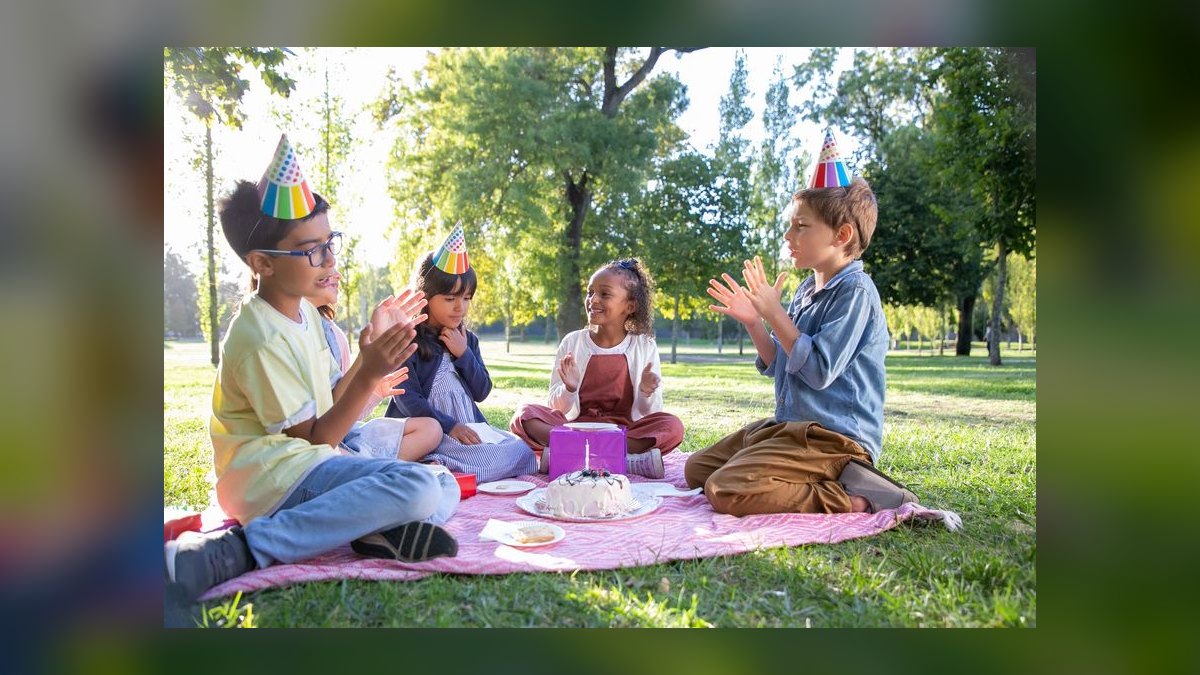
All-white or pale everything. A cream linen set is gorgeous for exactly the first eleven minutes. Frosting, juice, grass, and unwashed small hands are all destructive to light fabric. If you must wear light colors, keep them on the top half and put something dark below the waist, where floor contact happens.
Forgetting the temperature swing. People dress for the forecast and then discover the venue is either an icebox or a greenhouse. Indoor party rooms run cold from aggressive AC and warm from thirty bodies in motion — sometimes within the same hour. Not bringing a removable layer is the most common regret.
Delicate embellishments. Sequins, beads, lace, and loose knits catch on climbing structures, netting, Velcro, and toys. Many soft-play venues explicitly prohibit zippers and hard buckles for equipment-safety reasons. Check before you plan around a jacket.
Dangling jewelry. Long necklaces and hoop earrings over an inch are grab hazards. A child hugging you at chest height has a necklace at eye level, and a toddler reaching for a shiny thing does not know it is attached to your ear. Studs and small hoops solve it entirely.

New shoes. The classic. You will be standing and walking for two to three hours on hard floors. Break shoes in over at least a week of normal wear first, or wear the pair you already trust.
Overpacking the bag. A large tote you carry in one hand means you have one hand for the entire party. Crossbody or backpack, always — cake-cutting, gift-handling, and picking up a crying child all require two hands.
Heavy fragrance. Enclosed party rooms plus strong perfume or cologne is a genuine problem for kids and adults with sensitivities, and a family-friendly setting is the wrong venue to test it. Light and clean, or nothing.
The theme overcommit. Nodding to a dinosaur theme with a green sweater is charming. Arriving in a full costume when nobody else did makes the day about you, which is the one thing a kid's birthday should never be. Unless the invitation says costume, dress one degree toward the theme and stop.
Choosing the right register: a decision framework
Rather than memorize outfits, run the situation through a short decision tree. It resolves nearly every case and adapts as the variables change.
Start with formality signal. Does the invitation name a restaurant, a private venue, or a "celebration" for a milestone birthday? Move one notch dressier: a button-down instead of a tee, loafers instead of runners, a midi dress instead of separates. Does it name a park, a backyard, a trampoline park, or a pool? Move one notch more practical: durable fabrics, tread, sun protection.
Then apply your role. Hosting? Prioritize durability and freedom of movement over everything, and pick the outfit you would still be happy in after three hours of setup and cleanup. Guest with a child in tow? Dark bottoms, crossbody, pockets. Guest without a child? You have the most latitude — this is where a slightly more considered outfit costs nothing.
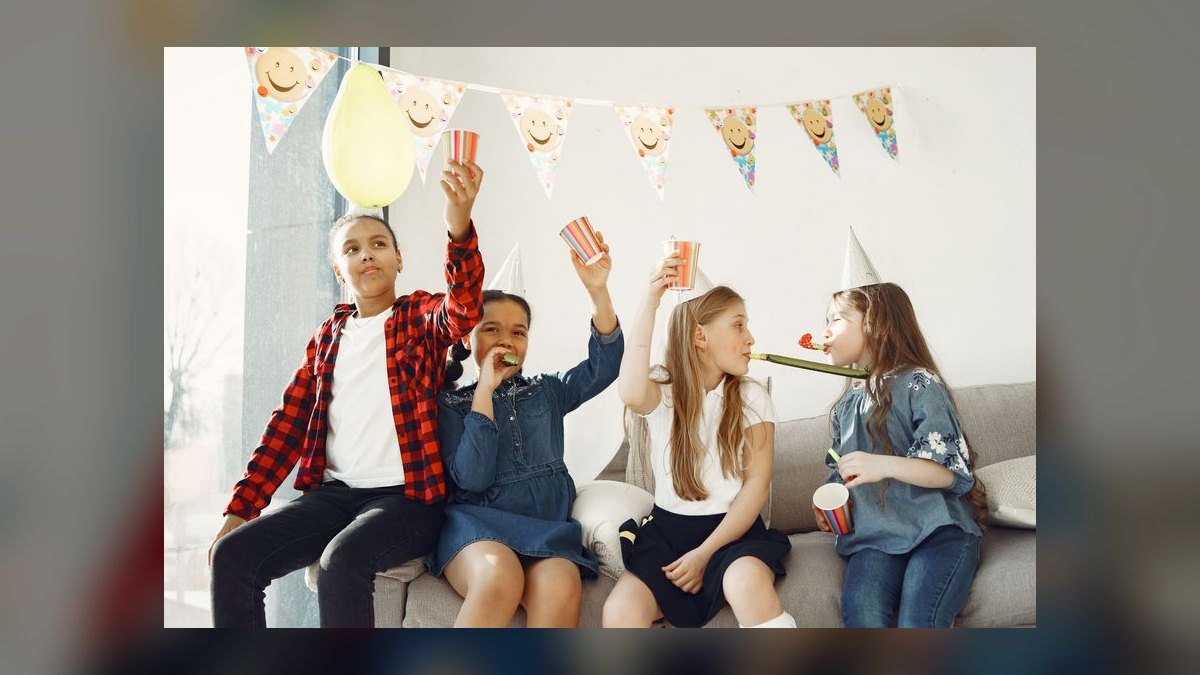
Then apply age and comfort preference. The pattern across decades is a shift in silhouette, not in formality. In your twenties, trend-forward pieces — wide-leg trousers, platform sneakers, an oversized knit — read as current and are perfectly appropriate. In your forties, structured basics carry it: a fine-knit polo, straight-leg dark denim, a Breton stripe, clean leather sneakers or loafers. In your sixties and beyond, softer and more classic wins — cashmere or a fine merino crewneck, an A-line midi skirt, a relaxed chino, ballet flats or leather loafers with real support. The common thread at every age is identical: fabrics that move, shoes that do not hurt, one layer for temperature.
Then check the weather register. Spring means a light trench or denim jacket over a knit, because the swing between noon and five is large. Summer means moisture-wicking or naturally breathable fabric — linen, bamboo viscose, lightweight merino — plus a hat and sunglasses for outdoor events; tailored shorts hitting just above the knee are fine for men, athletic shorts are not. Fall means texture: a flannel worn open over a tee, a merino or cashmere-blend sweater, suede or leather shoes that handle damp grass. Winter is usually an indoor party with a cold parking lot on either end — a mid-weight puffer or a quilted vest over a sweater beats a heavy parka you have to store somewhere for two hours.
Adjacent scenarios worth calibrating against. A first-birthday party skews dressier and far more photographed — this is the one where a midi dress or an actual button-down earns its place, because the photos become keepsakes. A milestone kid birthday at a rented venue sits between the two. A casual drop-in at a park is the most relaxed end of the spectrum, and elevated-weekend is the ceiling there. If you are attending a party for a child of a colleague or a client, treat it like a soft professional setting: nothing you would not want a work contact to see, which mostly means skipping slogan tees and very short hems.
The escape hatch. When genuinely uncertain, the default that fails least often across every venue, season, role, and age is: dark straight-leg jeans, a solid mid-tone knit top, clean low-profile sneakers, a cardigan or light jacket, a crossbody bag, and stud earrings. It is never wrong. It photographs well. It survives the floor. Build from there only when you have specific information that justifies deviating.
Related questions
Can I wear jeans to a kid's birthday party?
Yes — dark or medium-wash straight or slim jeans are the single most reliable choice across ages and venues. Skip heavily ripped or distressed pairs, which read too casual and snag on play equipment. Stretch denim with a few percent elastane is worth seeking out for floor comfort.
Are sneakers acceptable for women at a kid's party?
Completely. Clean, minimalist leather or knit sneakers now read as a deliberate style choice rather than a compromise, and they are far more practical than flats on grass or gym flooring. Keep them low-profile and clean; scuffed athletic trainers read differently than tidy minimalist ones.
What if there's a bounce house or trampoline?
Wear stretchy, breathable fabric and plan for grip socks, which most soft-play venues require and sell on site. Skip belts with hard buckles, zippered jackets, and full skirts — many venues prohibit them outright for equipment safety, and all three catch on netting.
Should I match the party theme?
Nod, do not commit. One color pulled from the theme — green for dinosaurs, blue for space — reads as thoughtful. A full costume when nobody else wore one redirects attention from the birthday child, which defeats the point. The exception is an invitation that explicitly requests costumes.
What's different about a first birthday party?
First birthdays are the most photographed and often the dressiest kid party you will attend, with more extended family present and more posed group shots. Move one notch up: a washable midi dress, a proper button-down, loafers or flats over sneakers. Durability still matters — there is cake.
FAQ
What colors work best for a kid's birthday party?
Mid-tone and warm neutrals do the most work: navy, charcoal, olive, stone, rust, and cream on top. Muted pastels like sage, lavender, and blush photograph beautifully in daylight and hide light marks better than pure white. Keep the darkest shade below the waist, where floor contact and spills concentrate. Avoid head-to-toe white or pale silk, and avoid very busy small-scale prints, which can moiré in phone photos.
Is it okay to wear shorts?
For men, tailored chino shorts hitting just above the knee are fine at an outdoor summer party; athletic, cargo, and gym shorts are not. For women, a midi dress or lightweight linen trousers usually reads better than shorts and gives more coverage for sitting on the ground. If the party is at a pool or a splash pad, the calculus changes entirely and swim-adjacent clothing is expected.
How dressy should a grandparent go?
Slightly softer and slightly more classic than the parents, and that reads as entirely correct. A fine cashmere or merino crewneck, an oxford button-down, an A-line midi skirt, relaxed chinos, and supportive loafers or ballet flats hit the mark. Grandparents are typically seated more and photographed deliberately, so comfort over three hours and a good photograph both matter more than trend alignment.
What should I carry?
A crossbody bag or small backpack, six to eight inches wide, in a wipeable material. Inside: phone, keys, a stain pen, unscented wipes, a small portable charger, and lip balm. Hands-free is not a style preference here — cake-cutting, gift-handling, and picking up a child all need two hands. If you are bringing a gift, carry it in a separate tote you can set down and abandon on arrival.
Do I need to change if the party runs into dinner?
Usually not, if you built the outfit correctly. Elevated casual transitions to a family dinner without modification — swapping sneakers for loafers, adding a jacket, or putting on the cardigan you brought handles the shift. The one item that does not transition is anything visibly stained, which is the argument for the stain pen and for dark bottoms.
What about fragrance and jewelry?
Keep both minimal. Heavy perfume or cologne in an enclosed party room is a real problem for children and adults with sensitivities; light and clean, or skip it. For jewelry, studs or hoops under an inch, a simple watch, and nothing that dangles. Long necklaces sit at exactly toddler-grab height, and sharp or textured pieces can scratch during a hug.
Sources
- https://www.goodhousekeeping.com/ — testing and guidance on washable, durable everyday fabrics
- https://www.consumerreports.org/ — independent product testing including footwear and apparel care
- https://www.parents.com/ — practical family-event and children's party guidance
- https://www.realsimple.com/ — stain removal, fabric care, and wardrobe simplification
- https://www.healthychildren.org/ — American Academy of Pediatrics guidance on children's safety and comfort
- https://www.nytimes.com/section/style — seasonal style reporting and cultural context
- https://www.epa.gov/sunsafety — sun exposure and UV protection guidance for outdoor events
- https://www.weather.gov/ — National Weather Service forecasts for planning outdoor events
Related on PULSE
- [What to Wear to a 50th Birthday Party in 2027](/knowledge/sy0190)
- [What to Wear to a Milestone Birthday in 2027](/knowledge/sy0193)
- [What to Wear to a Pool Party in Winter in 2027](/knowledge/sy0829)
- [What to Wear to a Cocktail Party in Your 40s in 2027](/knowledge/sy0812)
- [What to Wear to a Cocktail Party if You Have an Athletic Build in 2027](/knowledge/sy0837)
- [What to Wear to a Holiday Party if You're Curvy in 2027](/knowledge/sy0755)
 pulse-styleHow to Style a Midi Skirt for a First Date in 2027
 pulse-styleHow to Style a Trench Coat for an Engagement Party in 2027
 pulse-styleWhat to Wear to a Marketing Job Interview in 2027
 pulse-styleWhat to Wear to the Gym in 2027
 pulse-styleWhat to Wear to a Cocktail Party in 2027
 pulse-styleWhat to Wear to a Housewarming Party in 2027
 pulse-styleWhat to Wear to a Rooftop Party in 2027
 pulse-styleWhat to Wear to a Dinner Party in 2027
 pulse-styleWhat to Wear to a Golf Outing in 2027
 pulse-styleWhat to Wear to a Jazz Club in 2027