

What to Wear to a Rooftop Party in 2027
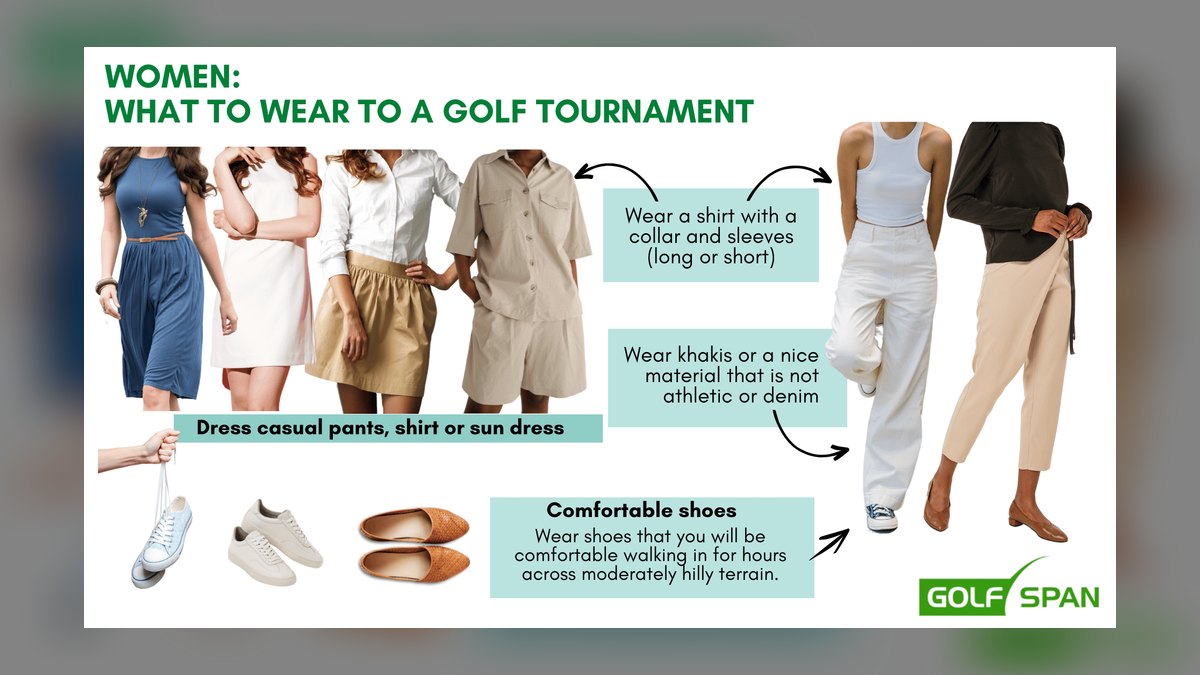
Wear breathable linen or Tencel separates in an earthy neutral palette, add one polished layer you can shed at golden hour, and choose flat-stable footwear that survives decking. Rooftop dress codes sit between smart-casual and cocktail: elevated fabric, relaxed silhouette, minimal accessories, and a wind-proof shape that still looks intentional after sunset.
What a rooftop dress code actually is, and why it trips people up
A rooftop party is not a venue type so much as a set of physical constraints wearing a social costume. Three things are happening at once, and every good outfit decision traces back to one of them.
First, thermal swing. An open roof at 7 p.m. in July can sit at 88°F with the sun still hitting the west parapet, then drop to the low 70s by 10 p.m. once the concrete stops radiating. That is a fifteen-to-twenty-degree slide inside a single event. No single-layer outfit is correct for both halves. A cocktail dress that reads perfect at arrival reads cold at 9:30; a wool blazer that reads sharp at 9:30 reads miserable at arrival. The fix is not "bring a jacket" as an afterthought — it is designing the outfit as a two-state system where both states look finished.
Second, wind. Roofs get laminar wind off the building edge plus turbulent eddies around HVAC housings and parapet walls. At twelve stories you are frequently dealing with gusts five to ten miles per hour stronger than street level. That eliminates a whole category of otherwise-correct clothing: unweighted maxi skirts, loose silk scarves worn decoratively, brimmed hats without an inner band, unbuttoned lightweight overshirts, anything that requires a free hand to manage. If a garment needs supervision, it is the wrong garment for a roof.
Third, surface and standing time. Rooftop venues use concrete pavers, ipe or composite decking with gaps, artificial turf, or occasionally gravel ballast. Stiletto heels sink into turf, catch in deck gaps, and slide on wet pavers. You will also stand for most of the event — rooftops are chronically under-seated, usually one seat for every four to six guests — so a shoe you can wear for three unbroken hours is a functional requirement, not a comfort preference.
Layer a fourth constraint on top for evening events: light quality. Golden hour is flattering to almost everything, but the two hours after sunset at a rooftop bar are typically lit by warm string lights at 2200–2700K. That warm cast pushes cool tones muddy — a cool-grey suit reads greenish, a stark white shirt reads yellow-cream, and true black loses all texture and becomes a silhouette. Warm neutrals (sand, camel, terracotta, olive, cream) and saturated jewel tones photograph and read better under that light, which is why the standard rooftop palette advice is not arbitrary aesthetics. It is lighting engineering.
Understanding those four constraints is what separates people who "get" rooftop dressing from people who simply copy an outfit photo. The photo was shot at a specific temperature, on a specific surface, under specific light. The constraints are what transfer.
There is also a social layer worth naming. Rooftop parties skew toward being *seen* — they are the venue people choose specifically for the view and the photographs. That means the outfit gets evaluated at two distances: across the roof at fifteen feet, and in a phone camera at three feet. Fifteen-foot legibility rewards silhouette and color block. Three-foot legibility rewards fabric texture and hardware quality. An outfit that only works at one distance feels off, and the most common failure is a look that photographs well but reads as shapeless from across the space.
The step-by-step process for building the outfit
Work the decision in order. Each step constrains the next, which is why people who start at "what shirt" end up with outfits that fight themselves.
Step one: pull the actual forecast, not the season. Check the hourly forecast for the venue's ZIP code, specifically the temperature at your arrival hour and at two hours past sunset, plus sustained wind speed. Add roughly 5–8°F to street-level temperature for rooftop sun exposure during daylight, and subtract 3–5°F for the post-sunset wind chill at height. Those two adjusted numbers are your real design brief. If the spread between them exceeds twelve degrees, you are definitively building a two-layer outfit.
Step two: pick the fabric family before the garment. Above roughly 82°F, you want linen, linen-cotton, Tencel/lyocell, or a lightweight woven cotton — anything with a loose weave and high moisture-wicking. Between 68°F and 82°F, cotton poplin, silk-cotton, viscose crepe, and tropical-weight wool all work. Below 68°F, fine-gauge merino, cotton knits, and wool-blend outerwear enter. Polyester and nylon underperform badly in the top band; they hold heat against the skin and show sweat in exactly the places you do not want.
Step three: choose the silhouette against wind. Anything below the knee should either be structured enough to hold shape or fitted enough not to catch air. A midi slip in a heavier viscose-satin holds fine; the same cut in a thin chiffon does not. Wide-leg trousers work because the weight is distributed and the waist is anchored — flared skirts do not, because the hem is the widest point and it is unsupported.
Step four: layer selection. Your outer layer needs three properties: it packs down, it looks deliberate rather than utilitarian, and it reads as part of the outfit rather than a rescue. An unlined linen or cotton blazer, a fine-gauge cardigan, a cropped denim jacket, or a lightweight knit overshirt all qualify. A rain shell or gym-style windbreaker does not — it announces "I got cold" instead of "this is the look."
Step five: footwear, chosen against surface. Confirm the venue surface if you can (venue photos on their site or on a maps listing usually reveal it). Turf or wide-gap decking means no thin heels, full stop. Concrete pavers tolerate a block heel of two to three inches. Everything tolerates a clean leather sneaker, a flat sandal with a real footbed, or a loafer.
Step six: accessories last, and subtract one. Pick the pieces you want, then remove the least essential. Rooftop lighting and crowding mean fine detail disappears; one strong accessory reads far better than three competing ones.
The same sequencing logic transfers cleanly to adjacent outdoor-social scenarios — a garden wedding, a boat party, a beach club dinner, a stadium suite. In every case the order is constraints first, fabric second, silhouette third, footwear fourth, decoration last. Only the constraint values change.
Costs, timelines, and typical ranges
Budget for a rooftop outfit splits into three tiers, and the return on spend is wildly uneven across them.
The entry tier, roughly $150–$350 for a complete look. Fast-fashion and mass-market brands cover this comfortably. A linen-blend shirt or camp collar in the $30–$60 range, chinos or wide-leg trousers at $50–$90, a clean leather or leather-look sneaker at $60–$120, and a belt or simple jewelry piece rounding out under $40. At this tier you are buying silhouette and color, not fabric quality. It photographs fine. It does not hold shape after four wears, and linen-blends heavy on polyester will hold heat, which partially defeats the point.
The mid tier, roughly $400–$900. This is where fabric quality starts doing real work. Genuine 100% linen or a high-linen blend, garment-dyed rather than piece-dyed, drapes differently and breathes measurably better. An unlined blazer at $200–$400, trousers at $90–$160, quality footwear at $150–$300. The mid tier is where most people should sit for a garment they will wear across multiple summers and multiple event types, because the cost-per-wear math turns favorable fast — a $300 linen blazer worn twelve times a summer across three summers costs about $8 a wear.
The upper tier, $1,000 and up. Diminishing returns on appearance, real returns on longevity and hand-feel. Loro Piana-grade cotton-linen, full-canvas soft tailoring, and resoleable leather footwear last a decade. Whether that matters depends entirely on how often you actually attend events like this.
Timeline is the underrated cost. Give yourself two weeks minimum if you are buying anything new, and here is why: tailoring. A $90 pair of off-the-rack trousers hemmed and taken in at the waist for $25–$50 outperforms a $250 untailored pair every time. Standard turnaround at most alteration shops is five to ten business days, longer in peak wedding season from May through September. Jacket sleeve shortening runs $30–$60, waist suppression $40–$80, trouser hem $15–$30.
Shoes need break-in time too. New leather footwear wants three to five wears of two hours each before you subject it to a three-hour standing event. Skipping this is the single most common self-inflicted injury in event dressing.
One more spend to consider: the dry-clean cycle. Linen and silk-blend pieces typically need cleaning after two to three wears in summer heat, at $8–$20 per garment. Over a season with six events, that is meaningfully more than people budget. Machine-washable linen — increasingly common and clearly labeled — sidesteps most of it, and the slightly rumpled texture it produces is period-correct for the fabric anyway.
Where people get it wrong
The failure modes cluster tightly, and almost all of them come from optimizing for the mirror instead of the roof.
Dressing for the invitation instead of the physics. An invitation reading "cocktail attire" at a rooftop venue does not mean the same thing it means in a ballroom. Roof cocktail means fabric-elevated, not formality-elevated. A full worsted-wool suit at a July roof party is technically correct to the dress code and practically wrong — you will be visibly overheated within twenty minutes, which undercuts the look far more than a slightly-too-casual outfit would.
Treating the layer as optional. People check the daytime high, see 85°F, and skip the jacket. Then the sun drops, the wind picks up, and they spend the back half of the party with their arms crossed. The layer is not insurance; it is half the outfit. Design it in.
Wearing new shoes. Covered above, but worth repeating because it is the most common and most avoidable error. Blisters at hour two change your posture, your willingness to circulate, and your mood — all of which are more visible than the shoes.
Over-accessorizing under bad light. Three delicate necklaces that layer beautifully in daylight collapse into visual noise at 2400K under string lights at fifteen feet. One substantial piece — a watch with presence, a single strong earring, a well-made bag — carries further.
Ignoring what the surface does to heels. A thin heel on artificial turf sinks with every step, on gapped decking catches and torques the ankle, and on a wet paver after a bar spill slides. This is not a style judgment; it is a stability one. Block heels, wedges, and platforms distribute load across enough surface area to stay planted.
Choosing black by default. Black is the reflexive safe choice for evening events, and on a rooftop it underperforms twice: it absorbs heat in daylight, and it flattens into a shape without texture under warm string lighting. Deep navy, charcoal, chocolate, and olive all read as "dark and considered" while retaining visible structure.

Forgetting the hands. You will be holding a drink for most of the event. That means one hand is permanently occupied, which means a clutch requiring a second hand is a bad choice, an unsecured wrap you must keep adjusting is a bad choice, and a phone with nowhere to live is a persistent low-grade problem. Crossbody bags, jacket pockets, and anything with a strap solve this.
Skipping sun protection on daytime and early-evening events. Roofs have no shade infrastructure by default. Two hours of unfiltered late-afternoon sun produces a visible burn line that will outlast the party by a week. A broad-spectrum SPF applied before you leave costs nothing and prevents the most common day-after regret.
Misjudging fragrance in a confined outdoor space. Rooftops feel open, so people over-apply. But rooftop crowds cluster densely along the railing and around the bar, and the wind moves scent unpredictably. Two sprays at pulse points is the ceiling.
Decision framework: matching the look to the event
Not all rooftop parties are the same event wearing the same clothes. Sort by four variables and the answer falls out.

Variable one: who is hosting. A work function, a friend's birthday, a wedding welcome party, and a public bar night are four different formality floors. Work functions run one notch more conservative than you think — the safest read is smart-casual with a jacket. Private social events tolerate more personality. Public bar nights have essentially no floor, which paradoxically makes a considered outfit stand out more.
Variable two: start time. Anything starting before 6 p.m. is a daytime event that becomes an evening event. Anything starting after 8 p.m. is an evening event throughout, which shifts the whole palette darker and the fabric slightly heavier, and mostly eliminates the sun-management problem.
Variable three: is there a stated dress code. If yes, decode it against the venue rather than the words. "Smart casual" on a roof means collared or elevated top, non-denim bottom, closed or structured shoe. "Cocktail" on a roof means what would be summer-cocktail elsewhere — dress or separates in a nice fabric, no floor-length anything. "Casual" on a roof still means one deliberate element, because the venue itself sets a bar the word does not.
Variable four: how long you will be there. A ninety-minute stop-by tolerates a less comfortable shoe and a more structured garment. A five-hour event does not, and you should optimize hard for comfort because hour four is where every shortcut becomes visible.

Running this framework takes about ninety seconds and eliminates the two most expensive mistakes — showing up a full formality notch off the room, and picking a shoe that fails at hour three.
How the same rules extend to adjacent outdoor events
Rooftop dressing is a specific case of a broader category: social events held on hard surfaces, outdoors, across a temperature transition. Once you internalize the constraint model, it transfers with only minor recalibration.
Garden and backyard weddings swap concrete for grass, which changes the footwear answer entirely — thin heels sink into soil far worse than into turf, and heel caps or wedges become close to mandatory. Temperature swing is comparable to a roof but wind is usually gentler at ground level with tree cover, so flowing silhouettes come back into play. The formality floor rises: garden weddings genuinely mean cocktail, and the "one notch down for the roof" allowance does not apply.
Boat parties and marina events add motion and spray to the rooftop constraint set. Wind is stronger and more constant, the deck is often wet, and nearly every venue prohibits hard heels outright to protect the decking. Non-marking rubber soles and secured accessories become non-negotiable. The temperature drop after sunset over water is steeper than over land — plan for a full ten to fifteen degrees.
Beach clubs and pool decks invert the fabric logic: the challenge is not thermal swing but sand, chlorine, and the presence of a swim layer under the outfit. Linen still wins. Leather loses badly to salt and chlorine, so canvas, rubber, and synthetic-soled footwear outperform.
Stadium suites and open-air lounges sit closest to the rooftop case, with one difference: seated time is much higher, so garments that wrinkle catastrophically when sat in — unlined linen trousers being the prime offender — need reconsideration. A cotton-linen blend with a small percentage of stretch holds shape through three hours of seated time far better.
Outdoor markets, food halls with roof decks, and gallery openings with terraces are hybrid indoor-outdoor spaces where the layer question becomes a carry question. You will be moving between climate-controlled indoor space and open terrace repeatedly, which means your outer layer will be on and off six times. That argues for something genuinely packable — a fine cardigan or an unstructured overshirt rather than a structured blazer that looks wrong folded over an arm.
The common thread across all of them: identify the temperature curve, identify the ground surface, identify the wind, and let those three answers eliminate options before you ever think about style. Style is what you do with what survives that filter.
Related questions
Can I wear jeans to a rooftop party?
Yes, with conditions. Choose a lightweight, dark-wash denim in a straight or slim cut — no distressing, no heavy raw denim above 12 oz. Pair with an elevated top so the outfit reads intentional rather than default. Rigid heavy denim traps heat badly in summer.
Are shorts ever appropriate?
For daytime and casual evening rooftop events, tailored shorts with a 7-to-9-inch inseam work well paired with a collared shirt and a leather sandal or clean sneaker. Avoid them entirely for work functions, wedding-adjacent events, or anything with a stated cocktail dress code.
What should I do if the venue is fully exposed with no cover?
Prioritize sun management: broad-spectrum SPF before arrival, a hat you can secure or remove, and a light long-sleeve layer in a woven fabric rather than bare arms. Woven linen sleeves are cooler than exposed skin in direct afternoon sun.
Does the answer change for a rooftop restaurant versus a rooftop bar?
Yes, modestly. Restaurants imply seated time and a slightly higher formality floor — closed shoes and a collar are safer. Bars imply standing, circulation, and more tolerance for casual footwear. Both share the same fabric and layering logic.
How do I keep an outfit looking sharp after three hours outdoors?
Choose fabrics that wrinkle gracefully rather than fabrics that resist wrinkling and then fail. Linen looks correct rumpled; a stiff cotton poplin looks slept-in. Blot rather than wipe any spill, and keep the outer layer off until you actually need it.
FAQ
How far in advance should I plan a rooftop party outfit?
Two weeks if you are buying anything new, because alterations take five to ten business days and new footwear needs three to five short break-in wears. If you are shopping from what you own, forty-eight hours is enough — long enough to confirm fit, check for stains, and steam anything that needs it. Same-day decisions are how people end up in the wrong shoes.
What single fabric is the safest default?
A linen-cotton blend, roughly 55/45. Pure linen breathes best but wrinkles aggressively and can look sloppy by hour three. Pure cotton holds shape but breathes less. The blend splits the difference, takes a press well, and works across the entire 68°F–90°F band that covers most rooftop events.
Is there a color rule I should follow?
Warm neutrals over cool ones, and avoid true black for evening rooftop events. Warm string lighting between 2200K and 2700K flatters sand, camel, terracotta, olive, cream, and saturated jewel tones, while pushing cool greys and stark whites toward muddy or yellow. One accent color against a neutral base is the reliable structure.
Do I need to bring a bag?
Something with a strap, yes. You will hold a drink for most of the event, which leaves one hand, and a clutch consumes it. A crossbody, a small shoulder bag, or a jacket with functional pockets solves the phone-keys-card problem without occupying your remaining hand. This matters more on a roof than almost anywhere, because there is rarely a table to set anything on.
What happens if it rains?
Most rooftop venues have a stated rain plan — a covered section, a lower-floor room, or a reschedule. Check the invitation or the venue site. If rain is a real possibility, favor footwear with grip, avoid suede entirely, and skip anything in a fabric that spots visibly when wet, which includes most silks and lightweight linens in pale colors.
How do I handle a venue that turns out to be much windier than expected?
Adapt on arrival. Button or belt anything loose, move a scarf from decorative to functional by tying it, and relocate to the leeward side of the roof — usually the side away from the open view, near the building core. If your hair is the problem, a tie or a low secured style beats fighting it for three hours.
Sources
- https://www.gq.com/style
- https://www.vogue.com/fashion
- https://www.harpersbazaar.com/fashion/
- https://www.esquire.com/style/
- https://www.whowhatwear.com/
- https://www.nytimes.com/section/style
- https://www.weather.gov/safety/heat
- https://www.aad.org/public/everyday-care/sun-protection
- https://www.permanentstyle.com/
- https://www.thecut.com/fashion/
Related on PULSE
- [How to Style a Cardigan for a Rooftop Party in 2027](/knowledge/sy2600)
- [How to Style Tailored Shorts for a Rooftop Party in 2027](/knowledge/sy2576)
- [How to Style a Wrap Dress for a Rooftop Party in 2027](/knowledge/sy2552)
- [How to Style a Puffer Jacket for a Rooftop Party in 2027](/knowledge/sy2528)
- [How to Style Combat Boots for a Rooftop Party in 2027](/knowledge/sy2504)
- [How to Style a Pencil Skirt for a Rooftop Party in 2027](/knowledge/sy2480)
 pulse-styleHow to Style a Midi Skirt for a First Date in 2027
 pulse-styleHow to Style a Trench Coat for an Engagement Party in 2027
 pulse-styleWhat to Wear to a Marketing Job Interview in 2027
 pulse-styleWhat to Wear to the Gym in 2027
 pulse-styleWhat to Wear to a Cocktail Party in 2027
 pulse-styleWhat to Wear to a Housewarming Party in 2027
 pulse-styleWhat to Wear to a Dinner Party in 2027
 pulse-styleWhat to Wear to a Golf Outing in 2027
 pulse-styleWhat to Wear to a Jazz Club in 2027
 pulse-styleWhat to Wear to a Kid's Birthday Party in 2027