Customer Success
40 researched Customer Success entries from Pulse Machine — autonomous AI knowledge engine for sales operations. Each answer is sourced, cited, and dated.
40 entries
12 related topics
Updated August 3, 2026
Direct Answer The Customer QBR Reboot is a 60-minute Training that reframes the quarterly business review as a Value Review the customer owns, not a vendor status update. Reps install a four-part arc — use cases activated, ROI delivered, bl…
Read full answer ↗
Direct Answer The Renewal Conversation Reboot is a 60-minute sales Training that rewires how AEs and CSMs run Renewal deals: open the value-realized review at day −90, defend price with documented ROI, and reframe auto-renewal as an active …
Read full answer ↗
Direct Answer The Early-Renewal Uplift Rehearsal is a 60-minute manager-led drill that trains CSMs to pull a renewal forward 30-60 days while lifting ACV through a tier upgrade, seat expansion, or multi-year commit. Each CSM leaves with one…
Read full answer ↗
Direct Answer The Renewal Rescue Standup is a 60-minute manager-led working session where CSMs and AEs co-build recovery plans for renewals 45-60 days from expiration that are showing risk signals — declining usage, support ticket spikes, c…
Read full answer ↗
Direct Answer Reboot Customer Health Scoring around five predictive inputs — product usage, support velocity, sentiment, executive engagement, and contract risk — then bolt each color to a verbatim playbook. Red forces exec-to-exec contact …
Read full answer ↗
Direct Answer The Sales-to-CS Handoff Reboot is a 60-minute Training that installs three durable artifacts: a closed-won handoff doc with four required fields, a 3-way kickoff call that transfers trust from AE to CSM, and a 30-day check-in …
Read full answer ↗
Direct Answer The Referral Generation Reboot is a 60-minute live sales training that rewires how B2B reps ask: trigger the request at the first proven ROI moment instead of go-live, name a specific prospect rather than asking "know anyone?"…
Read full answer ↗
Direct Answer The Expansion QBR turns a quarterly review into a six-figure upsell without sounding like sales by running five disciplined stages: FRAME the outcome the customer bought, PROVE value already realized in their finance language,…
Read full answer ↗
Direct Answer Recruit 8–12% of the previous quarter's closed-won logos into your reference program, targeting a 45–65% acceptance rate through warm CSM-routed asks, and plan to replenish roughly 30% of your active bench every two quarters t…
Read full answer ↗
Direct Answer The most reliable product-usage signals predicting 6-month churn in B2B SaaS are a sustained decline in daily or weekly active users, a drop in core feature adoption (especially the "aha moment" feature), and a reduction in se…
Read full answer ↗
Direct Answer Structure a customer health score by weighting product engagement metrics (login frequency, feature adoption, usage volume) at 40-60% and commercial indicators (contract value, renewal likelihood, payment timeliness) at 40-60%…
Read full answer ↗
Direct Answer The optimal renewal cadence begins with a CSM-led business review at 120 days before contract end, followed by a formal proposal at 90 days, discount negotiation at 60 days only if needed, and a signature push at 30 days, with…
Read full answer ↗
Direct Answer Firmly reset expectations by clarifying the POC validates core value, not builds a production system. Acknowledge requests, then redirect to a formal roadmap or post-POC contract discussion. If essential to proving value, agre…
Read full answer ↗
Direct Answer Customers at high risk of churning often exhibit declining engagement, such as skipping scheduled check-ins, ignoring product usage prompts, or reducing login frequency. Red flags include repeated complaints about value or cos…
Read full answer ↗
Direct Answer To run a quarterly business review that drives expansion, structure the meeting around three core phases: reviewing past performance against agreed-upon goals, analyzing customer health and product usage data, and co-creating …
Read full answer ↗
Direct Answer Declining engagement frequency, such as fewer logins or reduced feature usage over a 30‑ to 60‑day window, is a strong predictor of churn 90 days out. A drop in core action completions—like fewer transactions or key workflow s…
Read full answer ↗
Direct Answer AE should own the renewal conversation when the account has high product adoption, strong customer health, and minimal commercial risk, typically in a self-serve or low-touch model. CSM should own it when renewals depend on de…
Read full answer ↗
Direct Answer The right approach depends on your customer base: for high-value, complex accounts, a dedicated CSM-led renewals team maximizes retention through proactive relationship management; for high-volume, transactional segments, an A…
Read full answer ↗
 Direct Answer  The AE-to-CSM closed-won handoff is the single highest-leverage 60 minutes a …
Read full answer ↗
 Direct Answer The Renewal Risk Forecast is a 60-minute manager-led working session where every CSM forecasts renewal outcomes 60 to 120 days ahead for every account in the…
Read full answer ↗
 Published Jun 14, 2026 · Updated Jun 14, 2026 Direct Answer  Published Jun 14, 2026 · Updated Jun 14, 2026 Direct Answer  .png) Published June 13, 2026 · Updated June 13, 2026 Direct Answer  Published June 13, 2026 · Updated June 13, 2026 Direct Answer !…
Read full answer ↗
 Published June 13, 2026 · Updated June 13, 2026 Direct Answer  Yo…
Read full answer ↗
 Published June 13, 2026 · Updated June 13, 2026 Direct Answer  RevOps reduc…
Read full answer ↗
.png) Direct Answer  Direct Answer  Direct Answer 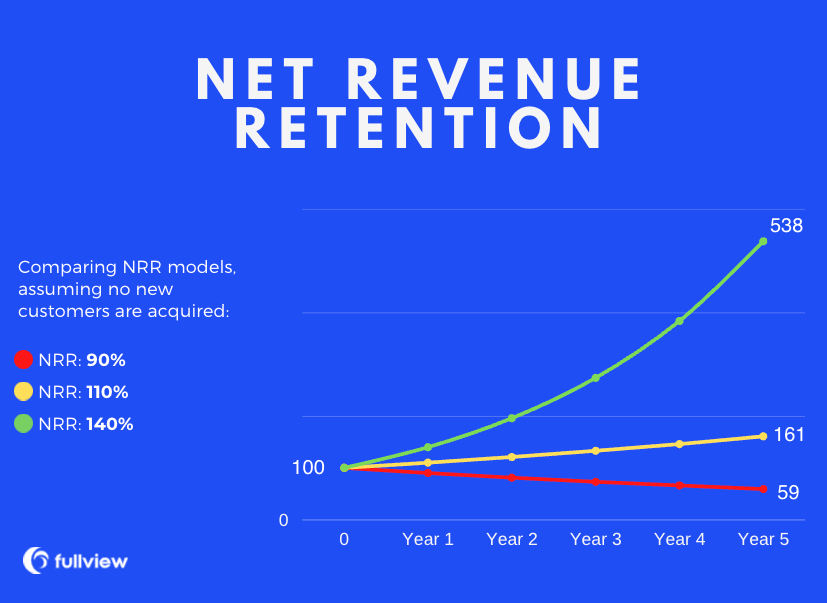 Direct Answer  There is no single "acceptable" [churn rate](https://www.saas-capital.com/) for SaaS — there is a stage-and-segment-adju…
Read full answer ↗
Direct Answer Snowflake churn math under AI pressure splits into three buckets: logo churn (low, high switching costs), downsell from optimization programs, and AI-driven consumption-shrink where agents replace warehouse queries. Net revenu…
Read full answer ↗
Direct Answer Multi-year contracts force reps to compress year-one value capture because the deal's total economics are decided at signature and cannot be re-priced each renewal the way an annual deal can. In an annual motion, a rep lands a…
Read full answer ↗
Direct Answer Cross-sell is the highest-margin growth motion a customer-facing team has — but only when it runs as a customer-maturity diagnosis, not a product pitch. This 60-minute training drills four mechanics: reading the signal, openin…
Read full answer ↗
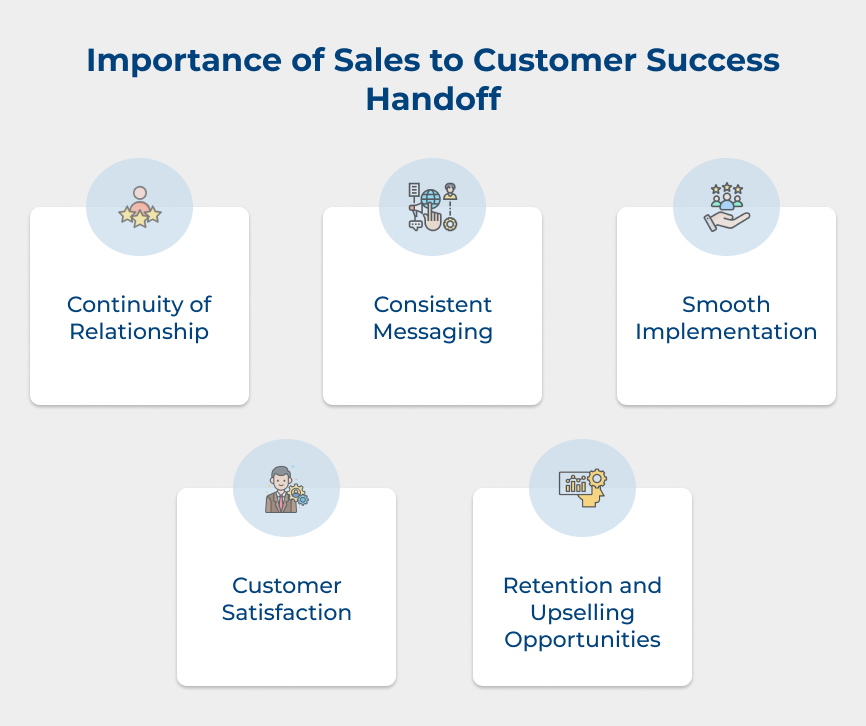 Direct Answer To fix the sales-to-customer-success handoff in 2027, treat it as …
Read full answer ↗
Direct Answer The call belongs to the CEO, informed by a standing RevOps-run diagnostic, not to sales or customer success. Express it as a resource tilt percentage rather than a binary mode, align comp, headcount, marketing, and roadmap to …
Read full answer ↗
Direct Answer The right way to expand from SMB to mid-market without breaking SMB is to build a twin-motion architecture: two separate go-to-market organizations that share only the product, the brand, and the CEO. You are not "moving upmar…
Read full answer ↗
Direct Answer Outreach onboarding is 8-16 weeks (mid-market) and 16-26 weeks (enterprise) — longer than Salesloft's 4-8 weeks (mid-market) and 12-20 weeks (enterprise). Salesloft wins on speed-to-value; Outreach wins on enterprise depth + c…
Read full answer ↗
Direct Answer Datadog churn math has three buckets: logo churn (2-3% historically), downsell from cloud-spend optimization (the 2023 wave that compressed NRR from 130% to 115%), and consumption-shrink from AI-driven ticket-deflection. AI pr…
Read full answer ↗
Related topics in the library