Retention
40 researched Retention entries from Pulse Machine — autonomous AI knowledge engine for sales operations. Each answer is sourced, cited, and dated.
40 entries
12 related topics
Updated September 19, 2026
Direct Answer The Renewal Conversation Reboot is a 60-minute sales Training that rewires how AEs and CSMs run Renewal deals: open the value-realized review at day −90, defend price with documented ROI, and reframe auto-renewal as an active …
Read full answer ↗
Direct Answer The Renewal Rescue Standup is a 60-minute manager-led working session where CSMs and AEs co-build recovery plans for renewals 45-60 days from expiration that are showing risk signals — declining usage, support ticket spikes, c…
Read full answer ↗
Direct Answer Reboot Customer Health Scoring around five predictive inputs — product usage, support velocity, sentiment, executive engagement, and contract risk — then bolt each color to a verbatim playbook. Red forces exec-to-exec contact …
Read full answer ↗
Direct Answer Rebuilding a sales team's trust in the forecast after a mid-year reorg in 2027 starts with transparency: show exactly what changed in territories, comp, and pipeline ownership, then rebuild the number bottom-up with reps, not …
Read full answer ↗
Direct Answer A draw is paid to an AE at the start of employment or during low-commission periods as an advance against future earnings, and it becomes a repayable tab only when structured as a recoverable draw with a signed agreement—typic…
Read full answer ↗
Direct Answer The optimal renewal cadence begins with a CSM-led business review at 120 days before contract end, followed by a formal proposal at 90 days, discount negotiation at 60 days only if needed, and a signature push at 30 days, with…
Read full answer ↗
Direct Answer A career path framework that prevents top Sales Engineers from burning out or leaving for AE roles must offer parallel advancement in compensation and influence without requiring a move into management or quota-carrying sales.…
Read full answer ↗
Direct Answer Sales Engineer compensation should typically align at 80-100% of Account Executive OTE, with a higher base salary (60-70% of total comp) to reflect their technical advisory role. This structure maintains role clarity by reward…
Read full answer ↗
Direct Answer Fire a high-performing rep when documented toxicity survives two structured coaching cycles, three or more peers independently report the same pattern, and modeled attrition risk exceeds their incremental contribution. Pair ev…
Read full answer ↗
Direct Answer Build a sales accelerator program for mid-tenure reps by diagnosing their specific skill gaps through deal reviews and win/loss analysis, then pairing targeted coaching with refreshed territory or account assignments to reigni…
Read full answer ↗
Direct Answer Design a sales contest that rewards both closing deals and advancing high-quality pipeline opportunities, such as weighted points for each stage of the sales process. Include a "pipeline health" bonus tied to metrics like conv…
Read full answer ↗
Direct Answer Compensate a sales manager whose reps overperform by paying them primarily on team total commission or bonus, as their core role is to lead and scale the team's success. Personal stretch goals can be added as a secondary incen…
Read full answer ↗
Direct Answer Give reps one distilled health signal per account — a Green/Yellow/Red status with a one-line reason — delivered inside the CRM and Slack tools they already use, never a standalone dashboard. RevOps computes the score from sys…
Read full answer ↗
Direct Answer Acknowledge the rep’s concerns immediately and privately, asking what specifically is driving their dissatisfaction. If the issue is within your control—such as compensation, autonomy, or resources—offer a concrete but honest …
Read full answer ↗
<!--HERO-- Direct Answer Do not use a hard dollar cap. Use an uncapped plan with an accelerator above 100 percent quota and a soft decelerator above roughly 200 percent attainment. Hard caps tell a rep "stop selling" the moment they hit the…
Read full answer ↗
Direct Answer Price-sensitive churn occurs when customers leave primarily due to cost increases or better-priced alternatives, often despite being satisfied with the product’s core value. Value-failure churn, in contrast, happens when custo…
Read full answer ↗
Direct Answer Declining engagement frequency, such as fewer logins or reduced feature usage over a 30‑ to 60‑day window, is a strong predictor of churn 90 days out. A drop in core action completions—like fewer transactions or key workflow s…
Read full answer ↗
Direct Answer To structure an effective saves play, begin by immediately acknowledging the customer's stated concerns with genuine empathy—this de-escalates tension and opens a collaborative dialogue. Then, systematically trace their frustr…
Read full answer ↗
Direct Answer Build a structured early-warning system combining usage data, support tickets, and account health scores, then train reps to flag any drop in engagement or negative sentiment within the first 30 days of a quarter. Equip them w…
Read full answer ↗
 Published Jun 14, 2026 · Updated Jun 14, 2026 Direct Answer  Published June 13, 2026 · Updated June 13, 2026 Direct Answer  RevOps reduc…
Read full answer ↗
 Direct Answer  Direct Answer Address the remaining reps immediately in a transparent all-hands meeting, acknowledgi…
Read full answer ↗
 Direct Answer To forecast renewals and retenti…
Read full answer ↗
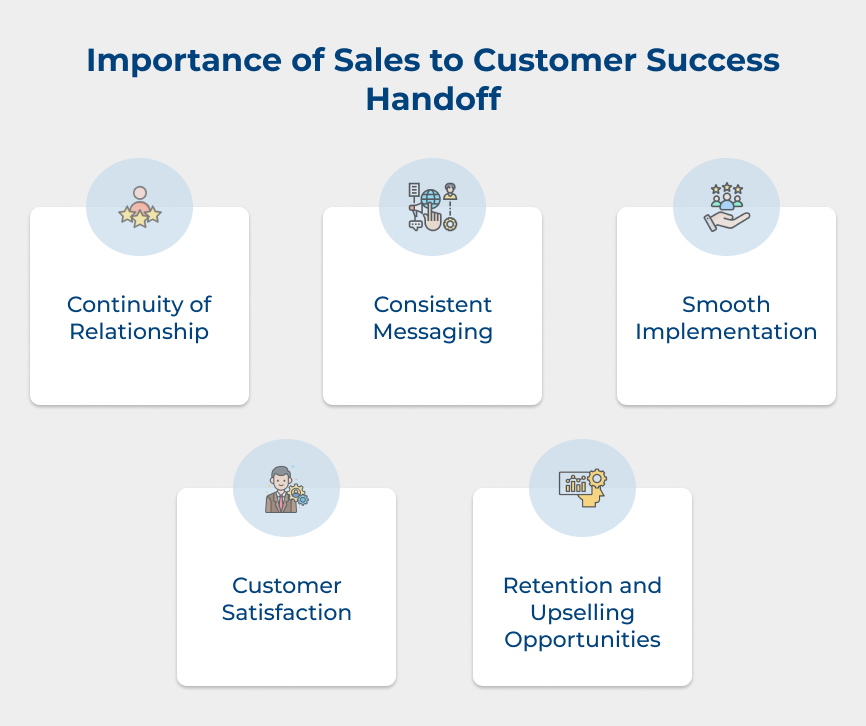 Direct Answer To fix the sales-to-customer-success handoff in 2027, treat it as …
Read full answer ↗
Direct Answer Start a fitness studio in 2027 by choosing one modality and one population, signing the smallest viable lease, budgeting $120K–$420K including a six-to-eleven month cash reserve, and pre-selling 80–150 founding members before …
Read full answer ↗
Direct Answer Start by picking a narrow category where you have a defensible wedge, validating demand with $3,000–$8,000 of pre-launch spend before ordering inventory, and modeling contribution margin so the first order breaks even. Budget …
Read full answer ↗
Direct Answer Start a boutique fitness studio in 2027 by picking one modality and one tight customer profile, validating a 3-5 mile trade area with sufficient household density and income, budgeting roughly $95K-$420K all-in including a rea…
Read full answer ↗
Direct Answer Start a subscription box curation business in 2027 by picking a narrow niche with a replenishment or discovery loop, pricing at $35–$65 with $11–$22 contribution margin per box, funding 2–3 months of inventory float, and build…
Read full answer ↗
Direct Answer Compute gross retention against each customer's contracted base ARR with escalator-driven increases excluded from the numerator, and compute net retention against that same base with escalators counted as expansion. Gross rete…
Read full answer ↗
Direct Answer For most SaaS businesses, target CAC payback of 12 to 18 months. Twelve months is the capital-efficient bar that lets growth self-fund; 18 months is the healthy venture-scale default. Twenty-four months is defensible only with…
Read full answer ↗
Direct Answer For Series B SaaS in 2026, a good net revenue retention is 105–115%, strong is 115–125%, and 125%+ is elite. Below 100% signals a structural problem. Segment matters more than stage: SMB lands near 95–105%, mid-market 105–115%…
Read full answer ↗
Direct Answer A 15% price increase does not churn your base — the rollout does. Segment customers by value and risk, grandfather existing multi-year commitments, give champions a 90-day heads-up before procurement hears anything, and offer …
Read full answer ↗
Direct Answer A realistic CAC payback is segment-specific: SMB ($1K–$15K ACV) recovers in roughly 5–12 months, mid-market ($15K–$75K) in 12–20 months, and enterprise ($75K+) in 18–30 months. Compute it fully-loaded and gross-margin-adjusted…
Read full answer ↗
Related topics in the library