
The Zero-Trust Networking Stack for Remote Engineering Teams in 2027
 Curated byKory White · Fractional CRO · Maryland
 PULSEKNOWLEDGE LIBRARY
Quality
Certified
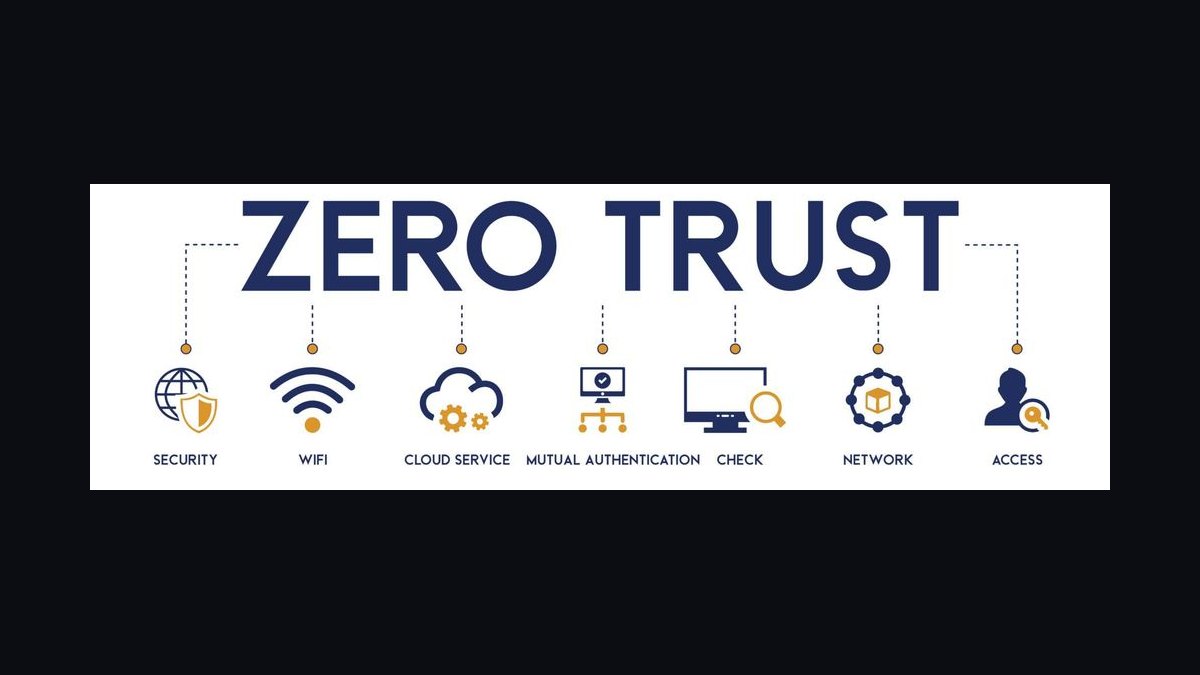
A 2027 zero-trust stack for Remote Engineering teams layers four components: an identity provider issuing short-lived, device-bound credentials; a ZTNA broker or mesh overlay replacing flat VPN reachability; endpoint posture signals feeding every authorization decision; and centralized logging tying each connection to a named human and machine. The measurable payoff is reduced blast radius, lower access latency, and audit answers in one query.
The outcome you should expect
The measurable outcome of replacing a flat remote-access VPN with a zero-trust Networking stack is not "fewer breaches" — that is unfalsifiable on a one-year horizon and no honest operator should promise it. The outcome is a change in blast radius, in access latency, and in how fast you can answer an auditor's question. Those three are observable within a quarter, and each can be instrumented with a number before you spend a dollar.
Blast radius is the headline. On a traditional concentrator VPN, a compromised laptop lands inside a routed network segment. Whatever that segment can reach, the attacker can reach — usually far more than the engineer ever needed. Under a properly segmented ZTNA deployment, the same compromised laptop can reach only the specific applications its identity is entitled to, and each of those connections is brokered, logged, and independently revocable. The practical test is simple: from a freshly enrolled device, run a port scan of an internal CIDR range. Under a VPN you will see hosts. Under working ZTNA you should see nothing, because there is no route — only per-application proxied sessions. If you still see hosts, you have deployed a VPN with a new logo on it, and that happens more often than vendors admit.
Access latency usually improves, but not universally, and the direction depends on your topology. A centralized VPN concentrator forces hairpinning: an engineer in Lisbon connecting to a workload in eu-west-1 may route through a concentrator in Virginia and back. Edge-brokered ZTNA or a WireGuard-based mesh removes that hairpin, and mesh overlays that establish direct peer-to-peer paths remove the middlebox entirely when NAT traversal succeeds. When it fails, traffic falls back to a relay and latency rises again — so measure the direct-connection rate, not just median latency.

The audit outcome is the one finance will care about. With per-application brokering, the question "who accessed the production billing service last Tuesday, from what device, and was that device patched at the time" has a single query answer instead of a correlation exercise across VPN session logs, host auth logs, and an asset inventory that is six weeks stale. Teams that reach this state typically stop treating access reviews as a quarterly fire drill.
A fourth outcome, less discussed: onboarding and offboarding collapse to identity operations. Deprovisioning a departing engineer becomes one action in the identity provider rather than a checklist spanning bastion host keys, VPN profiles, and per-service credentials. That is where the real operational savings hide.
What drives that outcome
Four mechanisms produce those results, and each fails independently — which is why partial deployments underperform so badly. Remove any one and the remaining components degrade into a more expensive VPN.

Identity as the control plane. Every access decision resolves to a verified human or workload identity, not an IP address. In practice this means an OIDC or SAML identity provider — Okta, Microsoft Entra ID, Google Workspace, or a self-hosted option like Keycloak — is the single source of authentication truth, and every downstream component consumes tokens from it rather than maintaining a local user database. The failure mode here is the forgotten local account: the Jenkins box with its own admin login, the legacy switch with a shared password. Those are the accounts that survive offboarding.
Phishing-resistant authentication. Push-based MFA is no longer sufficient on its own; push fatigue attacks are well-documented and NIST guidance has moved toward phishing-resistant factors. For Engineering teams specifically, WebAuthn/FIDO2 hardware keys or platform authenticators are the practical baseline, because engineers hold the credentials that matter most. Hardware-backed keys — a security key, or a TPM/Secure Enclave-bound passkey — mean a stolen password and a relayed prompt are not enough.
Device posture as a first-class input. Authorization asks two questions, not one: who are you, and what are you connecting from? Posture signals commonly include disk encryption state, OS patch level, whether the EDR agent is running and reporting, and whether the device certificate matches an enrolled asset. The important design choice is what happens on a posture failure — hard block, or degraded access. A hard block on "OS is 3 days behind" will get your stack disabled by frustrated engineers within a month.
Continuous evaluation, not one-shot login. A session authorized at 09:00 should not remain valid unconditionally at 17:00 if the device fell out of compliance at noon. This means short token lifetimes, re-evaluation on policy change, and a revocation path that actually propagates. Test the revocation path deliberately; many teams discover their "instant" revocation takes as long as the longest cached token TTL.
The diagram makes the dependency chain visible: posture feeds identity, identity feeds policy, policy feeds the broker, and the log store feeds back into policy.
Benchmarks and realistic ranges
Concrete planning numbers matter more than architecture diagrams when you are asking for budget. The ranges below reflect commonly published vendor pricing tiers and typical mid-size engineering deployments; verify current pricing directly, since per-seat rates change frequently and enterprise agreements diverge sharply from list.
Licensing. Per-user, per-month list pricing for the major categories generally lands in these bands: ZTNA/secure-access brokers in the single-digit to low-double-digit dollars per user; identity providers with adaptive access policies similar; EDR in the same range, sometimes billed per endpoint rather than per user. A ten-person engineering team can often run entirely on free tiers — Cloudflare Zero Trust and Tailscale both publish free tiers suitable for small teams, and Wazuh and the Elastic Stack provide open-source monitoring — while a 200-engineer organization should budget in the low tens of thousands per year across the four layers combined. Do not model the log pipeline as a flat per-seat cost; ingest-based SIEM billing scales with volume, not headcount, and it is the line item that surprises people.
Hardware. Budget two FIDO2 security keys per engineer, not one. The second key is the account-recovery path; without it your recovery flow degrades to a help-desk phone call, which is the exact social-engineering target you were trying to eliminate. Hardware keys are a one-time cost in the tens of dollars per key.
Rollout timeline. For an engineering org of 50–300 people, a realistic phased rollout runs three to six months of elapsed time, with the bulk of effort in application inventory rather than tooling. Expect roughly two to four weeks to stand up the identity provider and enrollment flow, two to six weeks to inventory and categorize internal applications, four to twelve weeks to migrate applications behind the broker in waves, and an indefinite tail for the three or four legacy systems that speak neither modern auth nor anything resembling it.

Latency. Measure before and after with a fixed synthetic transaction — an SSH handshake plus a trivial command, or an internal HTTP request — from at least three geographies your team actually works from. Edge-brokered access typically removes a hairpin worth tens of milliseconds for geographically dispersed teams. Mesh overlays achieve direct peer connections a high but not universal fraction of the time; symmetric NAT and restrictive corporate networks force relay fallback, which adds a hop. Track the direct-versus-relayed ratio as an explicit metric.
Adoption metrics worth instrumenting from day one. Percentage of engineers enrolled with a phishing-resistant factor. Percentage of internal applications reachable only through the broker. Number of surviving direct network routes to production. Median time from offboarding ticket to last-access revocation. Percentage of authorizations carrying a fresh posture signal versus a stale or absent one. Each of these is a number you can move; "we did zero Trust" is not.
Support load. Plan for a spike. The first four to six weeks after a wave migration typically generate elevated ticket volume around enrollment, key registration, and applications that behaved differently on the flat network. Staff for it explicitly, because unstaffed friction is how these programs get rolled back.
Risks, edge cases, and failure modes
The identity provider becomes a single point of failure. When every access path depends on one IdP, an IdP outage is a total work stoppage — engineers cannot reach the code, the infrastructure, or the incident tooling they would use to respond. This is a real and recurring operational risk, not a theoretical one. The mitigation is a documented, tested break-glass path: a small number of emergency credentials, stored offline, tied to named individuals, with alerting on every use and a mandatory post-use rotation. Untested break-glass is the same as no break-glass. Rehearse it quarterly.

Non-human identities are the neglected half. CI runners, deployment agents, service accounts, and scheduled jobs vastly outnumber humans in most engineering organizations, and they rarely get the same treatment. A stack that enforces WebAuthn for engineers while a build runner holds a long-lived static token has moved the weakest link, not removed it. Push workload identity toward short-lived, federated credentials — OIDC federation between your CI provider and your cloud, workload identity federation, or SPIFFE-style identities — and inventory every static credential that remains.
Legacy protocols that predate the model. Zero-trust brokers handle HTTP and SSH well. They handle a database client speaking a raw TCP protocol less gracefully, and they handle an appliance with a hardcoded management IP and no auth integration not at all. Every organization has three to five of these. Decide their fate deliberately: broker them at the TCP layer with tight per-identity policy, isolate them behind a jump host that is itself brokered, or accept a documented exception with compensating controls and a review date. What you must not do is leave a flat route open "temporarily" for them, because that route becomes permanent and it invalidates the segmentation everywhere else.
Posture checks that punish the wrong people. Overly aggressive posture policy — blocking on any pending update, on any unrecognized peripheral, on a browser one version behind — trains engineers to look for workarounds. The predictable result is a shadow path: a personal SSH tunnel, a forwarded port, a copy of production data on an unmanaged machine. Graduated response works better than binary: warn, then degrade to read-only or browser-isolated access, then block, with clear self-service remediation at each step.

BYOD and contractor devices. Full agent-based posture checking is often unavailable on a device you do not own. Browser-isolation approaches let you serve internal web applications to unmanaged devices without an agent, keeping data off the endpoint. This works well for web apps and poorly for anything requiring a local toolchain. For contractors who need real development access, the honest answer is usually a managed device or a managed cloud development environment, not a policy exception.
Logging gaps that only appear during an incident. A stack that logs authorizations but not denials, or logs the broker but not the endpoint, produces an incomplete timeline exactly when the timeline matters. Verify log coverage by running a tabletop: pick a hypothetical compromised account, and try to reconstruct every resource it touched over 30 days using only what you currently retain. Note every gap. Retention windows shorter than your realistic detection time are a gap too.
Cost drift in the log pipeline. Endpoint telemetry and access logs are high-volume. Teams routinely deploy a SIEM, ingest everything, and get a bill several multiples of the estimate. Tier the data: high-fidelity, short-retention for verbose telemetry; filtered, long-retention for authentication and authorization events. Decide this before ingest, not after the invoice.
Vendor concentration. Buying identity, ZTNA, endpoint, and logging from one vendor simplifies integration and worsens your negotiating position and your correlated-failure profile. Buying four best-of-breed products maximizes flexibility and hands you an integration project. Neither is wrong; pick deliberately and write down why, because the person renegotiating in three years will need that reasoning.
A practical rollout plan
Sequence matters enormously here. The single most common failure is buying the ZTNA product first and discovering that identity is not clean enough to build policy on.
Phase one — identity hygiene, before you buy any networking product. Consolidate authentication into one identity provider. Enumerate every local account on every internal system and either federate it or document why it cannot be. Establish groups that reflect actual entitlement boundaries — not the org chart, which changes for reasons unrelated to access. This phase produces no visible security improvement and is nonetheless the phase that determines whether everything after it works.
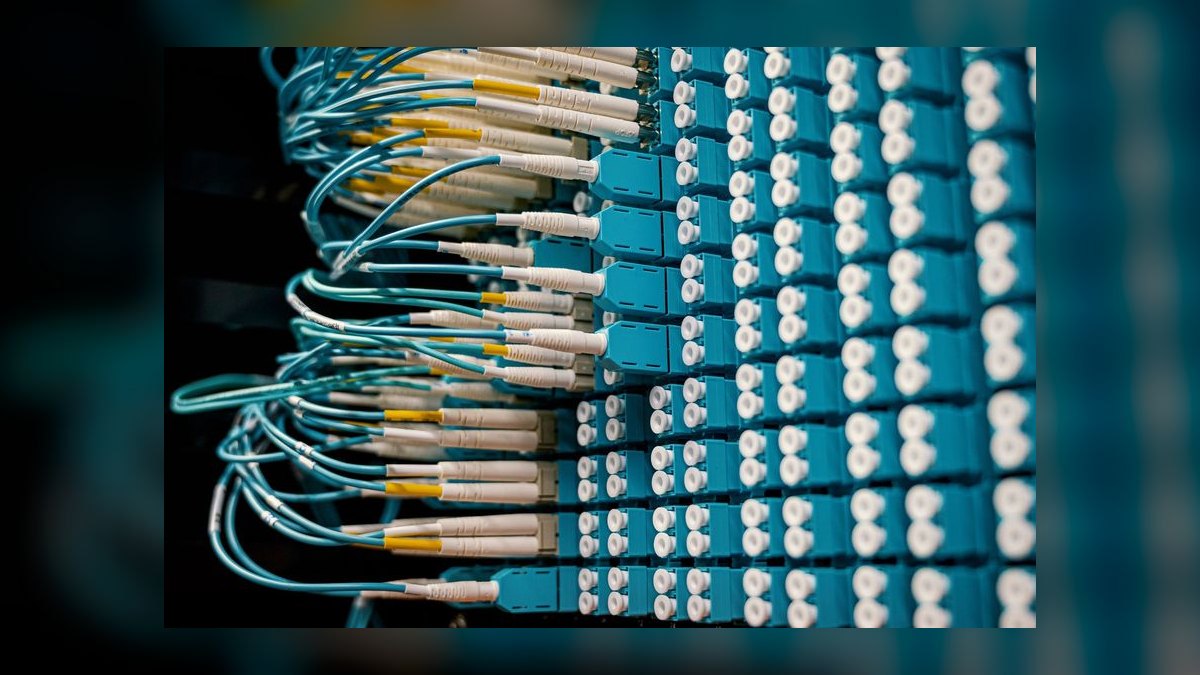
Phase two — enroll devices and establish posture. Deploy the endpoint agent and device certificates. Critically, run posture in *observe-only* mode first: collect signals, build a dashboard of how many devices would fail each check, and fix the fleet before you enforce. Enforcing on day one against a fleet with 30% failing checks produces an outage, not a security posture.
Phase three — inventory and tier applications. List every internal application, service, and admin interface an engineer reaches over the network. Tag each with protocol, sensitivity, and whether it supports modern authentication. This inventory is the actual work of the program. Sort into three buckets: web apps that broker cleanly, SSH and TCP services that broker with configuration, and legacy systems requiring a decision.
Phase four — migrate in waves, starting with a friendly cohort. Pick one team, ideally the platform or security team, and move their applications behind the broker with the old path still available. Fix what breaks. Then expand a wave at a time. Each wave should end with a specific removal: the corresponding VPN route or firewall rule is deleted, not merely deprecated. A migration that never deletes the old path has not reduced blast radius at all.

Phase five — cut over and verify by attack. After the final wave, disable the legacy remote-access path and verify by attempting the things that should now be impossible: scanning an internal range from an enrolled device, reaching an unentitled application, connecting from a device with the EDR agent stopped, using a revoked account. Document each result. This is the step that separates a real deployment from a diagram.
Phase six — operate. Quarterly access reviews driven from the broker's entitlement data. Quarterly break-glass rehearsal. Continuous monitoring for new flat routes appearing, because they will — someone always needs "just one" firewall exception for a migration that then ends.
The loop back from verification to wave migration is the important edge. Teams that treat cutover as a one-way door skip the discovery that a route survived.
Related questions
Does a mesh overlay replace a ZTNA broker, or do you need both?
They solve adjacent problems. Mesh overlays like WireGuard-based networks give encrypted device-to-device connectivity with strong identity binding. Brokers add per-application authorization, browser isolation, and clientless access. Small teams often run mesh alone; larger ones typically run mesh for infrastructure and a broker for applications.
How do you handle engineers who need root on production hosts?
Route privileged access through a brokered, session-recorded path with just-in-time elevation rather than standing root. Grant time-boxed elevation tied to an approved ticket, log the session, and expire automatically. Standing root on production is the entitlement most likely to survive an otherwise successful zero-trust rollout.
What does this mean for on-call incident response?
Design for it explicitly. On-call engineers need access during exactly the conditions — degraded infrastructure, possible IdP disruption — where strict enforcement is most fragile. Break-glass credentials, an out-of-band communication channel, and a rehearsed procedure are not optional extras; they are the difference between a controlled incident and a compounded one.
Can you adopt this incrementally without a big-bang cutover?
Yes, and incremental is strongly preferred. Run the broker alongside the existing VPN, migrate application by application, and delete the corresponding legacy route as each application moves. The discipline that makes it work is deleting the old path at each step rather than accumulating parallel access.
FAQ
How is zero-trust networking actually different from a VPN for a remote engineering team?
A VPN authenticates once and then grants network-level reachability — the device sits on a routed segment and can reach whatever that segment reaches. Zero-trust grants application-level access per request, evaluated against identity and device posture, with no underlying route to scan. The practical test is whether a port scan from an enrolled laptop finds anything.
Can a small team afford this, or is it enterprise-only?
Small teams can run a credible stack at very low cost. Major vendors publish free tiers for small user counts, open-source options like Wazuh and the Elastic Stack cover monitoring, and hardware security keys are a modest one-time purchase. The binding constraint for a small team is engineering time to configure and maintain it, not license cost.
What happens when an engineer's device is compromised mid-session?
The endpoint agent flags the device, posture signals go stale or fail, and the policy decision point should refuse to reissue credentials on the next evaluation. Whether that takes seconds or hours depends entirely on your token lifetimes and revocation propagation. Test this deliberately — the gap between assumed and actual revocation time is often large.
How do you support contractors and personal devices?
For web-based internal tools, browser isolation lets an unmanaged device access the application without data landing on the endpoint or an agent being installed. For contractors needing a real development toolchain, a managed device or a managed cloud development environment is usually the honest answer. Blanket policy exceptions for contractors defeat the model.
Does this stack satisfy SOC 2 or ISO 27001 requirements?
It provides strong evidence for access-control and monitoring criteria, but no stack is compliant by itself — compliance depends on configuration, documented policy, and demonstrated operation over time. The genuine benefit is that per-application brokering makes access-review and least-privilege evidence a query rather than a reconstruction project.
What is the most common reason these rollouts fail?
Never deleting the old path. Teams deploy the broker, migrate applications, and leave the legacy VPN running "for edge cases." Blast radius is unchanged, cost doubles, and the program is judged a failure on the next audit. Every migration wave must end with a specific route or firewall rule removed.
Sources
- NIST Special Publication 800-207, Zero Trust Architecture — https://csrc.nist.gov/publications/detail/sp/800-207/final
- NIST Special Publication 800-63B, Digital Identity Guidelines (authentication) — https://pages.nist.gov/800-63-3/sp800-63b.html
- CISA Zero Trust Maturity Model — https://www.cisa.gov/zero-trust-maturity-model
- Cloudflare Zero Trust documentation — https://developers.cloudflare.com/cloudflare-one/
- Tailscale — how Tailscale works — https://tailscale.com/blog/how-tailscale-works
- WireGuard protocol documentation — https://www.wireguard.com/protocol/
- W3C Web Authentication (WebAuthn) specification — https://www.w3.org/TR/webauthn-2/
- SPIFFE — workload identity specification — https://spiffe.io/docs/latest/spiffe-about/overview/
- Google BeyondCorp research publications — https://research.google/pubs/?q=beyondcorp
- UK NCSC zero trust architecture design principles — https://www.ncsc.gov.uk/collection/zero-trust-architecture
Related on PULSE
- [What is the recommended Zero Trust Network Access (ZTNA) Vendor sales and operations tech stack in 2027?](/knowledge/tk0231)
- [The Zero-Trust Edge Stack for Remote Healthcare Clinics in 2027](/knowledge/tk0528)
- [What is the best tech stack for an engineering firm in 2027?](/knowledge/tk0029)
- [The Data Engineering Stack: Ingestion, Transformation, and Orchestration in 2027](/knowledge/tk0512)
- [The Remote Education Tech Stack: Live Streaming, Interactive Whiteboards, and Assessment with WebRTC and Canvas API](/knowledge/tk0417)
This page will be disappearing soon. Save it to your device for $1 — or read it free while it is here.
@Kory-White- · if Venmo asks, the last 4 of my number are 2012
This page is gone.
This one is off the shelf now. $1 keeps it on your phone for good — the whole page, pictures and diagrams included.
 pulse-tech-stacksTech Stack for Boutique Fitness Studios in 2027
 pulse-tech-stacksWhat is the best tech stack for a commercial security & alarm monitoring company in 2027?
 pulse-tech-stacksWhat is the recommended Ski Resort Operations sales and operations tech stack in 2027?
 pulse-tech-stacksTech Stack for Summer Camps in 2027
 pulse-tech-stacksWhat is the best tech stack for a financial advisory or RIA wealth management firm in 2027?
 pulse-tech-stacksWhat is the complete software stack for an accounting firm in 2027?
 pulse-tech-stacksWhat software stack should a Residential Real Estate & Brokerage business run in 2027?
 pulse-tech-stacksWhat is the best tech stack for a casino or gaming operator in 2027?
 pulse-tech-stacksWhat is the complete software stack for an auto glass and windshield repair company in 2027?
 pulse-tech-stacksTop 10 API Design Tools for Developer Experience Teams in 2027