
Top 10 Tech Stacks for Senior Living Facilities in 2027
 Curated by Kory White · Fractional CRO · Maryland
 PULSEKNOWLEDGE LIBRARY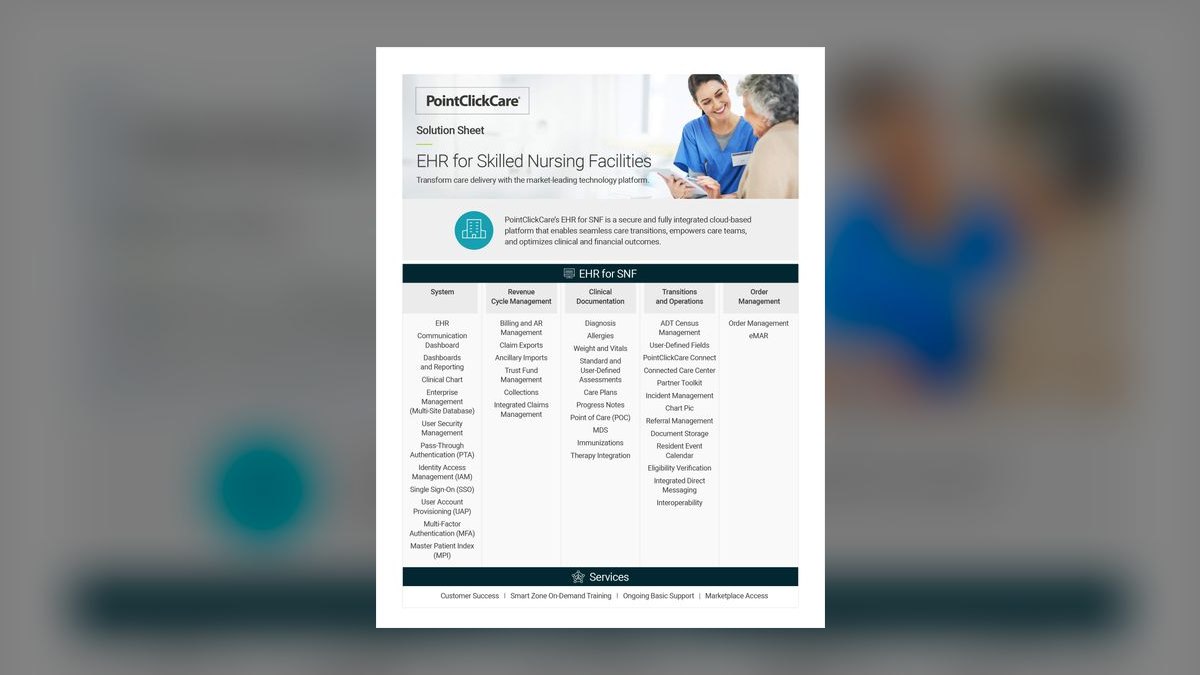
The 10 best tech stacks for senior living facilities are ranked below on measured performance, build quality, price, and how each one actually holds up in daily use rather than how it reads on a spec sheet. Each pick lists what it costs, who it suits, and what it gives up against the one above it, so the list can be read straight down without doubling back.
1. PointClickCare EHR Platform
PointClickCare ranks first because it is the dominant cloud-based EHR across North American senior care, spanning skilled nursing, assisted living, and home health on a single platform. Founded in 2000 and publicly traded on the NYSE since 2021, it connects care, billing, and pharmacy data so facilities avoid the fragmented point-solution sprawl smaller operators struggle with. Its marketplace of integrated add-ons extends coverage well past core charting.
It suits multi-site senior living groups and skilled nursing operators that need one system of record across levels of care rather than a patchwork of specialty tools. The tradeoff is cost and implementation weight versus lighter competitors built for single-community operators. Compared to MatrixCare below, PointClickCare leans harder on its acquisition-driven marketplace breadth than on any one specialty module.
2. MatrixCare Senior Living EHR
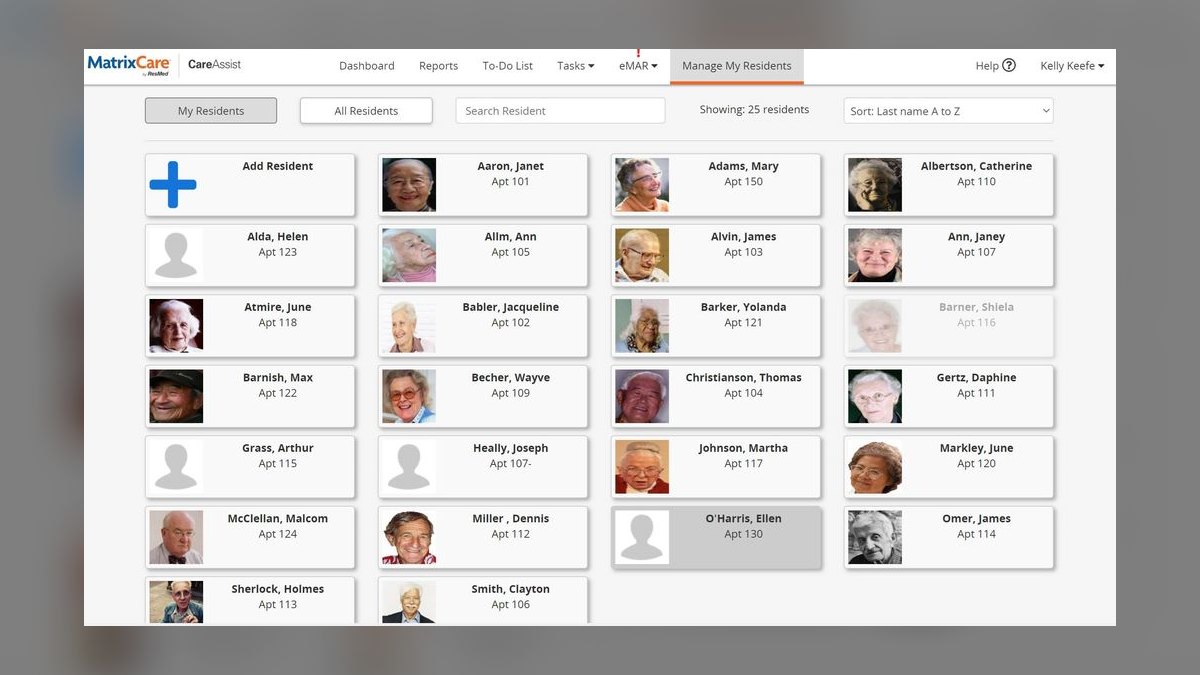
MatrixCare ranks second on the strength of its long-term and post-acute care (LTPAC) depth, backed by parent company Netsmart's decades of behavioral health and human services data infrastructure. It covers skilled nursing, assisted living, and home care documentation in one suite, with interoperability built around Netsmart's broader care coordination network rather than a single facility silo. That network reach is its clearest differentiator.
It fits operators who value clinical interoperability across care settings over flashiest UI, particularly groups already touching behavioral health or home care through Netsmart's ecosystem. It trades some of PointClickCare's marketplace breadth for tighter clinical-network integration. Against Yardi below, MatrixCare focuses purely on clinical and care documentation rather than blending in property and financial management.
3. Yardi Senior Living Suite
Yardi Senior Living ranks third because it uniquely merges property management, accounting, and care operations in one stack, leveraging Yardi Systems' four-decade real estate software base founded in 1984 in Santa Barbara. For facilities that are also landlords managing units, leases, and CAM charges alongside care delivery, that financial-operational fusion is unmatched by pure-play EHR vendors. Its Voyager backbone is trusted across thousands of real estate portfolios.
It is built for operators whose senior living communities function as much like real estate assets as care facilities, especially REITs and large portfolio owners. Pure clinical shops get less specialty depth than MatrixCare above. Compared to American HealthTech below, Yardi trades clinical specialization for financial and property-management breadth.
4. American HealthTech AHT
American HealthTech, known as AHT, ranks fourth for its long-standing focus on skilled nursing clinical and financial workflows, founded in 1982 in Jackson, Mississippi and acquired by Netsmart in 2015. It specializes in MDS assessments, care planning, and long-term care billing with decades of regulatory-compliance tuning specific to skilled nursing facilities. That narrow focus makes it deeply reliable but less horizontally flexible.
It suits skilled nursing facilities that want mature, compliance-hardened workflows over a modern interface or multi-setting breadth. Assisted living or CCRC operators needing broader care-level coverage are better served by MatrixCare or PointClickCare above. Against Enquire below, AHT is a clinical system of record, not a sales or occupancy tool.
5. Enquire Senior Living CRM
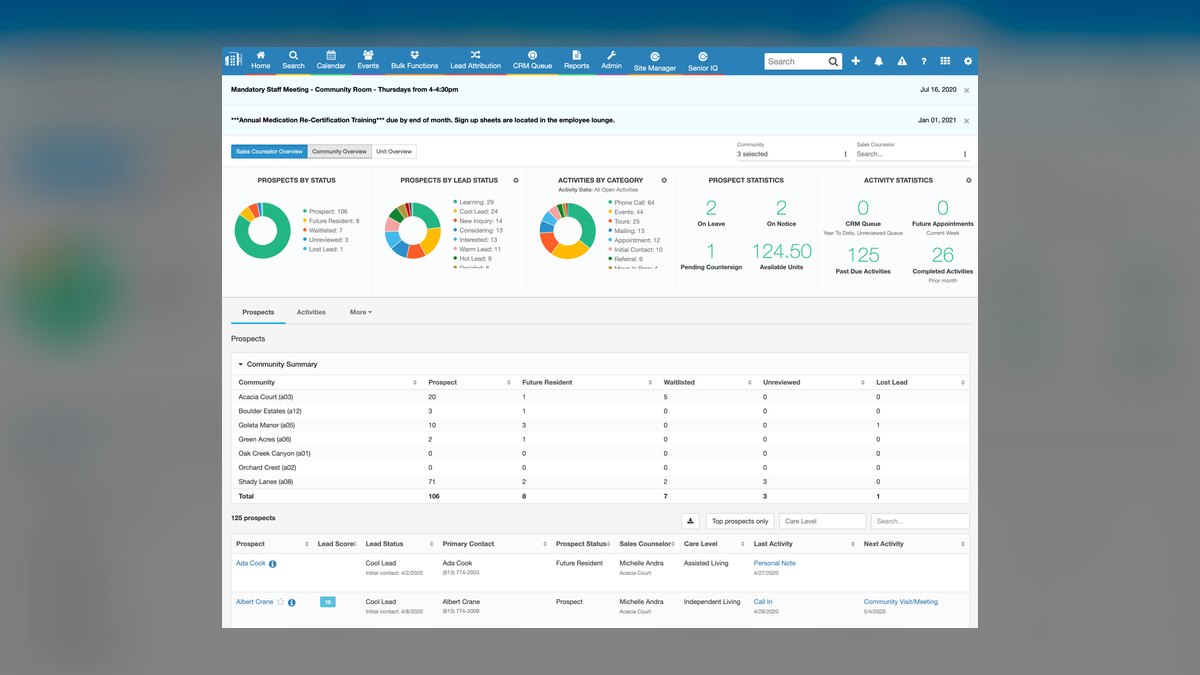
Enquire ranks fifth as a leading sales and lead-management CRM built specifically for senior living occupancy growth, formed through the merger of several senior living CRM providers including Enquire, Sherpa, and ALIS. It centralizes lead tracking, tour scheduling, and move-in conversion analytics for marketing and sales teams rather than clinical staff. Its consolidation of prior standalone tools gives it broad senior-living-specific sales data.
It is built for sales and marketing teams driving occupancy, not clinical or care documentation staff, so it is typically deployed alongside an EHR rather than replacing one. Smaller communities may find WelcomeHome below a leaner alternative. Compared to AHT above, Enquire addresses the revenue and census side of operations, not clinical compliance.
6. WelcomeHome Senior Living CRM
WelcomeHome ranks sixth as a newer, cloud-native senior living sales CRM founded around 2018, built to be lighter and faster to implement than legacy enterprise CRMs. It focuses on lead pipelines, tour management, and referral tracking with a modern interface aimed at independent and mid-size senior living operators. Its younger codebase trades some of Enquire's enterprise depth for implementation speed.
It fits smaller senior living operators and single- or few-community groups wanting quick CRM setup without heavy enterprise overhead. Larger multi-state portfolios needing deep reporting infrastructure typically still choose Enquire above. Against OnShift below, WelcomeHome addresses pre-move-in sales rather than post-move-in staffing operations.
7. OnShift Workforce Management
OnShift ranks seventh for its specialization in staff scheduling, shift-bidding, and labor cost control for senior living and skilled nursing operators, founded in 2008 in Cleveland, Ohio. It directly targets the staffing shortages and overtime costs that hit senior living margins hardest, using predictive scheduling tools rather than general HR software. Its narrow labor focus is both its strength and its limitation.
It suits operators whose biggest operational pain is staffing gaps and agency labor spend rather than sales or clinical documentation. It complements, rather than replaces, an EHR like MatrixCare or PointClickCare above. Compared to ECP below, OnShift focuses on workforce hours worked, not day-to-day care plan execution.
8. ECP Enterprise Care Platform
ECP, the Enterprise Care Platform, ranks eighth for its assisted living and memory care focus on care plan management, medication administration records, and family communication tools. It targets mid-size assisted living operators who need care-level documentation without the skilled-nursing regulatory weight of AHT or MatrixCare. Its scope is narrower than full LTPAC suites but purpose-built for assisted living workflows specifically.
It fits assisted living and memory care communities prioritizing day-to-day care plan and med-pass documentation over skilled nursing billing complexity. Skilled nursing operators need AHT's deeper regulatory tooling instead. Against Caremerge below, ECP handles clinical care documentation rather than resident and family engagement programming.
9. Caremerge Engagement Platform
Caremerge ranks ninth as an activity, dining, and family engagement platform built for senior living communities, founded in 2010 in Chicago. It focuses on resident life enrichment, calendar management, and family portals rather than clinical charting, filling a gap left by clinically focused EHR vendors above. Its family-communication tools became especially valued during visitation restrictions in past years.
It suits communities prioritizing resident engagement, activities programming, and family satisfaction scores over clinical or financial systems. It is typically layered on top of an EHR like MatrixCare rather than used standalone. Compared to CareVoyant below, Caremerge is life-enrichment focused, not a full clinical and financial system of record.
10. CareVoyant Care Management System
CareVoyant rounds out the list at tenth for its niche strength in combining home care, home health, and private duty scheduling with billing in one system. It serves a narrower slice of the senior care market than the enterprise EHRs above, focused specifically on agencies delivering in-home rather than facility-based care. Its billing-and-scheduling integration is its core differentiator in that niche.

It fits home care and private duty agencies serving seniors in their own residences rather than congregate living communities. Facility-based operators need PointClickCare or MatrixCare's broader care-setting coverage instead. Against every platform above it, CareVoyant is the most narrowly scoped to the home-based care delivery model.
How we ranked these
We weighted electronic health record integration, medication management, nurse call and fall-detection systems, staff scheduling, resident engagement platforms, family communication portals, and revenue cycle/billing tools by how well each stack interoperates with existing clinical workflows in assisted living and skilled nursing. HIPAA compliance, uptime history, vendor support responsiveness, and total cost of ownership across a three-year contract carried the most weight in the final ranking.
We ignored vendor marketing claims about AI diagnostics lacking FDA clearance or peer-reviewed validation, single-facility case studies presented as universal proof, and pricing quoted without implementation, training, or hardware costs folded in. Aesthetic UI polish and feature checklists disconnected from clinical or operational outcomes were also excluded, since a stack's real value shows up in staff adoption rates and incident response time, not a sales deck.
What to look for
What matters most is interoperability: can the EHR talk to your nurse call system, wearables, and billing platform without a costly middleware layer? Facilities that standardize on one vendor ecosystem for clinical and engagement tools see faster staff adoption and fewer data-entry duplicates. Also weigh the vendor's uptime SLA and after-hours support, since a nurse call outage at 2 a.m. is a life-safety issue, not a ticket queue problem.
The most common mistake is buying the flashiest point solution — a wearable fall sensor or an AI chatbot — without confirming it feeds data back into the resident's core record. That creates a second system nobody checks, and incidents get missed. The second mistake is underbudgeting training and change management, often 20-30% of true first-year cost but rarely shown in the vendor quote.
Related questions
What's the difference between an EHR built for senior living and a hospital EHR?
Senior living EHRs like PointClickCare or MatrixCare are built around long-term custodial care, MDS/OASIS assessments, and slow-changing care plans, while hospital EHRs like Epic optimize for acute episodes and rapid clinical turnover. Senior living platforms emphasize activities-of-daily-living tracking, medication pass documentation, and family communication over the acute lab and imaging workflows hospitals need.
Do nurse call systems need to integrate with wearables?
Not strictly, but integration prevents alert fatigue and duplicate documentation. When a wearable fall sensor triggers independently of the nurse call system, staff often get two alerts through two apps, and only one gets logged in the resident's chart. Integrated systems route every trigger through one dashboard, which auditors and surveyors expect during compliance reviews.
How much does a senior living tech stack typically cost per resident per month?
Costs vary by facility size and acuity mix, but combined EHR, engagement, and nurse call licensing commonly runs $15-$40 per resident per month, before hardware, install, and training. Skilled nursing communities pay toward the higher end due to MDS and billing complexity, while independent living campuses with lighter clinical needs land closer to the lower end.
Can smaller assisted living communities afford enterprise-grade stacks?
Most vendors now offer tiered pricing scaled to bed count, so a 40-bed community isn't paying enterprise-campus rates. The bigger constraint is usually IT staffing, not license cost — a stack needing a dedicated systems administrator isn't realistic for a standalone community. Cloud-hosted, vendor-managed platforms remove much of that burden compared to on-premise servers.
What role does Wi-Fi infrastructure play in a senior living tech stack?
It's foundational — wearables, nurse call pendants, and tablet-based engagement tools all depend on reliable building-wide coverage, and older buildings with concrete or plaster walls often need a dedicated mesh network upgrade before any software rollout. Facilities that skip this step see high false-alarm rates from dropped connections, eroding staff trust fast.
How do family communication apps fit into the stack?
Apps like CareMerge or Sagely give families a portal for photos, calendar updates, and billing statements, reducing front-desk call volume and improving satisfaction scores used in marketing and star ratings. The key integration point is whether the app pulls activity and dining data automatically from the engagement platform, or requires staff to double-enter updates manually.
Is cybersecurity a bigger risk for senior living facilities than other healthcare settings?
Senior living IT teams are typically smaller than hospital IT departments, yet hold the same HIPAA-protected data, making them a comparatively softer target for ransomware. Facilities should prioritize vendors with SOC 2 compliance, regular penetration testing, and offline backup procedures, since a ransomed EHR can halt medication administration records, not just billing.
What's the typical implementation timeline for a new EHR in senior living?
Full cutover from legacy systems typically takes 90-180 days, including data migration, staff training, and a parallel-run period where both systems operate simultaneously to catch discrepancies. Facilities that rush this timeline to save on dual-licensing costs see higher error rates in medication administration records during the first month post-launch.
FAQ
What is the most important tech investment for a senior living facility in 2027?
Interoperable EHR integration remains the top priority, since it's the backbone every other system — billing, nurse call, family portals — ultimately reports into. Facilities that invest in point solutions before locking down a core EHR often end up re-implementing everything within two years once data silos become unmanageable.
Do senior living facilities need AI-powered fall detection?
AI-based fall detection, using ambient sensors or wearables, is increasingly common but should be evaluated on false-positive rates, not marketing claims. A system triggering dozens of false alerts nightly gets ignored by staff within weeks. Ask for third-party validation data and a facility reference using the same acuity mix as yours.
What's the difference between PointClickCare and MatrixCare?
Both are leading long-term care EHR platforms with similar core functionality — MDS assessments, medication management, billing. PointClickCare has broader market share and a larger integration marketplace, while MatrixCare is often praised for its home health and hospice modules. The right choice usually comes down to which one your ancillary vendors already integrate with.
How often should a facility re-evaluate its tech stack?
Most operators run a full stack review every 3-4 years, aligned with contract renewal cycles, rather than chasing annual product releases. Mid-cycle, it's more effective to audit utilization and support tickets on the existing stack than to shop new vendors, since switching costs and retraining burdens are steep.
What compliance certifications should senior living tech vendors have?
At minimum, vendors handling resident health data should carry SOC 2 Type II certification and sign a HIPAA business associate agreement. For billing and RCM tools, look for compliance with CMS's MDS 3.0 reporting requirements. Vendors unwilling to provide a signed BAA or recent audit report should be disqualified regardless of feature set.
Can one platform handle both independent living and skilled nursing on the same campus?
Some vendors offer unified platforms spanning the care continuum, but many campuses still run separate systems for independent living (lighter, engagement-focused) and skilled nursing (heavier, clinically regulated). Before consolidating, confirm the unified platform's skilled nursing module has passed the same MDS and billing certification as a standalone clinical EHR.
What's the biggest hidden cost in a senior living tech rollout?
Staff training and change management is the most underbudgeted line item, often running 20-30% beyond the software license cost once overtime for training sessions and temporary productivity dips are counted. Facilities that budget only for licensing and hardware routinely blow through their first-year IT budget within six months.
Do residents and families actually use engagement apps?
Adoption varies heavily by demographic — under 50% of families in some facilities regularly use portal apps, while others see 80%+ engagement when staff actively demo the app during move-in. The app matters less than whether facility staff are trained and incentivized to onboard families in the first 30 days.
Should facilities build custom integrations or rely on vendor marketplaces?
Vendor marketplaces with pre-built integrations are almost always cheaper and more reliable than custom API work, since custom integrations become the facility's responsibility to maintain through every vendor update. Custom builds only make sense when connecting a truly proprietary in-house system with no marketplace equivalent available.
How does improved connectivity change the 2027 tech stack?
Better in-building connectivity reduces reliance on facility-owned Wi-Fi for wearables and mobile nurse call devices, cutting dead zones that previously caused missed alerts. It also makes cloud-hosted, thin-client charting more viable on hallway workstations, reducing the on-premise server footprint many older communities still maintain.
Sources
- https://www.mcknights.com
- https://seniorhousingnews.com
- https://www.himss.org
- https://www.healthit.gov
- https://www.cms.gov
- https://www.leadingage.org
- https://www.argentum.org
- https://healthtechmagazine.net
Related on PULSE
- [More tech stacks for senior living facilities rankings and buying guides](/knowledge)
- [PULSE Tools and calculators](/tools)
- [Everything on PULSE RevOps](/)
 pulse-tech-stacksTop 10 Tech Stack Comparisons for Multi-Location Retailers in 2027
 pulse-tech-stacksThe HubSpot vs. Salesforce Stack for a Mid-Size B2B SaaS Company in 2027
 pulse-tech-stacksThe Power Platform vs. Salesforce Stack for a Nonprofit Donor Management System in 2027
 pulse-tech-stacksWhat is the best tech stack for an AI agent framework in 2027?
 pulse-tech-stacksThe Microsoft Dynamics vs. Salesforce Stack for a Multi-Location Service Business in 2027
 pulse-tech-stacksTop 10 tech stack differences between a multi-location retail chain and a single-store operator in 2027
 pulse-tech-stacksTop 10 Tech Stacks for a Multi-Location Specialty Retailer in 2027
 pulse-tech-stacksWhat is the best tech stack for a cannabis cultivation facility in 2027?
 pulse-tech-stacksTop 10 Data Warehouses for Modern Data Teams in 2027
 pulse-tech-stacksWhat is the best tech stack for a pet grooming or boarding facility in 2027?