


Sales Coaching by Linda Richardson — Cliff Notes Summary
Quality
Certified
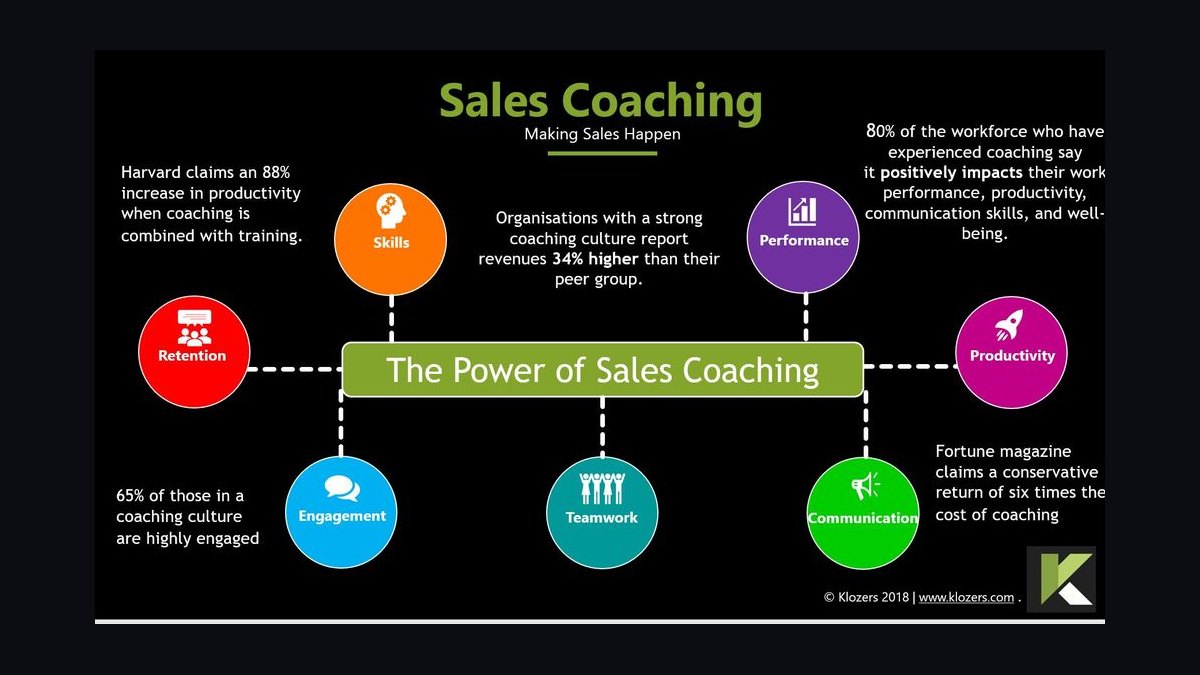
Linda Richardson's *Sales Coaching: Making the Great Leap from Sales Manager to Sales Coach* argues that coaching is a distinct skill from selling, and that most managers are promoted reps who never learned it. Its core is a five-step conversation — Connect, Explore, Discover, Advocate, Action — run through short pre-call and post-call sessions.
The outcome you should expect from working the book
The honest promise of this book is narrower than most sales-leadership titles, and that narrowness is why it has survived since 1996. Richardson does not claim a coaching framework will fix a broken territory design, a mispriced product, or a comp plan that pays reps to do the wrong thing. What she claims is that a manager who runs structured coaching conversations produces reps who diagnose their own deals faster, and that this compounds quietly over a year in ways a quarterly kickoff never does.
Concretely, a manager who works the book should expect four visible changes. First, forecast conversations get shorter and more accurate, because the weakness in a deal surfaces during coaching rather than in the last week of the quarter. Second, ramp for new hires compresses, because a rep who is coached before and after live calls learns from real conversations instead of from a training deck reviewed once in onboarding. Third, the manager's own calendar changes shape — less firefighting inside individual deals, more time spent on the two or three reps whose next skill jump moves the number most. Fourth, and least measurable, the manager stops being the bottleneck. Reps who have named their own gaps out loud, week after week, start naming them without being asked.

What you should not expect is a fast signal. Coaching is a lagging-outcome activity with leading-activity metrics, which is exactly why Richardson spends a chapter arguing you should measure the activity. A manager who runs pre-call and post-call sessions for six weeks and sees no quota movement has not failed; they have accumulated six weeks of a habit that pays out over a full sales cycle. If your average cycle is 90 days, the earliest honest read on coaching impact is roughly two cycles out — six months — and even then you are reading a trend, not a proof. Leaders who kill coaching programs at week eight are reading noise as signal.
There is a second-order outcome worth naming because it rarely appears in the book's own marketing: retention of the people you least want to lose. Richardson's argument about A-players — that they need more coaching, not less — lands hardest here. Strong reps interpret an absence of coaching as an absence of interest. A manager who only shows up when the number is at risk is, from the A-player's seat, a manager who is not invested in their career. The coaching cadence is, among other things, a retention mechanism disguised as a performance mechanism.
What drives that outcome

The mechanism is not the framework itself. Plenty of managers can recite Connect-Explore-Discover-Advocate-Action and still run a coaching session that is functionally a status update. What drives the outcome is the sequencing — specifically, the deliberate demotion of the manager's own advice from step one to step four.
Untrained managers start where they are strongest. A promoted top rep hears a deal problem and immediately pattern-matches: *here is how I would run that call*. Richardson's entire architecture exists to delay that instinct by three full steps. Connect establishes that this is a development conversation, not an evaluation — and the practical move is to open with the rep's agenda rather than yours. "What do you want to get out of the next twenty minutes?" produces a different session than "Let's review the Acme deal," because the first invites diagnosis and the second invites defense.
Explore and Discover are where the actual work happens, and Richardson's rule of thumb is that the rep should be doing roughly 70% of the talking through both. The questions that earn their keep are reconstruction questions: walk me through how the champion described the buying process; what did the economic buyer push back on; where are you least sure. These force the rep to rebuild the deal out loud, and the gaps become audible to both parties at the same moment. Discover is the shared diagnosis — and Richardson insists the gap be named by the rep with the manager's help, not delivered as a verdict. The reasoning is behavioral rather than sentimental: a rep who names their own gap owns the fix, while a rep who receives the gap argues with it.

Only at Advocate does the manager's experience get spent, and it should be spent narrowly — one tactic, one question to try, one story. Action closes the loop with two or three written commitments, owned by the rep, with a date, reviewed at the next session. Richardson's dividing line is unsentimental: no Action step means it was not coaching, it was a chat.
The three roles Richardson defines sit underneath this conversation and determine what you coach, not how. Skill coaching works on technique — discovery questions, objection handling, pacing — and its unit of analysis is a single conversation: a recorded call, a role-play, a ride-along. It runs weekly or per-call. Strategic coaching works the deal — stakeholder map, competitive position, account plan — and its unit is the opportunity, reviewed monthly or per-deal. Career coaching works the person — what they want to be doing in three years, which gap to close, whether enterprise or mid-market is the right next move — and it runs quarterly. Managers who collapse all three into one weekly meeting end up doing only the middle one, because deals are urgent and careers are not.
Benchmarks and realistic ranges
Richardson's numbers are structural rather than statistical, and that is a feature — a book from 1996 quoting close-rate percentages would have aged badly. The durable numbers are the ones about time allocation and cadence, and they hold up because they describe human attention rather than market conditions.
The pre-call session is ten minutes and five questions: What is the objective? Who is in the room? What is your opening? What is the most likely objection? What next step will you ask for? The post-call is ten minutes and five more: What happened? What worked? What did not? What is the new next step? What will you do differently? Ten minutes is not an arbitrary round number — it is short enough that a manager can defend it on a full calendar, and long enough to force a rep to commit to a specific next step out loud before they are in front of a buyer.
The cadence math is where the leverage becomes obvious. Two coached calls per rep per week, across a team of eight, is sixteen coaching touches a week — roughly 160 minutes of the manager's time, or about half a day. Over a 50-week year that is 800 coached calls on one team. Compare that to a two-day annual training offsite: sixteen hours of instruction, delivered once, against roughly 130 hours of coaching delivered in the context where the skill is actually used. The book's claim that pre-call and post-call coaching transforms reps faster than any training program is really a claim about repetition and context, not about content quality.
For weekly one-to-ones, Richardson prescribes 60 to 90 minutes of protected time per rep. In practice, most managers running teams of six to ten find 60 minutes is the sustainable number, with 90 reserved for reps in a ramp or a turnaround. Above roughly ten direct reports the math stops working: ten reps at 60 minutes of one-to-one plus two ten-minute pre/post pairs each is over fifteen hours a week before pipeline reviews, forecast calls, escalations, or the manager's own management. This is a real and underdiscussed constraint on span of control — the book's cadence is a quiet argument for keeping teams under about eight.
On measurement, Richardson's guidance is to instrument the activity, not just the result: sessions per rep per week, pre-call slots used versus available, post-call coverage on major calls. Activity is leading, outcome is lagging, and a manager who can only report on outcome has no ability to correct mid-quarter. A reasonable starting bar for a team adopting this is 80% post-call coverage on deals above a defined threshold and one protected one-to-one per rep per week held at least 90% of scheduled occurrences. Those two numbers are honest, checkable, and unglamorous — which is the point.
Risks, edge cases, and failure modes
The most common failure is the player-coach trap, and it is structural rather than personal. A manager who carries their own quota — common in early-stage companies and in small enterprise teams — will always resolve a calendar conflict in favor of their own deal, because their own deal has a name and a date and a commission attached. The realistic mitigation is not willpower. It is either removing the carried quota or explicitly ring-fencing coaching slots as immovable, the same way a customer meeting is immovable.
The second failure mode is Advocate creep. Managers who nominally adopt the five steps tend, under time pressure, to compress Explore and Discover into a single setup question and then deliver the answer they had before the session started. The tell is talk-time: if the manager is speaking more than a third of the session, the framework has collapsed back into telling. Call-recording platforms make this checkable in a way it was not in 1996 — a manager can audit their own coaching sessions for talk ratio the same way they audit a rep's discovery call.
Third, the Coaching Sandwich fails when the bread is generic. "Good job on that call" followed by a real criticism followed by "keep it up" reads to any competent rep as a delivery vehicle for the middle slice, and it trains them to discount the praise entirely. Richardson's qualifier is that the positives must be behaviorally specific — the question about their renewal cycle was sharp — because a specific observation proves you were actually paying attention. Generic praise is worse than no praise, since it signals the opposite of attention.
Fourth, coaching applied to the wrong problem does damage. If a rep is missing because the territory has no accounts, or the product genuinely loses the head-to-head, or the comp plan rewards logo count while the company needs expansion revenue, then a weekly coaching conversation about discovery technique is a manager telling a rep to try harder at something that is not the constraint. Richardson's frameworks are silent here, and that silence is a real limitation: the book assumes the go-to-market machine around the rep is basically sound. A modern operator should run a quick systems check — territory, ICP fit, pricing, comp — before concluding a gap is a skill gap.
Fifth, there is a documentation edge case. The Action step depends on commitments being written down and reviewed, and in most teams that means a CRM field or a shared note. When coaching notes live in the manager's private notebook, the commitments quietly stop being reviewed, and the loop breaks at exactly the step that makes it coaching rather than conversation. Where those notes live is a small operational decision with outsized consequences.
Finally, the book has genuinely aged in one dimension. Its 1996 workflow assumes live ride-alongs and paper call plans. The modern equivalent — reviewing an AI-flagged ninety-second clip from a recorded call rather than sitting in the room — is the same coaching conversation with far more leverage, and Richardson acknowledged call recording in the 2008 update. The risk in the modern version is the inverse of the old one: it is now easy to generate more coaching signal than any manager can act on, and a dashboard full of talk-ratio metrics can substitute for the conversation entirely. The metrics are inputs to Explore, not replacements for it.
A practical rollout plan

Treat adoption as a habit change with a calendar dependency, not a training rollout. The failure pattern for coaching programs is uniform: a kickoff, high enthusiasm, four good weeks, then quarter-end, then nothing. Building around that pattern means starting smaller than feels serious.
Weeks one and two: pick one rep and two calls per week. Not the whole team. Run the five pre-call questions and the five post-call questions, ten minutes each, and write down what the rep committed to. The goal in this phase is only to prove the slot survives contact with a busy week. If it does not survive for one rep, it will certainly not survive for eight.
Weeks three through six: extend to the full team at one coached call each per week, and add the protected weekly one-to-one at 60 minutes. Split that hour deliberately — roughly two thirds strategic coaching on live opportunities, one third skill coaching against a specific recorded moment. Career coaching does not belong in the weekly slot; it gets its own quarterly session, because career conversations lose to deal urgency every single time they share an agenda.
Weeks seven through twelve: instrument it. Track sessions per rep, pre-call coverage, and post-call coverage, and review those three numbers with your own manager the way you review pipeline. This is the step most teams skip, and skipping it is why coaching programs are invisible when budget season arrives — an activity nobody measures is an activity nobody can defend.

Two adjacent moves make the rollout stick. The first is upstream: align what you coach with whatever qualification language your team already uses, so that Discover questions map to the same fields your pipeline review reads. If the team runs a stakeholder-and-pain qualification model, the Explore questions should surface exactly those elements, and the coaching conversation stops being a separate ritual. The second is downstream: feed patterns from coaching back into enablement. When four reps in a month all miss the same stakeholder type, that is not four coaching problems — that is one content or training gap, and the manager who spots it saves the next four conversations.
For the manager coaching other managers — a second-line leader — the same five steps apply, with the unit of analysis moved up. You are coaching the coaching session, not the deal. The most useful artifact is a recording of your frontline manager's own one-to-one, reviewed together, with the talk-ratio question asked plainly. Second-line leaders who only inspect pipeline are running Richardson's failure mode one level up.
Related questions
How is this different from *The Coaching Habit*?
Bungay Stanier's book is domain-neutral and question-first, built around a small set of habit-forming questions for any manager. Richardson's is sales-specific and conversation-structured, with pre-call and post-call rehearsal tied to live deals. They are complementary: one supplies the reflex, the other supplies the sales cadence.
Do I need call-recording software to run this?
No. The book predates it and the five steps work against a ride-along, a role-play, or a rep's verbal recap. Recording adds leverage — reviewing a flagged ninety-second clip beats sitting through a full call — but it changes the input to coaching, not the coaching conversation itself.
How many direct reports can one manager coach this way?

Practically, six to eight. Ten reps at a weekly hour plus two ten-minute pre/post pairs each exceeds fifteen hours a week before pipeline, forecast, and escalations. The cadence is a quiet argument for narrower spans of control than most orgs run.
Should this apply to SDRs and customer success too?
Yes, with a shorter loop. SDR calls are brief enough that pre-call coaching often collapses into a two-minute objective check, while post-call review of recorded conversations carries most of the value. CS renewal conversations map cleanly onto strategic coaching, since the unit of analysis is an account rather than a call.
What is the single first change to make?
Put a ten-minute pre-call slot on the calendar before your top rep's biggest call this week and a ten-minute post-call slot right after. Run the five questions each time. One rep, one week, before scaling anything.
FAQ
Who is Linda Richardson?
Richardson founded the sales-training firm that carries her name in 1978 and taught at the Wharton School. She is the author of several books on selling and sales management, of which *Sales Coaching* is the most widely referenced by frontline sales managers. The firm was acquired in 2020 and its coaching curricula remain in use.
What are the five steps of the coaching conversation?

Connect (set context and ask the rep's agenda), Explore (open-ended questions that surface the rep's own diagnosis), Discover (name the gap together), Advocate (offer one specific tactic or story), and Action (agree two or three written commitments with a date). The order matters more than the labels.
What is the actual difference between coaching and managing?
Managing is telling — assigning quota, reviewing forecast, pushing a deal over the line. Coaching is asking — surfacing the rep's thinking so they can solve the next deal without you. Both are part of the job. A manager who only manages produces reps who cannot operate independently.
Why put Advocate at step four instead of step one?
Because promoted top reps instinctively start there, and a manager's answer delivered first shuts down the rep's own diagnosis. Delaying advice through three steps forces the rep to reconstruct the deal out loud, which is where the real gap becomes visible to both people simultaneously.
Do top performers really need more coaching?
Richardson argues yes, and the reasoning is about interpretation rather than skill. A-players read the absence of coaching as the manager losing interest, and they plateau or leave. The content shifts — coach them toward the role they want next, not toward this quarter's quota.
How long before coaching shows up in the numbers?
Longer than most leaders allow. With a 90-day sales cycle, the earliest honest read is roughly two cycles out. In the meantime, measure the activity — sessions per rep, pre-call and post-call coverage — because leading indicators are the only thing available before the lagging ones arrive.
Sources
- https://www.mheducation.com/
- https://www.richardson.com/
- https://www.wharton.upenn.edu/
- https://hbr.org/2011/07/the-dirty-secret-of-effective-sales-coaching
- https://hbr.org/2016/11/how-to-be-a-great-sales-coach
- https://www.gartner.com/en/sales
- https://www.mckinsey.com/capabilities/growth-marketing-and-sales/our-insights
- https://boxofcrayons.com/the-coaching-habit-book/
- https://www.trilliondollarcoach.com/
Related on PULSE
- Changing the Sales Conversation by Linda Richardson — Cliff Notes Summary
- The Coaching Habit by Michael Bungay Stanier — Cliff Notes Summary for Sales Managers
- Cracking the Sales Management Code by Jason Jordan and Michelle Vazzana: Summary, Key Lessons, and RevOps Takeaways
- Major Account Sales Strategy by Neil Rackham: Summary, Key Lessons, and RevOps Takeaways
- The Advantage by Patrick Lencioni — Cliff Notes Summary for Sales Leaders
This page will be disappearing soon. Save it to your device for $1 — or read it free while it is here.
@Kory-White- · if Venmo asks, the last 4 of my number are 2012
This page is gone.
This one is off the shelf now. $1 keeps it on your phone for good — the whole page, pictures and diagrams included.
 pulse-recentCrossing the Chasm by Geoffrey Moore — Top 10 Key Takeaways for Sales Leaders in 2027
 pulse-recentFanatical Prospecting by Jeb Blount — Top 10 Key Takeaways for Sales Leaders in 2027
 pulse-recentThe Greatest Salesman in the World by Og Mandino — Top 10 Key Takeaways for Sales Leaders in 2027
 pulse-recentWhat is the first concrete step in The Sandler Rules by David Mattson for a sales leader to implement the system in 2027?
 pulse-booksRework by Jason Fried and David Heinemeier Hansson — Cliff Notes Summary
 pulse-recentConceptual Selling by Robert Miller and Stephen Heiman — Top 10 Key Takeaways for Sales Leaders in 2027
 pulse-recentHyper Sales Growth by Jack Daly — Top 10 Key Takeaways for Sales Leaders in 2027
 pulse-recentWhat is the most actionable step in The Sandler Rules for Sales Leaders by David Mattson to improve discovery in 2027?
 pulse-recentProActive Selling by Skip Miller — Top 10 Key Takeaways for Sales Leaders in 2027
 pulse-recentSPIN Selling by Neil Rackham — Top 10 Key Takeaways for Sales Leaders in 2027