


What is the most actionable step in The Sandler Rules for Sales Leaders by David Mattson to improve discovery in 2027?
Quality
Certified
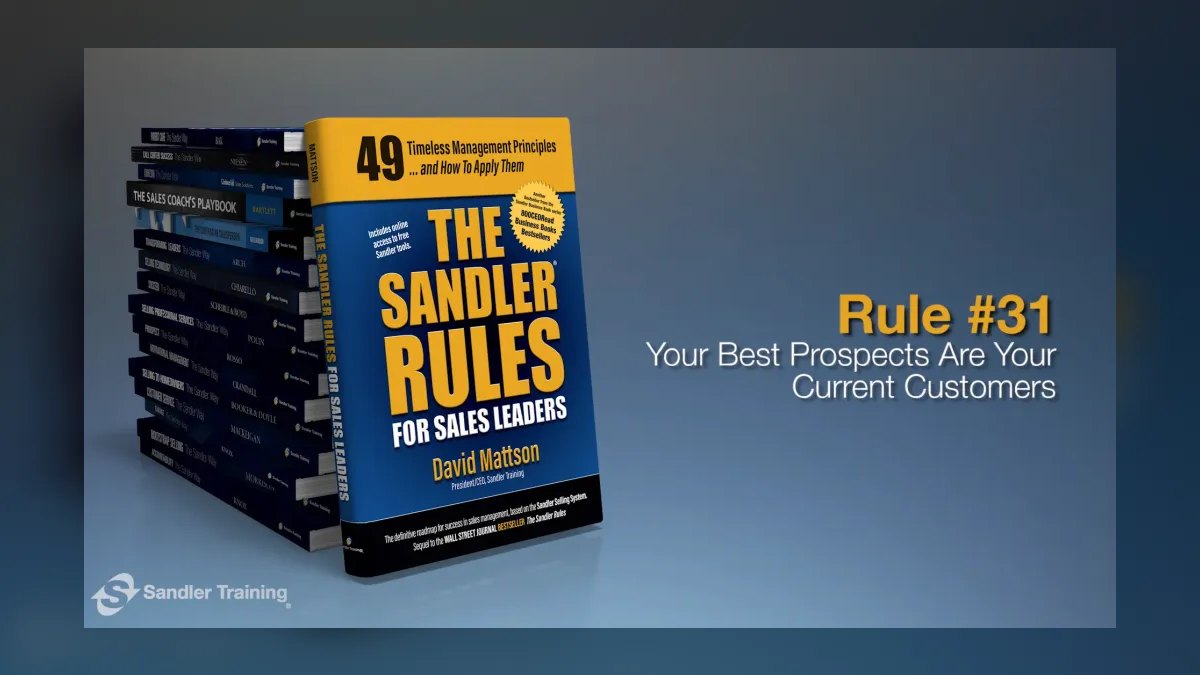
The single most actionable step is Rule #7 — "You never have to like prospecting, you only have to do it" — operationalized as a leader-enforced discovery pre-brief: before any first call, the rep writes the pain question set and the exit criteria. Sandler's core discipline is asking, not telling, so leaders coach the questions, not the pitch.
The Tuesday pipeline review that keeps producing the same dead deals
Picture a mid-market software team of nine reps and one director. Every Tuesday at 9:00 the director opens the forecast board and walks the top fifteen opportunities. Rep after rep describes deals in the language of the buyer's org chart — "we met with the VP, she loved it, she's taking it to her boss" — and the director asks the question that has been asked in that room for four years: "So what's next?" The answer is always a meeting. Never a decision, never a budget number, never a named consequence of doing nothing. Two quarters later, roughly 40% of those deals are still on the board, aged past 120 days, and the team calls them "slow" rather than what they are, which is undiscovered.
This is the exact failure David Mattson wrote *The Sandler Rules for Sales Leaders* to address, and it is a leadership failure before it is a rep failure. The book's premise is that sales managers spend their time inspecting outcomes they cannot change — closed/won, stage, forecast category — instead of inspecting the behaviors that produce those outcomes. A deal that reached "proposal" without a quantified pain, a confirmed budget conversation, and an identified decision process was never a proposal-stage deal. It was a demo with optimism attached to it. The director inspecting the stage field is inspecting a lie the CRM has agreed to tell.
The reason discovery specifically is where this compounds is arithmetic. Everything downstream of discovery — the demo script, the business case, the pricing conversation, the mutual action plan, the security review — is built on facts gathered in the first two calls. If those facts are wrong or missing, every hour spent downstream is spent building on sand, and the cost of that error grows the further you get from the source. A bad discovery call costs thirty minutes. A bad discovery call discovered in month four of an enterprise cycle costs a quarter of a rep's capacity, a solutions engineer's time, a legal review, and the credibility hit of walking a deal backward.
So the actionable step is not "do better discovery." It is a specific, inspectable leadership behavior: the manager reviews the written question set *before* the call and reviews the written answers *after* it, and no opportunity advances a stage without those artifacts. Mattson's argument throughout the book is that leaders get the behavior they inspect. If you inspect stage, you get stage manipulation. If you inspect discovery artifacts, you get discovery. That is the whole mechanism, and it is deliberately unglamorous — this is a Sandler strategy built on repetition, not insight.
The adjacent workflows this touches are worth naming early, because most teams try to fix discovery in isolation and fail. Territory design affects it: a rep with 800 accounts runs shallow discovery because depth is economically irrational for them. Compensation affects it: if the plan pays on bookings only, with no clawback and no ramp on retention, the rep is correctly optimizing for volume of qualified-ish deals rather than quality of qualified ones. Marketing's MQL definition affects it, because a rep who inherits a lead defined by a whitepaper download has nothing to build on and will substitute a product tour for a discovery conversation. Fix the discovery pre-brief without touching these and you get compliance theater — reps filling in fields to satisfy a manager, which is the behavior Sandler's Rule #43 ("Improve your people and improve yourself") is specifically warning against.
One more piece of the scenario matters. In 2027, the pressure on discovery is not just internal. Buyers arrive at the first call having read the docs, watched a competitor comparison video, and asked an AI assistant to summarize the category. The information asymmetry that made "let me walk you through what we do" a viable opening is gone. The only thing the rep knows that the buyer's research does not is what is specifically true about *this* buyer's operation — and the only way to get that is to ask. That is why the Sandler emphasis on questions over presentation reads as more current now than it did when the book was written, not less.
How the pre-brief mechanism actually works
The mechanic is a two-artifact loop attached to every first meeting, owned by the manager, not the rep. It costs about ten minutes of manager time per call reviewed and it replaces, rather than adds to, the pipeline review conversation.

Artifact one: the pre-brief. Twenty-four hours before the discovery call, the rep writes four things into a fixed template. First, the hypothesized pain — a one-sentence statement of what is probably broken in the buyer's operation, stated in the buyer's terms, not the product's ("their renewal team is manually reconciling usage data across two systems" not "they need our analytics module"). Second, five to eight questions, written verbatim, that would confirm or kill that hypothesis. Third, the "up-front contract" — the explicit agreement on the meeting's agenda, time box, and the range of acceptable outcomes, including "no." Fourth, the exit criteria: what specifically must be true at the end of the call for this to become a real opportunity, and what would cause the rep to disqualify.
Artifact two: the debrief. Within four hours of the call, the rep records the answers — not a narrative summary, the answers. Pain in the buyer's words. Financial impact with a number or an explicit "not yet quantified." Decision process with names and a sequence. Timeline with a compelling event or an explicit "none identified." The manager reads it and does one of three things: advance, send back for a second discovery call, or disqualify.
The manager's coaching moves happen at the pre-brief, not the debrief, and that ordering is the whole point. Coaching after the call is autopsy; coaching before the call is intervention. A manager who reads a pre-brief and sees five feature-shaped questions ("do you currently use a data warehouse?") can rewrite them into pain-shaped questions ("when the renewal team finds a discrepancy in the usage data, what happens next — who fixes it and how long does it take?") in about ninety seconds, and the rep runs a different call as a result. Same rep, same account, materially different outcome, from ninety seconds of leader input placed at the right moment.

mermaid flowchart LR P["Discovery quality problem"] --> Q{"Where is the<br/>variance concentrated?"} Q -->|"Across the whole team"| R["Pre-brief loop<br/>+ question coaching"] Q -->|"In 2-3 named reps"| S["Individual coaching<br/>or staffing decision"] Q -->|"Fields empty but<br/>calls are good"| T["Qualification framework<br/>MEDDIC / SPICED"] Q -->|"Reps ask but<br/>don't listen"| U["Recorded call review<br/>monthly deep-dive"] Q -->|"Volume makes<br/>depth impossible"| V["Fix territory design<br/>then revisit"] R --> W["Manager time cost:<br/>6-8h/week at full coverage"] W --> X["Ration: new reps,<br/>high ACV, rotating sample"] T --> Y["Risk: populated fields,<br/>low-quality contents"] U --> Z["Highest fidelity,<br/>highest cost per unit"] </parameter>
The honest summary of the trade space: the pre-brief loop has the best ratio of behavior change to implementation cost, which is why it is the *most actionable* step, but "most actionable" is not "most powerful." Territory redesign and comp restructuring are more powerful and take two quarters. Start with the loop because you can start it Monday, and use what it reveals to build the case for the structural changes.
Where this goes wrong, and how to keep it honest

Pitfall: the manager grades instead of coaches. If the pre-brief review turns into a red-pen exercise, reps optimize for a passing grade. The tell is pre-briefs that get shorter and more generic over time. The fix is a rule the manager holds themselves to: the review produces at most three suggested changes and at least one question the manager genuinely does not know the answer to. Curiosity models the behavior you are asking for.
Pitfall: exit criteria that are actually stage criteria. "Has a follow-up meeting scheduled" is not an exit criterion, it is an activity. Real exit criteria are facts about the buyer's world: a named consequence of inaction, a person who can approve spend, a process with steps, a date driven by something other than the rep's quarter. If your criteria can be satisfied by anything the rep controls unilaterally, they are not criteria.
Pitfall: skipping the up-front contract because it feels awkward. Sandler's up-front contract — agreeing at the top of the call on agenda, duration, and what outcomes are acceptable including a clean "no" — is the piece reps drop first because it feels stilted to say out loud. It is also the piece that prevents the single most expensive discovery failure: the call that ends with mutual vagueness. Have the rep write the contract verbatim in the pre-brief and read it. It stops sounding scripted around the fifth time.

Pitfall: treating "no" as failure in the metrics. If your dashboard rewards meetings-to-opportunity conversion, you have built an incentive against disqualification, and no amount of coaching overcomes an incentive. Add disqualification-within-14-days as a tracked, celebrated metric, and say out loud in the pipeline review that a fast, well-reasoned kill is a good outcome. Rule #10's spirit — develop a prospecting mindset rather than chasing every open door — depends on the team believing that walking away is permitted.
Pitfall: importing the book as doctrine. *The Sandler Rules for Sales Leaders* is a set of 49 short rules, and the temptation is to run all of them at once as a program. Don't. Pick the pre-brief loop, run it for a quarter, and let the failures it exposes tell you which of the other rules you need. A team that installs seven behavior changes simultaneously cannot attribute any result to any cause and will abandon all seven when the quarter is mediocre.
Pitfall: no forum for the pattern. Individual debriefs are diagnostic for one deal. The value compounds only if someone reads thirty of them monthly and notices that six deals died on the same unasked question about an integration dependency. Put a thirty-minute monthly slot on someone's calendar to read disqualification reasons in bulk and report two patterns to the team. This is also where discovery feedback reaches product and marketing, which is the upstream half of the loop most teams never close.
A note on the 2027 context. Two adjacent shifts change how you run this. First, conversation-intelligence tooling now makes question-count, talk ratio, and topic coverage cheap to extract, which means the debrief can be partly auto-populated — use that to reduce the rep's writing burden, never to replace the manager's reading. Second, buyers increasingly arrive pre-educated, so questions that surface public information waste the call's scarcest resource. Audit your question sets for anything answerable from the buyer's own website or annual report and cut it. What remains — the operational specifics, the internal politics, the actual cost of the status quo — is what discovery is for, and it is exactly what Sandler's question-first strategy was built to extract.
Related questions

How is this different from just adopting MEDDIC?
MEDDIC defines the fields you must fill; the pre-brief improves the conversation that fills them. Teams running MEDDIC alone often get complete records containing weak information. Run both — framework as output spec, pre-brief as input quality.
Does this work for transactional, high-volume sales?
Partially. At very short cycles the full pre-brief is too heavy. Compress it to a three-question hypothesis card and shift coaching to recorded-call sampling, since volume gives you plenty of calls to sample and depth per deal matters less.
What if my managers carry their own quota?
Sample instead of covering. Prioritize reps in their first 90 days and deals above an ACV threshold, and cap review at roughly three calls per rep per week. Partial coverage still changes behavior because reps write differently when review is possible.
How long before the numbers move?
Question quality changes in week one, debrief completeness in two to three weeks, disqualification rate within a month. Zombie-deal rate and cycle-length tail need a full sales cycle plus a quarter, because aged deals already on the board must clear first.
Won't my conversion rate drop?

Yes, initially, and that is the intended effect — you are killing deals you previously carried. Warn your leadership in writing before you start, or the program gets cancelled in week four when the funnel chart turns red.
FAQ
Is Rule #7 really the most actionable rule in the book for discovery?
Rule #7 is the hook, but the actionable unit is what a leader does with it: convert an attitude ("do the uncomfortable thing consistently") into an inspectable artifact. Several rules point the same direction — Rule #18 on not filling in the prospect's picture, and the book's repeated insistence that leaders coach behavior rather than review outcomes. If you prefer to hang the practice on a different rule number, the mechanism is unchanged. The step is the pre-brief and debrief loop; the rule is why it works.
Do I need to buy Sandler training to run this?
No. The pre-brief loop is a management habit and a one-page template. Formal training helps with the conversational technique — up-front contracts, pain funnels, negative reverse selling — and there is real value in a consistent shared vocabulary across a team. But the leadership mechanic described here costs a document and a calendar block, and you can run it while you decide whether to invest in training.
What exactly goes in the pre-brief template?

Four fields on one screen: a one-sentence pain hypothesis stated in the buyer's operational terms; five to eight verbatim questions that would confirm or kill it; the up-front contract written out as the rep will say it; and the exit criteria that define what must be true for this to become a real opportunity. Resist adding a fifth field. Every addition moves the artifact toward being a form.
How do I stop reps from writing the pre-brief after the call?
Timestamp it and make the review synchronous for the first month — a five-minute conversation, not an async comment. Reps backfill artifacts that nobody reads before the event. They do not backfill artifacts attached to a conversation they have to show up for. After the habit sets, async review usually holds.
What if a rep resists this as micromanagement?
The objection is often fair, and the distinction is what you inspect. Inspecting call counts and CRM hygiene is micromanagement. Inspecting the thinking behind a call, and improving it before the call happens, is coaching. If a rep's pre-briefs are consistently strong, take them off full coverage and say so publicly — earning autonomy through demonstrated quality is what separates this from surveillance.
Can conversation-intelligence tools replace the manager review?
They can populate the debrief, flag talk ratio, and surface which questions went unanswered — genuinely useful, and it cuts the rep's writing burden. They cannot do the pre-call intervention, which is where the value is. A tool that tells you the call went badly after it went badly is an autopsy. Keep the manager on the pre-brief.
Sources
- https://www.sandler.com/ — Sandler's official site, including the Sandler Rules materials and methodology overviews.
- https://www.penguinrandomhouse.com/ — publisher catalog listings for the Sandler Rules titles.
- https://hbr.org/2017/03/the-sales-managers-guide-to-greatness — Harvard Business Review on sales management priorities and coaching.
- https://www.mheducation.com/ — McGraw Hill, publisher of *The Sandler Rules*.
- https://www.salesforce.com/resources/research-reports/state-of-sales/ — Salesforce State of Sales research on selling behaviors and time allocation.
- https://www.gartner.com/en/sales — Gartner sales research on B2B buyer behavior and buying-group dynamics.
- https://www.forrester.com/blogs/category/b2b-sales/ — Forrester B2B sales research and commentary.
- https://corporatevisions.com/ — research and commentary on B2B sales conversations and messaging.
- https://www.gong.io/resources/ — conversation-intelligence research on discovery calls, talk ratio, and question patterns.
Related on PULSE
- How to build a discovery call scorecard your managers will actually use
- MEDDPICC vs. SPICED: choosing a qualification framework that fits your cycle
- Why fast disqualification is a pipeline health metric, not a conversion problem
- Designing a one-page deal pre-brief template that reps don't resent
- What conversation intelligence can and cannot coach in a sales team
- Territory design as the upstream cause of shallow discovery
This page will be disappearing soon. Save it to your device for $1 — or read it free while it is here.
@Kory-White- · if Venmo asks, the last 4 of my number are 2012
This page is gone.
This one is off the shelf now. $1 keeps it on your phone for good — the whole page, pictures and diagrams included.
 pulse-recentProActive Selling by Skip Miller — Top 10 Key Takeaways for Sales Leaders in 2027
 pulse-recentHow does *The New Strategic Selling* define the first step in qualifying an opportunity in 2027?
 pulse-recentWhat are the first three concrete steps in Sandler Rule #1 for a new sales rep in 2027?
 pulse-recentGetting to Yes by Roger Fisher and William Ury — Top 10 Key Takeaways for Sales Leaders in 2027
 pulse-recentThe Closer’s Survival Guide by Grant Cardone — Top 10 Key Takeaways for Sales Leaders in 2027
 pulse-recentWhat are the concrete steps in Strategic Selling for building a sales plan in 2027?
 pulse-recentObviously Awesome by April Dunford — Top 10 Key Takeaways for Sales Leaders in 2027
 pulse-recentThe Sales Manager’s Guide to Greatness by Kevin Davis — Top 10 Key Takeaways for Sales Leaders in 2027
 pulse-recentWhat is the second concrete step in Strategic Selling by Miller Heiman for identifying a sales coach in 2027?
 book-summaryNever Split the Difference by Chris Voss: Summary, Key Lessons, and RevOps Takeaways