


ProActive Selling by Skip Miller — Top 10 Key Takeaways for Sales Leaders in 2027
Quality
Certified
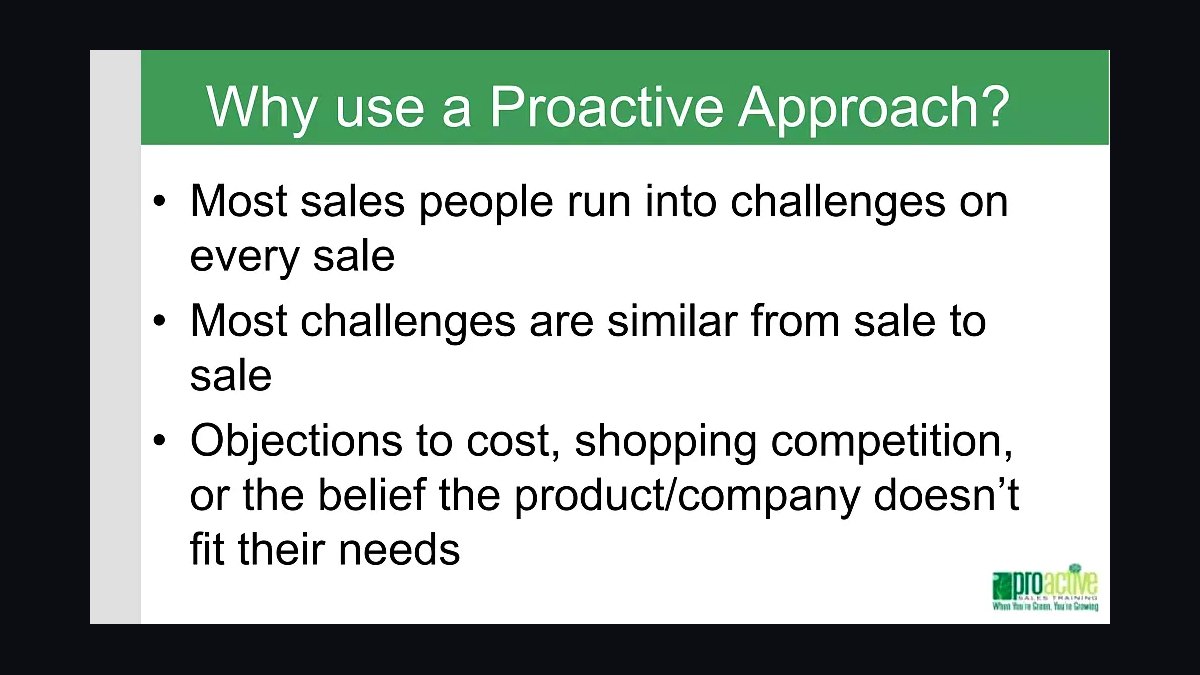
Skip Miller's *ProActive Selling* gives sales leaders ten actionable takeaways: run a buyer-centered process instead of a seller-centered pitch, qualify with "why change/why now/why you," secure economic-buyer access early, forecast by funnel stage not gut feel, and coach reps through ride-alongs rather than status meetings. Applied consistently, these takeaways turn reactive order-taking into a repeatable, proactive selling strategy that shortens cycles and tightens forecast accuracy.
The outcome you should expect
Leaders who implement the ProActive Selling framework should expect three measurable shifts within one to two quarters, not overnight. First, pipeline composition changes: reps stop logging every conversation as a "deal" and instead tag opportunities against defined stages (Suspect, Prospect, Qualify, Develop/Solution, Propose, Negotiate/Close). That reclassification alone typically shrinks the visible pipeline by 20-40% in the first review cycle, because deals lacking a confirmed compelling event or an identified economic buyer get demoted out of "Commit" and "Best Case" buckets. This feels like a step backward to leadership at first — the pipeline number drops — but it is the correction, not the damage; the prior number was inflated by hope-based entries.
Second, close rates on deals that survive the reclassification rise, because the surviving opportunities have passed real qualification gates: a named compelling event, a validated budget conversation, and at least one meeting with someone who can say yes without further approval. Reps who internalize Miller's core question set — why change, why now, why you/why your company — stop chasing deals that are structurally unwinnable (no urgency, no budget authority, no differentiation story) and reallocate that time to deals with a real path to close.
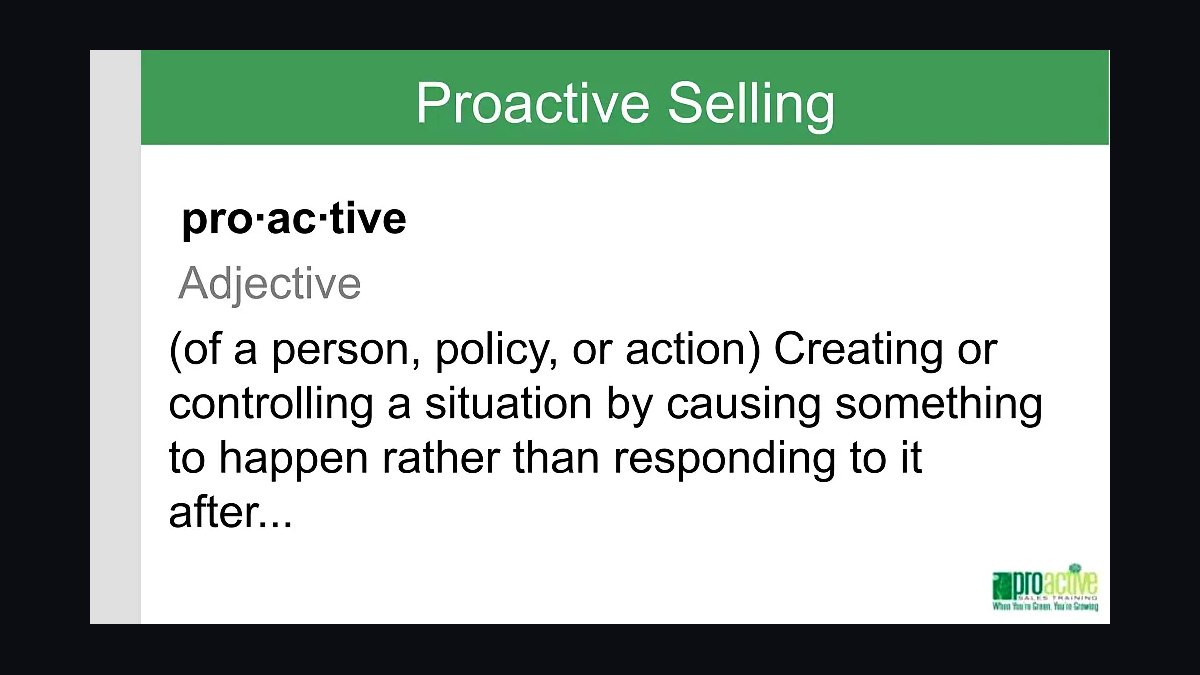
Third, forecast variance narrows. When a sales leader stops asking "what do you think will close" and instead asks "what stage is this in and what evidence do you have," the subjective padding that inflates forecasts disappears. Most organizations that adopt Miller's stage-based forecast categories (Pipeline, Best Case, Commit) see the gap between forecasted and actual quarter-end revenue shrink meaningfully within two to three quarters, as reps learn that sandbagging and overcalling both get exposed by the stage-evidence requirement rather than by a manager's opinion.
What drives that outcome
The mechanism behind these results is that ProActive Selling replaces subjective judgment calls with a shared, inspectable vocabulary. Every deal gets evaluated against the same evidence checklist instead of each rep's private mental model of "how good this feels." That shared vocabulary is what lets a sales leader run consistent one-on-one reviews, compare reps apples-to-apples, and catch a stalled deal before it quietly dies in Q4.

The driver at each node is discipline, not talent. A rep with average product knowledge who rigorously maps the buyer's internal process — who influences the decision, who signs, what triggered the search — will consistently outperform a naturally gifted talker who skips that mapping and pitches features to whoever picks up the phone. Sales leaders who want this outcome have to make the mapping mandatory in CRM fields and pipeline reviews, not optional coaching advice, because reps under quota pressure default to the path of least resistance (pitching) unless the process forces the harder work (qualifying).
Benchmarks and realistic ranges
Sales leaders evaluating whether the ProActive Selling approach is working should watch a small set of leading indicators rather than only bookings. A healthy adoption curve typically shows: qualified-to-closed-won conversion improving from a baseline in the low-to-mid teens (many unstructured B2B pipelines run 10-15%) toward the low-to-mid twenties within two to three quarters, as weak deals stop entering the funnel disguised as strong ones. Average sales cycle length for mid-market and enterprise deals often compresses by roughly 10-20% once compelling-event qualification is enforced, because deals without urgency stop lingering in "Propose" for months waiting on a buyer who was never going to move.

Forecast accuracy — measured as forecasted commit versus actual closed revenue at quarter-end — is the sharpest signal. Organizations with no formal stage-evidence requirement commonly see 20-30 point swings between what was forecast and what closed. After a full quarter of disciplined stage-gating, that variance typically narrows to single digits or low teens, because "Commit" category deals genuinely require a signed order or a confirmed verbal-with-paperwork-in-legal, not a rep's confidence level.
On the manager side, ride-along cadence is the benchmark that predicts everything else. Miller's coaching model calls for leaders to be in the field or on live calls with each rep regularly enough to observe the qualification conversation directly — not just read CRM notes after the fact. Teams that hit a consistent cadence (most organizations target something in the range of one substantive live observation per rep every one to two weeks) see coaching corrections land faster than teams relying solely on pipeline-review meetings, where a rep's self-report of "it's going well" can mask a deal that never had a real economic buyer engaged.

These ranges are directional, not universal — a 200-person outbound SDR-fed motion and a six-person enterprise team selling seven-figure contracts will land at different absolute numbers. The diagnostic value is in the trend line: is qualified-to-close conversion moving up, is cycle time compressing, is forecast variance shrinking. If none of the three move after a full quarter of genuine adoption, the process is being logged in CRM but not actually practiced on calls.
Risks, edge cases, and failure modes
The most common failure mode is treating ProActive Selling as a CRM field-filling exercise rather than a behavior change. Reps learn to type "compelling event: end of fiscal year" into a text box without ever having asked the buyer a real why-now question, and the framework becomes theater that produces false confidence instead of real qualification. Leaders catch this by listening to actual calls or reading verbatim notes, not by trusting that a populated field means the conversation happened.
A second risk is over-qualifying in fast-moving, lower-price-point motions. Miller's framework was built primarily around complex B2B sales with multiple stakeholders and long cycles; a transactional or high-velocity motion (short cycle, single decision-maker, lower price) that tries to force every deal through the full economic-buyer-access and compelling-event ritual will slow reps down without adding proportional value. Leaders should scale the rigor to the deal size and complexity rather than applying one qualification bar to every opportunity in the funnel.

A third edge case is manager capacity. The coaching model depends on leaders actually being present for live conversations — ride-alongs, call reviews, deal strategy sessions — and a manager carrying eight or more direct reports plus their own quota responsibilities frequently cannot sustain that cadence. When coaching capacity collapses, teams revert to pipeline-review theater: reps report stage and category, nobody verifies the evidence behind it, and the forecast drifts back toward guesswork within a quarter or two.
A fourth failure mode is political: demoting inflated pipeline exposes previously reported numbers as wrong, and leaders sometimes soften the reclassification to avoid an uncomfortable conversation with their own boss about why the forecast just dropped 30%. That short-term face-save reintroduces the exact distortion the framework was built to remove, and it tends to recur every quarter unless leadership above the sales leader also buys into the more honest — if smaller — number.
Finally, access to the economic buyer is not fully within the rep's control. In some organizations the champion genuinely gatekeeps and no amount of skill gets a rep to the VP or budget owner before contract stage. Leaders need a realistic fallback play — building a strong enough internal champion and multi-thread relationships — rather than treating "no economic buyer access yet" as an automatic disqualifier that kills otherwise viable deals.
A practical rollout plan

Sales leaders introducing this strategy in 2027 get the best adoption by sequencing the rollout instead of flipping every rep to the full framework simultaneously. Start with vocabulary and stage definitions so the whole team is measuring the same thing, then layer in coaching cadence, then tie forecast categories to compensation conversations only once the underlying discipline is real.
In the first two weeks, get the sales team in a room and agree on what each stage means in plain language, and what evidence is required to move a deal forward — this has to be a shared definition, not a mandate handed down, or reps will fill fields without believing in them. Weeks three and four introduce the required qualification fields in CRM: compelling event, economic buyer name and title, and a one-line why-you differentiator, with existing deals audited against the new bar rather than grandfathered in.
Weeks five through eight are where the coaching takeaways matter most: leaders start observing live calls, specifically listening for whether the rep actually asked the hard qualifying questions or just recited them into a form afterward. This is also when leaders should expect the loudest pushback, since reps under quota pressure resist anything that slows down logging a deal as "likely."

By weeks nine through twelve, the leader reclassifies the full pipeline using the new evidence standard and reports the resulting number upward honestly, including the drop. This is the step most leaders are tempted to skip or soften, and it is the one that determines whether the rest of the rollout produces a real forecast or a cosmetic one. From that point forward, the leader reviews forecast variance monthly against actuals, using the gap itself as the feedback loop that tells them whether the qualification discipline is holding or eroding.
Related questions
What is the "why change, why now, why you" framework in ProActive Selling?
It's Miller's core qualification filter: confirm the buyer has a genuine reason to change, a timeline forcing action now, and a reason it should be your solution specifically — skipping any one of the three means the deal isn't truly qualified yet.
How is ProActive Selling different from Solution Selling?
ProActive Selling puts heavier emphasis on mapping the buyer's internal process and forecast-stage evidence, while Solution Selling focuses more on pain-based discovery; in practice many leaders blend elements of both.
What forecast categories does Skip Miller recommend?

Typically Pipeline, Best Case, and Commit, each requiring progressively stronger evidence — Commit generally requires a confirmed economic buyer and a clear path to a signed order, not just rep confidence.
How often should sales leaders do ride-alongs under this model?
Frequently enough to observe live qualifying conversations directly, commonly on the order of every one to two weeks per rep, since CRM notes alone can't reveal whether a real why-now conversation happened.
Does this framework work for short-cycle, low-price-point sales?
Only partially — the full economic-buyer and compelling-event rigor fits complex, multi-stakeholder deals best; transactional motions should scale the qualification bar down to avoid slowing reps unnecessarily.
FAQ
What are the top takeaways from ProActive Selling for sales leaders? Run a buyer-centered process, qualify with why-change/why-now/why-you, get economic-buyer access early, stage deals on evidence not opinion, and coach through live observation rather than status meetings alone.
Who is Skip Miller and why does his framework matter to sales leaders?

Skip Miller is a sales trainer and author who built ProActive Selling around structured, stage-based qualification; it matters because it replaces gut-feel forecasting with an inspectable, coachable process leaders can actually manage.
Why does pipeline shrink after adopting this strategy? Because deals lacking a real compelling event or economic-buyer access get correctly demoted instead of counted as likely — the shrinkage reflects previously inflated numbers, not new losses.
How long does it take to see results from this rollout? Most leaders see meaningful shifts in conversion rate and forecast variance within two to three quarters of consistent enforcement, not immediately after training.
Can this framework be applied without changing CRM fields? Not effectively — without required fields for compelling event, economic buyer, and stage evidence, reps default back to reporting deals as "likely" based on feel rather than proof.
What's the biggest risk sales leaders should watch for? Treating the framework as paperwork: fields get filled without the underlying qualifying conversation actually happening on the call, which produces false confidence instead of real qualification.
Sources
- https://www.m3learning.com/proactiveselling
- https://www.amazon.com/ProActive-Selling-Control-Process-Buyer-Focused/dp/0814413437
- https://www.forbes.com/sites/forbesbusinesscouncil/
- https://hbr.org/topic/sales
- https://www.salesforce.com/resources/articles/sales-forecasting/
- https://www.gartner.com/en/sales/insights
- https://www.linkedin.com/business/sales/blog
Related on PULSE
- How do you build a sales qualification framework from scratch?
- What separates a coaching-focused sales manager from a status-meeting manager?
- How should sales leaders structure pipeline review meetings?
- What are the most common forecast accuracy mistakes in B2B sales?
- How do you identify the real economic buyer in an enterprise deal?
This page will be disappearing soon. Save it to your device for $1 — or read it free while it is here.
@Kory-White- · if Venmo asks, the last 4 of my number are 2012
This page is gone.
This one is off the shelf now. $1 keeps it on your phone for good — the whole page, pictures and diagrams included.
 pulse-recentHow I Raised Myself from Failure to Success in Selling by Frank Bettger — Top 10 Key Takeaways for Sales Leaders in 2027
 pulse-recentWhat is the Blue Sheet from Strategic Selling by Miller Heiman and how do you fill it out in 2027?
 pulse-recent$100M Offers by Alex Hormozi — Top 10 Key Takeaways for Sales Leaders in 2027
 pulse-recentWhat is the first concrete step in the Sandler Selling System for handling a prospect's initial brush-off in 2027?
 pulse-recentWhat is the first concrete step in The Sandler Rules by David Mattson for building a sales plan in 2027?
 pulse-recentThe Sales Manager’s Guide to Greatness by Kevin Davis — Top 10 Key Takeaways for Sales Leaders in 2027
 pulse-recentHow do you implement the Sandler Rules by David Mattson in your first 30 days as a new sales manager in 2027?
 pulse-recentObviously Awesome by April Dunford — Top 10 Key Takeaways for Sales Leaders in 2027
 pulse-recentMonetizing Innovation by Madhavan Ramanujam — Top 10 Key Takeaways for Sales Leaders in 2027
 pulse-recentNever Split the Difference by Chris Voss — Top 10 Key Takeaways for Sales Leaders in 2027