


Sales Engagement by Manny Medina — Top 10 Key Takeaways for Sales Leaders in 2027
Quality
Certified

Manny Medina's sales engagement philosophy — the discipline he helped build at Outreach — comes down to ten practical takeaways: standardize outbound into repeatable sequences, blend channels instead of relying on email alone, treat rep activity as measurable data, coach from that data weekly, and let AI surface which touches actually move deals. Leaders who apply this strategy consistently see more predictable pipeline and less rep-to-rep variance.
A concrete scenario that frames the problem
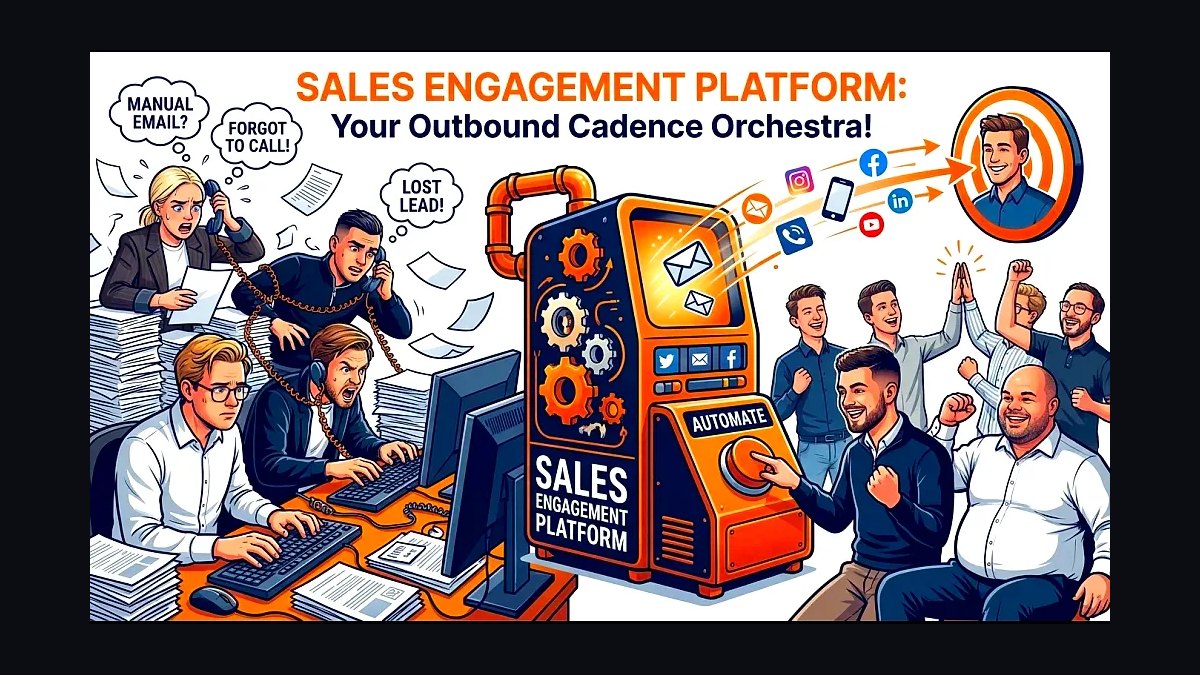
Picture a 40-rep outbound team in early 2027. Each rep builds their own outreach cadence from memory, some send five follow-ups, others send two, and nobody tracks which sequence step actually books the meeting. The VP of Sales sees wildly different quota attainment across reps who work the exact same territory tier, and has no data to explain why. This is the exact gap Manny Medina's sales engagement category was built to close: turn "how a rep prospects" from a personal habit into a shared, measurable system.
Under the old model, a manager's only diagnostic tool is a pipeline review meeting once a week, where reps self-report what they tried. There's no record of open rates, call connect attempts, or how many touches actually preceded a reply. When a quarter goes badly, leadership can't tell if the problem was messaging, timing, channel mix, or simply that half the team stopped following up after touch two.
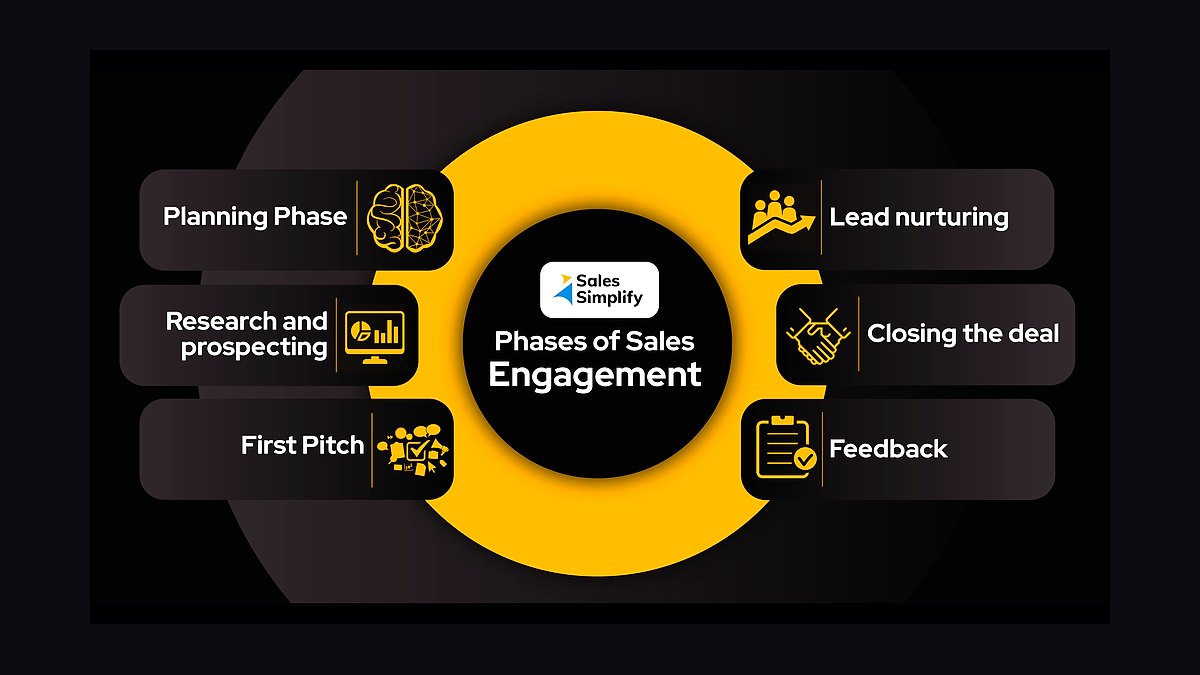
Now put the same team on a structured engagement platform. Every step of every sequence — the email subject line variant, the day-3 call attempt, the day-7 LinkedIn touch — is logged with a timestamp and an outcome. A manager can pull up any rep's activity for the week and see, touch by touch, where prospects are engaging and where they're going silent. This is the scenario Medina's Takeaways for sales leaders repeatedly return to: engagement data is only useful when it is captured at the step level, not just as a monthly aggregate. A leader reviewing this data can now tell a rep "your day-1 email opens fine, but your day-4 call attempts are hitting voicemail because you're calling at 4pm — try 9am," which is a coachable, specific instruction instead of a vague "try harder."
The scenario also exposes a second problem: without a shared sequence, onboarding a new rep takes months because there's no institutional playbook to hand them. With sequences captured as reusable templates, a new hire can be running the team's best-performing cadence on day one, inheriting the accumulated experimentation of everyone who came before them.
How the mechanism actually works (mermaid)
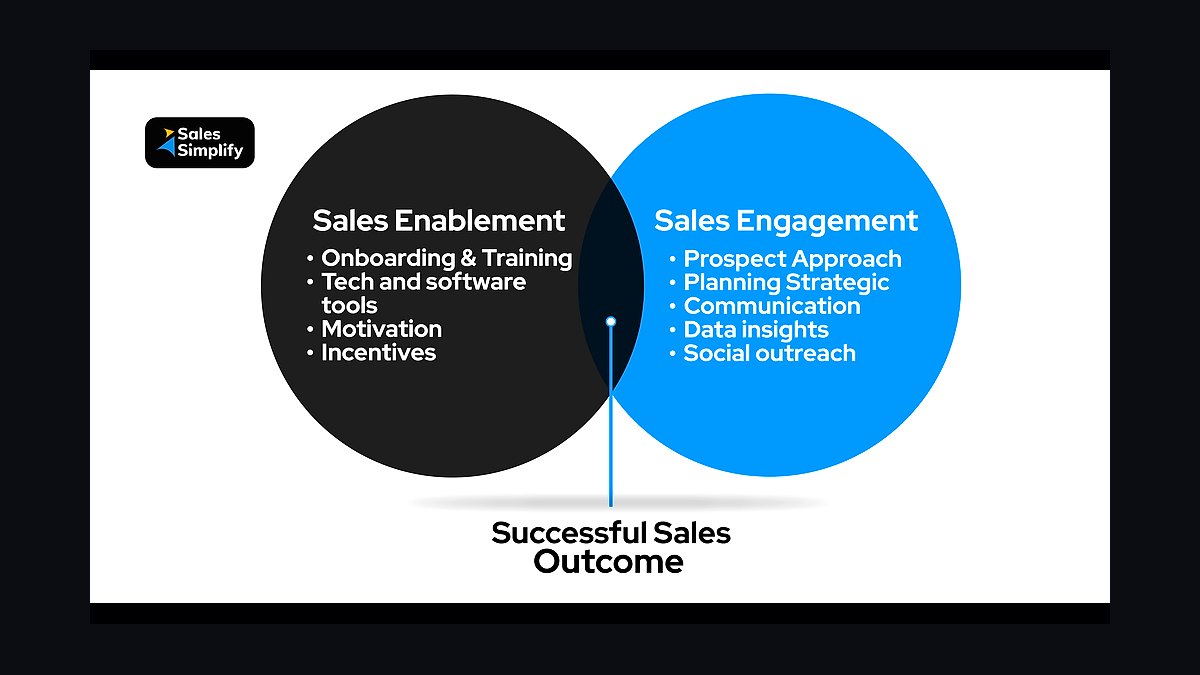
The mechanical core of a sales engagement platform is the sequence engine: a rep or manager builds a multi-step, multi-channel cadence once, and every prospect who enters that sequence receives the same structured set of touches unless a reply or a rule interrupts it. A typical structure alternates channels rather than repeating the same one, because a prospect who ignores three emails in a row is statistically unlikely to open a fourth, but may pick up a phone call or respond to a LinkedIn message in between.
The steps generally run like this: a prospect is enrolled from a list or a CRM view, the first touch (usually email) fires immediately or on a scheduled delay, and each subsequent step waits a set number of business days before firing the next touch. If the prospect replies, opens a meeting link, or unsubscribes, the sequence engine detects that event and automatically removes them from the remaining steps — this prevents the embarrassing scenario of a prospect getting a "just following up" email after they've already booked a call. Everything the platform can observe (opens, clicks, replies, call outcomes, bounce events) writes back into a rep-level and sequence-level activity ledger, which is the raw material for the coaching and forecasting layer.
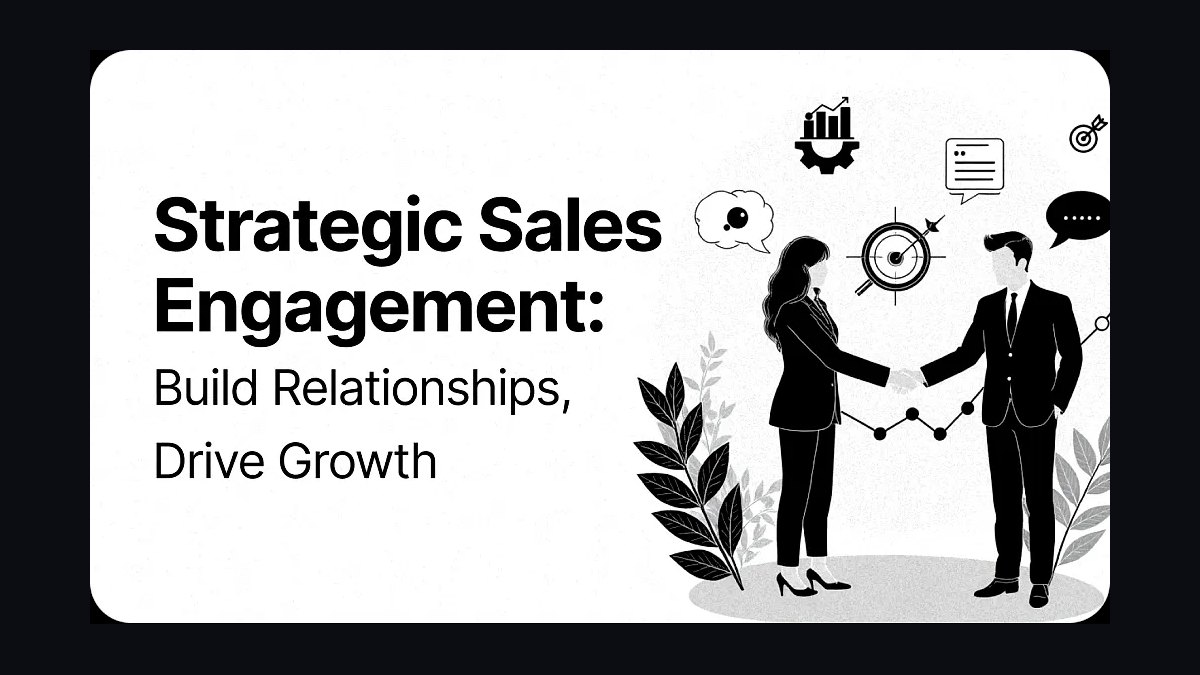
The layer above the sequence engine is analytics: activity from every rep rolls up into dashboards that show reply rate by step, by channel, and by messaging variant. This is where the strategy shifts from "run more sequences" to "run the sequences that are proven to convert," because leadership can directly compare Rep A's 14% reply rate on a two-line email against Rep B's 4% reply rate on a five-paragraph one, using the same audience and timeframe. Over time, the best-performing variants get promoted into the team's standard template, and underperforming ones get retired — the mechanism is a continuous feedback loop, not a one-time setup.
Real numbers, ranges, and benchmarks
Sales leaders adopting this kind of engagement strategy should calibrate expectations against realistic industry ranges rather than best-case anecdotes. Cold email reply rates on a well-targeted B2B list typically land between 1% and 5% per touch; a full multi-touch sequence (8-12 touches across 2-3 weeks) commonly produces a cumulative reply rate in the 8-15% range when channels are mixed, versus roughly half that when a sequence is email-only. Phone connect rates on outbound dials generally run 3-8% for cold numbers, climbing to 15-25% when the call follows a prior email open or a warm signal like a funding announcement or a job change.
Sequence length matters more than most reps assume: data across engagement platforms consistently shows the majority of replies arrive between touch 3 and touch 7, not touch 1. A sequence that stops at two touches is leaving a large share of achievable replies on the table, while a sequence that runs past 12-14 touches over more than four weeks tends to see diminishing returns and rising unsubscribe/complaint rates. A reasonable target for most B2B teams is 8-10 touches spread over roughly three weeks, mixing email, phone, and one or two social touches.
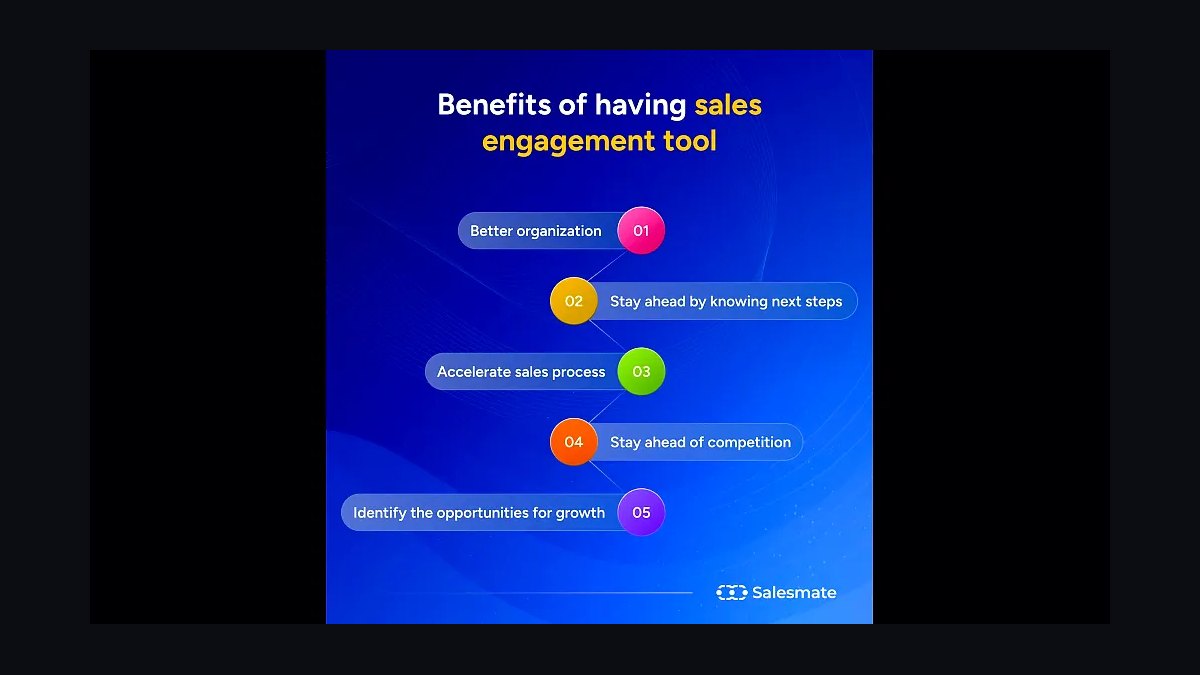
On the management side, a well-run engagement motion typically shows rep-to-rep variance narrowing over 60-90 days as coaching from ledger data takes hold — teams often report the gap between their top-quartile and bottom-quartile rep's reply rate shrinking by a third or more once managers can point to specific step-level data instead of general encouragement. Time-to-productivity for a new rep, when handed a proven sequence template on day one instead of building their own from scratch, commonly drops from the 3-6 month range down closer to 4-8 weeks. Leaders should treat these as directional benchmarks to sanity-check their own numbers against, not guarantees — team size, ICP, and average deal size all shift the ranges.
Trade-offs and alternatives (mermaid)
Adopting a structured sales engagement strategy is not free, and sales leaders weighing it should understand the real trade-offs rather than assume it's a pure upgrade. The first cost is rigidity risk: a sequence built for one persona and one pain point performs worse when reps blindly apply it to a different segment. Leaders have to budget ongoing time for sequence maintenance — reviewing performance monthly and retiring stale messaging — or the system calcifies into a template nobody trusts, and reps quietly go back to writing everything from scratch.
The second trade-off is the platform cost itself, both in licensing and in the ramp time it takes reps to adopt a new tool inside their daily workflow. Smaller teams (under 8-10 reps) sometimes get more value from a lighter-weight alternative — a shared spreadsheet of proven talk tracks plus CRM task reminders — than from a full engagement platform, because the coaching benefit of step-level analytics only pays off once there's enough rep volume to make the comparisons statistically meaningful.
A third trade-off worth naming directly: leaning hard on measured, standardized sequences can, if applied carelessly, flatten the personalization that makes a message land with a specific buyer. The alternative some teams choose is a hybrid — standardize the cadence timing and channel mix (the mechanical part) while leaving the actual message copy open for rep judgment on strategic accounts, and reserving fully-scripted sequences for higher-volume, lower-touch segments. Leaders should treat "full automation everywhere" and "no structure anywhere" as the two extremes to avoid, and pick a point on that spectrum that matches deal size: high-ACV enterprise motions generally warrant more rep discretion, while SMB and mid-market volume motions benefit more from strict sequence discipline.
Common pitfalls and how to avoid them
The most common pitfall is treating the engagement platform as a message-blasting tool rather than a data and coaching system — teams buy it for the automation and never build the weekly review habit that makes the data useful, so activity volume goes up while conversion stays flat or drops. The fix is to put a recurring 20-30 minute weekly review on the calendar where a manager and rep look at step-level reply and connect rates together, not just total activity counts.
A second pitfall is copying a sequence that worked for one segment and applying it unchanged to a different one — a sequence tuned for a technical buyer persona will usually underperform when reused verbatim on a finance buyer. Avoid this by tagging sequences to the persona and use case they were built for, and reviewing performance by segment, not just in aggregate.
A third pitfall is over-lengthening sequences in the hope that more touches always help; past roughly touch 12-14, reply rates flatten while spam complaints and list fatigue rise, which can hurt sender reputation for every rep sharing that email domain. Cap sequences at a length backed by the reply-rate curve, not by how many ideas the team has for follow-up copy.
A fourth pitfall is ignoring the exit conditions — sequences that don't reliably stop the moment a prospect replies or books a meeting create the "sorry, ignore my last email" problem that damages trust with the exact prospects who were about to convert. Audit exit-trigger logic whenever a new channel or message type is added to a sequence. Finally, leaders sometimes measure only reply rate and skip meeting-held rate and win rate, which rewards reps for volume rather than quality — tie the sequence review explicitly back to pipeline and revenue outcomes, not just top-of-funnel engagement metrics.
Related questions
What is sales engagement software, in plain terms?
It's a system that lets reps run structured, multi-channel outreach sequences (email, calls, social) while automatically logging every touch and outcome, so managers can see and coach based on real activity data instead of self-reported effort.
Did Manny Medina invent sales engagement?
He didn't invent outbound prospecting, but as a co-founder of Outreach he was one of the people who defined and popularized the modern "sales engagement platform" category that formalized sequences and activity analytics.
How many touches should a cold outbound sequence have?
Most well-performing B2B sequences run 8-10 touches across roughly three weeks, mixing email, phone, and one or two social touches, since most replies arrive between touch 3 and touch 7.
Can a small sales team benefit from this approach without buying a platform?
Yes — teams under about 10 reps can approximate the discipline with a shared playbook document and CRM task reminders; the analytics-driven coaching benefit of a full platform scales best once there's enough rep volume to compare performance meaningfully.
FAQ
What's the single biggest mistake sales leaders make when adopting a sales engagement strategy? Buying the automation but skipping the weekly coaching review — without a habit of looking at step-level data together, activity volume rises but conversion rarely improves.

Does a multichannel sequence really outperform email-only outreach? Generally yes; mixing email, phone, and social touches commonly produces roughly double the cumulative reply rate of an email-only sequence over the same number of weeks, since prospects who ignore one channel often respond on another.
How long before a new sequence design should be judged as working or not? Give it at least 3-4 weeks and a sample of 50-100+ enrolled prospects before drawing conclusions — smaller samples or shorter windows produce noisy, unreliable reply-rate signals.
Should every rep on a team use the exact same sequence? Not necessarily — a shared base cadence per segment keeps timing and channel mix consistent, but message copy can reasonably vary by rep skill and account context, especially on higher-value accounts.
What metric matters more, reply rate or meetings held? Meetings held and downstream win rate matter more; reply rate is a useful diagnostic for sequence health, but optimizing for replies alone can reward volume over qualified pipeline.
Is this approach only relevant to outbound prospecting? No — the same sequence-and-ledger mechanism is commonly applied to inbound follow-up, renewal outreach, and re-engagement of stalled deals, anywhere a repeatable, trackable cadence of touches improves consistency.
Sources
- https://www.outreach.io/
- https://www.linkedin.com/in/mannymedina/
- https://www.gartner.com/en/sales/topics/sales-engagement
- https://www.forbes.com/sales/
- https://hbr.org/topic/sales
- https://www.salesforce.com/resources/articles/sales-engagement/
- https://www.g2.com/categories/sales-engagement
Related on PULSE
- What is a sales cadence and how many touches should it have?
- How do you coach reps using CRM activity data?
- What's the difference between sales engagement and sales enablement?
- How do you structure a multichannel outbound sequence?
- What KPIs should a VP of Sales track for outbound teams?
This page will be disappearing soon. Save it to your device for $1 — or read it free while it is here.
@Kory-White- · if Venmo asks, the last 4 of my number are 2012
This page is gone.
This one is off the shelf now. $1 keeps it on your phone for good — the whole page, pictures and diagrams included.
 pulse-recentObviously Awesome by April Dunford — Top 10 Key Takeaways for Sales Leaders in 2027
 pulse-recentWhat are the concrete steps in Sandler Rule #7 for handling a prospect's budget objection in 2027?
 pulse-recentBlueprints for a SaaS Sales Organization by Jacco van der Kooij — Top 10 Key Takeaways for Sales Leaders in 2027
 pulse-recentThe Customer Success Professional’s Handbook by Ashvin Vaidyanathan — Top 10 Key Takeaways for Sales Leaders in 2027
 pulse-recentHigh-Profit Prospecting by Mark Hunter — Top 10 Key Takeaways for Sales Leaders in 2027
 book-summaryInfluence (New and Expanded) by Robert Cialdini — Cliff Notes Summary
 pulse-recentFanatical Prospecting by Jeb Blount — Top 10 Key Takeaways for Sales Leaders in 2027
 pulse-recentSell or Be Sold by Grant Cardone — Top 10 Key Takeaways for Sales Leaders in 2027
 pulse-recentSPIN Selling by Neil Rackham — Top 10 Key Takeaways for Sales Leaders in 2027
 pulse-recentSnap Selling by Jill Konrath — Top 10 Key Takeaways for Sales Leaders in 2027