

What’s the key framework from *Gap Selling* for diagnosing customer problems?
 Curated byKory White · Fractional CRO · Maryland
Quality
Certified

The core framework is the Gap: map the customer's current state, define a specific future state, then measure the distance between them. Keenan's rule is that you diagnose problems and their root causes, business impact, and emotional weight before naming any product. The gap's size sets urgency, price, and whether a deal moves at all.
The outcome you should expect
Teams that actually run this framework — not just quote it — see a specific and fairly narrow set of changes, and it helps to know what they are before you rebuild your discovery process around it.
The first thing that changes is deal shape, not deal count. Reps who diagnose properly disqualify earlier and more often. That feels like losing at first. A rep who used to carry twenty-five open opportunities may carry twelve, because the other thirteen never had a gap worth closing — the prospect was curious, or benchmarking, or gathering quotes to pressure an incumbent. Gap Selling surfaces that fast, because a prospect with no articulated current-state pain cannot answer the drill-down questions. The pipeline shrinks and the forecast gets more honest. Most sales leaders find this uncomfortable for a quarter and then stop wanting to go back.
The second change is where deals die. In a feature-led motion, deals die late — at pricing, at security review, at "we decided to revisit next year." In a gap-led motion, deals die early, in discovery, which is enormously cheaper. Losing a deal in week one costs a call. Losing it in week fourteen costs a solutions engineer, a proof of concept, a security questionnaire, a legal review, and an executive sponsor's credibility.

The third change is the character of your conversations. Reps stop presenting and start interrogating — respectfully, but genuinely. The talk-to-listen ratio inverts. Discovery calls get longer and demos get shorter, because by the time you demo, you already know the four things that matter and you show only those. Prospects notice. The most common qualitative feedback from buyers on a well-run gap call is some version of "you understand our business better than our current vendor does," and that sentence is worth more than any deck.
The fourth change is pricing power, and it's the one most people underestimate. When a buyer has articulated — in their own words, with their own numbers — that a broken handoff between marketing and sales is costing them a meaningful share of inbound leads, the conversation about your price becomes a conversation about ratio. Your number is small or large relative to the number they said out loud. If you never got them to say a number, your price is being compared to zero, and every price loses that comparison.
What you should not expect is a faster sales cycle in the first two quarters. Diagnosis takes time. The cycle often lengthens slightly at the front end and shortens dramatically at the back end, because there's no late-stage stalling over value. Net, most teams report roughly flat or modestly shorter cycles with materially higher win rates on qualified deals — and a much larger no-decision-avoided rate, which is the quiet killer in complex B2B.
What drives that outcome

The mechanism is simple and worth stating plainly: buyers do not act because a solution is good. They act because staying where they are has become intolerable. Everything in the framework serves that one causal chain.
Start with current state. Keenan's insistence here is that current state is not a complaint, it's a description. A complaint is "our onboarding is slow." A description is "a new customer signs on Monday, our CS lead manually copies eleven fields from the CRM into the provisioning tool, that tool doesn't talk to billing, so billing gets set up two days later, and the customer can't log in until Thursday." One of those you can act on. The other is a mood. The discipline is to keep asking process questions — who touches it, what happens next, where does it break, how often, who notices — until you could draw the workflow yourself.
Then root cause. This is where most reps stop too early. Slow onboarding is a symptom; manual data entry is a cause; the missing CRM-to-ERP integration is the cause of the cause; and the reason nobody built that integration might be that IT's roadmap is owned by a different VP with different incentives. Each "why" moves you up a layer, and the layer you land on determines whether your solution is relevant at all. A tool that speeds data entry is worthless if the real constraint is a political one about roadmap ownership — and you'd rather know that in week one.

Then impact, in three currencies. Business impact is money and time: revenue not booked, hours consumed, penalties risked, churn absorbed. Operational impact is what the organization can't do because it's doing this instead — the opportunity cost. Personal impact is what it costs the human in front of you: the VP who's been promising a fix for three quarters, the ops manager whose team is burning out, the CFO who will own the blame. Business impact makes the case defensible in a committee. Personal impact makes someone actually push it forward. You need both; teams that only build the spreadsheet get polite agreement and no motion.
Then future state — and Keenan's contrarian note is that most buyers have a weak one. Ask a prospect what good looks like and you'll typically get "faster" or "more efficient." That's not a future state, it's an adjective. The rep's job is to help them articulate something concrete and measurable enough that the difference from today is arithmetic rather than opinion: not "faster onboarding" but "customer live within twenty-four hours of signature, with zero manual field entry."
The gap is then just subtraction. And because it's subtraction, it's arguable in a good way — the buyer can check your work, correct your numbers, and in correcting them, take ownership of them. A number a buyer corrects is a number a buyer owns.
Benchmarks and realistic ranges
Precise industry-wide statistics on Gap Selling adoption don't exist in any form worth citing, so treat the following as practitioner-level heuristics rather than research findings — they're useful as calibration, not as evidence.

On call structure: a genuine diagnostic discovery call in complex B2B typically runs forty-five to sixty minutes with the rep speaking well under half the time. If your reps are talking more than they're listening on a first call, the framework isn't being run, whatever the CRM notes say. Call-recording platforms make this trivially measurable, and talk ratio is the single easiest leading indicator to instrument.
On the number of "whys": three to five layers is the practical range. One or two leaves you at symptom level. Beyond five, you're usually past the buyer's knowledge and into speculation, which reads as interrogation rather than diagnosis. If you hit a wall at layer three, that's a signal you're talking to the wrong person — the answer lives one function over, and your next move is a referral, not a harder push.
On stakeholder count: a gap that only one person can describe is usually not a real organizational gap. In complex sales, expect to validate the same current state with two to four people across different functions. Their descriptions will diverge, and the divergence is the finding. When the VP of Sales says the problem is lead quality and the VP of Marketing says the problem is follow-up speed, you've found a gap neither of them has named, and naming it is the most valuable thing you'll do in that account.
On quantification: don't chase decimal-point precision. A buyer who says "we lose about two days a week to this" has given you something more durable than a modeled figure with four significant digits, because they'll repeat their own number to their CFO and they won't repeat yours. Range estimates the buyer endorses beat point estimates you constructed. If you must model, model conservatively and show your assumptions — an inflated business case that gets picked apart in a committee meeting takes your credibility with it.

On timeline to competence: reps generally need one to two full quarters to internalize this. The first month tends to be awkward — reps ask the questions mechanically, from a list, and buyers feel processed rather than understood. Competence shows up when a rep can abandon their question list mid-call and follow the thread the buyer just opened. Managers should coach to that specific behavior rather than to script adherence.
On what "good" looks like in the CRM: a well-diagnosed opportunity should have a written current state a colleague could read cold and understand, at least one root cause distinct from the symptom, a quantified impact with the buyer's own words attached, and a named future state. If your opportunity fields can't hold that, change the fields — the framework fails quietly when the system of record has nowhere to put a diagnosis.
Risks, edge cases, and failure modes
The framework fails in recognizable ways, and most of them are behavioral rather than conceptual.
Premature solutioning is the most common by a wide margin. A rep maps a fragment of the gap, hears something that maps to a feature, and pivots. The moment you name your product, the buyer stops exploring their problem and starts evaluating your product, and you cannot get back — that door only swings one way. The tell is a discovery call where the last fifteen minutes were a mini-demo. The fix is mechanical: agree, as a team, that the product is not named on call one, and let managers spot-check recordings for it.
Interrogation instead of diagnosis. Five whys delivered without warmth feels like a deposition. Buyers shut down, give short answers, and end calls early. The correction is to trade — offer a relevant pattern you've seen at similar companies, then ask. "Most ops teams we talk to end up with three separate spreadsheets shadowing the CRM. Is that happening here?" You're still diagnosing, but you've paid for the question.

The gap the buyer can't act on. Sometimes the diagnosis is correct and completely useless, because the root cause sits in a budget or department your champion has no influence over. This is not a failed diagnosis; it's a successful one with an unwelcome answer. The right move is to name it and either find a path to the person who owns it or exit gracefully. Reps who keep working the accessible symptom instead of the inaccessible cause produce long, expensive no-decisions.
Manufactured urgency. There's a temptation to inflate the cost of inaction — round up, add a compounding assumption, extend the horizon. Sophisticated buyers, especially finance ones, will find it, and when they do, everything else you said becomes suspect. Understated and defensible beats aggressive and fragile, every time.
The genuinely small gap. Not every prospect has a problem worth solving. Transactional purchases, commodity renewals, small teams with simple workflows — forcing a deep diagnosis onto these wastes everyone's time and reads as pretentious. Match the depth of diagnosis to the complexity of the purchase. A framework designed for six-figure, multi-stakeholder deals applied to a four-seat renewal is malpractice in the other direction.
Single-threaded diagnosis. You diagnose beautifully with one champion, they leave for another company in month three, and the entire gap leaves with them, because it lived in one person's head and one rep's notes. Write the diagnosis down, share it back to the account in writing, and validate it with a second stakeholder. A gap documented in a shared artifact survives turnover; a gap living in a call recording does not.

Renewal and expansion blind spots. Existing customers are the easiest place to apply this and the place it's applied least, because reps assume they already know the account. Current state drifts — the customer reorganized, adopted a new adjacent tool, changed leadership. Diagnosing an existing account annually, as if new, is where most expansion revenue actually hides.
Incompatible incentives. If your comp plan rewards demo volume or meeting count, reps will pitch, because the plan tells them to. The framework and the compensation structure have to agree. This is the failure mode that looks like a training problem and is actually a design problem, and no amount of coaching fixes it.
A practical rollout plan
Rolling this out across a team is a change-management exercise, not a training event, and it's worth sequencing deliberately.
Weeks one and two — instrument before you teach. Pull twenty recent discovery calls, including wins, losses, and no-decisions. Score each on four things: did the rep describe the current state as a process, did they reach a root cause, is there a quantified impact in the buyer's words, and is the future state specific. You'll typically find the current state partially covered and the other three largely absent. Now you have a baseline and, more usefully, real internal examples to teach from instead of hypotheticals.
Weeks three and four — rebuild the artifacts, not just the skills. Change the CRM fields so there is somewhere to write a diagnosis. Rewrite the discovery call agenda. Build a question bank organized by layer, not by topic. Update the opportunity review template so the first question in every pipeline meeting is "what's the gap, in their words?" If the artifacts still reward feature-talk, the training won't hold past week six.

Weeks five through eight — practice on real accounts with a safety net. Pair reps for live calls, one asking, one taking notes and watching for premature solutioning. Debrief immediately after, while it's fresh. Run short internal role-plays where the manager plays a buyer whose stated problem isn't the real one — that's the specific skill you're building, and it doesn't develop from lecture.
Weeks nine through twelve — coach to the tape. Managers review two calls per rep per week against the four-point rubric. Coach the missing layer, not the whole call. Public recognition should go to the best disqualification, not just the best close — that's the cultural signal that decides whether reps trust the framework or route around it.
Ongoing — extend past the sales team. The gap diagnosis is useful downstream: customer success can inherit it as an onboarding brief, and product marketing can mine repeated root causes across accounts for messaging that describes problems rather than features. Upstream, marketing can build content around the root causes that show up most often, which tends to attract prospects who already know they have a gap. The framework becomes an organizational strategy for understanding customers, not just a rep technique — and that's where the compounding return is.
One caution on sequencing: don't roll this out mid-quarter, and don't roll it out to the whole team at once if you can avoid it. Start with three or four reps who are curious rather than skeptical, let them produce results, and let those results do the persuading.
Related questions

How long should a Gap Selling discovery call be?
Typically forty-five to sixty minutes for complex B2B, with the rep listening far more than talking. Shorter calls rarely reach root cause. If you need more time, book a second call rather than rushing the diagnosis.
Can you use the Gap framework without hard financial numbers?
Yes. Relative anchors work — time lost per week, deals delayed per quarter, headcount consumed. Numbers the buyer states themselves carry more weight in their own committee than any figure you model for them.
Does Gap Selling replace MEDDIC?
No, they complement each other. Gap Selling governs how you diagnose; MEDDIC governs how you qualify and track. The diagnosis feeds MEDDIC's pain and implication fields directly and strengthens champion development.
What if the buyer disagrees with your gap diagnosis?
Treat disagreement as data, not objection. You likely missed a root cause, a stakeholder, or an emotional driver. Return to questions rather than defending your conclusion — the correction usually reveals the real gap.
FAQ
What is the single most important question in Gap Selling?
Some version of "what does it cost you to stay where you are?" It forces the buyer to price their current state rather than evaluate your solution, and it converts a vague dissatisfaction into a defensible business case they can carry internally.

How is Gap Selling different from solution selling?
Solution selling starts with a product and searches for a fit. Gap Selling starts with the problem and withholds the product entirely until the gap is diagnosed, quantified, and confirmed by the buyer. The sequencing difference is the whole methodology.
Do I need this framework for every deal?
No. Transactional, low-complexity purchases don't warrant deep diagnosis, and forcing it wastes the buyer's time. It's built for multi-stakeholder deals where a business case has to survive a committee that never spoke to you.
Can the framework work on existing customers?
It works especially well there. Current state drifts as accounts reorganize and adopt new tools, so re-diagnosing an existing account annually — as though it were new — is where a large share of expansion revenue is usually sitting unnoticed.
How do you know when the diagnosis is complete?
When you can restate the customer's situation back to them, in their language, and they correct nothing material. Buyer agreement is the completion signal. If they hesitate or qualify your summary, a layer is still missing.
What's the fastest way to tell a team is doing this wrong?
Listen for the product name on a first call. If it appears in the first twenty minutes, the diagnosis stopped and the pitch started, and everything downstream — pricing, urgency, stakeholder access — will be harder than it needed to be.
Sources
- https://salesguy.com/
- https://www.gong.io/resources/
- https://blog.hubspot.com/sales
- https://www.saleshacker.com/
- https://hbr.org/topic/subject/sales
- https://raingroup.com/blog/
- https://www.linkedin.com/business/sales/blog
- https://www.forrester.com/blogs/category/b2b-sales/
Related on PULSE
- What's the one framework from *Gap Selling* that turns a casual prospect into a committed buyer?
- How does *Gap Selling* help you identify hidden customer pain points?
- Gap Selling by Keenan: Summary, Key Lessons, and RevOps Takeaways
- Gap Selling by Keenan — Cliff Notes Summary & Key Takeaways
- The Challenger Customer by Brent Adamson — Cliff Notes Summary & Key Takeaways
- How does *SPIN Selling* help you uncover customer needs during discovery calls in 2027?
This page will be disappearing soon. Save it to your device for $1 — or read it free while it is here.
@Kory-White- · if Venmo asks, the last 4 of my number are 2012
This page is gone.
This one is off the shelf now. $1 keeps it on your phone for good — the whole page, pictures and diagrams included.
 bsHow does *SNAP Selling* help you break through the noise in a crowded market?
 bsWhat’s the most underrated chapter in *How to Win Friends and Influence People* for building executive relationships?
 pulse-booksHow much do executive book summary subscriptions like getAbstract or Blinkist cost in 2027?
 pulse-booksTop 10 best Book Summaries options in 2027
 bsWhat’s the core strategy in *Fanatic Prospecting* for building a pipeline from scratch in 2027?
 bsWhat’s the key difference between a situational and a problem question in *SPIN Selling* for discovery calls in 2027?
 bsWhat’s the most actionable chapter in *How to Win Friends and Influence People* for networking in 2027?
 bsCan *How to Win Friends and Influence People* still make you more likeable in 2027?
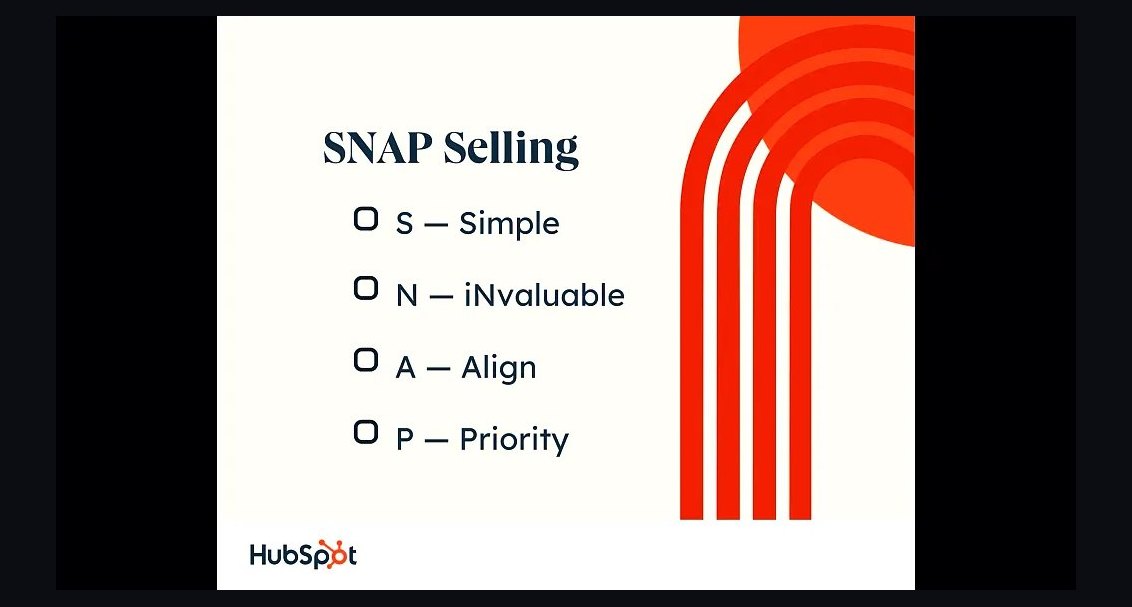 bsHow does *SNAP Selling* help you shorten a six-month sales cycle into three months in 2027?
 pulse-booksWhat is the best way to approach Book Summaries in 2027?