


What’s the most effective way to use *Pitch Anything* to frame your pricing during a procurement call in 2027?
Quality
Certified
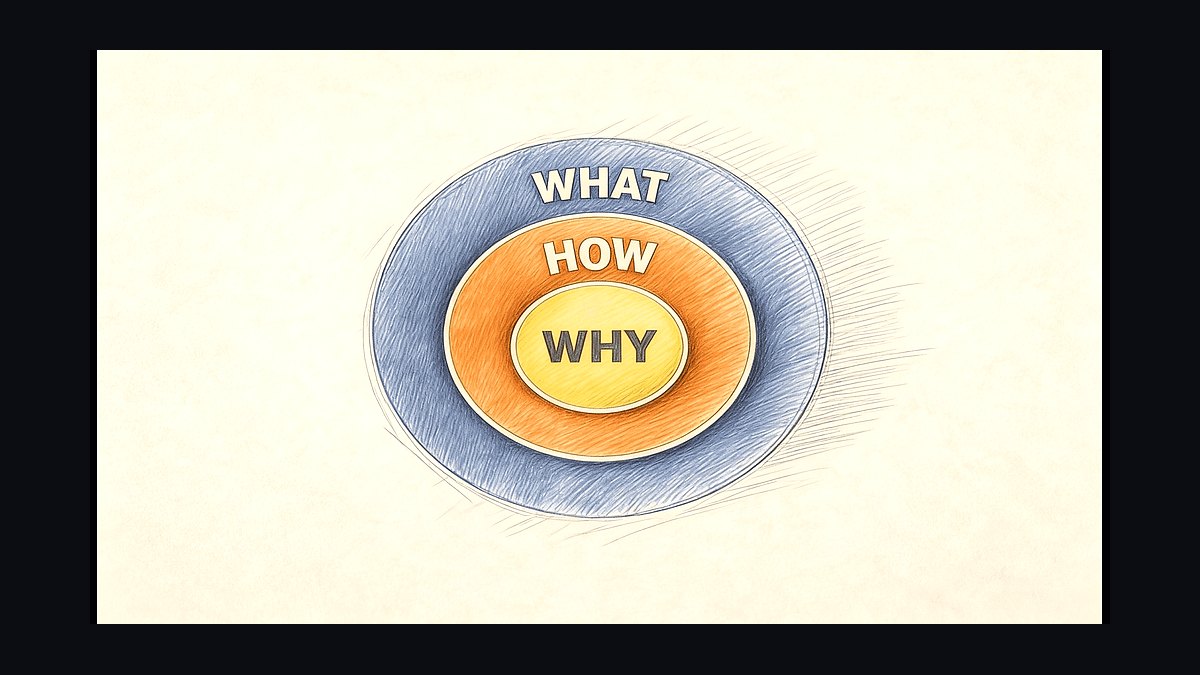
The most effective way to use **Oren Klaff's *Pitch Anything* to frame your pricing during a procurement call in 2027 is to anchor your price with a "frame collision" — a deliberate, high-status disruption that forces the buyer to see your price not as a number to negotiate down, but as a fixed, non-negotiable value proposition tied to scarcity and novelty. In 2027, procurement teams are armed with AI-driven benchmarking tools, real-time market data, and aggressive discount-tracking systems; the old consultative "build value then price" approach fails because buyers instantly compare your number against a thousand data points. Klaff's method — frame control, novelty framing, time pressure, and prizing** — flips the script: you present your price first, with absolute confidence, and then frame the entire conversation around why the buyer *can't* get this value elsewhere, using social proof (other high-status clients who paid full price) and scarcity (limited availability or deadline). The key is to avoid negotiation entirely — instead, you create a "frame war" where you win by holding your frame longer than the buyer holds theirs.
1Frame Control — The Core of Pricing Power
Frame control is the foundational concept in *Pitch Anything*. Klaff argues that every interaction is a battle of frames — each person brings a subconscious mental structure (their frame) that defines the relationship, the stakes, and the rules. In a procurement call, the buyer's default frame is: *"I have the power, I control the budget, and you need to justify your price to me."* If you accept this frame, you lose pricing power immediately. Instead, you must impose your own frame — one where *you* are the scarce resource, *your* solution is unique, and *the buyer* must qualify to work with you. This is done through frame collisions: a statement or action that shatters the buyer's frame and replaces it with yours. For example, when the buyer says, "Your price is too high," you don't defend; you respond with, "That's interesting — most of our top-tier clients said the same thing before they saw the ROI." This reframes the conversation: now you're not negotiating price; you're educating them on why other smart buyers paid full price.
2The Three Frames for Pricing — Novelty, Time, and Prize
Klaff identifies three specific frames that directly apply to pricing in a procurement call:

- The Novelty Frame — You present your solution as something the buyer has *never* seen before, breaking their mental model of how pricing works. For example: "Unlike the three vendors you've already evaluated, we don't charge per seat or per feature. We charge a flat fee for access to our proprietary algorithm that reduces your churn — and we guarantee that result." This frames your price as unique and non-comparable.
- The Time Frame — You impose a deadline or scarcity that forces a decision. In 2027, procurement teams often drag out cycles to extract discounts; you counter by saying, "Our pricing is valid for the next 72 hours because we're about to allocate our team to another client in your sector." This creates urgency and prevents the buyer from using time as leverage.
- The Prize Frame — You frame *yourself* as the prize, not the buyer. You say, "We're selective about who we work with because our solution requires a certain level of organizational commitment. If you're not ready to implement within 30 days, we might not be the right fit." This flips the power dynamic: now the buyer must prove *they* deserve *you*.
3The "Prizing" Technique — Anchoring High and Holding
Prizing is Klaff's term for anchoring your price high and refusing to move. In procurement calls, the buyer will almost always ask for a discount — it's their job. But Klaff's method (drawn from his experience raising capital) shows that concessions destroy value perception. Instead, you use the "take-away" technique: when the buyer pushes back, you don't lower the price; you *remove* something from the offer. For example: "If the price is a concern, we can remove the dedicated support team and the 24/7 SLA — that brings the cost down, but you'll have to manage implementation yourself." This reframes the conversation: now the buyer is choosing between *features*, not *price*. The anchor remains fixed, and the buyer feels like they're negotiating for value, not a discount. In 2027, with procurement teams using AI to benchmark your price against competitors, prizing is your only defense — because if you lower your anchor, the AI flags you as "negotiable" and you'll never get full price again.

4The "Frame War" — Handling Objections Without Discounting
Every procurement call is a frame war — a battle of who controls the narrative. Klaff teaches that you win by holding your frame longer than the buyer holds theirs. Here's the step-by-step for handling objections:
- Acknowledge the objection — "I hear you, and I understand why you'd say that."
- Reframe the objection — "But let me show you why that perspective is actually the reason our top clients pay full price."
- Use a story — "We had a client in your exact industry who tried to negotiate a discount. They ended up losing implementation time and missed their revenue target. They came back and paid full price."
- Re-anchor — "So the real question isn't whether the price is too high — it's whether you can afford to wait."

This sequence never concedes price; instead, it reframes the objection as a misunderstanding of value. In 2027, procurement teams are trained to use silence and pressure tactics — Klaff's method turns those against them by making the buyer justify *their* hesitation, not your price.
5The "Hot Cognition" Advantage — Emotional Framing Over Logic
Klaff's neuroscience background is critical here: he argues that buyers make decisions emotionally (hot cognition) and then rationalize them logically (cold cognition). In a procurement call, the buyer's amygdala is triggered by high prices — it perceives a threat. Your job is to override that threat response with novelty, social proof, and status. For example, you open with a story about a high-status CEO who chose your solution over a cheaper competitor — this triggers the buyer's dopamine system (desire for status) and mirror neurons (they want to emulate that CEO). Then, when you state your price, it's framed as the *price of entry* to that exclusive club, not a cost. In 2027, procurement teams use AI-driven decision tools that strip out emotion — but Klaff's method works because humans still make the final call, and emotional framing bypasses the AI's logic. You say, "Your AI might flag our price as above market, but it can't calculate the opportunity cost of not having our solution." This reframes the data as incomplete.

6The 2027 Procurement Reality — Adapting Klaff's Method to AI and Data
In 2027, procurement has evolved: buyers use AI-powered benchmarking to compare your price against thousands of similar deals. Klaff's method must be adapted to this reality. Here's how:
- Pre-frame the data — Before the buyer pulls up their AI, you say, "I know your system will show you a range of prices. But none of those vendors offer our proprietary algorithm that reduces churn. So the comparison is apples to oranges." This frames the AI's output as irrelevant.
- Use social proof as a data override — "Our last three clients in your sector all paid this price, and their ROI was strong. Would you like me to connect you with their CFO?" This anchors your price to real outcomes, not market averages.
- Leverage scarcity in the AI era — "Our team is only available for a few more implementations this quarter. If you don't decide by Friday, you'll have to wait." This creates a time frame that the AI can't optimize for.
- Hold the frame with a "walk-away" — If the buyer insists on a discount, you say, "I understand. Let me know if you change your mind — but our price is firm." Then go silent. In 2027, procurement teams are trained to exploit hesitation; walking away is the ultimate frame control.

7The "Prize" Frame: Transforming Your Price into a Reward
In *Pitch Anything*, Klaff introduces the concept of "prizing" — the idea that the person who wants the deal less holds the power. On a procurement call in 2027, this is your single most potent pricing tool. Instead of presenting your price as a cost the buyer must justify to their finance team, reframe it as a reward they must earn. Begin the call by subtly communicating that your solution is scarce, your time is limited, and you are selectively choosing partners. Use language like, "We're only taking on a few new clients this quarter who meet our criteria," or, "This pricing is available to organizations that align with our strategic priorities." This flips the dynamic: the buyer shifts from "Can I get a discount?" to "How do I qualify for this opportunity?"
To execute this, never lead with a price sheet. Instead, open with a qualification conversation that makes the buyer feel they are being vetted. Ask about their strategic goals, their willingness to adopt your methodology fully, and their internal alignment. Only after they have invested time and emotional energy do you reveal the price — and when you do, frame it as the natural cost of accessing this exclusive value. In 2027, procurement teams are trained to demand line-item breakdowns and cost-plus justifications. Counter this by refusing to negotiate on price; instead, negotiate on terms, scope, or timing. If they push back, say, "I understand budget constraints. Let me see if I can adjust the scope to fit, but the unit price is fixed because it reflects the quality of the outcome." This maintains your frame as the prize.

8Novelty Framing: Disrupting the Benchmarking Reflex
Procurement in 2027 relies heavily on AI-driven benchmarking that compares your price against historical deals, competitor data, and market averages. Klaff's "novelty" frame is your antidote. He argues that the human brain (and by extension, AI models trained on human data) struggles to price something truly novel because there is no reference point. Your goal is to make your offering incomparable — not by claiming it's better, but by framing it as a fundamentally different category. For example, if you sell a SaaS platform, don't say, "Our tool is more efficient than competitors." Instead, say, "We don't sell a tool; we sell a decision-making protocol that transforms how your team allocates capital. No benchmark exists for that because no one else does it."
To operationalize this, prepare a "novelty statement" that you deliver immediately after stating your price. For instance: "I know your AI will flag this as above market. That's because market data compares old solutions. Our approach is structurally different — it eliminates the need for the departments your benchmark assumes are required. So the comparison is invalid." This forces the buyer to abandon their automated analysis and engage with your frame on your terms. In 2027, the most effective pricing calls are those where the buyer cannot quickly find a cheaper alternative because you've successfully reframed the category. Pair this with a time-bound novelty — "This pricing is only available for the next two weeks because we are launching a new integration that will fundamentally change the workflow" — to add urgency without discounting.
9Closing the Price with Irreversible Commitment
Klaff emphasizes creating situations that make retreat difficult — this is ideal for finalizing pricing without concessions. On a procurement call, you can build commitment by linking your price to a specific, irreversible action you will take if they don't commit. For example, after presenting your price, say: "I have a call with another prospect tomorrow who is ready to sign at this price. If you want to move forward, I need a verbal commitment by end of day, or I will allocate the remaining capacity to them." This is not a bluff; it must be true or at least plausible. In 2027, buyers respect scarcity because they face it themselves — top talent, limited integrations, and exclusive data sets are genuinely finite.
To make this work, prepare a "commitment ladder" before the call. Define the smallest yes you need (e.g., a signed letter of intent, a deposit, or a pilot start date) and frame it as the only way to lock the price. If they hesitate, use Klaff's "time constraint" — "I can hold this price until Friday, but after that, our quarterly pricing review will adjust it upward based on new feature releases." This keeps the focus on the value they gain by acting now, not on the cost. Avoid the temptation to offer a discount as a "concession"; instead, offer a value-added bonus (like extended support or an extra training session) that preserves your price frame while giving them a win to take back to their team. In 2027, the procurement officer's real job is to show they got a good deal — your commitment strategy gives them a story to tell without you having to lower your price.
FAQ
What's the single most important frame to use in a procurement call? The prize frame — where you position yourself as the scarce resource. When the buyer feels they must qualify for you, price becomes secondary.
How do I handle a buyer who says "your price is above the market"? Reframe: "Our price is above the market because our solution delivers more value. Would you like to see the ROI data from our clients?"
Does Klaff's method work with procurement teams that use AI? Yes, but you must pre-frame the AI's data as incomplete. Emphasize proprietary features and outcomes that the AI can't benchmark.
What if the buyer uses silence to pressure me? Hold your frame. Don't fill the silence. Klaff says silence is a frame test — the first person to speak loses. Wait them out.
Can I use frame control if I'm a junior rep? Yes, but you need to practice. Start with small frame collisions in low-stakes calls, like "That's interesting — most of our clients say the opposite."
How do I avoid sounding arrogant or pushy? Frame control isn't about aggression — it's about confidence. Use stories and social proof to make your frame feel natural, not confrontational.
Sources
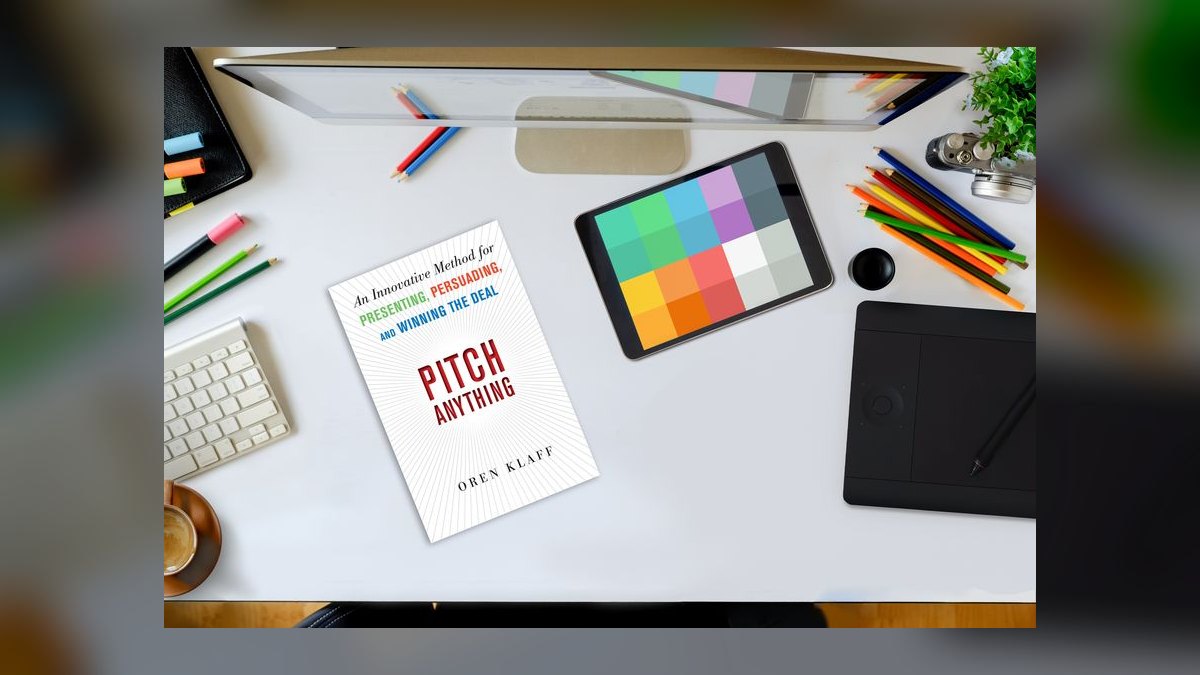
- Oren Klaff, *Pitch Anything: An Innovative Method for Presenting, Persuading, and Winning the Deal* (McGraw-Hill, 2011)
- Klaff's official website and training materials (pitchanything.com)
- Industry reports on AI in procurement and B2B pricing strategy
- Behavioral economics research on anchoring and framing effects in negotiations
- Case studies on frame control in complex B2B sales environments
Related on PULSE
- What’s the most effective opening line from *The Challenger Sale* for a cold email in 2027?
- Pitch Anything — Cliff Notes Summary
- Pitch Anything by Oren Klaff — Cliff Notes Summary & Key Takeaways
- How does *SPIN Selling* help you uncover customer needs during discovery calls in 2027?
- What’s the single most counterintuitive tip from *To Sell Is Human* for writing cold email subject lines that get opened in 2027?
- Way of the Wolf — Cliff Notes Summary
This page will be disappearing soon. Save it to your device for $1 — or read it free while it is here.
@Kory-White- · if Venmo asks, the last 4 of my number are 2012
This page is gone.
This one is off the shelf now. $1 keeps it on your phone for good — the whole page, pictures and diagrams included.
 bsHow do you use *Influence: The Psychology of Persuasion* to prevent buyer’s remorse after a big sale in 2027?
 bsWhat’s the difference between a "challenger" and a "relationship builder" in *The Challenger Sale* for 2027?
 bsWhat’s the one insight from *The JOLT Effect* that changes how you handle indecisive buyers in 2027?
 bsHow does *Influence: The Psychology of Persuasion* apply to upselling existing customers in a subscription model in 2027?
 bsWhat’s the biggest emotional trigger *Gap Selling* says you should never ignore in a buyer conversation?
 bsWhat are the key lessons from *Never Split the Difference* for negotiating a raise in 2027?
 bsWhat’s the most practical selling tip from *The Psychology of Selling* for closing deals in 2027?
 bsHow do sales leaders build a repeatable outbound prospecting motion without a big SDR team in 2027?
 bsHow does *The Mom Test* define a "bad customer" to disqualify early in your discovery process in 2027?
 pulse-booksTop 10 practical takeaways from Atomic Habits for building a new routine in 2027.