
How does *Fanatical Prospecting* change your daily routine for outbound sales?
 Curated byKory White · Fractional CRO · Maryland
 PULSEKNOWLEDGE LIBRARY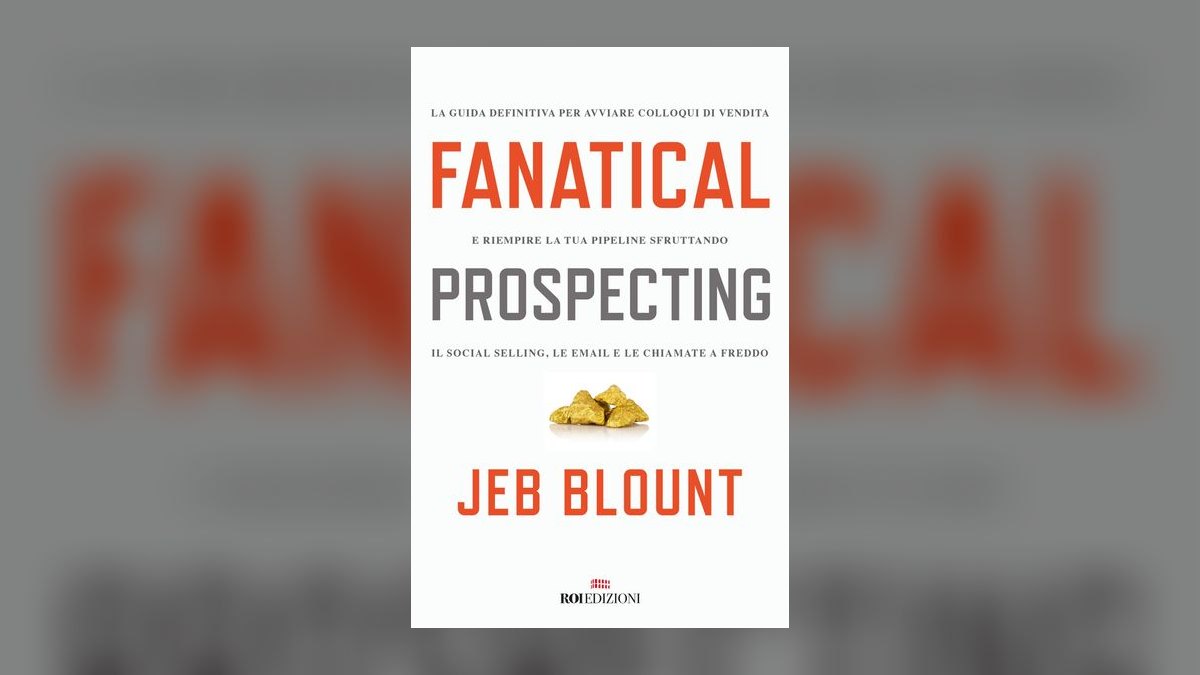
*Fanatical Prospecting* by Jeb Blount replaces reactive, whenever-I-feel-like-it outreach with a scheduled, non-negotiable Prospecting routine: a protected "Golden Hour" of outbound calls and messages at the start of the day, a "Power Hour" of follow-up at the end of it, and daily activity targets you track like a scorecard. The change is behavioral, not tactical — outbound stops being an interruption and becomes the fixed anchor the rest of your day is built around, driven by activity metrics rather than mood or pipeline health.
A Rep's Week Before and After the Book
Picture a mid-market account executive named someone selling HR software, quota of eight new logos a quarter. Her calendar before reading the book looks like most reps' calendars: back-to-back demos in the morning, admin and CRM cleanup after lunch, and outbound squeezed into "whenever there's a gap" — usually late Friday afternoon, usually skipped when a deal needs attention. Her pipeline follows a boom-bust pattern: she closes a flurry of deals from a burst of outreach two months ago, the pipeline goes quiet, she panics, does a week of frantic cold calling, and the cycle repeats. This is the exact failure mode Blount diagnoses — prospecting treated as a backup activity instead of the primary one, done only when the pipeline already looks empty, which guarantees it always will be.
After adopting the book's routine, her calendar changes shape before her skill does. The first sixty minutes of the day — 8:00 to 9:00 — becomes a locked calendar block labeled "Golden Hour," treated with the same seriousness as a customer call, no meetings booked against it, no email or Slack open during it. That hour is spent exclusively on calls, personalized emails, and LinkedIn touches to new and warm prospects. The last hour of her day becomes a "Power Hour" for follow-up: sending the emails she promised on morning calls, logging notes in the CRM, and queuing tomorrow's list. Demos, internal meetings, and admin now fill the middle of the day — the part of the day her energy and willpower are already declining — instead of eating the two windows where she has the most discipline available. Nothing about her pitch or her product knowledge changed; what changed was when outbound happens and whether it is protected.

The scenario matters because it shows the book's actual lever isn't a script or a clever opener — it's calendar discipline applied to an activity most reps quietly deprioritize. A rep who reads the book for closing techniques will be disappointed; a rep who reads it for how to restructure a day around Prospecting will get a concrete, repeatable routine they can start tomorrow morning.
How the Golden Hour / Power Hour Mechanism Actually Works
The mechanism is a closed daily loop, not a one-time habit change, and it only works if each stage feeds the next one. It starts with the premise that willpower is a depleting resource — you have more discipline at 8 a.m. than at 3 p.m. — so the hardest, most emotionally taxing activity (cold outbound) gets scheduled into the highest-willpower window, before meetings, email, or other people's priorities can compete for that time.

During the Golden Hour, the rep works a pre-built call and message list — not a list assembled that morning, which wastes the high-energy window on research instead of outreach. The list is prepared the previous afternoon during the Power Hour, which is the second half of the loop: that end-of-day block is used to review what happened in the day's conversations, send the follow-ups those conversations require, update CRM records while details are still fresh, and build tomorrow's Golden Hour list. Skip the Power Hour and the Golden Hour degrades within a few days, because reps show up to a blank list and burn the high-energy window on prep instead of dialing.
Layered on top of both blocks is a daily scorecard — a simple tally of calls made, emails sent, and conversations started, reviewed at the end of each day as pass/fail against a fixed target. This scorecard is the feedback signal that keeps the loop honest: it measures activity the rep controls (did I make the calls) rather than outcomes the rep doesn't fully control on a given day (did someone say yes), which prevents the routine from collapsing the first time a discouraging day of rejections hits.

The strategy embedded in this loop is that consistency compounds: a single Golden Hour produces almost nothing measurable, but thirty consecutive ones produce a pipeline that no longer depends on a lucky week.
Real Numbers, Ranges, and Benchmarks From the Routine
The book is unusually specific about targets, which is part of why it changes daily behavior rather than staying abstract advice. The headline benchmark is a minimum of 30 outbound phone calls per day during the Golden Hour — not calls plus voicemails counted loosely, but 30 genuine dial attempts, since Blount treats the phone as the highest-leverage channel because it allows real-time objection handling that email and social touches cannot. Alongside that, the Power Hour target is 15 to 20 personalized prospecting emails per day, each kept under roughly 100 words with a single, explicit call to action rather than multiple asks.

Social touches get a smaller but specific allocation: about 15 minutes daily on LinkedIn, split between personalized connection requests, engagement on prospects' posts, and direct messages to warm leads, measured by conversations started rather than connections accepted — a distinction the book stresses because a large connection count with zero replies produces no pipeline.
The cadence benchmark governs how long a given prospect stays "in rotation" before being reclassified: a new prospect should receive a minimum of six touches across roughly 14 days, mixing channels — for example call plus LinkedIn connect on day one, email on day two, call on day four, email plus LinkedIn DM on day seven, call on day ten, and a final "breakup" email on day fourteen. This is a direct response to the common failure of reps abandoning outreach after two or three attempts, well short of the number of touches research on outbound response rates generally shows is needed to get a reply.

Pipeline coverage gets its own rule of thumb: enough new qualified opportunities generated today to sustain the pipeline roughly 30 days out, treated as a rolling buffer rather than a monthly check-in — if a day passes with zero new qualified activity, that 30-day buffer shrinks and the rep is expected to make it up rather than let the shortfall stand. None of these numbers are guarantees of a specific close rate; they are minimum activity thresholds meant to make results a function of volume and consistency rather than luck.
Trade-Offs and Alternatives to the Fanatical Routine
Adopting this routine is not free, and it isn't the only way to structure outbound activity, so it's worth weighing what you give up and what alternatives exist. The most direct trade-off is calendar rigidity: protecting a fixed Golden Hour means declining or moving meetings that land in that slot, which can create friction with managers or teammates used to scheduling whenever is convenient, especially in the first few weeks before the block is respected as fixed. Reps in customer-facing roles with heavy support obligations, or in time zones that put their highest-energy hour in conflict with required team standups, may need to shift the block later in the day rather than force the literal 8-to-9 slot — the principle (protect your highest-willpower hour) matters more than the specific clock time.

A second trade-off is the activity-over-outcome philosophy itself: measuring calls made and emails sent rather than meetings booked can mask a quality problem. A rep who hits 30 calls a day with a broken pitch or a badly targeted list will pass their own scorecard while still producing a weak pipeline, so the routine needs to be paired with periodic coaching on call quality and targeting, not treated as sufficient on its own.
The main alternative approaches worth naming: account-based, research-heavy outbound (fewer touches per day, far more personalization per prospect, common in enterprise sales where a 30-call daily minimum would be impossible against a target list of only a few dozen accounts); inbound-led motions that reduce reliance on cold outbound entirely by leaning on content and marketing-generated leads; and sales-engagement-platform-driven cadences that automate much of the sequencing Blount describes manually, trading some of the personalization emphasis for scale. None of these are wrong — they fit different deal sizes and buyer counts — but they solve a different problem than the one this routine targets, which is a rep or team whose pipeline is thin because outbound is being skipped, not because the cadence design is wrong.

Common Pitfalls and How to Avoid Them
The most common failure is treating the Golden Hour as aspirational rather than literally protected — letting the first "urgent" meeting request or Slack ping of the day override it. The fix is mechanical: block it on the shared calendar as a recurring appointment with a real title, decline conflicting invites by default, and if it must move for a genuine emergency, reschedule it the same day rather than skip it, exactly as you would a client meeting.
A second pitfall is starting the Golden Hour with a blank list, which happens when the prior day's Power Hour was skipped. Reps then spend the high-energy window building a list instead of dialing it, and the routine quietly erodes within a week. Avoiding this requires treating list-building as an output of the Power Hour, not an input to the Golden Hour — the list for tomorrow should already exist before today ends.
A third pitfall is chasing the call-count number with low-value dials — calling the same easy, low-fit leads repeatedly to pad the scorecard rather than working a properly qualified list. The scorecard is meant to enforce consistency, not to become a vanity metric; pairing it with a manager or peer review of call quality, not just volume, keeps the number honest.
A fourth pitfall is abandoning the multi-touch cadence after one or two attempts because a prospect didn't respond immediately, which throws away leads that would have converted on touch four or five. The corrective is disciplined use of a CRM or tracking sheet that automatically surfaces "next touch due" for every prospect in the 14-day sequence, so persistence doesn't depend on memory.

Finally, teams sometimes copy the specific numbers (30 calls, 15 emails) without adapting them to their own deal size, average contract value, or buyer count, then get discouraged when a small enterprise target list can't sustain 30 fresh dials a day. The fix is to keep the underlying strategy — a protected high-energy block, a protected follow-up block, and an honest daily scorecard — while calibrating the specific volume targets to the realities of your market rather than treating Blount's numbers as universal law.
Related questions
How many calls does Fanatical Prospecting recommend making per day?
A minimum of 30 phone calls per day during the Golden Hour, paired with 15-20 personalized emails during the Power Hour — treated as minimum thresholds, not averages to hit occasionally.
What is the 6-touch cadence in Fanatical Prospecting?
A minimum of six touches across roughly 14 days per new prospect, mixing calls, emails, and LinkedIn messages, since most buyers don't respond to the first two or three attempts.
Can the Golden Hour work for remote or distributed sales teams?
Yes — the block is defined by protected time on the rep's own calendar, not by physical location, so remote reps apply the same rule: no meetings, no email, no Slack during that hour.
What happens to prospects who never respond to the cadence?
They move to a monthly nurture list rather than being dropped, since Blount treats a "no" as temporary and worth periodic re-engagement with new information or offers.
Does Fanatical Prospecting replace inbound marketing?
No — it's a routine for outbound activity specifically; teams with strong inbound pipelines still use the same discipline for the outbound portion of their pipeline goals.
FAQ
What is the single biggest routine change Fanatical Prospecting makes to a rep's day? Moving outbound Prospecting into a fixed, protected block at the start of the day — the Golden Hour — instead of treating it as something done only when there's spare time.
Is 30 calls a day realistic for every sales role? Not universally — it fits high-velocity, high-volume outbound motions well; enterprise reps working small target-account lists typically adapt the volume down while keeping the same protected-block strategy.
How does the Power Hour differ from the Golden Hour? The Golden Hour is for new outreach at the day's highest-energy point; the Power Hour is the last hour of the day for follow-up, CRM updates, and preparing tomorrow's outbound list.
What metric does the daily scorecard track? Raw activity — calls made, emails sent, and conversations started — scored pass/fail against a fixed daily target, deliberately excluding outcome metrics like deals closed.
How should a team avoid turning the call-count target into a vanity metric? Pair the scorecard with periodic quality review of the calls themselves, not just the volume, and keep the target list properly qualified rather than padded with easy, low-fit dials.
What replaces the fixed cadence for enterprise or account-based selling? Fewer touches spread across a smaller number of deeply researched target accounts — the volume drops but the underlying routine discipline (protected time, tracked follow-up) still applies.
Sources
- https://www.wiley.com/en-us/Fanatical+Prospecting-p-9781119144755
- https://salesgravy.com
- https://blog.hubspot.com/sales
- https://business.linkedin.com/sales-solutions
- https://www.salesforce.com/blog
- https://www.gong.io/labs
- https://www.rainsalestraining.com
- https://darrenhardy.com/thecompoundeffect
Related on PULSE
- How can Fanatical Prospecting change your approach to social selling and LinkedIn outreach?
- How does Fanatical Prospecting define the perfect prospecting day for a remote sales team?
- What's the biggest mistake Fanatical Prospecting warns against when following up with a warm lead?
- How can Fanatical Prospecting help you maintain a full pipeline without burning out?
- How does Predictable Revenue help you scale outbound sales in a competitive market?
@Kory-White- · if Venmo asks, the last 4 of my number are 2012
 bsWhat are the key lessons from *Never Split the Difference* for negotiating a raise in 2027?
 bsHow do you apply *Fanatical Prospecting* to LinkedIn outreach in 2027?
 bsHow does *Gap Selling* help you close more deals in a recession in 2027?
 bsWhat sales script does *New Sales. Simplified.* recommend for cold calls in 2027?
 bsDoes *The Psychology of Selling* still hold up for modern sales techniques in 2027?
 bsWhat’s the most actionable principle from *How to Win Friends and Influence People* for remote work in 2027?
 bsWhat’s the biggest mistake *SPIN Selling* warns against in complex B2B sales?
 bsWhat’s the most persuasive technique from *Pitch Anything* for investor pitches?
 bsWhat’s the key insight from *The Challenger Sale* for leading a sales team in 2027?
 bsHow do you use *Never Split the Difference* to handle difficult conversations with customers in 2027?