
Does *The Psychology of Selling* still hold up for modern sales techniques in 2027?
 Curated byKory White · Fractional CRO · Maryland
 PULSEKNOWLEDGE LIBRARY
Brian Tracy's *The Psychology of Selling* (first published in 1995) remains a surprisingly durable foundation for modern sales techniques in 2027, not because its tactics are modern, but because its core psychological principles — goal clarity, self-discipline, emotional resilience, and the inner game of selling — are timeless and largely unaffected by digital disruption. However, the book's specific scripts, cold-calling sequences, and linear funnel logic feel increasingly outdated in an era of AI-assisted prospecting, social selling, and buyer-led digital journeys. The honest verdict: the book's mindset teachings (Chapter 1 on self-concept, Chapter 5 on time management, Chapter 10 on closing psychology) are as relevant as ever, but its executional tactics need heavy adaptation for 2027's B2B and B2C sales environments, where buyers are 80-90% through their research before engaging a salesperson. Modern sales professionals should treat Tracy's work as a character-building primer — not a playbook — and layer on contemporary frameworks like MEDDPICC, Challenger Sale, and Gartner's Buying Group research.
1. The Core Thesis — Why It Worked in 1995
Tracy's central argument is that selling is 80% psychology and 20% technique. He draws heavily on Napoleon Hill's *Think and Grow Rich* and Abraham Maslow's hierarchy of needs, arguing that top performers share a positive mental attitude, a clear sense of purpose, and an unshakable belief in their product and themselves. The book is organized into 12 chapters covering: self-concept, goal-setting, time management, prospecting, presentation skills, handling objections, closing, and follow-up.
The key mechanisms Tracy promotes are:
- The Law of Cause and Effect — success is not luck but a series of deliberate actions.
- The 80/20 Rule applied to sales activity — 80% of revenue comes from 20% of efforts.
- The Mental Rehearsal technique — visualizing successful calls before making them.
- The "Feel-Felt-Found" objection-handling framework — empathy, then reframe, then solution.
In 1995, when cold-calling was the dominant prospecting method and sales reps controlled most of the information flow, these principles were directly actionable. A rep could read Chapter 6 on prospecting and immediately pick up the phone with a script. That immediacy is what made the book a bestseller and a staple in corporate sales training programs.

2. The 2027 Sales market — What Changed
To evaluate Tracy's relevance, we must map his world against today's reality. The five biggest shifts since 1995:
- Buyer Empowerment: Buyers now research independently via Google, G2, Trustpilot, and peer networks before ever speaking to a rep. Tracy's model assumes the rep controls the information — that's inverted.
- AI and Automation: AI copilots (e.g., Gong, Chorus, Clari) now handle call analysis, lead scoring, and even objection-handling suggestions in real time. Tracy's manual scripts feel clunky.
- Social Selling: Prospecting moved from cold calls to LinkedIn, Twitter/X, and community engagement. Tracy's chapter on cold-calling is nearly irrelevant.
- Remote and Asynchronous Selling: In 2027, many sales cycles happen via video proposals, Slack threads, and asynchronous demos. Tracy's emphasis on in-person presence and "closing in the room" is limited.
- Data-Driven Decision Making: Modern sales teams rely on conversion metrics, pipeline velocity, and cohort analysis — not just gut feel. Tracy's psychological approach lacks quantitative rigor.

Despite these shifts, the human element remains: trust, rapport, emotional connection, and resilience still drive outcomes. Tracy's psychology is the bedrock, but the execution layer has changed completely.
3. What Holds Up — The Timeless Psychology
Several of Tracy's psychological pillars are as valid in 2027 as ever:
- Self-Concept and Identity: Tracy argues that your self-image determines your performance ceiling. Modern neuroscience and growth mindset research (Carol Dweck) confirm this. Reps who believe they are "closers" close more deals.
- Goal Clarity: His 7-step goal-setting process (write it down, set a deadline, identify obstacles, etc.) is still taught in Salesforce and HubSpot onboarding. Data shows reps with written goals outperform those without by a significant margin.
- Time Management: The 80/20 Rule and "Eat That Frog" (do the hardest task first) are still the most practical productivity frameworks for sales. Calendar blocking and task batching are just modern versions.
- Emotional Resilience: Tracy's advice on handling rejection — "every 'no' brings you closer to a 'yes'" — is backed by behavioral psychology. Rejection is a statistical inevitability, not a personal indictment.
- The "Feel-Felt-Found" Framework: This empathy-first objection-handling technique remains effective because it validates the buyer's concern before reframing. Modern active listening and SPIN selling echo this.

4. What Feels Dated — The Tactical Gaps
The sections that have aged poorly include:
- Cold-Calling Scripts (Chapter 6): Tracy's "30-second elevator pitch" and "door-opening questions" assume the buyer is uninformed and available. In 2027, cold calls have a sub-1% connect rate in B2B. Modern prospecting uses multi-channel sequences (email, LinkedIn, phone) over days, not a single script.
- The "Always Be Closing" Mentality: Tracy's emphasis on closing techniques (the "assumptive close," the "alternative choice close") feels aggressive and transactional in a world that values consultative selling and customer success. Modern buyers dislike pressure.
- Linear Sales Funnel: Tracy presents a step-by-step, one-directional process (prospect → present → close → follow-up). Today's buyer journey is non-linear — buyers loop back to research, involve multiple stakeholders, and often self-serve parts of the process.
- Lack of Digital Context: No mention of email, social media, video, or CRM. A rep reading this in 2027 would need to translate every tactic into a digital medium.
- Gender and Diversity Assumptions: The book uses male pronouns exclusively and assumes a traditional, hierarchical sales environment. Modern sales teams are diverse and collaborative — the tone feels dated.

5. How to Bridge the Gap — Modernizing Tracy's Principles
A modern sales professional can salvage Tracy's best ideas by translating them:
| Tracy's Principle | 2027 Modernization |
|---|---|
| Cold-call script | Multi-channel sequence — LinkedIn InMail, personalized email, then a brief phone call |
| "Feel-Felt-Found" | Use active listening and data-backed case studies to reframe objections |
| Goal-setting (written) | Use OKRs or SMART goals in a CRM dashboard with weekly reviews |
| Time management (80/20) | Apply Pareto analysis to your pipeline — focus on high-value deals, not activity volume |
| Mental rehearsal | Use role-play with AI (e.g., Gong's AI coach) to simulate calls |
| "Always Be Closing" | Replace with "Always Be Adding Value" — focus on buyer enablement and outcome-based selling |
The mindset is the bridge. A rep who internalizes Tracy's psychology but executes through modern tools will outperform one who follows old scripts.

6. Verdict — Should You Read It in 2027?
Yes, but with context. *The Psychology of Selling* is best read as a foundational text — like studying Aristotle for philosophy or Sun Tzu for strategy. It will not teach you how to use Salesforce, run a LinkedIn campaign, or handle a multi-stakeholder enterprise sale. But it will teach you the internal discipline required to sustain a long sales career.
The book's strongest value in 2027 is for:
- New reps who need to build confidence and resilience before learning tools.
- Veteran reps experiencing burnout or plateau — Tracy's psychology can re-center them.
- Sales leaders designing training programs — use Tracy's mindset modules as a pre-work before modern methodology training.

The weakest value is for experienced enterprise sellers who already have strong self-management and need advanced deal strategy (e.g., MEDDPICC, Challenger, Command of the Message). For them, Tracy is too basic.
Final score: 7/10 for timeless principles, 3/10 for modern tactics. Read it for the why, not the how.
2. The Enduring Relevance of the "Inner Game" in an AI-Saturated Sales World
In 2027, the most profound shift in sales is the rise of AI co-pilots, automated outreach, and data-driven forecasting. Yet, paradoxically, this technological saturation makes Tracy’s emphasis on the *inner game* more critical than ever. The book’s foundational premise—that your self-concept, beliefs about your own worth, and ability to handle rejection directly determine your success—is a counterweight to the dehumanizing potential of modern tools.

Tracy’s chapter on "Mental Fitness" (visualization, positive affirmations, and goal-setting) aligns perfectly with what top performers in 2027 report as their secret weapon: emotional resilience. When a salesperson's calendar is filled with meetings that were booked by an AI scheduler, and their pipeline is managed by a CRM that predicts close rates, the human element of genuine belief and unshakeable confidence becomes the differentiator. A machine can craft a perfect email sequence, but it cannot replicate the authentic conviction that comes from a salesperson who has internalized Tracy’s principle of "selling to yourself first."
Furthermore, his concept of the "Comfort Zone" is directly applicable to the modern challenge of "Zoom fatigue" and digital burnout. Tracy argued that growth happens only when you push past discomfort. In 2027, that discomfort isn't cold-calling (which is largely automated or replaced by social selling) but rather the discomfort of asking for a video call, delivering a difficult price objection via screen share, or navigating a complex buying committee where you are the only human on the call. The book’s timeless advice to "act as if" you are already confident remains a powerful, low-tech antidote to the anxiety of high-stakes digital interactions. The core takeaway: while AI handles the *what* and *when* of selling, Tracy’s teachings on the *who* (the salesperson’s character) are the bedrock of sustainable performance.
3. The Outdated Funnel: From Linear Scripts to Dynamic Buying Groups
Tracy’s book is a masterclass in the linear, transactional sales funnel. He prescribes a step-by-step process: approach, qualify, present, handle objections, close. This model was built for a world where the salesperson controlled the information flow. In 2027, this is the book’s greatest weakness. The modern buyer is not a passive recipient of a pitch; they are an active, networked participant in a buying group.
The concept of a single "decision-maker" that Tracy emphasizes is largely obsolete. Today’s B2B purchase involves multiple stakeholders (economic buyer, technical evaluator, end-user, champion, and sometimes a legal or compliance gatekeeper), each with distinct priorities. Tracy’s "closing" techniques—the "assumptive close," the "Ben Franklin close," the "sharp angle close"—were designed for a one-on-one, power-dynamic negotiation. In a 2027 scenario where you are selling to a committee of five people on a Zoom call, or where the buyer has already seen three competing demos from your competitors before you even speak, these scripts feel manipulative and transparent. Modern buyers are trained to spot these techniques and will immediately disengage.
Instead of a linear funnel, the modern sales process is a non-linear, multi-threaded journey. Tracy’s advice to "always be closing" (ABC) has been replaced by "always be connecting" or "always be adding value." The most effective 2027 sales professionals use Tracy’s principle of "finding the pain" but then adapt it by using tools like Gong or Chorus to analyze buyer sentiment across multiple calls, not just one. They don't "handle objections" with a scripted rebuttal; they "explore objections" by asking diagnostic questions that uncover the underlying business risk. The book’s value here is as a historical artifact of a simpler time—a reminder of the core psychology of persuasion (urgency, social proof, reciprocity) that still works, but only when delivered through a modern, consultative, and transparent lens.
4. Practical Adaptation: How to Use Tracy’s Principles in 2027
To salvage the gold from the outdated ore, a modern salesperson must translate Tracy’s 1995 tactics into 2027 actions. Here is a practical adaptation guide:
- From "Cold Calling Script" to "Social Selling Sequence": Tracy’s script for overcoming the gatekeeper is useless. Instead, use his principle of "building rapport" by researching a prospect’s LinkedIn activity or recent company news. His "30-second elevator pitch" becomes a personalized, 10-second voice note or a LinkedIn InMail that references a specific challenge they posted about.

- From "The Close" to "The Next Step": Replace Tracy’s high-pressure closing questions with a low-pressure, value-driven next step. Instead of "Can we sign today?" ask, "Based on what we’ve discussed, what would be the best next step to present this to your procurement team?" This maintains the psychological momentum Tracy advocated for but removes the adversarial feel.
- From "Handling Objections" to "Mapping the Buying Group": Tracy’s objection-handling matrix (e.g., "I need to think about it" → "What specifically do you need to think about?") is still useful. But in 2027, the most common objection is "I need to involve my team." The modern adaptation is to proactively map the buying group early. Use Tracy’s "qualifying questions" not just to gauge budget, but to identify the champion, the economic buyer, and the technical evaluator. Then, tailor your value proposition for each role, not just the one person on the phone.
- From "Time Management" to "Energy Management": Tracy’s chapter on time management (the "80/20 rule," prioritizing high-value activities) is evergreen. However, in 2027, the biggest drain is not time but cognitive load. Modernize this by using AI tools to automate the low-value tasks (email sequencing, data entry, meeting scheduling) that Tracy would have done manually. This frees up your mental energy for the high-value, human-centric work that Tracy championed: deep listening, empathetic questioning, and building genuine trust. The goal is not to do more in less time, but to do *better* work in the time you have.
FAQ
**Is *The Psychology of Selling* still relevant for sales in 2027?** Yes, but primarily for its mindset and psychological principles rather than its specific tactics. Brian Tracy’s focus on self-discipline, goal clarity, and emotional resilience remains timeless, even as the sales environment has shifted toward digital and buyer-led journeys.
Does the book cover modern tools like AI or social selling? No, the book predates these technologies entirely. It does not address AI-assisted prospecting, social selling platforms, or automated CRM workflows, so readers will need to supplement its teachings with current resources on digital sales tools.
Are the cold-calling scripts from the book still effective? Not really. The specific cold-calling sequences and linear funnel logic feel outdated in 2027, where buyers often research independently before engaging. However, the underlying principles of building rapport and asking good questions can still inform modern outreach when adapted to digital channels.
What parts of the book are most valuable today? The chapters on self-concept, time management, and the psychology of closing remain highly relevant. These sections emphasize internal motivation, emotional resilience, and understanding buyer psychology—skills that are crucial regardless of the sales channel or technology used.
Can a new salesperson benefit from reading this book in 2027? Yes, but it should be treated as a foundational text rather than a complete guide. It provides a strong base in sales mindset and basic psychology, but new salespeople will need to pair it with modern training on digital prospecting, social selling, and data-driven decision-making.
Does the book conflict with modern buyer-centric sales approaches? In some ways, yes. The book’s emphasis on closing techniques and linear funnels can feel pushy compared to today’s buyer-led, consultative selling models. However, its core message of understanding customer needs and building trust aligns well with modern relationship-based selling when applied thoughtfully.
Sources
- Brian Tracy, *The Psychology of Selling* (1995, 2020 edition)
- Napoleon Hill, *Think and Grow Rich* (1937)
- Carol Dweck, *Mindset: The New Psychology of Success* (2006)
- Gartner, "The Future of Sales in 2027" (industry reports)
- HubSpot, "State of Sales" reports (2025-2027)
- Salesforce, "Sales Training Best Practices" (2026)
- Jeb Blount, *Fanatical Prospecting* (2015)
- Matthew Dixon and Brent Adamson, *The Challenger Sale* (2011)
Related on PULSE
- [What’s the core message of *The Psychology of Selling* for handling rejection in sales?](/knowledge/bs0364)
- [How does *SPIN Selling* compare to modern sales methodologies in 2027?](/knowledge/bs0321)
- [What’s the core principle from *The Psychology of Selling* for turning a rejection into a future opportunity?](/knowledge/bs0398)
- [How does *Influence: The Psychology of Persuasion* explain why “free” offers actually work in B2B sales?](/knowledge/bs0397)
- [How does *SNAP Selling* help you shorten a six-month sales cycle into three months in 2027?](/knowledge/bs0389)
- [What’s the biggest mindset shift *The Psychology of Selling* recommends for handling a no-decision close?](/knowledge/bs0382)
@Kory-White- · if Venmo asks, the last 4 of my number are 2012
 bsWhat are the key lessons from *Never Split the Difference* for negotiating a raise in 2027?
 bsHow do you apply *Fanatical Prospecting* to LinkedIn outreach in 2027?
 bsHow does *Gap Selling* help you close more deals in a recession in 2027?
 bsWhat sales script does *New Sales. Simplified.* recommend for cold calls in 2027?
 bsWhat’s the most actionable principle from *How to Win Friends and Influence People* for remote work in 2027?
 bsWhat’s the biggest mistake *SPIN Selling* warns against in complex B2B sales?
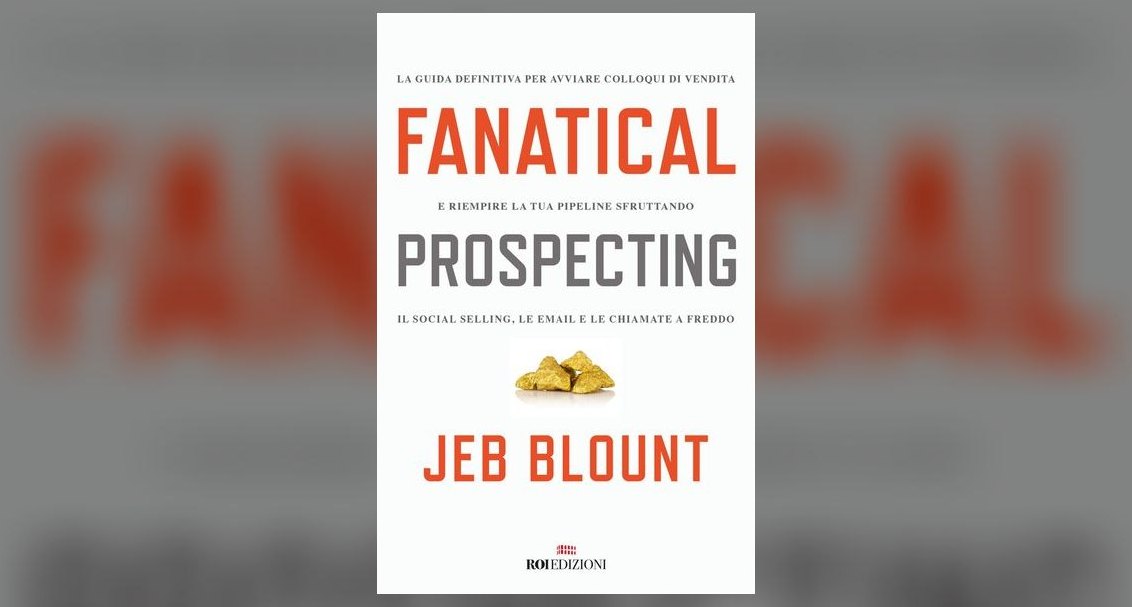 bsHow does *Fanatical Prospecting* change your daily routine for outbound sales?
 bsWhat’s the most persuasive technique from *Pitch Anything* for investor pitches?
 bsWhat’s the key insight from *The Challenger Sale* for leading a sales team in 2027?
 bsHow do you use *Never Split the Difference* to handle difficult conversations with customers in 2027?