


What should you know before investing in Book Summaries in 2027?
Quality
Certified
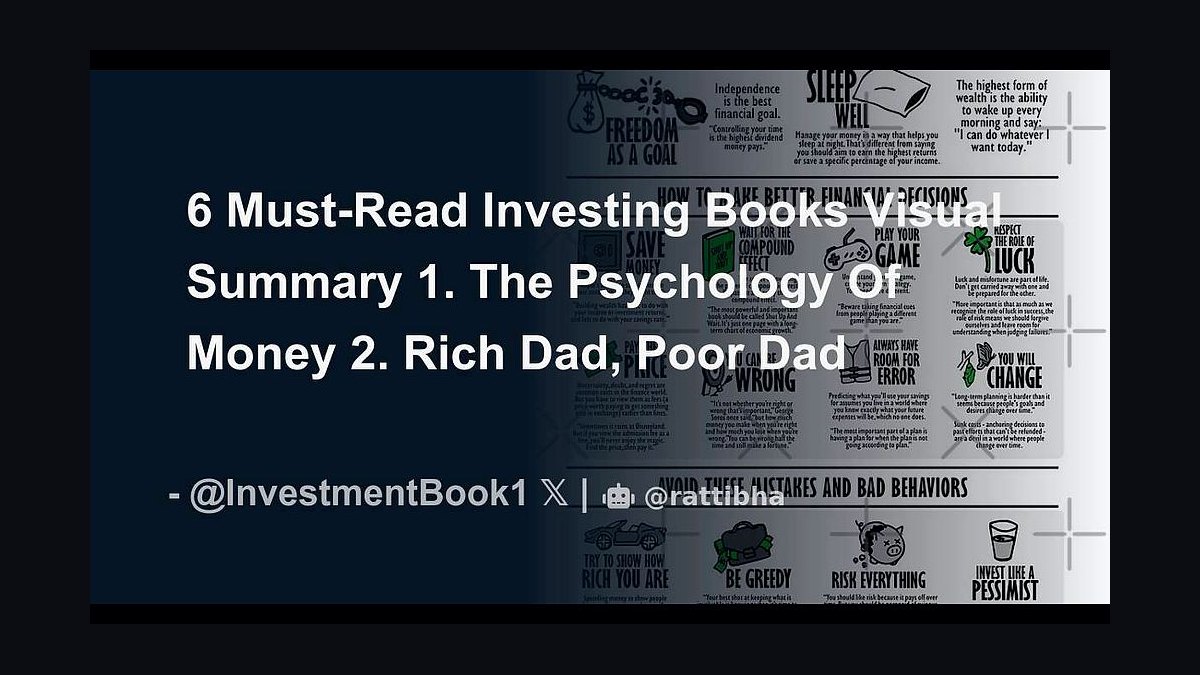
No single answer fits all, but before investing in book summaries in 2027, you must evaluate your learning goals, preferred format, and the credibility of the summary provider. Book summaries have evolved from simple text digests to interactive, AI-enhanced experiences, making them a powerful tool for professionals seeking to consume knowledge efficiently. However, without a clear strategy, they risk becoming passive content consumption that fails to drive real behavior change.
The decision to invest in book summaries in 2027 hinges on understanding the maturity of the market, the rise of personalized learning, and the need to integrate summaries into a broader professional development ecosystem. As the landscape shifts from generic summaries to curated, action-oriented insights, buyers must prioritize platforms that offer depth, context, and measurable outcomes. The market has matured significantly, with dozens of providers competing on features like AI personalization, audio quality, and integration with productivity tools, making it essential to conduct thorough due diligence before committing to a subscription or enterprise plan.
What are the key features to look for in a book summary service in 2027?
In 2027, a top-tier book summary service must go beyond mere condensation. The most critical feature is personalization—the ability to tailor summaries to your industry, role, or specific learning objectives. For example, a RevOps leader might need summaries that highlight operational frameworks, while a product manager focuses on user research insights. Look for platforms that use AI to analyze your reading history and recommend summaries that fill knowledge gaps. This personalization extends to the ability to adjust summary length, depth, and format based on your available time and learning preferences, ensuring you get the most relevant information in the most digestible form.
Another essential feature is actionable takeaways. The best summaries don't just tell you what the book says; they provide concrete steps, templates, or frameworks you can apply immediately. This shift from "knowledge for knowledge's sake" to "knowledge for action" is a defining trend of 2027. Additionally, consider the format variety—top services offer text, audio, video, and interactive summaries, allowing you to learn in the way that suits your schedule. Integration with your existing tools, like CRM or project management software, is also a growing priority, enabling you to capture insights directly into your workflow. For instance, some platforms now allow you to export a summary's key action items directly into your task manager or note-taking app, reducing friction between learning and doing. You should also evaluate the community and social features, such as discussion forums or shared notes, which can deepen understanding through peer interaction and accountability.

How do AI and personalization change the value of book summaries in 2027?
AI has transformed book summaries from static digests into dynamic learning tools. In 2027, AI-powered personalization means you can ask a summary to focus on specific themes, such as "leadership in remote teams" or "data-driven decision making." The summary then reconfigures itself to highlight relevant passages, case studies, and exercises. This deep customization ensures you extract maximum value from every book, even if you only have 15 minutes. The AI can also adapt the summary's language and complexity to match your expertise level, making it accessible for beginners while still offering depth for advanced learners.
Furthermore, AI enables conversational learning—you can interact with a summary, ask follow-up questions, and request clarifications, much like a tutor. This moves book summaries from passive consumption to active engagement. Platforms now use AI to track your comprehension over time, suggesting summaries that reinforce weak areas or challenge your thinking. For a RevOps professional, this means you can build a personalized curriculum that directly supports your strategic goals, without the noise of irrelevant content. The AI can also identify patterns across multiple summaries, synthesizing insights from different authors to create a cohesive understanding of a topic. For example, if you read summaries on change management, the AI might highlight common principles across books like "Leading Change" by Kotter and "Switch" by the Heath brothers, saving you the effort of cross-referencing manually.
What are the risks of relying on book summaries instead of full books?

The primary risk is loss of depth and nuance. A 15-minute summary cannot capture the rich context, supporting evidence, and narrative arc of a full book. This can lead to oversimplification and a shallow understanding of complex concepts. For example, summaries of "Thinking, Fast and Slow" might miss the subtle interplay between System 1 and System 2 thinking, which is critical for applying the concepts correctly. When you rely solely on summaries, you also miss the author's voice, storytelling, and the emotional resonance that often makes a book memorable and impactful. This can result in a fragmented understanding where you know the key points but lack the context to apply them effectively in real-world situations.
Another risk is confirmation bias. If you only consume summaries that align with your existing views, you miss the opportunity to be challenged by opposing ideas that a full book often presents. To mitigate this, use summaries as a gateway—not a replacement. After reading a summary, decide if the book merits a full read, especially for foundational texts in your field. For practical, how-to books, summaries may suffice, but for thought-provoking works, the full book is irreplaceable. As noted in our guide on effective learning strategies, combining summaries with full reads creates a powerful hybrid approach. Additionally, be aware of the curation bias inherent in any summary service—the platform's editorial choices about which books to summarize and how to frame them can subtly shape your worldview. To counter this, actively seek summaries from multiple providers and diversify your reading sources to ensure a balanced perspective.
How do book summaries fit into a professional development strategy in 2027?
Book summaries are best used as a scaffolding tool within a broader learning ecosystem, not as the sole source of knowledge. In 2027, professionals should treat summaries as a way to quickly survey a topic, identify key frameworks, and prioritize which books to read fully. For instance, you might use summaries to stay current on trends like AI in operations or new sales methodologies, then dive deeper into the most impactful books. This approach allows you to maintain a broad awareness of multiple fields while allocating your limited reading time to the most valuable resources.

They also serve as a retention tool. After reading a full book, a summary can help reinforce key points and serve as a quick reference. Many platforms now offer spaced repetition features that resurface summary highlights, improving long-term recall. For teams, summaries can create a shared vocabulary and baseline knowledge, enabling more productive discussions. To maximize ROI, integrate summaries into your weekly learning routine—set aside 30 minutes to review a summary, take notes, and identify one action item to implement. Learn more about building a learning habit in our article on continuous professional development. For organizations, book summaries can be a cost-effective way to upskill entire teams, providing a consistent learning experience that aligns with company goals. Some platforms offer enterprise features like team dashboards, shared highlights, and discussion prompts, making summaries a scalable solution for professional development initiatives.
What is the cost-benefit analysis for investing in book summaries in 2027?
The cost of premium book summary services in 2027 ranges from modest monthly subscriptions to annual plans that offer unlimited access. The key benefit is time efficiency—a single summary can save you 5-10 hours of reading time per book. For a busy professional, this time savings can be immense, allowing you to consume 50-100 books' worth of insights per year. When you calculate the value of your time, even a modest hourly rate makes the subscription cost negligible compared to the hours saved. For example, if you value your time at $100 per hour, saving 5 hours per book is worth $500, far exceeding the cost of most annual subscriptions.

However, the true value lies in application. If you use summaries to generate one actionable insight per week that improves your team's performance or your own efficiency, the ROI is clear. Conversely, if you passively consume summaries without applying the knowledge, the investment is wasted. Consider also the cost of missing out on deep insights from full books—a risk that can be mitigated by using summaries as a filter. Many platforms offer free trials, so test a service for a month to see if it fits your learning style before committing. For a cost comparison of popular tools, see our book summary platform guide. Additionally, factor in the opportunity cost of your learning time—if you spend 30 minutes on a low-quality summary that misrepresents a book, you've not only wasted time but also potentially internalized incorrect information. Therefore, investing in a high-quality service with rigorous editorial standards is crucial for maximizing the cost-benefit ratio.
How can you evaluate the quality of a book summary service?
Quality evaluation starts with sample summaries. Read or listen to a few summaries on topics you know well to assess accuracy, clarity, and depth. A good summary should preserve the author's core argument, include key supporting points, and avoid introducing bias. Check if the summary cites specific studies or examples from the book, which indicates thoroughness. Pay attention to the summary's structure—does it follow the book's logical flow, or does it impose an arbitrary framework? A well-structured summary should make the book's main ideas easy to understand and remember.
Also, evaluate the curation process. Reputable services employ professional summarizers, subject-matter experts, or editors, not just AI. Look for transparency about how summaries are created—some services even allow users to rate and review summaries, providing a community-driven quality check. Finally, consider the breadth of the library. Does it cover both business classics and recent releases? A diverse catalog ensures you can explore topics beyond your immediate field, fostering cross-disciplinary thinking. For a deeper dive on evaluation criteria, refer to our summary quality checklist. Additionally, check the service's update frequency—do they add new summaries regularly, and do they update existing summaries when new editions of books are released? A static library quickly becomes stale, especially in fast-moving fields like technology and business strategy.
Related questions

How do book summaries compare to audiobooks for learning?
Book summaries offer faster consumption and condensed insights, while audiobooks provide the full narrative and depth. Use summaries for quick surveys and audiobooks for deep dives into high-priority books. Both can complement each other in a well-rounded learning strategy.
Are AI-generated book summaries as good as human-written ones?
In 2027, AI summaries are improving rapidly but often lack nuance and contextual understanding. Human-written summaries remain superior for complex or philosophical works, while AI excels at factual, how-to content. The best services combine both approaches for optimal results.
What is the best book summary app for professionals?
The best app depends on your needs—Blinkist and getAbstract are strong for breadth, while Shortform and StoryShots offer deeper dives. Evaluate based on library size, format variety, and personalization features. Consider your industry and learning style when making a choice.
Can book summaries replace reading for leadership development?
No, summaries can supplement but not replace full reading for leadership development, which requires deep reflection and nuanced understanding of human behavior and organizational dynamics. Use summaries to identify key concepts, then read full books for transformative insights.
FAQ
Is it worth paying for book summaries if I have a library card? Free library apps like Libby offer some summaries, but premium services provide curated, high-quality content, AI personalization, and audio formats that libraries often lack. For professionals, the time saved and actionable insights often justify the cost, especially when considering the value of your time.
How many book summaries should I consume per month? Aim for 4-8 summaries per month, depending on your learning capacity. Focus on quality over quantity—spend time reflecting on each summary and applying at least one insight. Overconsumption can lead to information overload and reduced retention.
Do book summaries count as reading for professional development? Yes, when used strategically. They count as efficient knowledge acquisition, but they should be combined with full reads for deep expertise. Treat summaries as a tool, not a substitute, and document your insights for future reference.
Can I use book summaries to prepare for a certification exam? Summaries can help you survey key concepts quickly, but they lack the depth and detail needed for most certifications. Use them as a supplement to full study materials, not as a primary resource, and verify key points against official exam guides.
Are there free book summary services that are worth using? Some free services like Four Minute Books and Sam Thomas Davies’ summaries offer solid content, but they lack the library size, personalization, and features of paid platforms. Free options are good for occasional use or trying out the format before investing.
How do I avoid information overload from book summaries? Set a weekly limit, take notes on key insights, and prioritize application over consumption. Use a tool like a learning journal to track what you’ve learned and how you’ve applied it. Regularly review and prune your summary library to focus on high-impact content.
What is the future of book summaries beyond 2027? Expect deeper AI integration, interactive summaries with simulations, and personalized learning paths that adapt in real-time. Summaries will become part of larger knowledge management systems, integrating with your digital workspace for seamless learning and application.
Sources
- Blinkist
- getAbstract
- Shortform
- Harvard Business Review on Learning
- Forbes on Book Summaries
- Inc. Magazine on Reading Habits
- Psychology Today on Learning Retention
- The Economist on AI and Learning
- MIT Sloan Management Review on Knowledge Management
Related on PULSE
- Is Book Summaries worth it in 2027?
- Top 10 best Book Summaries options in 2027
- Top 10 Book Summaries strategies for 2027
- What is the best way to approach Book Summaries in 2027?
- How much does Book Summaries cost in 2027?
- What are the most common mistakes in Book Summaries in 2027?
Recently Added — Related
This page will be disappearing soon. Save it to your device for $1 — or read it free while it is here.
@Kory-White- · if Venmo asks, the last 4 of my number are 2012
This page is gone.
This one is off the shelf now. $1 keeps it on your phone for good — the whole page, pictures and diagrams included.
 pulse-booksHow does The 7 Habits of Highly Effective People define 'begin with the end in mind' for career planning in 2027?
 pulse-booksWhat is the best way to approach Book Summaries in 2027?
 pulse-booksHow much do executive book summary subscriptions like getAbstract or Blinkist cost in 2027?
 pulse-booksTop 10 Book Summaries strategies for 2027
 pulse-booksWhat are the most common mistakes in Book Summaries in 2027?
 pulse-booksWhat is the best way to apply the Four Tendencies framework to build a daily reading habit in 2027?
 pulse-booksIs Book Summaries worth it in 2027?
 pulse-booksHow much do Book Summaries cost in 2027?
 pulse-booksWhat is the single most counterintuitive piece of advice from Think and Grow Rich for achieving financial goals in 2027?
 pulse-booksHow does Daring Greatly by Brené Brown change how you handle criticism at work in 2027?