


What are the concrete steps to implement SNAP Selling by Jill Konrath in 2027?
Quality
Certified
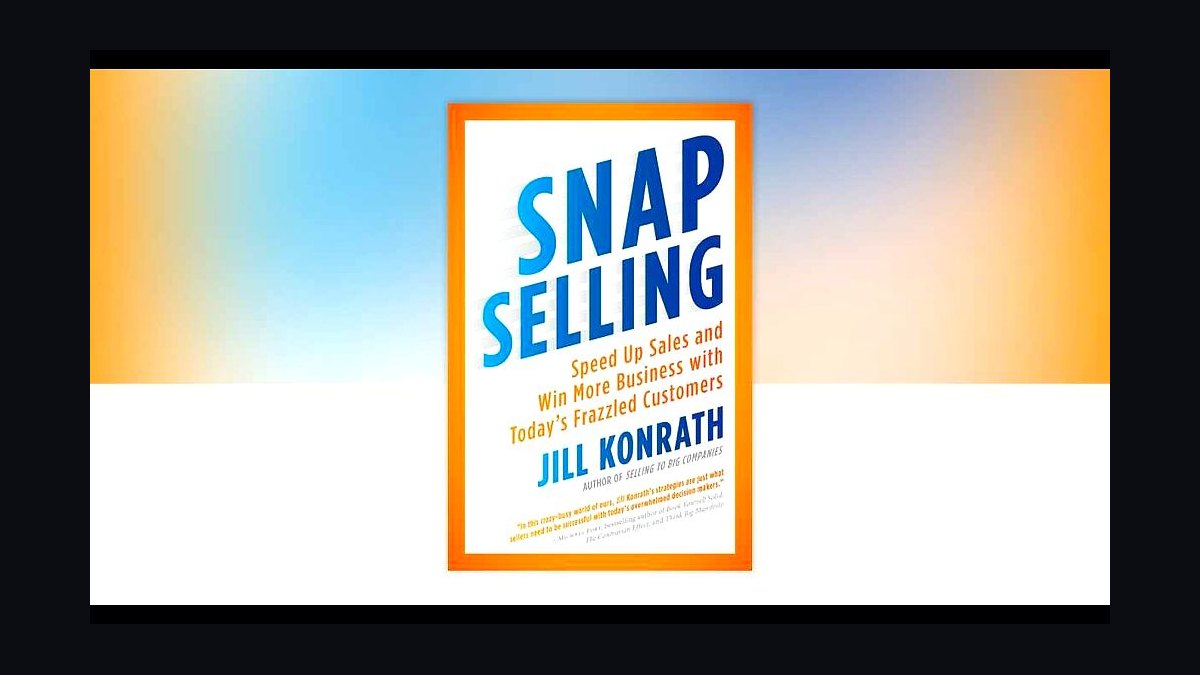
Implement SNAP Selling by mapping each buyer's decision path, then rebuilding your outreach around Konrath's four rules: keep it Simple, be iNvaluable, always Align, and raise Priorities. Concretely: audit your messaging for complexity, build one-page value points, tie every touch to a stated business initiative, and create urgency evidence.
What SNAP Selling is and why it still matters in 2027
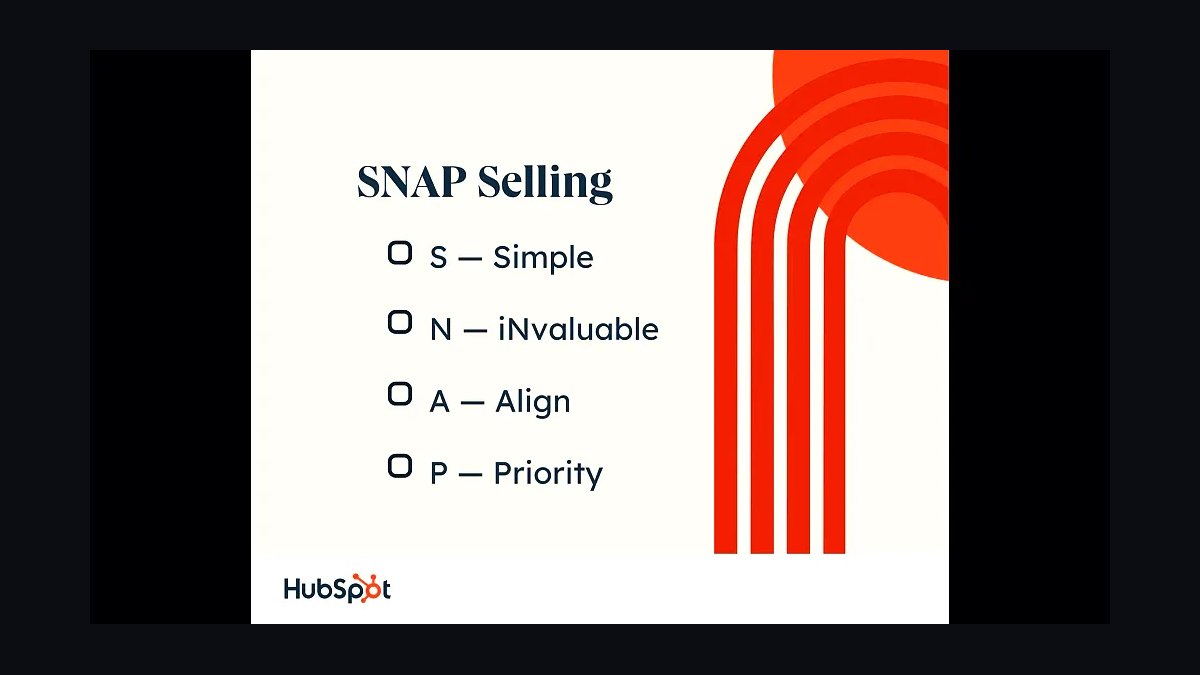
SNAP Selling is Jill Konrath's framework for selling to what she calls "frazzled customers" — buyers who are overloaded, interrupted constantly, and defaulting to "no decision" because doing nothing is the lowest-effort option available to them. The acronym stands for four decision-influencing rules: keep it Simple, be iNvaluable, always Align, and raise Priorities. Konrath published it in 2012, and the reason it aged well is that its core premise — that the scarce resource in a sale is the buyer's attention and cognitive bandwidth, not information — has only intensified.
What has changed since 2012 is the shape of that overload. In 2012, the overload was email volume and calendar density. By 2027, buyers face a different problem: an oversupply of *plausible-sounding* content, much of it machine-generated, arriving through every channel simultaneously. Vendor websites answer every question. AI assistants summarize category landscapes in seconds. The buyer does not lack information; they lack a way to tell which information is trustworthy and which of their forty competing priorities this purchase actually serves. That shift makes the "iNvaluable" and "Priorities" rules the two heaviest levers in the framework today, and makes "Simple" harder to achieve than it sounds, because simplicity now has to compete with content that is *already* simple and *already* free.
The other structural change is buying-group size. Enterprise purchases routinely involve six to ten-plus stakeholders, and mid-market deals that used to be a single-owner decision now pull in security, finance, and often a data or IT reviewer. SNAP was written primarily around the individual frazzled decision-maker. Applying it in 2027 means running the four rules against *each* member of the buying group, because "simple" for a VP of Sales and "simple" for a security reviewer are different documents with different failure modes.
Why bother with a fourteen-year-old framework instead of something newer? Because SNAP is one of the few methodologies that is explicitly diagnostic about *why* deals stall rather than prescriptive about what to say. MEDDIC tells you what to qualify. Challenger tells you how to reframe. SNAP tells you what the buyer's brain is doing when it decides whether to grant you thirty more seconds. Those are complementary, not competing — most teams that succeed with SNAP run it as a messaging and access layer *on top of* whatever qualification framework already lives in their CRM. If your team already runs MEDDPICC, you are not replacing it; you are fixing the reason your perfectly-qualified deals go dark.
One honest caveat before you commit: SNAP is a book and a set of principles, not a certified program with a fixed curriculum, a scoring rubric, or an official partner network the way some methodologies have. That is a feature if you want to adapt it cheaply, and a liability if your organization needs external validation and standardized enablement content to drive adoption. Budget for building your own assets, because the framework itself will not hand them to you.
The four decisions and the three buyer questions underneath them
Konrath's operating model is that a complex sale is not one decision but a sequence of small ones. Before a buyer signs anything, they make a decision to *allow access* (will I take this call?), a decision to *initiate change* (is the status quo actually costing me?), and a decision to *select resources* (of the options, why you?). Each of those decisions has a different failure mode, and most teams throw the same message at all three.
The access decision fails on relevance and effort. A buyer skims a subject line and makes a sub-second judgment about whether opening it will cost them more than it returns. Nothing you say about your product matters here. What matters is whether the first eight words reference something they already care about.
The change decision fails on risk asymmetry. Staying put has a known cost. Changing has an unknown cost plus a reputational exposure — if the project fails, the person who championed it wears it. This is why "we don't have budget" is usually a lie of politeness; the real objection is that the expected value of changing does not clear the personal risk of championing.
The selection decision fails on differentiation collapse. By the time a buyer is comparing three vendors, the feature grids look identical because every vendor answers the RFP the same way. Differentiation at this stage rarely comes from capability; it comes from demonstrated understanding of their specific environment and from reducing the buyer's implementation anxiety.
Mapping the four SNAP rules against those three decisions gives you a practical matrix. Simple matters most at access and at selection (where a complicated proposal reads as a complicated implementation). iNvaluable matters most at change, because it is the rule that says the rep personally, not just the product, has to be worth the meeting. Align matters everywhere but is the hard gate at change — if your offering does not connect to a stated, funded initiative, no amount of insight moves it. Priorities is the tiebreaker between "yes eventually" and "yes this quarter," and it is where most forecasts die.
There is an adjacent workflow worth naming here: this same matrix works for customer success renewals and expansion. A renewal is an access decision (will the champion take the QBR seriously?), a change decision (is staying with you obviously better than re-evaluating?), and a selection decision (why this tier, why this seat count?). Teams that run SNAP only on new logo acquisition leave the easier half of the value on the table.
The step-by-step process to implement it
Here is the concrete sequence. Treat this as a 90-day program with a pilot pod, not a one-day training event, because the failure rate for one-day methodology training approaches total.

Week 1 — Baseline and complexity audit. Pull your last 40–60 outbound sequences, discovery decks, and proposals. Score each asset on three things: word count of the first paragraph, number of distinct claims made before any buyer-specific reference appears, and number of decisions the buyer must make to respond. Most teams find their opening emails run 120–180 words and make four to six claims. Your target is under 90 words and one claim, with exactly one requested action. Also pull closed-lost data and count what percentage closed to "no decision" versus "lost to competitor." If no-decision is above roughly 25–30% of your losses, the Priorities rule is your highest-leverage fix and you should sequence it first.
Week 2 — Build the buyer matrix. For each of your top three personas, write down: their three stated business priorities this fiscal year (from earnings calls, job postings, LinkedIn posts, and 10-Ks if public), the trigger events that make your category urgent, and the specific words they use for the problem. Do not use your marketing language. This document is the raw material for everything downstream and it is the step teams skip.
Week 3 — Write value points. A value point is a single, specific, buyer-relevant statement that earns the next thirty seconds. Not "we increase pipeline efficiency." Something like "the three teams we've worked with in your segment all found their SDRs spending the first ninety minutes of the day on list hygiene." Build 8–12 per persona. Test them in live calls and kill the ones that get no reaction. Expect roughly half to die.
Week 4 — Rebuild the access layer. Rewrite cold email, call openers, and LinkedIn touches using the value points. Constraint: first sentence references their world, not yours; total length under 90 words; one ask; no attachment; no calendar link in the first touch. Run this as an A/B against your control sequence for at least 400 sends per arm before you believe the result.
Weeks 5–8 — Rebuild discovery and the change conversation. Rewrite your discovery guide so the first third is about their current process and its cost, the middle third is about what happens if nothing changes for four more quarters, and only the last third touches capability. Train reps to quantify the status quo cost in the buyer's own units — hours, headcount, churn points, days of cycle time — not in dollars you invented.

Weeks 9–12 — Simplify the selection layer. Cut your proposal to a one-page decision summary with an appendix. Build a plain-language implementation plan with named owners and week-by-week milestones, because implementation anxiety is the quiet killer in the selection decision. Add a "what could go wrong and how we handle it" section — counterintuitively, naming risk reduces it.
Costs, timelines, and realistic ranges
Be honest with your executive sponsor about what this costs, because underfunding is the single most common reason methodology rollouts stall at month four.
Content build cost. The buyer matrix and value points are the real work. For a three-persona motion, budget 60–100 hours of combined product marketing and senior AE time. That is not a week of someone's slack capacity; it is a genuine project. If you outsource the research portion, expect a meaningful engagement, but the value points themselves should never be outsourced — they have to come from people who have heard real objections.
Training and enablement. A one-day kickoff plus eight weeks of weekly 45-minute reinforcement sessions is the minimum that produces durable behavior change. Methodology training with no reinforcement cadence decays fast; the widely-cited pattern in sales enablement is that most of a one-off training's content is unusable within weeks. Budget manager time explicitly: two hours per week per manager for call review against the four rules.
Tooling. SNAP needs almost no new tooling, which is one of its advantages. What it does need is call recording with searchable transcripts so managers can coach against actual language rather than recollection, and a CRM field for "buyer's stated priority" so alignment is inspectable in pipeline review. If you already have conversation intelligence and a decent CRM, incremental tool spend can be near zero.

Timeline to signal. Access-layer metrics move first: reply rates and meetings-booked-per-100-touches should show a readable difference within 3–5 weeks of the rewrite, assuming adequate volume. Discovery quality changes show up in 6–10 weeks as better-qualified pipeline. The metric you actually care about — no-decision loss rate — moves on your sales cycle length plus a quarter. For a 90-day cycle, expect to wait two full quarters before the number is trustworthy. Anyone promising you a clean read faster than that is measuring noise.
Realistic outcome ranges. Resist the urge to promise a number. What is defensible to your CFO: this is a program aimed at the no-decision bucket and at top-of-funnel response, and you will report both as leading indicators with a stated confidence window. If your no-decision rate is 35% of losses and you get it to 28%, that is a large win that will not look dramatic on a slide. Set that expectation up front.
Opportunity cost. The hidden cost is rep attention during the rebuild. Reps rewriting sequences are not prospecting. Run the pilot with one pod of four to eight reps rather than the whole team, absorb the productivity dip in a controlled place, and let the pilot pod's results do the change management for you. Volunteer pilots outperform conscripted ones badly enough that it is worth waiting for volunteers.
Where teams get this wrong
Treating "Simple" as "short." Cutting your email from 180 words to 60 while keeping the same four self-referential claims produces a shorter bad email. Simple means low cognitive load and low decision count for the buyer — one idea, one ask, no ambiguity about what happens next. A 110-word email that makes one clear point outperforms a 50-word one that makes three fuzzy ones.
Confusing "iNvaluable" with "helpful." Sending an industry report is helpful. Being invaluable means the buyer would take your call even if you had nothing to sell, because your read on their situation is better than what they get internally. That bar is high and it requires reps to actually know the vertical. A generalist rep covering eleven industries structurally cannot be invaluable in any of them. This is an org design problem disguised as a messaging problem, and it is the most expensive finding in most audits.

Aligning to the company instead of the person. "Aligns with your digital transformation initiative" is corporate wallpaper. Alignment means this specific human's specific objective — the thing on their performance review. Two people in the same buying group have different ones, and often conflicting ones. The security reviewer's objective may be directly opposed to the VP's speed objective, and pretending otherwise is how deals die in legal.
Manufacturing false urgency for "Priorities." End-of-quarter discounts are not priority elevation; they are priority *substitution*, and sophisticated buyers now read them as weakness. Real priority elevation connects your solution to a dated, externally-imposed deadline the buyer already has: a compliance date, a contract expiry, a board commitment, a planned system sunset. If no such deadline exists, the honest move is to accept a longer cycle rather than fabricate pressure.
Skipping the loss-reason audit. Teams adopt the framework because they read the book, not because they diagnosed a problem. If you are actually losing to competitors on capability, SNAP will not help — you have a product gap and the messaging layer cannot paper over it. Do the loss audit first so you know which of the four rules you are actually buying.
Rolling out to everyone at once. Big-bang methodology rollouts create the appearance of adoption (everyone attended) with none of the substance (nobody changed a call). Pilot, measure, then expand.
Letting the CRM stay silent about it. If "buyer's stated priority" and "cost of status quo, in their units" are not fields a manager can inspect in pipeline review, the framework lives only in the reps who liked the book. Within two quarters it will be gone. Instrumentation is what turns a strategy into a system.
Decision framework: when SNAP is the right tool

SNAP is not universally the right choice, and part of implementing it well is knowing when not to. Use the loss-reason mix and deal shape to decide.
If your dominant loss reason is no decision / status quo, and your access metrics (reply rate, meeting rate) are weak, SNAP is a strong fit — it targets exactly that. If your dominant loss is to a named competitor on capability, you have a product or positioning problem; a competitive battlecard program and product feedback loop will outperform any messaging methodology. If your losses are concentrated in procurement and legal, your gap is deal management and mutual action plans, not buyer psychology.
Deal shape matters too. SNAP fits transactional-to-mid-market motions and the early stages of enterprise deals extremely well. For large, multi-year enterprise deals with formal evaluation committees, SNAP handles access and change beautifully but does not give you the account-planning, multithreading, and political-mapping apparatus that something like MEDDPICC or a formal account planning discipline provides. The common and correct answer at enterprise scale is to run both: SNAP governs how you communicate, your qualification framework governs what you inspect.
For product-led and self-serve motions, the framework translates to the in-product experience rather than the rep. "Simple" becomes time-to-first-value. "Priorities" becomes the trigger-based in-app prompt. The four rules are genuinely portable to lifecycle marketing and onboarding, and applying them there is often cheaper than applying them to a sales team.
Instrumenting it so it survives past quarter two
Most methodology implementations die quietly. The training happened, the deck exists, and eighteen months later nobody can name the four letters. The difference between the ones that stick and the ones that evaporate is almost always instrumentation and manager behavior, not rep enthusiasm.

Build four inspectable artifacts. First, two required CRM fields on every opportunity past discovery: the buyer's stated priority in their own words, and the quantified cost of the status quo in the buyer's units. Make them free-text, not picklists — picklists get gamed instantly. Second, a call-review rubric with one line per rule that managers score on two calls per rep per week. Third, a monthly no-decision loss report broken out by rep and segment, so the metric the program targets is visible to leadership without anyone having to build a slide. Fourth, a living value-point library with usage and reaction data, so the good ones spread and the dead ones get retired.
Manager behavior is the load-bearing element. If managers coach to activity volume in one-on-ones while the program asks for message quality, the program loses — reps optimize for whatever the person who writes their review actually asks about. Change the one-on-one agenda template before you change anything else.
Watch for two decay signals. The first is value-point staleness: a value point that was sharp in Q1 is generic by Q4 because competitors converge on the same observation. Refresh the library quarterly. The second is the "simple" ratchet, where proposals creep back toward twelve pages because someone loses a deal and adds a section in response. Put a page-count ceiling in the proposal template and require an exception to exceed it.
Finally, connect it upstream. Marketing should be writing to the same buyer priority matrix the reps use, or you will have a demand-gen engine promising one thing and a sales team saying another. The matrix is a shared asset, and treating it as a sales-only document is the most common way this good work gets diluted. Run it as a joint quarterly review with product marketing, and the whole go-to-market motion gets simpler at the same time.
Related questions
How does SNAP Selling compare to the Challenger Sale?

Challenger focuses on teaching, tailoring, and taking control to reframe how a buyer sees their problem. SNAP focuses on reducing buyer cognitive load and earning access. They are compatible: use SNAP's rules for how you communicate and Challenger's commercial insight as the substance of what you teach.
Can SNAP Selling work for inbound-led sales teams?
Yes. Inbound buyers are equally overloaded and equally prone to no-decision. The access decision is already partly won, so weight your effort toward the change and selection decisions — quantify the cost of the status quo and simplify the proposal and implementation plan.
How long before we see measurable results?
Reply and meeting rates move in three to five weeks with adequate volume. Pipeline quality shifts in six to ten weeks. The no-decision loss rate — the metric the program actually targets — needs one full sales cycle plus a quarter before the read is trustworthy.
Do we need to drop our existing sales methodology?
No, and you probably shouldn't. SNAP is a messaging and access layer. Qualification frameworks like MEDDPICC and account-planning disciplines answer different questions. Run SNAP on top of what you have rather than replacing an already-instrumented system.
What's the smallest viable pilot?
One pod of four to eight volunteer reps, one persona, a rewritten access layer, and a rewritten discovery guide. Ninety days. Measure reply rate and no-decision rate against a matched control pod. That is enough to justify or kill the wider rollout.
FAQ

What does SNAP actually stand for?
Simple, iNvaluable, Aligned, and Priority. Konrath frames these as four rules for influencing the decisions of overwhelmed buyers: keep everything easy to understand and act on, make yourself personally worth the buyer's time, connect to what they actually care about, and elevate your solution against their competing priorities.
Is SNAP Selling still relevant given how much buyers self-educate now?
Arguably more relevant. Self-education solves the information problem but worsens the attention and trust problem — buyers now wade through an enormous volume of plausible content. A framework built around reducing cognitive load and earning relevance is well-suited to that environment.
Who should own the implementation internally?
Ideally a revenue enablement or RevOps lead with an executive sponsor in sales leadership, partnered with product marketing for the buyer matrix. Rep-led adoption without an owner produces inconsistent application and no measurement, which is how these programs quietly disappear.
How do we build value points without fabricating statistics?
Source them from your own closed-won and closed-lost interviews, from public filings and earnings calls, from job postings that reveal priorities, and from patterns your CS team observes. Specific observations about real customer situations beat invented benchmarks and hold up under scrutiny.
Does this apply to customer success and renewals?
Yes, and it is often the cheapest place to start. Renewals and expansions involve the same access, change, and selection decisions. Applying the four rules to QBRs and expansion conversations typically requires less content build than a full new-logo rollout.
What is the single most common implementation mistake?
Running a one-day training with no reinforcement cadence, no CRM instrumentation, and no change to what managers inspect weekly. The concrete framework itself is not hard; making the behavior survive contact with quota pressure is the hard part, and that requires manager behavior change first.
Sources
- https://www.jillkonrath.com/
- https://en.wikipedia.org/wiki/Jill_Konrath
- https://hbr.org/2017/03/the-new-sales-imperative
- https://hbr.org/2012/07/the-end-of-solution-sales
- https://www.gartner.com/en/sales/insights/b2b-buying-journey
- https://www.salesforce.com/resources/research-reports/state-of-sales/
- https://www.mckinsey.com/capabilities/growth-marketing-and-sales/our-insights
- https://www.forrester.com/blogs/category/b2b-sales/
- https://hbr.org/2015/12/the-most-common-reason-a-deal-falls-apart
Related on PULSE
- How to reduce no-decision losses in a B2B pipeline
- Building a buyer priority matrix from public sources
- MEDDPICC vs. Challenger vs. SNAP: choosing a sales methodology
- How to instrument a sales methodology in your CRM
- Writing cold email that survives an overloaded inbox
- Designing a 90-day sales enablement pilot that actually sticks
This page will be disappearing soon. Save it to your device for $1 — or read it free while it is here.
@Kory-White- · if Venmo asks, the last 4 of my number are 2012
This page is gone.
This one is off the shelf now. $1 keeps it on your phone for good — the whole page, pictures and diagrams included.
 pulse-recentGetting to Yes by Roger Fisher and William Ury — Top 10 Key Takeaways for Sales Leaders in 2027
 pulse-recentHyper Sales Growth by Jack Daly — Top 10 Key Takeaways for Sales Leaders in 2027
 pulse-recentCrossing the Chasm by Geoffrey Moore — Top 10 Key Takeaways for Sales Leaders in 2027
 pulse-recentHow do you implement the Sandler Rules by David Mattson in your first 30 days as a new sales manager in 2027?
 pulse-booksTop 10 practical takeaways from Atomic Habits for building a new routine in 2027.
 pulse-recentWhat is the first concrete step in The Sandler Rules by David Mattson for building a sales plan in 2027?
 pulse-recentSales EQ by Jeb Blount — Top 10 Key Takeaways for Sales Leaders in 2027
 book-summaryWhat factors drive the price of Book Summaries up or down in 2027?
 pulse-recentSnap Selling by Jill Konrath — Top 10 Key Takeaways for Sales Leaders in 2027
 pulse-recentStart with No by Jim Camp — Top 10 Key Takeaways for Sales Leaders in 2027