


Question Based Selling by Thomas Freese — Top 10 Key Takeaways for Sales Leaders in 2027
Quality
Certified
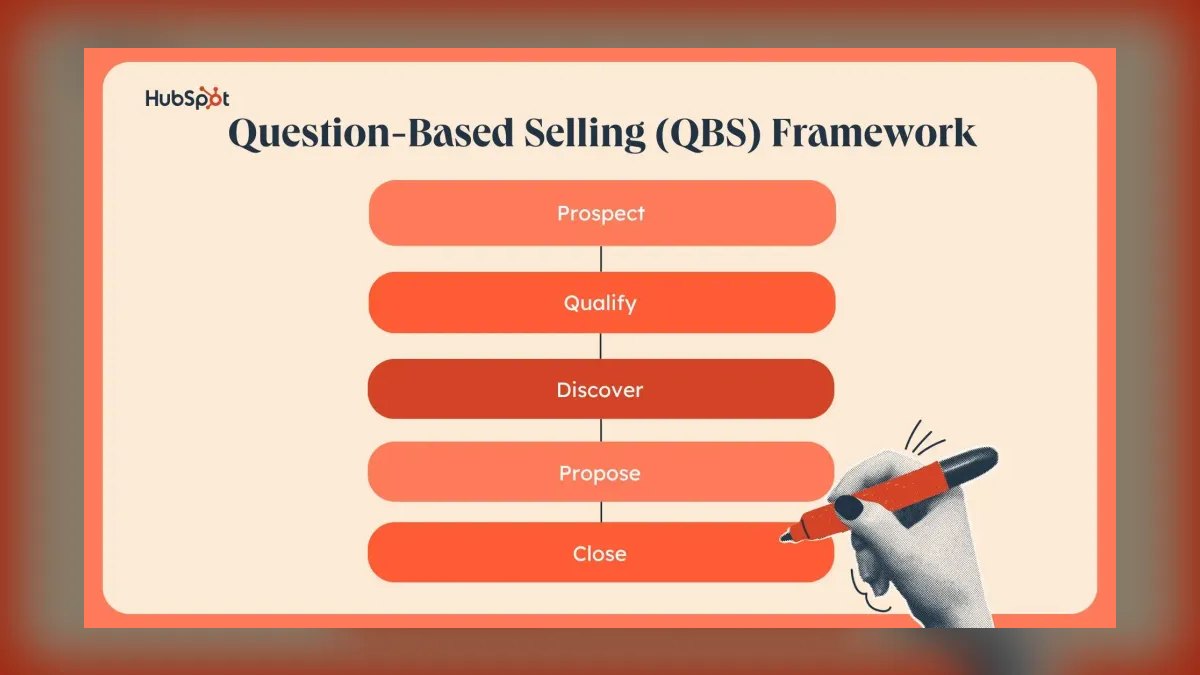
Thomas Freese's Question Based Selling (QBS) teaches sales leaders that skillfully sequenced questions — not product pitches — uncover hidden pain, build credibility, and control the buying conversation. For 2027 sales leaders, the actionable takeaways: diagnose before prescribing, replace assumptions with curiosity, use tonality to lower resistance, and coach reps to ask, not tell.
A stalled deal that QBS was built to fix
Picture a mid-market account executive three calls into a $60,000 opportunity. The prospect has seen a demo, received a proposal, and gone quiet. The rep's instinct is to send a "just checking in" email and stack another feature comparison deck on top of the last one. This is the exact failure pattern Thomas Freese wrote Question Based Selling to correct: the rep pitched before diagnosing, so the proposal answers a problem the buyer never confirmed having. Freese's core observation, drawn from years of sales training work, is that most sellers substitute product knowledge for questioning skill — they know the platform cold but can't get a stakeholder to admit what's actually broken. QBS reframes the entire selling motion around a strategy of curiosity: instead of leading with capability, the rep opens with situational and diagnostic questions that surface admitted pain, not just the polite, surface-level pain a prospect volunteers to avoid conflict. In the stalled-deal scenario, the fix isn't a better deck — it's going back to ask, "Walk me through what happens today when this process breaks down," a question designed to move the buyer from a vague, low-urgency complaint to a specific, costed problem. Sales leaders coaching this behavior in 2027 are dealing with buyers who have already read the vendor's website, run a competitor's free trial, and possibly queried an AI assistant about the category before a rep is ever looped in. That means the traditional QBS sequence — build rapport, ask diagnostic questions, uncover hidden pain, present a tailored solution — has to compress into fewer live conversations, because buyers arrive further along and expect the rep to add insight rather than re-explain the product. The scenario illustrates why QBS remains relevant: the mechanism (questions before pitches) doesn't change, but the leader's job is teaching reps to get to hidden pain faster, in one or two calls instead of five.
How the questioning mechanism actually works
Freese's model separates two categories of information a buyer can share: admitted pain, which is the problem a prospect will state openly when asked ("our reporting is slow"), and hidden pain, the deeper business consequence they won't volunteer unprompted ("we lost a $200,000 renewal because the reporting was slow and we missed a churn signal"). The QBS sequence moves a conversation from the first to the second in a deliberate order. It starts with situational questions that establish context without interrogating ("How is the team currently handling X?"), moves to problem or diagnostic questions that probe for friction ("What's the impact when that process slips?"), and only then earns the right to ask a solution-oriented question that lets the buyer articulate the value themselves ("If that reporting gap were solved, what would that be worth to the renewal conversation?"). Freese calls this last step letting the prospect "sell themselves" — the rep never states the ROI; the buyer does, which makes the number far stickier than anything printed in a proposal. Tonality is the second load-bearing mechanism in QBS: the same question asked with a downward, curious inflection lands as genuine interest, while the identical words asked with a flat or upward interrogation-style inflection trigger defensiveness. Freese trains reps to practice tonality explicitly because most sellers default to a "checklist" cadence under call pressure, which buyers read as qualification rather than consultation. The third mechanism is sequencing discipline: a rep who jumps to a prescriptive statement ("you need our analytics module") before diagnostic questions have surfaced hidden pain forces the buyer to defend a position instead of exploring one, which is why premature pitching is the single most common QBS violation Freese calls out in sales team audits.
Real numbers, ranges, and benchmarks sales leaders can coach against
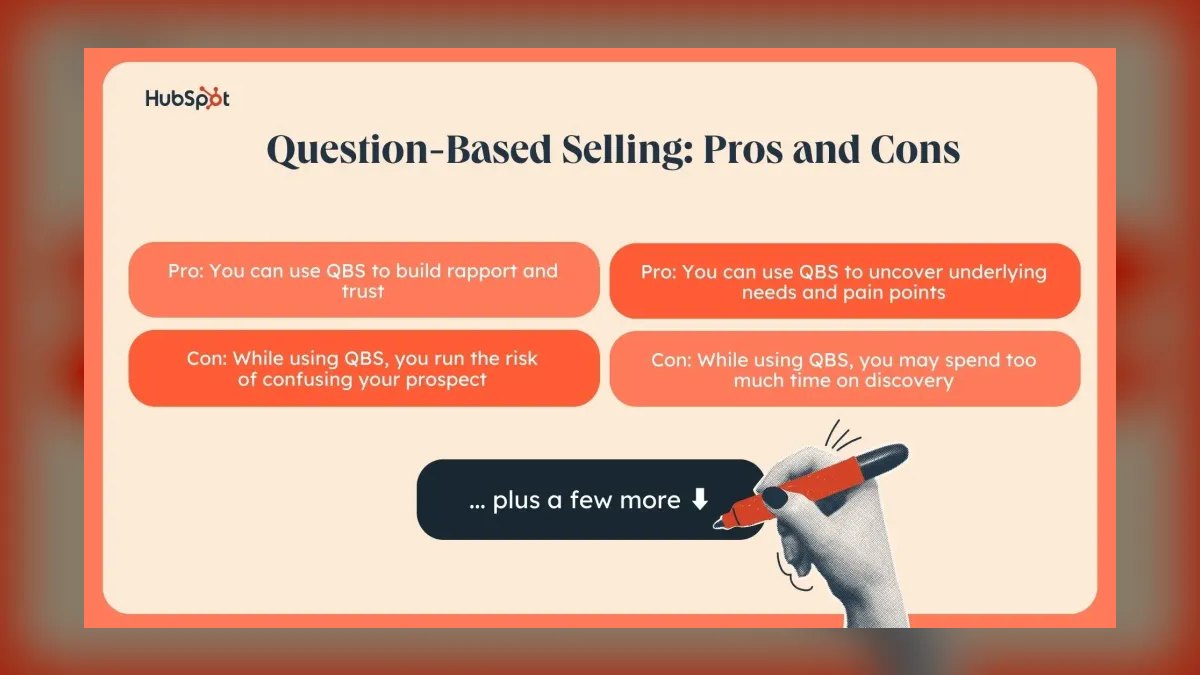
QBS is a qualitative methodology, but sales leaders running it at scale need concrete benchmarks to know whether reps are actually executing it rather than just nodding along in training. A widely cited industry pattern from call-recording analytics firms shows top-performing reps keep their own talk time under roughly 46% of a discovery call, versus 65-75% for underperforming reps — a proxy for whether a rep is asking questions or filling airtime with feature narration, which lines up directly with Freese's core complaint about "feature dumping." Sales leaders coaching QBS should expect a well-run discovery call to contain at least 8-12 open-ended questions before any product capability is mentioned; fewer than 5 usually signals the rep jumped to pitching too early. On question sequencing, Freese's own training material suggests a rough 3-to-1 ratio of situational-and-diagnostic questions to solution-oriented questions in a first call — front-loading context and pain before letting the conversation turn toward capability. For hidden-pain conversion, teams that adopt structured diagnostic questioning typically report meaningfully higher rates of prospects volunteering a specific dollar or time cost (versus a vague complaint) within the first two calls, though the exact lift depends heavily on vertical and deal complexity, so leaders should track it as a leading indicator per rep rather than a fixed team-wide target. On ramp time, because QBS is a skill (tonality, sequencing, listening) rather than a knowledge dump (product facts), most sales leaders find it takes new reps 60-90 days of role-played and live-call coaching before diagnostic questioning becomes unconscious competence — considerably longer than memorizing a battlecard, which is a common reason QBS rollouts stall when leaders treat it as a one-time training session instead of an ongoing coaching cadence. Win-rate impact is the number every sales leader ultimately wants, and while Freese doesn't publish a single universal lift figure, organizations that pair QBS discovery with disciplined call scoring commonly see qualified-pipeline-to-close rates improve because fewer deals are built on assumed rather than admitted pain, which reduces late-stage "no decision" losses tied to a business case the buyer never actually confirmed.
Trade-offs against other sales methodologies
QBS sits alongside several other named sales methodologies, and sales leaders choosing a framework in 2027 need to know where it overlaps and where it diverges. SPIN Selling, developed by Neil Rackham, is QBS's closest cousin — both are questioning-first frameworks, and SPIN's Situation-Problem-Implication-Need-payoff structure maps almost directly onto Freese's situational-diagnostic-hidden-pain-solution sequence. The practical difference is that SPIN emerged from large-scale behavioral research on complex, high-value sales calls, while QBS is built more as a trainable "how to actually say it" playbook, including the tonality and psychology of why certain phrasings land better — leaders often use SPIN for the theory and QBS for the delivery mechanics. The Challenger Sale, by contrast, argues for teaching the buyer something they didn't know and commercially reframing their problem before asking many questions at all, which is a real philosophical trade-off against QBS: Challenger front-loads a point of view, QBS front-loads curiosity. Leaders running competitive or educated-buyer motions sometimes blend the two — opening with a brief insight to earn credibility, then reverting to QBS-style diagnostic questioning to localize that insight to the specific account. MEDDIC and MEDDPICC are not competing questioning styles at all but qualification frameworks; a leader can run QBS-style questions specifically to fill in MEDDIC fields like "identified pain" and "economic buyer," so the two stack rather than compete. The most consequential trade-off with pure QBS is speed versus depth: a fully diagnostic, patient QBS conversation can feel slow to buyers who arrive pre-educated and expect a rep to already understand their category cold, which is why many 2027-era teams compress the sequence into a single well-prepared call using researched, hypothesis-led questions ("I'd expect renewal risk is showing up in your churn data — is that fair?") rather than Freese's more open-ended original phrasing. Leaders should treat this as a deliberate adaptation, not an abandonment of the strategy, since the underlying discipline — earn admitted pain before pitching — is unchanged.

Common pitfalls when rolling QBS out to a sales team
The most frequent failure sales leaders create is treating QBS as a script to memorize rather than a sequencing discipline to internalize — reps recite a list of "good questions" in order regardless of what the buyer just said, which produces a checklist cadence buyers can feel within the first two minutes. The fix is coaching reps to treat every diagnostic question as conditional on the prior answer: if a buyer's response doesn't reveal friction, the next question should dig into that same thread rather than moving down a pre-written list. A second common pitfall is skipping tonality training entirely because it feels soft compared to product certification — leaders who only run QBS as a slide deck, without call recordings and live tonality feedback, see reps understand the theory but still default to an interrogation tone under pressure, especially on calls with senior stakeholders. A third pitfall is declaring victory after uncovering admitted pain and stopping short of hidden pain, which leaves the business case thin; leaders should specifically listen for whether a rep asked at least one follow-up "what happens if this doesn't get fixed" question after the first complaint surfaces, since that's the question that usually converts admitted pain into a quantified, hidden-pain business case. A fourth pitfall shows up at the management layer: leaders reviewing pipeline by stage and forecast category alone, without ever listening to a call, can't tell whether a deal's "confirmed pain" field was filled in through real diagnostic questioning or just a rep's assumption typed into the CRM — call scoring against a QBS rubric (were situational, diagnostic, and value questions actually asked, in that order) closes this gap. Finally, in fast-moving 2027 sales cycles where buyers arrive having already used AI tools to research the category, a rep who runs a slow, fully generic QBS sequence risks sounding like they haven't done their homework; the pitfall isn't the methodology, it's failing to pre-load diagnostic questions with account-specific hypotheses, which keeps the discipline of QBS while respecting how much a modern buyer already knows before the first call.
Related questions
What is the difference between admitted pain and hidden pain in QBS?
Admitted pain is the surface complaint a buyer states unprompted ("this is slow"); hidden pain is the deeper business consequence — cost, risk, or missed outcome — that only surfaces after a follow-up diagnostic question quantifies the impact.
How is QBS different from SPIN Selling?
Both are questioning-first frameworks with nearly identical stage logic, but SPIN is research-derived question theory while QBS adds explicit coaching on tonality, phrasing, and psychology — how to ask, not just what to ask.
Can QBS work in a fast, transactional sales cycle?
Yes, if leaders compress the sequence into fewer, hypothesis-led questions prepared before the call rather than fully open-ended discovery, preserving the diagnose-before-pitch discipline without the slower original pacing.
How do sales leaders measure whether reps are actually using QBS?
Score recorded calls against a rubric: talk-time ratio, count of open diagnostic questions before any pitch, and whether a follow-up question converted admitted pain into a quantified, hidden-pain business case.
FAQ
Who wrote Question Based Selling and what is its core idea? Thomas Freese wrote Question Based Selling, arguing that strategically sequenced questions — not product pitches — build credibility, uncover a buyer's real pain, and let the buyer articulate value in their own words rather than accepting a rep's claims.
What are the top takeaways from Question Based Selling for sales leaders? Diagnose before prescribing, distinguish admitted pain from hidden pain, control tonality so questions read as curious rather than interrogative, sequence situational-then-diagnostic-then-solution questions, and coach reps to let the buyer state the value rather than pitching it.
Why do sales leaders struggle to roll QBS out successfully? They treat it as a memorized script instead of a sequencing discipline, skip tonality coaching because it feels less concrete than product training, and stop at admitted pain instead of following up to reach the costed, hidden version of the problem.
Is Question Based Selling still relevant for sales leaders in 2027? Yes, though the pacing has to adapt: buyers arrive more pre-educated, so leaders should coach reps to prepare hypothesis-led diagnostic questions in advance rather than running a fully open-ended sequence, while keeping the underlying discipline unchanged.
How does QBS relate to methodologies like MEDDIC or Challenger Sale? QBS is a questioning technique, not a qualification framework, so it can feed fields in MEDDIC (identified pain, economic buyer) directly; against Challenger Sale, the trade-off is QBS leads with curiosity while Challenger leads with an insight-driven reframe.
What's a practical way to start coaching QBS on a sales team? Record discovery calls, score them for talk-time ratio and question sequencing, and run live tonality role-plays weekly — reps typically need 60-90 days of repeated, coached practice before diagnostic questioning becomes a natural habit rather than a checklist.
Sources
- https://www.amazon.com/Question-Based-Selling-Customer-Questions/dp/1402207149
- https://www.qbsresearch.com/
- https://www.amazon.com/SPIN-Selling-Neil-Rackham/dp/0070511136
- https://hbr.org/2012/07/the-end-of-solution-sales
- https://www.gong.io/blog/
- https://www.rainsalestraining.com/blog
- https://www.richardson.com/sales-resources/
- https://en.wikipedia.org/wiki/Sales
Related on PULSE
- SPIN Selling by Neil Rackham: how situation, problem, implication, and need-payoff questions compare to QBS
- The Challenger Sale: teaching and reframing versus pure questioning-led discovery
- MEDDIC and MEDDPICC qualification: where diagnostic questions feed a qualification framework
- How to coach sales reps on discovery call talk-time ratio
- Building a call-scoring rubric for sales methodology adoption
- Hidden pain vs. admitted pain: diagnosing real buyer urgency
This page will be disappearing soon. Save it to your device for $1 — or read it free while it is here.
@Kory-White- · if Venmo asks, the last 4 of my number are 2012
This page is gone.
This one is off the shelf now. $1 keeps it on your phone for good — the whole page, pictures and diagrams included.
 book-summaryWhat factors drive the price of Book Summaries up or down in 2027?
 pulse-recentHow does *The New Strategic Selling* define the first step in qualifying an opportunity in 2027?
 pulse-recentSell or Be Sold by Grant Cardone — Top 10 Key Takeaways for Sales Leaders in 2027
 pulse-recentThe Sandler Rules by David Sandler — Top 10 Key Takeaways for Sales Leaders in 2027
 pulse-recentWhat is the most actionable step in The Sandler Rules for Sales Leaders by David Mattson to improve discovery in 2027?
 pulse-recentWhat is the first concrete step in Sandler Rule #4 for a sales leader to implement in 2027?
 pulse-recentFanatical Prospecting by Jeb Blount — Top 10 Key Takeaways for Sales Leaders in 2027
 pulse-recentProActive Selling by Skip Miller — Top 10 Key Takeaways for Sales Leaders in 2027
 pulse-recentWhat is the first concrete step in The Sandler Rules by David Mattson for a sales leader to implement the system in 2027?
 pulse-recentCoaching Salespeople into Sales Champions by Keith Rosen — Top 10 Key Takeaways for Sales Leaders in 2027