


RUN High School Recruit Parent NIL Education Outbound FOR — 60-Min Training
Quality
Certified
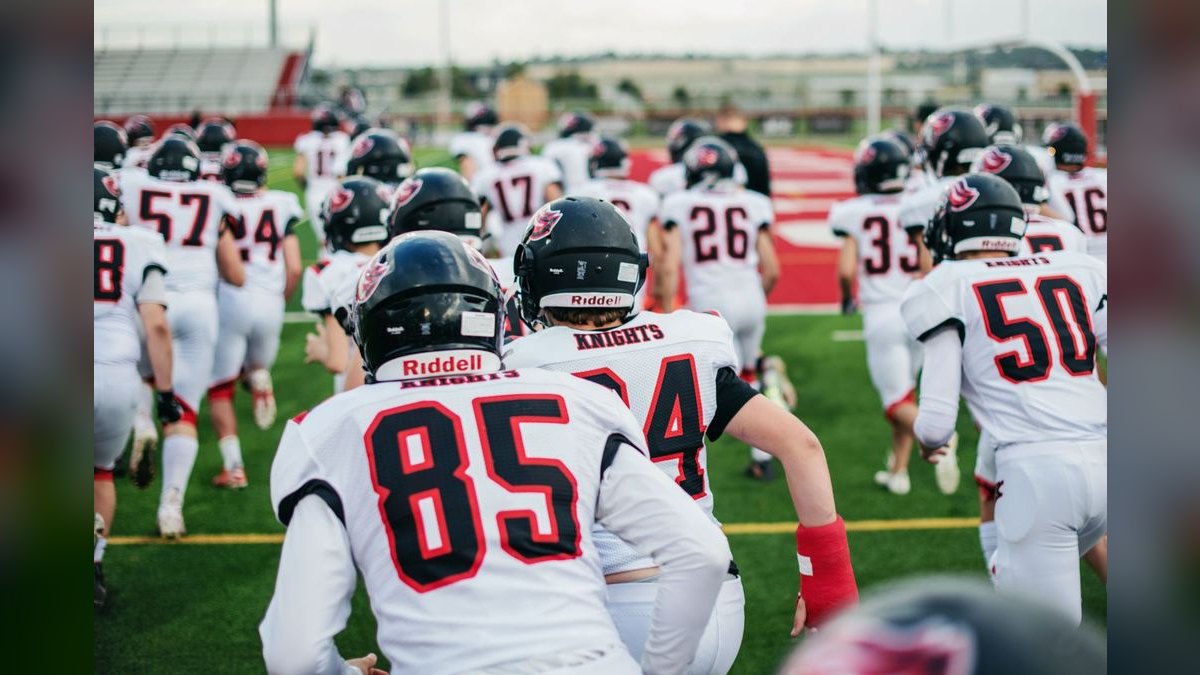
Run High School Recruit Parent NIL Education Outbound as one focused 60-minute working session where each staffer or coach builds a single real outreach artifact per family: a logged contact, three parent objections in their own words, a compliance disclosure status, and a dated next touch. It ends with a written, inspectable commitment — never a lecture.
What it is and why it matters
This 60-minute Training is a live working session, not a slide deck. Its single job is to standardize how a collective or athletics staff runs Outbound Education to the parents of a high school Recruit about Name, Image, and Likeness — before a commitment is made or a portal window opens. Parents of committed and target athletes are the real decision unit in NIL: they field the group texts, weigh the offer tiers, and worry about taxes, eligibility, and getting burned. A collective that treats parent education as an afterthought loses families to the program that explained NIL calmly, in writing, first.
The reason it belongs in a repeatable session — the same way a B2B sales team runs deal reviews — is that ad-hoc parent outreach doesn't survive inspection. Offers live in text threads, disclosure status lives in one staffer's memory, and no one can answer "which families have we actually educated, and what did they say?" The session forces every participant to apply the playbook to one real family tonight: who they are, what tier they're being discussed at, whether the deal has been disclosed to the compliance office, and the exact dated next step. When the collective GM or athletic director asks "where do we stand with the Johnsons," the answer is a logged row, not a shrug.
It matters because NIL is now a recruiting differentiator on par with facilities and playing time, and parents are the gatekeepers who translate a verbal number into a family decision. A program that educates parents — on how payments are structured, what a disclosure obligation is, how a collective differs from a booster, and what happens if a school changes coaches — builds trust that survives a bad game or a competing pitch. This session is how that education stops being one charismatic staffer's talent and becomes a documented, coachable motion the whole staff runs the same way every week.
There is also a defensive reason. Recruiting misinformation moves fast: a rival's number, a message-board rumor, or a well-meaning uncle's "advice" can reframe a family's whole read of your program in an afternoon. A staff that has already educated the parents in writing owns the reference document that family returns to when they get spun. Without that artifact, you are arguing from memory against someone else's screenshot. The session's real output is a durable, dated paper trail that makes your program the calm, credible source the family trusts by default.
The step-by-step process
The session runs 0:00 to 1:00 and the blocks sum to exactly 60 minutes. Before the room meets, the facilitator spends 15 minutes on prep: pick one real family per participant where NIL education is the blocker or unlock, pull the last contact record and any notes, print the one-page worksheet, and confirm the CRM or shared tracker has fields for family name, athlete, offer tier, disclosure status, objection, and next-touch date.
Frame (0:00–0:08, 8 min). The facilitator names one family the staff mishandled — a parent who heard conflicting numbers, or a deal announced before disclosure. Each participant opens one live record and titles a note "NIL Parent Education — [date]." No slides; the deliverable is one artifact per person that survives inspection next week. The framing story matters: it makes the stakes concrete and stops the room from treating the hour as optional.
Teach the layers (0:08–0:20, 12 min). Walk four layers on a real example: (1) facts already in the tracker, (2) parent-verbatim proof — what the mother or father actually said, (3) internal risks — compliance gaps, unfunded promises, eligibility questions, and (4) the next external touch. Ban marketing adjectives; only parent words, field names, and dates count. If someone can't cite a call for a claim, the row is flagged a "discovery gap" and becomes the next Outbound action, not a guess written into the record.
Solo build (0:20–0:35, 15 min). Silent worksheet completion on one real family. This is the longest block on purpose — the quality lift comes from individuals doing the reps, not from group discussion. Phones down, no side chatter; the facilitator circulates and answers only clarifying questions about field definitions, never feeding answers.
Pair role-play (0:35–0:48, 13 min). One person plays the skeptical parent — "how is this different from a booster paying my kid?" — and the other defends with logged evidence only. Rotate so each participant argues and defends once. This is where vague Education talk tracks get exposed and rewritten. The defender is not allowed to improvise a number; if it isn't in the record, the honest answer is "I need to confirm that and get back to you by Friday."
Counter-case (0:48–0:56, 8 min). When to park, nurture, or downgrade a family: no funding behind the tier, a parent who wants guarantees the collective can't legally make, or an athlete whose eligibility is unsettled. A rational "not now" protects the collective's credibility and budget, and each participant marks at least one family they will deliberately slow down rather than over-pursue.
Commit (0:56–1:00, 4 min). Round-robin: family, one-sentence outcome, next contact date, go/no-go. Anything committed without tonight's artifact gets reviewed first in Monday's pipeline meeting, not honored on faith. The facilitator captures every commitment in the shared tracker before the room disperses, so the record is closed the same night.
Costs, timelines, and typical ranges
The session itself is cheap; the discipline around it is where cost lives. Budget the 15-minute prep plus the 60-minute meeting per week during rollout, dropping to bi-weekly once roughly 80% of the staff runs the motion cleanly without prompting. Expect three to five weekly sessions before the artifact quality stabilizes — the first two usually surface that "we educated them" meant a single text, not a documented conversation.
On tooling, you do not need a heavy stack. A CRM you already own (or a shared spreadsheet for the first month) covers the tracker. Dedicated NIL platforms exist for disclosure, payments, and compliance workflows — Opendorse and similar vendors publish tiered pricing that scales with athlete count and feature set, and pricing varies widely by program size, so get a current quote rather than assuming a number. A small high school-facing collective can start with a spreadsheet and a calendar; a Power Five collective managing hundreds of athletes justifies a platform. Do not let tool selection block the session — the motion works on paper.
Time-to-value: the first measurable change is coverage. Within three to four weeks you should be able to answer, for every target family, whether they've been educated, what their top objection was, and when the next touch is dated. Within a quarter, the collective GM should see fewer "surprise" families — parents who go public with a competing program's number the staff never knew existed. The realistic ranges to watch are not revenue metrics but hygiene metrics: percentage of families with a logged education contact (aim for near-complete coverage of active targets), percentage of deals disclosed to compliance before any public commitment (this should be 100% — anything less is a legal risk, not a KPI), and average days between parent touches during an active recruiting window (tighten this during portal and signing periods).
Staffing cost is the honest line item. This motion assumes someone owns parent education as a named responsibility, not a job that floats. In a small program that may be a single coordinator spending a few hours a week; in a large collective it may be a dedicated relations lead. The training is what lets you distribute the motion so it doesn't collapse when that one person is traveling. A reasonable first-quarter target is that at least two people can run a clean parent-education conversation and log it to standard, so coverage never depends on one calendar.
Finally, weigh the cost of not running it. A single family that goes public with a number your staff never disclosed can trigger an eligibility review, a compliance headache, and weeks of reputational cleanup — costs that dwarf the few staff-hours the weekly session consumes. Framed that way, the 60 minutes is the cheapest insurance in the recruiting budget, and the ranges above are simply the price of keeping the paper trail current.
Where teams get it wrong
The most common failure is letting the session become a status meeting. The moment the facilitator opens with "let's go around the room with updates," the working session dies and you're back to storytelling. Hard-anchor on the written agenda, require the pre-read, and end every block with a concrete artifact — not a discussion.
Second, teams confuse Outbound volume with education. Blasting parents with a glossy one-pager is not education; it's marketing they'll ignore. Real education is a two-way conversation where the parent's specific objection — taxes, eligibility, what happens if the coach leaves — gets answered in their own words and logged. If your tracker has no parent-verbatim quotes, you've been broadcasting, not educating.
Third, staffs skip compliance until after an announcement. Disclosure is not paperwork you backfill; in many states and under NCAA rules an athlete must report NIL agreements, and a collective that lets a family go public before disclosure exposes the athlete to eligibility jeopardy. The session bakes disclosure status into every worksheet row precisely so it can never be the thing everyone assumed someone else handled.
Fourth, teams over-promise. A parent hears "we'll make sure your son gets X" and treats it as a contract. If the tier isn't funded, that's a credibility bomb. The counter-case block exists to train staff to say a rational "here's what's realistic right now" instead of a hopeful number that detonates later.
Fifth, they never inspect. A training that isn't followed by weekly inspection decays within two sessions. The whole point of building an inspectable artifact is that the collective GM or AD actually opens the tracker on a set day and coaches the gaps. No inspection, no durability. Sixth, teams run the session once, declare victory, and stop — before the motion is a habit. Treat it like conditioning: repeat until the reps are automatic, then taper, and bring it back before every high-pressure window. A related trap is letting the coach and the collective tell a family two different stories; if the relationship-builder and the NIL specialist aren't aligned in the same session, the parent hears contradictions and trusts neither.
Decision framework: when to choose what
Not every family needs the full treatment, and not every situation calls for a live push. Use a simple triage. If a family is high-priority and NIL is the deciding factor, run the complete education motion — multiple documented touches, a written summary, and a named owner. If a family is high-priority but NIL is not their driver (they care about academics or fit), keep education light and factual; over-selling NIL can signal the program has nothing else. If a family is lower-priority or the tier is unfunded, park it honestly rather than making promises — a logged "not now" is a legitimate outcome the counter-case block is designed to produce.
Time the intensity to the calendar. Outside active windows, a steady bi-weekly cadence keeps relationships warm. Inside a portal window, signing period, or when a competing program surfaces a number, escalate to the full weekly Training rhythm and tighten touch spacing. Decide facilitation the same way: the person who owns the number facilitates and the staff participates, because manager-led coaching keeps the standard consistent, while peer-only sessions drift.
One more axis: match the messenger to the objection. Tax and income questions belong with whoever can speak accurately to reportable-income rules; eligibility questions belong with compliance; relationship and playing-time questions belong with the position coach. The framework's job is to route each family to the right combination of documented touches instead of defaulting every conversation to one overworked coordinator who then improvises on topics outside their lane.
Related questions
How is a collective different from a booster, and how do I explain that to a parent?
A booster is an individual supporter; a collective is an organized entity that pools funds and structures NIL deals with disclosure and, ideally, real deliverables. Tell parents plainly: payments are for name, image, and likeness activity, they're reportable income, and legitimate collectives document everything.
What compliance points must the session always cover?
Disclosure of any NIL agreement per NCAA and applicable state rules, the fact that NIL pay is taxable income, and that a collective cannot make pay-for-play or guaranteed-outcome promises. Every worksheet row carries a disclosure-status field so this is never skipped.
How often should we run the training?
Weekly during rollout and any active recruiting window, dropping to bi-weekly once roughly 80% of staff run the motion cleanly. It's a working session, not a course — bring it back before high-pressure periods and taper when reps are automatic.
Who should facilitate the session?
The person who owns the outcome — the collective GM, coordinator, or AD — facilitates while staff participate. Manager-led coaching holds the standard consistent; peer-only sessions tend to drift back into storytelling and status updates.
What's the single most important artifact to leave with?
One logged family row with a parent-verbatim objection, a disclosure status, and a dated next touch. If a participant leaves with only a story, the session failed; the whole point is an inspectable record the leadership can coach against next week.
FAQ
How long should this training run? Sixty minutes is the default. For a preseason or quarterly kickoff, extend to 90 minutes with a longer role-play block. Don't compress to 30 — the pair role-play is where weak parent talk tracks get exposed and rewritten, and cutting it removes the actual value.
Should a coach or the collective staff run parent outreach? Both, in their lanes. Coaches build the relationship; collective or relations staff handle the NIL specifics, disclosure, and documentation. The training aligns them so a parent hears one consistent story instead of conflicting numbers from a coach and a booster.
What's the right cadence? Weekly during rollout and any active window, then bi-weekly once most staff run it cleanly. It's a working session, not a permanent standing meeting — reduce frequency when the motion is a habit and reintroduce it before portal and signing periods.
How do we measure whether it's working? Track hygiene metrics weekly: share of target families with a logged education contact, share of deals disclosed to compliance before any public commitment (this should be 100%), and days between parent touches in an active window. Fewer surprise families is the real signal.
What's the biggest mistake? Letting it become a status meeting. The instant it opens with round-the-room updates, it collapses back into storytelling. Anchor on a written agenda, require the pre-read, ban marketing adjectives, and end with a recorded, dated commitment per family.
Do we need a paid NIL platform to run this? No. Start with a shared spreadsheet or a CRM you already own. Dedicated platforms help with disclosure and payment workflows at scale, but the motion works on paper — don't let tool selection stall the first session.
Sources
- https://www.ncaa.org/sports/2021/2/8/about-name-image-and-likeness.aspx
- https://opendorse.com
- https://www.on3.com/nil/
- https://www.sportico.com/law/
- https://www.irs.gov/newsroom/what-is-taxable-and-nontaxable-income
- https://hbr.org/2019/11/the-leader-as-coach
- https://www.ncsasports.org/name-image-likeness
- https://www.saturdaydownsouth.com/nil/
Related on PULSE
- Private School Admissions Selling — 60-Min Training
- Trade School Admissions Advising — 60-Min Training
- The SDR Outbound Calling Coaching Reboot — 60-Min Training
- The Outbound Sequence Design Reboot — 60-Min Training
- The Outbound Email Reboot — 60-Min Training
- The Three-Touch Outbound Sprint — 60-Min Training
This page will be disappearing soon. Save it to your device for $1 — or read it free while it is here.
@Kory-White- · if Venmo asks, the last 4 of my number are 2012
This page is gone.
This one is off the shelf now. $1 keeps it on your phone for good — the whole page, pictures and diagrams included.
 sales-training2027 NIL Go-to-market Strategy FOR Prairie View A&M D1 — 60-Min Training
 sales-trainingRUN December Transfer Portal Sprint GTM FOR Northern Illinois — 60-Min Training
 sales-training2027 NIL Go-to-market Strategy FOR Alcorn State D1 College — 60-Min Training
 sales-training2027 NIL Go-to-market Strategy FOR Incarnate Word D1 College — 60-Min Training
 sales-training2027 NIL Go-to-market Strategy FOR William & Mary D1 — 60-Min Training
 sales-training2027 NIL GTM Playbook FOR December Transfer Portal Sprint — 60-Min Training
 sales-training2027 NIL Go-to-market Strategy FOR South Dakota D1 College — 60-Min Training
 sales-training2027 NIL GTM Playbook FOR Roster NIL Valuation FOR — 60-Min Training
 sales-training2027 NIL Go-to-market Strategy FOR Charleston Southern D1 College — 60-Min Training
 sales-trainingRUN Transfer Portal Retention FOR Returning Starters FOR South — 60-Min Training