


What should you know before investing in Sales Trainings in 2027?
Quality
Certified

Before investing in Sales Trainings in 2027, know that the market has split into two models: subscription-based continuous learning platforms and outcome-based cohort programs. Neither is universally right. Decide based on deal complexity, rep tenure mix, and whether you can supply manager coaching capacity. Budget 5–10% of quota per rep, and insist on a measured pilot before scaling.
The two models you are actually choosing between
When you strip away vendor branding, the 2027 sales training market resolves into two fundamentally different purchase decisions. Understanding which one you are making is the single most important thing to settle before signing anything.
Model A: Continuous learning platforms. These are subscription products — typically annual per-seat licenses — that bundle a content library, microlearning modules, AI-assisted call analysis, role-play simulation, and analytics dashboards. The value proposition is reinforcement: short lessons delivered in the flow of work, spaced repetition to beat the forgetting curve, and integration into CRM and conversation-intelligence tools so that learning triggers off real deal activity. You are buying an operating system for skill maintenance, not an event.
Model B: Outcome-based cohort programs. These are structured engagements — often 8 to 16 weeks — delivered by an external facilitator or consultancy, frequently built around your own pipeline, your own call recordings, and your own methodology. Pricing is usually a flat program fee plus customization, sometimes with performance guarantees tied to pipeline creation or win-rate improvement. You are buying a concentrated behavior change with a defined start and end, plus a cohort of reps who go through it together.

The distinction matters because the failure modes are different. Platform purchases fail through non-adoption — seats bought, logins unused, content stale. Cohort purchases fail through decay — a great eight weeks followed by six months of nothing, with reps reverting to old habits by the next quarter. In practice, mature revenue organizations in 2027 often run both: a platform as the always-on layer, and one or two cohort programs per year for specific strategic skills such as enterprise multi-threading, negotiation, or executive storytelling.
There is a third, smaller category worth naming so you can rule it out deliberately: the one-off annual kickoff workshop. It still exists, it is still sold, and it remains the weakest return on spend for anything other than messaging alignment and morale. If a vendor's core offering is a two-day event with no reinforcement layer, treat it as a communications expense, not a training investment.
The practical implication: before you evaluate a single vendor, write down which model you are buying and why. Teams that skip this step end up comparing a per-seat SaaS quote against a bespoke cohort proposal and concluding, wrongly, that one is simply "cheaper." They are not substitutes at the unit level, and the cost comparison only becomes meaningful once you normalize for reinforcement duration and manager involvement.
How to decide between them

The decision is not a matter of taste. It falls out of four variables you can actually measure before you spend anything: average deal complexity, the tenure distribution of your team, your manager-to-rep ratio and coaching capacity, and whether you have a defined, written sales methodology.
Deal complexity. If your average sales cycle runs under 30 days with a single decision-maker, the skill delta between a good and great rep is mostly volume, follow-up discipline, and objection handling. That is exactly what a continuous platform reinforces well, cheaply, and at scale. If your cycles run 6 to 12 months with buying committees of five or more stakeholders, the skills that matter — multi-threading, mutual action plans, business-case construction, navigating procurement — are too situational for generic micro-content. Cohort programs built on your live deals win here.

Tenure mix. A team that is 60% ramping hires needs volume onboarding content and fast time-to-first-deal. A team that is 80% tenured with a long tail of underperformance needs diagnostic coaching and targeted intervention, not a curriculum. Platforms scale onboarding; cohorts fix specific gaps in experienced reps.
Manager coaching capacity. This is the variable most often ignored and the one that most reliably predicts failure. Every credible reinforcement model depends on the front-line manager. If your managers carry their own quotas, run 10+ reps each, and have never been trained to coach, buying either model without fixing that is pouring money into a leaky bucket. Budget for manager enablement in the same business case, or reduce scope.
Methodology maturity. If you cannot describe your sales process in named stages with exit criteria, buy nothing yet. Fix the process first. Training against an undefined process teaches reps to be inconsistent faster.
Note the shape of that flow: in three of the branches, the correct answer is to spend nothing on training yet. That is not a dodge. It is the most common honest finding, and a vendor who pushes back on it is telling you something useful about their incentives.
Concrete numbers behind each option
Numbers here are planning ranges drawn from how these programs are typically structured and priced in the market. Treat them as budgeting envelopes to validate in your own negotiations, not as quoted rates.

Platform economics. Per-seat annual licensing for a continuous learning platform commonly lands in the range of a few hundred to roughly $1,500 per rep per year depending on whether AI call analysis, simulation, and analytics are included. A 100-rep team therefore sits somewhere between roughly $50,000 and $150,000 annually for the platform layer alone. Implementation and integration with your CRM and conversation-intelligence stack is usually a one-time cost, and it is the line item teams forget.
Cohort economics. A facilitated cohort program for 15 to 25 reps typically runs from the mid five figures into six figures for the full engagement, inclusive of customization to your methodology and live-deal coaching. Per-rep, that often works out higher than a platform seat — sometimes two to four times higher — but it is concentrated on a defined population for a defined period rather than spread thinly across everyone.
The opportunity cost line. This is the number that changes decisions. Take 100 reps with a fully loaded cost of $150,000 each. Forty hours per year in training is 2% of their working time, which is roughly $300,000 in foregone selling capacity across the team — before you count the manager hours to prepare, deliver, and follow up. Any business case that omits this is incomplete, and it is the reason asynchronous microlearning beats live sessions on pure cost efficiency for anything that does not require human interaction.

The benchmark to hold yourself to. A widely used planning heuristic is to allocate 5–10% of a rep's annual quota to their development, which for a $1M quota rep implies $50,000–$100,000 — clearly more than most organizations actually spend. A more realistic and commonly cited per-rep planning figure is $2,000–$5,000 annually for a comprehensive program. The gap between the heuristic and the practice is where most of the disappointment lives: teams underfund reinforcement and then blame the content.
Expected timeline to signal. Leading indicators — call score improvements, discovery-question counts, methodology adoption in CRM fields — can move within 3 to 6 weeks. Lagging revenue indicators such as win rate and average deal size typically need one to two full quarters to show a defensible trend. If a vendor promises quota attainment lift inside 30 days, that is a marketing claim, not a measurement plan.
A worked comparison. Suppose you have 80 reps, a 120-day average cycle, and managers running 9 reps each. Option A: platform at $900 per seat is $72,000 per year, plus roughly $15,000 one-time integration, plus 20 hours of manager coaching time per month that you must actually protect on the calendar. Option B: two cohort programs of 20 reps each at $60,000 per program is $120,000, covering only half the team. Option C, the one most teams should pick: platform for all 80 reps at $72,000, plus one cohort of 20 senior reps at $60,000, plus a manager coaching certification. That is roughly $150,000–$180,000 all-in for year one, and it is the configuration that survives contact with a real quarter.
Implementation details and sequencing

The order of operations determines whether any of this works. The most common expensive mistake is buying content before building the reinforcement and measurement scaffolding around it.
Step 1 — Baseline the metrics before anyone learns anything. Pull 90 days of win rate by stage, average deal size, sales cycle length, discovery-call counts, and time-to-first-deal for ramping reps. Without a pre-training baseline, no ROI claim you make later will survive scrutiny from a CFO.
Step 2 — Name the two or three behaviors you are buying. Not "better discovery" but "at least four open-ended questions in the first 15 minutes of every first call, logged in the CRM." Behavior-level specificity is what makes both the content selection and the measurement tractable.
Step 3 — Fix the process and the data capture first. If the behaviors you want cannot be observed in your systems, you cannot measure them. Add the fields, tag the call recordings, and make sure the conversation-intelligence tool is actually recording the calls you care about.
Step 4 — Run a 90-day pilot with a control group. Assign the training to one team or region and compare against a matched group that does not receive it. This is the only clean way to separate training effect from seasonality, territory changes, or a product launch. It also gives you a credible internal story when you ask for the expansion budget.

Step 5 — Enable managers in parallel, not afterward. Manager coaching certification should run in the same window as rep training, not the quarter after. If managers cannot run a deal review that reinforces the new behavior, the behavior dies in three weeks.
Step 6 — Instrument the reinforcement loop. Whatever model you bought, the loop is the same: observe behavior in real deals, surface the relevant micro-lesson or coaching prompt, practice, apply on a live opportunity, re-measure. If the vendor's product does not close that loop automatically, you are buying a library, not a system.
Step 7 — Review at 90 and 180 days against the baseline. Keep what moved, cut what did not, and renegotiate scope at renewal rather than auto-renewing. Multi-year platform commitments signed before a pilot are how organizations end up paying for unused seats.
Two sequencing warnings worth stating plainly. First, do not run rep training and a CRM migration in the same quarter; adoption data will be garbage and you will misattribute the results. Second, do not let the pilot population be your top performers only — they will improve regardless of what you buy, and you will learn nothing about whether the program works on the middle of the team, which is where the actual revenue upside sits.

Finally, on vendor diligence: ask for the integration list in writing, ask what happens to your data if you leave, ask how content is updated and how often, and ask for two reference customers of similar size and deal complexity. A vendor who cannot produce references at your scale is a risk regardless of how good the demo looked.
Related questions
What should you know before investing in Sales Trainings in 2027 if your team is fully remote?
Prioritize asynchronous, on-demand content and recorded role-play. Live virtual sessions should be reserved for cohort work on real deals. Verify the platform works inside your existing collaboration tools rather than adding another destination reps must remember to visit.
How long before you can judge whether a Sales Trainings investment is working?
Leading behavioral indicators can move in 3 to 6 weeks. Defensible revenue impact — win rate, average deal size, ramp time — needs one to two full quarters. Set the review gate at 90 days for behavior and 180 days for revenue.
Can you run Sales Trainings without a documented sales process?
You can, but you should not. Training against an undefined process teaches inconsistency at scale. Document stages and exit criteria first, then buy content that maps to those stages. This sequencing alone prevents a large share of wasted spend.
Do you still need external Trainings if you have strong internal enablement?

Often yes, for specific gaps. Internal teams handle onboarding, product knowledge, and process. External cohort programs are most useful for strategic skills — enterprise multi-threading, negotiation, executive storytelling — where outside facilitation and benchmark data add value.
What is the biggest hidden cost when investing in sales training?
Opportunity cost of selling time, followed by manager hours. A 100-rep team spending 40 hours each in training gives up roughly $300,000 in selling capacity at a $150,000 fully loaded cost. Budget for it explicitly or the program will be cancelled mid-year.
FAQ
What percentage of quota should you budget for Sales Trainings in 2027? A common planning heuristic is 5–10% of a rep's annual quota, though most organizations spend far less in practice. A more realistic per-rep envelope for a comprehensive program is $2,000–$5,000 annually, plus manager enablement and integration costs.
Is a subscription platform or a cohort program better value? They solve different problems. Platforms are cheaper per rep and scale reinforcement across the whole team. Cohorts cost more per rep but change behavior faster on complex, situational skills. Most mature teams run a platform as the base layer plus one or two targeted cohorts per year.

How do you prove ROI on sales training to a CFO? Baseline win rate, average deal size, cycle length, and ramp time before the program. Run a 90-day pilot with a control group. Report leading behavioral indicators at 90 days and revenue indicators at 180 days. Include the opportunity cost of selling time in the cost side of the equation.
What is the most common reason sales training investments fail? Weak manager reinforcement. Reps attend, learn, and revert within weeks because no one coaches the new behavior in deal reviews. Fund manager coaching certification in the same budget and the same quarter as rep training, or expect decay.
Should you sign a multi-year training contract? Rarely before a pilot. Run a 90-day measured pilot on one team, review against baseline, then negotiate term length. Multi-year commitments signed pre-pilot are how organizations end up paying for unused seats and stale content.
How do you keep training content current through 2027? Choose providers with a regularly updated library and a published update cadence. Establish a quarterly internal review to refresh product, pricing, and competitive content. Tag content by objection and skill category so AI coaching can surface the right lesson at the right moment.
Sources
- Gartner Sales Research
- Forrester Sales Enablement Research
- Harvard Business Review
- McKinsey Growth, Marketing & Sales
- Sales Enablement Society
- RAIN Group Sales Training Research
- LinkedIn Learning Sales Skills Report
- Training Industry
- CSO Insights / Korn Ferry Sales Research
Related on PULSE
- The Pipeline Review Workshop — 60-Min Training — Pulse Sales Trainings
- The Closing Techniques Bootcamp — 90-Min Training — Pulse Sales Trainings
- The Multi-Threading Strategy Workshop — 90-Min Training — Pulse Sales Trainings
- The Forecasting Calibration Workshop — 60-Min Training — Pulse Sales Trainings
- The LinkedIn Social Selling Workshop — 90-Min Training — Pulse Sales Trainings
- The Enterprise Account Planning Workshop — 120-Min Training — Pulse Sales Trainings
This page will be disappearing soon. Save it to your device for $1 — or read it free while it is here.
@Kory-White- · if Venmo asks, the last 4 of my number are 2012
This page is gone.
This one is off the shelf now. $1 keeps it on your phone for good — the whole page, pictures and diagrams included.
 pulse-sales-trainingsTop 10 Sales Trainings strategies for 2027
 stWhat are the most common mistakes in Sales Trainings in 2027?
 stHow should sales leaders plan and manage territory sales expansion in 2027?
 stHow much do Sales Trainings cost in 2027?
 stIs Sales Trainings worth it in 2027?
 stWhat is a typical sales compensation structure as a percentage of gross profit to the rep in 2027?
 stWhat is the best way to approach Sales Trainings in 2027?
 pulse-sales-trainingsObjection Handling Roleplay Session Blueprint
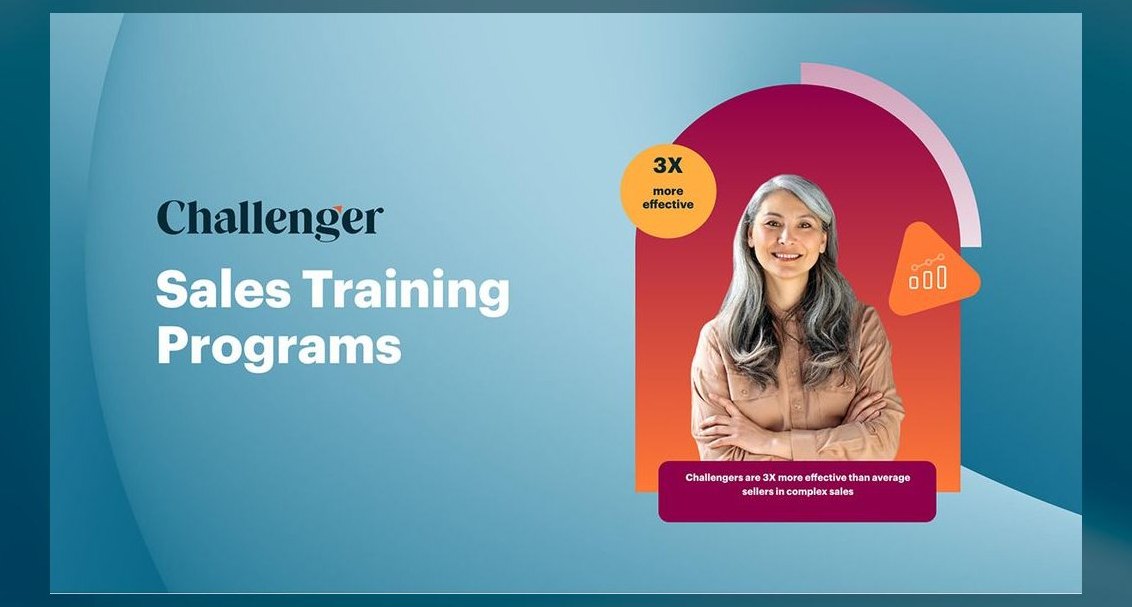 pulse-sales-trainingsThe Challenger Sale Method: Ready-to-Use Facilitator Deck for a 60-Minute Class
 pulse-sales-trainingsAccount Planning Strategy Session Outline