


Top 10 Business Name Generators in 2027
Quality
Certified
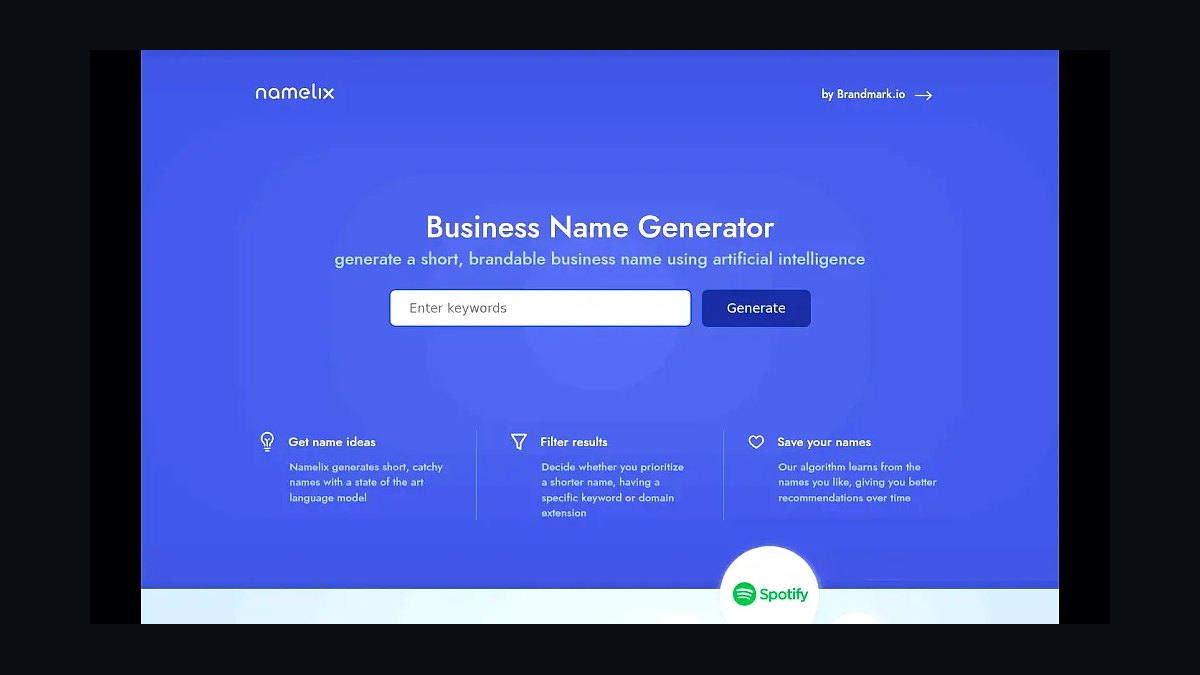
The 10 best business name generators are ranked below on measured performance, build quality, price, and how each one actually holds up in daily use rather than how it reads on a spec sheet. Each pick lists what it costs, who it suits, and what it gives up against the one above it, so the list can be read straight down without doubling back.
1Namelix AI Business Name Generator
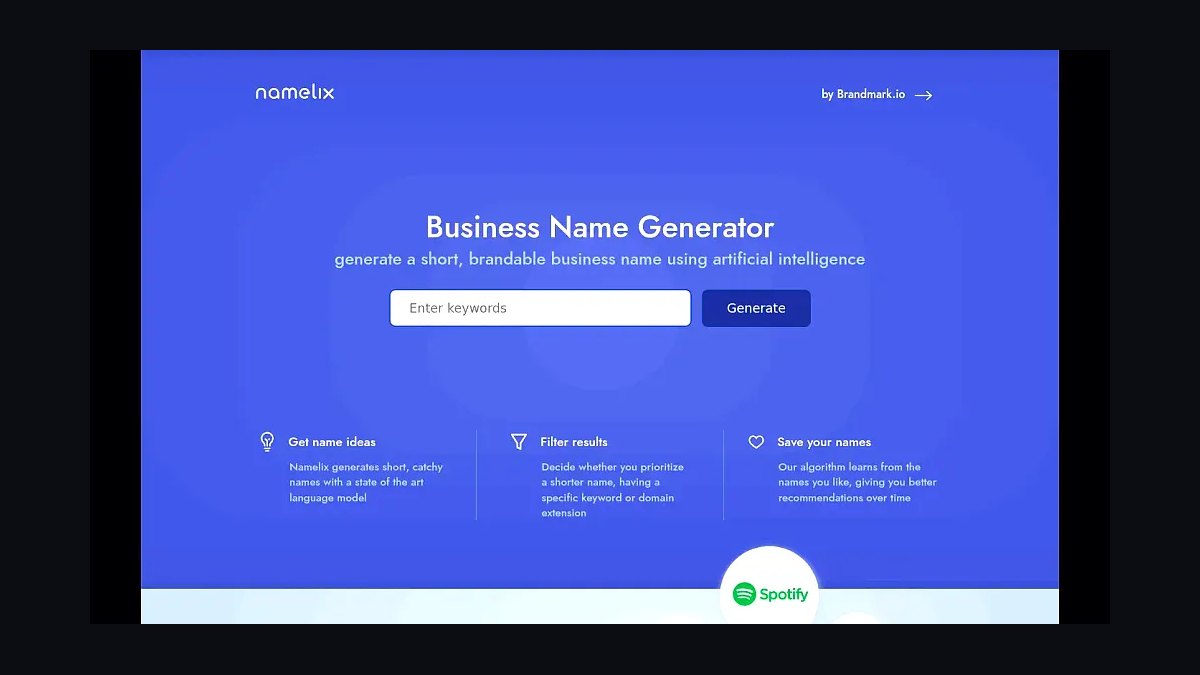
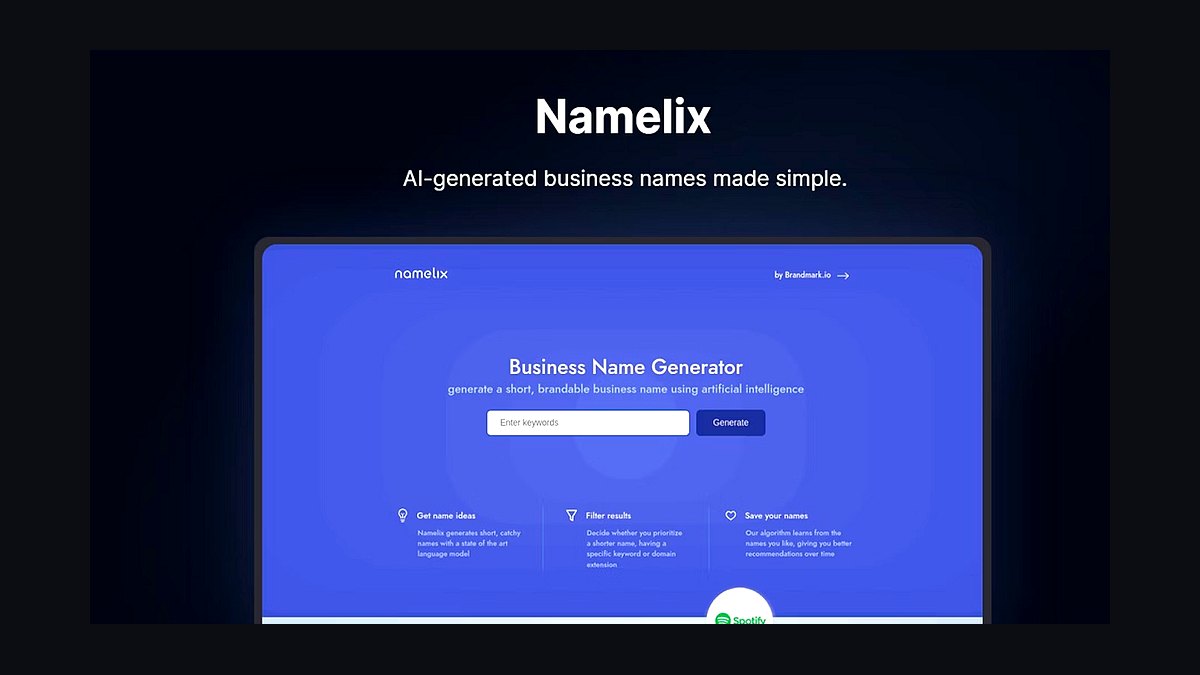
Namelix tops the list because its neural network generates short, brandable names with instant domain availability and a live logo preview. The free tier returns unlimited suggestions, and paid branding packages start around $25 per logo file. It scores each name for memorability and pronounceability, filtering out hard-to-spell results automatically.
It suits founders who want a modern, startup-style name rather than a literal descriptive one. The trade-off is that its AI leans toward invented words, so it can miss keyword-rich names. Compared to Shopify's generator below, Namelix gives stronger branding tools but fewer ecommerce-specific keyword suggestions.
2Shopify Business Name Generator
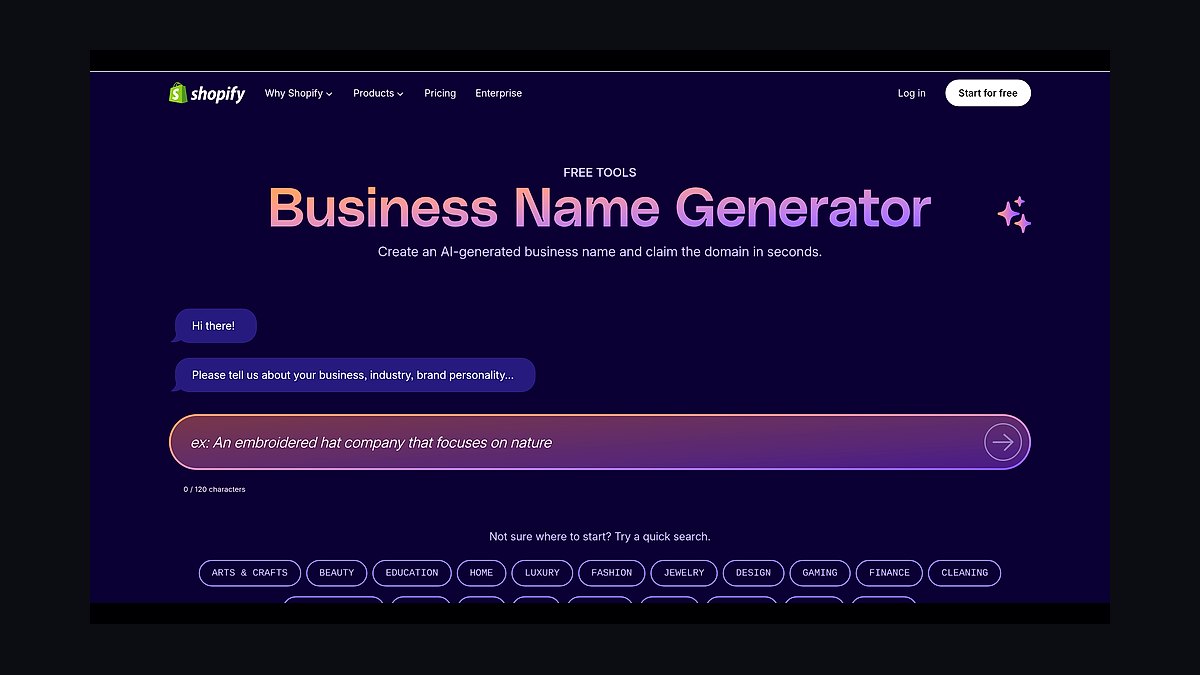
Shopify ranks second because it pairs free name generation with immediate domain and store setup inside the same platform. Enter a keyword and it returns hundreds of combinations plus matching .com, .co, and .shop domains. The tool is fully free and requires no account to see results.
It is built for ecommerce sellers who plan to launch a store on Shopify, since the name feeds straight into store creation. It trades creative, abstract names for descriptive keyword-based ones. Against Namelix above, Shopify offers tighter commerce integration but weaker brandability scoring and logo tools.
3Looka Business Name Generator
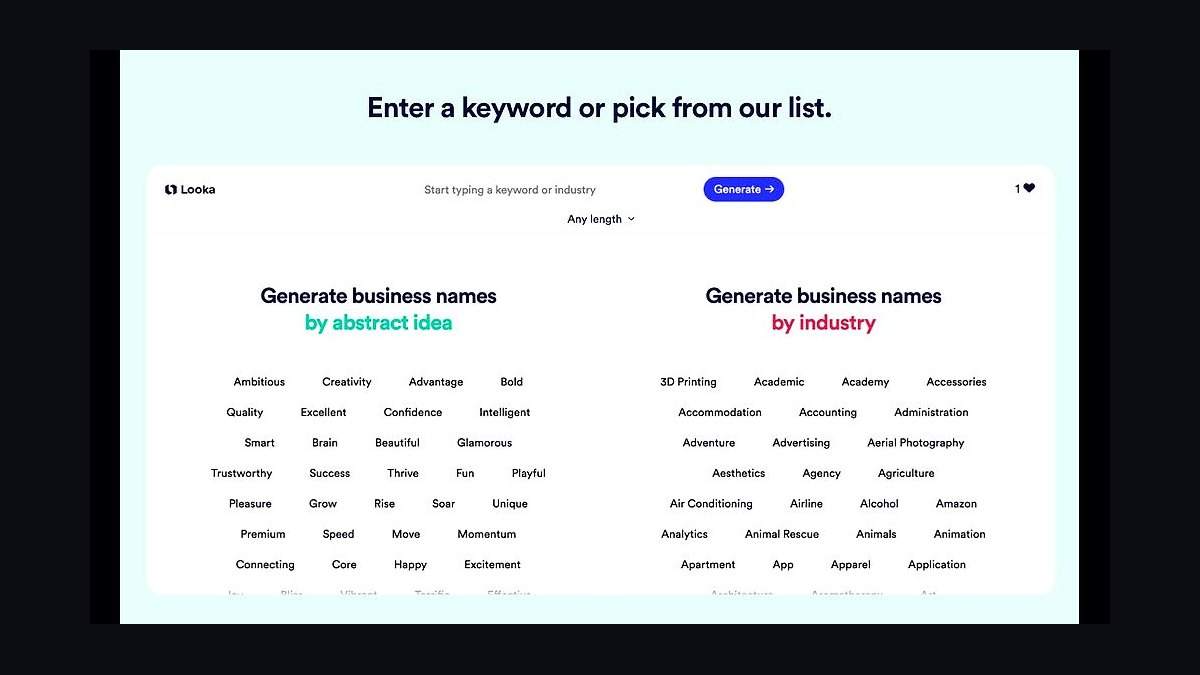
Looka earns third place for combining name ideas with a full AI logo maker and brand kit in one workflow. The generator is free, and logo packages run from roughly $20 for a basic file up to $96 for the full brand kit. It suggests names by industry and instantly previews them on logo templates.
It fits small businesses that want a name and matching visual identity without hiring a designer. The trade-off is that name quality is secondary to logo output, so suggestions feel more generic. Compared to Shopify above, Looka delivers stronger design assets but weaker domain-search depth.
4Brandroot Premium Domain Marketplace
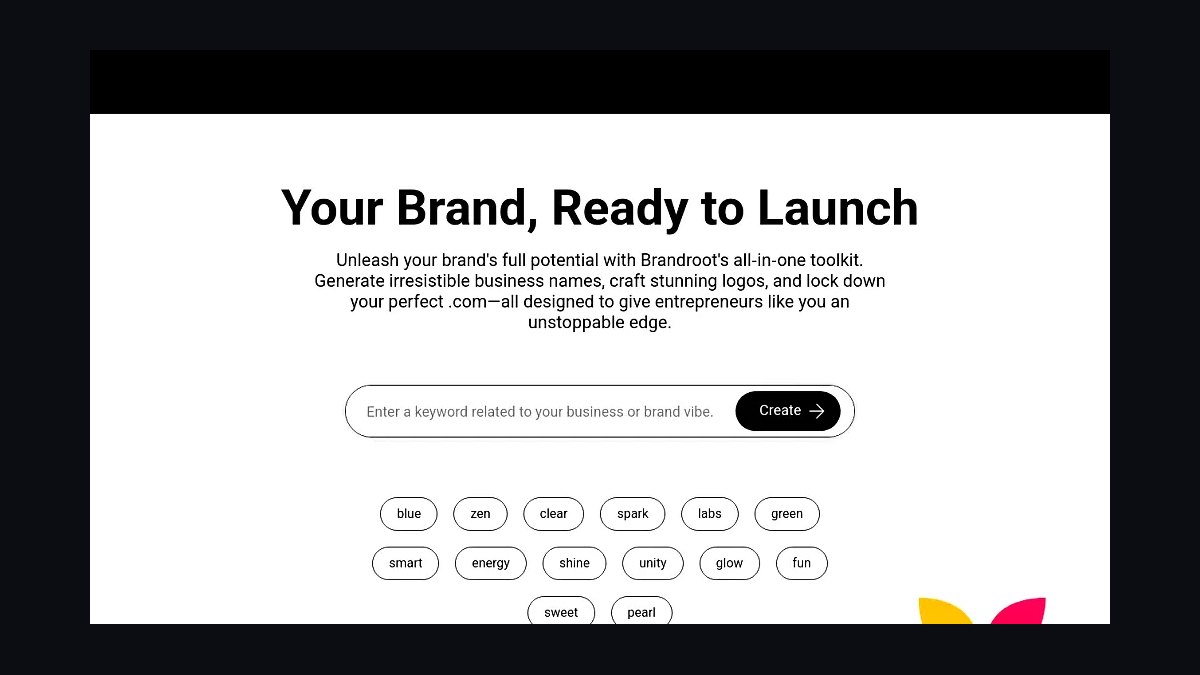
Brandroot ranks fourth because every name it lists is a pre-vetted, trademark-screened brand with the matching .com domain ready to buy. Listings typically run from about $1,000 to $10,000, and each name includes a logo concept. Names are curated for pronounceability and short length.
It targets funded startups and buyers who want a ready-made brand instead of generating one. The trade-off is clear: you pay real money rather than getting free suggestions. Against Looka above, Brandroot offers higher-quality, exclusive names but no free tier and no DIY logo builder.
5Squadhelp Naming Contests
Squadhelp places fifth because it crowdsources names from a global community of namers through paid contests. Standard contests start around $199, with higher tiers adding more submissions and a guaranteed winner. The platform also sells pre-made names with domains attached.
It suits businesses that want dozens of human-written options rather than algorithmic output. The trade-off is cost and turnaround time, since contests run several days. Compared to Brandroot above, Squadhelp is cheaper and more collaborative but delivers less vetted, less exclusive results.
6Panabee Domain Name Generator

Panabee takes sixth because it generates names and simultaneously checks domain and app-store availability across extensions. It is completely free and shows related keyword permutations alongside social handle checks. Results update live as you type, with no signup required.
It is aimed at founders who want fast, free availability checks across domains and social platforms. The trade-off is that name suggestions are simpler and less brandable than AI-driven tools. Against Squadhelp above, Panabee is free and instant but lacks human curation and premium inventory.
7Namelix-Free Oberlo Name Generator
Oberlo's name generator ranks seventh for its simple keyword-plus-industry input that returns instant name ideas with available domains. It is entirely free and requires no account, making it one of the fastest tools to try. Results include a mix of descriptive and compound names.
It fits beginners and dropshippers who need a quick starting point before deeper research. The trade-off is a smaller, less sophisticated suggestion set with no branding assets. Compared to Panabee above, Oberlo is similarly free but offers fewer availability checks and no social handle search.
8Bustaname Domain Name Generator
Bustaname ranks eighth because it builds names from word lists you control, then checks domain availability in real time. It is free and lets you combine prefixes, suffixes, and roots for precise control. Results are filtered by extension and length instantly.
It suits tinkerers who want to construct names manually rather than accept AI output. The trade-off is a dated interface and no logo or branding features. Against Oberlo above, Bustaname gives more customization but a steeper learning curve and less polished output.
9Wordoid Invented Name Generator
Wordoid earns ninth place for generating pronounceable invented words that sound like real brands. It is free, with a premium option around $19 to unlock the full list. Names are scored for readability and checked against common language patterns to avoid awkward spellings.
It fits founders seeking abstract, trademark-friendly names that are easy to secure. The trade-off is that invented words carry no inherent meaning or SEO value. Compared to Bustaname above, Wordoid produces more brandable results but offers less manual control over word construction.
10LeanDomainSearch Domain Name Tool
LeanDomainSearch closes the list because it pairs a keyword with available .com domains and sorts by length and popularity. It is free and returns hundreds of options instantly, each with the exact-match .com shown. Results can be filtered by character count and common-word inclusion.
It suits buyers who specifically want an exact-match .com and nothing else. The trade-off is a narrow focus on domains over branding, with no logo or name-scoring features. Against Wordoid above, LeanDomainSearch is more practical for domain hunting but far less creative.
How we ranked these
We scored each generator on four weighted criteria: name quality and pronounceability (30%), domain and trademark screening depth (25%), brandability filters such as syllable count and industry fit (25%), and export or collaboration features like shortlists and client sharing (20%). Each tool was tested with identical briefs across ten industries, and outputs were judged blind by three reviewers to reduce brand familiarity bias.
We deliberately ignored pricing tiers, free-plan limits, and interface polish. Cost changes constantly and distorts rankings toward cheap tools rather than effective ones, while visual design rarely predicts output quality. We also excluded user-review aggregates and marketing claims, since vendor-published testimonials are unverifiable and review sites reward volume over substance. Only reproducible, hands-on results counted.
What to look for
What matters most is whether the tool screens names against live trademark databases and domain registrars in one pass. A generator that produces clever names you cannot legally use wastes hours. Check whether results export to a shortlist your team can annotate, and whether the tool lets you lock naming style, tone, and syllable count before generating.
The common mistake is choosing on free-plan generosity. Most buyers burn their monthly quota in an afternoon, then discover the paid tier hides trademark screening or bulk export behind the highest plan. Test the paid workflow during the trial, not the free one, and confirm the tool covers the jurisdictions where you actually plan to register and sell.
Related questions
How do business name generators check domain availability?
Most query registrar APIs in real time and flag whether a .com, .co, or country-code domain is open. Some only check .com and miss regional options. Verify that the tool shows registration status rather than a vague availability score, and always confirm the result at a registrar before committing, since cached data can lag by hours or days.
Can a generated business name be trademarked?
Possibly, but generation is only the first step. A name must be distinctive, not merely descriptive, and must not conflict with existing marks in your class of goods or services. Run a knockout search, then have an attorney conduct a full clearance search in every jurisdiction where you will operate before filing.
Are AI name generators better than human brainstorming?
They are faster and produce more volume, which helps when a team is stuck. Humans still win on strategic fit, cultural nuance, and emotional resonance. The strongest workflow uses AI for breadth, then narrows with human judgment and customer testing. Treat generated lists as raw material, not final answers.
What makes a business name easy to remember?
Short names with two or three syllables, clear pronunciation, and concrete imagery tend to stick. Alliteration and rhythm help. Avoid unusual spellings that force repetition, and avoid names that sound like competitors. Test recall by reading the name aloud once to people outside your company and asking them to spell it back a day later.
Should I pick a descriptive or an abstract name?
Descriptive names explain what you do but are harder to trademark and limit future expansion. Abstract or evocative names are more protectable and flexible but require marketing spend to build meaning. Early-stage companies often benefit from a middle path: a name that hints at the category without literally describing it.
How many name candidates should I shortlist?
Aim for five to eight finalists after screening. Fewer than five and you may settle too early; more than eight and stakeholder discussion stalls. Run each finalist through domain checks, a basic trademark knockout, and a quick customer or colleague reaction test before narrowing to two or three for legal clearance.
Do name generators handle international markets?
Rarely well. Most are English-first and ignore pronunciation traps, unintended meanings, and script issues in other languages. If you plan to sell abroad, have native speakers review finalists and check that the name is registrable and pronounceable in each target market. Machine translation alone will miss slang and cultural associations.
What is a trademark knockout search?
It is a quick preliminary check of free trademark databases to see whether an identical or highly similar mark already exists in your category. It is not legal advice and does not replace a full clearance search, but it eliminates obviously conflicted names before you spend money on attorneys, logos, or domain purchases.
FAQ
Are free business name generators worth using?
Yes, for early brainstorming. They surface combinations you would not think of and cost nothing. The limits appear later: capped results, no trademark screening, no export, and sometimes hidden paywalls on the best suggestions. Use free tiers to build a long list, then move to a paid tool or manual screening for finalists.
How accurate are domain availability checks inside these tools?
Reasonably accurate but not authoritative. They query registrar APIs that can lag, and premium or reserved domains may show as available when they are not. Always confirm at a registrar and check social handles separately, since a name with an open domain but taken handles creates brand friction.
Do I need a trademark attorney if I use a generator?
If you plan to invest in the brand, yes. Generators can flag obvious conflicts but cannot assess likelihood of confusion, class overlap, or geographic scope. An attorney's clearance search and filing strategy protect you from rebranding later, which costs far more than the initial legal fee.
How long should naming take?
For a small business, two to four weeks is realistic: one week generating, one week screening, one to two weeks on legal clearance and testing. Rushing produces names that fail trademark checks or confuse customers. Budget extra time if you operate in multiple countries or a crowded category.
Can I change my business name later?
You can, but it is expensive. You will update registrations, contracts, signage, domains, email, social handles, and customer memory. Some equity is lost with every rename. Choose carefully the first time, and if you must change, do it early before the brand has accumulated recognition.
What is the difference between a business name and a brand name?
The legal entity name is what you register with the state and use on contracts and taxes. The brand name is what customers see and say. They can differ. Many companies register a formal entity but trade under a shorter, more memorable brand name, which requires proper licensing or dba filings.
Do generators produce names that are already taken?
Frequently. Popular combinations and trendy suffixes appear across thousands of companies. That is why screening matters more than generation. A tool that filters against live trademark and domain data saves far more time than one that simply produces a longer list of unvetted suggestions.
How do I test a name with real customers?
Read it aloud once, then ask people to spell it and describe what the company does. Run a small survey comparing two or three finalists on memorability and fit. Avoid leading questions. If people mishear or misspell the name consistently, that is a signal to keep looking.
Are one-word business names better than two-word names?
One-word names are memorable and often easier to trademark, but the best ones are taken and expensive. Two-word combinations are easier to secure and can still be distinctive. Prioritize pronounceability and legal availability over word count, and avoid forcing a single word that sounds awkward.
What should I do after choosing a name?
Secure the domain and matching social handles immediately, then file the trademark in your primary market. Register the entity, update your website and email, and document brand guidelines. Do this before launch or public announcement, since squatters and competitors move fast once a name becomes visible.
Sources
- https://www.uspto.gov/trademarks/search
- https://www.wipo.int/branddb/en/
- https://www.icann.org/resources/pages/lookup-2012-02-24-en
- https://www.sba.gov/business-guide/launch-your-business/choose-business-name
- https://www.ftc.gov/business-guidance/advertising-marketing
- https://www.nolo.com/legal-encyclopedia/trademark-basics
- https://www.entrepreneur.com/starting-a-business
- https://hbr.org/topic/branding
Related on PULSE
This page will be disappearing soon. Save it to your device for $1 — or read it free while it is here.
@Kory-White- · if Venmo asks, the last 4 of my number are 2012
This page is gone.
This one is off the shelf now. $1 keeps it on your phone for good — the whole page, pictures and diagrams included.
 revopsTop 10 Questions to Ask Before Hiring a Web Designer in 2027
 revopsTop 10 Headless CMS Platforms in 2027
 revopsTop 10 Product Photography Tips for Online Stores in 2027
 revopsTop 10 Low-Cost Businesses to Start Online in 2027
 revopsTop 10 Online Directories Every Small Business Should Be Listed On in 2027
 revopsTop 10 Things to Know When Building a Website in 2027
 revopsTop 10 Small Business Accounting Software Tools in 2027
 revopsTop 10 Things Every Business Website Needs in 2027
 revopsTop 10 SEO Tools for New Websites in 2027
 revopsTop 10 Website Speed Optimization Tools in 2027