 Pulse Reviews and Analysis
Lincoln’s Gettysburg Address (1863) — Text, Context, and Why It Endures
 Curated by Kory White · Fractional CRO, CRO Syndicate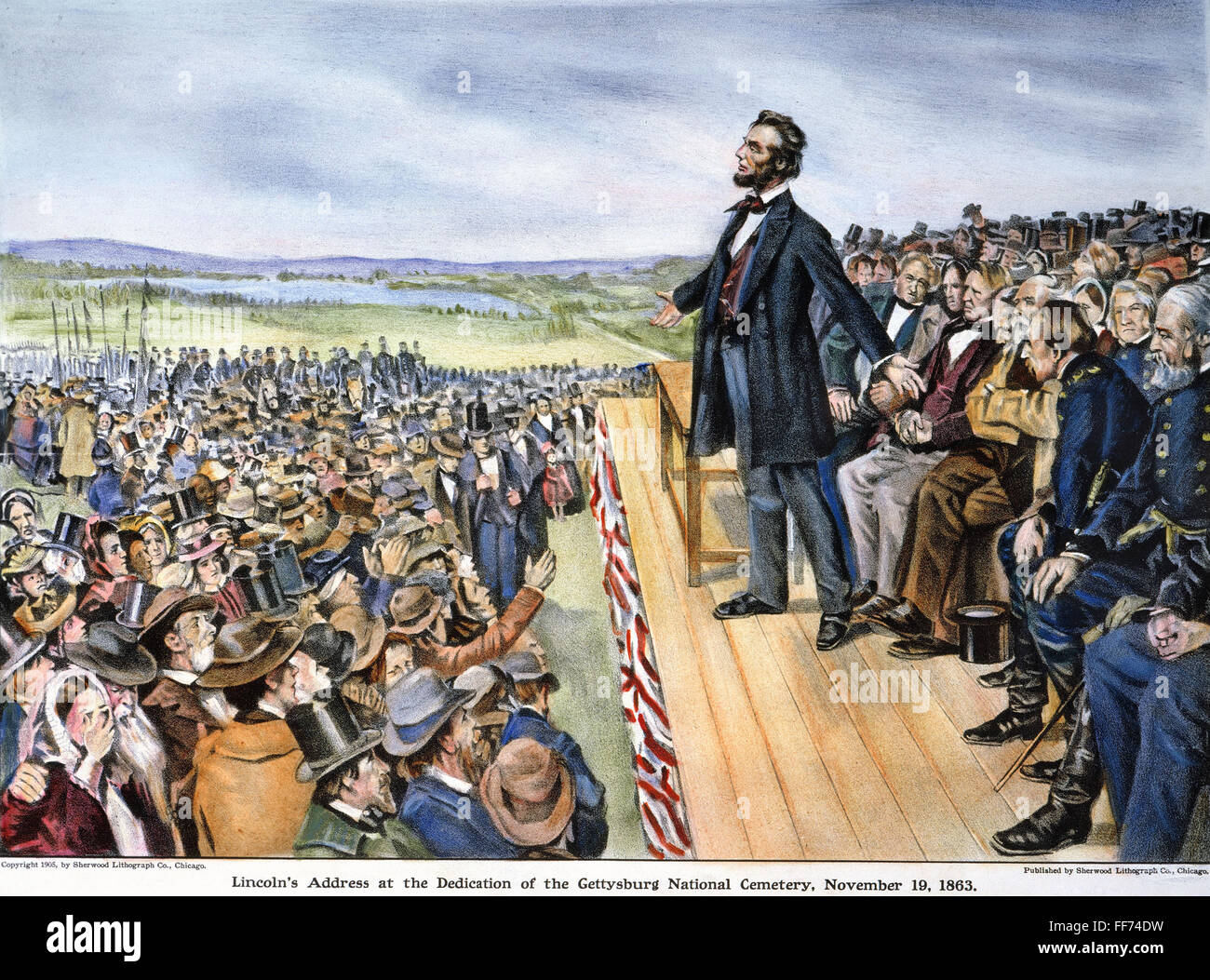
Lincoln’s Gettysburg Address (1863) — Full Text and Why It Endures
Context
On November 19, 1863, President Abraham Lincoln traveled to Gettysburg, Pennsylvania, to help dedicate the Soldiers’ National Cemetery — the burial ground for thousands of Union soldiers who had died there four and a half months earlier in the bloodiest battle of the American Civil War.
The featured orator that day was Edward Everett, a celebrated speaker who held the crowd for roughly two hours. Lincoln was the afterthought, invited to add a few "appropriate remarks" to formally consecrate the ground. He spoke for about two minutes.
By the time the applause settled, the President believed his speech had fallen flat. He was wrong. The handful of sentences he delivered that afternoon became the most quoted address in American history and reframed the entire purpose of the war.
About the Speaker
Abraham Lincoln (1809–1865) was the 16th President of the United States, a largely self-educated lawyer from frontier Illinois who guided the nation through its Civil War. He had little formal schooling but an extraordinary ear for cadence and the rhythms of the King James Bible. The Gettysburg Address shows a man at the height of his powers, compressing the meaning of a continental war into ten sentences.
The Speech
*~2 minutes (~270 words)*
Four score and seven years ago our fathers brought forth on this continent, a new nation, conceived in Liberty, and dedicated to the proposition that all men are created equal.
Now we are engaged in a great civil war, testing whether that nation, or any nation so conceived and so dedicated, can long endure. We are met on a great battle-field of that war. We have come to dedicate a portion of that field, as a final resting place for those who here gave their lives that that nation might live.
It is altogether fitting and proper that we should do this.
But, in a larger sense, we can not dedicate — we can not consecrate — we can not hallow — this ground. The brave men, living and dead, who struggled here, have consecrated it, far above our poor power to add or detract. The world will little note, nor long remember what we say here, but it can never forget what they did here.
It is for us the living, rather, to be dedicated here to the unfinished work which they who fought here have thus far so nobly advanced. It is rather for us to be here dedicated to the great task remaining before us — that from these honored dead we take increased devotion to that cause for which they gave the last full measure of devotion — that we here highly resolve that these dead shall not have died in vain — that this nation, under God, shall have a new birth of freedom — and that government of the people, by the people, for the people, shall not perish from the earth.
Why It Endures
The power of the address is mathematical in its economy. Lincoln says everything a two-hour oration tried to say, and he does it in roughly 270 words.
It opens with elevation — "Four score and seven years ago" — biblical phrasing that lifts the moment out of 1863 politics and into something timeless. Then it moves in a clean three-part arc: the past (a nation founded on an idea), the present (a war testing whether that idea can survive), and the future (a "new birth of freedom" the living must secure).
That structure gives a short speech the weight of an epic.
The most famous turn is Lincoln’s reversal of his own purpose. He came to dedicate the ground, then declares that he cannot — "we can not dedicate — we can not consecrate — we can not hallow." The soldiers already did that with their lives. By shrinking his own role, he hands the obligation to everyone listening.
The audience is no longer being addressed; they are being conscripted into "the unfinished work."
He builds momentum with repetition and triads — "of the people, by the people, for the people" — and contrast: what we say here against what they did here. The line about the world little noting his remarks is the great irony of the speech; it is the part everyone remembers. And he never once mentions slavery, the Union, Gettysburg by name, or a single general.
He keeps the abstraction high so the words outlive the occasion.
What You Can Borrow
- Go short on purpose. Two minutes that people memorize beat two hours they forget. Length is not weight.
- Build a past-present-future spine. Where we came from, what we face now, what we must do next — three beats give a brief speech real architecture.
- Use the rule of three. "Dedicate, consecrate, hallow." "Of the people, by the people, for the people." Triads land in the ear and stay there.
- Shrink yourself to lift the moment. Lincoln says his own words don’t matter, which is exactly why they did. Pointing the credit elsewhere draws people in.
- End by assigning a task. Don’t close on a summary — close on what the audience must now do. "It is for us the living."
- Lift the language. A single elevated phrase at the open ("Four score and seven years ago") sets a tone that ordinary words can’t.
Bottom Line
The Gettysburg Address is the proof that brevity, structure, and a clear moral purpose beat sheer volume every time — read it aloud once and you’ll feel how a handful of sentences can carry the weight of a nation.