
Mahatma Gandhi’s Quit India Speech (1942) — Key Passages and Lessons
 Curated byKory White · Fractional CRO · Maryland
 PULSEKNOWLEDGE LIBRARY
Gandhi's Quit India speech, delivered August 8, 1942, at Gowalia Tank Maidan in Bombay, demanded immediate British withdrawal and issued the mantra "Do or Die" — free India or perish trying. Its lessons: disciplined nonviolence, refusal to hate the opponent, and moral clarity compressed into a phrase ordinary people could carry.
The two readings of the speech: moral testament versus strategic instrument
Almost every serious treatment of the Quit India address splits along one fault line, and which side you take changes what you take away from it. The first reading treats the speech as a moral testament — the culmination of forty years of satyagraha philosophy, in which the demand for independence is secondary to the demand that Indians act as free people regardless of outcome. On this reading, the operative passage is not "Quit India" but the instruction that follows: "Every one of you should, from this moment onwards, consider yourself a free man or woman, and act as if you are free and are no longer under the heel of this imperialism." The freedom is internal and immediate; the British departure is a consequence, not the goal. Read this way, the speech succeeds the moment it is heard, and the arrests the following dawn are irrelevant to its success.
The second reading treats it as a strategic instrument — a calculated escalation timed to the exact moment of maximum British vulnerability. Japanese forces had taken Rangoon in March 1942 and were on the Burma–India frontier. Britain needed Indian manpower, Indian railways, and Indian ports for the eastern theatre. The Cripps Mission had collapsed weeks earlier. On this reading, the operative passages are the ones that make British rule the *cause* of Indian danger rather than its remedy: Gandhi's argument that a free India would be better able to resist Japan than a subjugated one, and his insistence that "the presence of the British in India is an invitation to Japan to invade India." The speech is leverage, applied at a hinge point, and its success is measured in what the Raj had to spend to contain it — over 60,000 arrests, the banning of Congress, and the diversion of military units to internal security during a war.
The two readings are not mutually exclusive, and the honest position is that Gandhi held both simultaneously — but they produce genuinely different lessons for anyone studying the speech as a model. The moral-testament reading teaches that a movement's integrity is its own reward and that you should never trade principle for tactical advantage. The strategic-instrument reading teaches that timing is a weapon, that you escalate when your opponent's need for you is highest, and that a demand made at the wrong moment is merely a complaint. Most modern applications fail because they pick one and pretend the other does not exist: purely moral movements make demands nobody is forced to answer, and purely strategic ones win concessions that dissolve because no one believed in them.
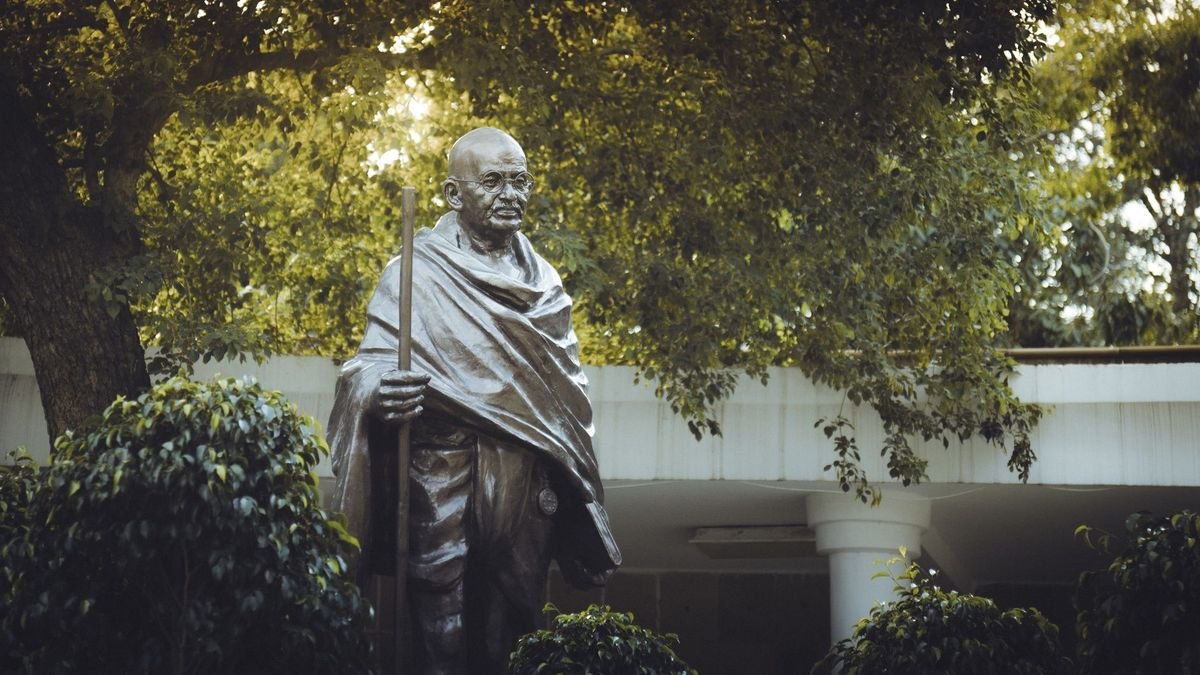
There is a third framing worth naming because it recurs in the historiography: the speech as an act of succession planning. Gandhi knew arrest was imminent — he said so, in effect, telling the Congress that leaders would be taken. The instruction "Every Indian who desires freedom and strives for it must be his own guide" is a deliberate decentralization order, issued in advance of decapitation. The lesson there is organizational rather than rhetorical: if you expect your leadership to be removed, the last speech before removal must transfer authority downward, not consolidate it upward. Gandhi did the former, and the movement continued for months without him — chaotically, sometimes violently against his instruction, but it continued.
How to decide which reading to apply
Choosing between the moral and strategic readings is not an academic exercise if you are actually trying to learn from the text. The choice determines which passages you study, which you skip, and what you carry into your own work. A workable decision procedure runs on three questions, answered in order.
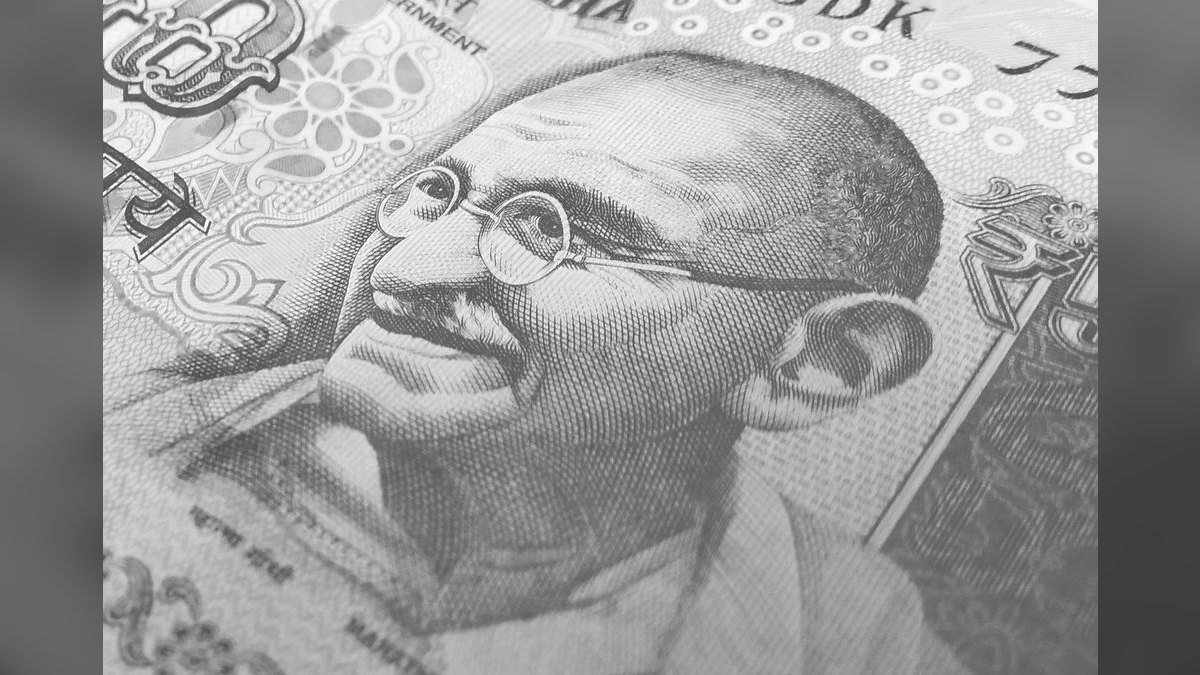
First: is your opponent dependent on your cooperation right now? Gandhi's leverage in August 1942 was not moral suasion — Britain had proved immune to that for decades. It was that the war made Indian non-cooperation catastrophically expensive. If your counterparty needs something only you can supply, the strategic reading applies and timing is your primary variable. If they do not need you at all, the strategic reading has nothing to offer and you are in the moral-testament case, where the point is to build the constituency that will create dependency later.
Second: can you sustain discipline under repression? The strategic reading requires that your movement not hand the opponent a pretext. Gandhi's explicit prohibition — "we are not going to strike a blow with sticks or arms" — was strategy disguised as ethics. When discipline broke during the August–September 1942 uprisings, with telegraph lines cut and police stations burned, the British were handed exactly the justification they needed, and Gandhi spent much of his imprisonment defending against the charge that he had incited it. If you cannot hold discipline, do not escalate; the escalation will be used against you within days.
Third: what is your time horizon? The moral reading pays off over decades and is indifferent to short-term defeat. The strategic reading demands a measurable result inside a window. Quit India failed by the strategic metric in 1942 — no British withdrawal, no negotiation, the Congress leadership in prison until 1944 — and succeeded on a five-year horizon, with independence in August 1947. If your horizon is short, the speech is a poor model. If it is long, it is one of the best available.
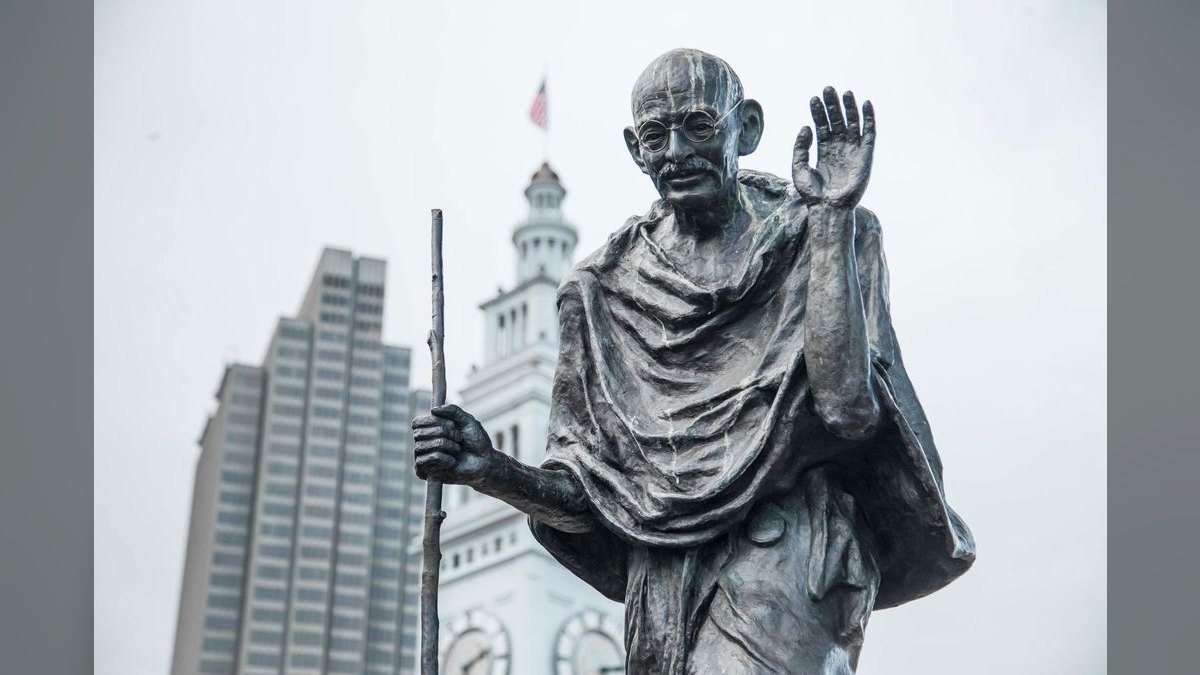
The decision tree is not a way of avoiding the harder question, which is that Gandhi himself did not choose. He gave a speech in which the moral and strategic arguments are braided so tightly that removing either collapses the other. The instruction to consider yourself free from this moment is moral — and it is also the only workable operating instruction for a movement whose leadership will be in jail by sunrise. That braid is the actual craft lesson, and it is harder to imitate than either strand alone.
The concrete numbers behind each reading
Historical claims are worth only as much as the figures behind them, and the Quit India episode has a reasonably firm evidentiary base, though several figures remain contested and should be quoted with their ranges rather than as settled fact.
On the speech itself. It was delivered on the evening of August 8, 1942, at Gowalia Tank Maidan (now August Kranti Maidan) in Bombay, to the All-India Congress Committee, which had that day passed the Quit India Resolution. Gandhi spoke at length — accounts describe an extended address rather than a brief one — and delivered substantial portions in Hindustani so that the crowd, rather than only the English-reading political class, could follow. He also spoke in English, and the surviving canonical text reflects both. No audio recording is known to exist; the text descends from transcripts and press accounts, which is why phrasing varies slightly between published versions. This matters for anyone quoting it: cite an established edition, such as the Collected Works published by the Government of India's Publications Division, rather than a floating internet transcription.
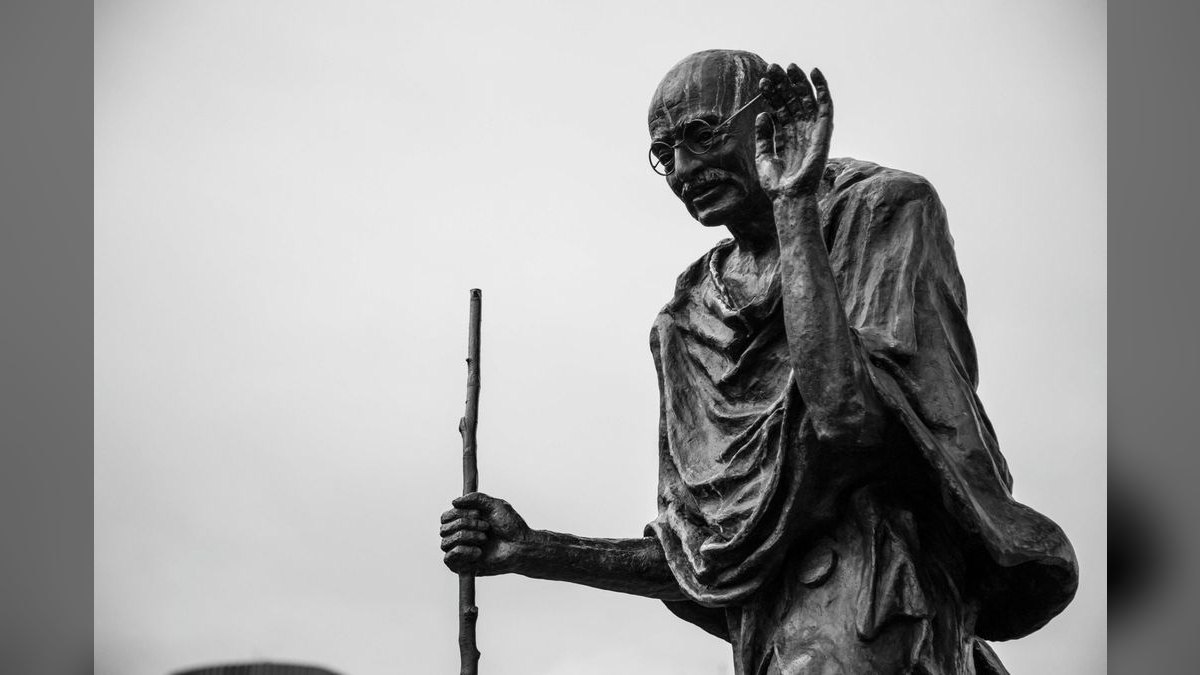
On the repression. Gandhi and the senior Congress leadership were arrested in the early hours of August 9, 1942 — within roughly twelve hours of the speech. Gandhi was held at the Aga Khan Palace in Pune. Two deaths in his custody circle mark the period: his secretary Mahadev Desai died in August 1942, days after the arrests, and his wife Kasturba died in detention in February 1944. Gandhi was released on May 6, 1944, on health grounds — an imprisonment of roughly twenty-one months. The Congress was declared unlawful. Mass arrests over the following months ran into the tens of thousands, with figures above 60,000 commonly cited. Deaths in police and military action during the suppression are generally given in a range from around a thousand to several thousand, with official British counts sitting at the low end and Indian nationalist estimates considerably higher; the honest citation reports the discrepancy rather than picking a number.
On the timeline to independence. From speech to Indian independence is five years and one week — August 8, 1942 to August 15, 1947. That interval is the single most useful number for anyone reasoning about the payoff horizon of a maximalist demand. It also frames the counterfactual honestly: British departure was driven by a convergence of factors — wartime exhaustion, the 1945 change of government in London, the Royal Indian Navy mutiny of 1946, and the collapse of confidence in the reliability of Indian troops and administrators — not by the 1942 movement alone. Anyone drawing a straight line from the speech to independence is overstating the case.

On what the reading choice costs. If you adopt the strategic reading, you are committing to a model in which the immediate result was total defeat: no negotiation, no timetable, the entire leadership removed from public life for nearly two years, and the field left open for the Muslim League — which did not join the movement — to consolidate its position while the Congress was in prison. That consolidation is directly relevant to the partition that followed. If you adopt the moral reading, you are committing to a model that cannot be falsified by outcomes, which makes it useless as a planning tool even as it remains valuable as a source of resolve. Neither is free. The Lessons most worth extracting sit in the tension: escalate on strategic grounds, but only with a moral position that survives losing.
There is a discipline analogy that practitioners in commercial settings find useful. A go-to-market team deciding whether to make a hard, non-negotiable demand of a channel partner faces the same structure: leverage exists only while the partner needs you, discipline determines whether the demand reads as principled or erratic, and the revenue consequences of getting the timing wrong are measured in quarters, not days. The analogy is imperfect and should not be pushed — nobody died at Gowalia Tank over a partner agreement — but the decision structure genuinely rhymes, and that is why the speech is studied outside history departments at all.
The key passages, in the order Gandhi built them
The address is best understood as a sequence of moves, each doing a specific job. Working through them in order shows the construction rather than just the highlights.
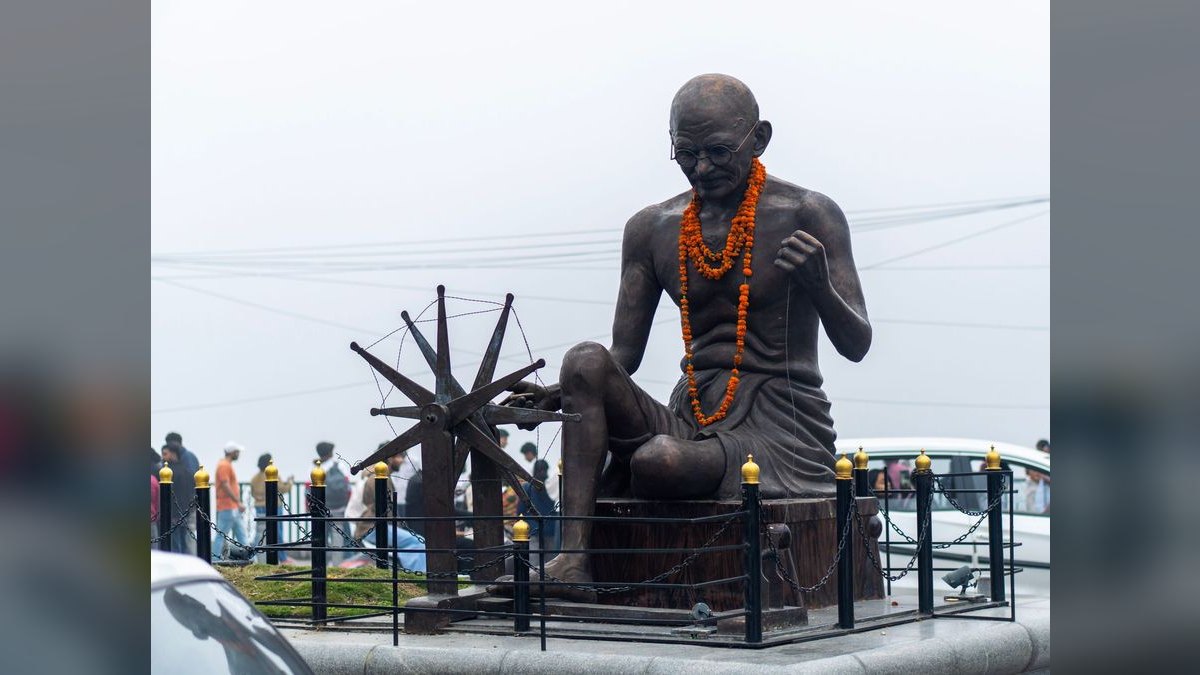
The disclaimer of authority. Gandhi opens by rejecting the role of commander: he wants no dictatorship, and describes himself as a servant. This is not modesty for its own sake. A movement about to lose its leadership cannot be built on a leader; the opening line pre-emptively distributes authority so that arresting Gandhi does not decapitate the movement. Every subsequent instruction is framed as advice a free person might take, not an order.
The separation of the British people from British rule. Gandhi states plainly that he does not hate the British and wants their friendship, while insisting the rule must end. This does two things at once. Morally, it holds the line against the hatred that would corrupt satyagraha. Strategically, it denies the Raj the ability to frame the movement as anti-British racial hostility, which would have played well in wartime London and badly in Washington. It also leaves a post-independence relationship intact — a point Gandhi makes explicitly when he speaks of the friendship being possible only between equals.

The reframing of the war aim. Gandhi argues that the Allied cause is compromised so long as India is unfree — that fighting fascism abroad while maintaining empire at home is incoherent. This is the passage that converted a domestic demand into an international argument, and it is the reason the speech landed in American political discourse at a moment when Washington's opinion mattered to London.
The nonviolence instruction. The prohibition on sticks and arms is stated flatly and early, not hedged. Gandhi knew the instruction would be tested and stated it in terms that left no interpretive room. That it was broken anyway, in scattered attacks on railways, telegraph lines, and police posts, is the central tragedy of the episode and the strongest evidence that a speech cannot substitute for organizational infrastructure.
The universalization. The struggle is framed as one for the freedom of all humanity, not only India. This is the move that let the speech travel — into the American civil rights movement, into anti-colonial movements across Africa and Asia, into the vocabulary of nonviolent resistance generally.

The mantra. "Do or Die" arrives last, offered explicitly as a mantra to be imprinted on the heart: free India or die in the attempt. It is short enough to chalk on a wall, it contains no instruction that requires a leader present to interpret it, and it converts an abstract political demand into a personal vow. The craft point is that Gandhi does not open with it. He earns it across the preceding structure and then hands it over as the one thing to carry when everything else is forgotten — which is precisely what happened.
Implementation: how to work with the speech in sequence
If you are studying, teaching, or drawing on the address rather than merely admiring it, sequence matters. The common failure is to start with "Do or Die," which is the last thing Gandhi says and makes no sense without what precedes it.
Start with the primary text, not a summary. Read the full address in an established edition. The Gandhi Heritage Portal and the Collected Works are the appropriate starting points. Summaries reliably drop the disclaimer of authority and the passages on friendship with the British — the two moves that make the rest coherent.

Then read the resolution the speech accompanied. The AICC's Quit India Resolution of August 8 is the formal demand; the speech is the address to the people who would have to carry it. Reading the two together prevents the standard error of treating the speech as a policy document. It is not — it is an instruction manual for individual conduct after the policy document's authors are arrested.
Then establish the context. The Cripps Mission's collapse in April 1942, the fall of Rangoon, and the unilateral declaration of Indian belligerency in 1939 are the three preconditions. Without them, the escalation looks like impatience. With them, it looks like a calculated read of a window.

Then read the aftermath, including the parts that do not flatter the movement. The sabotage campaigns, the parallel governments briefly established in places like Ballia and Satara, the League's non-participation, and Gandhi's own subsequent defence of the movement's conduct. A study that stops at the speech learns rhetoric; a study that continues through the aftermath learns what rhetoric can and cannot do.
Then, and only then, extract the transferable technique. Compress the demand to a phrase that survives without you. Pair maximal resolve with explicit restraint. Refuse to hate the opponent, in public and specifically. Borrow sacred vocabulary — "mantra" — for a secular demand. Universalize the local. Distribute authority before it is taken from you.
One sequencing caution. The technique list above is genuinely transferable, but the conditions that made it work were extreme: a leader with forty years of demonstrated personal sacrifice, an opponent constrained by its own liberal self-description, a wartime dependency, and a population with prior experience of mass civil disobedience from 1920 and 1930. Strip those away and the same six techniques produce a slogan and nothing else. The most common misapplication is adopting the rhetorical moves without the years of credibility that made an audience willing to act on them — Gandhi's willingness to go back to prison was not a rhetorical device, it was the collateral behind every sentence.
Related questions
Why did the Cripps Mission's failure make the speech possible?
Cripps offered post-war dominion status with provinces free to opt out, and no immediate transfer of power. Congress read the opt-out clause as a partition mechanism and the vagueness as bad faith. Its collapse in April 1942 removed the negotiated path, leaving escalation as the remaining option.
Did the Quit India movement stay nonviolent?
No. Gandhi's instruction was explicit, but after the leadership's arrest the movement fragmented, and attacks on railways, telegraph infrastructure, and police stations followed. Parallel administrations briefly formed in some districts. This breakdown is the strongest evidence that rhetoric cannot substitute for organizational structure.
Why did the Muslim League not join?
The League, under Jinnah, read a Congress-led mass movement as a route to Hindu-majority dominance in any successor state. With Congress leadership imprisoned from 1942 to 1944, the League used the interval to expand its organization and provincial position — a major factor in the partition that followed.
Is "Do or Die" a call to violence?
No. In context it is a vow of personal commitment: free India or die in the attempt — dying, not killing. Gandhi paired it with an explicit prohibition on striking a blow with sticks or arms in the same address, which is why the two passages must always be read together.
How long was Gandhi imprisoned afterward?
He was arrested in the early hours of August 9, 1942, and held at the Aga Khan Palace in Pune until his release on May 6, 1944 — roughly twenty-one months. Mahadev Desai died there in 1942 and Kasturba Gandhi in February 1944.
FAQ
Where and when exactly was the speech delivered?
On the evening of August 8, 1942, at Gowalia Tank Maidan in Bombay — now Mumbai, and the ground is now named August Kranti Maidan — before the All-India Congress Committee, which had passed the Quit India Resolution earlier that day. Gandhi was arrested in the early hours of the following morning, making it his last public address as a free man for nearly two years.
Was the speech in English or Hindustani?
Both. Gandhi addressed the gathering in Hindustani so the crowd could follow directly, and also spoke in English. The canonical published texts reflect both portions. Since no audio recording is known to survive, all versions descend from transcripts and press accounts, which is why wording varies slightly between editions — quote from an established edition rather than an unattributed web transcript.
Which passage is most often misquoted?
"Do or Die." It circulates stripped of the sentences around it, which include Gandhi's flat prohibition on striking a blow with sticks or arms and his statement that he does not hate the British. Quoted alone it reads as a call to arms; quoted with its neighbours it reads as what it is — a vow to accept death rather than inflict it.
Did the speech directly cause independence in 1947?
Not by itself. Independence followed a convergence: wartime exhaustion, the 1945 change of government in Britain, the 1946 Royal Indian Navy mutiny, and eroding confidence in the loyalty of Indian troops and administrators. The 1942 movement contributed decisively to the sense that continued rule required force Britain could no longer sustain, but a straight causal line from speech to independence overstates the evidence.
What is the single most transferable technique in it?
Compressing the entire demand into a phrase that functions without its author present. Gandhi expected arrest, so he handed the crowd a mantra rather than a plan. "Do or Die" needed no interpreter, no committee, and no leader at liberty — which is exactly why it survived twenty-one months of his imprisonment intact.
Why is a speech from 1942 studied outside history?
Because it is a compact case study in escalation under asymmetry: when to make a maximal demand, how to pair resolve with restraint, and how to distribute authority ahead of losing it. Communication, negotiation, and organizational-behaviour curricula use it for that structure, not for its politics.
Sources
- Gandhi Heritage Portal — primary texts and speeches
- The National Archives (UK) — India and the Second World War
- British Library — India Office Records collection guide
- Stanford Encyclopedia of Philosophy — Mohandas Gandhi
- Encyclopaedia Britannica — Quit India Movement
- BBC History — Mohandas Gandhi
- Indian National Congress — history and resolutions
- National Archives of India
- Stanford — The Martin Luther King, Jr. Research and Education Institute on Gandhi
Related on PULSE
- [Abraham Lincoln’s House Divided Speech (1858) — Key Passages and Lessons](/knowledge/sp0022)
- [Steve Jobs’s Stanford Commencement (2005) — Key Passages and Lessons](/knowledge/sp0021)
- [Barbara Jordan’s 1976 DNC Keynote — Key Passages and Lessons](/knowledge/sp0018)
- [Demosthenes’ The Third Philippic — Key Passages and Lessons](/knowledge/sp0026)
- [Mark Antony’s Funeral Oration (Shakespeare) — Key Passages and Lessons](/knowledge/sp0028)
- [William Faulkner’s Nobel Prize Acceptance (1950) — Key Passages and Lessons](/knowledge/sp0023)
@Kory-White- · if Venmo asks, the last 4 of my number are 2012
 pulse-moviesTop 10 Movies on Netflix 2027
 pulse-moviesTop 10 Movies on Max 2027
 pulse-moviesTop 10 Fantasy Movies of All Time in 2027
 pulse-moviesTop 10 Documentaries of All Time in 2027
 pulse-moviesTop 10 Superhero Movies of All Time in 2027
 pulse-moviesTop 10 Romance Movies of All Time in 2027
 pulse-moviesTop 10 Westerns of All Time in 2027
 pulse-moviesTop 10 Musical Movies of All Time in 2027
 pulse-moviesTop 10 Thriller Movies of All Time in 2027
 pulse-moviesTop 10 Crime Movies of All Time in 2027