
Queen Elizabeth I’s Speech to the Troops at Tilbury (1588) — Text and Lessons
 Curated byKory White · Fractional CRO · Maryland
 PULSEKNOWLEDGE LIBRARY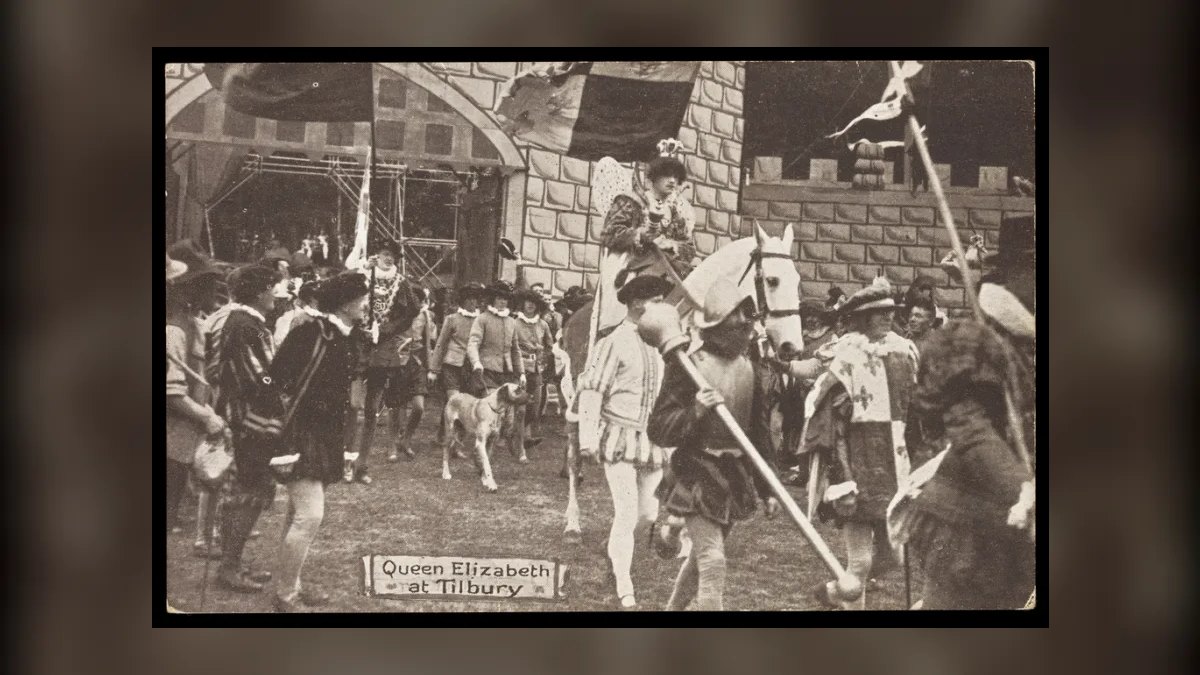
Queen Elizabeth I delivered her famous Tilbury speech in 1588 to inspire English troops preparing to face the Spanish Armada, though the exact wording comes from later accounts. The speech’s core lessons emphasize unity, courage, and the monarch’s personal commitment to her people, as seen in her line about having “the heart and stomach of a king.” The text remains a powerful example of leadership rhetoric, with its themes of national identity and defiance still studied today for its masterful use of antithesis, vulnerability, and brevity in crisis communication.
Elizabeth’s address at Tilbury stands as one of history’s most effective battlefield speeches, transforming a moment of existential threat into a declaration of shared purpose. By confronting her own perceived weakness—her sex—and converting it into a source of strength, she created a rhetorical template that leaders continue to draw upon. The speech’s survival across centuries, despite uncertainty about its exact wording, testifies to its emotional and political resonance.
What specific words did Elizabeth I say at Tilbury?
The most widely circulated version of Elizabeth’s Tilbury speech comes from a letter written by Dr. Leonel Sharp, a chaplain who claimed to have been present, though the letter was composed decades after the event. The core text runs roughly 330 words and opens with the queen acknowledging the counsel of those who feared for her safety: “Let tyrants fear. I have always so behaved myself that, under God, I have placed my chiefest strength and safeguard in the loyal hearts and good-will of my subjects.” The speech then moves through its famous antithesis—“I know I have the body of a weak and feeble woman; but I have the heart and stomach of a king, and of a king of England too”—before closing with the queen’s pledge to lead in person and her prediction of victory. While historians debate whether these are Elizabeth’s exact words, the structure and key phrases are consistent across multiple early accounts.
The speech’s brevity is itself a rhetorical choice. At roughly three minutes speaking time, every sentence carries weight. The queen does not waste words on tactical details or strategic justification; she gives the troops a single, unforgettable contrast (body versus heart) and a single, binding promise (I myself will lead). This economy of language, combined with the dramatic staging of a queen in armor, is what has made the speech endure. For a deeper analysis of how Elizabeth structured her arguments, see our guide on rhetorical devices in historical speeches.

How did the Spanish Armada crisis shape the Tilbury address?
The Armada crisis of 1588 was the most serious military threat England faced during Elizabeth’s reign. Philip II of Spain, seeking to overthrow the Protestant queen and restore Catholicism, had assembled a fleet of approximately 130 ships carrying over 30,000 men. The plan was for the Armada to sail up the English Channel, rendezvous with the Duke of Parma’s army in the Spanish Netherlands, and ferry that army across the Thames estuary. When Elizabeth arrived at Tilbury on August 9, the Armada had already been scattered by English fireships off Calais and was fleeing north around Scotland, but the land invasion threat remained acute. The 20,000–25,000 militia gathered at Tilbury were raw, poorly equipped, and uncertain—exactly the audience that needed a queen’s visible commitment.
Elizabeth’s decision to visit the camp was unprecedented. No English monarch had appeared on a battlefield since Henry V at Agincourt nearly two centuries earlier, and no queen had ever done so. Her advisors, including her principal secretary Lord Burghley, had urged her to retreat to safety, but Elizabeth insisted on sharing her people’s danger. The visual impact—a queen in a white velvet gown over a steel breastplate, mounted on a white horse, carrying a silver truncheon—was carefully orchestrated to project both femininity and martial authority. The speech that followed amplified that visual message, binding her fate to the soldiers’ own.

What rhetorical techniques make the Tilbury speech so effective?
The speech’s rhetorical architecture is deceptively simple but remarkably sophisticated. At its center is a single antithesis—body versus heart, woman versus king—that encapsulates the entire argument in one memorable contrast. This antithesis works because it concedes the contemporary prejudice against female rulers (“weak and feeble woman”) only to vault over it with a stronger claim. The “heart and stomach of a king” is not merely defensive; it is aggressive, claiming not just courage but appetite for battle. The addition “and of a king of England too” layers national pride onto personal authority, making the queen’s claim about English exceptionalism as much as about her own character.
Beyond the famous line, the speech uses several other devices with precision. Anaphora—the repetition of “I myself” three times in quick succession—creates a rhythmic insistence that Elizabeth will not delegate the danger. The closing triad “my God, my kingdom, and my people” moves from the divine to the national to the personal, a classic rhetorical ladder that lifts the stakes with each beat. And the speech’s brevity, as noted, is itself a device: by giving the troops only a few lines to remember, Elizabeth ensured they would be repeated around campfires that night and passed down to posterity. For a detailed breakdown of how Elizabeth’s rhetoric compares to other famous speeches, see our analysis of Churchill’s “Blood, Toil, Tears, and Sweat”.
How did Elizabeth I’s gender affect her leadership and the speech?
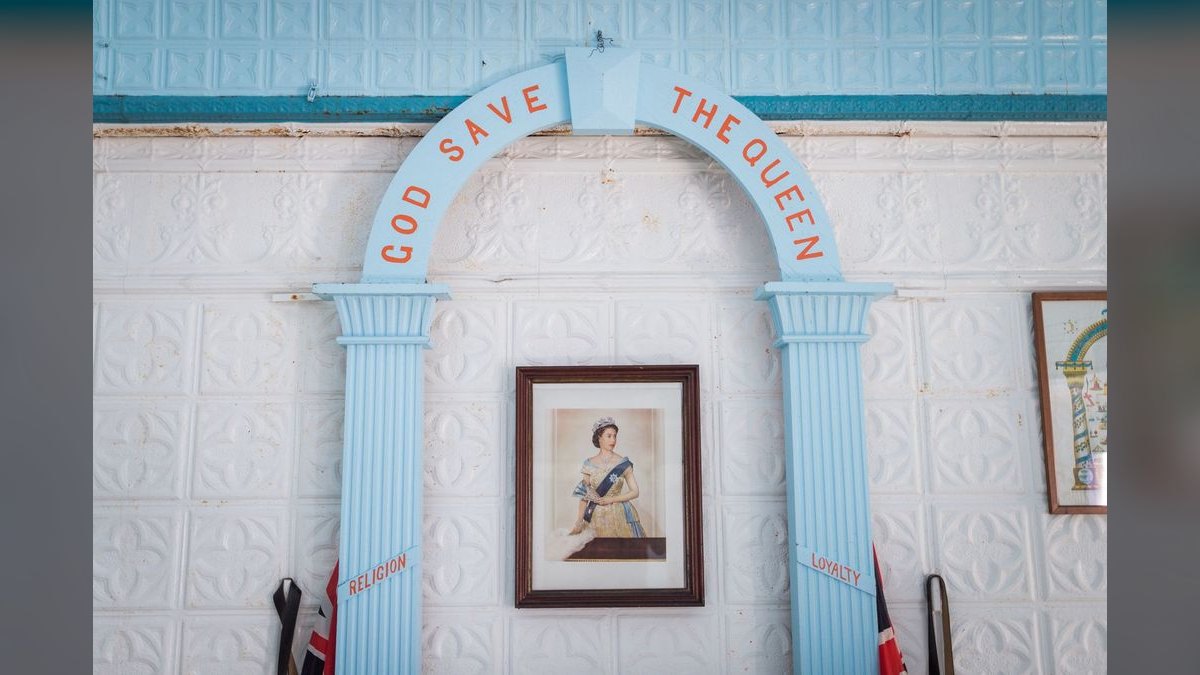
Elizabeth’s gender was the central political problem of her reign, and the Tilbury speech confronts it directly. In sixteenth-century Europe, female rulers were considered anomalous; political theorists from John Knox to Jean Bodin argued that women were naturally incapable of governance, especially in military matters. Elizabeth had spent thirty years navigating this prejudice by projecting authority through carefully managed imagery—the “Virgin Queen,” the mother of her people, the queen who would not marry. At Tilbury, she faced the ultimate test: a battlefield where her sex could be used to justify mutiny or desertion.
By raising the issue herself, Elizabeth disarmed her critics. The line “I know I have the body but of a weak and feeble woman” acknowledges the stereotype so fully that no one else can use it against her. Then the pivot—“but I have the heart and stomach of a king”—redefines the terms of debate. She does not claim to be a man; she claims to possess the qualities that matter in a ruler: courage, resolve, and appetite for the fight. The gender binary is acknowledged and then transcended. Modern leaders, especially women in male-dominated fields, continue to draw on this template: name the bias, then demonstrate the competence that renders it irrelevant.
What lessons can modern leaders learn from the Tilbury speech?
The Tilbury speech offers five practical lessons for anyone who must inspire others in a crisis. First, name the weakness before someone else does. Elizabeth said “weak and feeble woman” out loud so that her critics could not say it first, and then she owned the sentence with a stronger second half. In a modern context, this means acknowledging a genuine limitation—a budget shortfall, a failed product, a strategic mistake—before pivoting to the resources and resolve that will overcome it. Second, build one unforgettable line. The entire speech is remembered for a single antithesis; everything else supports it. Leaders should identify the one sentence that captures their message and polish it until it is quotable. Third, put your body on the line. Elizabeth’s promise to “take up arms” worked because she was visibly present in the camp, wearing armor, sharing the danger. Remote leadership has its place, but in moments of genuine threat, physical presence communicates commitment that no email can match.
Fourth, be brief when the moment is tense. The speech lasted three minutes, not thirty. In a crisis, people need a few lines they can repeat to themselves and others, not a detailed argument they must follow. Finally, close with a rising triad. “My God, my kingdom, and my people” lifts the stakes in three quick beats and predicts the win. Ending on rhythm and confidence, rather than a question or a hedge, leaves the audience with a sense of inevitability. For more on crisis communication techniques from historical speeches, see our guide on Lincoln’s Farewell to Springfield.
How has the Tilbury speech been preserved and interpreted over time?
The survival of the Tilbury speech depends on a single letter written by Leonel Sharp, a chaplain to the Earl of Essex, who claimed to have heard Elizabeth speak and recorded her words years later. Sharp’s manuscript, now held in the British Library, is the earliest known version, but it was produced around 1620—more than thirty years after the event. Other versions exist in contemporary diplomatic dispatches and in the memoirs of Elizabeth’s courtiers, but they differ in phrasing and emphasis. Some historians argue that the speech as we know it is more legend than transcript, shaped by Sharp’s own political agenda and the romanticization of Elizabeth’s reign that began shortly after her death. Yet the core themes—trust in her people, willingness to fight alongside them, defiance of conventional gender roles—appear in enough independent accounts to suggest they were genuinely spoken.
The speech’s interpretation has shifted across centuries. In the Victorian era, it was celebrated as proof of English national character and the greatness of the Tudor monarchy. In the twentieth century, feminist scholars reclaimed it as an early example of a woman using patriarchal language to subvert patriarchy. Today, it is studied in leadership programs and communication courses as a model of crisis rhetoric. The uncertainty about its exact wording does not diminish its power; if anything, the fact that later generations felt compelled to reconstruct the speech suggests how deeply it captured something true about Elizabeth’s leadership and her relationship with her people.
Related questions
What was the Spanish Armada’s actual impact on England?
The Armada’s defeat was a strategic failure for Spain but not a decisive blow; England remained vulnerable to invasion for years, and the war continued until 1604. The victory did, however, strengthen Elizabeth’s domestic position and Protestant nationalism.
Why did Elizabeth wear armor to Tilbury if she never fought?
The armor was symbolic, not functional; it visually communicated that the queen shared the soldiers’ risk and was willing to fight in spirit if not in person. The theatricality was deliberate and effective.
How did Elizabeth’s advisors react to her Tilbury appearance?
Many advisors opposed the visit, fearing assassination or capture. Elizabeth overruled them, and the speech’s success vindicated her judgment, reinforcing her reputation for decisive leadership.
Could the Spanish Armada have succeeded in invading England?
Historians debate this; the Armada was poorly coordinated with Parma’s army, and English naval tactics had already proven effective. The invasion plan was flawed from the start, but the threat was real.
What other speeches did Elizabeth I give that survive?
Elizabeth’s “Golden Speech” of 1601 to Parliament, her address to Cambridge University in Latin, and her response to a parliamentary delegation about marriage are among the best-documented examples of her oratory.
FAQ
Why is the Tilbury speech famous if the exact words are uncertain? The speech is famous because its themes—courage, unity, defiance of weakness—resonate across centuries, and the surviving versions capture a consistent rhetorical core that feels authentic to Elizabeth’s known style.
What does “heart and stomach of a king” mean in context? “Stomach” in Elizabethan English meant appetite, courage, or spirit; the phrase claims that Elizabeth possesses the fighting spirit of a male monarch, not just the title.
Did Elizabeth actually fight at Tilbury? No; she reviewed the troops and gave the speech but did not engage in combat. Her presence and armor were symbolic acts of solidarity.
How many soldiers were at Tilbury when Elizabeth spoke? Contemporary estimates range from 20,000 to 25,000 men, mostly militia and volunteers, gathered to repel a potential landing by Parma’s army.
When was the speech first published? The earliest known version appeared in 1612 in a collection of Elizabeth’s speeches, but Sharp’s manuscript letter, written around 1620, is the most complete text.
What is the most quoted line from the speech? “I know I have the body of a weak and feeble woman; but I have the heart and stomach of a king, and of a king of England too” is by far the most cited passage.
How does the Tilbury speech compare to other famous battlefield addresses? It is shorter and more personal than speeches like Lincoln’s Gettysburg Address; it relies on antithesis and personal commitment rather than abstract ideals, making it uniquely effective for its immediate audience.
Did the Tilbury speech help defeat the Armada? The Armada was already retreating by the time Elizabeth spoke, but the speech solidified morale and prevented panic among the land forces, contributing to the overall strategic success.
What do historians think Elizabeth actually said? Most historians accept the core themes and the famous antithesis as authentic, but caution that the exact wording is a later reconstruction influenced by Sharp’s memory and agenda.
Can the Tilbury speech be used in modern leadership training? Yes; it is frequently studied as a case study in crisis communication, rhetorical strategy, and the use of vulnerability to build authority.
Sources
- The British Library – Elizabeth I’s Tilbury Speech Manuscript
- The National Archives (UK) – Spanish Armada Records
- History.com – Spanish Armada Overview
- Encyclopedia Britannica – Elizabeth I Biography
- The Folger Shakespeare Library – Elizabethan Language and Politics
- Royal Collection Trust – Elizabeth I Portraits and Artifacts
- The Oxford Dictionary of National Biography – Elizabeth I
- BBC History – The Spanish Armada
Related on PULSE
- [Elizabeth Cady Stanton’s Declaration of Sentiments (1848) — Text and Lessons](/knowledge/sp0027)
- [Chief Joseph’s I Will Fight No More Forever (1877) — Text and Lessons](/knowledge/sp0024)
- [Patrick Henry’s Give Me Liberty or Give Me Death (1775) — Text and Lessons](/knowledge/sp0007)
- [Abraham Lincoln’s Farewell to Springfield (1861) — Text and Lessons](/knowledge/sp0040)
- [Abraham Lincoln’s House Divided Speech (1858) — Key Passages and Lessons](/knowledge/sp0022)
- [Mahatma Gandhi’s Quit India Speech (1942) — Key Passages and Lessons](/knowledge/sp0030)
@Kory-White- · if Venmo asks, the last 4 of my number are 2012
 pulse-moviesTop 10 Movies on Netflix 2027
 pulse-moviesTop 10 Movies on Max 2027
 pulse-moviesTop 10 Fantasy Movies of All Time in 2027
 pulse-moviesTop 10 Documentaries of All Time in 2027
 pulse-moviesTop 10 Superhero Movies of All Time in 2027
 pulse-moviesTop 10 Romance Movies of All Time in 2027
 pulse-moviesTop 10 Westerns of All Time in 2027
 pulse-moviesTop 10 Musical Movies of All Time in 2027
 pulse-moviesTop 10 Thriller Movies of All Time in 2027
 pulse-moviesTop 10 Crime Movies of All Time in 2027