
A Graduation Speech for a High School Graduation
 Curated byKory White · Fractional CRO · Maryland
 PULSEKNOWLEDGE LIBRARY
Quality
Certified
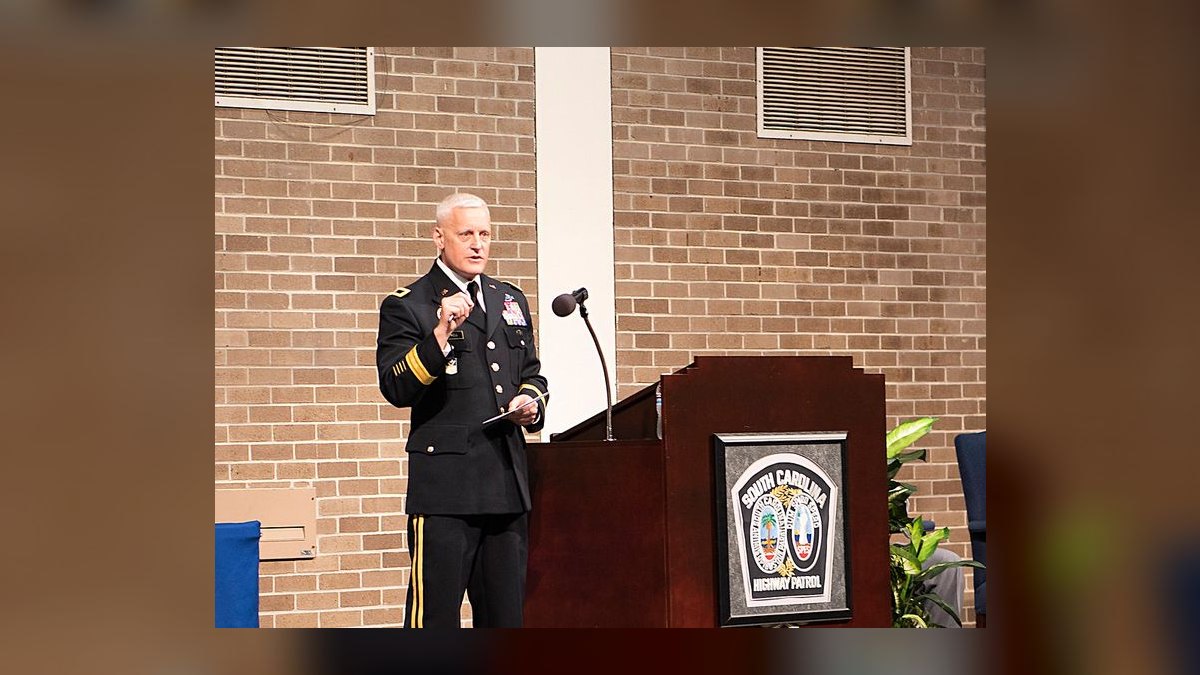
A high school graduation speech runs 3 to 7 minutes — roughly 500 to 800 spoken words — and works best when it names two or three specific shared memories, thanks teachers and families concretely, and closes on one clear line of encouragement. Authenticity beats eloquence: speak like a friend, not a lecturer.
What a graduation speech actually is and why the format matters
A high school graduation speech is a short piece of ceremonial oratory delivered to a mixed audience — graduates, parents, grandparents, teachers, administrators, and often younger siblings who stopped listening around minute two. That audience mix is the single most important structural fact about the assignment, and most first drafts ignore it. A speech written only for the graduating class becomes a string of inside jokes that leaves two-thirds of the room politely confused. A speech written only for parents becomes a sentimental essay the graduates tune out. The format demands a piece that works on both frequencies at once: specific enough that the class recognizes itself, universal enough that a grandmother in the eleventh row understands why the story matters.
The occasion also carries a fixed emotional job. Nobody attends a graduation ceremony to be informed. They attend to have a transition marked — to hear someone say out loud that the thing that just ended actually happened and actually counted. That is why the strongest speeches are heavy on acknowledgment and light on advice. A seventeen or eighteen-year-old dispensing life instruction to a room containing their own parents has a credibility problem; the same speaker describing what the last four years felt like has none, because they are the world's leading expert on that subject. Shift the ratio toward testimony and away from instruction and the speech immediately gets better.
Length matters more than speakers expect. Graduation ceremonies are logistically brutal — a class of 300 takes 25 to 35 minutes just to read names and cross the stage, and the whole event typically has to fit a 60 to 90 minute window before parking, catering, or the next ceremony creates real pressure. Administrators build the run of show around fixed blocks, and student speeches are the flexible ones. A speech that runs 4 minutes when 5 were allotted makes an administrator's day. A speech that runs 11 minutes when 5 were allotted eats someone else's slot and gets remembered for the wrong reason. Treat the time limit as a hard constraint, not a suggestion.
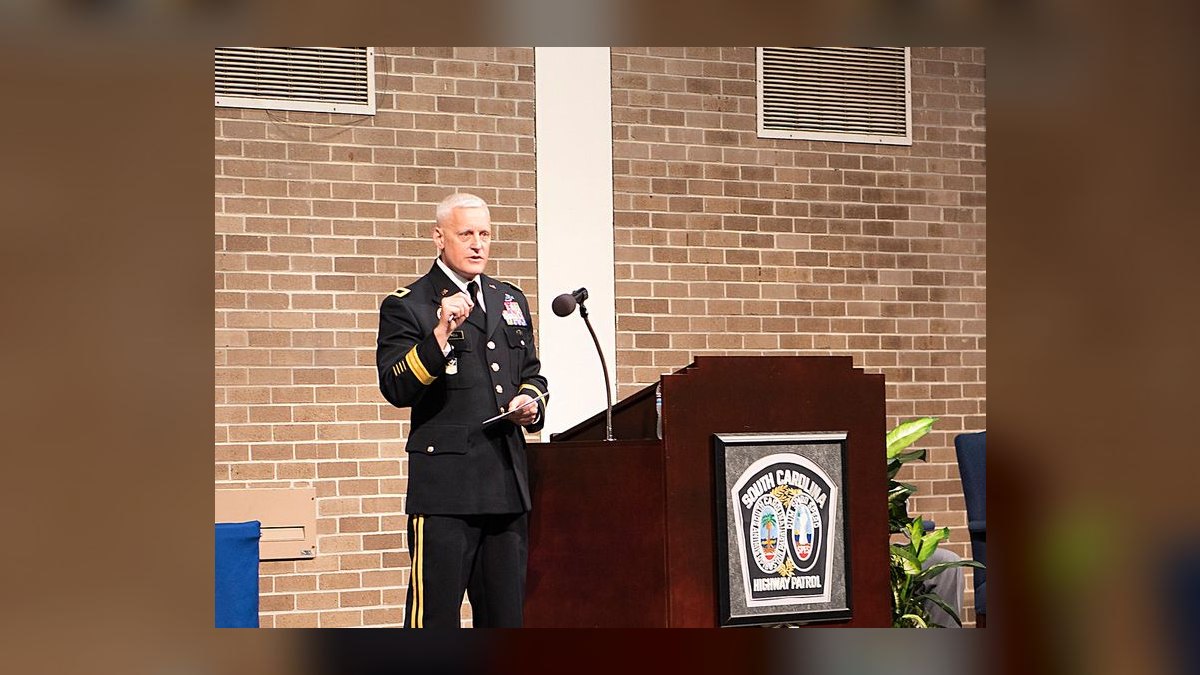
There is also the question of who is speaking and in what capacity. Valedictorian and salutatorian speeches carry an implicit academic frame, and the audience expects at least a nod to what the class learned. A class-president or student-elected speaker has more latitude toward humor and shared culture. A faculty or guest speaker — often a local business owner, a school board member, or an alum — carries a different burden: they must earn the right to be there by demonstrating they actually know something about this specific class, not just about graduations in general. Guest speakers who open with generic uplift lose the room in thirty seconds. Guest speakers who open with "I looked up your fall play and I heard the lighting rig fell over on opening night" own it.
Finally, understand what a graduation speech is not. It is not a eulogy for high school, not a résumé recital, not a thank-you list read aloud, and not a policy statement. Speakers who use the podium to settle scores, criticize the administration, or advocate a position unrelated to the occasion are usually cut off, and — practically speaking — schools increasingly require a script review precisely because that has happened. Know your school's review policy before you write, not after.
The step-by-step process for writing and rehearsing the speech
Work backward from the delivery date and treat this as a four-week project, not a weekend one. The single largest quality gap between speeches is not talent — it is rehearsal hours.
Week one — collect raw material. Do not write yet. Instead, spend two or three sessions of 20 minutes each making a list of everything that actually happened: the teacher who let the class eat lunch in their room, the game that went to double overtime, the week the heat broke in February, the fundraiser that made $340 less than the goal, the substitute nobody could pronounce the name of, the group chat that never died. Aim for 30 to 50 raw items. Text three or four classmates and ask them for their five. You are looking for the memories with the highest recognition-per-word ratio — the ones where a five-word reference produces a laugh across the entire class.
Week two — pick a spine and draft. From that list, choose one throughline. "We got good at improvising." "We learned to show up for each other." "This class never had a normal year." One sentence, written at the top of the page, that every paragraph must serve. Then draft long — 1,200 words is fine at this stage — pulling three or four items from the list as full anecdotes and letting the rest go. Do not polish. Getting the shape right matters more than getting the sentences right.
Week three — cut to time and rehearse aloud. Read the draft out loud with a timer. Most people speak ceremonial material at 110 to 140 words per minute, slower than the 150 to 180 of ordinary conversation, because the room is large and the pauses are longer. So a 5-minute slot is roughly 550 to 700 words, not the 900 a word-count-per-minute rule of thumb would suggest. Cut to fit with 15 percent margin — if you have 5 minutes, land at 4:15 in rehearsal, because live delivery expands with laughter, applause, and adrenaline pauses. Cut the weakest anecdote first, then adjectives, then any sentence that explains a joke.
Week four — rehearse for delivery, not content. By now the words should be stable. Run the speech eight to twelve times total: three times alone, twice in front of one person, once in the actual venue if you can get access, and the rest in the car or the shower. Record two of those runs on your phone and watch them with the sound off first — you are checking whether you look like a person or a lectern. Then listen with the screen off and count filler words. If "um" or "like" appears more than three or four times, the fix is not willpower, it is knowing the next sentence well enough that you do not need to buy time.
Two logistical steps get skipped and cause real problems. First, submit the script for review on the school's actual deadline, which is often 7 to 14 days before the ceremony — late submissions get speakers pulled. Second, do a microphone check in the venue. Outdoor stadium ceremonies, indoor gymnasiums, and rented auditoriums behave completely differently; a gym with a hard ceiling produces a slapback echo that makes fast talkers unintelligible, and a football field PA will swallow anyone who drifts more than six inches off the mic. Know which one you are walking into.
Timelines, word counts, and the practical numbers to plan around
Concrete planning numbers, because vague advice about "keeping it brief" is what produces eleven-minute speeches.
Speaking rate. Plan on 110 to 140 words per minute for ceremonial delivery. Nervous speakers naturally accelerate — a speaker who rehearses at 130 wpm alone will often hit 160 to 170 live, which compresses a 5-minute speech into 3:45 and, worse, strips out every pause that made a line land. The counter is to mark two or three deliberate three-second holds directly in the script, after the biggest emotional beats. Write "(PAUSE)" in caps. You will not remember to do it otherwise.
Word budgets by slot. A 3-minute slot is roughly 330 to 420 words. A 5-minute slot is 550 to 700. A 7-minute slot is 770 to 980. Anything past 7 minutes for a student speaker is unusual and should have been cleared with the administration. Write to the low end of the range; live delivery always runs longer than rehearsal.
Internal proportions. A workable split for a 5-minute speech: 30 to 45 seconds of opening and audience acknowledgment, 2 to 2.5 minutes of shared-memory storytelling, 45 to 60 seconds of thanks directed at teachers, staff, and families, 45 to 60 seconds of forward-looking message, and 15 to 20 seconds of closing. Notice that the "advice" block is the smallest one. That is intentional.

Anecdote count. Two to four specific stories, no more. Each full anecdote costs 60 to 120 words to set up and land. Six anecdotes in a 5-minute speech means each one gets 40 words, which is not enough to build a picture, and the speech turns into a list. It is better to tell three stories completely than seven partially.
Thank-you scope. Name individuals sparingly — three to six people maximum, and only those the whole room can place. Every named individual costs about 10 to 15 words and creates a small obligation to name the next person. The safer structure is to thank categories with one specific illustration each: "To the custodial staff who reset this gym four times in one week for the blood drive, the band concert, testing, and now this."
Rehearsal volume. Eight to twelve full run-throughs is the practical target. Below five, delivery is still script-bound. Above roughly fifteen, most speakers start sounding recited rather than spoken, and the material goes flat. If the speech starts feeling stale to you, that is usually the signal to stop rehearsing content and switch to rehearsing only the opening thirty seconds and the closing line, which are the two moments where nerves do the most damage.
Physical logistics. Print the speech in 16 to 18 point type on index cards or half-sheets, single-sided, numbered. Full-size paper shakes visibly and audibly on a live mic; cards do not. Do not staple — you cannot turn a stapled page one-handed at a podium. Bring two copies. Put a tissue in a pocket you can reach without turning your body away from the microphone.
Where speakers get it wrong
Trying to say everything. The most common failure is scope. A speaker tries to thank every teacher, reference every team, honor every club, and offer advice for college, trade school, military service, and gap years simultaneously. The result is a list with no shape. The audience cannot hold twelve themes; they can hold one. Anything that does not serve the throughline sentence written at the top of the page gets cut, no matter how much you like it.
Inside jokes with no on-ramp. A reference only 40 students understand produces a scattered laugh that sounds like failure in a room of 600 people. The fix is not to remove the reference — specificity is the whole point — but to add a five-word gloss so everyone can ride along: "For the parents: Mr. Alvarez's chemistry class had a rule that anyone who broke a beaker had to sing. We broke eleven beakers." Now the entire room is in on it, and the class gets its moment.
Borrowed openings. Starting with a dictionary definition, a Robert Frost quote, or a Steve Jobs anecdote signals that the speaker had nothing of their own. Quotes are not banned, but a quote should appear late and be earned — used to compress something you already demonstrated with your own material, not to substitute for it. If the quote could appear in any graduation speech at any school in the country, cut it.
Advice inflation. Speakers overestimate how much authority they have to instruct. "Follow your passion," "never give up," and "the future is yours" are not wrong; they are simply weightless, because the audience has heard them a hundred times and knows the speaker is repeating rather than reporting. Replace prescription with observation. Instead of "never give up," describe the specific time this class did not give up. The lesson lands on its own, and the audience gets to draw it themselves, which is why it sticks.
Reading verbatim with head down. A fully written script tempts the speaker to read it, which kills eye contact and flattens the vocal line into a monotone. Use cards with the opening and closing written out word for word — those two are worth memorizing exactly — and everything in between compressed to bullet cues. The middle should be known well enough to be spoken, not recited.
Fighting the emotion. Speakers who feel tears coming often accelerate to get through it, which is the worst option; the audience hears the wobble anyway and now the words are also rushed. The better move is to stop, breathe once, and name it briefly — "give me a second" — then continue. The room will wait. Applause frequently fills the gap, which buys additional recovery time.
A soft ending. Speeches that trail off with "so, yeah, thanks" waste all the goodwill built up over five minutes. The last line should be written, memorized, and delivered with the head up and the eyes on the back of the room, followed by a two-second hold before stepping away. That hold is what tells the audience to applaud.
Ignoring the room's actual mood. If the class lost a member, or the school went through something serious, a speech that pretends otherwise reads as tone-deaf. Acknowledge it early, briefly, with dignity, and then move forward — dwelling turns a graduation into a memorial, but skipping it entirely tells the room you were not paying attention.
Underestimating the mic. Speakers who have never used a live PA hold the microphone too low, turn away from a fixed podium mic when looking at the graduates, or blow into it to test it. Six to eight inches from the mouth, steady, and if you must look sideways at the class, turn your head and keep your chest square to the mic.
Choosing your approach: humor, sincerity, or the mix
The final decision is tonal, and it should be made deliberately rather than by default. There are three viable registers, and the right one depends on the class, the speaker, and the year.
Humor-forward works when the speaker is genuinely funny in ordinary conversation, the class had a broadly positive four years, and the ceremony is informal. It buys enormous goodwill in the first minute and keeps a restless audience engaged. It also carries the highest risk: a joke that dies in a gymnasium takes ten seconds to recover from, and the speaker has to keep going for four more minutes. If you choose this register, write a recovery line for your two biggest jokes and test all material on at least one adult who is not your friend.
Sincerity-forward works when the class has been through something difficult, when the speaker is not naturally a performer, or when the ceremony is formal. It is the lower-variance choice and almost never fails outright, though it can feel flat if the specifics are thin. Sincerity without concrete detail is just sentiment, and sentiment is the thing audiences forget fastest. If you go sincere, your anecdotes have to be sharper, not softer.
The blend — roughly 70 percent warmth with two or three placed laughs — is what most successful speeches actually are. Open light to relax the room, move into substance, land the emotional peak about two-thirds through, and close on a lifted, forward-looking note. The laughs are load-bearing: they earn the audience's attention for the serious part.
One more decision worth making consciously: whether to name the future at all. Some speakers close on where the class is going — college, work, service, the family business. That works when the class is genuinely varied and the speaker names the variety rather than assuming everyone is off to a four-year university. A closing that treats college as the default alienates the students headed into a trade, a job, or the military, and those students and their families are sitting right there. Naming the whole spread — "some of us start classes in August, some of us start shifts on Monday" — costs one sentence and includes the entire room.
Speakers with an interest in business sometimes want to work in what they have learned about work itself — a first job, a family company, how a school fundraiser cleared its revenue target after three failed attempts. That material can be excellent, because it is concrete and earned, but it needs to stay in service of the throughline rather than becoming a career pitch from the podium. One story about the fundraiser is a great illustration of persistence. Three minutes on it is a different speech.
Related questions
How long should a high school graduation speech be?
Three to seven minutes is standard, with five being the most common allotment. At a ceremonial pace of 110 to 140 words per minute, that is roughly 550 to 700 words for a five-minute slot. Rehearse to about 15 percent under your limit, since live delivery always expands.
Should I memorize the speech or use notes?
Use notes, but memorize the opening thirty seconds and the closing line exactly. Print bullet cues in 16 to 18 point type on numbered index cards, single-sided and unstapled. The middle should be known well enough to speak naturally rather than recited word for word.
What if I start crying at the podium?
Stop, breathe once, and say something brief like "give me a second." The room will wait and often applauds, which buys recovery time. Keep a tissue in a reachable pocket. Rushing through the emotion is worse — the audience hears it anyway, and now the words are lost too.
How do I thank teachers without it becoming a list?
Thank categories with one concrete illustration each rather than naming everyone. Three to six named individuals maximum, and only people the whole room can place. A single specific detail — a teacher who reopened the lab on a Saturday — carries more weight than ten names read aloud.
Can I open with a famous quote?
You can, but it is the weakest available opening because it signals borrowed material. Open with something only this class recognizes instead. If you use a quote, place it late, where it compresses something your own stories already proved, rather than substituting for them.
FAQ
How do I pick a theme for my graduation speech?
Write one sentence at the top of the page that every paragraph has to serve — something like "this class never had a normal year" or "we got good at showing up for each other." Derive it from your collected memory list rather than choosing it abstractly. Concrete beats lofty: "we learned to fail forward" outperforms "success" because it points at actual events you can then describe.
What is the best way to practice?
Run the full speech eight to twelve times: three alone with a timer, twice in front of one person, once in the actual venue if you can get access, and the rest anywhere. Record two runs on your phone. Watch one with the sound off to check whether you look present, then listen to the other with the screen off to count filler words. Stop rehearsing content past roughly fifteen runs — it starts sounding recited.
How do I handle the microphone?
Test it before the ceremony and learn whether it is a fixed podium mic, a handheld, or a lapel. Stay six to eight inches from a handheld, speak slightly louder than conversational, and keep your chest square to a fixed mic even when you turn your head toward the graduates. Never tap or blow into it — say "testing, one, two" instead. If it feeds back, pause and back off two inches rather than pushing through.
What do I do if a joke does not land?
Have a written recovery line ready for your two biggest jokes — something short and self-aware like "tough crowd, moving on" — then continue immediately without visible damage. Avoid material about grades, relationships, appearance, or any individual who has not agreed to it. Light self-deprecation is the safest humor available, but do not stack it; three self-jokes in a row reads as fishing for reassurance rather than being funny.
How do I write for students, parents, and teachers at the same time?
Address the groups explicitly once near the opening so everyone knows they were seen, then use shared experiences that work on multiple levels. Gloss any class-specific reference in five words so the whole room can follow. Rotate your eye contact deliberately among the graduates, the faculty section, and the family seating — most speakers stare at one section for the entire speech without realizing it.
What should I avoid saying entirely?
Skip anything that settles a score, criticizes staff or administration, singles out an individual negatively, or advocates a position unrelated to the occasion. Most schools now require a script review specifically because of incidents like these, and speakers who deviate from the approved text can be cut off mid-speech. Also skip any closing that assumes everyone is headed to a four-year college — name the whole range of what your classmates are doing next.
Sources
- Toastmasters International — Public Speaking Tips
- National Speech & Debate Association — Resources
- Edutopia — Public Speaking
- Harvard Graduate School of Education — Usable Knowledge
- American Psychological Association — Speaking of Psychology
- National Center for Education Statistics — Fast Facts
- TED — Playlists on Public Speaking
- Purdue Online Writing Lab — Public Speaking Resources
- Pew Research Center — Education
Related on PULSE
This page will be disappearing soon. Save it to your device for $1 — or read it free while it is here.
@Kory-White- · if Venmo asks, the last 4 of my number are 2012
This page is gone.
This one is off the shelf now. $1 keeps it on your phone for good — the whole page, pictures and diagrams included.
 pulse-speechesA Wedding Speech for a Same-Sex Wedding
 pulse-speechesA Retirement Speech for a CEO
 pulse-speechesA Speech for a Veterans Day Tribute
 pulse-speechesHow to Practice a Speech So It Sounds Natural in 2027
 pulse-speechesA Toast for a Christening
 pulse-speechesWhat Makes Patrick Henry’s “Give Me Liberty” a Great Speech in 2027
 pulse-speechesA Speech for a Customer Appreciation Event
 pulse-speechesA Wedding Speech for a Second Marriage
 pulse-speechesA Graduation Speech for a Kindergarten Graduation
 pulse-speechesWhat Makes David Foster Wallace’s “This Is Water” a Great Speech in 2027