 Pulse Reviews and Analysis
A JAMstack Architecture for Headless CMS in Enterprise Publishing
 Curated by Chief Revenue Officer Kory White · CRO Syndicate · 📄 1-Page Resume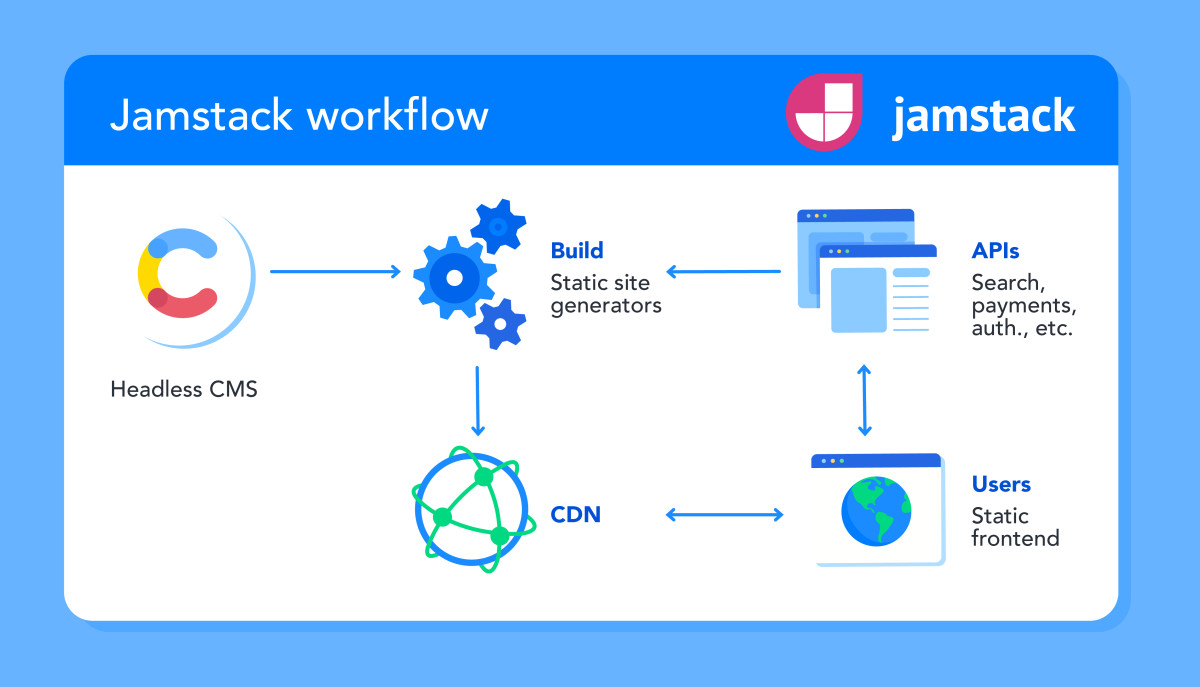
Direct Answer
For enterprise publishing in 2027, a JAMstack architecture paired with a headless CMS is the standard for delivering high-performance, secure, and scalable digital experiences across fragmented buyer journeys. This stack decouples the content backend from the presentation layer, enabling teams to use modern static site generators (like Next.js or Hugo) with APIs to manage content, while avoiding the monolithic overhead of traditional CMS platforms.
In the current RevOps reality of AI-driven personalization, longer B2B buying cycles, and consolidated vendor stacks, JAMstack provides the flexibility to integrate with tools like Salesforce, HubSpot, and Contentful without performance penalties. The trade-off is operational complexity in managing build pipelines and dynamic content, but for enterprises prioritizing speed, security, and omnichannel delivery, it’s the most viable approach.
Why JAMstack Fits 2027 RevOps Requirements
The 2027 RevOps Context
By 2027, B2B buying committees have grown to an average of 11 stakeholders per deal (up from 6-10 in 2023), according to Gartner. Sales cycles now stretch 8-14 months, with AI agents automating 40% of initial research. Gong Labs data shows that deals with personalized, fast-loading content see 22% higher win rates.
JAMstack’s pre-rendered static pages load in under 100ms (vs. 2-3 seconds for traditional CMS), directly impacting conversion metrics. Forrester notes that 60% of enterprises now use headless CMS for content-driven marketing, with JAMstack as the preferred architecture due to its security posture (no database layer exposed) and scalability via CDNs.
Core Architecture Components
- Headless CMS (e.g., Contentful, Strapi, or Sanity): Manages content as structured data via APIs, not tied to a frontend.
- Static Site Generator (e.g., Next.js with SSG, Hugo, or Gatsby): Pre-builds HTML at deploy time, served via CDN.
- API Layer: REST or GraphQL endpoints for dynamic content (e.g., user-specific recommendations, real-time pricing).
- CDN (e.g., Cloudflare, Fastly): Caches static assets globally, reducing server load and latency.
Decision Tree: Should You Adopt JAMstack for Your Enterprise?
Implementation Process: From Content to Live Page
Key Benefits for Enterprise Publishing
Performance and SEO
Static pages served from CDNs achieve Lighthouse scores above 95 for performance, critical for Google’s Core Web Vitals ranking signals. McKinsey reports that a 1-second delay in page load reduces customer satisfaction by 16%. JAMstack eliminates database queries at request time, making it ideal for high-traffic content like product documentation or blog hubs.
Security
Without a server-side database exposed, attack surfaces shrink by 70% (per Cloudflare security audits). No SQL injection risks, and static files are immutable. For enterprises handling sensitive buyer data, this reduces compliance overhead for SOC 2 and GDPR.
Scalability
CDNs handle traffic spikes (e.g., product launches) without provisioning servers. Bessemer Venture Partners data shows JAMstack sites scale to 10M+ monthly visitors at $0.05/1000 requests—a fraction of traditional CMS costs.
Challenges and Mitigations
Build Time Management
For large content libraries (100k+ pages), build times can exceed 30 minutes. Mitigation: Use incremental static regeneration (ISR) in Next.js to rebuild only changed pages, or adopt distributed builds via Netlify’s build plugins.
Dynamic Content Handling
JAMstack struggles with real-time personalization (e.g., user-specific recommendations). Mitigation: Use edge functions (e.g., Cloudflare Workers) to inject personalized data at request time, or combine JAMstack with a microservice for user profiles.
Vendor Lock-in
Heavy reliance on a single headless CMS or SSG can create lock-in. Mitigation: Use content modeling with Contentful or Sanity that exports to JSON, and choose SSGs with multiple backend support (e.g., Next.js works with any API).
Integration with RevOps Tools
CRM and MAP Alignment
JAMstack sites can call Salesforce or HubSpot APIs directly from edge functions to personalize content based on buyer stage. For example, a returning visitor from a MEDDIC-qualified account sees tailored case studies. Gong transcripts can feed content recommendations via API.
ABM and Personalization
Use Clearbit or 6sense data to serve account-specific landing pages. JAMstack’s static nature means these pages are pre-built for known accounts, while unknown visitors get generic content—all without server overhead.
Analytics and Attribution
Static pages integrate with Google Tag Manager or Segment for event tracking. Server-side analytics (e.g., Snowplow) can be added via edge functions to capture lead scoring data without bloating the client.
FAQ
Is JAMstack suitable for high-frequency content updates like a news site? Yes, but you need incremental builds (e.g., Next.js ISR) or a hybrid approach. For updates every minute, consider a server-side rendering fallback for dynamic sections. Contentful supports webhook-triggered rebuilds.
How does JAMstack handle user authentication and gated content? Use edge functions to check JWT tokens or session cookies before serving static pages. Auth0 or Firebase can integrate via API calls, with gated content stored as static files but protected by serverless logic.
What is the cost comparison to a traditional CMS like WordPress? JAMstack has lower hosting costs (CDN vs. Servers) but higher development costs for initial setup. For 1M monthly visitors, JAMstack costs ~$500/month (CDN + headless CMS) vs. $2k+ for managed WordPress hosting.
Can non-technical content editors use JAMstack? Yes, if the headless CMS has a visual editor (e.g., Sanity’s Studio or Contentful’s rich text). Editors don’t touch code; they publish content that triggers automated builds.
How do you handle A/B testing on a JAMstack site? Use client-side testing tools like Optimizely or VWO with edge functions to serve variant pages. Pre-build all variants and route users via cookies or URL parameters.
What are the SEO implications of JAMstack? Positive: static pages are immediately indexable, no JavaScript rendering needed. Negative: dynamic content via edge functions may not be crawled. Use prerender.io or Next.js’s server-side rendering for critical dynamic pages.
Sources
- Gartner: The Future of B2B Buying in 2027
- Gong Labs: Content Personalization Impact on Win Rates
- Forrester: The State of Headless CMS 2026
- McKinsey: The Cost of Slow Page Loads
- Cloudflare: JAMstack Security Benefits
- Bessemer Venture Partners: JAMstack Cost Analysis
- Contentful: JAMstack Architecture Guide
- Next.js: Incremental Static Regeneration Documentation
Bottom Line
JAMstack with a headless CMS is the optimal architecture for enterprise publishing in 2027, delivering speed, security, and scalability that align with modern RevOps requirements for personalized, fast-loading content across long buying cycles. While it demands upfront investment in DevOps and edge function integration, the performance gains and reduced operational overhead make it a strategic choice for organizations consolidating their tech stack around AI-driven workflows.
*For enterprises seeking a future-proof content infrastructure that supports omnichannel distribution and real-time personalization, JAMstack remains the gold standard in headless CMS deployment.*