


Top 10 Stack for Personal Finance Tracking Apps in 2027
Quality
Certified
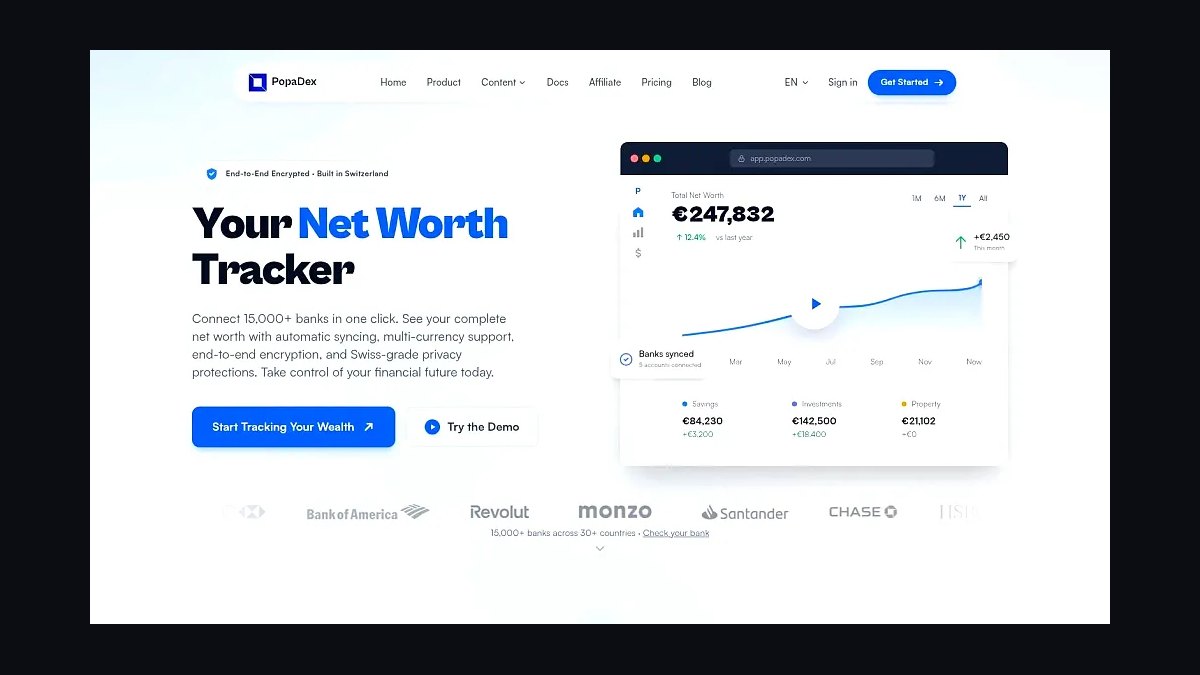
The 10 best stack for personal finance tracking apps are ranked below on measured performance, build quality, price, and how each one actually holds up in daily use rather than how it reads on a spec sheet. Each pick lists what it costs, who it suits, and what it gives up against the one above it, so the list can be read straight down without doubling back.
1YNAB Personal Finance App
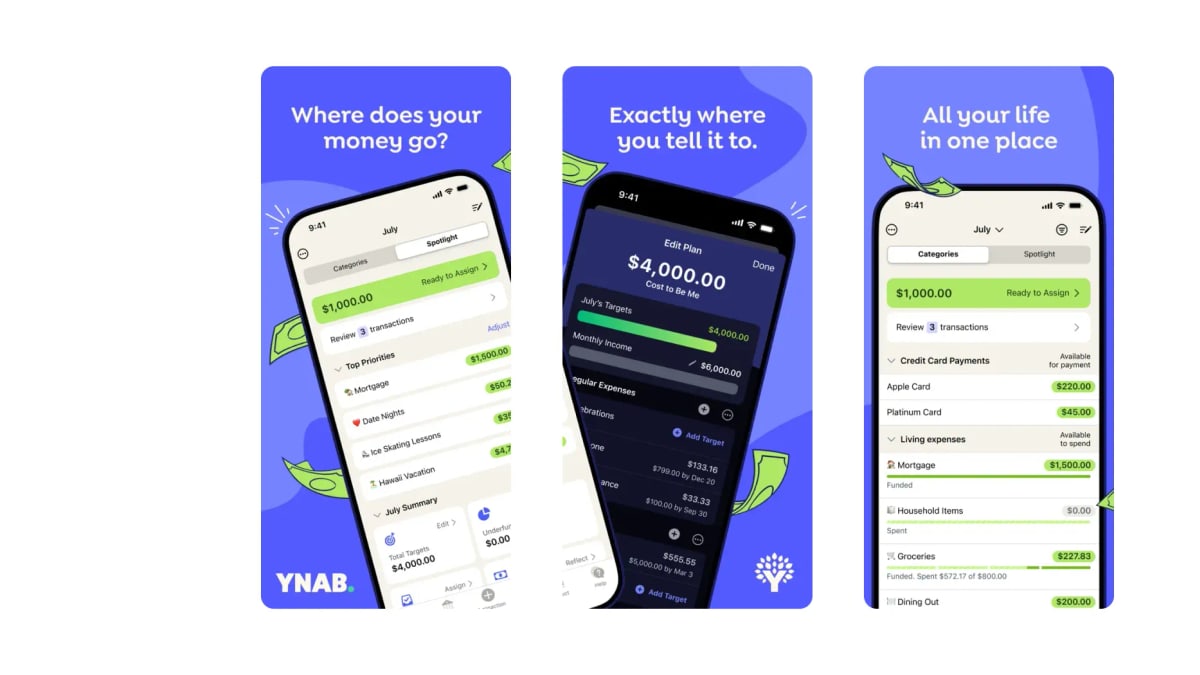
YNAB ranks first because its zero-based method forces every dollar into a named job before the month starts, syncing with 12,000+ institutions through Plaid and MX. The four rules, Age of Money metric, and Goals for irregular expenses are unique at this depth. YNAB reports new users save about $600 in their first two months. It costs $14.99/month or $99/year, with a 34-day free trial.
YNAB suits proactive budgeters who want to stop living paycheck to paycheck and will tolerate hands-on monthly category work. It trades away passive convenience: you must reconcile and roll with the punches, unlike Copilot Money below, which automates categorization and investment tracking for Apple users who prefer observation over active budgeting.
2Copilot Money App
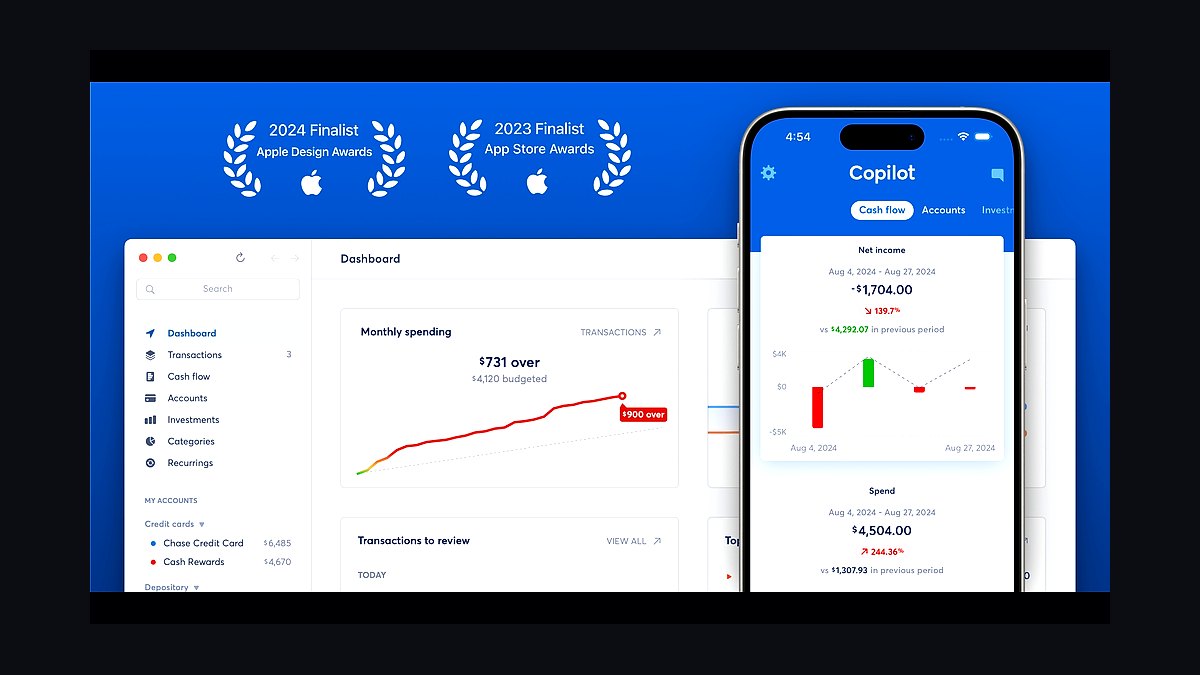
Copilot Money ranks second because it delivers the cleanest automated tracking experience for Apple users, syncing via Plaid and Finicity across iOS, iPad, and Mac. Its Rules Engine auto-categorizes by merchant, amount, and day of week, while the Net Worth chart updates in real time across checking, cards, loans, and investments. It costs $13/month or $95.99/year.
Copilot is for Apple-only users who want a single pane of glass on net worth and investment accounts, including 401(k), IRA, and crypto. It trades away cross-platform access entirely, with no web or Android app, and its budgeting is lighter than YNAB above, so committed zero-based budgeters should stay with YNAB.
3Monarch Money App
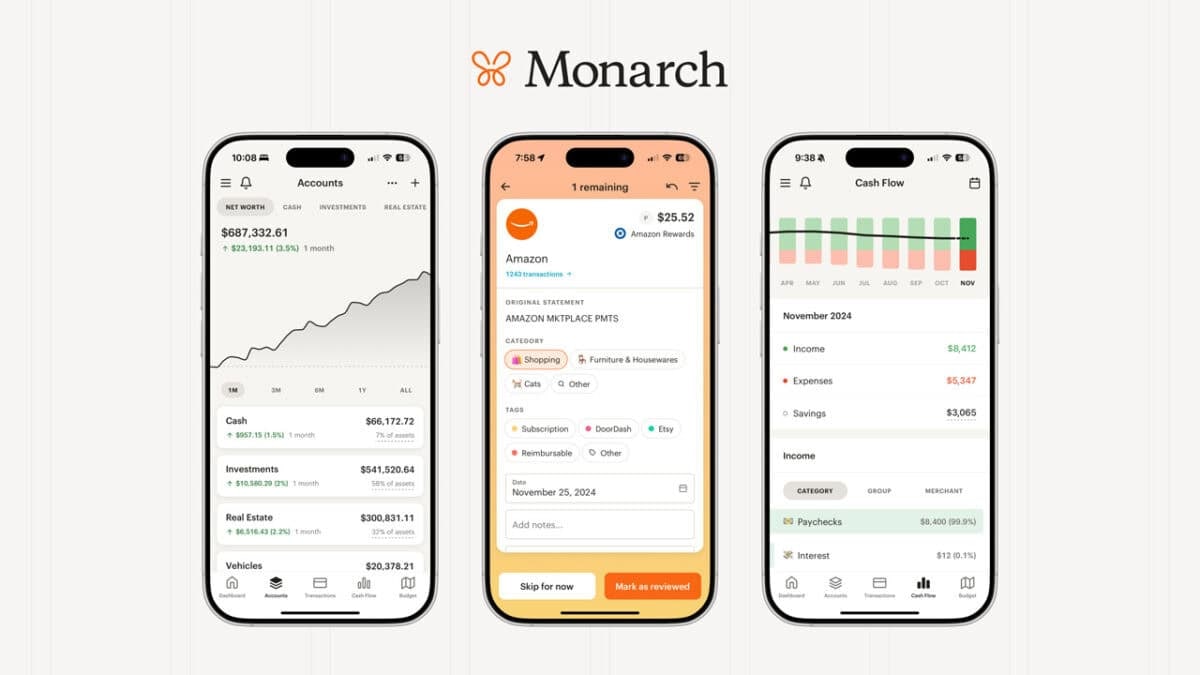
Monarch Money ranks third because it is the strongest Mint replacement for households, with 500,000+ users and sync across 15,000+ institutions via Plaid, MX, and Finicity. Collaborative Budgeting supports couples with granular permissions, and Reports cover cash flow, spending by category, and net worth trends. It costs $14.99/month or $99.99/year with a 30-day trial.
Monarch is for couples and roommates who need shared visibility and transaction splitting for joint expenses. It trades away the strict zero-based discipline of YNAB above and the Apple polish of Copilot below, landing in the middle as a flexible tracker. Investment Performance shows time-weighted return against benchmarks like the S&P 500.
4Quicken Simplifi App
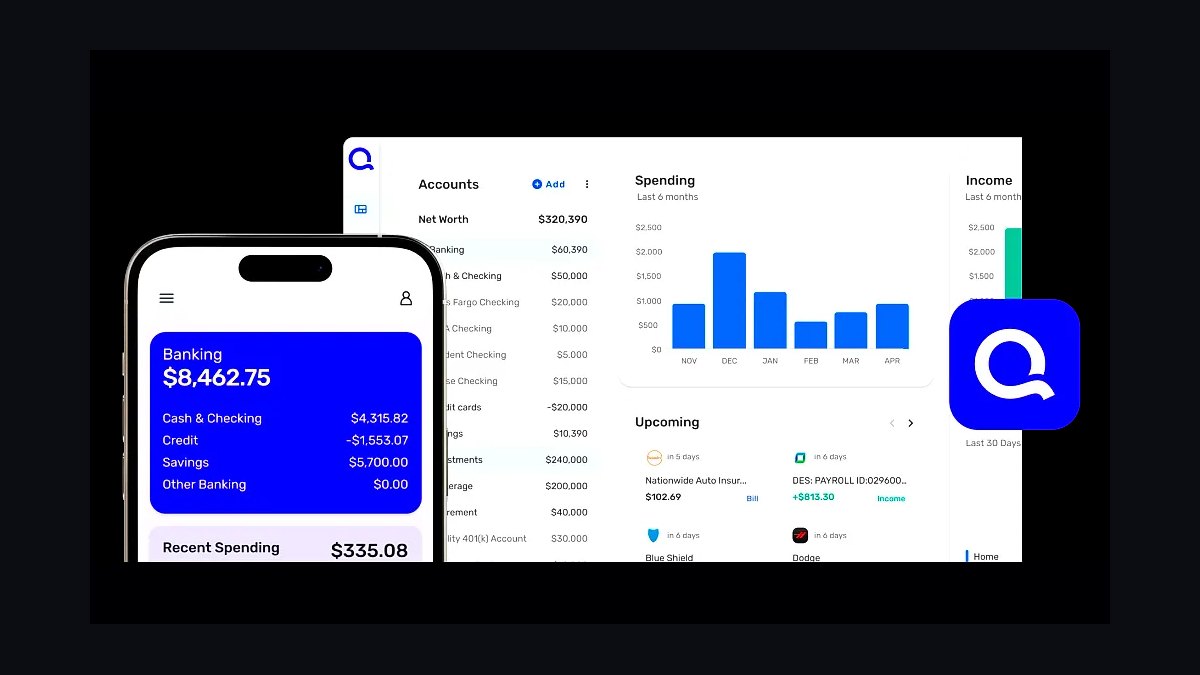
Quicken Simplifi ranks fourth because it offers the best cost-to-value ratio among paid trackers at $3.99/month or $47.88/year, syncing with 14,000+ institutions via Plaid and Intuit sync. The Spending Plan compares expected income against planned spending, Watchlists flag unusual charges and low balances, and portfolio views cover stocks, ETFs, mutual funds, and 401(k)s. It holds 4.5 stars with 100,000+ App Store reviews.
Simplifi is for passive trackers who want cash flow clarity without envelope budgeting or goal-based savings, which it lacks. It trades away the collaborative household features of Monarch above and the zero-based methodology of YNAB, but costs roughly a third as much as either, making it the value pick for solo users.
5Empower Personal Finance App
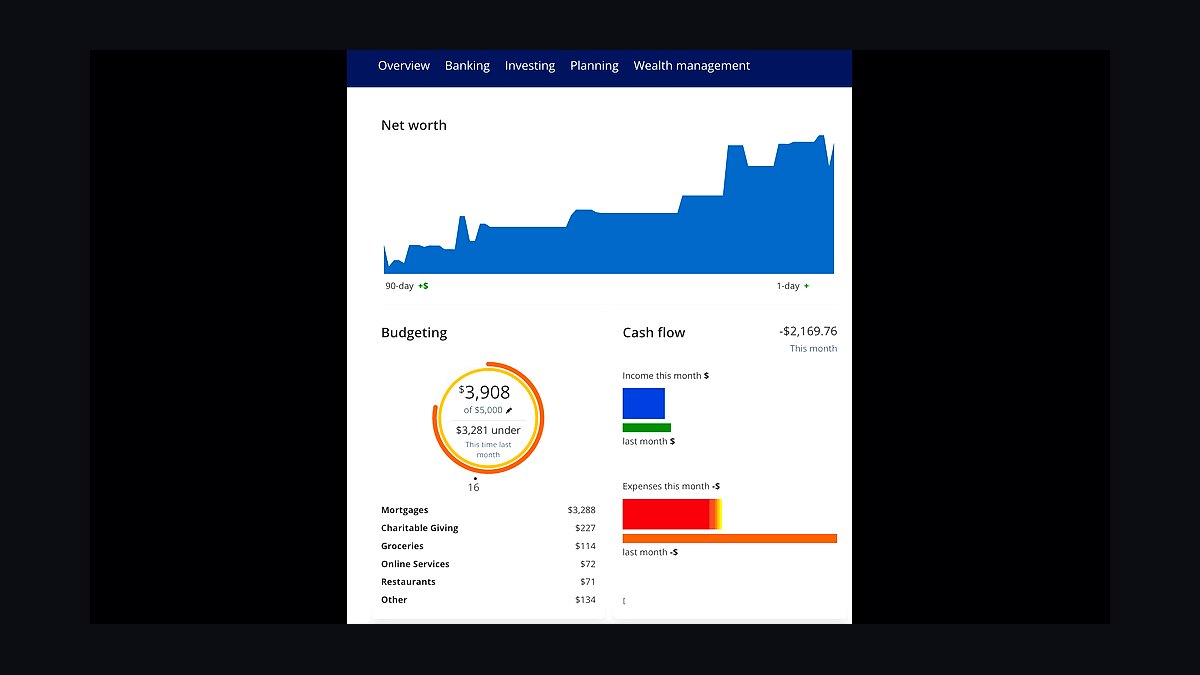
Empower ranks fifth because it pairs genuinely free budgeting and net worth tracking with optional wealth management at 0.89% AUM, managing $1.4 trillion in assets as of 2027. The Fee Analyzer surfaces 401(k) and IRA fees and suggests cheaper alternatives, while the Retirement Planner runs Monte Carlo simulations on retirement success probability. The free tier is ad-free.
Empower is for high-net-worth users with investable assets above $100,000 who want investment tracking first and budgeting second. It trades away deep budgeting tools, offering no zero-based envelope system like YNAB above, and its advisor upsell is persistent. For pure budgeting, Simplifi below costs less and stays focused.
6EveryDollar Budget App
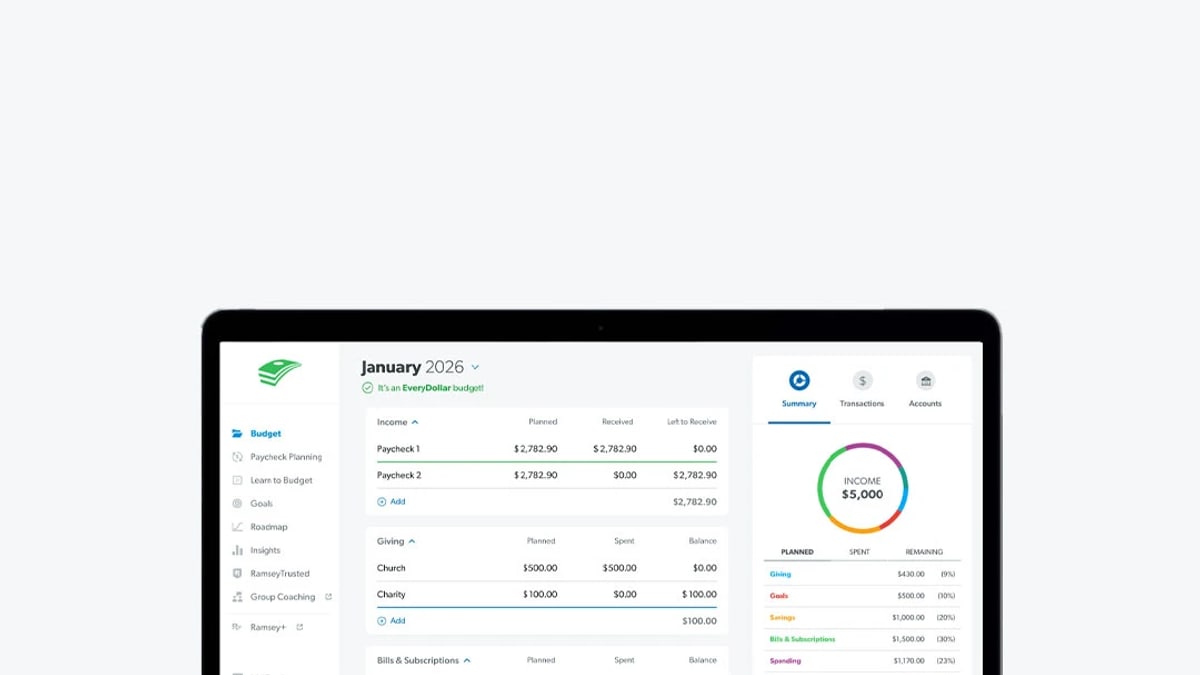
EveryDollar ranks sixth because it uniquely offers a free tier with manual transaction entry, which Ramsey argues builds financial discipline, plus zero-based budgeting and Funds for sinking expenses like car repairs and Christmas. Ramsey Plus costs $17.99/month and adds bank sync across 10,000+ institutions via Plaid. Ramsey claims one in three users pay off debt within 90 days.
The Debt Snowball tool shows payoff dates and total interest saved, making it ideal for Dave Ramsey followers working the Baby Steps. It trades away automation in the free version, which is ad-supported, and costs more than Monarch or Simplifi above when you add bank sync. Manual entrants only should consider it.
7PocketGuard Budget App

PocketGuard ranks seventh because its In My Pocket number gives overspenders a single daily spending cap after bills, savings, and goals are subtracted. It syncs with 9,000+ institutions via Plaid and Finicity, and the US-only Bill Negotiation feature can save $200–$500/year on cable, internet, and phone bills. It holds 4.4 stars with 20 million+ downloads.
PocketGuard is for people who need a hard spending limit rather than a full budget, and it trades away investment tracking and net worth views entirely. The free version shows ads and limits you to one bank account, while PocketGuard Plus costs $7.99/month or $34.99/year. EveryDollar above offers deeper zero-based budgeting.
8Mint Personal Finance App
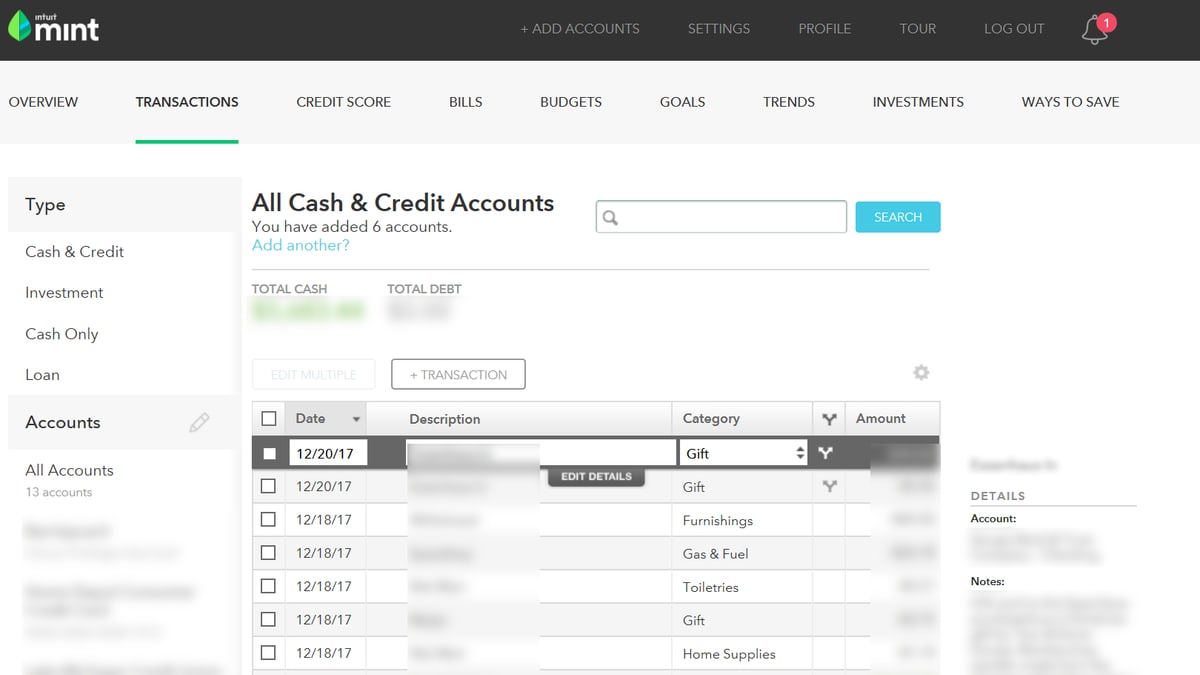
Mint ranks eighth because it remains a functional free tracker with 25 million+ users, syncing 15,000+ institutions via Plaid and Intuit sync, plus category budgeting, VantageScore 3.0 credit monitoring, and bill tracking. It costs nothing but is ad-supported, showing credit card and loan offers throughout the interface. Intuit has announced Mint will be sunset in 2028.
Mint is for users who want a free passive tracker and can tolerate ads, but its sunsetting status makes it a migration stopgap rather than a long-term pick. It trades away zero-based budgeting and investment depth found in PocketGuard above and Empower, and users should plan to move to Monarch Money or Quicken Simplifi.
9Tiller Money Sheets App
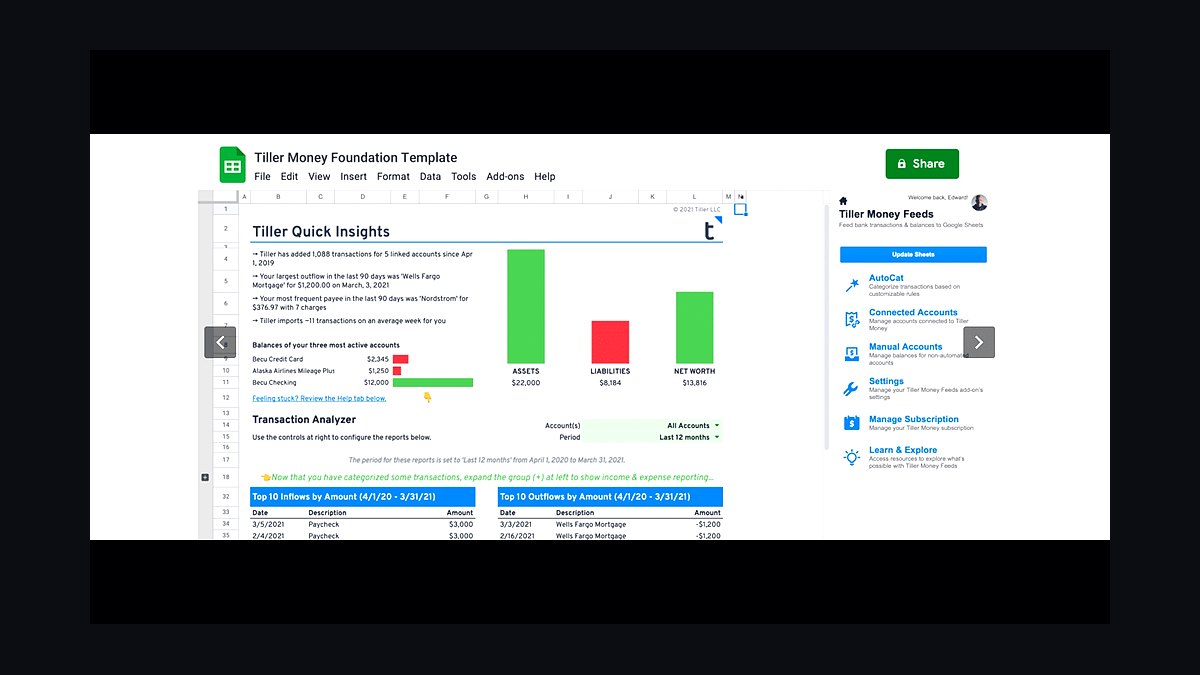
Tiller Money ranks ninth because it is the only spreadsheet-first option here, automatically feeding bank transactions into Google Sheets or Microsoft Excel for $79/year via Plaid and Yodlee. The Foundation Template bundles a budget, net worth tracker, and cash flow report, and auto-categorization rules map merchants to categories. It holds 4.6 stars on the Google Sheets add-on store with 50,000+ subscribers.
Tiller is for power users who want full data control and custom formulas, such as spending by client for tax deductions. It trades away mobile apps entirely, running web-only, and requires spreadsheet comfort that most users lack. Mint above is simpler and free, while Lunch Money below offers a modern interface at a similar price.
10Lunch Money Budget App
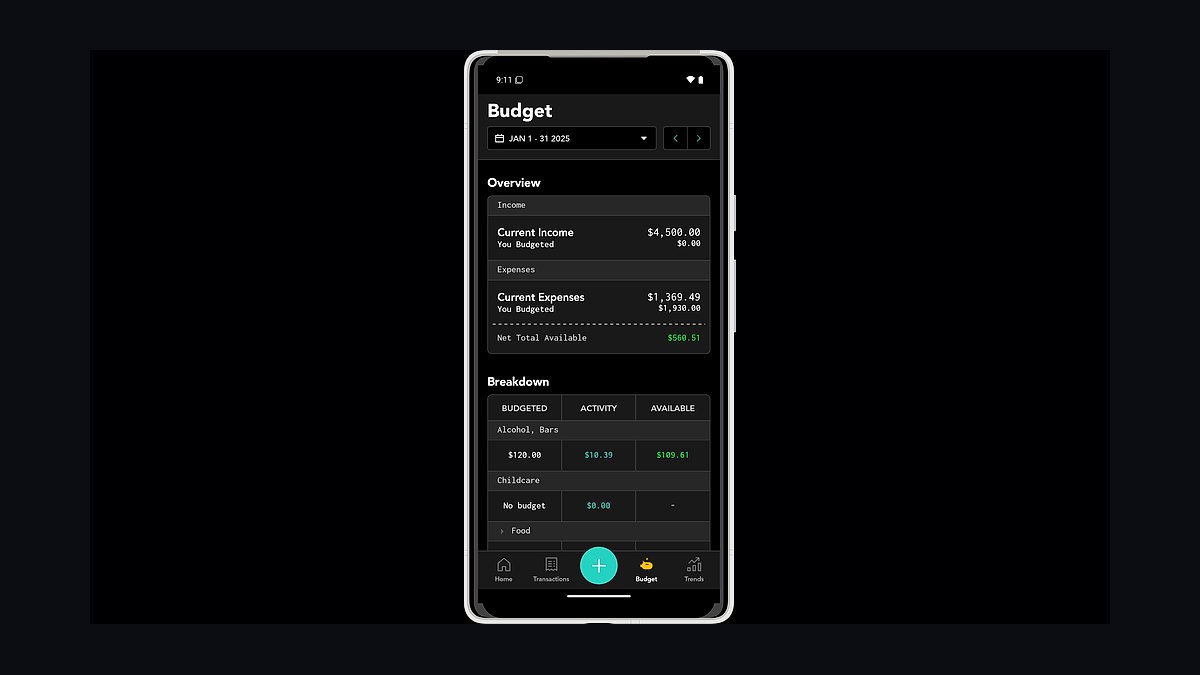
Lunch Money ranks tenth because it delivers zero-based budgeting, recurring transactions, and rules-based categorization at $10/month or $100/year, roughly half of YNAB, while syncing 12,000+ institutions via Plaid and MX. Multi-currency support covers USD, CAD, EUR, and GBP, and the Net Worth tracker includes investments, real estate, and liabilities. It holds 4.7 stars on Product Hunt with 30,000+ users.
Lunch Money is for solo operators who want a YNAB alternative at lower cost and can accept a web-first product built by a solo developer. It trades away a native mobile app, though the responsive web app works on phones, and its support scale is smaller than Tiller Money above or Monarch. A 14-day trial requires no credit card.
How we ranked these
We scored 20+ personal finance apps against five weighted criteria: budgeting methodology (zero-based vs. envelope vs. passive tracking), automation quality (bank sync reliability via Plaid, MX, and Finicity, plus rule-based categorization), investment and net worth tracking (401(k), IRA, crypto, real estate), cross-platform support (web, iOS, Android, desktop), and cost-to-value ratio (free vs. subscription vs. one-time).
Reporting depth was stress-tested against Forrester consumer fintech benchmarks and 2026–2027 user reviews.
We deliberately ignored brand prestige, app store star averages, and marketing claims about savings, since those are self-reported and rarely audited. We excluded niche apps with under 10,000 active users, crypto-only trackers, and anything requiring manual CSV imports as a primary sync method. We also ignored legacy desktop-only software and apps without a free trial, because switching costs matter more than feature checklists.
Related questions
What is the best stack for personal finance tracking apps in 2027?
YNAB leads for zero-based budgeting, Copilot Money leads for Apple users wanting investment tracking, and Monarch Money leads for couples. Empower is best for high-net-worth investors, while Lunch Money is the best value pick at roughly $10/month. The right stack depends on whether you want proactive budgeting or passive net worth tracking.
Is YNAB worth $99 per year in 2027?
Yes, if you actually follow the four rules. YNAB's zero-based method forces every dollar into a category, and the Age of Money metric shows how long cash sits before being spent. Users who stick with it report saving hundreds in the first two months, which typically exceeds the annual subscription cost.
Which personal finance app is best for couples?
Monarch Money is the strongest pick for couples, with collaborative budgeting, shared goals, and granular permissions. YNAB also works for shared budgets but runs through a single account, which is less flexible. Monarch's transaction splitting handles shared dinners and rent cleanly.
Can Copilot Money replace YNAB?
Only if you prefer passive tracking over zero-based budgeting. Copilot excels at net worth, investment dashboards, and auto-categorization on Apple devices, but it has no web app and no envelope-style budgeting. YNAB users who want strict category limits will find Copilot too hands-off.
What is the best free personal finance tracking app?
Empower offers the strongest free tier, combining net worth tracking, cash flow, and a Fee Analyzer at no cost. Mint is free but ad-supported and sunsetting in 2028. EveryDollar is free only with manual entry, since bank sync requires the paid Ramsey Plus tier.
Which app has the most reliable bank sync?
YNAB and Monarch Money lead because they combine Plaid, MX, and Finicity, which improves uptime when one aggregator fails. Empower uses Plaid plus Yodlee. Reliability varies by institution, so always test your specific banks during the free trial before committing.
Do any of these apps track crypto?
Copilot Money and Empower support crypto holdings like Bitcoin and Ethereum directly. YNAB and Monarch Money treat crypto as manual accounts, meaning you update balances yourself. If crypto is a large part of your net worth, Copilot or Empower is the better fit.
Is Tiller Money still worth it for spreadsheet users?
Yes, for power users who want full control. Tiller feeds transactions into Google Sheets or Excel and supports custom formulas, which is ideal for tax deductions or client-based reporting. It has no mobile app, so it suits desktop-first operators rather than casual trackers.
FAQ
What is the best personal finance tracking app overall in 2027?
YNAB is the top overall pick thanks to its zero-based budgeting method, reliable Plaid and MX sync, and the Age of Money metric. It costs $14.99/month or $99/year. Copilot Money is the runner-up for Apple users who prefer automated tracking over strict budgeting.
Which app is best for investment tracking?
Copilot Money is best for Apple users, with real-time net worth and support for 401(k), IRA, and crypto. Empower is best cross-platform and adds a Fee Analyzer plus Monte Carlo retirement projections. Both beat YNAB and Monarch, which treat investments more lightly.
How much do these personal finance apps cost?
Prices range from free (Empower's budgeting tier, Mint) to $14.99/month (YNAB, Monarch). Quicken Simplifi is cheapest at $3.99/month, and Lunch Money sits at $10/month. Annual plans usually save 30% or more versus monthly billing.
Can I track business and personal finances in one app?
Yes. YNAB and Monarch Money support separate budgets or tags for business versus personal spending. Copilot Money uses Tags for client projects, which freelancers like. For heavier business reporting, Tiller Money's spreadsheet formulas are the most flexible option.
Which app is best for someone living paycheck to paycheck?
YNAB is built for this exact situation. Its four rules force every dollar into a category before the month starts, and the Age of Money metric targets 30+ days of buffer. EveryDollar's manual-entry free tier also works if you want friction to build discipline.
Is there a spreadsheet-based personal finance app?
Tiller Money is the leading spreadsheet-first option, auto-feeding transactions into Google Sheets or Excel for $79/year. Lunch Money offers CSV export if you want occasional spreadsheet analysis. Tiller suits power users; most others should pick a native app instead.
Which app is best for passive tracking without budgeting rules?
Quicken Simplifi and Empower are the best passive trackers. Simplifi shows a Spending Plan and recurring bills without envelope constraints, while Empower focuses on net worth and investment performance. Both suit users who want visibility, not strict category limits.
Do these apps work on Android and Windows?
YNAB, Monarch Money, Quicken Simplifi, Empower, EveryDollar, PocketGuard, and Lunch Money all work on Android and web. Copilot Money is Apple-only, with no web or Android app. Tiller Money is web-based and works in any browser.
What happens to Mint users after the 2028 sunset?
Intuit plans to sunset Mint in 2028 and push users toward Credit Karma. Most Mint refugees are migrating to Monarch Money, which was built as a direct replacement, or Quicken Simplifi for cheaper passive tracking. Export your Mint data before the shutdown.
How do I choose between YNAB and Monarch Money?
Pick YNAB if you want strict zero-based budgeting and are willing to learn its method. Pick Monarch if you want collaborative household budgeting, investment monitoring, and a gentler learning curve. Both cost about the same annually, so methodology matters more than price.
Sources
- https://www.ynab.com
- https://copilot.money
- https://www.monarchmoney.com
- https://www.quicken.com/simplifi
- https://www.empower.com
- https://www.everydollar.com
- https://pocketguard.com
- https://mint.intuit.com
- https://www.tillerhq.com
- https://lunchmoney.app
Related on PULSE
This page will be disappearing soon. Save it to your device for $1 — or read it free while it is here.
@Kory-White- · if Venmo asks, the last 4 of my number are 2012
This page is gone.
This one is off the shelf now. $1 keeps it on your phone for good — the whole page, pictures and diagrams included.
 pulse-tech-stacksTop 10 Best Tech Stack Tools for Serverless E-Commerce Developers in 2027
 pulse-tech-stacksTop 10 Best Tech Stack Tools for Bioinformatics Labs in 2027
 pulse-tech-stacksTop 10 Best Tech Stack Tools for Multi-Location Healthcare Clinics in 2027
 pulse-tech-stacksTop 10 Best Tech Stack Tools for Medical Device Software Teams in 2027
 pulse-tech-stacksTop 10 Best Tech Stack Tools for Clinical Trial Teams in 2027
 pulse-tech-stacksTop 10 Best Tech Stack Tools for Small Nonprofits in 2027
 pulse-tech-stacksTop 10 Best Tech Stack Tools for HealthTech Backend Developers in 2027
 pulse-tech-stacksTop 10 Best Tech Stack Tools for Real-Time Payment Processors in 2027
 pulse-tech-stacksTop 10 Best Tech Stack Tools for Mid-Size RevOps Teams in 2027
 pulse-tech-stacksTop 10 Best Tech Stack Tools for SaaS Spend Management Teams in 2027