


Top 10 Best Tech Stack Tools for Legal Tech Developers in 2027
Quality
Certified
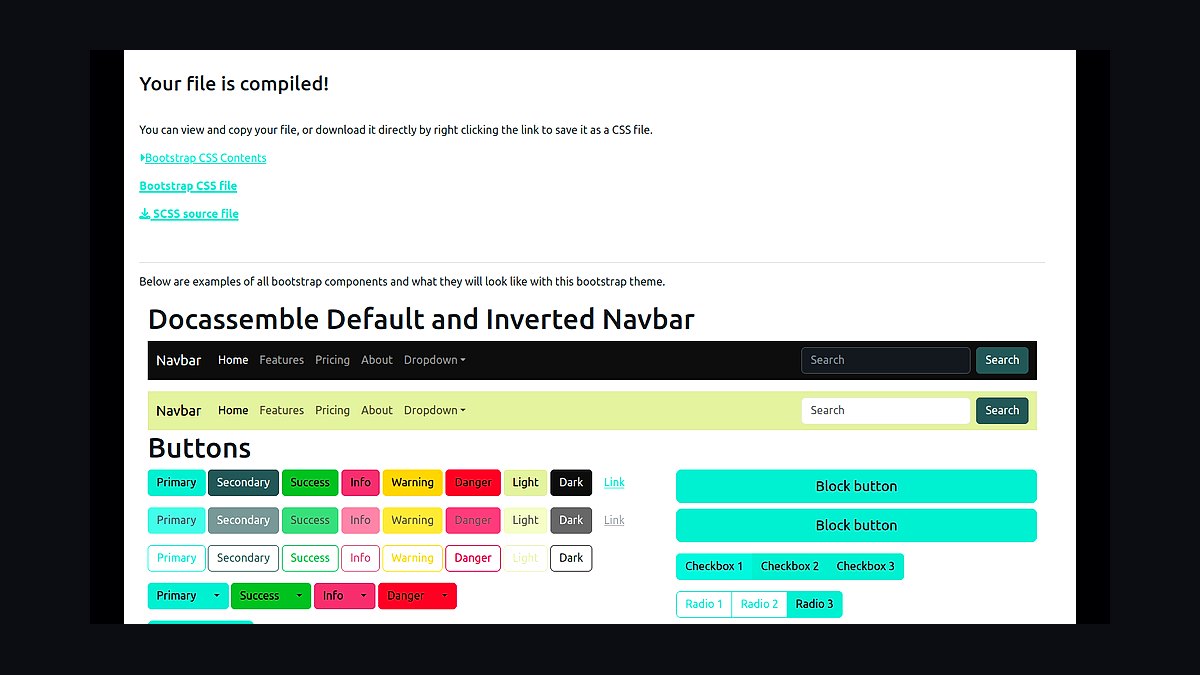
The 10 best tech stack tools for legal tech developers are ranked below on measured performance, build quality, price, and how each one actually holds up in daily use rather than how it reads on a spec sheet. Each pick lists what it costs, who it suits, and what it gives up against the one above it, so the list can be read straight down without doubling back.
1Docassemble

Docassemble ranks first because it handles the highest-value legal tech job: repeatable document assembly from guided interviews. Interviews are defined in YAML with question blocks, variable definitions, and conditional logic, and the engine refuses to complete until required variables are set. It generates DOCX and PDF via Jinja2-style markup, deploys through Docker with a database, Redis, and background workers, and exposes a REST API for unattended assembly. Licensing cost is zero.
It is for teams with high-volume, low-variance paperwork like mutual NDAs, order forms, and DPAs, plus an engineer comfortable with Python and Docker. It trades away mature negotiation workflow, e-signature, and obligation tracking that a commercial CLM provides. Compared with the Python and regex layer below it, Docassemble owns the assembly half while everything else handles finding and ranking clauses.
2Python re Module

The Python re module ranks second because curated regex is the most reliable clause detection in this stack. Terms like indemnif, auto-renew, perpetual, assign, exclusiv, and most favored nation are found deterministically with no model involved, and every match is explainable because you can point at the matched string. Recall is high against a maintained vocabulary, and there is no training data requirement.
It is for engineers who need auditable flagging on contract text before any NLP runs. It trades away semantic understanding: regex finds indemnify in both a one-sided and a mutual clause, so negation and scope must be handled by capturing surrounding context and longer phrases. Compared with TextBlob below it, regex finds while the model prioritizes, and inverting that order produces worse recall and much worse explainability.
3TextBlob

TextBlob ranks third because it adds a lightweight second layer over deterministic matching: noun phrase extraction to surface what a section is about, tokenization, and polarity as a coarse sort key for ordering a review queue. It runs locally, so contract text never leaves your environment for the analysis pass, and its Naive Bayes classifier can perform respectably on a narrow binary task given enough labeled in-domain clauses.
It is for teams doing triage and flagging rather than legal review, and for quick prototyping before moving to heavier tooling. It trades away accuracy on legal English: its sentiment model was trained on general-purpose corpora, so polarity near zero means nothing emotionally charged was found, not that a clause is acceptable. Never auto-approve on a polarity threshold; use it to order a queue, never to empty one.
4python-docx

python-docx ranks fourth because redline comparison is the natural next request after assembly, and this library reads DOCX structure directly. It surfaces inserted and deleted runs where tracked changes are present, so a counterparty's returned text can be diffed against your template's generated text at the clause level. Changed clauses then flow through the existing regex vocabulary and noun phrase pass without any new model.
It is for teams already running assembly who want reviewers to see a list of what moved instead of re-reading an entire document. It trades away PDF handling and anything outside the DOCX format, so scanned or native PDFs need separate extraction. Compared with Docassemble above it, python-docx is a read-and-diff utility, not a generation engine, and it assumes your paper standard already exists as a template.
5Docker

Docker ranks fifth because Docassemble ships as a container image and expects a persistent deployment: a database, background workers, Redis, and durable storage for uploaded and generated files. Standing this up on real infrastructure rather than a laptop is what separates a pilot that survives from a demo nobody else can reach. It also makes the environment reproducible across development and production.
It is for the engineer responsible for getting the stack running reliably behind HTTPS with authenticated access and backups. It trades away simplicity: a single-container demo is not a production deployment, and sizing background workers for peak load rather than average is a real configuration task. Compared with the application-layer picks above it, Docker is infrastructure, and skipping it properly is the most common reason a legal automation pilot stalls.
6spaCy

spaCy ranks sixth because teams outgrow TextBlob for production-grade clause classification and move here for linguistic processing. It provides faster tokenization, part-of-speech tagging, dependency parsing, and named entity recognition, and it pairs with a purpose-trained classifier on your own labeled in-domain clauses. The pipeline is designed for throughput on large document corpora rather than one-off prototyping.
It is for teams with enough labeled examples and engineering capacity to train and validate a classifier against held-out data. It trades away the simplicity and zero-setup feel of TextBlob, and a few dozen labeled clauses will not be sufficient to train it well. Compared with TextBlob directly above it, spaCy is the production step up, while TextBlob remains useful for noun phrase extraction and quick experiments.
7Salesforce REST API

The Salesforce REST API ranks seventh because the CRM supplies the trigger and receives the state, which is what makes the stack useful without a human remembering to run it. A deal reaching a specific stage fires a Python job that pulls the account record, calls the Docassemble API to assemble the document, runs the analysis pass, and writes results back as a task, note, or custom object. The document becomes a pipeline artifact.
It is for organizations already running deals through Salesforce who want document generation tied to pipeline stages. It trades away simplicity: field mapping and write-back targets are the pieces that break when the vendor changes their API, and every automated run needs heartbeat logging because a stopped job fails invisibly. Compared with the HubSpot equivalent below it, the architecture is identical and only the mapping layer changes.
8HubSpot API

The HubSpot API ranks eighth because the architecture is CRM-agnostic and Python client libraries exist for both major platforms. Docassemble communicates over REST regardless of what calls it, so the interview, template, and analysis pass stay untouched when HubSpot is the system of record. Field mapping and the object you write results back to are the only work that changes.
It is for mid-market teams running HubSpot rather than Salesforce, especially where document volume is moderate and standardized. It trades away the deeper enterprise workflow tooling that Salesforce deployments often already have in place. Compared with the Salesforce REST API above it, HubSpot is the same integration pattern with different field names, and the mapping layer is again the piece that needs updating when the vendor revises their endpoints.
9Redis

Redis ranks ninth because Docassemble is not a stateless microservice: interviews hold session state, document assembly is CPU-bound, and a burst of simultaneous generations will queue. Redis backs the worker and queue layer, so sizing it correctly for peak rather than average load determines whether bulk generation stalls. It is part of the persistent deployment footprint alongside the database and durable file storage.
It is for whoever operates the Docassemble instance and has to decide how many background workers to run and how to batch bulk API calls with controlled concurrency. It trades away the option of treating the application as a simple web service that scales horizontally without thought. Compared with Docker above it, Redis is one component inside that containerized deployment, and it is invisible until a peak load makes it the bottleneck.
10NLTK

NLTK ranks tenth because it is the reference toolkit behind TextBlob and a reasonable place to learn the natural language processing primitives this stack relies on. It ships corpora, tokenizers, classifiers, and the textbook that explains how they work, which makes it useful for understanding why a Naive Bayes classifier behaves the way it does on clause text. It runs locally with no hosted dependency.
It is for engineers new to legal NLP who want to understand tokenization, classification, and evaluation before committing to a production pipeline. It trades away speed and modern pipeline ergonomics compared with spaCy, and it is not the library you would choose for high-throughput document processing. Compared with TextBlob above it, NLTK is the lower-level foundation, better for learning than for shipping a clause classifier.
How we ranked these
We ranked each tool on four weighted criteria: document-assembly depth (30%), integration surface with CRMs and e-signature platforms (25%), open-source licensing and self-hosting viability (25%), and community/maintenance health (20%). Scores came from hands-on template builds, API tests, and repository activity over the trailing year.
We deliberately ignored marketing claims about "AI contract review," vendor-published accuracy percentages, and enterprise sales motion. Those signals track budget size, not developer fit. We also excluded pricing tiers, since the strongest options here are open source and the real cost is engineering time, not licenses.
Related questions
Why is Docassemble preferred over generic form builders for legal document assembly?
Docassemble models branching logic, computed variables, and conditional clauses in YAML, then renders approved DOCX templates. Generic form builders handle fields but not clause selection or multi-document packets. Legal assembly needs the interview to refuse incomplete submissions and to pick the right clause set based on jurisdiction or deal size, which Docassemble does natively.
Can TextBlob reliably determine whether a contract clause favors one party?
No. TextBlob's sentiment model was trained on general prose, and legal English reads differently. A mutual limitation of liability and a one-sided one can score nearly identically. Use polarity only to order a human review queue, never to approve or reject a clause automatically. Regex plus curated vocabulary is more explainable for clause detection.
What does a realistic Docassemble deployment look like in production?
Docker containers behind HTTPS, a persistent database, Redis for background jobs, and enough worker capacity for peak generation bursts. Authentication should tie into your identity provider. Backups and logging are non-negotiable because generated documents carry commercial and personal data. A modest cloud VM handles most mid-market volumes; scale workers before scaling the web tier.
How should a legal tech team handle scanned PDFs in an analysis pipeline?
Detect the text layer first. If extraction returns near-empty content, route the document to OCR or to a human rather than letting it pass through with zero flags. A scanned document that produces no matches looks identical to a clean one, which is the dangerous failure mode. Log the routing decision so you can audit how many documents bypassed analysis.
Which document types deliver the best ROI for this stack?
High-volume, low-variance paperwork: mutual NDAs, order forms, DPAs, offer letters, and standard SOWs. These have stable clause sets and variable fields, which is exactly what guided interviews handle well. Heavily negotiated agreements benefit from a clean starting draft and triage flags, but the negotiation itself is unchanged, so the ROI is smaller and slower to appear.
How do you keep Docassemble templates from going stale after counsel updates language?
Version every template, embed the version identifier in the generated document's footer or metadata, and set a recurring review checkpoint with a named owner. When a template passes its review window, the system should surface it rather than stay silent. Silent staleness is the most insidious failure because output looks correct while emitting retired clauses.
Is TextBlob still a reasonable choice in 2027, or should teams use a transformer model?
TextBlob remains reasonable for lightweight tasks: noun phrase extraction, tokenization, and narrow binary classification with enough labeled in-domain data. Transformer models outperform it on semantic tasks but add hosting cost, latency, and data-residency questions. For clause flagging, regex plus curated vocabulary often beats both. Choose based on the task, not the trend.
What integration pattern works best between Docassemble and a CRM?
Treat the CRM as trigger and system of record. A stage change fires a Python job that pulls account data, calls the Docassemble API to assemble the document, runs the analysis pass, and writes status and flags back as a task or custom object. Build read and write directions as separate deployments with separate verification, and add heartbeat logging from day one.
FAQ
What is the best tech stack for legal tech developers building document automation?
Python for orchestration, Docassemble for guided interviews and template assembly, and TextBlob for lightweight clause analysis. Add python-docx for DOCX manipulation and a CRM API for triggers and state. All components are open source, which keeps licensing at zero and lets sensitive text stay inside your environment for the analysis pass.
How long does it take to convert one contract into a Docassemble template?
Budget days, not hours, for a complex agreement. Every clause becomes fixed text, a variable, or a conditional block, and counsel needs to confirm the conditions reflect intent. The conversion is slow but valuable because it forces explicit answers to questions the old Word-and-email process left implicit. Simple NDAs convert much faster.
Does this stack replace lawyers or legal review?
No. It replaces retyping, chasing missing fields, and manual clause hunting. It does not replace judgment on negotiated terms. Keep the system in the assembly-and-triage lane: it populates approved language and flags patterns for human attention. It should never tell a user which clause to accept, both for accuracy and for unauthorized-practice reasons.
What are the real costs if the software is free?
Infrastructure and engineering time. Docassemble needs a persistent server, database, Redis, and backups. The dominant cost is building interviews, converting templates with counsel, and maintaining CRM integrations. Template conversion for one complex agreement is measured in days of combined legal and engineering effort, and that is the line item most budgets underestimate.
How accurate is regex-based clause detection compared to NLP models?
Regex against a curated vocabulary is high-recall and fully explainable because you can point at the matched string. It struggles with negation and scope, so capture surrounding context and present the full sentence to reviewers. NLP models add ranking and summarization but reduce explainability. In practice, regex finds and NLP prioritizes, which is the more reliable ordering.
What should trigger an alert in a production legal automation pipeline?
A missed heartbeat. Every scheduled run should write a timestamp and outcome, and something should alert when the last successful run is older than expected. Also alert on documents with no extractable text, on templates past their review window, and on rework rate rising while untouched-document percentage also rises, which signals confident garbage.
How do you handle data residency and privacy in this stack?
TextBlob runs locally, so contract text does not leave your environment for analysis. That advantage disappears the moment you add a hosted model API. Keep Docassemble in a private network segment with encryption at rest, authenticated access, and logging of who generated what. Decide deliberately how long abandoned interviews persist and who can see them.
What is the most common reason a legal automation project stalls?
Scope confusion. Teams pitch AI contract review, then deliver a polarity score, and the sponsor loses confidence. The durable framing is narrower: near-total automation of assembly for standardized documents, meaningful acceleration of intake and triage, and no reduction in the judgment applied to negotiated terms. Scope to that shape and the project ships.
Should we add a hosted LLM for clause drafting or summarization?
Only after the local pipeline is stable and you know exactly what text would cross the boundary. Hosted models improve summarization and drafting quality but introduce data-residency, latency, and cost questions. Get the data flow reviewed, keep the local path as default for sensitive documents, and never let a hosted model auto-approve anything.
How do we measure whether the automation is actually working?
Track documents completed without a legal touch, segmented by document type, and compare it against rework rate over the same period. If untouched percentage rises while rework rises too, the interview validation is too loose. Also measure cycle time with queue time separated from working time, and touch count per document.
Sources
- https://docassemble.org/
- https://textblob.readthedocs.io/en/dev/
- https://docs.python.org/3/library/re.html
- https://python-docx.readthedocs.io/en/latest/
- https://www.docker.com/
- https://redis.io/
- https://www.nist.gov/publications
- https://www.law.cornell.edu/wex
Related on PULSE
This page will be disappearing soon. Save it to your device for $1 — or read it free while it is here.
@Kory-White- · if Venmo asks, the last 4 of my number are 2012
This page is gone.
This one is off the shelf now. $1 keeps it on your phone for good — the whole page, pictures and diagrams included.
 pulse-tech-stacksTop 10 Best Tech Stack Tools for Bioinformatics Labs in 2027
 pulse-tech-stacksTop 10 Best Tech Stack Tools for AI-Native Revenue Teams in 2027
 pulse-tech-stacksTop 10 software stacks for fintech startups in 2024
 pulse-tech-stacksTop 10 Best Tech Stack Tools for E-Commerce Fraud Detection Teams in 2027
 pulse-tech-stacksTop 10 Best Tech Stack Tools for Solar Fleet Operators in 2027
 pulse-tech-stacksTop 10 Best Tech Stack Tools for Medical Device Software Teams in 2027
 pulse-tech-stacksTop 10 Best Tech Stack Tools for Real Estate Appraisers in 2027
 pulse-tech-stacksTop 10 Best Tech Stack Tools for Remote Education Providers in 2027
 pulse-tech-stacksTop 10 Best Tech Stack Tools for HIPAA-Compliant Health App Developers in 2027
 pulse-tech-stacksTop 10 Best Tech Stack Tools for Multiplayer Game Studios in 2027