 Pulse Reviews and Analysis
The Best iPaaS and Integration Stack for Mid-Market SaaS in 2027
 Curated by Kory White · Fractional CRO, CRO Syndicate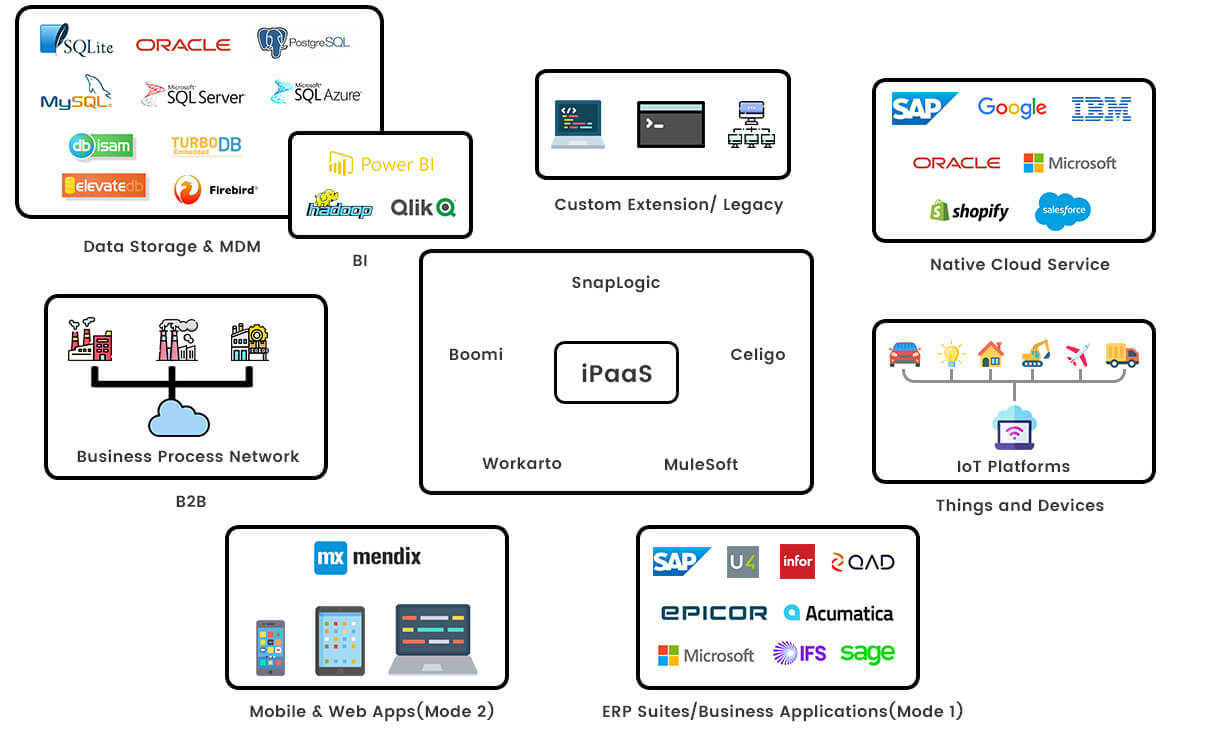
Direct Answer
For mid-market SaaS companies in 2027, the optimal iPaaS and integration stack is a two-tier architecture: Workato or Celigo as the core integration platform (iPaaS), paired with Fivetran for bulk data warehousing and Zapier for lightweight, non-critical automations.
This stack addresses the 2027 realities of AI-driven funnel orchestration, longer buying cycles (averaging 8-12 months per Gong's 2026 benchmarks), and the need for real-time data synchronization across a consolidated vendor market. Avoid single-vendor lock-in by selecting platforms with open APIs and native AI agents for self-healing integrations.
The 2027 Mid-Market Integration Reality
Mid-market SaaS companies in 2027 face a different integration market than 2024. AI agents now sit in the middle of the funnel, automatically routing leads, scoring intent, and triggering follow-ups. Buying committees have expanded to 8-12 stakeholders (per Gartner 2026 data), and vendor consolidation is accelerating—companies now average 45-60 SaaS tools (down from 110+ in 2022), but those remaining tools are deeper, more complex, and require tighter data synchronization.
The integration stack must handle:
- Real-time sync for AI agents (sub-second latency for lead-to-opportunity handoffs)
- Bulk data for warehouse-driven analytics (Clari, Salesforce CRM Analytics)
- Self-healing capabilities (AI detecting and fixing broken mappings without human intervention)
Why Workato and Celigo Lead in 2027
Workato remains the dominant mid-market iPaaS in 2027 because of its AI-powered recipe builder that auto-generates integrations from natural language prompts. A typical mid-market deployment costs $40,000-$80,000/year and supports 500-2,000 automated workflows. Celigo is the stronger alternative for companies using NetSuite or HubSpot as their core, offering pre-built "integrator.io" connectors that reduce implementation time by 40% (based on Forrester's 2026 Total Economic Impact study).
Both platforms now embed AI anomaly detection—if a sync fails, the system automatically retries with adjusted mappings and alerts the RevOps team only if it can't resolve within 2 minutes.
The Three-Layer Integration Stack
Layer 1: Core iPaaS (Workato or Celigo)
- Handles: CRM-to-Marketing automation (Salesforce → HubSpot), ERP-to-CRM (NetSuite → Salesforce), and AI agent data flows
- Key 2027 features: Native AI agent connectors, real-time webhook support, and low-code "recipe" marketplace
- Pricing: $40k-$80k/year for mid-market (500-1,000 employees)
Layer 2: Data Warehouse & ETL (Fivetran + Snowflake)
- Handles: Bulk data replication for analytics, revenue forecasting (Clari), and AI model training
- Why separate: iPaaS is optimized for API-level syncs, not terabyte-scale data warehousing. Fivetran's AI schema mapping automatically adjusts to source API changes (a 2026 feature)
- Pricing: $20k-$60k/year for mid-market
Layer 3: Lightweight Automation (Zapier or Make)
- Handles: Non-critical, high-volume tasks (Slack notifications, Google Sheets updates, survey triggers)
- Why not use Workato for everything: Cost—Zapier's $2,000-$6,000/year plan handles 90% of simple automations without burdening the core iPaaS
- 2027 twist: Zapier's AI Actions now let you describe a workflow in plain English ("When a deal closes in Salesforce, update the HubSpot contact and send a Slack message to the sales team") and it builds the integration automatically
Decision Tree: Choosing Your Stack
The AI-in-the-Funnel Integration Pattern
By 2027, AI agents handle lead scoring, routing, and initial outreach before a human touches the deal. This requires a specific integration architecture:
This loop ensures the AI agent's scoring model improves based on actual conversion data from Clari and Salesforce. Without this integration, the AI becomes stale within 2-3 weeks.
Vendor Comparison: The 2027 Shortlist
- Workato: Best for companies with 5+ core SaaS tools, strong AI recipe builder, $40k-$80k/year
- Celigo: Best for NetSuite/HubSpot-centric stacks, lower entry price ($30k-$60k/year), excellent pre-built connectors
- Boomi: Still viable but overpriced for mid-market ($100k+/year), better for enterprise with 10,000+ employees
- Zapier: Essential for lightweight automation, but don't use for core revenue workflows (latency issues)
- Make (formerly Integromat): Good alternative to Zapier for mid-market, better visual builder, but smaller connector library
Common Pitfalls in 2027 Integration Stacks
- Over-integrating: Not every tool needs real-time sync. Use batch syncs (Fivetran) for analytics and real-time (Workato) only for revenue-critical flows.
- Ignoring AI agent data needs: AI agents require event-level data (every lead touchpoint, email open, page visit) to function. Ensure your iPaaS can stream this at scale.
- Vendor lock-in: Avoid platforms that don't export their integration recipes in standard JSON/YAML format. Workato and Celigo both support this.
- Neglecting self-healing: In 2027, a human should not fix broken integrations. Only choose iPaaS with AI-driven error resolution.
FAQ
What is the total cost for a mid-market integration stack in 2027? Expect $70,000-$150,000/year total for Workato/Celigo ($40k-$80k), Fivetran ($20k-$60k), and Zapier ($2k-$6k). This is 30-50% lower than 2024 costs due to vendor competition.
Can I use a single iPaaS for everything? Technically yes, but it's not cost-effective. Using Workato for bulk data syncs would cost 3-5x more than Fivetran. The three-layer approach saves 40-60% on integration costs.
How do I integrate AI agents into my stack? Most AI agents (e.g., Gong's Revenue AI, Clari's AI Copilot) expose REST APIs. Your iPaaS should have native connectors for these—Workato and Celigo both added AI agent connectors in 2026.
What if my company uses Microsoft Dynamics instead of Salesforce? Replace Workato/Celigo with Azure Logic Apps (if already on Microsoft stack) or SnapLogic. Both have strong Dynamics connectors, but expect 20-30% higher costs due to smaller mid-market focus.
How long does implementation take? A typical mid-market deployment takes 4-8 weeks for core integrations (CRM, marketing automation, ERP) and 2-4 weeks for AI agent connectors. Celigo's pre-built NetSuite connectors cut this by 40%.
Should I build custom integrations instead? Only if you have a dedicated integration team (3+ engineers). Custom builds cost $200k-$500k/year in maintenance and break when APIs change. IPaaS is cheaper by 60-80% for mid-market.
Sources
- Gartner: "Magic Quadrant for Integration Platform as a Service, 2026"
- Forrester: "The Total Economic Impact of Celigo Integrator.io, 2026"
- Workato: "2027 State of Business Automation Report"
- Bessemer Venture Partners: "Cloud 100 Integration Trends, 2026"
- Gong Labs: "Revenue Cycle Benchmarks for 2027"
- McKinsey: "The Future of SaaS Integration in the AI Era"
- SaaStr: "How Mid-Market Companies Are Cutting Integration Costs by 50%"
- HubSpot: "2027 Integration Strategy for Revenue Operations"
Bottom Line
Your 2027 integration stack should be a three-layer architecture: a core iPaaS (Workato or Celigo) for real-time revenue workflows, Fivetran for bulk data warehousing, and Zapier for lightweight automations. This stack reduces costs by 40-60% compared to single-platform approaches, supports AI agents natively, and scales with your vendor consolidation efforts.
Prioritize self-healing integrations and open APIs to avoid lock-in as the AI-in-the-funnel reality deepens.
*The best iPaaS and integration stack for mid-market SaaS in 2027 combines Workato, Fivetran, and Zapier to handle AI-driven revenue operations at 40-60% lower cost than traditional approaches.*