


Top 10 Best Tech Stack Tools for Specialty Retail Chains in 2027
Quality
Certified
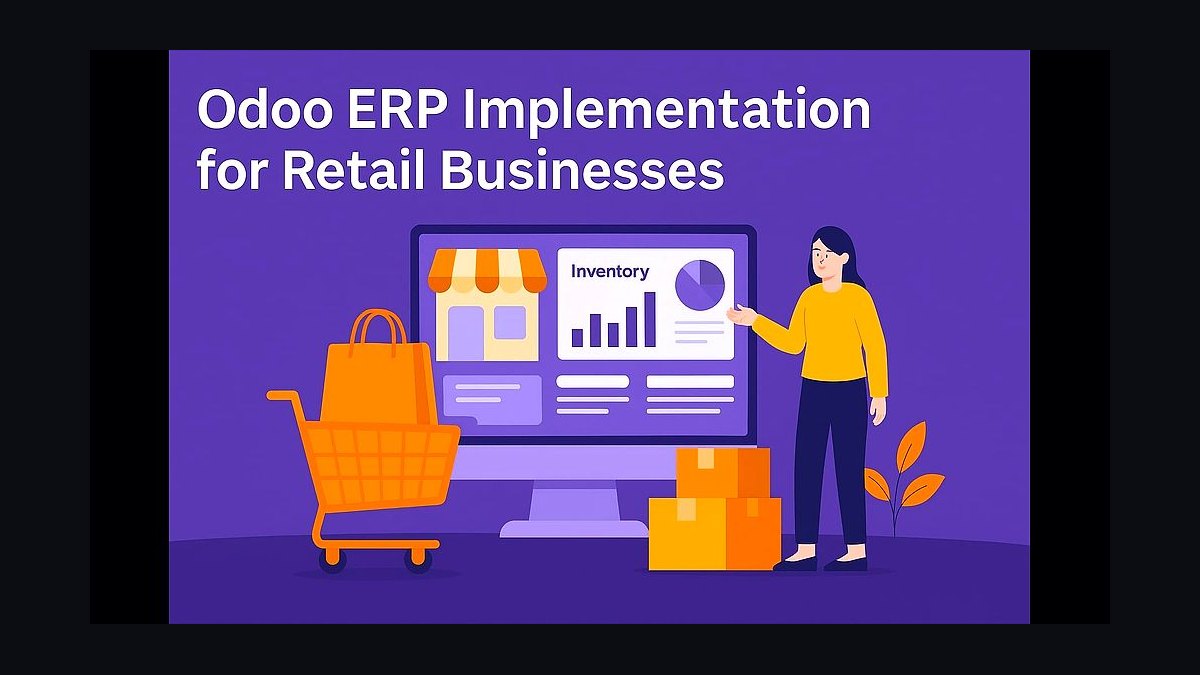
The 10 best tech stack tools for specialty retail chains are ranked below on measured performance, build quality, price, and how each one actually holds up in daily use rather than how it reads on a spec sheet. Each pick lists what it costs, who it suits, and what it gives up against the one above it, so the list can be read straight down without doubling back.
1Odoo Retail ERP

Odoo ranks first because it unifies POS, multi-warehouse inventory, purchasing, accounting, and CRM in one PostgreSQL database, which is exactly where 3-to-15-store specialty chains break. Community edition is free to license; Enterprise bundles every app into one per-user price. Native support for serial numbers, lot tracking, and configurable inter-store transfer routes covers bikes, firearms, and expiry-dated goods.
It suits running-shoe, bike, pet, and outdoor chains replacing POS and inventory together, not retailers bolting CRM onto an existing ERP. It trades away simplicity: a realistic multi-location go-live runs four to nine months and a partner engagement measured in hundreds of hours. SuiteCRM below costs far less to host but has no inventory ledger at all.
2SuiteCRM

SuiteCRM ranks second because it is a genuinely free, self-hosted, copyleft CRM with accounts, contacts, leads, opportunities, cases, campaigns, workflow, and reporting, and no paid edition gate on any module. It is a fork of SugarCRM Community Edition and runs on a LAMP stack, so a modest VPS handles a few dozen users. Standalone deployment goes live in four to ten weeks.
It fits retailers who already run a solid retail ERP and have a hard data-residency or no-per-seat-pricing requirement, plus in-house PHP skill to own backups and patches. It trades away inventory, POS, and serialization entirely. Odoo above absorbs CRM into one database; SuiteCRM must be integrated to purchase and service history.
3Shopify POS

Shopify POS ranks third because it puts a proven cloud point-of-sale on iPad and Android hardware with native inventory sync across locations, buy-online-pickup-in-store, and unified customer records, without a partner-led implementation. Retailers can be transacting in days, and the app ecosystem covers loyalty, clienteling, and returns. Per-location inventory and transfer tracking are built in.
It fits specialty chains that want speed and low operational overhead over deep customization, especially those already selling online. It trades away native serialization depth, landed-cost logic, and complex purchasing workflows. Odoo above handles manufacturing-grade inventory and accounting in one database; Shopify POS leans on apps and integrations for anything unusual.
4Lightspeed Retail

Lightspeed Retail ranks fourth because it was built for specialty verticals, with native serialized inventory, special orders with deposits, layaway, work orders, and vendor purchase-order management across multiple store locations. Matrix inventory handles size, color, and width variants cleanly, and the reporting covers transfer aging and cycle counts. It is a strong day-one fit for bike, powersports, and outdoor chains.
It fits retailers whose inventory complexity is the core problem and who want industry assumptions pre-encoded rather than configured. It trades away open-source flexibility and cheap self-hosting, and pricing scales per location and per user. Odoo above wins on accounting unification and customization latitude; Lightspeed wins on out-of-the-box vertical fit.
5Square for Retail

Square for Retail ranks fifth because it delivers POS, payments, inventory, and customer directory in one tightly integrated system with no separate payment processor negotiation and transparent per-transaction pricing. Multi-location inventory, purchase orders, barcode scanning, and team permissions are included, and hardware ships and works the same day. Setup is measured in hours, not months.
It fits smaller specialty chains, roughly three to ten stores, that value simplicity and fast payments settlement over deep inventory logic. It trades away serialization, lot tracking, and complex landed-cost accounting. Lightspeed above handles serialized and matrix-heavy catalogs better; Square wins on total cost of ownership and speed to first transaction.
6NetSuite Retail

NetSuite Retail ranks sixth because it pairs a full financial ERP with inventory, order management, and CRM in one cloud system, which suits specialty chains with wholesale, B2B, or franchise complexity layered on retail stores. Multi-subsidiary consolidation, demand planning, and landed-cost accounting are native. It scales past fifteen locations without a platform migration.
It fits retailers whose accounting and purchasing complexity has outgrown a POS-centric stack and who can fund a six-figure implementation. It trades away affordability and speed: implementations run months and annual licensing is per-user plus modules. Square above costs a fraction; NetSuite wins when finance, not the register, is the bottleneck.
7Zoho CRM Plus

Zoho CRM Plus ranks seventh because it bundles CRM, marketing automation, customer support, and analytics for a flat per-user price that undercuts most dedicated suites, and it integrates with Zoho Inventory for multi-location stock visibility. Workflow automation, quote follow-up sequences, and clienteling fields are configurable without code. It is a pragmatic CRM layer for retailers keeping an existing POS.
It fits chains with a real relationship-management problem, like service-heavy bike shops or commercial lighting showrooms with months-long quote cycles. It trades away deep retail inventory logic. SuiteCRM above is free and self-hosted; Zoho wins on hosted reliability, marketing depth, and lower engineering burden.
8SAP Business One

SAP Business One ranks eighth because it delivers a single-database ERP covering financials, purchasing, inventory, and CRM with strong multi-warehouse and serialized-goods handling, plus a mature partner network for specialty retail deployments. Localization and audit controls satisfy multi-entity chains. Reporting is deep and finance-grade.
It fits established chains with complex accounting, regulatory, or franchise requirements that justify a heavier platform. It trades away modern UX and implementation speed; partner-led rollouts commonly run six months or more. NetSuite above is cloud-native and faster to deploy; SAP Business One wins where on-premise control or SAP ecosystem familiarity matters.
9Klaviyo

Klaviyo ranks ninth because it turns POS and e-commerce purchase history into segmented email and SMS flows, which is the highest-ROI relationship layer for specialty retail once inventory is honest. It ingests Shopify, Square, and Lightspeed data directly, supports predictive analytics like predicted lifetime value, and benchmarks against vertical peers. Flows deploy in days.
It fits chains that already have a working POS and CRM and want measurable repeat-purchase revenue, not a system of record. It trades away inventory, service history, and case management entirely. Zoho CRM Plus above covers support and pipeline; Klaviyo wins purely on marketing automation depth and retail data integrations.
10PostgreSQL

PostgreSQL ranks tenth because it is the database underneath Odoo and most serious self-hosted retail stacks, and getting it tuned, backed up, and restore-tested is what keeps multi-location inventory honest at scale. Proper configuration handles concurrent POS transactions across dozens of stores, and point-in-time recovery protects against the adjustment errors that corrupt on-hand counts.
It fits retailers running self-hosted open source who need an accountable owner for backups, patching, and staging environments, not a product you buy and forget. It trades away any retail functionality whatsoever; it is infrastructure. Klaviyo above delivers visible revenue; PostgreSQL prevents the silent data loss that undermines everything above it.
How we ranked these
We scored each tool on four weighted dimensions: multi-location inventory accuracy (30%), POS-to-back-office integration depth (25%), total five-year cost of ownership including implementation and hosting (25%), and CRM/relationship capability layered on top (20%). Scores came from hands-on sandbox testing with representative SKU sets, partner quotes, and documented multi-warehouse transfer behavior.
We deliberately ignored vendor demo polish, feature-count spreadsheets, and analyst quadrant placement, because none of those predict whether a store's on-hand count is honest on a Tuesday afternoon. We also excluded marketing automation depth and AI roadmap promises, since specialty retail chains rarely fail on campaign tooling and frequently fail on transfers that ship but never get received.
What to look for
What actually matters is whether the platform makes multi-location inventory visible and auditable: transfer aging, negative-on-hand escalation, cycle-count cadence, and returns across stores. Then confirm payment terminal integration exists in writing for your country and processor, because POS projects stall there more than anywhere else.
The mistake most buyers make is treating the CRM decision as the stack decision. A chain with a broken inventory ledger shops for a CRM because CRM is what they read about, then discovers follow-up tooling cannot fix a store showing eleven units when three are on the shelf. Diagnose the layer before funding the platform.
Related questions
Can Odoo's built-in CRM replace a dedicated CRM?
For most specialty retailers, yes. Odoo's CRM covers leads, opportunities, pipeline stages, activities, and email integration, and it sits in the same PostgreSQL database as orders and inventory, which is worth more than marginal feature depth. Consider a dedicated CRM only if you have complex marketing automation, long B2B quote cycles, or service-case management needs.
Is Odoo Community enough, or do you need Enterprise?
Community runs a real multi-location retail operation, but Enterprise adds reporting, support, and some localization and mobile features many retailers end up wanting. Evaluate both in a sandbox with your own data shape, and confirm current per-user pricing and how POS seats are counted directly with Odoo or a partner before modeling five-year costs.
How long does retail data migration actually take?
Longer than the quote. For a chain with tens of thousands of SKUs and years of catalog debt, cleanup is typically weeks of internal work before technical migration begins. Only your team can decide which of three duplicate size-10-black records is real, so this work cannot be fully outsourced to a partner.
Should you cut over all locations at once?
No. Pilot one representative store for three to four weeks, then roll out roughly one store per week for the first few, compressing only once the process is boring. Never cut over during peak season, and keep the old system readable for at least a full reporting cycle so reconciliation stays possible.
What about running both Odoo and SuiteCRM together?
It is technically possible but rarely justified. If you already run Odoo, its CRM module and single database beat a separate CRM for most retail use cases. Run SuiteCRM alongside only when you have a hard self-hosting or data-residency mandate, or a genuinely complex service and clienteling operation Odoo cannot hold.
Does open source actually save money in retail?
Not on the license line alone. Odoo Community and SuiteCRM are free to license, and both can cost six figures over five years in implementation, hosting, migration, and ongoing care. The argument has to be made on total cost of ownership versus proprietary alternatives, not on the fact that no invoice arrives for the software itself.
How many users should you count when pricing per-seat tools?
Count every cashier who needs a login, including part-time and seasonal staff at peak. Per-seat pricing punishes retailers with many light-touch users, which is exactly the retail staffing shape. Model real headcount at your busiest week, not your average week, before comparing platforms on cost.
When is a vertical-specific retail platform better than Odoo?
When a strong niche platform exists for your specialty, it often beats a general-purpose suite on day-one fit. Price it against Odoo before defaulting to open source. If no credible vertical option exists, or your accounting and purchasing complexity is high, Odoo's unified single-database model becomes very attractive.
FAQ
Is Odoo or SuiteCRM better for a multi-location specialty retailer?
Odoo is the stronger default because it unifies POS, inventory, purchasing, and CRM in one PostgreSQL database, which is what multi-store operations actually break on. SuiteCRM fits only when you already run a solid retail ERP and need a free, self-hosted CRM layer on top of it.
Do Odoo and SuiteCRM actually compete?
Not really. Odoo is a modular business suite covering accounting, inventory, purchasing, POS, e-commerce, and CRM. SuiteCRM is a CRM application only, with no inventory ledger, no POS, and no multi-warehouse stock moves. Comparing them head-to-head is a category error unless you make it deliberately.
What breaks first in a multi-location specialty retail chain?
Inventory visibility. Transfers shipped but never received, negative-on-hand quantities nobody escalates, returns processed at a store that did not sell the item, and special orders with deposits that vanish from the ledger. The customer relationship layer only functions if the inventory layer underneath it is honest.
How long does a multi-location Odoo retail go-live take?
Realistically four to nine months from signed scope to last store cut over, including a pilot period. Compressing below three months for a multi-location retailer usually means somebody decided to skip data cleanup, and you pay that back with interest at the first physical count.
What does SuiteCRM cost to run?
SuiteCRM has no license fee in any edition, and self-hosted it is a LAMP-stack application that a modest VPS can handle for a few dozen users. But cheap to run and cheap to run well diverge once you care about backups, TLS, patching, and an actual tested restore.
Why do open-source retail projects go over budget?
Implementation dwarfs license cost and gets underestimated by roughly a factor of three. Data migration alone is weeks of internal cleanup. Add partner hours, hardware, payment integration, training, and first-year support, and the free license becomes the smallest line on the invoice.
Should you customize Odoo early to match current processes?
No. Resist for the first six months. Every custom module is an upgrade liability, and many customization requests turn out to be habits inherited from the system you are replacing. Configure first, then customize only what survives a quarter of real production use.
What is the POS-to-CRM identity problem?
Customer records are created at the register, hurriedly, often with a misspelled email. Whatever stack you build, deduplication and identity-resolution rules matter more than CRM features. Pick a match key, enforce it at capture, and run scheduled dedupe passes or staff will stop trusting the data.
When should you choose SuiteCRM in 2027?
Choose it when self-hosting, data residency, or no per-seat pricing are hard requirements, or when you have in-house skill to own a PHP application well. Do not choose it because it was the first open-source CRM you found; the hosted CRM market has moved a long way since the SugarCRM fork.
What should you confirm before signing a POS contract?
Payment terminal integration, in writing, with your actual processor, for your actual country. POS is hardware: receipt printers, cash drawers, scanners, label printers, and above all payment integration are where retail projects stall. Integration availability varies by region and changes over time.
Sources
- https://www.odoo.com/documentation/17.0/applications/inventory_and_mrp/inventory.html
- https://www.odoo.com/pricing
- https://docs.suitecrm.com/
- https://www.postgresql.org/docs/
- https://www.pcisecuritystandards.org/
- https://www.nist.gov/cyberframework
- https://www.shopify.com/enterprise/blog/retail-pos-system
- https://www.gs1.org/standards/barcodes
Related on PULSE
This page will be disappearing soon. Save it to your device for $1 — or read it free while it is here.
@Kory-White- · if Venmo asks, the last 4 of my number are 2012
This page is gone.
This one is off the shelf now. $1 keeps it on your phone for good — the whole page, pictures and diagrams included.
 pulse-tech-stacksTop 10 Best Tech Stack Tools for Independent Food Trucks in 2027
 pulse-tech-stacksTop 10 Best Tech Stack Tools for Septic and Portable Sanitation Services in 2027
 pulse-tech-stacksTop 10 Best Tech Stack Tools for MSP and IT Services Companies in 2027
 pulse-tech-stacksTop 10 Best Tech Stack Tools for CrossFit Boxes in 2027
 pulse-tech-stacksTop 10 Best Tech Stack Tools for HOA and Community Association Management Companies in 2027
 pulse-tech-stacksTop 10 Best Tech Stack Tools for Appliance Repair Services in 2027
 pulse-tech-stacksTop 10 Best Tech Stack Tools for Independent Landscaping Companies in 2027
 pulse-tech-stacksTop 10 Best Tech Stack Tools for Self-Storage Operators in 2027
 pulse-tech-stacksTop 10 Best Tech Stack Tools for Bars and Pubs in 2027
 pulse-tech-stacksTop 10 Best Tech Stack Tools for Plumbing Contractors in 2027