

Best Cellular and Wireless Carrier in Colorado in 2027
 Curated byKory White · Fractional CRO · Maryland
Quality
Certified

Verizon is the best overall cellular and wireless carrier in Colorado for 2027, because its low-band 700MHz and 850MHz spectrum holds a usable signal across mountain passes, canyons, and Eastern Plains highways where competitors thin out. T-Mobile wins on raw urban 5G speed and price along the Front Range, making the honest answer geography-dependent.
The two carriers that actually compete for a Colorado line
Colorado is a bad state for national carrier rankings, and that is the first thing worth saying plainly. A carrier ranking built on national averages weights the map by population, and Colorado's population is stacked into a narrow strip — roughly 85% of residents live along the Front Range corridor from Fort Collins through Denver and Colorado Springs down to Pueblo. That corridor is flat, dense, and heavily built out by every carrier. It tells you almost nothing about what happens when you drive west on I-70 past Georgetown, or south into the San Luis Valley, or east toward the Kansas line where the nearest tower may be fifteen miles off the highway.
So the practical comparison splits into two distinct products that happen to share a brand name each.
Verizon is the coverage-first choice. Its Colorado advantage is spectrum physics, not marketing. Verizon holds 700MHz (LTE band 13) and 850MHz spectrum, and low-frequency signal diffracts around terrain and penetrates building materials far better than mid-band. In a state where the obstacle between you and the tower is frequently a granite ridge, that matters more than peak throughput. Verizon's 5G Ultra Wideband — C-band and, in a few downtown pockets, millimeter wave — delivers the fast tier in the metros, while the nationwide 5G layer rides the low-band and follows LTE's footprint closely. The practical result is a phone that shows two or three bars in places where a competitor shows SOS, and a data session that survives the drive between Idaho Springs and Silverthorne instead of dropping at every tunnel and cut.
T-Mobile is the speed-and-price choice. Its 2.5GHz mid-band holdings — inherited from the Sprint merger and deployed aggressively as Ultra Capacity 5G — give it the deepest fast-5G layer of any US carrier, and Colorado's metros benefit fully. In downtown Denver, in Boulder, in the Colorado Springs core, T-Mobile routinely posts the highest median download speeds of the three national carriers. Its 600MHz (band 71) low-band extends a basic signal impressively far for a network that was regionally weak a decade ago. Pricing is the second half of the argument: T-Mobile's flagship unlimited plans generally undercut Verizon's equivalents by $10–$20 per line, and tax-inclusive pricing on some plan families removes the $8–$12 monthly surprise that shows up on other carriers' bills.

AT&T is the legitimate third option rather than a throwaway. Its low-band 850MHz footprint is solid in suburbs and along the interstates, its 5G+ mid-band covers the major metros, and — decisively for one specific audience — FirstNet gives public safety users Band 14 priority and preemption. If you work fire, EMS, law enforcement, search and rescue, or wildland response in Colorado, FirstNet eligibility usually settles the question before any coverage map does. AT&T tends to sit between the other two on mountain reliability: better than T-Mobile in many valleys, less consistently strong than Verizon on the high passes.
Everything below the big three is a resold version of one of these networks. Visible and Xfinity Mobile ride Verizon. Mint and Metro ride T-Mobile. Cricket rides AT&T. Google Fi is primarily T-Mobile with roaming fallbacks. Boost blends AT&T and T-Mobile with its own build in select metros. That means the coverage question and the price question are separable: you pick the network by where you live and drive, then pick the brand by how much you want to pay and how much deprioritization you can tolerate.
How to decide between them
The decision is not "which carrier is best" — it is "which network is best at the six or eight places I actually am." Almost everyone can name those places: home, work, the school pickup line, the trailhead, the in-laws' house, the stretch of highway where a dead zone would matter most. Build that list first. It converts an unanswerable national question into a checkable local one.

The trial step is the part people skip, and it is the only step that produces real evidence. Every major carrier now supports eSIM, and eSIM makes carrier testing nearly free: a modern phone can hold an active line and a trial line simultaneously, so you can run a competitor's network for two to four weeks without touching your existing number or service. T-Mobile has offered a network trial program of this kind for years; Verizon and AT&T have both introduced trial paths as well, and most MVNOs will let you start a single month cheaply enough that the test costs less than a tank of gas.
Test correctly and the results are conclusive. A few rules that make trial data trustworthy:
- Test where you stand still, not just where you drive. A dropped call at 65 mph is annoying; no signal in your basement office is a daily tax. Run a speed test in the room where you actually work.
- Test at the worst hour, not the best. Networks congest. A 7 p.m. weekday test in a dense neighborhood, or a Saturday-afternoon test at a trailhead lot, reflects the experience you'll actually have.
- Test the specific mountain segments you drive. Coverage on I-70 is not uniform. The stretch approaching the Eisenhower–Johnson tunnels, the Vail Pass climb, and the canyon segments of US-6 and US-24 behave differently from each other and differently from the open valley floors.
- Watch what band you're on, not just the bars. On iPhone, field-test mode is limited, but Android users can check the serving band directly. Sitting on low-band with two bars is often more stable than bouncing between mid-band and nothing.
- Note whether calls complete, not just whether data flows. Wi-Fi calling masks a lot of home coverage problems — which is fine if you're always home, and useless on a forest road.
One adjacent factor deserves its place in the decision: home internet. Fixed wireless access — 5G home internet from T-Mobile, Verizon, and increasingly others — has become a genuine broadband option in Colorado communities where fiber never arrived and the cable plant is aging. If the same carrier can serve your phone and your house, the bundle discount is frequently $10–$25 a month, and the decision stops being purely about the phone. Conversely, if you're a cable internet subscriber, the operator's mobile arm (Xfinity Mobile on Verizon's network, Spectrum Mobile likewise) usually offers the cheapest path to that same network — which flips the usual assumption that the best network must cost the most.

What the numbers actually mean before you compare them
Carrier marketing throws numbers at this question, and most of them are true but misleading. Understanding what each metric measures is more useful than memorizing any specific figure, because the figures shift quarter to quarter while the measurement biases stay constant.
Coverage-area percentages are the most gamed statistic in the industry. "99% of Americans covered" is a population figure, not a land figure, and in Colorado those two diverge enormously. The state covers roughly 104,000 square miles; a carrier can cover the overwhelming majority of Coloradans while leaving a large fraction of Colorado's actual acreage unserved. When you read a coverage claim, check whether the denominator is people or square miles — and treat any land-area claim in a mountain state with suspicion, since a tower's mapped radius assumes line of sight that terrain routinely destroys.
Median vs. average download speed. Ookla-style crowdsourced results report medians, which is the right choice, because averages are dragged upward by a small number of users standing under a millimeter-wave node downtown. But even medians are biased by where testing happens: people run speed tests when they suspect a problem or when they're showing off a fast connection, and both behaviors cluster in cities. A carrier can hold the state's highest median speed and still be the wrong choice for someone who lives in Gunnison.
Reliability and task-completion scores — the kind published by drive-test firms and consumer studies — measure something closer to what a person feels: did the call connect, did the page load, did the video start without buffering. These correlate better with satisfaction than raw throughput does. A network delivering a consistent 25 Mbps everywhere beats one that delivers 600 Mbps in three neighborhoods and nothing on the pass.

Premium data allowances and deprioritization. Nearly every "unlimited" plan includes a premium-data threshold — commonly in the 50GB range on flagship plans, lower on mid-tier and much lower on prepaid brands. Past that threshold, your traffic is deprioritized behind other users when a tower is congested. This is not throttling in the old sense; on an uncongested rural tower you may notice nothing at all. On a congested one — a stadium, an airport concourse, a festival, a ski base area on a powder Saturday — the difference between prioritized and deprioritized traffic is the difference between a working phone and a decorative one. MVNO customers are typically deprioritized relative to the host carrier's direct customers regardless of how much data they've used, which is precisely the trade you're making for the lower price.
Price tiers, roughly and honestly. Across the market in this era, the shape looks like this: flagship postpaid unlimited from a national carrier lands somewhere in the $65–$90 per line range for a single line, dropping substantially — often to the $30–$50 range per line — at three or four lines. Mid-tier postpaid runs $50–$70. Prepaid brands from the carriers themselves sit around $40–$60. MVNOs on the same networks range from roughly $15 to $45 depending on data and prepay term, with the deepest discounts requiring six- or twelve-month upfront payment. Exact figures move constantly and vary by promotion, autopay discount, and line count, so treat these as bands to sanity-check an offer against rather than quotes.
The bill is not the plan price. Device payment plans, insurance, activation fees, and taxes routinely add 20–35% to an advertised per-line figure. A $60 plan with a $28/month phone installment and $17 in fees and insurance is a $105 line. When comparing carriers, compare the total monthly outflow, and separate the device subsidy explicitly: a carrier "giving" you a $1,000 phone over 36 months has locked you in for three years, and the switching penalty is the remaining balance.
Perks have real but bounded value. Bundled streaming services, cloud storage, and travel credits are worth something — but only what you'd otherwise pay. A bundled subscription you already have costs the carrier nothing and saves you nothing. Value it at zero and re-rank.

Terrain, spectrum, and why Colorado breaks the usual advice
The reason national carrier advice fails here is worth understanding mechanically, because it generalizes to every mountain state and to a surprising number of adjacent decisions.
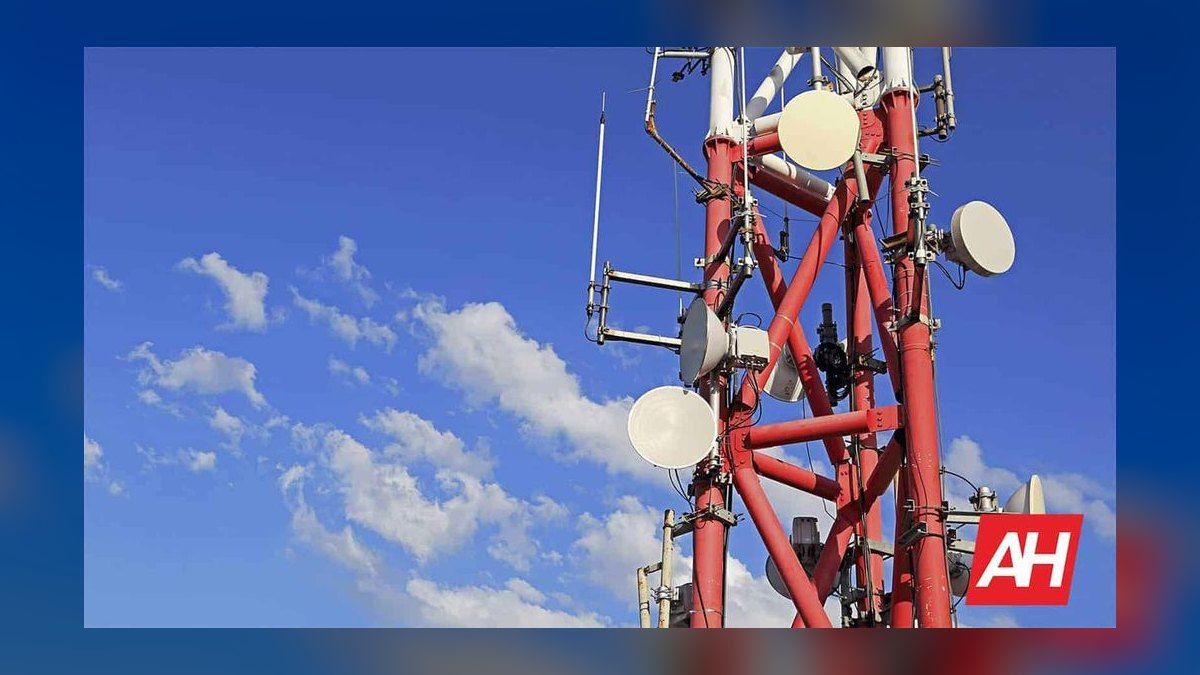
Radio propagation is a function of frequency. Low-band spectrum — 600MHz, 700MHz, 850MHz — has long wavelengths that bend around obstacles and pass through walls and trees with modest loss. A single low-band site can cover many miles of open terrain and will still deliver usable signal into the shadow behind a ridge. Mid-band — 1.7GHz through 2.5GHz, plus C-band around 3.7GHz — carries far more capacity but attenuates faster and is stopped more thoroughly by terrain and building materials. Millimeter wave, up in the 24–39GHz range, delivers extraordinary throughput over a block or two and is blocked by a hand, a window, or a passing bus.
Colorado presents essentially every hard case for this physics simultaneously. Deep, narrow canyons with steep walls on both sides — Glenwood Canyon, Big Thompson, Clear Creek — create signal shadows that only low-band reaches into, and even then imperfectly. High passes have line-of-sight to nothing but sky and rock. Dense forest canopy on the Western Slope absorbs mid-band. Tunnels require deliberately installed in-tunnel repeater systems, which exist on major routes but not everywhere, and which each carrier must participate in individually. The Eastern Plains have the opposite problem: perfect line of sight but enormous distances between sites and a population too sparse to justify densification.

Two consequences follow. First, the carrier with the deepest low-band holdings has a structural advantage in Colorado that no amount of urban mid-band deployment offsets, which is the core of the Verizon case. Second, coverage maps understate the problem, because most maps are modeled from tower parameters and terrain data rather than measured door to door. A modeled map shows coverage over a valley; the measured reality shows a hole behind every ridge and a dead spot in every deep cut.
Practical implications that follow from the physics:
- Signal boosters work, and they are underused. A cellular signal booster — an outdoor antenna, an amplifier, and an indoor antenna — can turn one weak outdoor bar into a stable indoor connection. They're legal, carrier-approved models are required, and for a rural or foothills home with marginal coverage they solve the problem more cheaply than switching networks. Boosters amplify what exists; they cannot create signal where there is none.
- Wi-Fi calling is the other half of the home fix. If you have any broadband at all, Wi-Fi calling makes home coverage largely irrelevant for calls and texts. This is why some rural Coloradans happily use a carrier with poor local coverage — they're on Wi-Fi at home and only need the cellular network on the road.
- Satellite messaging changed the backcountry calculus. Direct-to-device satellite service — carrier partnerships that let an ordinary phone send texts via low-earth-orbit satellites, plus the emergency SOS satellite features built into recent iPhone and Android flagships — means a phone with no terrestrial signal is no longer a brick in an emergency. These services are text-first and constrained; they are not a substitute for coverage, and for genuine wilderness travel a dedicated satellite messenger with an SOS subscription remains the serious tool. But as a backstop on a fourteener approach or a hunting trip, it materially reduces the risk of choosing a carrier with mountain gaps.
- Roaming agreements fill some plains gaps. In parts of eastern and southern Colorado, national carriers roam onto regional networks. Roaming usually works for voice and text and is often data-limited, so a phone showing "extended network" may make calls fine and struggle to load a map.
Sequencing a switch without breaking anything
Switching carriers has a small number of failure modes and every one of them is avoidable with ordering discipline. The single most common mistake is canceling the old service first — never do this. A canceled number cannot be ported; the port request is what closes the old account.

Working through that sequence in detail:
Device compatibility comes before anything else. A phone bought from one carrier may be locked, and unlock policies usually require the device to be paid off and active for a set period. Beyond locking, band support matters: a phone sold for one network may lack the specific mid-band or C-band radios another network relies on, so it will fall back to LTE and you'll never see the fast tier you're paying for. Check the model number against the target carrier's compatibility tool, not against a general spec sheet.
Port credentials are a security feature, not an obstacle. Number porting requires the account number and a transfer PIN generated by the losing carrier — a protection added specifically to blunt SIM-swap fraud. Generate the PIN shortly before you port; they expire. And while you're in there, confirm you have a port-out lock or number-transfer lock enabled on the new account afterward. SIM-swap attacks target phone numbers precisely because so much account recovery still runs through SMS.
Activate before you port. With eSIM this is the whole trick: the new line comes up on a temporary number, you validate every service on it, and only then do you request the port. If the new network turns out to be wrong for your locations, you've lost a month of service fees and nothing else.

Validate more than "data works." Voice over LTE/5G, SMS, MMS group messaging, visual voicemail, Wi-Fi calling, and hotspot each provision separately and each can fail independently. Group MMS in particular has a long history of quiet breakage after a switch.
Expect the first bill to look wrong. Prorated partial months, one-time activation fees, and device credits that begin on the second or third cycle make the first invoice unrepresentative. Autopay and paperless discounts — commonly $5–$10 per line — often require a debit card or bank draft rather than a credit card to qualify at the full amount. Read that condition before assuming the advertised price.
Then re-secure everything downstream. Two-factor authentication tied to SMS, banking app device bindings, work MDM enrollment, and any service that fingerprints your carrier will need attention. Doing this in the first day, deliberately, beats discovering it when you're locked out of a bank account on a Saturday.
And keep the trial mentality afterward. Most carriers offer a satisfaction window — commonly around 14 to 30 days — during which you can reverse the decision with limited penalty. Use the first two weeks as an extension of the test: drive the routes, sit in the basement, take the calls. If it's wrong, reverse it while reversing is cheap.
Adjacent situations that change the answer
The Verizon-versus-T-Mobile framing holds for a typical Colorado consumer line, but several common situations override it outright.
Small business and fleet. If you run field crews — HVAC, plumbing, landscaping, construction, delivery — the deciding variable is not the median speed in Denver but whether dispatch, GPS, photo upload, and payment terminals work at every job site your crews reach. Business plans add pooled data, priority tiers, and device management, and the pricing structure differs enough from consumer plans that comparing consumer rates is misleading. For a crew that works foothills and mountain jobs, the coverage-first answer strengthens; for one that never leaves the metro, price should win.
Multi-line families with split geography. Nothing requires a household to be on one carrier. A family with a Denver-based parent and a college student in Gunnison or Durango may genuinely be better served by two carriers, and the discount lost on the fourth line is often smaller than the value of the student's phone working. Run the math rather than assuming the family plan wins.
Second homes and mountain property. For a cabin or condo in a resort community, cellular is frequently the only practical broadband, which makes fixed wireless availability the deciding factor — and FWA availability is capacity-gated, meaning a carrier may have perfect phone coverage at that address and still refuse to sell home internet there because the local sector is full. Check FWA address eligibility separately from the coverage map.
Travel beyond Colorado. If you cross into Wyoming, Utah, New Mexico, or Kansas regularly, or if you travel internationally more than once a year, the calculus shifts. International roaming allowances vary widely between carriers and plan tiers, and a plan that includes usable data in Mexico and Canada — relevant for a lot of Colorado travel — can be worth more than a $10 monthly difference.
Connected vehicles, watches, and tablets. Add-on lines for smartwatches and tablets typically run $10–$20 each, and connected-car services often come bundled with a specific carrier. If you're carrying three connected devices, the per-line add-on cost can outweigh the base plan difference between carriers entirely.
Prepaid as a deliberate choice, not a fallback. Prepaid and MVNO service has stopped being a downgrade. You accept deprioritization, thinner customer support, and usually no device financing. In exchange you pay less, you're not on a contract, and — with eSIM — you can switch again next month if it disappoints. For a light user in a well-covered metro area, this is frequently the objectively correct answer, and the fact that it's rarely the recommended one says more about carrier marketing budgets than about the product.
Related questions
Does Verizon really beat T-Mobile everywhere in Colorado?
No. T-Mobile typically posts higher median 5G speeds in Denver, Boulder, and Colorado Springs, and often better fixed-wireless availability in suburbs. Verizon's edge is in mountain valleys, passes, and rural highways where low-band propagation decides whether you have service at all.
Is a Verizon MVNO the same coverage as Verizon?
The tower coverage is identical, but the priority is not. MVNO traffic is generally deprioritized behind the host carrier's direct customers during congestion, so a stadium, airport, or ski base area may feel noticeably slower even though the map looks the same.
Will satellite texting replace mountain coverage?
Not soon. Direct-to-device satellite service is text-first and low-bandwidth, designed as an emergency and messaging backstop rather than a data connection. It meaningfully reduces the risk of a coverage gap but does not make a weak terrestrial network acceptable for daily use.
What if I only care about home internet, not the phone?
Then evaluate fixed wireless availability at your exact address first, since capacity limits mean coverage does not guarantee eligibility. Bundle discounts from a mobile line can then make the phone decision follow the internet decision rather than the reverse.
How long should I test before switching?
Two to four weeks, spanning at least one weekend and one high-traffic evening. Anything shorter misses congestion patterns and seasonal variation, particularly at trailheads and resort towns where population swings dramatically between weekdays and weekends.
FAQ
Which network is best for mountain towns and ski areas in Colorado?
Verizon is the safest default because of its 700MHz and 850MHz low-band depth, which reaches into valleys and behind ridges better than mid-band. That said, resort base areas are heavily built out by all three national carriers — the differences appear on the approach roads, at trailheads, and in the side valleys, not at the lift line. Test your specific routes rather than trusting a general reputation.
Is T-Mobile a bad choice if I live in Denver?
No — in the metro it is frequently the better choice. T-Mobile's 2.5GHz mid-band gives it the deepest fast-5G layer in urban Colorado, and its pricing usually undercuts Verizon's comparable tier. The argument against it is entirely about what happens when you leave the corridor. If your driving stays on the Front Range, the coverage-first reasoning doesn't apply to you.
What about AT&T — is it ever the right answer?
Yes, in two cases. FirstNet eligibility for public safety personnel is close to decisive, since Band 14 priority and preemption are functionally unavailable elsewhere. And AT&T is often competitive in suburban and interstate coverage while landing between the other two on price, so it's worth including in any trial rather than eliminating on reputation.
How much can I actually save with a prepaid or MVNO plan?
The gap between a flagship postpaid unlimited line and a comparable MVNO line on the same network is commonly $25–$45 per month per line, with the largest savings requiring multi-month prepayment. You give up priority during congestion, device financing, and in-store support. For a light-to-moderate user in a well-covered area, that trade is usually worth taking.
Do I need a signal booster, or should I just switch carriers?
If one carrier gives you a weak-but-present outdoor signal at home and the others give you nothing, a booster is the cheaper fix — it amplifies existing signal into the house. If no carrier has usable signal at the property, a booster cannot help, and Wi-Fi calling over satellite or wired broadband becomes the practical answer instead.
How do I switch without losing my phone number?
Never cancel the old line first — the port request itself closes the old account. Get your account number and transfer PIN from the current carrier, activate the new line via eSIM while the old one stays live, verify voice, text, and data work, then submit the port. Most ports complete within a few hours, though some take up to two days.
Sources
- FCC National Broadband Map — mobile coverage by address
- FCC — 5G and wireless spectrum overview
- FCC — consumer guide to cell phone signal boosters
- FCC — wireless local number portability
- Verizon coverage map
- T-Mobile coverage map
- AT&T wireless coverage map
- FirstNet Authority — public safety broadband network
- Ookla Speedtest market reports — United States
- Colorado Broadband Office
Related on PULSE
This page will be disappearing soon. Save it to your device for $1 — or read it free while it is here.
@Kory-White- · if Venmo asks, the last 4 of my number are 2012
This page is gone.
This one is off the shelf now. $1 keeps it on your phone for good — the whole page, pictures and diagrams included.
 telcoBest Cellular and Wireless Carrier in Boise in 2027
 telcoIs a prepaid carrier as good as Verizon, AT&T, or T-Mobile in 2027?
 telcoWhy are taxes and fees so high on my phone bill in 2027?
 telcoCan I use one carrier for phone and another for home internet in 2027?
 telcoHow does mobile hotspot and tethering work in 2027?
 telcoHow long does it take to port a phone number in 2027?
 telcoCan I bring my own phone to a new carrier (BYOD) in 2027?
 telcoWhat is the difference between 5G UW, 5G+, and regular 5G in 2027?
 telcoShould I get a contract or no-contract phone plan in 2027?
 telcoIs Visible worth it in 2027?