

Best Cellular and Wireless Carrier in Iowa in 2027
 Curated byKory White · Fractional CRO · Maryland
Quality
Certified

For most Iowans in 2027, T-Mobile is the strongest overall cellular and wireless carrier, thanks to its low-band 600 MHz 5G reach across farmland and small towns. Verizon remains the safer pick where voice reliability in deep rural western Iowa matters more than raw speed, and UScellular still holds ground in eastern counties.
The outcome you should expect
Before you switch anything, it helps to set a realistic expectation of what "best carrier" actually buys you in a state shaped like Iowa. This is not a dense coastal market where three networks fight over the same square mile of downtown. Iowa is roughly 56,000 square miles with about 3.2 million residents, and the population is spread across 99 counties with only a handful of true metros — Des Moines, Cedar Rapids, Davenport and the Quad Cities, Sioux City, Iowa City, Waterloo, Council Bluffs, Ames, Dubuque. Everything else is a grid of towns of 500 to 15,000 people connected by two-lane highways and county roads. That geography is the single biggest variable in your outcome, and it dominates every marketing claim you will read.
The practical result is a split expectation. In the metros and along the I-80 and I-35 corridors, all three national carriers will feel roughly similar for ordinary use: web pages load instantly, video streams at full resolution, calls connect. The differences that show up in speed-test tables — one carrier at 200-plus Mbps, another at 120 — are almost invisible in day-to-day phone use. If your entire life happens between Des Moines and Iowa City, you should expect the "best carrier" decision to be worth maybe $15 to $30 a month in plan pricing, not a meaningful difference in whether your phone works.
Off the interstate, the expectation inverts completely. Once you are 20 miles from a metro, the question stops being "how fast" and becomes "does it work at all in my kitchen, in my machine shed, in the back forty, and on the gravel road I take to work." Low-band spectrum — the 600 MHz and 700 MHz and 850 MHz ranges — is what carries a signal several miles from a tower and through building materials. Mid-band spectrum (the 2.5 GHz and C-band ranges that deliver the fast speeds carriers advertise) travels a fraction of that distance. So the rural outcome you should expect is: whichever carrier has the most low-band coverage near your specific address wins, and it is not necessarily the same carrier that wins for your cousin two counties over.

The third expectation worth setting is about indoor coverage, which is where most complaints actually originate. An older farmhouse with plaster-and-lath walls, a steel-sided pole barn, a basement office, a hospital, a concrete-and-glass office building downtown — all of these attenuate signal severely. A carrier can genuinely cover your county on a map and still fail inside your specific building. This is why the outcome you should plan for is not "pick the winner and be done," but "pick the likely winner, test it in the three or four places you actually spend time, and keep a fallback option open." Wi-Fi calling has quietly become the real fix for indoor dead zones, and every major carrier supports it — which means your home broadband quality is now part of your cellular experience whether you think of it that way or not.
Finally, expect the wireless decision to entangle with your home internet decision. Fixed wireless access — home internet delivered over the same 5G towers that serve phones — has become a legitimate option across much of Iowa, especially in towns where the wireline alternative is aging DSL. Bundling a phone line with fixed wireless home internet often produces the best total monthly outcome, and it means a single carrier's tower quality now determines both your phone service and your household's broadband. That concentration of risk is worth naming up front.
What drives that outcome
Four forces determine which carrier wins at your address, and they interact in ways the national coverage maps deliberately smooth over.
Spectrum band mix. Every carrier holds a portfolio of spectrum across low, mid, and high bands. Low band (600 MHz, 700 MHz, 850 MHz) is the workhorse for rural Iowa: a single tower can serve a radius measured in miles rather than blocks, and the signal penetrates walls and grain bins. Mid band (2.5 GHz, 3.45 GHz, 3.7 GHz C-band) is the speed layer — it carries far more capacity but reaches perhaps a mile or two from the tower and struggles indoors at range. Millimeter wave is effectively a stadium-and-downtown-block technology and is irrelevant to the vast majority of Iowa. T-Mobile's structural advantage in states like Iowa comes from its nationwide 600 MHz footprint, which it deployed early and broadly; Verizon's traditional strength came from a dense, well-engineered low-band LTE network that had years of rural buildout behind it. AT&T sits between the two and carries the FirstNet public-safety spectrum as a differentiator.
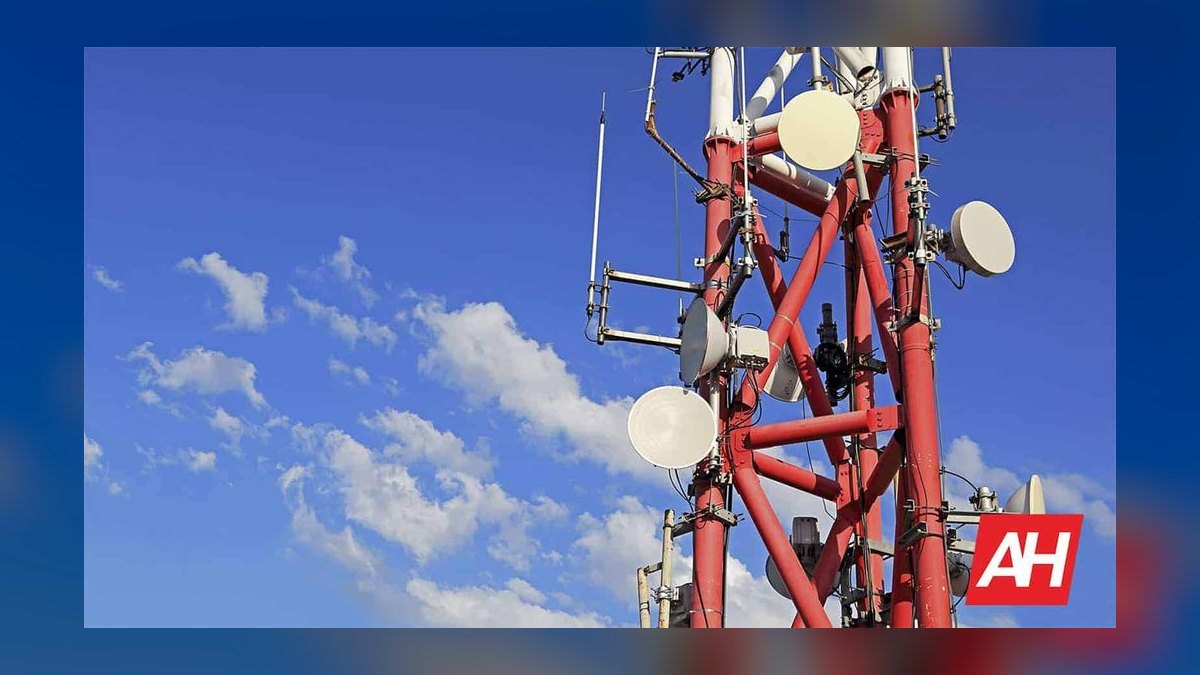
Tower density and backhaul. Spectrum without towers is a spreadsheet entry. What actually matters is how many cell sites sit within range of you, whether they are fiber-fed or microwave-fed, and how much capacity each one has. Rural Iowa towers are often shared infrastructure — carriers lease space on the same tower from the same tower company — which is why a spot with one carrier's coverage often has all three. Conversely, a genuine hole is usually a hole for everyone. Backhaul matters because a tower fed by a thin microwave link will bottleneck under load no matter how much spectrum it broadcasts, which is how you end up with five bars and unusable data at 6 p.m.
Roaming and partner agreements. Iowa has a meaningful history of regional and rural carriers, and the national networks fill gaps through roaming arrangements rather than building everywhere themselves. This is why an MVNO or a carrier with roaming rights can occasionally outperform its parent network in a specific rural pocket, and why postpaid plans that include domestic roaming behave differently from budget prepaid plans that strip it out. When you compare a $25 prepaid plan against a $70 postpaid plan on the same network, roaming rights and data prioritization are usually the two things you gave up.
Prioritization tiers. Every unlimited plan has a threshold — commonly somewhere in the 30 GB to 60 GB range depending on tier — after which your traffic is deprioritized relative to higher-tier customers when a tower is congested. Deprioritization is not throttling; on an empty rural tower you will not notice it at all. On a congested tower — a football Saturday in Iowa City, the state fairgrounds in August, a county fair, a crowded interstate rest stop on a holiday weekend — the difference between prioritized and deprioritized traffic can be the difference between usable and unusable. Budget brands are deprioritized by design, and that trade-off is the entire reason they cost less.

The diagram above is the decision spine, but the honest summary is simpler: your address decides more than the carrier brand does. Two households in the same ZIP code can reach opposite conclusions, and both are correct.
Benchmarks and realistic ranges
Concrete numbers help, provided you treat them as ranges rather than promises. Here is what is reasonable to expect in Iowa, stated as bands rather than precise figures, because real-world performance varies by handset, band support, time of day, and distance from the serving tower.
Metro download speeds. In Des Moines, Cedar Rapids, the Quad Cities, and Iowa City, mid-band 5G on a modern handset typically lands somewhere in the low-hundreds of Mbps under normal conditions, with peaks meaningfully higher on an uncongested sector and drops into the tens of Mbps at busy times or at the edge of a mid-band cell. Any of those numbers is far more bandwidth than a phone needs — 4K video streams comfortably under 25 Mbps, and a video call needs a small fraction of that. Treat metro speed comparisons as a tiebreaker, not a decision criterion.
Rural download speeds. Outside mid-band range, you are on low-band 5G or LTE, and realistic throughput commonly falls into the single-digit to low-double-digit Mbps range, occasionally better on a well-fed tower with light load. That is enough for streaming music, navigation, messaging, standard-definition to HD video, and normal work applications. It is not enough for uploading large files quickly or for a household of simultaneous heavy users.

Upload speeds. This is the number nobody advertises and the one that bites remote workers. Uploads on LTE and low-band 5G frequently sit in the 1 to 10 Mbps range in rural areas. If you back up photos, push large CAD or video files, run a home security camera fleet, or join video calls where your camera is on all day, upload is your real constraint. Check it explicitly during any trial period.
Latency. Expect roughly 25 to 60 milliseconds on modern 5G and LTE in most of the state, higher on congested or distantly-served sites. That range is fine for video calls, cloud applications, and most gaming outside twitch-competitive titles.
Plan pricing. Single-line postpaid unlimited plans from the national carriers generally sit in the $50 to $90 per month range before taxes, fees, and autopay discounts, with premium tiers at the top of that band adding larger premium-data allotments, more hotspot data, international inclusions, and bundled streaming services. Multi-line family pricing drops the per-line cost substantially — four lines often lands in the $25 to $45 per line range depending on tier and promotions. Prepaid and MVNO brands running on the same networks typically sit in the $15 to $50 range, with the trade-offs described earlier. Fixed wireless home internet commonly falls in the $35 to $70 range, often with a discount for existing phone customers.

Hotspot allotments. Entry unlimited plans frequently include little or no high-speed hotspot data; mid and premium tiers commonly include somewhere between 15 GB and 50 GB. If you tether a laptop regularly — a real pattern for field sales, ag consultants, and contractors driving between sites — hotspot allotment is often the line item that should drive your tier choice, not the phone data cap.
Coverage percentages. Carriers publish population-coverage figures in the high 90s nationally, and all three national networks cover the large majority of Iowa's population. Population coverage is a fundamentally misleading metric for a rural state, because covering Des Moines covers 200,000-plus people in a small area. Geographic coverage — the share of land area served — is the number that matters if you drive gravel roads, farm, hunt, or work outdoors, and it is always dramatically lower than the population figure for every carrier. When comparing, look at the map for your specific townships, not the headline percentage.
Switching costs. Porting a number is free and usually completes in minutes to a few hours. The real cost sits in device financing: if you owe a balance on an installment plan, switching either requires paying it off or accepting a switching promotion that covers it in bill credits spread over 24 to 36 months, which effectively locks you in for that period. Budget for that lock-in as part of the decision.
Risks, edge cases, and failure modes
The coverage map is a model, not a measurement. Published maps are predictive propagation models with terrain and clutter assumptions baked in. They are directionally useful and locally unreliable. The classic Iowa failure mode is a map showing solid coverage over a river valley, a set of bluffs in the northeast Driftless region, or the rolling Loess Hills along the western edge — terrain that shadows signal in ways the model smooths over. Always validate with a trial, and validate at your actual coordinates rather than in the nearest town.

Indoor attenuation. Metal-clad agricultural buildings, modern low-emissivity window coatings, poured-concrete basements, and older homes with foil-backed insulation all block signal aggressively. A phone that shows three bars in the driveway can be unusable in the basement office. Mitigations, roughly in order of cost: enable Wi-Fi calling (free, and genuinely effective if your home internet is stable), reposition the router and use the phone near an exterior window, install a signal booster with an outdoor donor antenna (a few hundred dollars, and it needs a usable outdoor signal to amplify), or add a femtocell-style device if your carrier offers one.
Congestion events. Iowa produces predictable, extreme, temporary congestion: Hawkeyes and Cyclones game days, the state fair, RAGBRAI's rolling route across the state each July, county fairs, and the caucus cycle when it runs. On those days, deprioritized plans degrade badly and even premium plans slow down. If your work depends on connectivity during a known event, plan around it rather than assuming your carrier will absorb it.
Weather and power. Severe thunderstorms, derechos, and ice storms take out both towers and the commercial power feeding them. Towers have battery and sometimes generator backup, but extended outages exhaust it. The 2020 derecho remains the reference event for how badly wide-area infrastructure damage disrupts communications across eastern Iowa. The mitigation is redundancy: a second device on a different network, a charged power bank, and knowing which nearby location keeps working. For farms and rural businesses, a satellite messaging option or satellite broadband as a backup path is increasingly reasonable insurance rather than an exotic purchase.

Device band support matters more than people realize. A phone that lacks the specific bands your carrier uses in your area will underperform on that carrier no matter how good the network is. This is the most common cause of "I switched and it got worse" when the network itself is fine. Bringing an unlocked device from another carrier is usually workable but check band compatibility explicitly, particularly for low-band 5G and for the mid-band ranges that deliver speed. Older devices may also lack Voice over New Radio support, which affects call setup on 5G-only sites.
Prepaid support gaps. Budget brands typically offer chat-only or app-only support with no local storefront. When something breaks — a failed port, a SIM provisioning error, a billing dispute — the resolution path is slower and more frustrating. Some people value the $30 monthly savings more than the support; many people discover during a bad week that they did not. Weigh this honestly against how much troubleshooting patience you have.
Business and fleet edge cases. Organizations running mobile workforces across Iowa face a different calculus. A field service operation, an agricultural cooperative with agronomists driving between fields, a trucking company, or a home-health provider covering multiple counties will often find that no single carrier covers every route acceptably. The standard answer is a dual-carrier strategy: primary lines on one network, a subset of critical devices or in-vehicle routers on a second, or multi-carrier routers that fail over automatically. That costs more per month and saves considerably more in avoided downtime. Public-safety agencies have an additional option in FirstNet, which provides priority and preemption on AT&T's network for verified first responders.
Connected devices and telematics. The same coverage question governs IoT deployments — grain bin monitors, irrigation controls, livestock sensors, fleet telematics, connected implements, and remote camera systems. These devices often sit in exactly the low-signal locations where consumer coverage is worst, and they are frequently on cheap data plans without roaming. If you are specifying hardware for a farm or rural business, evaluate the carrier at the equipment's location, not at the office.

A practical rollout plan
Treat this as a small project rather than a store visit. The sequence below takes two to five weeks and dramatically reduces the odds of regret.
Step one: map your real footprint. Write down the five to eight locations where you actually need service — home, workplace, the buildings you spend hours in, the schools or facilities you visit weekly, the commute route, and any recurring travel. Include the specific rooms in your home where reception matters. Vague requirements produce vague results; a list of addresses gives you something to test against.
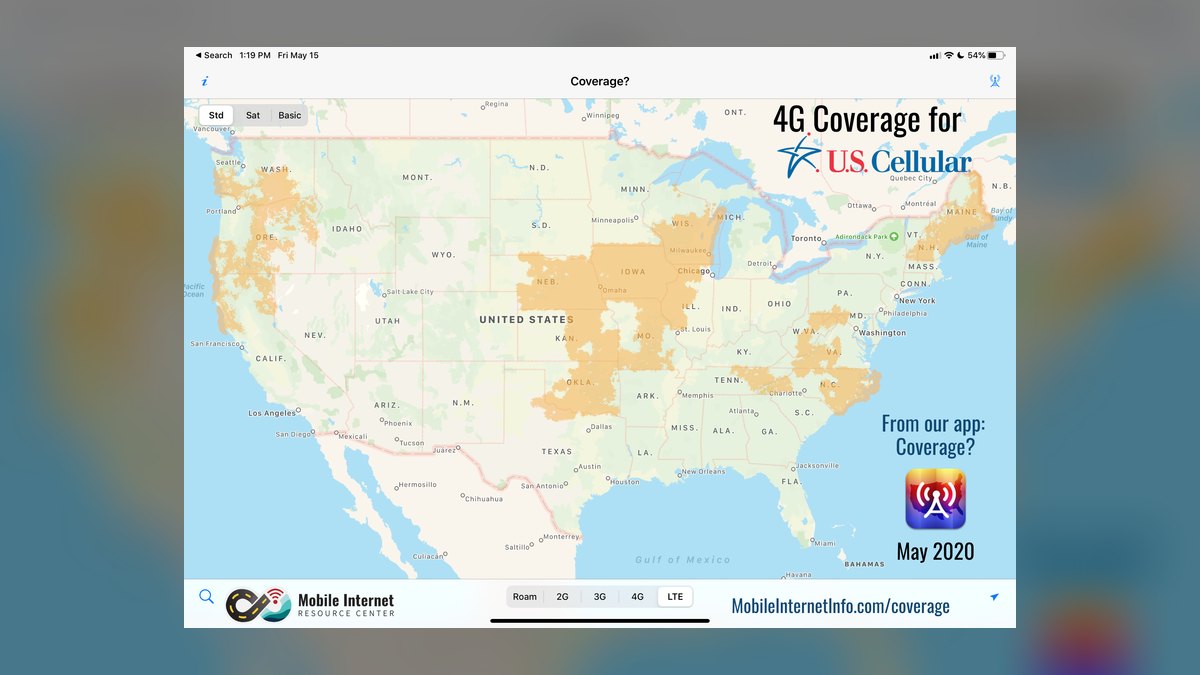
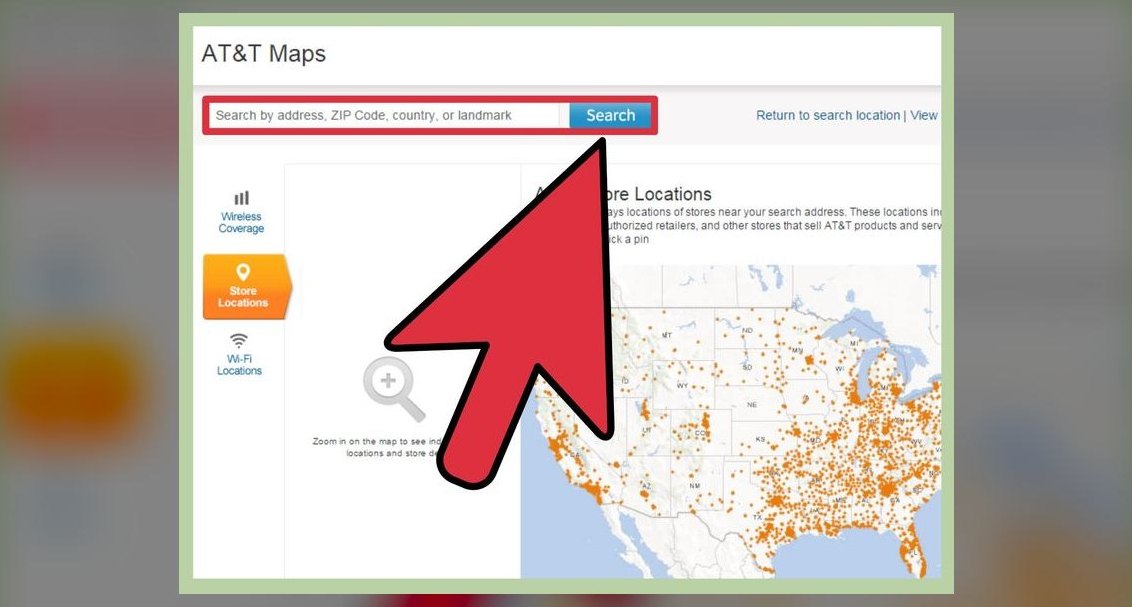
Step two: check maps for those specific points. Pull up each national carrier's map and zoom to your addresses, not your county. Note which show mid-band 5G, which show low-band 5G or LTE only, and which show partner or roaming coverage. Cross-check against the FCC's national broadband map, which aggregates carrier-reported availability and includes a challenge process for reporting inaccurate data. Discrepancies between a carrier's own map and the FCC data are a useful warning sign.
Step three: ask locally. In small-town Iowa this is genuinely the highest-signal research method available. Neighbors, the co-op, the school office, the local fire department, and community social media groups will tell you within an hour which carrier works at which end of the county. Local knowledge routinely beats national maps because it reflects the specific tower that actually serves you.
Step four: run a real trial. Every major carrier offers some form of trial — commonly an eSIM-based test line that runs alongside your existing service for a period of weeks, or a money-back window on a new activation. Use it. Activate the trial on your own phone, keep your existing line active, and live with both for the full window. During the trial, run speed tests at each mapped location at different times of day, place actual voice calls from the worst spots, check upload speed specifically, and drive your commute with a call in progress to see where it drops.
Step five: evaluate the plan tier, not just the carrier. Once the network is settled, pick the tier by matching your real usage: pull your last three months of data usage from your current carrier's app, add your hotspot needs, and buy one tier above that if you are close to a prioritization threshold. Do not buy premium tiers for bundled streaming services you already pay for separately; do check whether an existing subscription becomes redundant.
Step six: sequence the port carefully. Port only after the trial passes. Keep the old service active until the port completes and you have confirmed calls, texts, and two-factor authentication codes all arrive on the new line — SMS-based authentication failures during a port are the most common self-inflicted wound in switching. Do not cancel the old account manually; initiating the port at the new carrier cancels it automatically, and cancelling first can strand the number.
Step seven: settle the home internet question. If you are considering fixed wireless from the same carrier, evaluate it separately using the same trial discipline, and check whether your address has a fiber or fixed-wireless-ISP alternative first. Bundling is often the cheapest total outcome, but it concentrates your household's connectivity on one tower.
Step eight: build the fallback. Whatever you choose, keep a cheap secondary option available — a prepaid SIM on a different network in a drawer, an eSIM profile you can activate in minutes, or a spare device. In a state where a single storm can take out regional infrastructure, a $15 backup line is cheap insurance.
Run this once and the answer holds for years, because tower footprints change slowly. Revisit it when you move, when a carrier announces new buildout in your county, or when your device financing term ends and you are free to switch without penalty.
Related questions
Does the best carrier in Des Moines match the best carrier in rural Iowa?
Usually not. Metro performance is dominated by mid-band 5G capacity, where all three national networks are competitive. Rural performance is dominated by low-band reach, which favors carriers with broad 600 MHz or well-built 850 MHz footprints. Evaluate the two environments separately.
Are prepaid brands the same network as their parent carrier?
Yes, they use the same towers, but not the same treatment. Prepaid and MVNO customers are typically deprioritized during congestion and may have reduced or no domestic roaming, lower hotspot allotments, and video resolution caps. On an empty rural tower the experience is identical; on a busy one it is not.
Is 5G home internet a real substitute for wired broadband in Iowa?
For many households, yes — particularly where the alternative is aging DSL. It depends entirely on your distance from the serving tower and that tower's load. Speeds fluctuate more than wired service. Test it during peak evening hours before cancelling anything.
What is the fastest way to fix a weak signal at home?
Turn on Wi-Fi calling first; it is free and routes calls over your home internet. If that is insufficient, a signal booster with an exterior antenna helps when there is a usable outdoor signal to amplify. Neither fixes a location with no outdoor signal at all.
Should a rural business run more than one carrier?
Often, yes. If your team drives multiple counties, no single network covers every route well. Splitting lines across two carriers, or deploying multi-carrier failover routers in vehicles and at remote sites, costs modestly more and eliminates the single-network failure mode.
FAQ
How much does coverage actually vary between Iowa counties?
Substantially. The corridor counties along I-80 and I-35 have dense tower coverage and multiple carriers with mid-band 5G. North-central and southwestern counties, and the bluff and river-valley terrain in the northeast and along the Missouri River, have sparser towers and more terrain shadowing. Two counties that look identical on a population-coverage chart can behave very differently on the ground, which is why the trial step matters more here than in an urban state.
Is it worth paying for a premium unlimited tier?
Only if you regularly exceed the prioritization threshold or need substantial hotspot data. Pull your actual usage from your carrier's app before deciding. Most people use far less mobile data than they assume, because home and office Wi-Fi absorbs the bulk of it. The exceptions are heavy tethering users, people without home broadband, and households where the phone is the primary internet connection.
Will switching carriers cost me anything?
Porting the number is free. The real cost is any remaining balance on a device installment plan, which either must be paid off or gets covered by switching promotions that pay it back as bill credits over 24 to 36 months — which effectively commits you for that term. Read the promotional terms carefully; the credits typically stop if you leave early.
Does my phone model change which carrier performs best?
Yes, meaningfully. Band support varies by model and by which carrier version of a device you bought. A handset missing the low-band 5G or mid-band frequencies your carrier uses locally will underperform regardless of network quality. Before switching, verify your specific model supports the bands the new carrier deploys in your area, and confirm Wi-Fi calling and Voice over New Radio support.
What should farms and rural businesses do about connected equipment?
Evaluate coverage at the equipment's physical location, not at the office. Grain bin sensors, irrigation controllers, livestock monitors, and field telematics sit in the weakest-signal spots by definition. Consider external antennas, and check whether the device's data plan includes roaming — many low-cost IoT plans do not, which turns a marginal location into a dead one.
How do I prepare for a storm or extended outage?
Keep a charged power bank and a car charger, know which nearby locations retained service in past outages, and maintain a backup line on a second network — an inexpensive prepaid SIM or a spare eSIM profile activates in minutes. For remote properties, satellite messaging or satellite broadband is a reasonable secondary path. Text messages often get through when voice calls will not, because they need far less signal.
Sources
- FCC National Broadband Map
- T-Mobile Coverage Map
- Verizon Coverage Map
- AT&T Wireless Coverage Map
- UScellular Coverage Map
- Ookla Speedtest United States Reports
- FirstNet Authority
- FCC Wireless Spectrum Overview
- U.S. Census Bureau QuickFacts: Iowa
- FCC Consumer Guide: Cell Phone Signal Boosters
Related on PULSE
This page will be disappearing soon. Save it to your device for $1 — or read it free while it is here.
@Kory-White- · if Venmo asks, the last 4 of my number are 2012
This page is gone.
This one is off the shelf now. $1 keeps it on your phone for good — the whole page, pictures and diagrams included.
 telcoIs Mint Mobile worth it in 2027?
 telcoBest 5G Home Internet Providers in 2027
 telcoHow do I activate a new cell phone for the first time in 2027?
 telcoHow do I choose between fiber, cable, and 5G home internet in 2027?
 telcoBest 5G Phones in 2027
 telcoBest Cell Phone Plans for Heavy Data Users in 2027
 telcoHow do I get the best Black Friday cell phone deal in 2027?
 telcoWhat is the difference between 5G UW, 5G+, and regular 5G in 2027?
 telcoShould I finance a new phone or buy it outright in 2027?
 telcoT-Mobile vs Visible: which is better in 2027?