

Best Cellular and Wireless Carrier in Mississippi in 2027
 Curated byKory White · Fractional CRO · Maryland
Quality
Certified

Verizon is the strongest overall cellular and wireless carrier in Mississippi for 2027, thanks to the broadest rural and highway coverage across the state's 82 counties. AT&T runs a close second, particularly in the Delta and along interstate corridors. T-Mobile wins on price and urban 5G speed, while C Spire and UScellular offer meaningful local support.
A pickup truck, a gravel road, and a dropped call
Picture a route technician who lives in Rankin County, services HVAC accounts across Yazoo, Holmes, and Leflore, and finishes the week with a run down to Hattiesburg. That single work week crosses almost every coverage regime Mississippi has: dense mid-band 5G around the Jackson metro, thin low-band 5G on the two-lane state highways, patchy handoff zones in the Delta's flat farmland, and stretches of pine timber in the Pine Belt where the only thing keeping the phone alive is 4G LTE on a low-frequency band that travels far and penetrates foliage.
The reason "best carrier in Mississippi" is a harder question here than in, say, Chicago is that Mississippi's population is unusually dispersed. Roughly half the state's residents live outside metropolitan statistical areas, and the state's largest city is small by national standards. Carriers build capacity where subscribers cluster, so the metro-versus-rural gap in Mississippi is wider than the national average. A carrier can honestly advertise excellent 5G coverage and still leave that route technician stranded for twenty minutes on a county road between Belzoni and Tchula.
That is the scenario that should frame any carrier decision in the state. Ask yourself three questions before you look at a single price. First, what percentage of your week is spent inside the Jackson, Gulfport-Biloxi, Hattiesburg, Tupelo, Meridian, or Southaven/DeSoto footprints? Second, how much of your usage is latency-sensitive (video calls, field-service dispatch apps, card readers, telehealth) versus tolerant of a slow pipe (email, texts, cached maps)? Third, what happens operationally if the phone is unreachable for fifteen minutes — is that an inconvenience or a lost job?

If your answers skew rural and consequence-heavy, coverage breadth dominates everything else and Verizon or AT&T are the realistic finalists. If you live and work inside a metro and your worst-case failure is a delayed reply, price and speed dominate, and T-Mobile or one of the low-cost brands riding a major network becomes the rational pick. The same logic scales up: a small business choosing a fleet plan for eight field trucks is really making a coverage-risk decision, not a phone-plan decision, and it should be evaluated the way you'd evaluate any other operational dependency — by worst case, not by average case.
There's an adjacent consideration most Mississippi buyers underweight: fixed wireless. Because wired broadband is uneven outside the metros, many households and small offices in the state now use cellular-network home internet as a primary or backup connection. That changes the carrier calculus, because the carrier with the best signal at your house may be worth choosing for the phone too — one relationship, one bill, one coverage footprint to reason about, and a hotspot fallback that actually works when the fiber cut happens.
How coverage, spectrum, and the network under the brand actually work
Most disappointment with a Mississippi carrier choice traces to a single misunderstanding: "5G" on a coverage map is not one thing. It is at least three distinct products sharing a logo.

Low-band 5G (roughly the 600–850 MHz range) is the layer that paints the big colored blobs on national maps. It travels far, bends around terrain, and pushes through pine canopy and metal-roofed barns. It is also narrow, so real-world throughput often lands close to good 4G LTE. This is the layer that keeps you connected on a Delta county road, and it is the layer that makes a map look better than the experience feels.
Mid-band 5G (C-band, 2.5 GHz, 3.5 GHz depending on carrier) is where the genuine speed lift lives. It has far more capacity but a much shorter reach per tower, so it gets deployed where subscriber density justifies the build: metros, suburbs, interstate corridors, stadiums, campuses. High-band millimeter wave is the third layer — enormous throughput, block-scale range, effectively a downtown-and-venue technology.
Carriers brand the fast layers separately, and learning those labels is the single most useful consumer skill in this market: Verizon calls it 5G Ultra Wideband, AT&T uses 5G+, and T-Mobile uses 5G Ultra Capacity. Plain "5G" on any of the three means you may well be on the low-band layer. When you check a coverage map for your ZIP code, the only question that matters is whether the fast-branded layer reaches the specific places you spend time — home, work, the school, the two or three routes you actually drive.

The second structural fact: the brand on your bill is frequently not the company that owns the towers. Mobile virtual network operators lease capacity wholesale and resell it. Visible is Verizon's own direct-to-consumer prepaid brand. Cricket Wireless is AT&T's prepaid brand. Metro by T-Mobile and Mint Mobile both ride T-Mobile. Cable-company offerings — Xfinity Mobile and Spectrum Mobile — have historically ridden Verizon's network, which is why they can advertise big coverage numbers without owning a single Mississippi tower.
That arrangement carries a real, specific catch: deprioritization. Postpaid customers on the network owner's own premium plans generally get scheduling priority when a cell site is congested. Prepaid and MVNO traffic often sits a tier lower, sometimes only after a monthly premium-data threshold is crossed, sometimes at all times. The practical consequence is that an MVNO's coverage footprint matches the host network — the signal bars are real — while its throughput during a Friday-evening rush on a busy Jackson-area sector can fall dramatically. Coverage is inherited; performance under load is not.
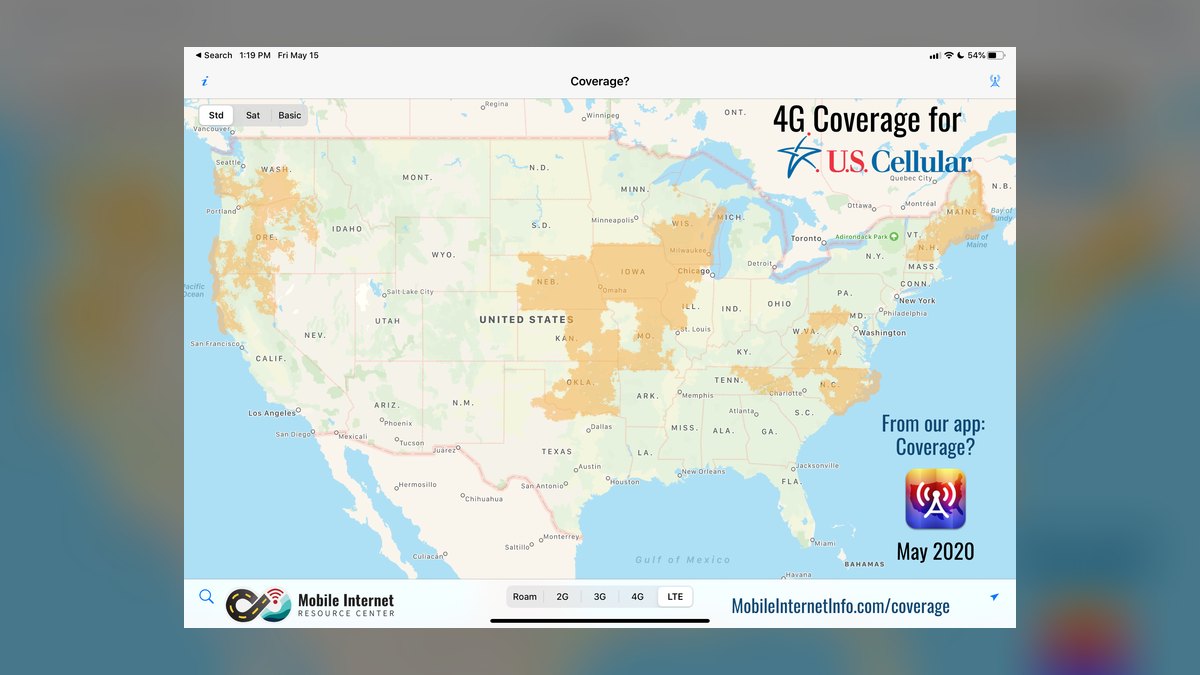
One more mechanism worth knowing, because it quietly decides outcomes in rural counties: roaming and priority agreements. Regional carriers such as UScellular supplement native coverage with roaming onto a national network where they have no towers, which means your phone can show full bars in a county the carrier doesn't actually serve — usually with restrictions on data volume or speed while roaming. Separately, AT&T operates FirstNet, the dedicated public-safety network, which gives qualified first responders preemptive priority. If you work in EMS, fire, or emergency management anywhere in rural Mississippi, that single feature can outrank every price comparison on the page.

The numbers that should drive the decision
Treat every figure a carrier publishes as a claim about a category, not a promise about your address. With that caveat, here is how the tiers separate.
Coverage breadth. Verizon and AT&T both cover the large majority of Mississippi's land area and population, and they are close enough that the difference at any given address is more meaningful than the difference in the statewide averages. T-Mobile's population coverage is competitive statewide and its fast-layer footprint is strong in metros, but its rural land-area coverage in eastern and east-central counties has historically trailed the other two. UScellular covers a substantial share of the state natively, concentrated toward the east — Hattiesburg, Meridian, Columbus — and fills gaps with roaming. C Spire, headquartered in Ridgeland, covers the Jackson metro, the Gulf Coast, and the I-55 spine well, and thins out in the Delta and the far northeast.
Speed tiers. Expect a rough hierarchy rather than exact numbers. Mid-band 5G in Jackson, Gulfport, Biloxi, Southaven, and along interstate corridors commonly delivers download speeds in the high tens to low hundreds of megabits per second on the national carriers — enough that the bottleneck moves to the app, not the link. Low-band 5G and modern 4G LTE in rural counties typically land in the single digits to low tens of megabits, which is fine for messaging, maps, card readers, and voice, and marginal for large file uploads or multi-participant video. Deprioritized prepaid traffic during a congested hour can fall to a fraction of the same tower's premium throughput. Regional carriers generally sit below the national mid-band peaks but often deliver more consistent results in their home markets because their sectors are less loaded.

Price architecture. The pricing pattern across the market is more stable than any individual price point, so plan around the pattern. Entry-level postpaid unlimited plans from the national carriers cluster in the $60–$70 per line range for a single line, and the per-line price drops sharply with lines added — often into the $30s per line at four lines. Premium postpaid tiers land roughly $15–$30 above entry level and buy three things: a large premium-data allowance before deprioritization, a much bigger mobile hotspot bucket, and bundled streaming. Prepaid brands from the network owners typically sit in the $50–$60 range for unlimited on a single line with no multi-line math required. Direct-to-consumer and annual-prepay MVNOs go lower still, into the $15–$40 range, trading away priority, retail support, and sometimes hotspot generosity.
The three specs that actually differentiate plans. Ignore the marketing tiles and compare exactly these. First, premium data allowance — the gigabytes per month you get before deprioritization kicks in; entry plans often have little or none, premium plans commonly include tens of gigabytes. Second, hotspot allowance, which in Mississippi doubles as your broadband contingency plan and ranges from a few gigabytes on entry tiers to a couple dozen on premium ones. Third, video resolution caps: cheaper tiers frequently cap streaming at 480p, which is invisible on a phone and obvious on a hotel television.
Run the math on the actual comparison. Four lines at an entry postpaid tier around $35 per line is roughly $140 monthly, about $1,680 a year, plus taxes and fees, plus device financing. Four lines on a low-cost MVNO at $25–$30 per line is roughly $100–$120 monthly, saving on the order of $250–$500 a year. That is a real number — and it is the number you should weigh against a plausible failure cost. One missed service call, one hour of a technician idling because dispatch couldn't reach them, and the savings evaporate. Households with no field-work exposure should absolutely take the savings; a business with trucks on Delta county roads generally should not.
Two costs buyers routinely miss. Device financing is typically spread over 24–36 months and locks you to the carrier for the duration; leaving early accelerates the remaining balance. And promotional trade-in credits are usually delivered as monthly bill credits over that same term rather than as cash up front, so the advertised "free phone" is a commitment, not a discount. Prepaid and MVNO brands generally skip both mechanisms — you buy the handset outright and stay free to move, which for a coverage-uncertain address is worth real money as optionality.

Trade-offs, and the alternatives worth a serious look
Every choice in this market is a trade along one of four axes: coverage breadth, peak speed, monthly cost, and support quality. You can reliably get three; the fourth is what you pay with.
Choosing coverage breadth means postpaid service on Verizon or AT&T, and it means paying near the top of the market. What you buy is the elimination of a category of problem — you stop thinking about whether the phone will work somewhere. For anyone whose income depends on being reachable across rural Mississippi, that is the correct purchase and the analysis really can stop there.
Choosing peak speed and price together means T-Mobile or a T-Mobile-based brand, and it means accepting that rural coverage in parts of east and east-central Mississippi will be thinner. This is an excellent choice for someone whose life happens inside the Jackson, Gulf Coast, or DeSoto County footprints, and a poor one for someone who drives the state.

Choosing local support means C Spire or UScellular. The trade is peak speed and, in places, coverage breadth — but the thing you get is genuinely hard to buy from a national carrier in a small Mississippi town: a nearby storefront and staff who handle your account in person. For an older customer, a first smartphone, or a small business without IT support, walking into a store and having a person fix the problem in twenty minutes has real value that no speed test captures. C Spire also runs fiber in the state, which makes a bundled home-plus-mobile relationship straightforward in its footprint.
Choosing minimum cost means Visible, Mint Mobile, Cricket, Metro, or a cable-company mobile plan. The trade is priority during congestion and, for the digital-only brands, the absence of a store to walk into. For a light user, a second line, a child's phone, or a tablet, this is often the smartest money on the page.
Two hybrid strategies deserve more attention than they get. Split the fleet by route. A business does not have to standardize on one carrier. Put the trucks that work the Delta and rural county roads on the broadest-coverage network and the office staff on the cheapest metro plan. The billing overhead is an hour a month; the coverage improvement is structural. Carry a second line on a different network. A $15–$30 monthly MVNO line on a different host network than your primary, kept in a spare phone or an eSIM slot on your main one, is the cheapest redundancy available to a rural Mississippi worker. Modern phones with dual eSIM support make this nearly frictionless, and it converts a total outage into a slow connection.

The adjacent play worth evaluating in the same decision: fixed wireless home internet. In parts of Mississippi where wired options are limited, cellular home internet from a national carrier is a legitimate primary connection and an excellent backup one. Bundling it with your mobile lines often unlocks a discount, and it gives you a second, independent path to the internet during a fiber cut or a storm. Given the state's hurricane exposure on the Coast, the ability to fall back on a battery-powered hotspot on a network that stayed up is not a hypothetical benefit.
Where Mississippi buyers get burned
Buying from the national map instead of your own addresses. A national coverage map is a marketing asset. Check the specific places you live: your house, your workplace, the school, the two routes you drive weekly, and the one rural road you take to see family. If a carrier fails at any address you can't avoid, its statewide average is irrelevant to you.
Reading "5G" as "fast 5G." This is the most common and most expensive misread. Look specifically for 5G Ultra Wideband, 5G+, or 5G Ultra Capacity at your addresses. Plain 5G may be low-band, which is valuable for reach and unremarkable for throughput.
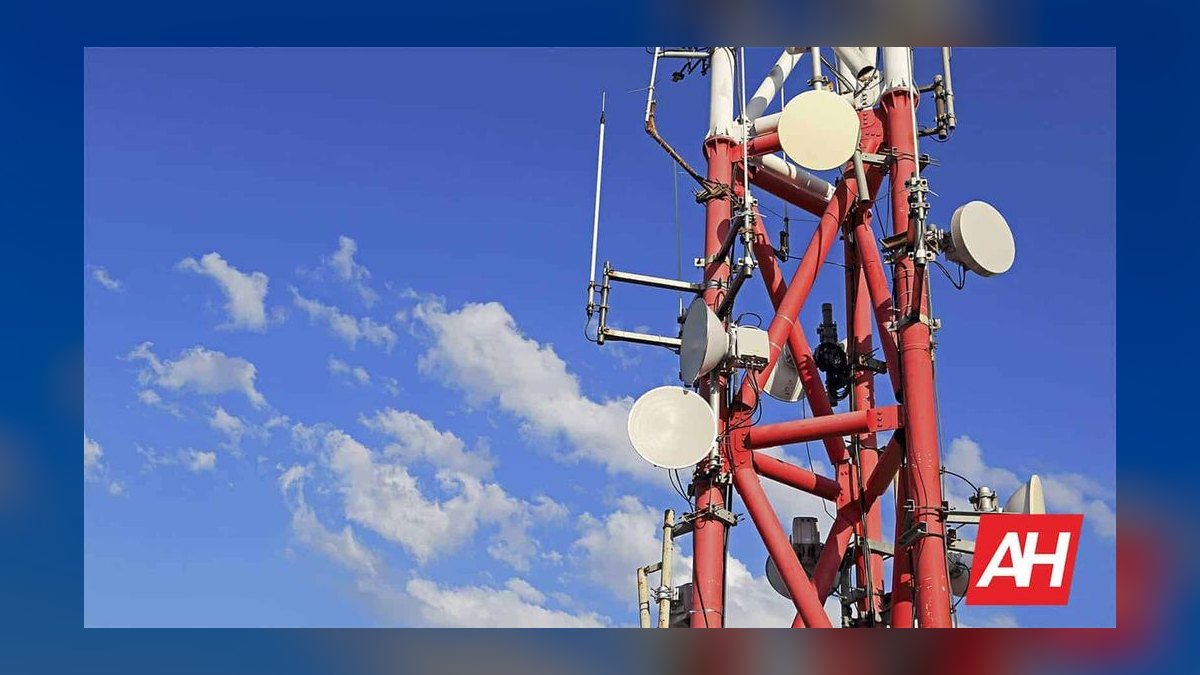
Trusting a single data source. Carrier maps are self-reported. Crowdsourced measurements from Ookla and Opensignal reflect where testers actually are, which biases toward populated areas. The FCC's national broadband map aggregates carrier-submitted mobile coverage and lets you compare providers at one location and file a challenge if reality doesn't match the claim. Use all three: carrier map for the claim, crowdsourced data for the experience, FCC map for the cross-check.
Skipping the trial that costs nothing. Every major carrier supports eSIM activation, and several offer a free trial line you can run alongside your existing service on a compatible phone. This is the single highest-value step available. Run a candidate carrier for a week or two over your actual routes before you port your number or finance a device. A hundred dollars of due diligence and two weeks of patience prevents a two-year mistake.
Underestimating the handset. Band support varies by model and by where the phone was sold. A device that doesn't support your carrier's specific mid-band frequencies will never see the fast layer no matter how good coverage is, and a phone bought for one carrier may lack bands another relies on. Before switching, verify the exact model is certified for the network you're joining — carrier compatibility checkers take a serial number and answer in seconds. Unlocked international variants are a frequent culprit here.
Missing the discounts you already qualify for. Every national carrier and most regional ones run substantial ongoing discounts for military, veterans, first responders, teachers, nurses, and people 55 and older, and many employers and universities have negotiated rates. These are typically per-line and applied for the life of the account, so they routinely beat any promotional offer. Ask explicitly; it is not always volunteered. If you work in public safety, ask specifically about FirstNet eligibility — priority access and preemption on a congested network during a storm response is a different class of benefit than a discount.
Ignoring the exit. Before you sign, know your unwind cost: the remaining device balance, whether promotional credits vanish on departure, and whether your number ports cleanly. Keep the account active until the port completes — canceling first can strand the number. And confirm the phone is carrier-unlocked before you plan to move, since financing agreements commonly keep a device locked until it's paid off.
Forgetting that networks change. Coverage in 2027 is not coverage in 2024. Carriers are still densifying mid-band across secondary Mississippi markets, and a county that was thin two years ago may be well covered now. Re-check the maps rather than relying on a neighbor's verdict from three years back, and revisit the decision annually — the switching cost is lower than it used to be, and the pricing environment rewards people who look.
Related questions
Which carrier is best for rural Mississippi specifically?
Verizon or AT&T, in that general order, because their combined land-area coverage across the state's non-metro counties is the broadest. Verify at your exact addresses — the two are close enough statewide that the local answer often differs from the statewide one.
Is a prepaid brand a real substitute for postpaid?
For coverage, yes — the footprint is the host network's. For performance under congestion, no. Prepaid and MVNO traffic is commonly deprioritized behind premium postpaid, so busy-hour speeds can drop noticeably even with full signal bars.
How much does going to four lines actually save?
Per-line pricing typically falls from roughly $60–$70 at one line to the $30s at four on national postpaid plans. That's a large enough gap that families and small teams should almost always consolidate onto one account rather than buying lines separately.
Does C Spire being a Mississippi company matter?
Practically, yes, in two ways: physical retail presence across the state, and in-state fiber that makes bundling home and mobile simple. It matters less if you regularly travel outside its footprint, where you're reliant on roaming.
Should I use cellular for home internet in Mississippi?
It's a reasonable primary connection where wired options are limited, and an excellent backup everywhere. Bundling with mobile lines often discounts both, and an independent second path to the internet is valuable during storm season on the Coast.
FAQ
How do I check coverage for my specific ZIP code in Mississippi?
Use three sources rather than one. Start with each carrier's official coverage map and enter your address, not just the ZIP — coverage varies within a ZIP code. Cross-check against the FCC's national broadband map, which aggregates carrier-submitted mobile data and lets you compare providers side by side at one point. Then look at crowdsourced measurements from Ookla or Opensignal for a sense of real-world experience in your area. If the three disagree, trust the crowdsourced data for speed and the carrier map for basic reach.
What's the difference between 5G and the fast 5G?
Plain "5G" often means low-band spectrum that travels far but delivers speeds close to good 4G LTE. The fast layer is mid-band, branded 5G Ultra Wideband by Verizon, 5G+ by AT&T, and 5G Ultra Capacity by T-Mobile. In Mississippi, that fast layer is concentrated in Jackson, the Gulf Coast, Southaven, and along interstate corridors. If a map shows only plain 5G at your address, expect solid reliability rather than headline speeds.
Can I try a carrier before I switch my number?
Usually, yes. Most major carriers support eSIM activation and several offer a free trial line that runs alongside your existing service on a compatible phone. This is the best way to evaluate a network in Mississippi, because it tests your actual routes instead of a map's estimate. Run the trial for at least a week and include every place you regularly go, especially the rural stretches.
Why does my phone show full bars but load nothing?
Full bars measure signal strength to the tower, not available capacity. A congested sector, or a plan whose traffic is deprioritized, can produce strong signal with very slow throughput. It can also mean you're attached to a low-band layer with limited headroom. If this happens repeatedly at the same place and time, it's a capacity issue at that site, not a problem with your handset.
What's the cheapest way to get broad Mississippi coverage?
A prepaid or direct-to-consumer brand that rides the network with the coverage you need. Because MVNOs inherit their host's footprint, you can get broad-coverage signal at a fraction of postpaid pricing. The trade is congestion priority and, for digital-only brands, no retail support. For light users and secondary lines, it's typically the best value available.
Does my current phone work on a different carrier?
Not always. Band support varies by model and by the market a device was sold into, so a phone may connect but never reach a carrier's fast mid-band layer. Run the exact model through the target carrier's compatibility checker before switching, and confirm the device is carrier-unlocked — financed phones commonly stay locked until the balance is paid.
Sources
- FCC National Broadband Map
- Verizon Coverage Map
- AT&T Wireless Coverage Map
- T-Mobile Coverage Map
- UScellular Coverage Map
- C Spire Wireless
- FirstNet (AT&T public safety network)
- Opensignal USA Mobile Network Experience Reports
- Ookla Speedtest Global Index and Reports
- U.S. Census Bureau QuickFacts: Mississippi
Related on PULSE
This page will be disappearing soon. Save it to your device for $1 — or read it free while it is here.
@Kory-White- · if Venmo asks, the last 4 of my number are 2012
This page is gone.
This one is off the shelf now. $1 keeps it on your phone for good — the whole page, pictures and diagrams included.
 telcoHow does international roaming work and how do I avoid huge bills in 2027?
 telcoMint Mobile vs Cricket Wireless: which is better in 2027?
 telcoWhy is my cell phone data so slow and am I being throttled in 2027?
 telcoWhat are the most common mistakes in Telco in 2027?
 telcoWhat is the best two-line cell phone plan in 2027?
 telcoHow do I test a carrier's coverage before fully switching in 2027?
 telcoUS Mobile vs Mint Mobile: which is better in 2027?
 telcoWhat is the best plan if I barely use data in 2027?
 telcoHow do I port my phone number to a new carrier in 2027?
 telcoIs carrier phone insurance worth it in 2027?