

Best Cellular and Wireless Carrier in San Diego in 2027
 Curated byKory White · Fractional CRO · Maryland
Quality
Certified

The best cellular carrier in San Diego depends on your specific locations and usage patterns. No single carrier wins everywhere in San Diego County due to its extreme geographic diversity—coastal urban core, canyon-cut inland valleys, mountains, and desert. T-Mobile generally leads in urban mid-band 5G speeds along the coastal strip and freeway corridors. Verizon maintains stronger signal in rural backcountry areas east of Alpine and Ramona. AT&T sits between them with balanced performance. The only way to get a definitive answer for your situation is to test a trial eSIM at your specific addresses during peak hours.
What carrier choice actually means in San Diego County
San Diego is not one market. It is a coastal urban core, a chain of canyon-cut inland valleys, a desert, and a mountain range, all inside a single county roughly the size of Connecticut. That geography is the single most important variable in picking a carrier here, and it is the reason national "best carrier" rankings translate badly to this metro.
The physics matter. Mid-band 5G (2.5 GHz to 3.9 GHz) penetrates buildings reasonably well and propagates a mile or two from a macro site in flat terrain. Millimeter wave (24–39 GHz) delivers headline gigabit speeds but its usable radius is measured in city blocks and it does not pass through walls or foliage. Low-band travels many miles and penetrates almost everything, but speeds land in LTE territory.
Translate that to local terrain. Downtown, Mission Valley, Hillcrest, Kearny Mesa, and Chula Vista are dense and well-provisioned—mid-band coverage is effectively saturated for all three national carriers. The canyons are where it gets uneven: Rose Canyon, Tecolote Canyon, and the arroyos threading through Mission Hills and Point Loma. A macro site a half-mile away that serves the mesa perfectly can leave the canyon floor below it on a single weak bar.
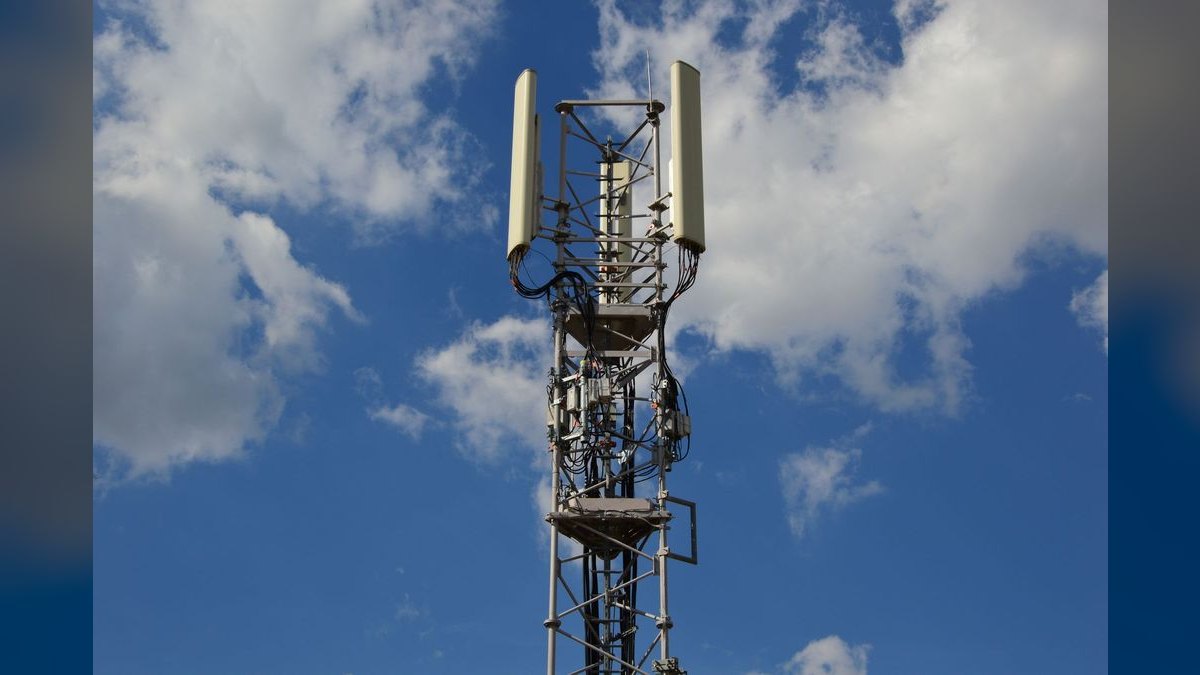
Then there is the eastern half of the county. Once you pass Alpine on the 8 or Ramona on the 67, macro site density drops sharply, mid-band gives way to low-band LTE, and the differences between carriers stop being about speed and start being about whether a call connects at all. Julian, Mt. Laguna, Borrego Springs, Palomar Mountain, and the Cleveland National Forest are the areas where a carrier's rural footprint is the entire decision.
Coastal fog and marine layer are frequently blamed for signal problems in La Jolla, Ocean Beach, and Point Loma. What actually degrades coastal service is terrain—the bluffs, the elevation drop to the shoreline, mature tree canopy, and older building stock with stucco over wire lath, which is remarkably effective at blocking mid-band signal indoors.
The step-by-step process for choosing
The process below is what actually produces a defensible answer, and it takes about a week of passive data collection rather than an afternoon of reading reviews.
Step 1 — Write down your real locations. List the specific addresses where connectivity failing would actually cost you something: home, office, client sites, school pickup line, trailheads. Five to ten locations is typical. Weight them by time spent.

Step 2 — Pull coverage maps for each address. Every national carrier publishes an address-level coverage lookup. The FCC's National Broadband Map aggregates carrier-submitted data independently. Check all of them. Where the carrier's own map and the FCC map disagree, treat that as a flag for real-world testing.
Step 3 — Check crowdsourced real-world data. Ookla and Opensignal both publish metro-level network performance reports built from millions of user-initiated tests. These reflect actual delivered performance including congestion, which coverage maps do not. Look at median rather than peak speeds.
Step 4 — Trial before you port. eSIM has made this nearly free. Most modern phones support at least two active eSIM profiles. Every major carrier and most MVNOs now offer a trial line—commonly 7 to 30 days. Run the candidate carrier as a secondary eSIM for two weeks while keeping your current line live.

Step 5 — Test at the times that hurt. Peak congestion follows predictable patterns: weekday lunch downtown and in Kearny Mesa, the 3–7 PM commute along the 5, 8, 15, and 805, and event surges at Petco Park, the Convention Center during Comic-Con, and the Del Mar Fairgrounds during the fair and race meets.
Step 6 — Test indoors, not just outdoors. Stand in the room where you actually work, not on the sidewalk. If your building is stucco-over-lath, older concrete, or has low-E coated windows, expect a substantial indoor penalty. Check whether the carrier supports Wi-Fi calling as a fallback.
Step 7 — Decide and port. Porting requires your account number and a transfer PIN from the losing carrier. Do not cancel the old line first—porting a cancelled number is difficult to impossible. Keep the old line active until the new one is confirmed working.

Costs, timelines, and typical ranges
Pricing in the US wireless market moves constantly, so treat every figure here as a range to verify at the point of purchase. The structure of the market, however, is stable.
Postpaid unlimited, single line. Premium tiers from the three national carriers cluster in the $65–$90 per month range before autopay discounts and before taxes and fees. Entry-level unlimited tiers run roughly $50–$70 and cut premium data, hotspot, and video resolution. Single lines are the worst value—per-line price drops steeply at three and four lines, often to the $30–$45 range.
Autopay and paperless discounts are typically $5–$10 per line per month and are functionally mandatory. Some carriers require a debit card or bank draft rather than a credit card.

Taxes, fees, and surcharges in California add meaningfully. Between state and local utility taxes, 911 surcharges, CPUC fees, and carrier-imposed regulatory recovery fees, expect anywhere from a few dollars to over 15% on top of an unbundled postpaid line.
Prepaid and MVNO tiers. Budget-tier plans with modest data buckets (5 GB to 20 GB) commonly land in the $15–$30 range, often requiring annual or multi-month prepayment. MVNO unlimited plans typically run $25–$45. Trade-offs include deprioritization behind the parent network's postpaid customers, video resolution caps (frequently 480p), reduced hotspot data, and app-only support.
Device costs. Carrier device promotions are typically structured as 24- or 36-month bill credits, not discounts. The credits stop if you leave, meaning you owe the remaining device balance. If unsure about a carrier, buy the device unlocked and outright.
Timelines. eSIM activation on a trial line is generally 5–15 minutes. A number port between carriers usually completes in under an hour for a single wireless-to-wireless line, though ports from landline or VoIP numbers can take several business days.

5G home internet as a cable replacement is priced roughly $40–$70 per month depending on carrier and bundling, generally with no contract, no equipment fee, and no data cap. Real-world throughput varies enormously by location.
Where people get carrier selection wrong in this market
Trusting the coverage map instead of your own device. Coverage maps are predictive propagation models. They do not model your specific building, your specific floor, or the trees between you and the tower. Every carrier's map will show your address as covered. The map is a screening tool, not an answer.
Confusing peak speed with usable speed. A gigabit reading under a millimeter wave node in the Gaslamp is real and completely irrelevant to your daily experience. What determines whether video calls hold is the median mid-band speed at your desk during congested hours.

Ignoring upload entirely. If your work involves video meetings, uploading photos, or syncing to cloud storage, uplink throughput is the constraint. It is typically a small fraction of downlink and degrades faster under congestion.
Testing outdoors and buying for indoors. The delta between curbside and interior-room signal is frequently 15–25 dB depending on construction. San Diego's older stucco-over-wire-lath housing stock is genuinely hostile to mid-band.
Optimizing for the trip you take twice a year. If backcountry coverage matters twice a year, a cheap prepaid second eSIM on the carrier with the better rural footprint costs far less than restructuring your primary line around it.

Assuming the MVNO is identical to the parent network. An MVNO sits below the parent's postpaid customers in the scheduler's priority queue. In an uncongested cell, the experience is indistinguishable. In a congested one—downtown at lunch, Petco Park at first pitch—the gap is dramatic.
Missing the cross-border case. San Diego has enormous daily cross-border traffic to Tijuana. Mexico roaming inclusion varies significantly by carrier and by plan tier. If you cross regularly, this single line item can dominate the comparison.
Letting a device promotion make the network decision. Over 36 months, a $20/month price difference is $720—and you spend all 36 months on the network that works worse where you live.

Decision framework: matching carrier to how you actually live
Rather than ranking carriers absolutely, sort yourself into a profile first.
The urban-core heavy user. You live and work inside the 5/8/15/805 box, stream, tether, and take video calls. Optimize for mid-band spectrum depth and capacity. Premium postpaid is defensible here; so is a well-chosen MVNO if you can tolerate occasional peak-hour deprioritization.
The backcountry regular. You commute to Julian, Ramona, Alpine, Borrego Springs, or into the Cleveland National Forest weekly. Optimize for low-band footprint and rural macro density, not speed. Verify with a trial eSIM on the actual routes.
The budget-first resident. You use under 20 GB a month and are on Wi-Fi at home and work. An MVNO on a well-provisioned parent network is close to a free lunch in this metro.

The multi-line household. Four lines change the math. Per-line postpaid pricing at four lines often lands near MVNO territory while retaining priority, hotspot, and retail support.
The cross-border commuter. Tijuana daily or weekly puts Mexico roaming terms at the top of the list, ahead of speed.
The remote worker choosing home internet too. If your income depends on the connection, keeping mobile and home internet on different networks is worth the lost bundle discount.
Related questions
Does a carrier's advertised 5G coverage mean fast 5G?
No. Carriers label low-band 5G and mid-band 5G under different marketing names on the same map. Low-band 5G often performs like good LTE. Check specifically for the mid-band layer at your address.
Is a prepaid or MVNO plan meaningfully worse in San Diego?
Usually less than elsewhere. The metro's mid-band networks are well-provisioned, so deprioritization bites mainly during peak congestion and at large events. Under roughly 20 GB a month with Wi-Fi at home, most users notice video resolution caps more than speed.
How long does porting a number between carriers take?
Wireless-to-wireless single-line ports typically complete within an hour. Landline or VoIP source numbers can take several business days. Never cancel the old line first.
Should I buy my phone from the carrier?
Only if you are confident in the carrier. Carrier device deals are usually 24–36 month bill credits that vanish if you leave. Buying unlocked costs more upfront but preserves the ability to switch.
Can I run two carriers at once on one phone?
Yes, on any recent phone supporting dual eSIM or eSIM plus physical SIM. A cheap data-only prepaid line on a second network is a common setup for backcountry backup or business continuity.
FAQ
Which carrier is best for downtown San Diego and Mission Valley?
For dense urban areas inside the freeway box, all three national carriers deliver usable mid-band 5G. The differentiator is capacity under congestion rather than coverage. Test at 12:30 PM on a weekday, not on a Sunday morning.
What works east of the 67—Julian, Ramona, Mt. Laguna, Borrego Springs?
East county is a low-band question, not a 5G question. The carriers with the oldest and densest rural macro portfolios generally hold usable signal deeper into the mountains and desert. Run a trial eSIM along your actual route.
Why is my signal bad in La Jolla, Ocean Beach, or Point Loma despite full coverage on the map?
Terrain and building construction. Bluffs, elevation changes, and heavy tree canopy attenuate mid-band signal. Older stucco-over-wire-lath walls block it effectively indoors. Enable Wi-Fi calling to resolve most indoor voice problems.
Is 5G home internet a real replacement for cable in San Diego?
For many households, yes—it is typically contract-free, equipment-fee-free, and uncapped. Performance depends heavily on your distance from the serving site. Use the trial window aggressively and test at peak evening hours before cancelling anything.
What should I know about roaming into Tijuana?
Mexico roaming terms vary widely by carrier and plan tier. Some unlimited plans include it, others charge a daily pass, others sell data by the gigabyte. If you cross the border regularly, this can outweigh every speed difference in the comparison.
How much data do I actually need?
Check your current carrier's app for the last six months of usage. Most people significantly overestimate. If you are consistently under 20 GB, a smaller plan or MVNO tier is the obvious move.
Sources
- FCC National Broadband Map
- Ookla Speedtest — United States performance data
- Opensignal — Mobile Network Experience reports
- T-Mobile coverage map
- Verizon coverage map
- AT&T wireless coverage map
- FCC — Cell phone number porting rules
- California Public Utilities Commission — Communications
- J.D. Power — U.S. Wireless studies
- CTIA — Wireless industry resources
Related on PULSE
This page will be disappearing soon. Save it to your device for $1 — or read it free while it is here.
@Kory-White- · if Venmo asks, the last 4 of my number are 2012
This page is gone.
This one is off the shelf now. $1 keeps it on your phone for good — the whole page, pictures and diagrams included.
 telcoHow do I add a tablet to my cell phone plan in 2027?
 telcoUS Mobile vs Mint Mobile: which is better in 2027?
 telcoBest Cellular and Wireless Carrier in Los Angeles in 2027
 telcoWhat is the difference between 5G UW, 5G+, and regular 5G in 2027?
 telcoBest Cellular and Wireless Carrier in Wichita in 2027
 telcoBest Cell Phone Plans for International Travel in 2027
 telcoBest 5G Home Internet Providers in 2027
 telcoHow much mobile data does a family of four actually need in 2027?
 telcoShould I get a contract or no-contract phone plan in 2027?
 telcoMint Mobile vs Cricket Wireless: which is better in 2027?