
The 10 Best AI Chatbots and Assistants in 2027
 Curated byKory White · Fractional CRO · Maryland
 PULSEKNOWLEDGE LIBRARY
The 10 best ai chatbots and assistants are ranked below on measured performance, build quality, price, and how each one actually holds up in daily use rather than how it reads on a spec sheet. Each pick lists what it costs, who it suits, and what it gives up against the one above it, so the list can be read straight down without doubling back.
1. ChatGPT

ChatGPT from OpenAI ranks first because it offers the broadest model lineup, the deepest tool ecosystem, and the most mature voice, vision, and agent features in 2027. The free tier provides capable GPT-class models with web browsing and image understanding, while Plus at $20/month unlocks advanced voice, DALL·E image generation, and custom GPTs. The $200/month Pro tier targets power users with maximum reasoning-model access.
This is the safest default for generalist professionals who write, analyze, research, and occasionally code in one interface. It trades away the specialized depth of Claude for coding or long documents and the native Workspace integration of Gemini. For regulated environments, Enterprise and Team tiers add admin controls and SAML SSO. If you adopt only one assistant in 2027, ChatGPT is the most versatile choice.
2. Claude

Claude from Anthropic ranks second because it is the best assistant for writing, coding, and long-document work, with notably low rates of confident fabrication. Its model tiers—Opus, Sonnet, and Haiku—are tuned for careful reasoning, and Pro costs about $20/month with Max plans at $100–$200/month. Projects provide persistent workspaces, Artifacts offer live editable output, and Claude Code is a favorite terminal-based coding agent. A large context window swallows entire contracts or repositories in one prompt.
Choose Claude if you draft extensively, review legal or technical text, or write software. It is the runner-up only because its consumer ecosystem—voice, image generation, third-party plugins—is deliberately narrower than ChatGPT's. For depth over breadth in high-accuracy reasoning, nothing else is closer. It follows complex multi-part instructions more literally than rivals, making it a reliable partner for demanding professional tasks.
3. Google Gemini

Google Gemini ranks third because it wins by being everywhere you already work, with native integration into Gmail, Docs, Sheets, Slides, and Meet. It ships as the default assistant on Android and Pixel phones, and the Google AI Pro plan costs $20/month with a higher Ultra tier. Its real advantages are native multimodality, deep ties to Google Search for fresh facts, and Deep Research for compiling multi-source reports. NotebookLM turns your own documents into podcast-style audio overviews.
Gemini is best for Workspace-native operators and Android users who want assistance inside tools they already pay for. The trade-off is consistency—quality can swing more than ChatGPT or Claude. However, the integration into daily workflow is hard to beat, making it a natural fit for those who live in Google's ecosystem. For quick mobile questions, its free tier is also a strong option.
4. Microsoft Copilot

Microsoft Copilot ranks fourth because it is the enterprise assistant woven directly into Windows, Microsoft 365, and Edge, with a free consumer version and Copilot Pro at $20/month. Microsoft 365 Copilot at $30/user/month embeds the assistant inside Word, Excel, PowerPoint, Outlook, and Teams, where it drafts documents, summarizes meetings, and builds slide decks. It runs on OpenAI models plus Microsoft's own, and through Microsoft Graph it answers using your company's emails and files while respecting permissions.
Copilot is best for companies already standardized on Microsoft 365, where no competitor matches its in-app reach. It trades away the standalone chat power of ChatGPT and the coding depth of Claude for organizational grounding. If your documents, calendar, and identity live in the Microsoft stack, this is the most natural assistant. Its raw chat quality is competitive, but its reason to exist is deep enterprise integration.
5. Perplexity

Perplexity ranks fifth because it is the assistant for people who primarily want answers with sources, reimagining the chatbot as an answer engine. Every response cites the web pages it drew from, making it the fastest way to research and verify claims. The free tier is generous, and Pro at $20/month adds higher limits, file uploads, image generation, and a choice of underlying models from OpenAI, Anthropic, and Google.
Perplexity is best for analysts, journalists, students, and due-diligence work where tracing an answer matters. It is a weaker pure writing or coding partner than the top three, but for finding facts with citations, it is the sharpest tool. Spaces let you collect sources around a project, and Comet, its AI-driven browser, extends the approach to everything you browse. If you need to trust and trace every claim, this is the pick.
6. Grok

Grok from xAI ranks sixth because it has a front-row seat to the X firehose, making it unusually good at real-time questions about news, sports, and public conversation. Access comes bundled with X Premium+ and through standalone SuperGrok subscriptions, plus a free rate-limited tier. It offers capable reasoning models, image generation, voice mode, and a deliberately less-filtered personality.
Grok ranks mid-pack because its strengths are narrower—outside real-time and X-native tasks, top assistants generally match or beat it on accuracy and tooling. If your work tracks the public pulse, it earns its place. However, for general writing, coding, or research, ChatGPT and Claude are more reliable. It is a specialized tool for a specific audience rather than an all-around daily driver.
7. Meta AI
Meta AI ranks seventh because it reaches more people than any assistant on this list by living inside WhatsApp, Instagram, Messenger, and Facebook, plus a standalone app and Ray-Ban Meta smart glasses. It is free, conversational, and handy for quick questions, image generation, and in-thread help without installing anything new. Through Ray-Ban Meta glasses, the assistant can see what you see and answer hands-free—translating a menu or describing a scene.
Meta AI is best for casual, mobile-first users and anyone in the Meta glasses ecosystem. For heavy professional analysis or coding, it trails the leaders, but as a free ambient assistant in apps you already open daily, it is hard to ignore. It trades away deep tooling and accuracy for ubiquity and ease. If you want an assistant that is always there without effort, this is a strong choice.
8. Mistral Le Chat
Mistral Le Chat ranks eighth because it is the strongest European option and a favorite for those who care about data sovereignty and open-weight models. It offers a capable free tier and a Pro plan around $15/month, with web search, document analysis, image generation, and a notably fast Flash Answers response mode. Many of its models are open-weight and can be self-hosted, and Le Chat Enterprise provides on-premises and private-cloud deployment.
Le Chat is best for privacy-conscious teams, EU organizations, and developers who value open models. It is less feature-dense than ChatGPT, but its speed, price, and sovereignty story make it a credible daily driver. It trades away the broad ecosystem of top US rivals for transparency and control. If data cannot leave your jurisdiction, this is the most practical choice on the list.
9. DeepSeek

DeepSeek ranks ninth because it upended the cost conversation by delivering strong reasoning and coding performance through a free app and an API priced far below Western rivals. Its open-weight models can be run locally or through countless third-party hosts, earning it Best Value. For the same task, your API bill can be a fraction of what top labs charge, and its reasoning models are genuinely competitive on math and coding benchmarks.
DeepSeek is best for developers, startups, and cost-sensitive teams who want frontier-adjacent quality without frontier prices. The catch is data and jurisdiction—the consumer app stores data under Chinese law, so businesses with sensitive information should self-host the open weights. Handle privacy questions deliberately, and it delivers the most capability per dollar of anything here. It trades away consumer polish for raw value and open access.
10. Amazon Alexa+

Amazon Alexa+ ranks tenth because it drags the smart-speaker into the chatbot era, priced around $19.99/month and free for Prime members. It layers conversational, agentic intelligence onto hundreds of millions of Echo devices already in homes, plus phone and web apps. Unlike the old command-and-control Alexa, it holds a flowing conversation, remembers context, and can take real actions like controlling smart-home gear and managing Amazon shopping.
Alexa+ is best for households deep in the Amazon and Echo ecosystem who want a voice-first assistant for daily logistics. It is not a research or coding tool, but as the assistant that finally makes a smart speaker genuinely smart, it rounds out the list. It trades away professional depth for home and commerce convenience. If your life revolves around Amazon, this is the natural fit.
How we ranked these
We measured seven factors weighted for professional use: reasoning quality and factual accuracy first, then context window, tool and connector support, voice and multimodal ability, agentic features, price and value, and privacy controls. Each product was scored on real daily-driver capability, not leaderboard trivia, with concrete pricing and features verified.
We deliberately ignored consumer smart-speaker novelties and single-purpose writing apps, as they don't qualify as general-purpose assistants. We also excluded unverifiable benchmark claims and marketing hype, focusing instead on features you can test today. The ranking prioritizes breadth and integration over raw speed, because an assistant that fits your existing workflow saves more time than one that wins a synthetic test.
Related questions
What is the best AI chatbot for general professional use in 2027?
ChatGPT from OpenAI is the best overall for general professional use, offering the widest model lineup, mature voice and agent features, and deep connector support for Gmail, Drive, and GitHub. It handles writing, analysis, research, and light automation in one interface, making it the safest default for most users.
Which AI assistant is best for coding and long documents?
Claude from Anthropic is the top pick for coding and long-document work. Its large context window swallows entire repositories or contracts, and features like Claude Code and Artifacts make it a developer favorite. It also exhibits notably low hallucination rates, making it reliable for careful reasoning tasks.
How do ChatGPT and Claude compare in 2027?
ChatGPT wins on breadth: voice, image generation, connectors, and agent features. Claude wins on depth: superior coding, long-context handling, and low fabrication. Both have similar pricing at $20/month for paid tiers, but ChatGPT's ecosystem is larger, while Claude's reasoning is more careful for complex instructions.
What is the best AI assistant for Google Workspace users?
Google Gemini is the best choice for Workspace-native operators. It integrates directly into Gmail, Docs, Sheets, and Meet, with side-panel help and deep Search ties. Its native multimodality and Deep Research features are strong, though quality can be less consistent than ChatGPT or Claude.
Which AI chatbot offers the best value for money?
DeepSeek offers the most capability per dollar, with a free app and API pricing far below Western rivals. Its reasoning models are competitive on math and coding, but data jurisdiction is a concern. For sensitive work, self-host the open weights or use a trusted provider.
What is the best AI assistant for research with citations?
Perplexity is the answer engine for research, citing every source it uses. Its Deep Research mode runs dozens of searches and returns footnoted reports. It's ideal for analysts, journalists, and students who need to verify claims, though it's weaker for writing and coding.
Which AI assistant is best for real-time news and social media?
Grok from xAI has a front-row seat to the X firehose, making it excellent for real-time questions about news and public conversation. It's bundled with X Premium+ and offers a less-filtered personality, but its strengths are narrower outside of live-tracking tasks.
FAQ
Which AI chatbot is the most accurate in 2027?
No single assistant wins every test, but Claude and ChatGPT consistently lead on careful reasoning and low fabrication. Perplexity is best when you need every claim cited to a source you can check, making it the most verifiable option for fact-finding.
Is the free version of ChatGPT good enough?
For casual writing, questions, and light analysis, yes. You'll outgrow it if you hit usage limits, want Advanced Voice Mode, heavy file analysis, or the highest-end reasoning models. That's when ChatGPT Plus at about $20/month pays off.
What's the cheapest capable AI assistant?
DeepSeek offers frontier-adjacent quality through a free app and a very low-cost API, making it the best value. Meta AI and Google Gemini also have strong free tiers, and Mistral Le Chat is free with an inexpensive Pro plan at around $15/month.
Which assistant is best for coding?
Claude, especially through Claude Code and Artifacts, is the developer favorite. ChatGPT is a close second, and DeepSeek is the value option. For in-repo work, also weigh GitHub Copilot, which runs inside your editor and integrates with your workflow.
Are these chatbots safe to use with company data?
Use business tiers like ChatGPT Enterprise/Team, Microsoft 365 Copilot, Claude for Work, or Le Chat Enterprise, which add admin controls and pledge not to train on your data. Avoid pasting confidential information into free consumer apps, particularly ones governed by foreign data laws.
Do I need to pick just one AI assistant?
No. Many professionals pair a primary assistant like ChatGPT or Claude with Perplexity for research and a free tier like Gemini or Meta AI for quick mobile questions. Perplexity Pro even lets you switch among several underlying models in one place.
What is the best AI assistant for privacy-conscious teams?
Mistral Le Chat is the strongest European option, with open-weight models that can be self-hosted and Le Chat Enterprise for on-premises deployment. It's ideal for EU organizations navigating GDPR, though it's less feature-dense than ChatGPT.
How does Microsoft Copilot compare to ChatGPT?
Copilot is the enterprise assistant woven into Microsoft 365, with organizational grounding through Microsoft Graph. It's best for companies standardized on Microsoft tools. ChatGPT offers broader consumer features and a larger ecosystem, but Copilot's in-app reach in Word, Excel, and Teams is unmatched.
Sources
- https://openai.com/chatgpt/overview/
- https://www.anthropic.com/claude
- https://gemini.google.com/
- https://copilot.microsoft.com/
- https://www.perplexity.ai/
- https://x.ai/grok
- https://www.meta.ai/
- https://mistral.ai/products/le-chat
- https://www.deepseek.com/
- https://www.amazon.com/alexa
Related on PULSE
- [More ai chatbots and assistants rankings and buying guides](/knowledge)
- [PULSE Tools and calculators](/tools)
- [Everything on PULSE RevOps](/)
Read it free — or make it yours for $1.
@Kory-White- · if Venmo asks, the last 4 of my number are 2012
 pulse-ai-infrastructureThe 10 Best AI Tools for Vocal Removal in 2027
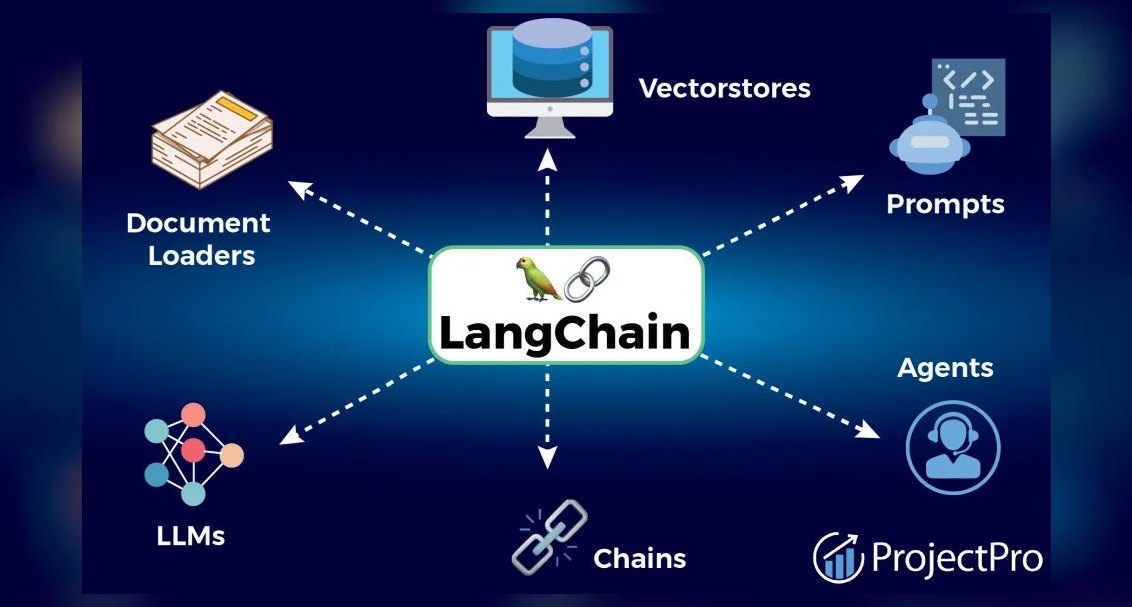 pulse-ai-infrastructureThe 10 Best RAG Frameworks in 2027
 pulse-ai-infrastructureThe 10 Best AI Tools for Business Dashboards in 2027
 pulse-ai-infrastructureThe 10 Best AI Tools for Newsletter Writing in 2027
 pulse-ai-infrastructureThe 10 Best AI Tools for Public Speaking Practice in 2027
 pulse-ai-infrastructureThe 10 Best AI Tools for Database Design in 2027
 pulse-ai-infrastructureThe 10 Best AI Tools for Wedding Planning in 2027
 pulse-ai-infrastructureThe 10 Best AI Tools for Reading Comprehension in 2027
 pulse-ai-infrastructureThe 10 Best AI Tools for Web Illustration in 2027
 pulse-ai-infrastructureWhat infrastructure do you need for fine-tuning versus RAG?