
The 10 Best AI Tools for Expense Management in 2027
 Curated byKory White · Fractional CRO · Maryland
 PULSEKNOWLEDGE LIBRARY
The 10 best ai tools for expense management are ranked below on measured performance, build quality, price, and how each one actually holds up in daily use rather than how it reads on a spec sheet. Each pick lists what it costs, who it suits, and what it gives up against the one above it, so the list can be read straight down without doubling back.
1. Ramp

Ramp ranks first because it delivers the highest automation-per-dollar of any tool here: $0 base software, free unlimited virtual and physical corporate cards, and revenue earned through interchange rather than per-seat fees. Ramp Intelligence reads emailed or uploaded receipts, matches them to card transactions, and codes each line to the right GL account and vendor based on prior behavior. Policy enforcement fires at the swipe, blocking categories like alcohol outright.
Ramp fits US-based startups through mid-market companies compressing a multi-day close into hours. It trades away the global multi-currency depth Brex offers, so teams with staff in Europe, Latin America, or Asia will find it thinner. Native syncs cover QuickBooks Online, Xero, NetSuite, and Sage Intacct, with bill pay and reimbursements included. Ramp Plus runs roughly $15 per user per month for advanced workflows and procurement.
2. Brex
Brex ranks second because it matches Ramp's free-tier economics while issuing cards in dozens of countries with multi-currency support Ramp lacks. Brex Assistant collects receipts over SMS and email, auto-codes transactions, and answers policy questions in plain language, cutting the manual nagging controllers usually do. The Essentials tier starts free; Premium runs around $12 per user per month, with Enterprise custom-priced. Brex Empower layers budgets, approvals, and real-time reporting on the card.
Brex suits multi-entity, venture-backed companies with distributed teams and treasury needs, since Brex business accounts keep cash and spend under one login. It trades away some of Ramp's US-focused close speed and SaaS price-creep detection. Native integrations include NetSuite, QuickBooks, Xero, and Sage Intacct, plus HRIS connectors that automate employee onboarding and offboarding.
3. SAP Concur

SAP Concur ranks third on compliance breadth rather than speed. Concur Expense, Concur Travel, and Concur Invoice form a connected suite, and ExpenseIt uses AI to itemize hotel folios and build expense entries straight from a receipt photo. Its audit service reviews expense reports against policy before reimbursement, and travel-booking integration captures itinerary data smaller tools cannot reach. T&E spend analytics depth is unmatched at enterprise scale.
Concur is for enterprises with thousands of travelers facing VAT reclaim and regulatory audit requirements across many countries. It trades away interface speed — the experience is heavier and slower than card-led platforms like Brex above it. Pricing runs per-report and per-user plus implementation costs, so it is overkill for small teams. It connects to SAP S/4HANA, NetSuite, and most major ERPs.
4. Navan
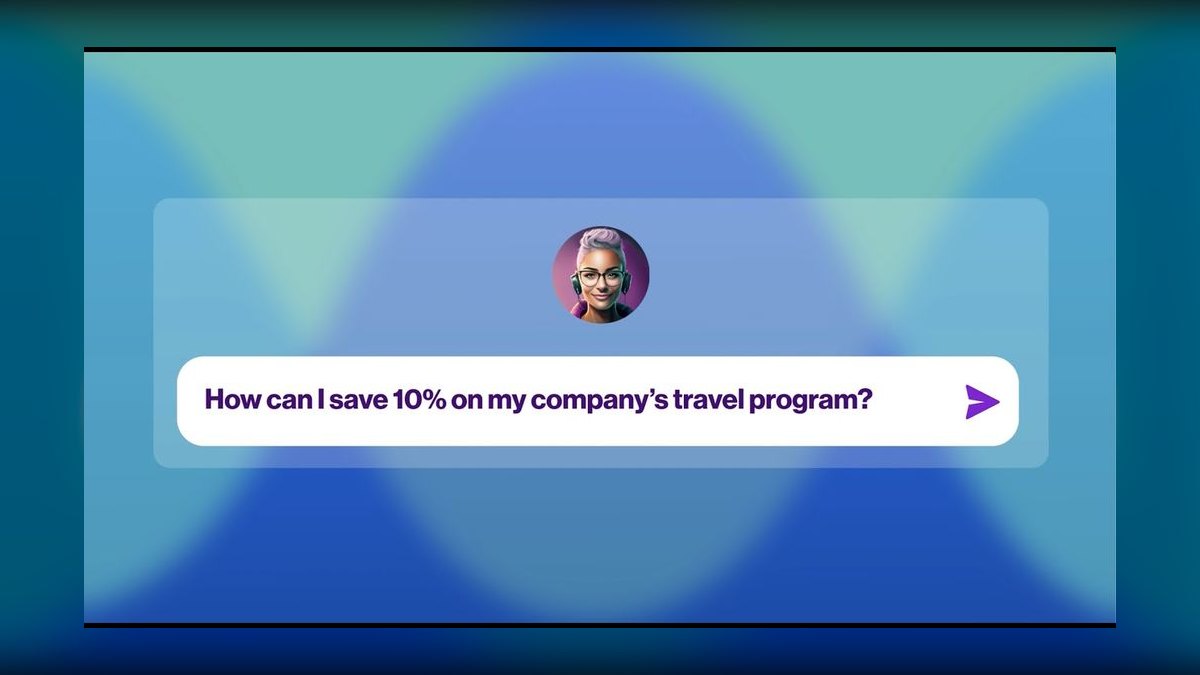
Navan ranks fourth because it merges corporate travel booking and expense management into one product, so the expense report largely writes itself after a trip is booked. Its virtual assistant recommends in-policy flights and hotels, then reconciles the resulting charges automatically. Because booking and charge live in the same system, receipt-matching for airfare, hotels, and rideshare is cleaner than bolting a travel tool onto a separate card platform.
Navan fits travel-heavy companies where T&E is a major spend line. It trades away the compliance and audit depth Concur offers directly above it, and its value narrows sharply for teams that rarely travel. Navan Expense is free for many companies up to a usage threshold, with travel monetized through booking. Navan Connect keeps existing Visa or Mastercard corporate cards while adding expense automation.
5. Expensify
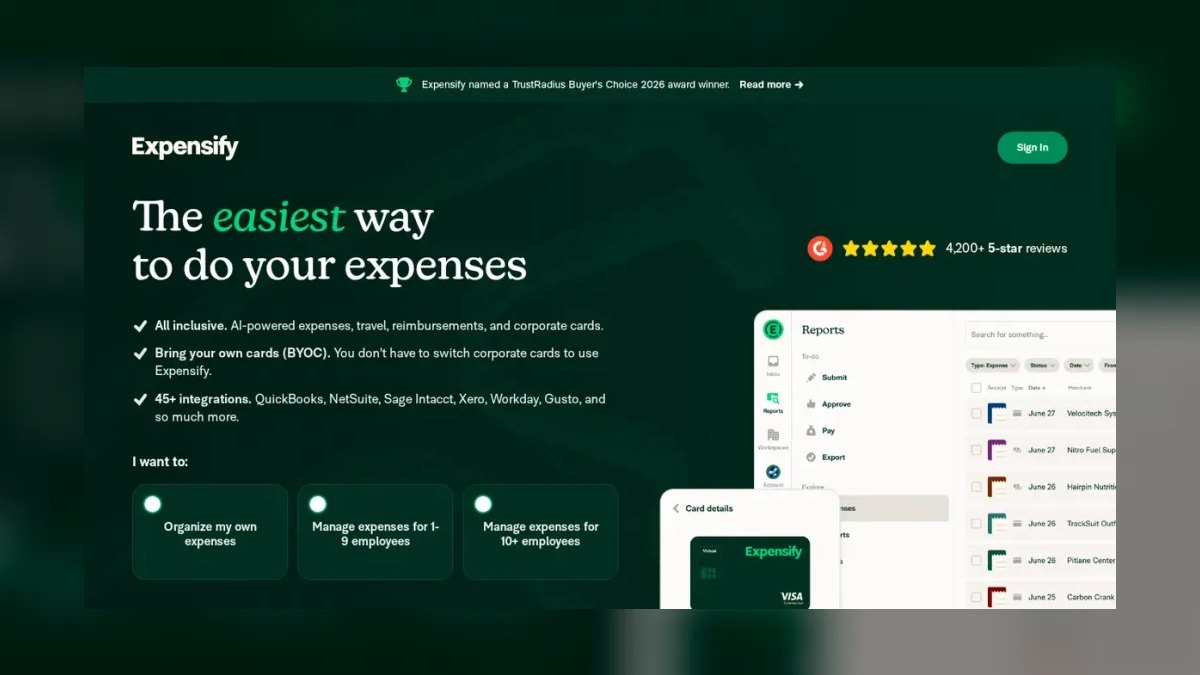
Expensify ranks fifth on receipt-capture accuracy: SmartScan OCR remains a benchmark for reading paper and PDF receipts, extracting merchant, date, and amount from a single photo, then auto-categorizing and submitting without manual entry. Concierge, the platform's AI layer, auto-approves compliant reports and prompts employees for missing receipts. The Expensify Card adds real-time compliance checks plus a cash-back incentive tied to plan discounts.
Expensify serves freelancers, small teams, and reimbursement-heavy workflows where employees spend out of pocket and need fast payback. It trades away the procurement and budgeting depth of Ramp and Brex, staying narrow on pure expense reporting. Collect runs about $5 per user per month and Control about $9 annually billed. It syncs with QuickBooks, Xero, NetSuite, and Sage Intacct.
6. BILL Spend & Expense
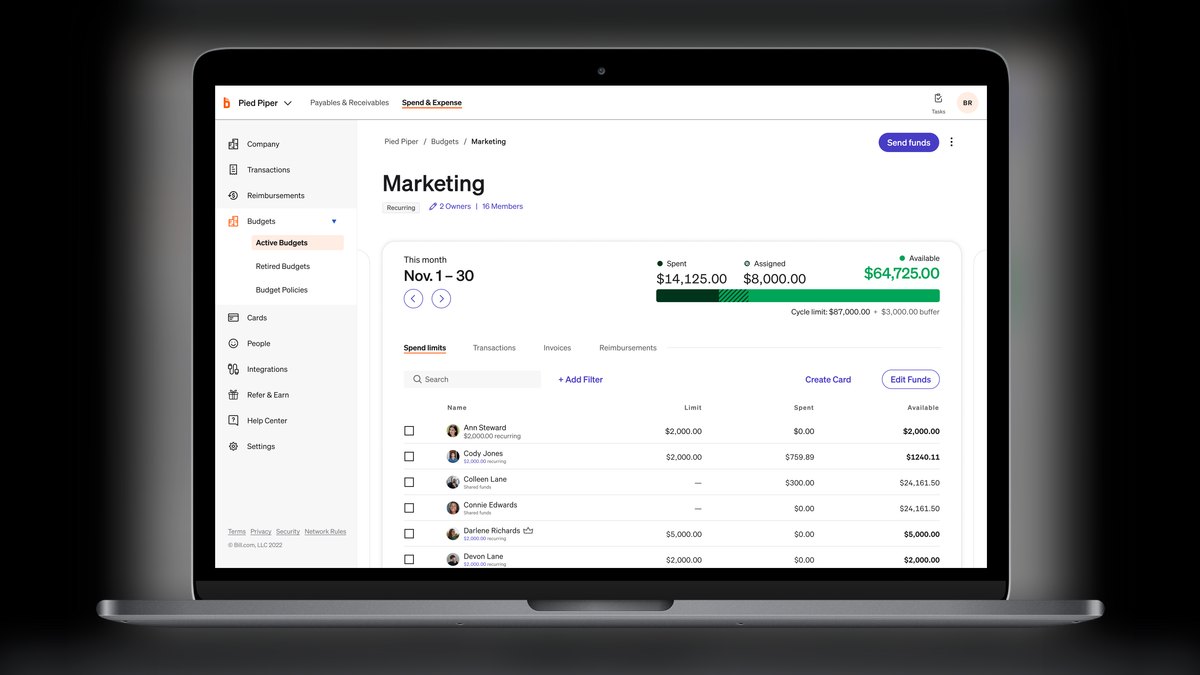
BILL Spend & Expense ranks sixth for budget-first control: managers pre-fund virtual cards by project or team, and balances update in real time as employees spend, making overspending structurally difficult rather than policed afterward. Formerly Divvy, it pairs free corporate cards with budgeting software at $0 per user, monetized through interchange. The mobile app captures receipts and auto-matches them to transactions, with reimbursements running through the same platform.
It fits small and mid-sized businesses already running accounts payable on BILL who want spend management without adding a vendor. It trades away the AI coding sophistication of Ramp and the receipt OCR polish of Expensify above it. Integrations cover QuickBooks, Xero, NetSuite, and Sage Intacct. The tightest AP-plus-expense loop in one login is the actual draw here.
7. Zoho Expense
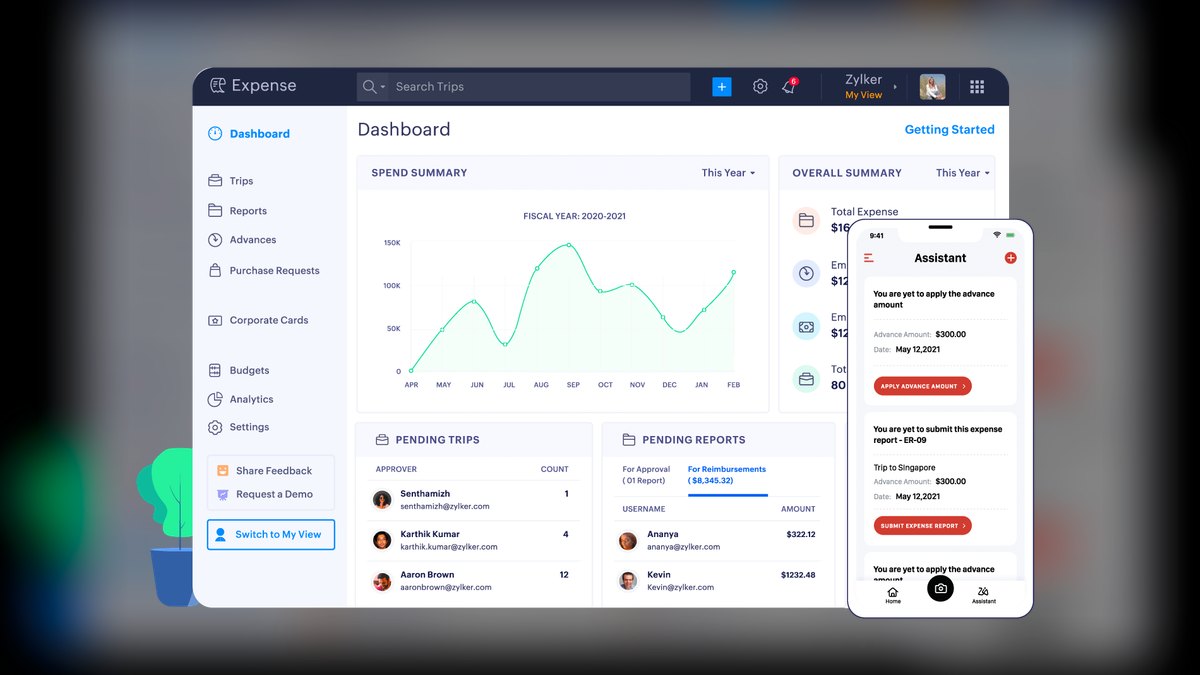
Zoho Expense ranks seventh but delivers the most functionality per dollar here. The free tier supports up to three users, and paid plans start around $4–5 per active user per month while still including autoscan receipt OCR, mileage tracking, multi-currency expenses, and per diem automation. Autoscan reads receipts in multiple languages and auto-creates expenses. Built-in VAT and GST handling is unusual at this price point.
It suits budget-conscious SMBs and companies already inside the Zoho ecosystem of Books, CRM, and People. It trades away the free corporate-card economics that Ramp, Brex, and BILL use to subsidize software, so card interchange never offsets the seat fee. It integrates with QuickBooks, Xero, NetSuite, and Sage Intacct, and connects to corporate card feeds for automatic reconciliation.
8. Rippling

Rippling ranks eighth because Rippling Spend derives its automation from identity rather than the card. Since the platform already holds each employee's role, department, and start date through its HRIS and payroll layers, it provisions cards, applies spend policies, and deprovisions access automatically. Offboarding someone in the HRIS kills their cards instantly, a compliance win standalone expense tools cannot match. AI auto-categorizes transactions and matches receipts against card swipes.
It fits companies consolidating vendors into one system of record for people, IT, and spend. It trades away depth — the expense module alone is narrower than dedicated card platforms like Ramp or BILL. Pricing is per-employee per-month across modules, with Spend often bundled. It syncs with NetSuite, QuickBooks, Xero, and Sage Intacct.
9. Emburse Expense
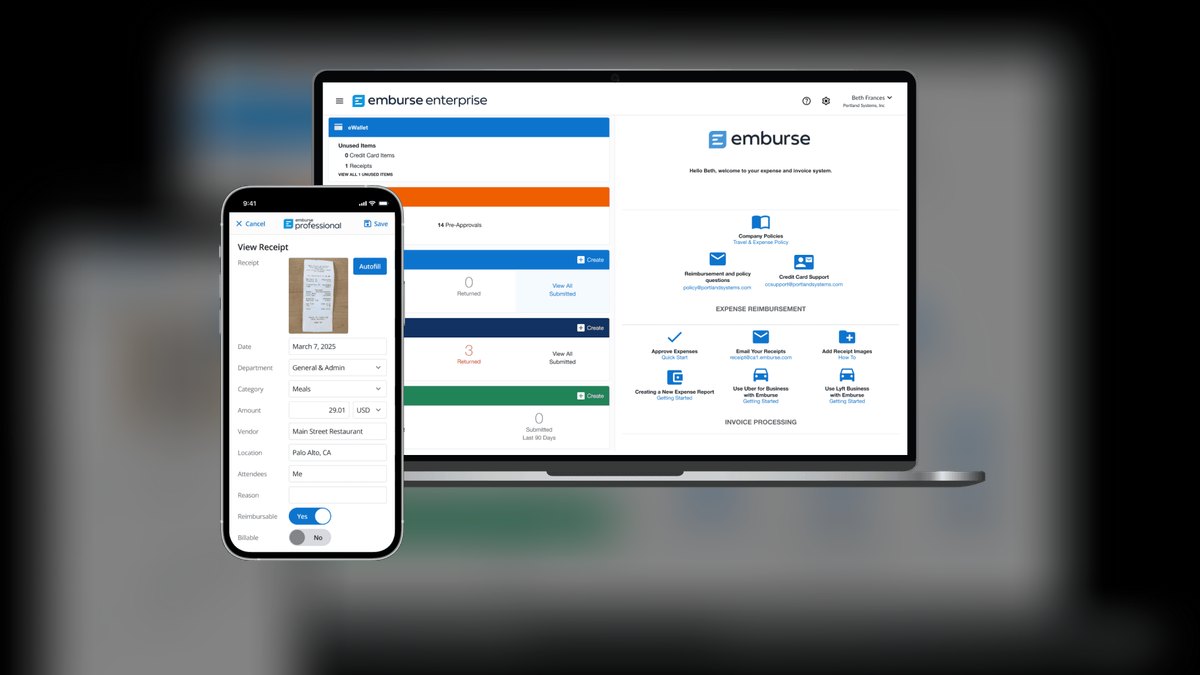
Emburse Expense ranks ninth as the configurable middle path, built on the Certify and Chrome River platforms. It covers invoice plus T&E for mid-market and enterprise finance teams, with AI receipt processing and Emburse Analytics giving controllers granular spend visibility and audit trails. It supports multi-entity structures, detailed policy engines, and corporate card programs, and its audit tooling enforces compliance across large headcounts.
It fits organizations with complex approval hierarchies and global compliance needs that find Concur too heavy but need more configurability than card-first startups offer. It trades away transparent pricing — quotes are tailored to company size, landing between lightweight tools and full enterprise suites. Integrations include NetSuite, Sage Intacct, and Microsoft Dynamics. Growing companies that outgrew Expensify without wanting a Concur implementation land here.
10. Pleo

Pleo ranks tenth for US-centric buyers but first for European ones. Headquartered in Copenhagen, it issues smart company cards, physical and virtual, and uses AI to capture receipts, auto-categorize spend, and reconcile transactions in the local accounting tool. Employees photograph a receipt at the moment of payment; Pleo matches it and prompts for anything missing, keeping bookkeeping current instead of scrambling at month-end.
It fits European SMBs and mid-market companies needing native VAT handling, multi-currency support, and regional regulatory compliance that US-first tools handle awkwardly. It trades away relevance for US-only teams, which is why it sits below Emburse here. A free Starter tier covers small teams, with paid plans priced per user in EUR and GBP. Integrations include Xero, QuickBooks, Sage, NetSuite, and e-conomic.
How we ranked these
AI accuracy carried the heaviest weight: how cleanly a tool reads receipts, matches them to card swipes, codes the right GL account, and flags duplicates without human babysitting. Policy automation counted next — rules that fire at the point of purchase, not after reimbursement. We also scored card depth (virtual cards, multi-currency issuance, bill pay), native syncs to NetSuite, QuickBooks, Xero, and Sage Intacct, and total cost.
We ignored G2 star averages and vendor-supplied case studies; both reward marketing budgets more than automation quality. Funding rounds and logo walls were excluded — a well-capitalized vendor is not a faster close. We also skipped feature checklists that count integrations without testing them, and any AI claim we could not tie to a concrete behavior like folio itemization, SMS receipt capture, or auto-coding from prior transactions.
What to look for
Start with where your spend actually happens. If employees swipe company cards, a card-led platform like Ramp, Brex, or BILL makes receipts arrive automatically and costs nothing in software. If people pay out of pocket and get reimbursed, per-user tools like Expensify or Zoho Expense fit better. Geography decides the rest: Pleo for European VAT rails, Brex for multi-entity, Concur for global travel compliance.
The common mistake is buying on price rather than touch rate. A $5-per-user tool that still needs a controller to fix half the codings costs more than free software that codes correctly. Run a two-week pilot with one department, import a real expense report, and count how many lines close without a human touching them. Also confirm interchange-funded tiers have no hidden spend minimums.
Related questions
What is the difference between expense management and spend management?
Expense management handles what employees have already spent — receipts, reports, approvals, and reimbursement. Spend management starts earlier, controlling money before it leaves: card issuance, budgets, vendor contracts, and procurement approvals. Ramp, Brex, and BILL sell spend management with expense reporting inside it, while Expensify and Zoho Expense focus on the reporting and reimbursement half.
How do free corporate card platforms actually make money?
Interchange — the fee a merchant's bank pays the card issuer on every swipe, typically a small percentage of the transaction. Ramp, Brex, and BILL Spend & Expense route that revenue back into free software, which is why per-seat pricing disappears. The practical consequence: your card volume is the business model, so low-spend teams may hit usage minimums or feature gates.
Which of these tools handle travel booking as well as expenses?
Navan and SAP Concur. Navan merges booking and expense in one product, so a flight booked in-policy reconciles itself when the charge lands. Concur pairs Concur Travel with Concur Expense and adds audit review, VAT reclaim, and itinerary data at enterprise scale. Card-first platforms like Ramp and Brex handle the charge but not the booking itself.
Do these tools work with NetSuite and Sage Intacct?
All ten sync with the major ledgers. Ramp, Brex, Expensify, BILL, Zoho Expense, Rippling, and Navan all publish native connectors for NetSuite, QuickBooks Online, Xero, and Sage Intacct. Emburse adds Microsoft Dynamics, Concur connects to SAP S/4HANA, and Pleo covers European systems like e-conomic. Depth varies more than presence — test dimension and class mapping during a pilot, not the logo list.
What does 'agentic' spend control actually mean here?
It means the software acts on rules instead of just reporting violations. A card blocked from alcohol categories, a virtual card locked to one merchant and amount, or a receipt request sent by SMS without a controller writing the email — those are actions taken automatically. Ramp's policy enforcement at the swipe and Brex Assistant's auto-coding are the clearest working examples.
When does Rippling beat a dedicated expense platform?
When identity is the bottleneck. Because Rippling already holds each employee's role, department, and start date, it provisions cards with the right policy on day one and kills them the moment someone is offboarded. That closes a real security gap standalone tools cannot. The expense module itself is narrower than Ramp's, so the trade is consolidation versus depth.
How long does migrating expense platforms usually take?
Card-led tools move fastest — issuing cards and connecting a ledger is often a week or two, with the real work being GL mapping and approval-chain setup. Concur and Emburse are implementation projects measured in months because policy engines, multi-entity structures, and audit rules must be configured. Run the old and new systems in parallel for one close cycle before cutting over.
FAQ
What is the best AI expense management tool for 2027?
Ramp, for most operators. Free software, free unlimited virtual and physical cards, and AI that auto-codes receipts, matches them to swipes, and blocks out-of-policy spend at the point of purchase. Brex is the runner-up for global, venture-backed teams, and Zoho Expense is the best-value option for small businesses watching every per-seat dollar.
Does Ramp charge for software or corporate cards?
No. Ramp's base platform is free with no per-seat fee, and it issues unlimited virtual and physical cards at no cost, earning revenue through card interchange instead. The optional Ramp Plus tier runs roughly $15 per user per month and adds advanced workflows and procurement. There is no annual contract required on the base tier.
Can Brex handle multi-currency expenses for global teams?
Yes. Brex issues cards in dozens of countries, supports multi-currency transactions, and handles local reimbursements, which makes it stronger than Ramp for companies with staff in Europe, Latin America, or Asia. Brex Assistant collects receipts over SMS and email and auto-codes across currencies. The Essentials tier starts free; Premium runs about $12 per user per month.
How does AI receipt matching actually work?
The tool runs OCR on a photo, email, or PDF to pull merchant, date, amount, and line items, then compares those fields against pending card transactions to find the matching swipe. Coding comes from prior behavior — how that vendor was categorized last time. Expensify's SmartScan and Concur's ExpenseIt also itemize hotel folios into separate expense lines.
What is the cheapest option for a small business?
Zoho Expense. Its free tier covers up to three users, and paid plans start around $4–5 per active user per month while still including autoscan receipt OCR, mileage tracking, per diem automation, and VAT/GST handling. Expensify's Collect plan at roughly $5 per user is the alternative if reimbursements dominate. Ramp and BILL are free but card-dependent.
Is SAP Concur still worth it in 2027?
At enterprise scale, yes. Concur remains the safest pick for thousands of travelers, VAT reclaim across many countries, and audit services that review reports against policy before reimbursement. Its T&E analytics depth is unmatched. The tradeoff is a heavier interface, per-report and per-user pricing, and implementation cost — genuine overkill for a fifty-person company.
Which tool closes the books fastest?
Ramp, because reconciliation happens continuously rather than at month-end. Receipts match to swipes as they arrive, transactions code to the right GL account automatically, and out-of-policy spend is blocked at purchase instead of chased later. BILL Spend & Expense gets close by pre-funding budgets to virtual cards, which makes overspending structurally difficult rather than a post-hoc cleanup task.
What should a European company choose?
Pleo, built in Copenhagen for EU and UK rails. It handles native VAT, multi-currency spend, and local compliance that US-first tools treat as an afterthought, and integrates with Xero, QuickBooks, Sage, NetSuite, and European ledgers like e-conomic. A free Starter tier exists, with paid plans priced per user in EUR and GBP. Brex is the alternative for multi-entity global structures.
Are there hidden costs in the free tiers?
The software fee is genuinely zero, but the economics depend on card volume. Interchange-funded platforms may gate features or apply usage expectations if your monthly spend is low, so confirm thresholds before migrating AP. Premium layers also cost real money: Ramp Plus around $15 per user monthly, Brex Premium about $12. Implementation and ledger-mapping time is the other unbudgeted cost.
Sources
- https://ramp.com/expense-management
- https://www.brex.com/product/spend-management
- https://www.concur.com/en-us/expense-management
- https://navan.com/products/expense
- https://www.expensify.com/
- https://www.bill.com/product/spend-and-expense
- https://www.zoho.com/us/expense/pricing/
- https://www.rippling.com/spend
- https://www.emburse.com/products/emburse-expense
- https://www.pleo.io/
Related on PULSE
- [More ai tools for expense management rankings and buying guides](/knowledge)
- [PULSE Tools and calculators](/tools)
- [Everything on PULSE RevOps](/)
This page will be disappearing soon. Save it to your device for $1 — or read it free while it is here.
@Kory-White- · if Venmo asks, the last 4 of my number are 2012
 pulse-ai-infrastructureThe 10 Best AI Tools for SEO in 2027
 pulse-ai-infrastructureThe 10 Best AI Tools for Image Upscaling in 2027
 pulse-ai-infrastructureThe 10 Best AI Tools for Writing Poetry in 2027
 pulse-ai-infrastructureThe 10 Best AI Tools for Background Removal in 2027
 pulse-ai-infrastructureWhat are the most common mistakes in AI Infra in 2027?
 pulse-ai-infrastructureThe 10 Best AI Tools for Beat Making in 2027
 pulse-ai-infrastructureThe 10 Best AI Tools for Restaurant Picks in 2027
 pulse-ai-infrastructureThe 10 Best AI Tools for Language Learning in 2027
 pulse-ai-infrastructureThe 10 Best Fractional GPU and GPU Sharing Tools in 2027
 pulse-ai-infrastructureThe 10 Best AI Tools for DevOps Automation in 2027