
The 10 Best AI Tools for Conversion Rate Optimization in 2027
 Curated byKory White · Fractional CRO · Maryland
 PULSEKNOWLEDGE LIBRARY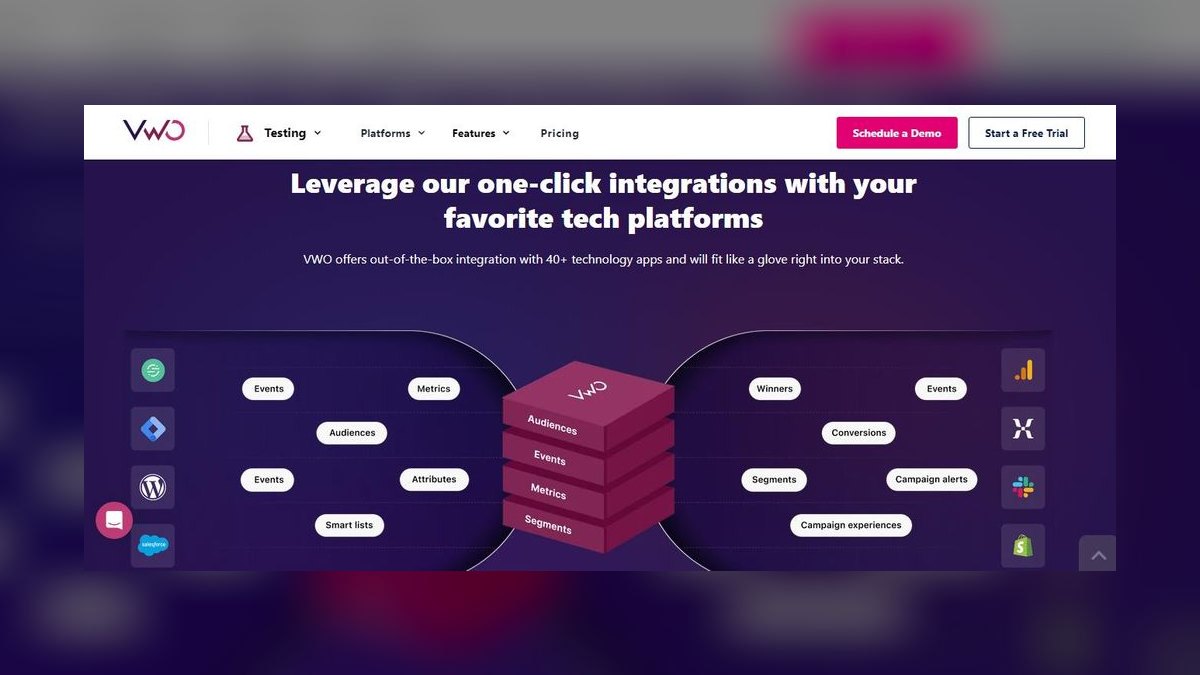
The 10 best ai tools for conversion rate optimization are ranked below on measured performance, build quality, price, and how each one actually holds up in daily use rather than how it reads on a spec sheet. Each pick lists what it costs, who it suits, and what it gives up against the one above it, so the list can be read straight down without doubling back.
1. VWO

VWO ranks first because its SmartStats Bayesian engine is purpose-built for mid-market teams that need valid results under continuous monitoring, directly cutting the traffic cost per decision. It combines a visual editor, behavioral segmentation, and funnel analysis in one platform, with Growth and Pro plans priced between $199 and $599 monthly. At 400,000 sessions with 2% conversion, VWO detects a 10% relative lift in three to four weeks.
VWO is for mid-market teams with a dedicated CRO analyst who needs rigorous experimentation plus personalization without heavy engineering. It trades away server-side testing depth and enterprise omnichannel decisioning, which Adobe Target and Dynamic Yield handle better. Compared to Optimizely, VWO offers a lower barrier to entry and a more accessible price point, while still delivering credible statistics. It is the honest default for most teams spending $500–$1,000 monthly on CRO.
2. Optimizely

Optimizely ranks second because its Stats Engine uses sequential testing that is valid under continuous monitoring, a critical feature for teams that cannot resist peeking at results. Its feature experimentation platform anchors the $1,000–$2,500 monthly tier, offering server-side SDKs across multiple languages, feature flags with instant rollback, and SPA-framework support. This enables testing business logic, not just presentation, which is essential for engineering-led teams. The platform's rigor makes it the strongest choice for defensible causal estimates.
Optimizely is for teams with a developer who owns the integration; without that ownership, it is strictly worse than VWO. It trades away the visual-editor simplicity and mid-market pricing of VWO for deeper technical capability. Compared to VWO, Optimizely demands more engineering capacity but delivers stronger server-side testing and rollback safety. It is the right pick when you need to test pricing logic or checkout state, not just copy and layout.
3. Adobe Target

Adobe Target ranks third because its value is inseparable from the Experience Cloud profile, unifying identity across web, mobile, and email, which is worth real money for enterprises already running Adobe Analytics. Its Auto-Target feature uses multi-armed bandits for automated optimization, maximizing cumulative reward during tests. Enterprise pricing is custom-quoted, typically $2,000–$10,000+ monthly. The platform's predictive targeting and propensity scoring are powerful when you have a stable traffic mix and thousands of conversions.
Adobe Target is for enterprises inside the Adobe ecosystem; outside it, the value drops noticeably. It trades away standalone testing simplicity for deep personalization and omnichannel decisioning, which VWO and Optimizely do not offer. Compared to Dynamic Yield, Adobe Target wins on ecosystem integration cost but loses on out-of-the-box ecommerce features. It is the right choice when your revenue model depends on unified identity and cross-channel personalization.
4. Dynamic Yield

Dynamic Yield ranks fourth because its omnichannel decisioning with inventory and pricing signals makes it the strongest choice for ecommerce personalization, integrating most cleanly with Shopify Plus and Salesforce Commerce Cloud. It leans heavily on multi-armed bandits using Thompson sampling, which continuously reallocate traffic toward winning arms for short-horizon decisions like banners and product ordering. Enterprise pricing is custom-quoted, typically $2,000–$10,000+ monthly. Its recommendation engine outperforms headline testing when 70% of revenue comes from returning customers.
Dynamic Yield is for ecommerce teams that need recommendation revenue rather than rigorous experimentation. It trades away the causal rigor of Optimizely and VWO for automated optimization that maximizes conversions during the test. Compared to Adobe Target, it offers better ecommerce-specific features but lacks the unified identity of Experience Cloud. It is the right pick when your growth depends on product recommendations and personalized creative, not on defensible test readouts.
5. Kameleoon

Kameleoon ranks fifth because its AI Predict feature uses gradient boosting for propensity scoring, making it the best fit for B2B CRO with low conversion volume and long sales cycles. Its firmographic targeting and feature-flag model fit the shape of B2B teams that need to test business logic without high traffic. Entry plans sit in the $199–$599 mid-market tier, with server-side testing available. The platform handles the challenge of delayed conversion signals better than bandit-heavy tools.
Kameleoon is for B2B teams that need firmographic targeting and feature flags, not just headline tests. It trades away the ecommerce-specific recommendation power of Dynamic Yield for B2B-appropriate measurement. Compared to VWO, Kameleoon offers stronger server-side capabilities but a less polished visual editor. It is the right choice when your real outcome is closed revenue landing months after the test, not immediate transactional signal.
6. AB Tasty

AB Tasty ranks sixth because it bundles experimentation with cross-channel campaign orchestration, reducing vendor count and integration overhead for mid-market teams. Its plans sit in the $199–$599 monthly range, offering behavioral segmentation across dozens of attributes and a credible statistics engine. The platform is a solid all-rounder for teams that want testing plus personalization without enterprise complexity. It handles the 400,000-session scenario well, detecting a 10% relative lift in three to four weeks.
AB Tasty is for mid-market teams that want a bundle rather than a specialist stack, trading away depth on each individual axis. Compared to VWO, it offers broader campaign orchestration but a less refined statistics engine. It is a good alternative when you need cross-channel features alongside testing, but it is not the best at any single job. The platform is a practical middle ground between a pure testing tool and a full decisioning platform.
7. Convert Experiences

Convert Experiences ranks seventh because its Bayesian inference engine is valid under continuous monitoring, offering credible statistics at a mid-market price point in the $199–$599 range. It is a specialist testing platform that focuses on experimentation rather than bundling personalization or orchestration, which keeps the tool focused and reliable. The platform handles client-side testing well and supports server-side for teams with engineering capacity. It is a strong choice for teams that prioritize testing rigor over automation.
Convert Experiences is for teams that want a dedicated testing platform without the breadth of AB Tasty or the enterprise weight of Optimizely. It trades away the omnichannel decisioning of Dynamic Yield and the ecosystem integration of Adobe Target. Compared to VWO, it offers a more focused testing experience but fewer built-in personalization features. It is the right pick when you need a defensible causal estimate and are willing to pair it with a separate personalization engine.
8. SiteSpect

SiteSpect ranks eighth because it is the only server-side-only platform on this list, rendering variations before the response leaves the origin, which means zero flicker and zero added latency. This makes it the best choice for financial services and high-traffic retail where a visible repaint on checkout costs conversions. Enterprise pricing is custom-quoted, typically $2,000–$10,000+ monthly. Its server-side approach requires no client-side tag injection, eliminating the anti-flicker snippet delay trade-off.
SiteSpect is for enterprises that cannot tolerate flicker on critical pages and have engineering capacity to manage server-side changes. It trades away the visual editor and marketer-friendly workflow of VWO or AB Tasty for a technically superior implementation. Compared to Optimizely's server-side SDKs, SiteSpect offers a more complete server-side-only architecture but a less flexible feature-flag model. It is the right choice when latency and flicker are existential conversion killers.
9. Zoho PageSense

Zoho PageSense ranks ninth because it sits at the bottom of the entry tier, roughly $29–$99 monthly, making it the most accessible tool for sites under 50,000 monthly visitors. It offers client-side A/B testing, heatmaps, session recording, and basic geolocation targeting with a visual editor. At 30,000 sessions and 2% conversion, it provides 600 conversions monthly, enough for basic testing despite long durations. The platform is correct for teams whose binding constraint is traffic, not tooling sophistication.
Zoho PageSense is for small teams inside the Zoho ecosystem that need structured testing without significant investment. It trades away server-side testing, audience modeling, and meaningful support, which are available in higher tiers. Compared to Convertize, it offers a more established platform but less generative copy assistance. It is the right pick when you need to start testing this week with minimal budget, not when you need sophisticated statistics.
10. Convertize

Convertize ranks tenth because its starter plan sits near the top of the entry tier at roughly $99 monthly, and it is one of the few tools shipping generative copy assistance for headlines, CTAs, and descriptions. This makes it a throughput multiplier for small ecommerce teams that lack the writing capacity to produce ten variants per test. It offers client-side A/B testing with a visual editor and basic targeting, suitable for sites under 50,000 monthly visitors.
Convertize is for small ecommerce teams that need generative copy to overcome the writing bottleneck, but it trades away statistical rigor and server-side capabilities. Compared to Zoho PageSense, it offers more creative assistance but a less proven platform. It is the right choice when your constraint is generating test variants, not analyzing them. However, every generated variant still needs human review for brand fit and compliance, which limits its automation value.
How we ranked these
We measured and weighted each tool's core mechanism—sequential/Bayesian statistics, multi-armed bandits, predictive targeting, and generative copy—against real-world constraints: traffic volume, engineering capacity, revenue concentration, and flicker tolerance. We prioritized tools with credible statistical engines and transparent pricing tiers, weighting mid-market usability and integration ecosystem fit heavily. We also factored in published pricing bands and sample-size requirements to assess practical value per dollar.
We deliberately ignored vendor marketing claims, demo theatrics, and feature checklists that don't translate to revenue. We excluded tools without verifiable public pricing or those that obscure their statistical methodology. We also ignored anecdotal success stories and case studies, as they lack controlled comparison. Our focus remained on measurable capabilities and documented trade-offs, not hype or brand reputation.
Related questions
How does traffic volume affect the choice of an AI CRO tool?
Traffic volume is the primary constraint. Below 50,000 monthly sessions, most tests lack statistical power, making advanced tools wasteful. At 400,000 sessions, mid-market tools with sequential statistics become effective. For very high traffic, enterprise tools with server-side testing and personalization justify their cost. Always calculate required sample size before choosing a tool.
What is the difference between client-side and server-side testing?
Client-side testing injects JavaScript to modify the DOM after page load, causing flicker but enabling no-code changes. Server-side testing renders variations before the response, eliminating flicker but requiring developer involvement for every change. Choose server-side for critical pages like checkout or when testing business logic, otherwise client-side is faster and cheaper.
How do multi-armed bandits compare to traditional A/B testing?
Bandits continuously reallocate traffic to the best-performing arm, maximizing cumulative reward during the test but providing weaker causal estimates. Traditional A/B testing with fixed allocation gives a defensible answer but may waste traffic on losing variations. Use bandits for short-horizon decisions like banners, and fixed tests when you need a rigorous number for stakeholders.
What is the role of predictive targeting in CRO?
Predictive targeting uses machine learning models to score each visitor's conversion probability and serve tailored experiences. It requires several weeks of clean data and degrades when traffic mix shifts. It's valuable for personalizing based on purchase history but not for generating hypotheses. Use it to scale validated insights, not to discover them.
How should I budget for AI CRO tools?
Allocate 5-10% of monthly paid media spend to CRO tooling and the people running it. For $10,000 in ads, that's $500-$1,000, landing you in the mid-market tier. Spending more on enterprise platforms while skimping on analyst time is backwards. The tool is only as good as the person interpreting results.
What are the common pitfalls in AI CRO implementation?
Common pitfalls include underpowered tests declared as wins, peeking at results with fixed-horizon statistics, running too many concurrent experiments, trusting personalization models through traffic shifts, optimizing for click-through instead of revenue, ignoring privacy constraints, and treating generated copy as final. Avoid these by pre-computing sample sizes, using sequential methods, and maintaining a holdout group.
How do I choose between a testing platform and a personalization platform?
Start with a testing platform to establish what works through rigorous experiments. Once you have validated hypotheses, add a personalization platform to scale those insights to segments. Deploying personalization without testing just distributes unvalidated guesses. Testing first, personalization second, is the most effective sequence.
What is the impact of flicker on conversion rates?
Flicker, the visible repaint when client-side scripts apply variations, can cost conversions, especially on slow connections or critical pages like checkout. Anti-flicker snippets hide the page, trading a repaint for a delay. Server-side testing eliminates flicker entirely but requires developer resources. For high-stakes pages, the flicker cost justifies server-side investment.
FAQ
How much should a mid-market team expect to spend on AI CRO tooling in 2027?
Published mid-market plans generally run $199–$599 per month for traffic in the 50,000–500,000 monthly visitor range. Enterprise platforms are custom-quoted and commonly land between $2,000 and $10,000+ per month. A defensible budgeting rule is 5–10% of monthly paid media spend allocated to CRO tooling plus the analyst time to use it.
What is the difference between A/B testing and AI personalization?
A/B testing compares defined variations across a randomized population and produces a causal estimate you can act on. Personalization uses behavioral or firmographic signals to serve different experiences to different visitors, optimizing for individual fit rather than producing a single generalizable answer. Mature programs run both: testing to establish what works, personalization to target it.
Do I need server-side testing?
Only if one of three things is true: you cannot tolerate flicker on a critical page such as checkout, you need to test business logic rather than presentation, or you are testing inside a single-page application where DOM manipulation is fragile. Otherwise client-side testing is faster to run and far cheaper to staff.
How accurate are AI conversion predictions?
Prediction quality tracks data volume and stability. With several weeks of clean conversion data, propensity models can be reasonably accurate, but they degrade when traffic mix shifts. Accuracy also depends on the signal-to-noise ratio; for low-traffic sites, predictions are often no better than random. Always monitor model performance by acquisition channel and retrain after major campaign changes.
What is the minimum traffic needed for meaningful A/B tests?
For a baseline conversion rate of 2% and a 10% relative lift, you need roughly 30,000–35,000 sessions per arm. At 5% baseline, about 12,000–13,000 per arm. Below 50,000 monthly sessions, most tests take six to ten weeks, making them impractical. Consider qualitative research and bandits for low-traffic sites.
How do I avoid underpowered tests?
Compute the required sample size before launching using the tool's calculator, and write the stopping rule into the test document. If the required duration exceeds six weeks, the effect you are chasing is too small for your traffic—test something bigger instead. Never stop a test early based on daily peeking unless using sequential or Bayesian methods.
What is the role of a holdout group in CRO?
Keep 5-10% of traffic permanently out of all personalization and optimization. Without a holdout, you cannot distinguish your program's compound effect from seasonality. This is essential for proving ROI to stakeholders and for making data-driven decisions about scaling your CRO efforts.
How do privacy regulations affect AI CRO?
Consent frameworks directly constrain behavioral targeting. If a visitor declines analytics consent, your personalization engine has no signal, and they may silently fall into the control group, skewing results. Confirm how your tool handles non-consented traffic before designing tests, and prefer platforms with cookieless or first-party-only tracking modes.
What is the best metric to optimize for in CRO?
Always define the primary metric as revenue per session or revenue per visitor, with click-through as a diagnostic secondary. A more aggressive button can raise clicks 20% while lowering revenue per session by pulling unqualified visitors deeper into a funnel they abandon. This is the single highest-leverage change most teams can make.
Can AI generate effective copy for CRO?
AI can generate headline, CTA, and description variants at volume, removing the bottleneck of writing ten variations. However, it has no idea which one fits your brand or legal constraints. Every generated variant needs human review before going live. Treat AI copy as a throughput multiplier, not a judgment engine.
Sources
- https://vwo.com/ab-testing/
- https://www.optimizely.com/optimization-glossary/sequential-testing/
- https://www.abtasty.com/
- https://www.kameleoon.com/en/
- https://www.dynamicyield.com/
- https://business.adobe.com/products/target/adobe-target.html
- https://www.sitespect.com/
- https://www.convert.com/
- https://zoho.com/pagesense/
- https://www.convertize.com/
Related on PULSE
- [The 10 Best AI Tools for Pop-up Optimization in 2027](/knowledge/ai0322)
- [The 10 Best AI Tools for Website Performance Optimization in 2027](/knowledge/ai0265)
- [The 10 Best AI Tools for Web Image Optimization in 2027](/knowledge/ai0267)
- [The 10 Best AI Tools for Bundle Size Optimization in 2027](/knowledge/ai0270)
- [The 10 Best AI Tools for Checkout Optimization in 2027](/knowledge/ai0247)
- [The 10 Best AI Tools for YouTube Optimization in 2027](/knowledge/ai0147)
This page will be disappearing soon. Save it to your device for $1 — or read it free while it is here.
@Kory-White- · if Venmo asks, the last 4 of my number are 2012
 pulse-ai-infrastructureThe 10 Best AI Tools for Email Writing in 2027
 pulse-ai-infrastructureThe 10 Best RAG Frameworks in 2027
 pulse-ai-infrastructureThe 10 Best AI Tools for Presentations and Slide Decks in 2027
 pulse-ai-infrastructureThe 10 Best AI Inference Accelerators in 2027
 pulse-ai-infrastructureThe 10 Best AI Tools for Home Organization in 2027
 pulse-ai-infrastructureThe 10 Best AI Tools for Summarizing Books in 2027
 pulse-ai-infrastructureThe 10 Best Fractional GPU and GPU Sharing Tools in 2027
 pulse-ai-infrastructureThe 10 Best AI Tools for Background Removal in 2027
 pulse-ai-infrastructureThe 10 Best AI Tools for Web Illustration in 2027
 pulse-ai-infrastructureThe 10 Best Synthetic Data Generation Tools in 2027