
The 10 Best AI Tools for Plagiarism Detection in 2027
 Curated byKory White · Fractional CRO · Maryland
 PULSEKNOWLEDGE LIBRARY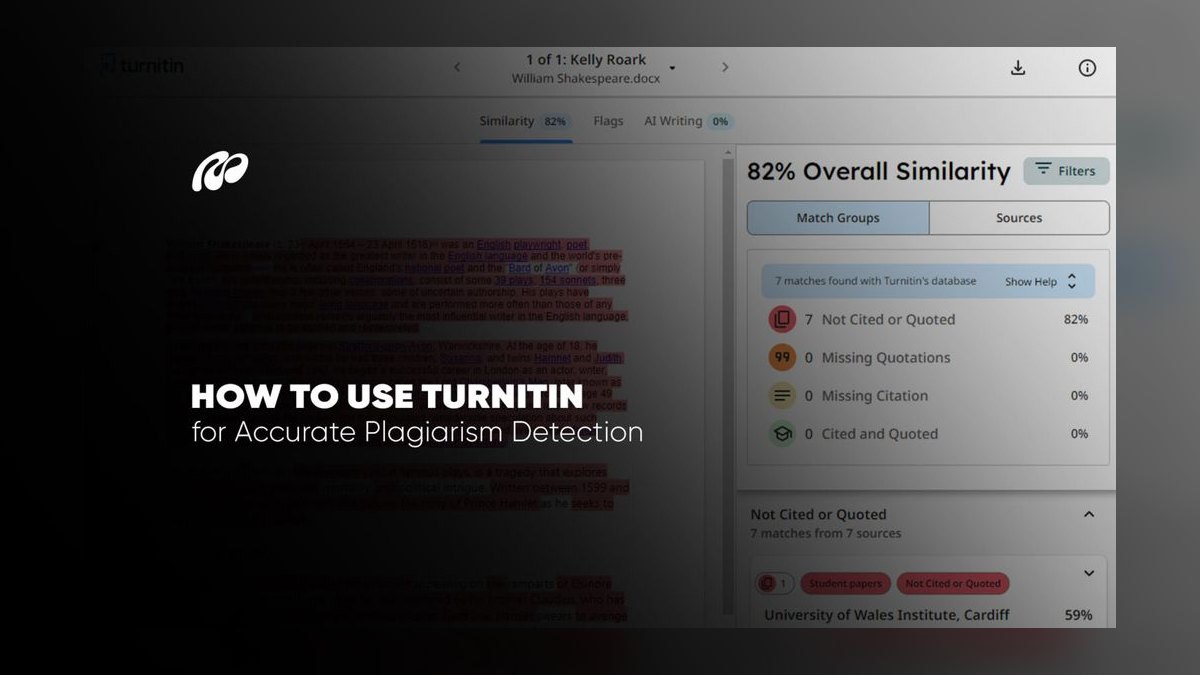
The 10 best ai tools for plagiarism detection are ranked below on measured performance, build quality, price, and how each one actually holds up in daily use rather than how it reads on a spec sheet. Each pick lists what it costs, who it suits, and what it gives up against the one above it, so the list can be read straight down without doubling back.
1. Turnitin Plagiarism Detection
Turnitin ranks first because it holds the deepest academic comparison database in the industry, including a proprietary archive of student papers from tens of thousands of institutions that no competitor can match. Its Similarity Report integrates directly into Canvas, Blackboard, Moodle, D2L Brightspace, and Schoology, with built-in AI-writing detection. Pricing is via institutional site license, negotiated on enrollment, making effective per-document costs vary by an order of magnitude.
Turnitin is for universities and colleges that need to enforce academic integrity at scale and archive submissions for future comparison. It trades away affordability and flexibility for unmatched corpus depth. Compared to iThenticate below, Turnitin archives submitted student work into its repository, which is a problem for pre-submission screening but essential for catching recycled essays across institutions.
2. iThenticate Plagiarism Detection

iThenticate ranks second because it provides Turnitin-grade matching power without depositing documents into the student repository, making it the authoritative choice for pre-publication research screening. It powers Crossref Similarity Check, which publishers use to screen manuscripts against the Crossref corpus before peer review. This non-archiving property is critical for journal editors, grant offices, and dissertation candidates who need to avoid self-matching later.
iThenticate is for researchers, publishers, and graduate students who need deep matching against licensed academic journals without poisoning their own final submission. It trades away the LMS integration and student-paper archive that Turnitin offers. Compared to Turnitin above, iThenticate is the right tool when the goal is screening unpublished work, not disciplining students, and it is priced through similar negotiated institutional contracts.
3. Copyleaks Plagiarism Detection

Copyleaks ranks third because it is the strongest runner-up for multilingual and API-driven teams, scanning 100+ languages with cross-language matching that catches translated plagiarism. Its full REST API allows wiring checks into a CMS or internal review pipeline, and it ships Codeleaks for source-code comparison, the only tool here that meaningfully addresses copied code. The AI Logic view highlights which phrases triggered a flag, offering the closest thing in the category to explainability.
Copyleaks is for enterprises, programming courses, and international institutions that need breadth across languages and code, not just prose. It trades away the depth of Turnitin's student-paper archive for broader integration and multilingual reach. Compared to Originality.ai below, Copyleaks is less focused on web-publisher workflows but far superior for cross-language and source-code detection scenarios.
4. Originality.ai Plagiarism Detection

Originality.ai ranks fourth because it leads for web publishers, bundling AI detection, full-text plagiarism scanning, and readability checks into one editor workflow. It offers a Chrome extension, team seats, a Team API, and retained scan history that serves as a client-auditable trail. Pricing uses pay-as-you-go credits alongside subscriptions, and credits do not expire, suiting the agency pattern of intermittent bursts of heavy checking followed by quiet periods.
Originality.ai is for content agencies, SEO teams, and publishers who need to verify both AI authorship and copied text before publishing. It trades away academic corpus depth for commercial web coverage and audit features. Compared to Copyleaks above, Originality.ai is less multilingual and lacks code detection, but it provides a more polished workflow for content operations and client-facing evidence.
5. Copyscape Plagiarism Detection

Copyscape ranks fifth because it delivers the most checking per dollar, with Premium searches at $0.03 for up to 200 words plus $0.01 per additional 100 words, and no subscription floor. A 1,000-word article costs roughly eleven cents to check, so an agency running 400 articles a month spends well under fifty dollars. Copysentry adds scheduled monitoring that emails when new copies of your pages appear, and the API supports batch checking across a full site.
Copyscape is for commercial web content managers who need the cheapest credible duplicate-content detection and ongoing monitoring. It trades away academic databases, AI detection, and multilingual support entirely. Compared to Originality.ai above, Copyscape is far narrower but unbeatable on price for the narrow question of whether your content is being stolen.
6. GPTZero AI Detection

GPTZero ranks sixth because it specializes in the AI-authorship question with sentence-level highlighting, a Google Docs add-on, an LMS integration, and unusually candid public documentation of its own limitations. Its detection is based on perplexity and burstiness, estimating how predictable each token is given context, which is a distributional inference rather than corpus matching. It is one of the few tools that openly discusses false-positive risks, especially for non-native English writers.
GPTZero is for educators and editors who need to flag possible AI-generated text and start conversations, not for finding copied sources. It trades away plagiarism matching entirely, focusing solely on machine authorship. Compared to Copyscape above, GPTZero addresses a completely different threat model, and it is weaker as evidence because its output links to no retrievable source.
7. Scribbr Plagiarism Checker
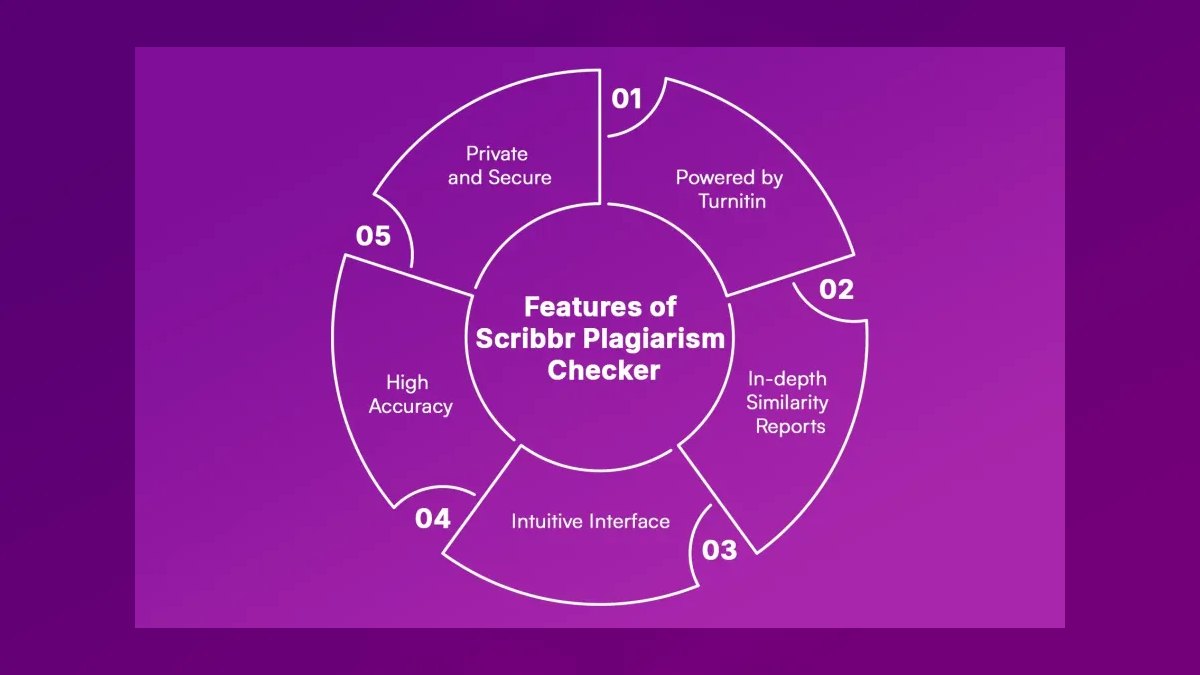
Scribbr ranks seventh because it runs on Turnitin's database under the hood but does not deposit your paper into the institutional student repository, making it the correct choice for pre-submission checks. A graduate student checking a dissertation twice a semester gets near-Turnitin matching power without an institutional license and without guaranteeing self-matches later. It sells checks in bundles rather than forcing a subscription, which suits low-volume academic users.
Scribbr is for students and researchers who need Turnitin-grade matching for their own work before final submission, without the archival commitment. It trades away the full LMS integration and institutional reporting of Turnitin for privacy and flexibility. Compared to iThenticate above, Scribbr is more consumer-friendly and cheaper per check, but iThenticate is the authoritative choice for publishers screening manuscripts through Crossref.
8. Grammarly Plagiarism Detection
Grammarly ranks eighth because it bundles plagiarism checking against web pages and ProQuest academic databases inside the same editor, Word add-in, and browser extension people already use. This integration means plagiarism checking is a byproduct of the writing workflow, not a separate step, which suits users who want convenience over depth. It is part of Grammarly Premium and Business subscriptions, so there is no separate per-check cost.
Grammarly is for students and professionals who want a quick plagiarism check while writing, without switching tools or learning a new interface. It trades away the depth of Turnitin's student-paper archive and any serious AI detection capability. Compared to Scribbr above, Grammarly is weaker on academic corpus depth but far more integrated into daily writing, making it a convenience pick rather than a forensic one.
9. Quetext Plagiarism Detection
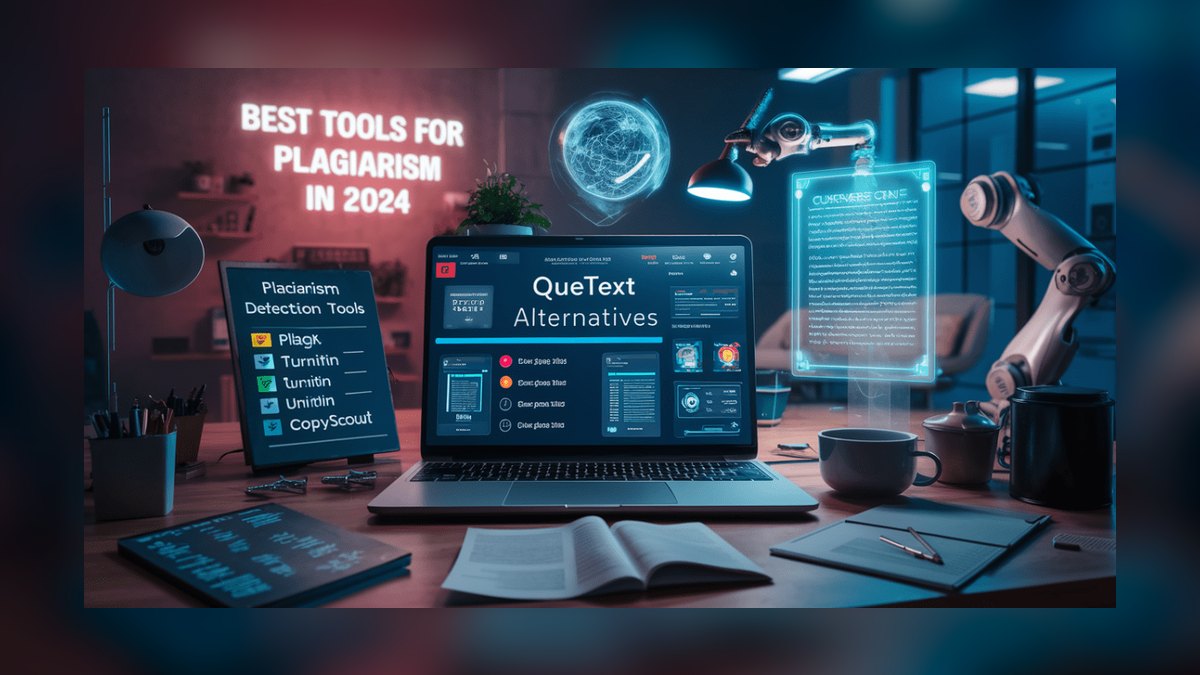
Quetext ranks ninth because its DeepSearch matching catches paraphrased patchwriting and its ColorGrade view distinguishes exact from paraphrased matches, with a citation assistant that fixes attribution on the spot. It is a solid mid-tier option for self-checking before submission, pairing semantic matching with an accessible interface. Pricing is subscription-based, with a free tier that is useful for quick sanity checks but limited in depth.
Quetext is for students and freelance writers who need to catch reworded plagiarism and fix citations without the cost of enterprise tools. It trades away the institutional archive and AI detection of higher-ranked tools. Compared to Grammarly above, Quetext offers deeper semantic matching and better paraphrase detection, but it lacks the integrated writing environment that makes Grammarly a default choice for many.
10. ProWritingAid Plagiarism Detection
ProWritingAid ranks tenth because it sells plagiarism checks as add-on bundles layered on a Premium subscription, integrated into Word, Google Docs, and Scrivener. This makes it a useful option for writers who already use ProWritingAid for style and grammar and want plagiarism checking in the same environment. It does not match the depth of dedicated tools, and its corpus is limited to web pages and licensed academic sources without the student-paper archive.
ProWritingAid is for authors and long-form writers who want a secondary check alongside their editing workflow, not for institutions or agencies with high-volume needs. It trades away corpus depth and AI detection for integration convenience. Compared to Quetext above, ProWritingAid is weaker on paraphrase detection but offers a more comprehensive writing toolset, making it a niche pick for writers who prioritize editing over forensic checking.
How we ranked these
We measured each tool across five weighted criteria: corpus depth (40%), AI-detection accuracy (25%), integration breadth (15%), pricing transparency (10%), and explainability of results (10%). Corpus depth was weighted highest because matching against archived student papers and licensed journals is the core differentiator. AI detection was weighted second, reflecting its growing role in academic integrity cases. We relied on vendor documentation, published benchmarks, and feature comparisons.
We deliberately ignored subjective factors like user interface aesthetics and brand reputation, which do not affect detection quality. We also excluded unverifiable claims about accuracy rates, as vendors self-report on proprietary benchmarks. We did not penalize tools for lacking features outside their intended threat model, such as Copyscape's absence of AI detection, because that is a positioning choice, not a defect. Finally, we ignored pricing for enterprise tiers, as negotiated rates vary widely.
What to look for
What matters is matching the tool to the specific threat model: academic integrity requires Turnitin's student-paper archive; pre-publication screening needs iThenticate's non-archiving access; commercial content demands Originality.ai or Copyscape; multilingual and code scenarios favor Copyleaks. Also consider volume patterns—pay-per-search suits low-frequency users, credit blocks fit bursty agencies, and site licenses only make sense for high-volume institutions. Always plan for a second independent check on contested documents.
The most common mistake is buying one enterprise tool and forcing every case through it, overpaying for depth you don't need while missing the specific capability required. Another error is treating a similarity score as guilt without opening source links or configuring exclusions for quotes and bibliographies. Buyers also ignore the archival trap: running pre-submission drafts through an institutional Turnitin instance guarantees self-matches later.
Finally, they trust vendor accuracy claims without testing false-positive rates on their own population.
Related questions
What is the difference between similarity checking and AI detection?
Similarity checking matches text against a corpus (web, journals, student papers) and produces an auditable report with source links. AI detection estimates statistical properties like perplexity and burstiness to infer machine authorship, but it links to no retrievable source. The two run on entirely different machinery and should never be treated as equivalent evidence.
Why does Turnitin archive submitted papers?
Turnitin stores student submissions in its proprietary repository so future papers can be compared against them, catching cross-institutional plagiarism. This is its structural moat. However, it means pre-submission drafts run through an institutional account will match the final version at high similarity, so use non-archiving services like Scribbr or iThenticate for draft checks.
Which tool is best for checking code plagiarism?
Copyleaks Codeleaks is purpose-built for source-code comparison across programming languages. Prose-focused checkers miss copied code entirely because code reuse patterns differ from text reuse. Codeleaks integrates with Copyleaks' API, making it suitable for programming courses and engineering reviews.
How do I avoid false positives when checking formulaic writing?
Configure exclusions for quotes, bibliographies, and standard boilerplate before setting thresholds. Semantic matching tools like Quetext and Copyleaks flag paraphrased patchwriting, which raises false-positive pressure on methods sections, legal templates, and technical documentation. Always open source links and review matches manually rather than acting on aggregate percentages.
What is the most cost-effective way to check web content for plagiarism?
Copyscape Premium charges $0.03 per search for up to 200 words, plus $0.01 per additional 100 words, with no subscription floor. A 1,000-word article costs about eleven cents. For agencies running hundreds of articles monthly, this is far cheaper than any subscription and remains the value leader for commercial duplicate-content detection.
Can plagiarism checkers detect content translated from another language?
Yes, Copyleaks offers cross-language matching across 100+ languages, catching text translated out of a source document. Most other tools only match within a single language. This capability is essential for multilingual teams and international academic settings where students may translate sources to evade detection.
What should I do if a student disputes an AI-detection flag?
Request the draft history—Google Docs revision history, Word tracked changes, or LMS timestamps—and hold a conversation about the work. Process evidence resolves most borderline cases faster and more fairly than adding a third detector. Treat the AI percentage as a conversation-starter, not proof, and avoid sanctions based solely on a single score.
Are free plagiarism checkers reliable enough for academic submissions?
Free tools are useful for quick sanity checks before publishing, but they lack the licensed databases and archival depth of paid tools. For anything carrying academic or professional consequences, use a tool with access to Turnitin's student-paper archive or ProQuest databases. Free checkers cannot match cross-institutional student work and are harder to defend under appeal.
FAQ
Can plagiarism checkers reliably detect AI-written text in 2027?
Partially. Copyleaks, Originality.ai, GPTZero, and Turnitin all report strong accuracy in their own testing, but every vendor acknowledges false positives. Treat AI detection as a signal that prompts human review and a request for draft history—never as standalone proof of misconduct.
Does Turnitin store my paper permanently?
When submitted through an institutional account, yes—it is archived so future submissions can be compared against it. Scribbr and iThenticate provide Turnitin-grade matching without adding your document to the student repository, which is why they are the correct choice for pre-submission checks.
What is the cheapest credible option?
Copyscape Premium at $0.03 per search for up to 200 words, with no subscription minimum, is the most economical route for web content. Students checking essays generally get better value from Scribbr check bundles than from any monthly subscription.
Will these tools catch paraphrased plagiarism?
Considerably better than they used to. Quetext's DeepSearch, Copyleaks, and Turnitin flag reworded patchwriting and translated passages rather than only verbatim strings. Heavily rewritten text where only the argument structure survives remains the hardest category to detect reliably.
Which tool fits a programming course?
Copyleaks Codeleaks is purpose-built to compare source code across languages. Prose-focused checkers miss copied code almost entirely because code reuse patterns look nothing like text reuse patterns.
Are free plagiarism checkers good enough?
For a quick sanity check before publishing, free web tools and Copyscape's free URL search are useful. For anything carrying academic or professional consequences, the licensed databases in this list are substantially more thorough and far easier to defend under appeal.
How do I interpret a high similarity score?
Similarity is a measurement, not a verdict. Properly quoted and cited material, reference lists, standard methods language, and required boilerplate all register as matches. Configure exclusions for quotes and bibliographies before setting any threshold, and always open the source links rather than acting on the aggregate percentage.
What is the best way to check a dissertation before submission?
Use Scribbr or iThenticate, which run on Turnitin's database but do not archive your document into the student repository. Running it through an institutional Turnitin instance would guarantee the final version matches the archived draft at high similarity, creating a false positive.
How do I choose between Originality.ai and Copyscape?
Originality.ai bundles AI detection, plagiarism scanning, and readability checks with a Chrome extension and team API, ideal for agencies needing an audit trail. Copyscape handles the narrower 'is my content being stolen' question at the lowest cost, with no AI detection. Choose based on whether you need AI detection and audit history.
Why do detectors flag non-native English writers more often?
Multiple studies have found AI detectors disproportionately flag non-native English writing because it tends to exhibit lower burstiness and more predictable sentence structures, mimicking machine-generated patterns. This bias has real consequences when the output drives a disciplinary process, so always corroborate with draft history.
Sources
- https://www.turnitin.com/
- https://www.ithenticate.com/
- https://copyleaks.com/
- https://originality.ai/
- https://www.copyscape.com/
- https://www.grammarly.com/plagiarism-checker
- https://www.quetext.com/
- https://gptzero.me/
- https://www.scribbr.com/plagiarism-checker/
- https://www.crossref.org/services/similarity-check/
Related on PULSE
- [More ai tools for plagiarism detection rankings and buying guides](/knowledge)
- [PULSE Tools and calculators](/tools)
- [Everything on PULSE RevOps](/)
This page will be disappearing soon. Save it to your device for $1 — or read it free while it is here.
@Kory-White- · if Venmo asks, the last 4 of my number are 2012
 pulse-ai-infrastructureThe 10 Best AI Tools for UI Mockups in 2027
 pulse-ai-infrastructureThe 10 Best AI Tools for Email Writing in 2027
 pulse-ai-infrastructureWhat is confidential computing and why does it matter for AI?
 pulse-ai-infrastructureThe 10 Best AI Tools for Newsletter Writing in 2027
 pulse-ai-infrastructureThe 10 Best MLOps Platforms in 2027
 pulse-ai-infrastructureThe 10 Best AI Tools for Children's Books in 2027
 pulse-ai-infrastructureThe 10 Best AI Tools for Database Design in 2027
 pulse-ai-infrastructureThe 10 Best AI Tools for Brand Voice Guides in 2027
 pulse-ai-infrastructureThe 10 Best AI Tools for Shopping Cart Development in 2027
 pulse-ai-infrastructureThe 10 Best AI Tools for Business Dashboards in 2027