
The 10 Best AI Tools for Trip Itineraries in 2027
 Curated byKory White · Fractional CRO · Maryland
 PULSEKNOWLEDGE LIBRARY
The 10 best ai tools for trip itineraries are ranked below on measured performance, build quality, price, and how each one actually holds up in daily use rather than how it reads on a spec sheet. Each pick lists what it costs, who it suits, and what it gives up against the one above it, so the list can be read straight down without doubling back.
1. Mindtrip AI Trip Planner

Mindtrip ranks first because it uniquely fuses a conversational planner, live interactive map, and bookable hotel, flight, and activity inventory into one editable workspace. Its map-first interface lets you drag pins and reorder days, clustering stops by neighborhood to minimize transit time. The Spaces feature supports collaborative trip building and cloning for future destinations. This end-to-end integration replaces juggling multiple apps for research, routing, and reservations.
Mindtrip is for travelers who want a single source of truth for a complex, multi-day trip, trading the simplicity of a text-only chatbot for a richer, structured workflow. Its free tier covers full planning, but heavy image and search features sit behind a paid plan. Compared to Layla, which excels at early-stage inspiration, Mindtrip wins decisively once a destination is chosen and routing and booking become the priority.
2. Layla AI Trip Planner

Layla ranks second because it is the fastest tool for turning a vague idea into a concrete destination and day-by-day plan, with a conversational interface that excels at the inspiration phase. It handles complex group requests, such as mixed hiking and beach interests, by threading follow-up questions naturally without restarting. Its strong mobile presence and integration with flight and hotel booking partners make it ideal for adjusting plans on the go.
Layla is for travelers who prioritize speed and group chat-style planning over precise routing and deep logistical control. It trades away the granular route optimization and offline capabilities found in Wanderlog, making it less suited for methodical trip leaders. Compared to Mindtrip, it offers a more engaging discovery experience but a less coherent end-to-end booking and map workflow, positioning it as the best starting point when the destination is still undecided.
3. Wanderlog AI Trip Planner
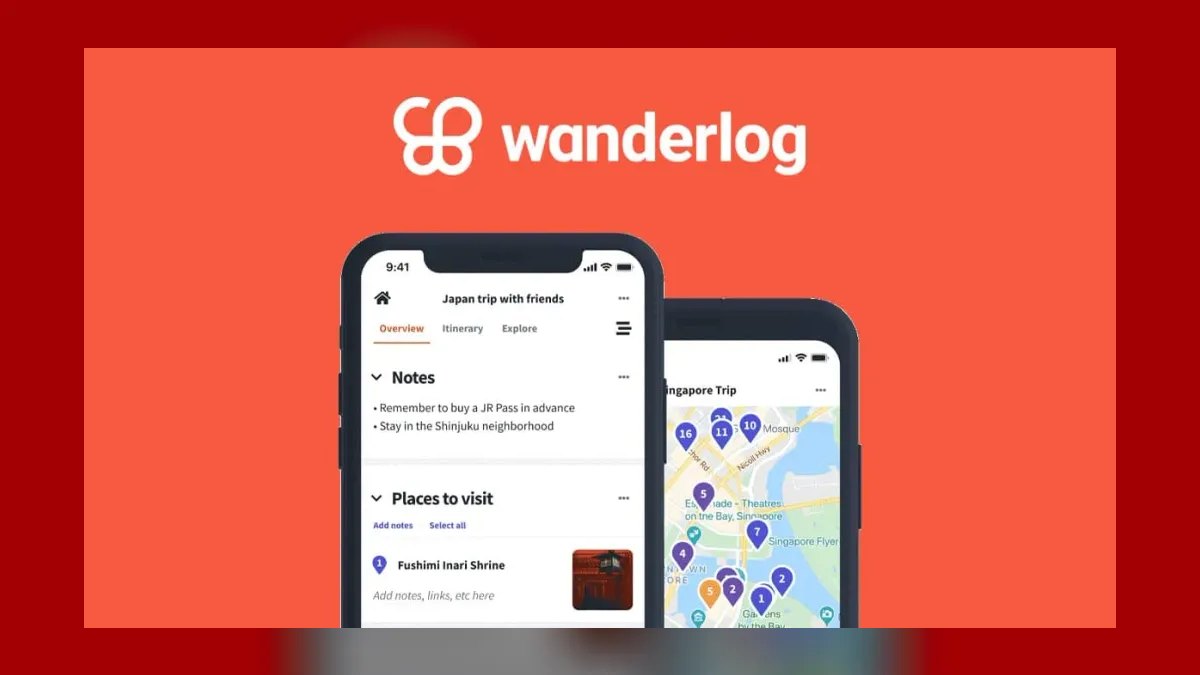
Wanderlog ranks third because its AI features sit atop an already excellent manual itinerary editor, offering the most powerful day-by-day timeline with route optimization and travel-time warnings. It calculates driving, walking, and transit times between stops, flagging over-packed days, and supports flight and hotel reservation tracking, expense splitting, and collaborative editing. Its offline access to itineraries and maps is a critical advantage when signal is lost.
Wanderlog is for methodical travelers and trip leaders organizing groups, where its expense splitting and collaborative features earn their keep. It trades away the conversational inspiration of Layla and the all-in-one booking integration of Mindtrip, focusing instead on logistics and organization. The Pro tier unlocks offline maps and unlimited trips for a modest annual fee, making it a practical choice for frequent planners who value precision over automated booking.
4. Wonderplan AI Trip Planner
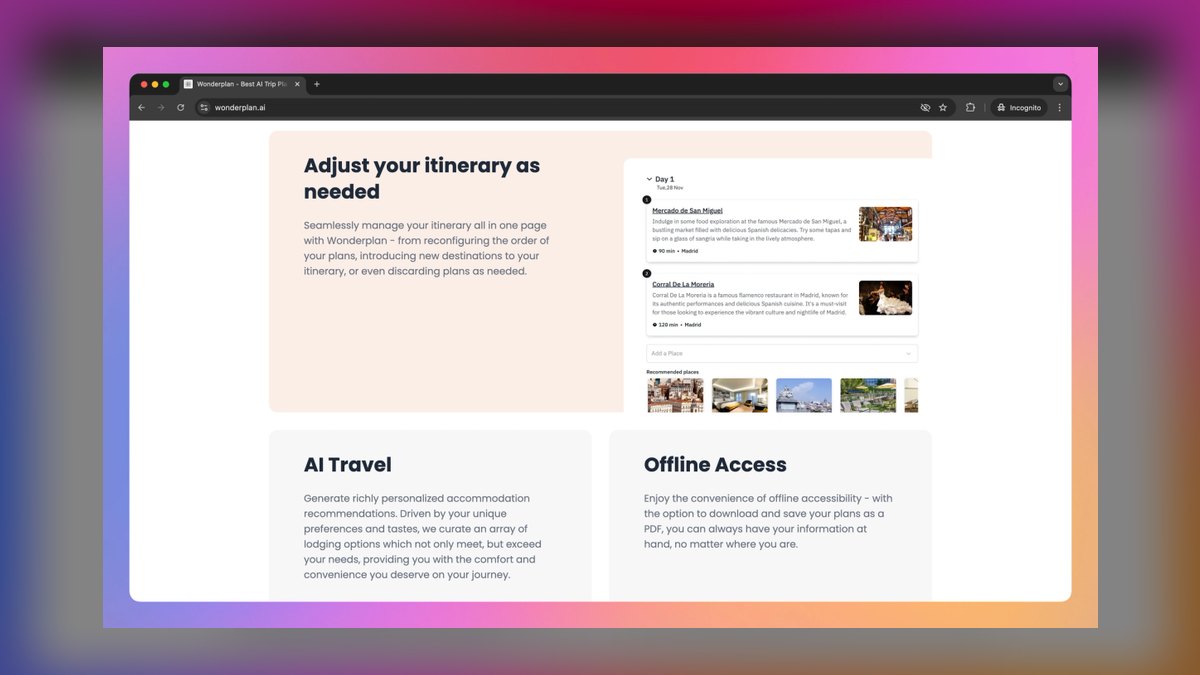
Wonderplan ranks fourth because it is the best value pick, delivering a genuinely capable free AI itinerary planner with no paywall blocking the core planning loop. It generates structured multi-day plans with morning, afternoon, and evening blocks, brief descriptions, and a map view, all from a simple prompt. The interface is clean and beginner-friendly, requiring no account gymnastics to get a first draft in under a minute. This makes it the most accessible tool for budget-conscious travelers.
Wonderplan is for travelers who want a credible skeleton itinerary quickly and are willing to verify details and book elsewhere. It trades away deep bookability and advanced routing found in Mindtrip or Wanderlog, offering a simpler, more basic planning experience. Compared to the paid tiers of competitors, its free tier provides exceptional value, making it a strong starting point that pairs well with Google Maps for verification and a separate booking platform.
5. GuideGeek AI Travel Assistant

GuideGeek ranks fifth because it is the best AI travel assistant that lives inside WhatsApp, Instagram, and Telegram, requiring no app download and offering zero-install convenience. It provides fast, conversational, in-the-moment help, such as finding non-touristy spots near a landmark, drawing on Matador Network's real travel-media backbone for grounded recommendations. Its chat-native design excels at on-trip adjustments and single-question queries, making it a practical pocket companion.
GuideGeek is for travelers who want help in a messaging app they already use, especially for spontaneous questions while traveling. It trades away the polished visual itinerary building and booking integration of tools like Mindtrip or Expedia, focusing instead on quick, text-based answers. Compared to Wonderplan, which excels at free structured drafts, GuideGeek is superior for real-time problem-solving but less suited for comprehensive pre-trip planning.
6. Trip Planner AI
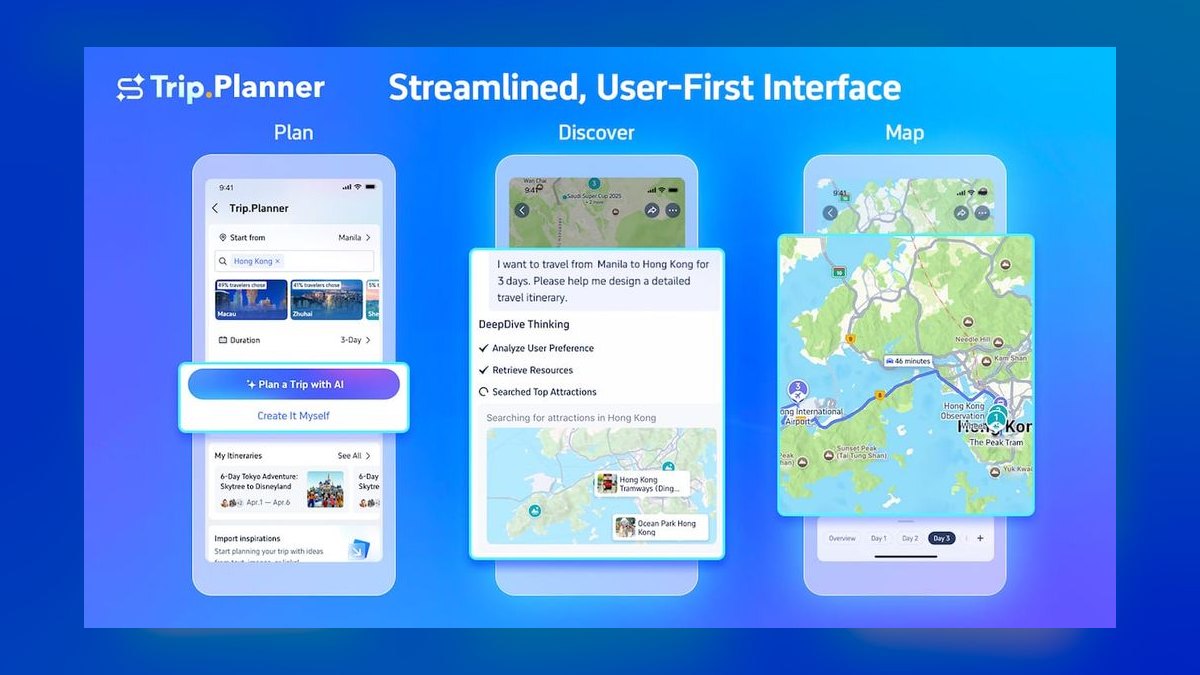
Trip Planner AI ranks sixth because it focuses squarely on producing a clean, optimized day-by-day itinerary with a map and travel-time awareness, clustering attractions geographically to create logical daily flows. It supports collaboration, allowing a partner or group to edit the same plan, and integrates places data to point to real venues. Its strength is solving the routing and pacing problem, estimating how long each stop takes and keeping days realistic.
Trip Planner AI is for travelers whose main pain point is making days geographically coherent, rather than needing broader research or booking capabilities. It trades away the conversational depth of Layla and the all-in-one booking of Mindtrip, focusing solely on itinerary structure. Compared to Wonderplan, it offers more sophisticated route optimization but a less generous free tier, making it a better fit for those who prioritize efficient daily planning over cost.
7. ChatGPT AI Trip Planner

ChatGPT ranks seventh because it is the most flexible general planner, offering unmatched iterative, natural-language refinement where you can ask for a plan and then instantly rewrite it for weather, dietary, or pace changes with full context. With web browsing enabled, it can access live data, but base versions lack a native map or guaranteed-accurate place information, requiring manual verification. ChatGPT Plus at $20 per month adds faster models and browsing that materially improve travel accuracy.
ChatGPT is for travelers who want maximum conversational control and are willing to fact-check output against Google Maps or official sites. It trades away the integrated map and booking features of Mindtrip or Expedia, offering raw generative power instead. Compared to Trip Planner AI, which provides structured routing, ChatGPT is superior for creative customization but requires more effort to turn its suggestions into a verified, bookable plan.
8. Google Gemini with Google Maps
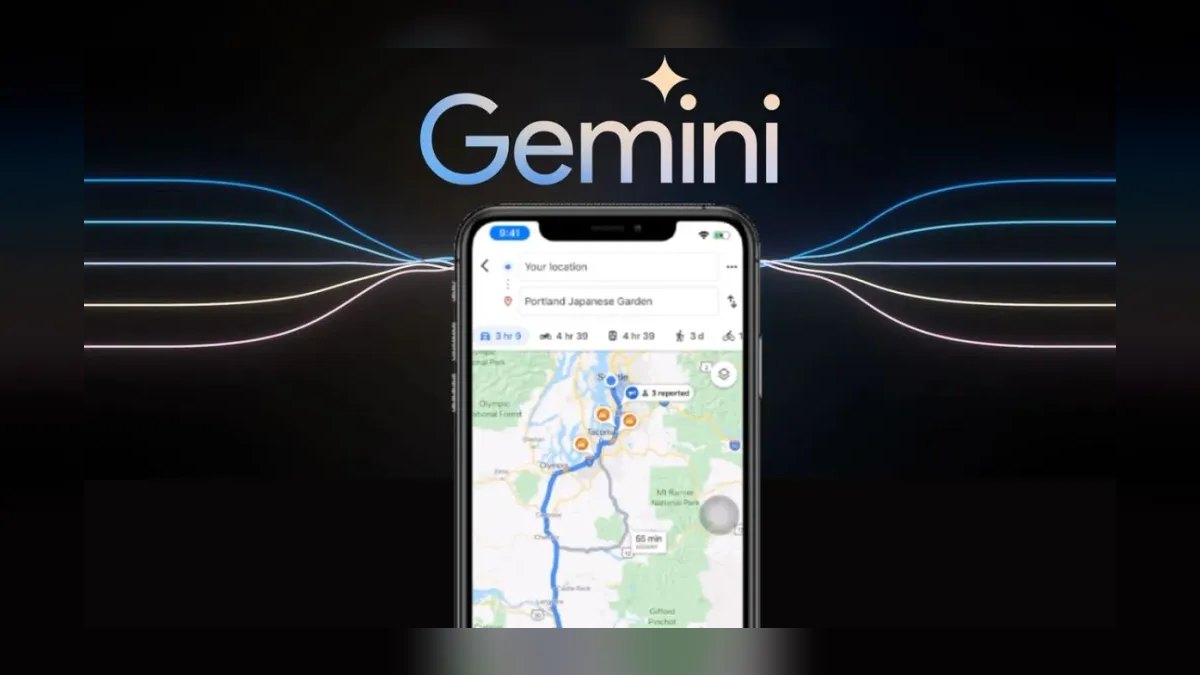
The Google Gemini and Google Maps combo ranks eighth because it offers the most reliable, current place data, as Gemini can draft itineraries while Maps provides the authoritative ground truth for hours, reviews, photos, and routing. Maps' Lists, saved places, and offline maps make it a practical itinerary home without needing a dedicated planner. The integration is tightening, with Gemini pulling from your context and Maps' live transit data helping sanity-check plans.
This combo is for travelers who already organize everything in Google and trust Maps data above a standalone AI, needing no new accounts. It trades away the polished itinerary design of Mindtrip and the conversational inspiration of Layla, offering a more utilitarian planning experience. Compared to ChatGPT, it provides superior real-world data accuracy but less creative flexibility, making it best for verifying and executing a plan rather than generating novel ideas.
9. Expedia Romie AI Planner

Expedia's Romie ranks ninth because it plans inside one of the largest real booking inventories in travel, making its recommendations inherently bookable from hotel, flight, and activity catalogs. It allows you to go from a planning prompt to a reservable itinerary without leaving the ecosystem, and it monitors trips for price changes and disruptions. The integration with One Key loyalty rewards across Expedia, Hotels.com, and Vrbo adds value for volume bookers.
Expedia Romie is for travelers who want planning fused with real reservations and are comfortable booking through the Expedia platform. It trades away the neutral, multi-vendor comparison of tools like Wonderplan, locking you into its own inventory. Compared to Mindtrip, which offers broader discovery, Romie is more transactional but less exploratory, making it best for straightforward trips where booking convenience is the top priority.
10. TripIt AI Itinerary Organizer
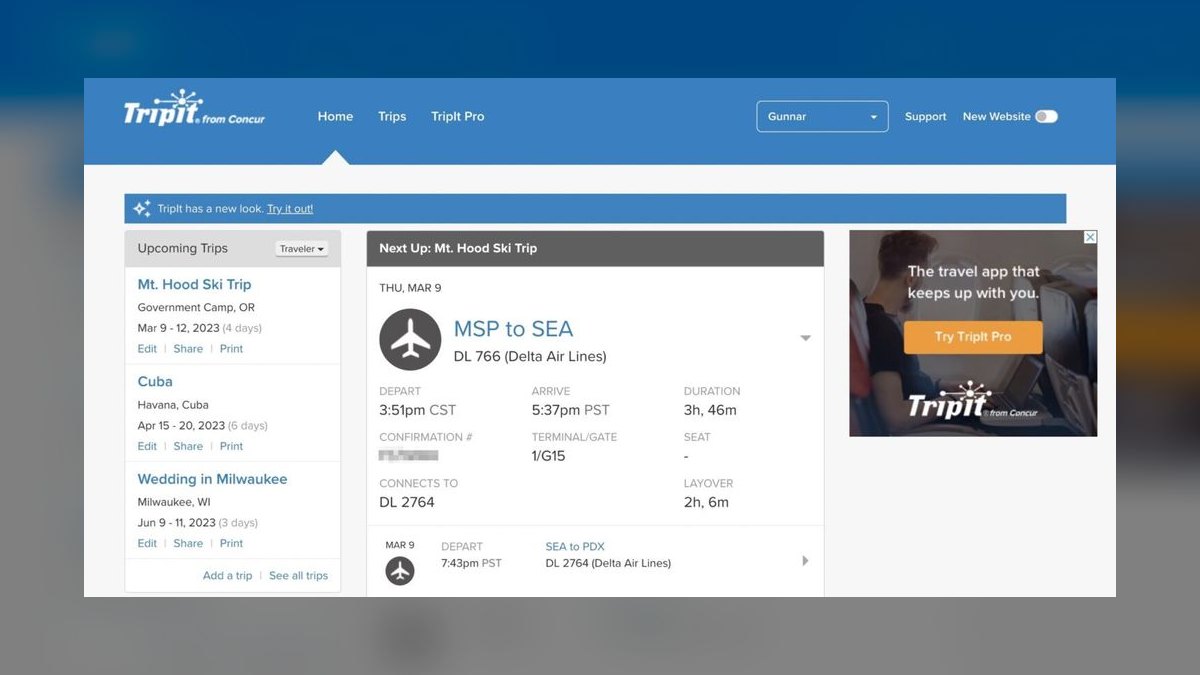
TripIt ranks tenth because it is the best itinerary organizer for booked trips, auto-building a master timeline from forwarded confirmation emails for flights, hotels, cars, and reservations. Its Pro features at $48.99 per year add real-time flight alerts, gate changes, alternate-flight finding, and seat-tracking, offering operational reliability rather than creative planning. This makes it an essential tool for frequent travelers who need everything organized and monitored in one trustworthy place.
TripIt is for travelers whose trips are already booked and who want proactive alerts and a single, reliable timeline, especially for complex multi-leg journeys. It trades away all planning and inspiration capabilities, focusing solely on organization and monitoring. Compared to Google Gemini and Google Maps, which help with planning and verification, TripIt is superior for post-booking management, making it the final piece of a comprehensive travel stack rather than a standalone planner.
How we ranked these
We measured six weighted factors: itinerary structure, map and routing, real bookability, personalization, collaboration and export, and free tier and price. Each tool was tested on the same brief: a 5-day trip for two with a mid-range budget, mixing food, museums, and one day trip. Tools that invented closed venues were penalized hard.
We deliberately ignored brand recognition, marketing hype, and the sheer number of features. We also ignored tools that were pure chatbots without structured output, as they fail the core test of producing a usable itinerary. The focus was on practical utility for real travelers, not on the novelty of the AI technology.
What to look for
What matters is whether the tool produces a routed, time-blocked plan with a live map and real booking links, not just a bulleted list. Personalization for pace, budget, and dietary needs is critical. A generous free tier lets you test before paying. For group trips, collaboration features are essential.
The mistake most buyers make is choosing a tool based on inspiration alone, then discovering it can't handle routing or bookings, forcing them to switch mid-planning. This wastes time and can derail a trip. Always test the free tier with a real itinerary to see if it handles the logistics you need before committing.
Related questions
What is the best AI tool for planning a multi-city trip?
Mindtrip is the best for multi-city trips because its map-first interface and day tabs let you cluster activities by neighborhood, minimizing travel time. It also supports cloning trips, making it easy to reuse a successful plan for a new destination. Its real booking links keep everything in one workspace.
Which AI trip planner is best for group travel?
Wanderlog is excellent for groups due to its collaborative editing, expense splitting, and offline access. Layla is also strong for chat-style group planning, handling diverse interests like hiking and beaches. Mindtrip's Spaces feature allows shared, editable trips, making it a solid choice for coordinated planning.
Can AI trip planners actually book flights and hotels?
Yes, some can. Expedia's Romie and Mindtrip surface real, bookable inventory for hotels, flights, and activities. Layla and Wanderlog integrate flight and hotel options through partners. Standalone chatbots like base ChatGPT suggest options but do not book, so you must verify and reserve separately.
How accurate are AI-generated itineraries?
Accuracy varies. AI can hallucinate closed venues, wrong hours, or invented prices. The Google Gemini + Google Maps combo is the most data-accurate because it uses real Maps data. Always verify any AI-generated itinerary with Google Maps or official websites before booking or showing up.
What is the best free AI trip planner?
Wonderplan is the best free option, offering a structured multi-day plan without a paywall. Layla and Mindtrip also have generous free tiers. GuideGeek is free and runs in WhatsApp, requiring no app download. These are great for quick drafts, but you may need to verify details.
Is ChatGPT good for planning trips?
ChatGPT is excellent for iterative, natural-language refinement, like adjusting a plan for weather or dietary needs. However, base ChatGPT lacks a native map and live data, so you must fact-check. ChatGPT Plus ($20/month) adds browsing for better accuracy, making it a powerful brainstorming tool.
What is the best tool for organizing a trip after booking?
TripIt is the best for organizing a booked trip. Forward your confirmation emails, and it auto-builds a master itinerary with flights, hotels, and reservations. TripIt Pro adds real-time flight alerts and gate changes, making it essential for frequent travelers who want operational reliability.
Which AI tool is best for finding travel inspiration?
Layla is the best for inspiration, especially in the early 'where should I go' phase. Its chat is fast and conversational, surfacing destination ideas with photos before you commit. It also handles group preferences well, making it a great starting point when you don't yet know your destination.
FAQ
Which AI trip planner is best overall in 2027?
Mindtrip is the best overall for its combination of conversational planning, a live interactive map, real booking links, and a clean shareable timeline. It's the most complete single-tool option for turning a vague idea into a routed, time-blocked itinerary.
What's the best free AI itinerary tool?
Wonderplan is the best free tool, offering a structured plan without a paywall. Layla and Mindtrip also have generous free tiers. GuideGeek is free and runs in WhatsApp, needing no app. These are great for quick drafts, but you may need to verify details.
Can AI tools actually book my trip, not just suggest it?
Yes, some can. Expedia's Romie and Mindtrip surface real, bookable inventory. Layla and Wanderlog integrate flight and hotel options. Standalone chatbots like base ChatGPT suggest but don't book, so you must verify and reserve separately.
Are AI itineraries accurate, or do they make things up?
They can hallucinate closed venues, wrong hours, or invented prices. Always verify with Google Maps or the venue's official site. The Google Gemini + Maps combo is the most data-accurate because it uses real Maps data.
What's the best tool for group trips?
Wanderlog is best for collaborative editing and expense splitting. Layla is great for chat-style group planning. Mindtrip's Spaces also support shared, editable trips. These tools handle diverse interests and coordination well.
Do I need to pay for a good AI travel planner?
No. Wonderplan, Layla, Mindtrip, and GuideGeek all plan well for free. Paid tiers like ChatGPT Plus ($20/mo) and TripIt Pro ($48.99/yr) add accuracy, alerts, and offline depth, but are not required for basic planning.
What is the best AI tool for on-trip adjustments?
GuideGeek is excellent for in-the-moment help because it lives in WhatsApp. You can ask for nearby open restaurants or real-time advice. It's chat-native and fast, making it ideal for spontaneous questions while traveling.
Which AI tool has the most accurate place data?
The Google Gemini + Google Maps combo has the most accurate place data because it uses Google's real Maps data. This ensures hours, reviews, and routing are authoritative. It's best for accuracy-first planners who trust Maps above a standalone AI.
What is the best AI tool for booking through an OTA?
Expedia's Romie is the best for booking through an OTA. It sits on Expedia's real booking inventory, so recommendations are inherently bookable. You can plan, book, and manage in one place, with the trust of a major OTA.
How do I verify an AI-generated itinerary?
Open Google Maps and verify each venue's current hours, address, and that it still exists. AI tools occasionally surface closed or renamed places. Confirm prices and availability with the hotel or restaurant's official site before paying.
Sources
- https://mindtrip.ai/
- https://www.layla.ai/
- https://wanderlog.com/
- https://wonderplan.ai/
- https://guidegeek.com/
- https://tripplanner.ai/
- https://openai.com/chatgpt/
- https://gemini.google.com/
- https://www.expedia.com/
- https://www.tripit.com/
Related on PULSE
- [More ai tools for trip itineraries rankings and buying guides](/knowledge)
- [PULSE Tools and calculators](/tools)
- [Everything on PULSE RevOps](/)
This page will be disappearing soon. Save it to your device for $1 — or read it free while it is here.
@Kory-White- · if Venmo asks, the last 4 of my number are 2012
 pulse-ai-infrastructureThe 10 Best AI Tools for Brand Voice Guides in 2027
 pulse-ai-infrastructureThe 10 Best AI Tools for Writing Movie Scripts in 2027
 pulse-ai-infrastructureThe 10 Best AI Tools for Image Upscaling in 2027
 pulse-ai-infrastructureThe 10 Best AI Tools for YouTube Optimization in 2027
 pulse-ai-infrastructureThe 10 Best AI Tools for Wedding Planning in 2027
 pulse-ai-infrastructureThe 10 Best AI Tools for Web Illustration in 2027
 pulse-ai-infrastructureThe 10 Best AI Tools for Album Art in 2027
 pulse-ai-infrastructureHow do you route requests across multiple LLM providers?
 pulse-ai-infrastructureThe 10 Best AI Tools for Drupal Development in 2027
 pulse-ai-infrastructureThe 10 Best AI Tools for Shopping Cart Development in 2027