
The 10 Best AI Tools for Gift Recommendations in 2027
 Curated byKory White · Fractional CRO · Maryland
 PULSEKNOWLEDGE LIBRARY
The 10 best ai tools for gift recommendations are ranked below on measured performance, build quality, price, and how each one actually holds up in daily use rather than how it reads on a spec sheet. Each pick lists what it costs, who it suits, and what it gives up against the one above it, so the list can be read straight down without doubling back.
1. Amazon Rufus
Amazon Rufus ranks first because it is the only AI gift recommender directly embedded in a live catalog of hundreds of millions of in-stock items, with real prices and Prime delivery estimates. It turns conversational queries like "thoughtful gift for a dad who grills, under $75" into specific, purchasable products with reasoning drawn from listings and aggregated customer reviews. Its review-sentiment synthesis helps you avoid gifts panned for sizing or praised for durability before you commit.
Rufus is for fast, mainstream gifting where you want idea-to-doorstep in a single session, and it handles follow-up refinements like "which is quietest" without losing context. Its limitation is that it only recommends what Amazon sells, so handmade, local, or boutique gifts fall outside its reach. Compared to Etsy Gift Mode below, Rufus offers far greater catalog breadth and speed, but trades away the unique, personalized finds that Etsy excels at.
2. Etsy Gift Mode
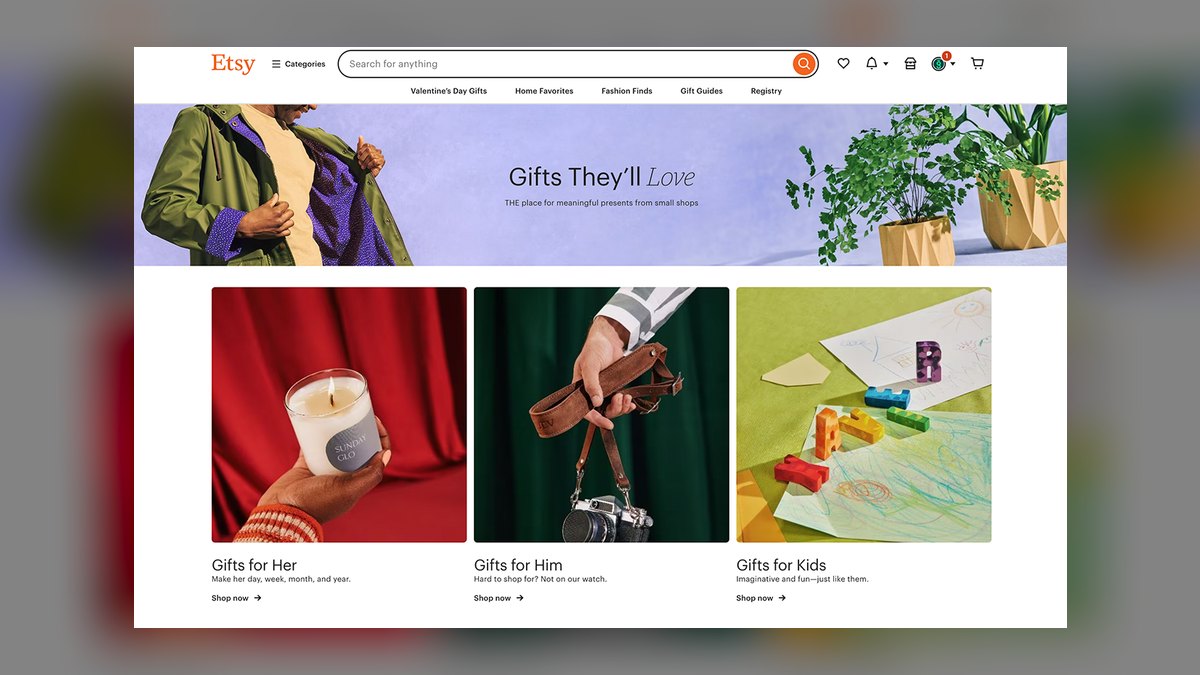
Etsy Gift Mode ranks second because it is the best tool for handmade, personalized, and one-of-a-kind gifts, mapping a short quiz onto 200+ curated gift personas like "The Nostalgia Seeker" or "The Pet Parent." It surfaces relevant listings from Etsy's marketplace of over 100 million items, many of which support personalization fields for custom name jewelry, engraved cutting boards, or made-to-order portraits.
Gift Mode is for givers who prioritize uniqueness and personalization over speed, and who can plan a week or more ahead. Its trade-off is shipping lead time and higher per-item prices, making it weak for last-minute buying. Compared to Amazon Rufus above, it offers a smaller catalog but far superior curation for sentimental, custom gifts that people remember.
3. Google Gemini

Google Gemini ranks third as the best value pick because it is free, conversational, and wired into Google's Shopping Graph, a continuously refreshed dataset of tens of billions of product listings from retailers across the web. It pulls real products, current prices, and links spanning many merchants, so you are not locked into one ecosystem. It handles nuanced prompts like "eco-friendly gift for a teenager into skateboarding, $40 max" and integrates with Google Lens for photo-based searches.
Gemini is for givers who want cross-retailer comparison shopping and options from big-box, specialty, and direct-to-consumer brands in one answer. It is not a checkout engine, so you finish purchases on each retailer's own site, and suggestions can occasionally surface out-of-stock or mispriced listings that need verification. Compared to Etsy Gift Mode above, Gemini offers broader catalog coverage but lacks the curated, handmade focus that makes Etsy superior for personalized gifts.
4. ChatGPT OpenAI
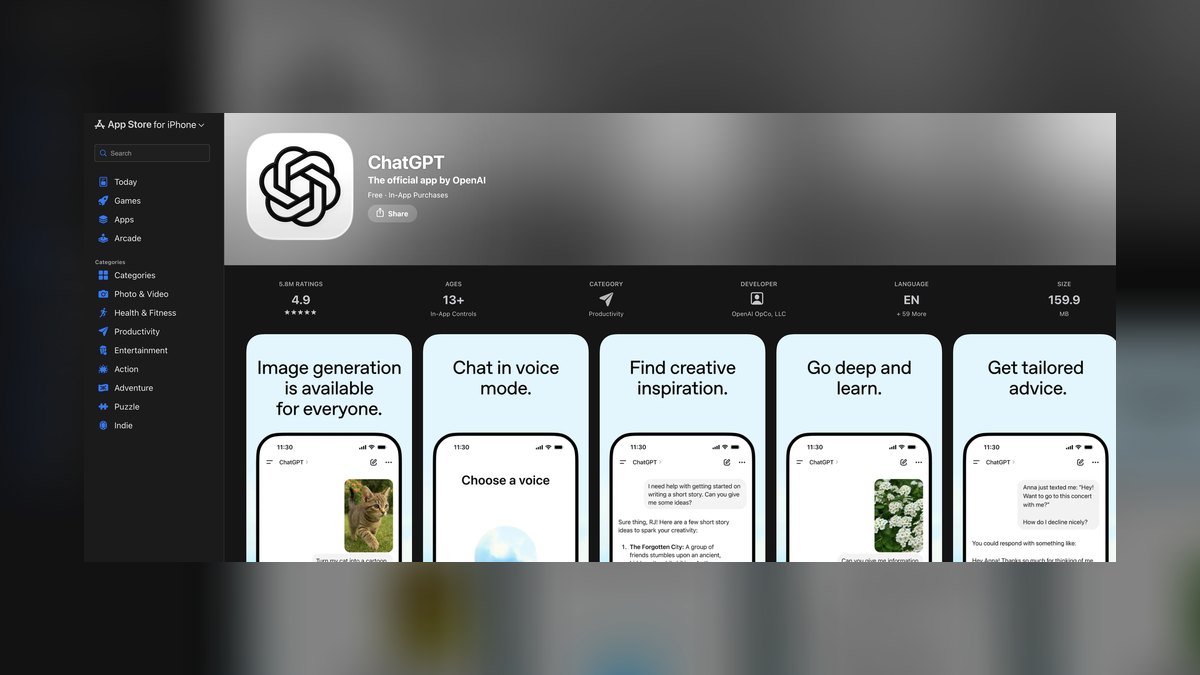
ChatGPT ranks fourth because it is the most flexible conversational gift brainstormer, excelling at reasoning about a person's personality, hobbies, and inside jokes to generate thoughtful, tiered ideas—practical, splurge, and sentimental. OpenAI has added product and shopping results that surface real items with images, prices, and merchant links inside the chat.
ChatGPT is for hard-to-buy-for people and for the ideation half of gifting, pointing you toward purchasable products to close the loop. Because it is not bolted to one retailer's live inventory, you should confirm price and availability at the source before buying. Compared to Google Gemini above, ChatGPT offers superior creative reasoning but lacks Gemini's direct integration with a live shopping graph for cross-retailer price accuracy.
5. Perplexity AI

Perplexity ranks fifth because it is an answer engine that cites its sources, making it unusually trustworthy for gift research. Ask for "the best-reviewed noise-canceling headphones under $200 as a gift" and it returns a synthesized recommendation with footnoted links to reviews, retailers, and spec pages you can verify. This citation habit cuts down on the hallucinated-product problem that plagues plain chatbots.
Perplexity is for evidence-backed, research-heavy gifts like electronics, appliances, and hobby gear, where you want to know why a pick is good before spending real money. The free tier covers most gift research, while Perplexity Pro at about $20/month unlocks deeper models and the fuller shopping flow. Compared to ChatGPT above, Perplexity is less suited to whimsical, sentimental gifts but offers a real advantage in verifiable reasoning and source transparency.
6. Microsoft Copilot

Microsoft Copilot ranks sixth because it brings AI gift help directly into Edge, Bing, Windows, and Microsoft 365, making it the most convenient tool for users already in that ecosystem. Its shopping features include price-history awareness, deal surfacing, and conversational product discovery, so you can describe a recipient and get suggestions plus context on whether a price is currently good. It draws on Bing's web and shopping index, so suggestions span many retailers rather than one.
Copilot is for deal-conscious givers who want the AI to flag price drops and coupons alongside recommendations, and its browser integration lets you ask about a product on any page without switching tabs. As with other web-grounded assistants, double-check stock and final price at checkout. Compared to Perplexity above, Copilot offers broader integration with a daily-use OS but lacks Perplexity's rigorous citation format for verifying each recommendation.
7. Klarna AI Shopping Assistant
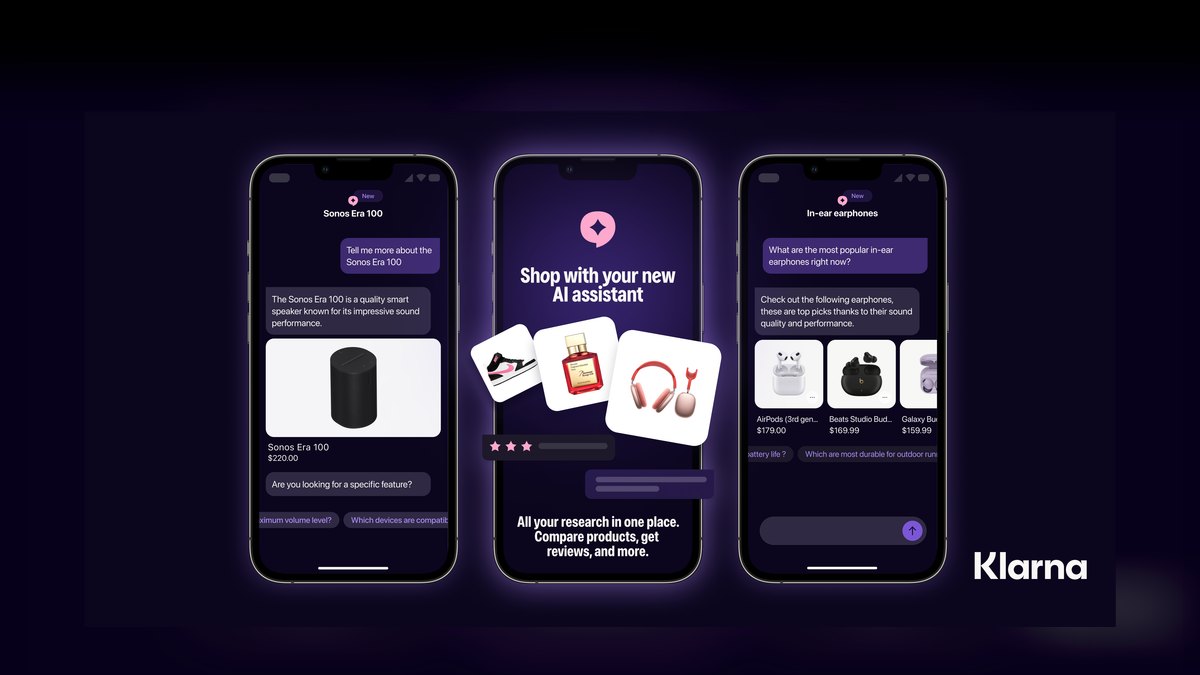
Klarna's AI shopping assistant ranks seventh because it blends product discovery with buy-now-pay-later and price-tracking tools, built with OpenAI technology. Inside the Klarna app, you can describe a gift, get curated suggestions across partnered retailers, and then split the cost into installments—useful for higher-ticket presents. Its price-drop alerts and wish-list saving help you time purchases for sales like Black Friday and Cyber Monday. This payment flexibility is a unique niche among gift recommenders.
Klarna is for budget-managed and bigger-ticket gifts, where spreading payment matters or where you are buying for several people and want to track total spend. The catalog is tied to Klarna's retail partners, so it is narrower than Gemini or Bing-backed tools, and BNPL should be used carefully to avoid overspending across many gifts. Compared to Microsoft Copilot above, Klarna offers payment flexibility but a far smaller product catalog and less general-purpose search capability.
8. Elfster AI Gift Recommendations
Elfster ranks eighth because it is the long-running Secret Santa and gift-exchange organizer whose AI gift recommendations come from rich context: it knows the exchange, the budget cap, and the recipient's own wish list. When a participant adds interests or items, the platform's suggestion features point gift-givers toward matching products, removing guesswork from drawn-name exchanges. It runs the name draw, enforces spending limits, and supports anonymous Q&A so you can clarify taste without spoiling the surprise.
Elfster is for group gifting and office or family exchanges, serving as the workflow tool rather than a generic chatbot. As a pure recommender for a single unknown person, it is weaker than catalog AIs like Amazon Rufus, but for structured multi-person gifting tied to real wish lists, it is the category leader. Compared to Klarna above, Elfster offers no payment tools but provides superior coordination for group exchanges.
9. Giftster AI Wish List
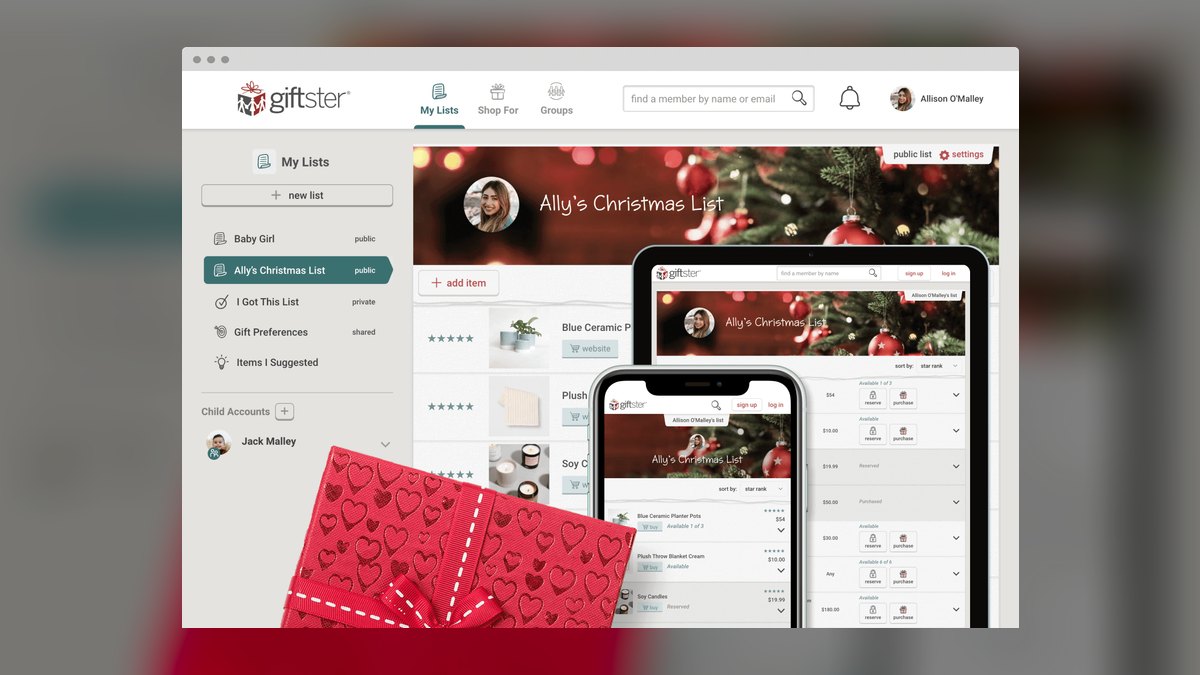
Giftster ranks ninth because it is a family and group wish-list registry that doubles as a recommendation aid by centralizing what people actually want. Members create lists, mark items as reserved so nobody double-buys, and organize by groups—extended family, friend circles, holiday clubs. The "what they want" signal it captures is the most reliable gift data there is, sidestepping the hardest part of gift-giving entirely.
Giftster is for recurring family gifting across birthdays and holidays year-round, not just December, and it prevents duplicate purchases through its reservation system. It won't brainstorm from scratch the way ChatGPT does, but by surfacing each recipient's stated wishes, it eliminates guesswork. Compared to Elfster above, Giftster is better for ongoing family coordination but lacks Elfster's built-in exchange management and anonymous Q&A features.
10. Pinterest AI Gift Ideas
Pinterest ranks tenth because it is a visual-discovery platform whose AI-driven recommendations and search make it a strong gift-idea source for aesthetic, lifestyle, and DIY-friendly presents. Search "gift ideas for a coffee lover" and its algorithm surfaces curated boards, product pins with shopping links, and visually similar items you can explore by image. Its visual search lets you start from any image and find buyable lookalikes, and shoppable pins connect directly to retailers.
Pinterest is for inspiration and themed gifting—gift baskets, aesthetic-driven presents, hobby-specific finds—where you are shopping by look and feel rather than a precise product name. It is weaker on price comparison and checkout consolidation, so you will often finish the purchase elsewhere. Compared to Giftster above, Pinterest excels at generating new ideas but lacks the wish-list precision that makes Giftster more reliable for known recipients.
How we ranked these
We measured each tool on six criteria: catalog grounding, personalization depth, purchase path, price transparency, breadth versus taste, and group/operator features. Catalog grounding and purchase path were weighted most heavily because the entire point of a gift recommender is ending with a bought, deliverable present. Tools that only chat without a real catalog behind them ranked lower.
We deliberately ignored brand popularity, marketing hype, and subjective 'wow factor' that doesn't translate to a successful purchase. We also excluded tools that lacked a clear path to buy the recommended item or that required a paid subscription for basic functionality. Our focus was on practical utility for busy gift-givers who need accurate, in-stock suggestions they can act on immediately.
What to look for
What actually matters is whether the tool is grounded in a live catalog with real prices and delivery estimates. Amazon Rufus wins because it's embedded in Amazon's inventory. Etsy Gift Mode excels for handmade items but requires lead time. Google Gemini offers cross-retailer breadth but needs verification. Consider the recipient's taste, your timeline, and whether you need speed or uniqueness.
The mistake most buyers make is choosing a tool based on brand familiarity rather than the specific gifting scenario. They use a general chatbot for last-minute gifts and end up with out-of-stock items, or they use a catalog tool for a sentimental gift that needs personalization. Match the tool to the job: Rufus for speed, Etsy for uniqueness, Gemini for comparison, and Elfster for group exchanges.
Related questions
What is the best AI tool for finding unique handmade gifts?
Etsy Gift Mode is the best choice for handmade, personalized, and one-of-a-kind gifts. It uses a quiz to map recipient interests onto 200+ gift personas and surfaces relevant listings from Etsy's marketplace of over 100 million items. It's ideal for milestone occasions where taste beats catalog size.
Which AI gift tool is best for last-minute purchases?
Amazon Rufus is the best for last-minute buying because it recommends only from Amazon's live catalog with real prices and Prime delivery estimates. You can go from idea to doorstep in one session, making it the fastest option for urgent gift needs.
How does Google Gemini compare to Amazon Rufus for gift ideas?
Google Gemini is a free, retailer-agnostic tool that draws on Google's Shopping Graph, offering cross-retailer comparisons. Amazon Rufus is grounded in Amazon's catalog, providing a direct purchase path. Gemini offers broader reach, while Rufus offers faster checkout.
Can ChatGPT help with gifts for someone who has everything?
Yes, ChatGPT excels at creative and experiential gift ideas for hard-to-buy-for people. You can provide a detailed description of the recipient's personality and hobbies, and it will generate thoughtful, tiered suggestions, including practical, splurge, and sentimental options.
What is the best tool for organizing a Secret Santa exchange?
Elfster is the best for Secret Santa and office gift exchanges. It runs the name draw, enforces budget caps, hosts wish lists, and supports anonymous Q&A. This helps gift-givers buy something the recipient actually wants, removing guesswork.
Is Perplexity good for researching electronics gifts?
Yes, Perplexity is excellent for evidence-based, research-heavy gifts like electronics. It provides synthesized recommendations with cited sources, linking to reviews and retailer pages. This allows you to verify why a pick is good before spending money.
How does Klarna's AI assistant help with gift shopping?
Klarna's AI shopping assistant blends product discovery with buy-now-pay-later and price-tracking tools. It's best for budget-managed, higher-ticket gifts, offering curated suggestions across partnered retailers and price-drop alerts to time purchases around sales.
FAQ
Which AI gift tool is most accurate about real, in-stock products?
Amazon Rufus is the most accurate because it recommends only from Amazon's live catalog with real prices and delivery dates. Etsy Gift Mode is similarly grounded within Etsy's marketplace. Web-grounded chatbots are broader but need a stock check before buying.
What's the best free AI gift tool?
Google Gemini for cross-retailer breadth and ChatGPT for creative ideation are both strong free options. Pinterest, Elfster, and Giftster are also free, each for a different job: inspiration, exchanges, and wish lists respectively.
Which tool is best for Secret Santa or office gift exchanges?
Elfster is the best for Secret Santa and office gift exchanges. It runs the name draw, enforces budget caps, hosts wish lists, and supports anonymous questions, so gift-givers buy something the recipient actually wants.
Can AI find unique or handmade gifts?
Yes. Etsy Gift Mode is built for handmade, custom, and personalized items across 100M+ listings, and Pinterest surfaces aesthetic and DIY-leaning ideas. Mainstream catalog AIs are weaker here.
Do these tools help with last-minute gifts?
Amazon Rufus is best for last-minute buying thanks to Prime delivery speed. Avoid handmade and made-to-order options on Etsy when time is tight, since those often need lead time.
Is it safe to trust an AI's gift price claims?
Treat them as a starting point. Perplexity cites sources and Copilot flags price history, but always confirm the final price and availability on the retailer's checkout page before purchasing.
What is the best AI tool for corporate gifting?
For corporate gifting, tools like Giftster or Elfster are useful for managing wish lists and group coordination. For product suggestions, Amazon Rufus offers a wide catalog and fast delivery, while Google Gemini provides cross-retailer comparisons for bulk purchases.
How do I choose between Amazon Rufus and Etsy Gift Mode?
Choose Amazon Rufus for fast, mainstream gifts with a direct purchase path. Choose Etsy Gift Mode for handmade, personalized, or unique gifts where taste matters more than speed. Consider the recipient's preferences and your timeline.
Are there any AI gift tools that integrate with social media?
Pinterest is the most social-media-integrated tool, using visual discovery and shoppable pins. It's great for inspiration and themed gifting. Other tools like ChatGPT and Gemini can also suggest gifts based on social media profiles if you provide the information.
Sources
- https://www.amazon.com/rufus
- https://www.etsy.com/gift-mode
- https://gemini.google.com
- https://openai.com/chatgpt
- https://www.perplexity.ai
- https://copilot.microsoft.com
- https://www.klarna.com
- https://www.elfster.com
- https://www.giftster.com
- https://www.pinterest.com
Related on PULSE
- [More ai tools for gift recommendations rankings and buying guides](/knowledge)
- [PULSE Tools and calculators](/tools)
- [Everything on PULSE RevOps](/)
This page will be disappearing soon. Save it to your device for $1 — or read it free while it is here.
@Kory-White- · if Venmo asks, the last 4 of my number are 2012
 pulse-ai-infrastructureHow do you route requests across multiple LLM providers?
 pulse-ai-infrastructureThe 10 Best AI Tools for Architecture Design in 2027
 pulse-ai-infrastructureThe 10 Best Synthetic Data Generation Tools in 2027
 pulse-ai-infrastructureThe 10 Best AI Tools for Screenwriting in 2027
 pulse-ai-infrastructureThe 10 Best AI Tools for Event Planning in 2027
 pulse-ai-infrastructureThe 10 Best AI Tools for Brand Voice Guides in 2027
 pulse-ai-infrastructureThe 10 Best AI Tools for UI Mockups in 2027
 pulse-ai-infrastructureThe 10 Best AI Tools for DevOps Automation in 2027
 pulse-ai-infrastructureThe 10 Best AI Tools for Writing Job Descriptions in 2027
 pulse-ai-infrastructureThe 10 Best AI Tools for Email Writing in 2027