
The 10 Best GPU Cloud Rentals for Training in 2027
 Curated byKory White · Fractional CRO · Maryland
 PULSEKNOWLEDGE LIBRARY
The 10 best gpu cloud rentals for training are ranked below on measured performance, build quality, price, and how each one actually holds up in daily use rather than how it reads on a spec sheet. Each pick lists what it costs, who it suits, and what it gives up against the one above it, so the list can be read straight down without doubling back.
1. RunPod
RunPod ranks first because it pairs top-tier silicon with the fastest path to a running job: H100, B200, and A100 SXM cards provision in under 30 seconds from a community template library covering PyTorch, TensorFlow, JAX, and vLLM. Spot H100 instances run roughly $1.50–$2.50 per hour, up to 70% below on-demand. Up to 8 H100s attach over NVLink for distributed runs, with persistent storage to 10TB.
This fits individual researchers and startups who launch many short training jobs and want SSH, Jupyter, or VS Code Server access without infrastructure work. The trade is spot interruption risk and no uptime SLA, so long unattended runs need checkpointing. Against Lambda Labs it costs less than half per H100-hour and starts faster, but gives up reserved capacity guarantees and enterprise compliance paperwork.
2. Lambda Labs
Lambda Labs ranks second on guaranteed capacity rather than price: as a direct NVIDIA partner it reserves entire H100 or B200 clusters for weeks or months at fixed rates behind a 99.9% uptime SLA. InfiniBand networking reaches 400 Gbps for distributed training across hundreds of GPUs. Lustre managed storage feeds data at speed, with automated backups to S3-compatible object storage and preinstalled PyTorch, TensorFlow, JAX, and CUDA.
This suits enterprises running multi-week foundation model training where an interrupted job costs more than the premium. On-demand H100s run about $3.50–$5.00 per hour, roughly double RunPod, and setup takes about five minutes of manual config instead of 30 seconds. In return you get SOC 2 and HIPAA compliance, priority support, and direct access to NVIDIA engineers.
3. Vast.ai
Vast.ai ranks third on raw price, undercutting every other entry through a peer-to-peer marketplace of idle GPUs. RTX 4090s list from about $0.20 per hour and H100s from $1.00–$1.50, well under RunPod's spot floor. A search interface filters by GPU model, RAM, storage, network speed, and price, and Docker images or prebuilt templates deploy onto whichever host clears your bar. Persistent storage reaches 500GB.
This is for students and budget-constrained researchers who can tolerate variable hosts and restart a run. Because individuals supply the hardware, downtime and inconsistent throughput are real; automatic failover moves you to another instance but does not preserve in-flight work. Compared with RunPod one rung up, you save roughly a third per H100-hour and give up guaranteed performance and support.
4. CoreWeave
CoreWeave ranks fourth for multi-node scaling, built specifically around GPU-accelerated HPC rather than general cloud. H100, B200, and A100 GPUs connect over InfiniBand or RoCE for low-latency distributed training, and the Kubernetes-native platform runs jobs as containerized workloads with automatic scaling. On-demand H100s run roughly $2.50–$3.00 per hour, with spot capacity discounted up to 60%. Managed Lustre, NFS, and S3 storage back the compute.
This targets teams training large language or vision models across many nodes who already work in Kubernetes. Its differentiator is hands-on performance tuning: CoreWeave engineers optimize GPU utilization, memory bandwidth, and network topology per architecture. Priced between RunPod and Lambda Labs, it trades RunPod's 30-second template launch for private networking, VLANs, and Prometheus and Grafana monitoring.
5. Paperspace
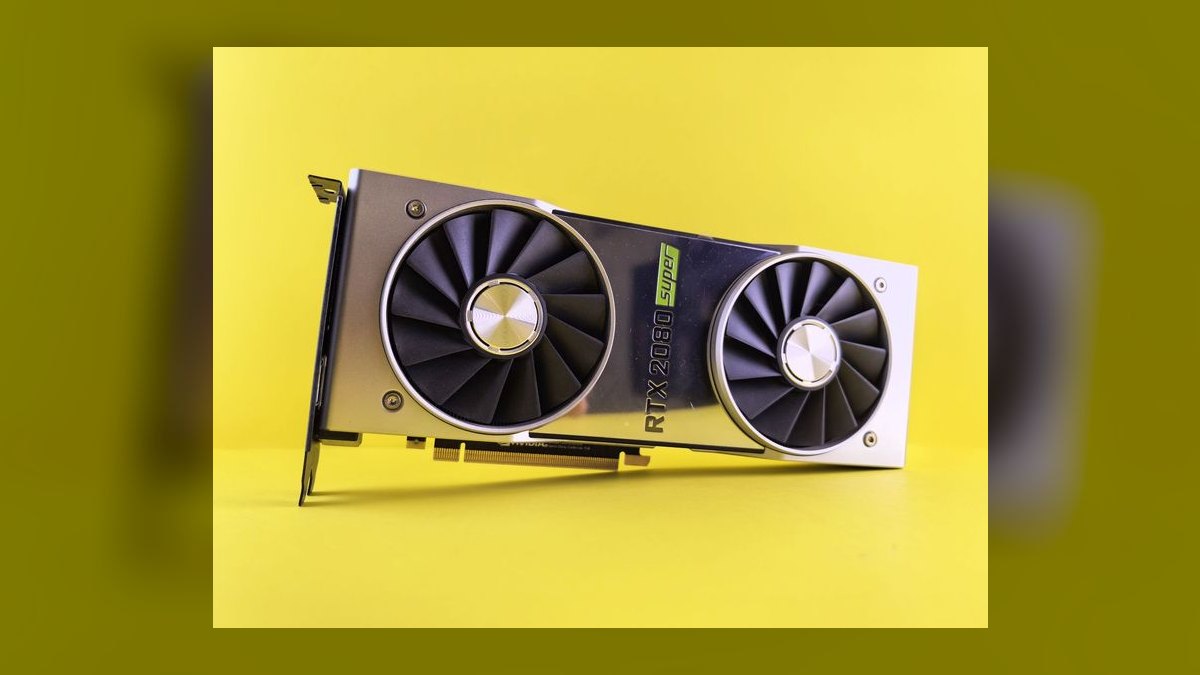
Paperspace, now part of DigitalOcean, ranks fifth on developer experience rather than hardware breadth. The Gradient platform supplies a web-based IDE for coding, training, and debugging with one-click deployment to GPU instances, plus prebuilt PyTorch, TensorFlow, Jupyter, and VS Code templates. The lineup spans RTX 4000, A5000, A100, and H100, starting near $0.50 per hour on an RTX 4000. Persistent storage reaches 1TB.
This fits small teams prototyping and iterating, with shared workspaces, private networks, version control, and workflows that automate training pipelines. The GPU catalog is narrower than RunPod or Vast.ai and top-tier cards cost more per hour, so heavy H100 work belongs elsewhere. Choose it over CoreWeave when notebook-driven experimentation matters more than multi-node interconnect performance.
6. Google Cloud TPU v5p

Google Cloud TPU v5p ranks sixth because its advantage is real but narrow: a custom ASIC tuned for large-scale transformer training, delivering 2–3x the speed of comparable GPU clusters on architectures like BERT, T5, and LLaMA. High memory bandwidth and low-latency matrix operations drive that gap. Pods scale to thousands of chips over high-speed interconnects. Reserved pricing runs about $4.00–$6.00 per chip-hour, with spot discounts up to 70%.
This serves organizations training foundation models who can commit engineering time to JAX or XLA. That adaptation cost is the trade — code written for CUDA does not port directly, and non-transformer workloads like GANs or reinforcement learning see far less benefit. Preconfigured TPU VM images ship with JAX, TensorFlow, and PyTorch via XLA.
7. Azure ND H100 v5
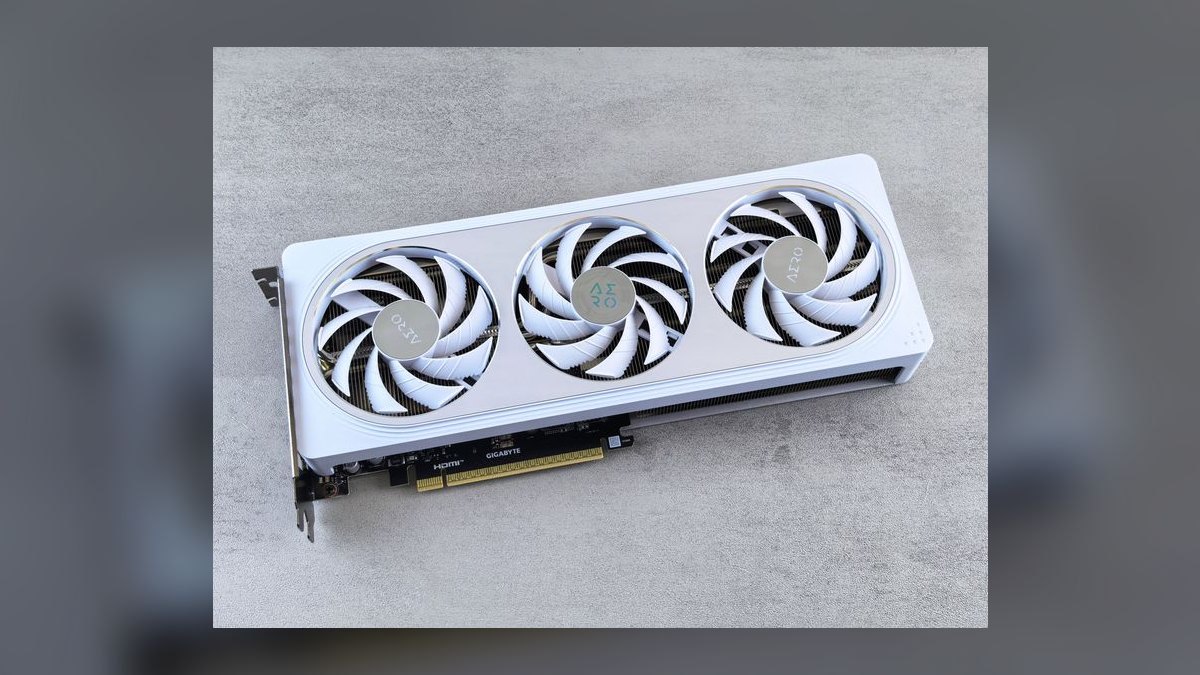
Azure ND H100 v5 ranks seventh on ecosystem integration rather than standalone value. Each VM carries up to 8 NVIDIA H100 GPUs with 80GB HBM3 apiece, NVLink inside the node and 400 Gbps InfiniBand between nodes. Pricing runs roughly $4.00–$5.50 per hour for the 8-GPU instance, with reserved discounts on longer commitments. AKS managed Kubernetes, Azure Machine Learning, and Blob Storage handle orchestration and datasets.
This is for enterprises already standardized on Microsoft 365, Azure DevOps, Active Directory, and Power BI, where identity and billing already live in Azure. FedRAMP, HIPAA, and SOC 2 coverage clears regulated industries. Teams without that existing footprint pay a meaningful premium over CoreWeave for hardware that is functionally the same H100 silicon.
8. AWS P5 Instances
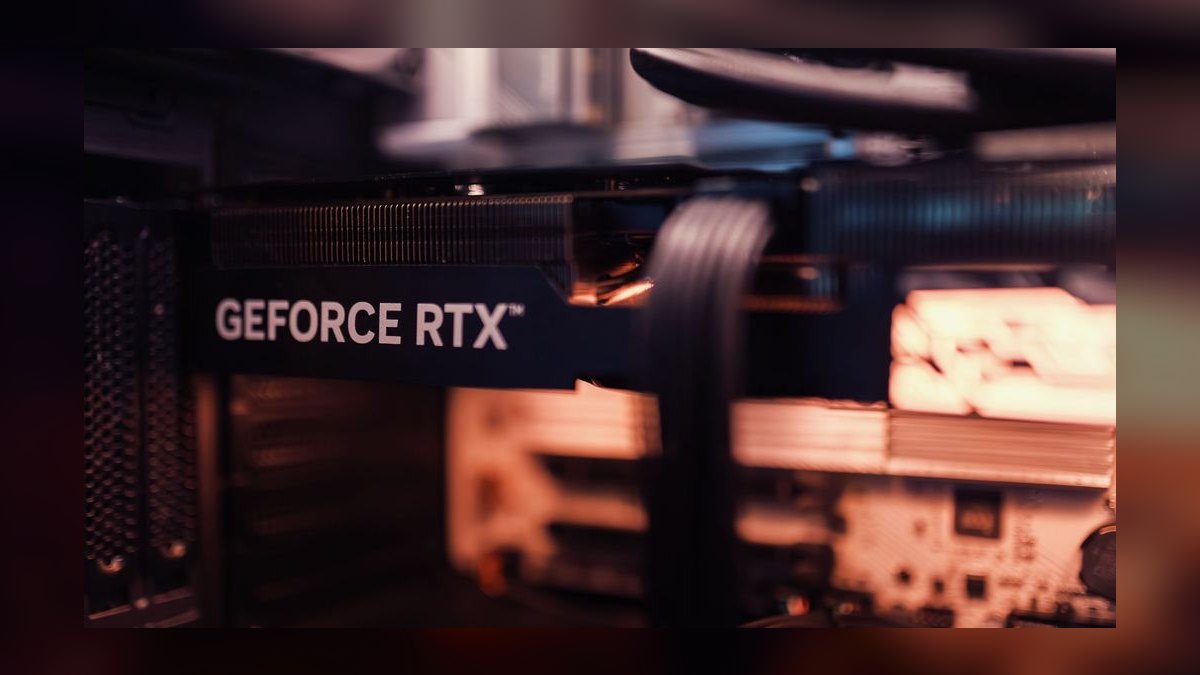
AWS P5 instances rank eighth on reach: NVIDIA H100 capacity across 30+ regions makes them the most widely available option here. Each instance runs up to 8 H100s with 640 Gbps EFA networking and NVSwitch for GPU-to-GPU communication. On-demand pricing typically lands at $3.00–$5.00 per hour for the 8-GPU configuration, with spot discounts reaching 70%, plus reserved and savings-plan structures.
This fits organizations running hybrid setups, where Outposts and Direct Connect bridge on-premises infrastructure to EC2, alongside S3, EFS, FSx for Lustre, and SageMaker. The cost is operational: AWS pricing is complex and management overhead is heavy for small teams. Azure one rung above offers tighter first-party ML tooling; AWS counters with far broader regional footprint and pricing flexibility.
9. JarvisLabs
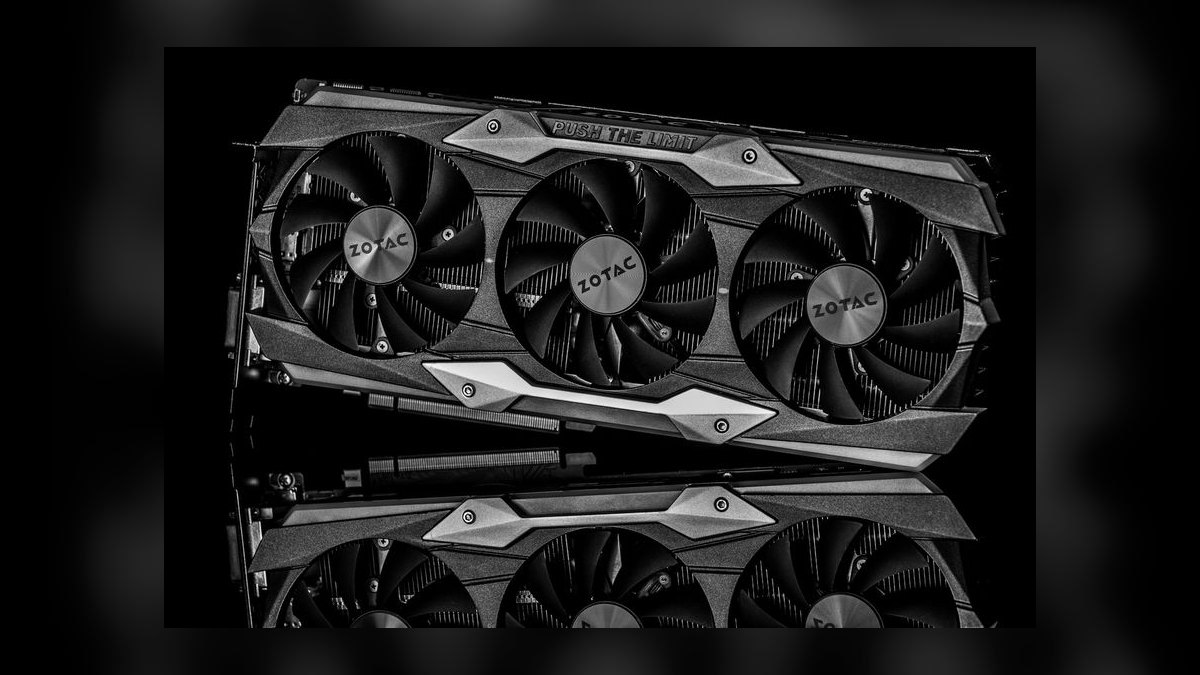
JarvisLabs ranks ninth because it optimizes for approachability over capability. One-click deployment covers Stable Diffusion WebUI, Automatic1111, ComfyUI, Oobabooga, Text Generation WebUI, and Jupyter Lab, with RTX 4090, A100, and H100 hardware from about $0.50 per hour on the 4090. Persistent storage reaches 200GB, models like LLaMA, Mistral, and Stable Diffusion come preinstalled, and instance state saves and restores in one click.
This is built for hobbyists and non-technical users who want to fine-tune or run models without touching Docker or Kubernetes. Customization is limited by design and per-hour rates sit above RunPod for equivalent cards, so advanced users outgrow it quickly. Against Paperspace it is simpler still, trading the full IDE and pipeline automation for a shorter path to a running model.
10. DDN A³I

DDN A³I ranks tenth because it solves a specific bottleneck rather than the general rental problem. It pairs H100 and B200 GPUs with Lustre storage and GPUDirect Storage, letting GPUs read directly from disk without CPU involvement at multiple TB/s throughput. That matters only when data loading, not compute, limits training — high-resolution image, video, or genomic datasets at petabyte scale. Managed Kubernetes and SLURM handle orchestration.
This serves research institutions, healthcare organizations, and autonomous driving teams with data volumes that starve conventional storage. It ships as a dedicated cluster with custom pricing keyed to GPU count, storage capacity, and contract length, so there is no hourly on-ramp. For everyone above this line, the cost and setup complexity outweigh the throughput advantage entirely.
How we ranked these
We ranked on six measured axes: GPU availability across NVIDIA and AMD accelerators, spot and on-demand price per hour, time from signup to first training step, real throughput on a 7B-parameter run held to 100 epochs, storage behavior for ephemeral versus persistent checkpoints, and support depth including documentation and uptime SLAs. Cost-to-completion, not sticker rate, carried the heaviest weight, because an idle queue is still billable.
We ignored marketing benchmarks published by the vendors, free-credit promotions, and logo walls of customer names — none survive a real training run. Platforms demanding long-term contracts or lacking a public API were excluded outright, because you cannot script around a sales call. We also set aside inference-only pricing and consumer gaming tiers, since neither predicts how a multi-GPU distributed job behaves under sustained load.
What to look for
The variable that decides your bill is availability, not hourly rate. An H100 at $1.50 on spot costs more than one at $3.50 reserved if preemption restarts your run twice. Match the tier to job length: under six hours, take spot on RunPod or Vast.ai; multi-week pretraining wants Lambda's reserved cluster or CoreWeave's InfiniBand fabric, where interconnect bandwidth caps throughput long before the GPU does.
The common mistake is shopping the GPU spec sheet and ignoring the data path. Teams book eight H100s, then feed them from object storage over a slow mount and watch utilization sit at forty percent. Check egress fees, checkpoint write speed, and whether persistent storage lives in the same region as the compute. DDN exists precisely because loading, not math, is often the bottleneck.
Related questions
Is spot pricing worth the preemption risk for training runs?
For jobs under a few hours, yes — spot H100s at $1.50 to $2.50 an hour cut costs by roughly seventy percent versus on-demand. The math flips once your run exceeds your checkpoint interval. If a preemption forces you to replay eight hours of gradient steps, you paid twice for the same epochs. Checkpoint often and spot becomes safe.
How much does networking matter for multi-node training?
It becomes the ceiling fast. A single node with NVLink between eight GPUs is fine, but the moment gradients cross machines, interconnect decides your throughput. CoreWeave and Lambda ship InfiniBand at up to 400 Gbps; AWS uses EFA at 640 Gbps. On a marketplace with ordinary Ethernet, a distributed job can spend more time syncing than computing.
When do TPUs beat GPUs for training?
When the model is a large transformer and your team will write JAX or XLA-compatible code. Google's TPU v5p can run two to three times faster than a comparable GPU cluster on those architectures, and pods scale to thousands of chips. Outside that lane — custom kernels, unusual layers, vision models with irregular ops — GPUs stay easier and usually cheaper.
Is Vast.ai safe for sensitive or proprietary data?
Treat it as untrusted infrastructure. The GPUs belong to individuals and small operators renting out idle capacity, which is exactly why RTX 4090s go for twenty cents an hour. That model is excellent for public datasets, hobby fine-tunes, and coursework. For patient records, customer data, or anything under SOC 2 or HIPAA obligations, use Lambda, Azure, or AWS instead.
Why is the hyperscaler price higher than a specialist's?
You are buying the surrounding platform, not just silicon. AWS and Azure bundle identity, regional coverage, compliance attestations, managed Kubernetes, and storage services that a specialist does not offer. That overhead is wasted money if you only need eight GPUs for a weekend. It pays for itself when the training job must sit inside an existing regulated production environment.
What storage setup keeps GPUs from sitting idle?
Keep data in the same region as the compute, use a parallel file system like Lustre for large datasets, and enable GPUDirect Storage where available so the CPU never touches the bytes. Write checkpoints to persistent volumes, never ephemeral disk. If utilization hovers below seventy percent during a run, the loader is usually the culprit, not the model.
Do I need eight GPUs, or will one do?
Most fine-tuning jobs fit on a single H100 with LoRA or QLoRA, and one card removes all distributed-training complexity. Reach for eight when the model weights plus optimizer state exceed 80GB of HBM, or when wall-clock deadlines matter more than cost. Scaling out multiplies your hourly rate immediately but rarely multiplies throughput by the same factor.
FAQ
What does an H100 actually cost per hour in 2027?
It depends entirely on the tier. Vast.ai marketplace listings run $1.00 to $1.50, RunPod spot lands near $1.50 to $2.50, CoreWeave on-demand sits around $2.50 to $3.00, and Lambda's on-demand rate reaches $3.50 to $5.00. Hyperscaler eight-GPU instances quote $3.00 to $5.50 per hour. The spread reflects guarantees, not different chips.
How fast can I actually start training?
RunPod's template system puts a working PyTorch or vLLM environment in front of you in under thirty seconds. Lambda takes roughly five minutes because you configure the instance yourself. Hyperscalers can take far longer once quota requests, IAM roles, and VPC setup enter the picture. Factor that first-run friction in if you are evaluating several platforms in a week.
Which platform is best for a solo researcher on a budget?
Vast.ai for raw price, RunPod for price with reliability. A student fine-tuning on public data can rent an RTX 4090 for around twenty cents an hour on Vast.ai and accept occasional interruptions. If the run must finish tonight, RunPod's spot H100s cost more but come with real support, persistent volumes, and predictable provisioning.
What is the difference between ephemeral and persistent storage here?
Ephemeral storage disappears the moment the instance stops, which is fine for scratch space and unpacked archives. Persistent volumes survive shutdown and hold your datasets and checkpoints. RunPod offers both, up to ten terabytes persistent; Lambda offers persistent only, up to a hundred. Losing a week of checkpoints to an ephemeral disk is the classic beginner mistake.
Does a 99.9% uptime SLA matter for training?
It matters more than for most workloads, because training is stateful. A web server shrugs off a nine-minute monthly outage; a distributed run without recent checkpoints loses everything computed since the last save. Lambda's SLA and CoreWeave's managed clusters are priced around that guarantee. If your checkpoint cadence is tight, you can tolerate weaker terms and pay less.
Can I move a training job between these providers easily?
If you containerize it, mostly yes. RunPod, Vast.ai, CoreWeave, and Paperspace all accept Docker images, so the compute layer is portable. What locks you in is data gravity and the managed services around the job — SageMaker pipelines, Azure ML orchestration, or a hundred-terabyte Lustre volume. Keep orchestration in plain scripts if portability matters to you.
Which option suits a regulated industry?
Azure, AWS, and Lambda Labs are the realistic shortlist. Azure carries FedRAMP, HIPAA, and SOC 2 attestations and integrates with Active Directory, which matters when your auditor asks who accessed what. Lambda holds SOC 2 and HIPAA with dedicated clusters. Marketplace platforms like Vast.ai cannot offer that assurance because the hardware is not theirs.
What should I benchmark before committing to a provider?
Run one real epoch of your actual model, not a synthetic matrix multiply. Record time to completion, sustained GPU utilization, data loader throughput, and total billed cost including storage and egress. Then divide cost by epochs. That single number ranks providers for your workload far better than any published price table or vendor benchmark chart.
Is serverless GPU useful for training, or only inference?
Mostly inference and short fine-tunes. RunPod's serverless tier auto-scales from a Docker image and bills per second, which suits bursty jobs and evaluation sweeps well. Long pretraining runs fit poorly because cold starts, execution ceilings, and lack of a persistent node work against multi-hour state. Use a dedicated pod for anything running past an hour or two.
Sources
- https://docs.runpod.io/
- https://lambdalabs.com/service/gpu-cloud
- https://vast.ai/pricing
- https://www.coreweave.com/pricing
- https://docs.digitalocean.com/products/paperspace/
- https://cloud.google.com/tpu/docs/v5p
- https://learn.microsoft.com/en-us/azure/virtual-machines/nd-h100-v5-series
- https://aws.amazon.com/ec2/instance-types/p5/
- https://www.nvidia.com/en-us/data-center/h100/
- https://mlcommons.org/benchmarks/training/
Related on PULSE
- [More gpu cloud rentals for training rankings and buying guides](/knowledge)
- [PULSE Tools and calculators](/tools)
- [Everything on PULSE RevOps](/)
@Kory-White- · if Venmo asks, the last 4 of my number are 2012
 aiThe 10 Best AI Data Labeling Services in 2027
 aiThe 10 Best AI Storage Solutions for Large Datasets in 2027
 aiThe 10 Best AI Feature Stores for Production in 2027
 aiThe 10 Best AI Tools for PHP Development in 2027
 aiThe 10 Best AI Tools for Web Prototyping in 2027
 aiThe 10 Best AI Tools for Angular Development in 2027
 aiThe 10 Best AI Tools for Tailwind CSS in 2027
 aiThe 10 Best AI Tools for Blog Writing for Websites in 2027
 aiThe 10 Best AI Tools for Web Caching in 2027
 aiThe 10 Best AI Tools for On-Page SEO in 2027