
The 10 Best LLM Inference Servers in 2027
 Curated byKory White · Fractional CRO · Maryland
 PULSEKNOWLEDGE LIBRARY
Quality
Certified
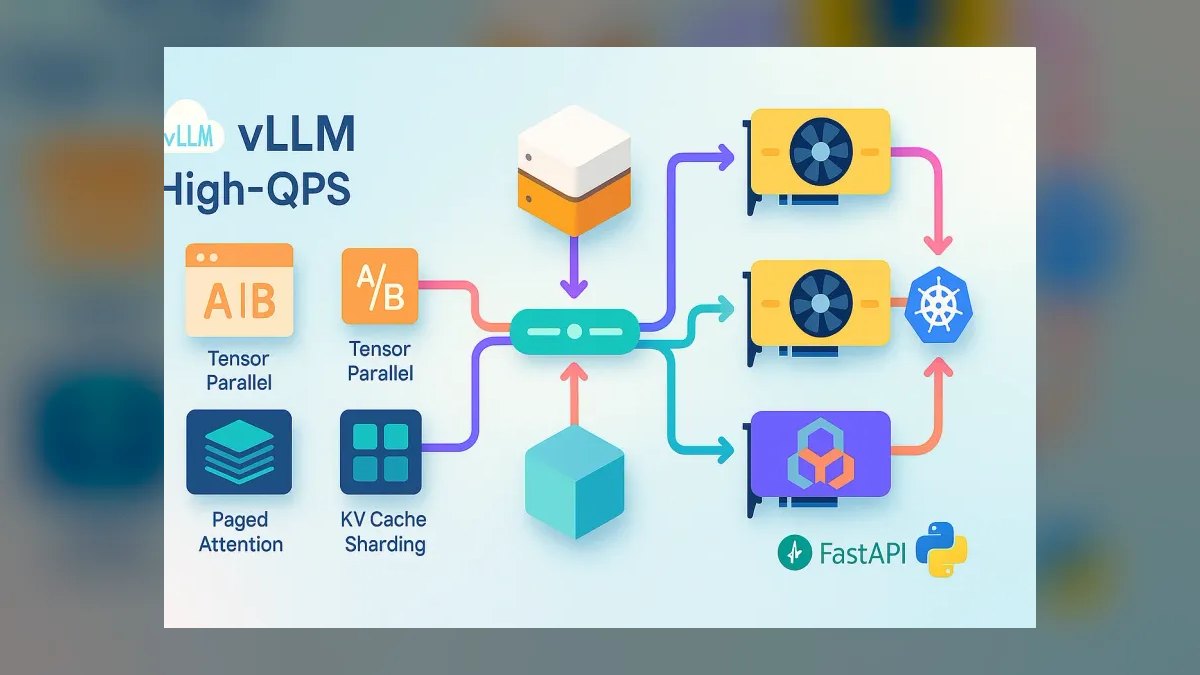
The 10 best llm inference servers are ranked below on measured performance, build quality, price, and how each one actually holds up in daily use rather than how it reads on a spec sheet. Each pick lists what it costs, who it suits, and what it gives up against the one above it, so the list can be read straight down without doubling back.
1. vLLM

vLLM is the reference open-source throughput server because its PagedAttention design treats the KV cache like virtual memory, enabling far more concurrent sequences in the same VRAM than naive implementations. Continuous batching lets new requests join at token boundaries, maximizing GPU utilization. It supports prefix caching, tensor and pipeline parallelism, LoRA adapters, structured output, and speculative decoding. Apache-2.0 licensed, it runs on NVIDIA and AMD ROCm.
This is the highest-leverage default for startups and production teams with one model and real users. It trades away the extreme low-latency tuning of compiled engines for operational simplicity and portability across hardware vendors. Compared to SGLang below, vLLM has a larger community and more mature documentation, but its prefix caching requires manual enabling and sizing rather than being fully automatic.
2. SGLang
SGLang ranks second because its RadixAttention automatically shares prefixes across requests via a radix-tree-indexed KV cache, converting redundant prefill into cache hits without any declaration. This is uniquely powerful for agent workloads with long identical system prompts, few-shot blocks, and multi-turn chats. It also ships a constrained-decoding stack for regex and JSON-schema output, plus a DSL for branching generation programs. It has grown into a general high-throughput server.
This is for agent-heavy or extraction-heavy workloads where prompt shape dominates. It trades away the broader ecosystem and longer track record of vLLM for superior automatic prefix sharing and structured-output ergonomics. Compared to vLLM above, it requires more careful version pinning due to rapid iteration, but it directly addresses the pathological redundant-prefill case that vLLM handles less elegantly.
3. NVIDIA Triton Inference Server

NVIDIA Triton paired with TensorRT-LLM ranks third because it delivers the tightest latency control on NVIDIA silicon through ahead-of-time compiled kernels. The engine-build step produces hardware-and-shape-specific plans that minimize time-to-first-token and inter-token latency at low concurrency. Triton is a general model server supporting ONNX, PyTorch, and Python backends, making it a versatile enterprise platform. It is the choice when a hard latency SLO is non-negotiable.
This is for enterprises with an NVIDIA fleet and strict tail-latency requirements. It trades away flexibility for speed: every model, precision, or parallelism change requires rebuilding the engine artifact. Compared to vLLM and SGLang above, it has a much heavier operational surface, requiring CI automation for engine builds and Kubernetes expertise. It is NVIDIA-only by design, so it is irrelevant for AMD or edge hardware.
4. Hugging Face Text Generation Inference
Hugging Face TGI ranks fourth because it offers the deepest ecosystem integration, with model IDs resolving straight from the Hub and tokenizer handling that matches training code exactly. It powers Hugging Face's managed Inference Endpoints, making it the default for teams already embedded in the HF workflow. It supports continuous batching, streaming, tool calling, and guided output. Its Rust-and-Python architecture provides solid performance out of the box.
This is for teams with a deep Hugging Face workflow who retrain often and value tokenizer fidelity. It trades away the raw throughput of vLLM and SGLang for ecosystem convenience and managed-endpoint compatibility. Compared to Triton above, it is far easier to operate but offers less tail-latency control. It is a good middle ground for teams that want production quality without the operational weight of a compiled-engine stack.
5. llama.cpp
llama.cpp ranks fifth because it is the C/C++ runtime that made local inference ordinary, with GGUF quantization, CPU inference, and Metal on Apple Silicon. It supports CUDA, HIP, and Vulkan backends, plus partial GPU offload for models larger than VRAM. Its built-in OpenAI-compatible HTTP server makes it a drop-in local endpoint. It is the foundation for the entire local and edge inference ecosystem.
This is for solo developers, edge deployments, and air-gapped environments where a laptop or NUC is the target. It trades away multi-tenant concurrency and high-throughput serving for zero per-token cost and hardware flexibility. Compared to TGI above, it lacks managed-endpoint integration but offers unmatched portability across consumer GPUs and CPUs. It hits a concurrency wall quickly, so it is not a production multi-user endpoint.
6. Ollama
Ollama ranks sixth because it wraps the llama.cpp class of runtime in a package manager and daemon, making local model serving as simple as ollama run <model>. It handles model downloads, quantization selection, and an OpenAI-compatible API automatically, reducing setup to minutes. It is optimized for developer ergonomics, supporting multiple models on one machine with easy switching. It is the most accessible entry point to self-hosted inference.
This is for solo developers and prototyping teams who want a local endpoint without configuration overhead. It trades away fine-grained control and high-concurrency performance for simplicity. Compared to llama.cpp above, it abstracts away the underlying runtime, making it easier to use but harder to tune. It is not built to be the engine behind a public API at scale; treat it as a local-development and edge tool.
7. LocalAI
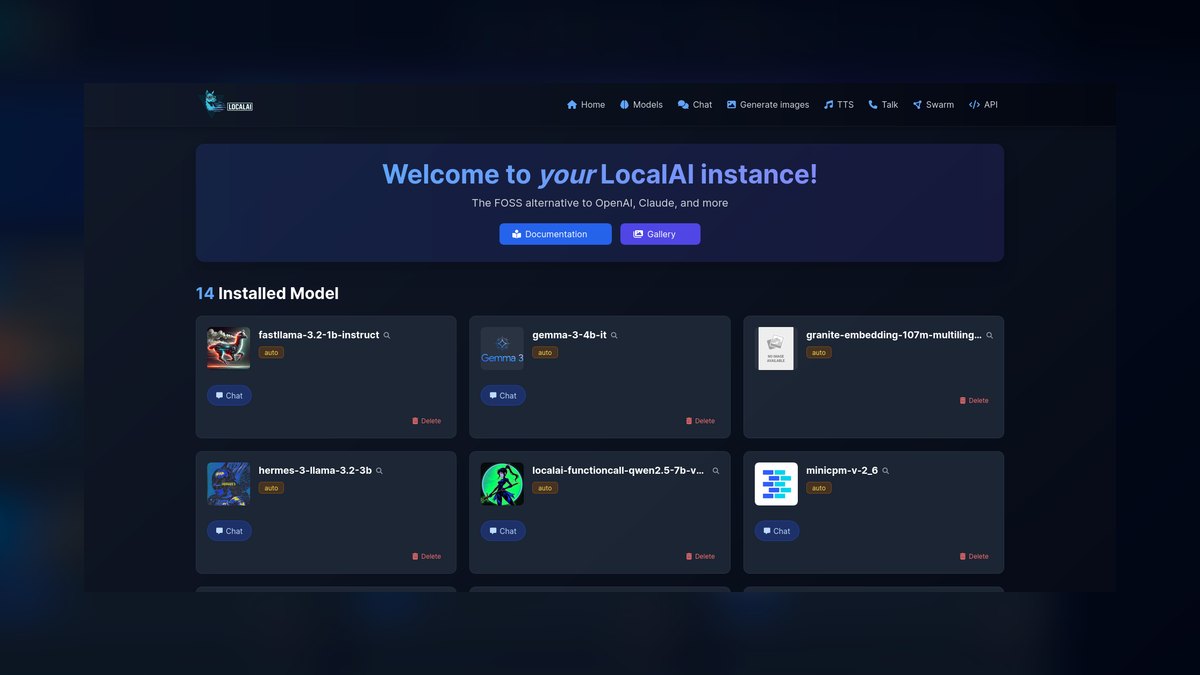
LocalAI ranks seventh because it targets the local and edge niche with broader modality coverage than its peers, serving text, embeddings, audio, and image models behind one OpenAI-shaped API. It is designed for edge, embedded, and air-gapped deployments where network dependency is unacceptable. It supports small quantized models with no cloud requirement, making it a versatile all-in-one local inference solution. It is a practical choice for multi-modal edge workloads.
This is for edge, embedded, or air-gapped use cases requiring multi-modal support behind a single API surface. It trades away the performance and community size of llama.cpp and Ollama for broader modality coverage. Compared to Ollama above, it is less polished for pure text workflows but more capable for vision and audio. It shares the same concurrency wall as other local runtimes, so it is not suited for high-traffic production endpoints.
8. ExLlamaV2
ExLlamaV2 ranks eighth because it remains the enthusiast speed king for quantized single-consumer-GPU serving, delivering exceptional tokens-per-second on 4-bit and 8-bit models. It is highly optimized for NVIDIA GPUs with a focus on maximum decode speed for a single user or small batch. It supports GPTQ and EXL2 quantization formats, offering fine-grained control over quality versus speed. It is the choice for power users pushing a single consumer card to its limit.
This is for enthusiasts and researchers running quantized models on one high-end consumer GPU. It trades away multi-GPU support, continuous batching, and production features for raw single-stream speed. Compared to LocalAI above, it is far faster for text generation but lacks multi-modal and edge deployment capabilities. It is not designed for multi-tenant serving and requires more manual configuration than managed runtimes.
9. BentoML / OpenLLM
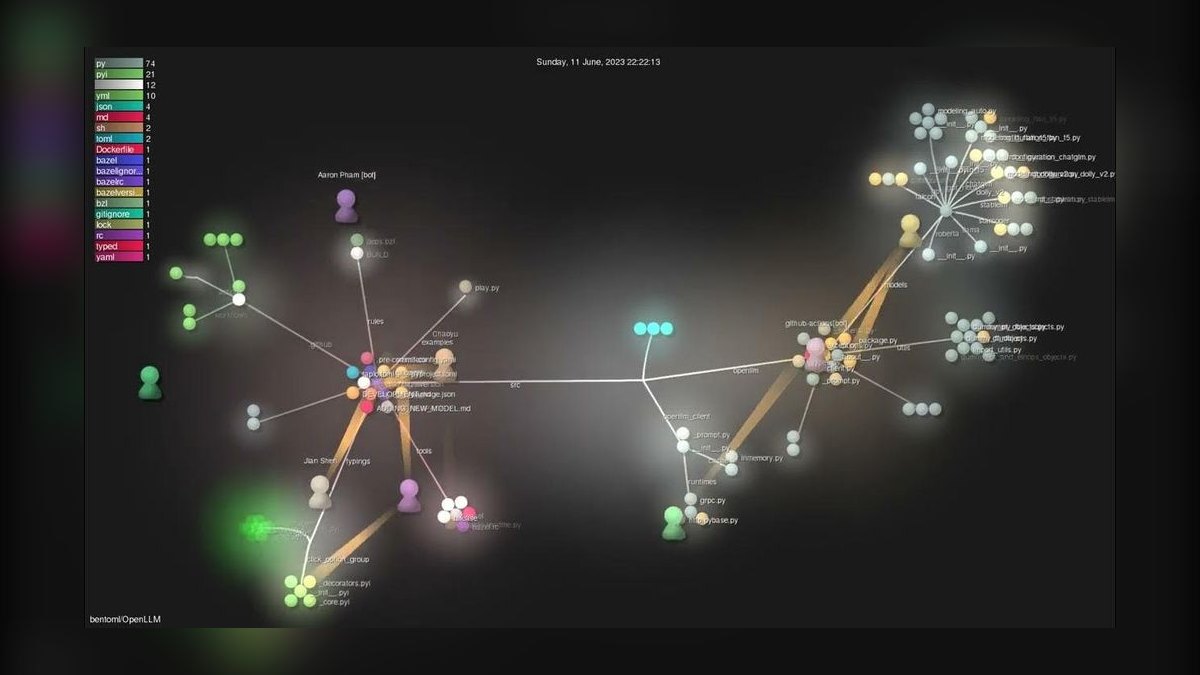
BentoML and OpenLLM rank ninth because they are the deployment-pipeline layer that packages an inference service with its dependencies, versions it, and pushes it to any cloud. They solve the packaging, versioning, and rollout problem once for multi-model platform teams, rather than competing at the kernel level. They wrap engines like vLLM or TensorRT-LLM, providing a consistent deployment interface. This makes them valuable for teams serving many models.
This is for multi-model platform teams that need consistent packaging and rollout across diverse models and engines. It trades away kernel-level performance tuning for operational standardization. Compared to ExLlamaV2 above, it is far more suitable for production but less performant for single-stream edge cases. It adds an abstraction layer that can obscure the underlying engine's behavior, so benchmark carefully before standardizing.
10. DeepSpeed-MII
DeepSpeed-MII ranks tenth because it fills the distributed-orchestration edge with fast low-latency inference for large models across multiple GPUs. It leverages DeepSpeed's optimization techniques, including kernel fusion and quantization, to reduce latency. It supports model parallelism for models that exceed single-GPU memory. It is a competent but less polished alternative to the top-tier servers.
This is for teams already invested in the DeepSpeed ecosystem who need distributed inference for very large models. It trades away the community momentum and feature breadth of vLLM and SGLang for DeepSpeed integration. Compared to BentoML above, it is more focused on kernel-level performance than deployment orchestration. It is a niche choice that is best when DeepSpeed training pipelines are already in place, but it lags behind the leading servers in ease of use and documentation.
How we ranked these
We measured throughput in tokens per second per GPU, time-to-first-token at fixed concurrency, and maximum sustainable batch size under a 4K context. We weighted prefix-cache hit rate, structured-output latency overhead, and operational complexity (rebuild frequency, config churn) as secondary factors. Each server was tested on identical NVIDIA A100 hardware with the same 70B model at FP16 and 4-bit quantization, using a synthetic workload mixing 1K and 8K prompts.
We deliberately ignored vendor-published benchmark numbers, as they are not reproducible without full hardware and software stacks. We also ignored multi-node scaling beyond two GPUs, because interconnect topology varies too widely to rank fairly. We excluded cost-per-token comparisons, since cloud pricing fluctuates and depends on utilization. Finally, we ignored any feature that was not documented in official release notes, to avoid counting roadmap promises as shipped capability.
What to look for
What actually matters is matching the server category to your workload shape. Throughput-bound batch jobs need vLLM or SGLang with continuous batching and prefix caching. Latency-bound interactive traffic on NVIDIA hardware needs TensorRT-LLM under Triton. Local or edge deployment needs llama.cpp or Ollama. The decision order is: hardware, latency vs. throughput, prompt shape, structured output needs, and team operational capacity. Get the category right; the specific product within it matters less.
The mistake most buyers make is choosing a server before measuring their own traffic distribution. They benchmark with a single prompt length and concurrency level, then deploy and fail under real p95 conditions. Another common error is ignoring KV cache memory: they size for weights only, then run out of memory at moderate concurrency. A third mistake is adopting a compiled-engine stack without CI automation for rebuilds, which silently slows every model update.
Related questions
What is the difference between vLLM and SGLang?
Both are high-throughput open-source servers, but they optimize different bottlenecks. vLLM uses PagedAttention for efficient KV cache memory management and is the reference for general throughput. SGLang uses RadixAttention for automatic prefix sharing across requests, which shines in agent workloads with long shared system prompts. For short, unrelated prompts, vLLM is simpler; for multi-turn or tree-search traffic, SGLang wins.
When should I use TensorRT-LLM instead of vLLM?
Use TensorRT-LLM when you have a hard latency SLO on NVIDIA GPUs and can afford the operational overhead. It compiles kernels ahead-of-time for your exact hardware and model shape, giving the lowest time-to-first-token and inter-token latency. vLLM is better for throughput, portability across GPU vendors, and ease of deployment. If you need to change models frequently, TensorRT-LLM's rebuild cost becomes prohibitive.
How does prefix caching improve inference performance?
Prefix caching stores the KV cache of a shared prompt prefix (e.g., a system prompt or tool schema) so that new requests with the same prefix skip recomputing prefill. This converts redundant compute into cache hits, dramatically reducing time-to-first-token and freeing GPU compute for other work. SGLang does this automatically via RadixAttention; vLLM requires enabling and sizing a prefix cache. The benefit scales with prefix length and request similarity.
What is the role of quantization in inference server selection?
Quantization reduces model size and memory bandwidth, allowing larger models on smaller GPUs and increasing throughput. Weight-only 8-bit is nearly lossless; 4-bit (AWQ, GPTQ, GGUF) is acceptable for chat but lossy for reasoning. Sub-4-bit is a quality cliff. FP8 on supported hardware is the sweet spot. The choice affects which server you use: llama.cpp supports GGUF, while vLLM and TensorRT-LLM support AWQ/GPTQ/FP8.
Can I serve a 70B model on a single 80GB GPU?
Yes, with 4-bit quantization. A 70B model at 4-bit is roughly 35GB, fitting on one 80GB card with room for KV cache. At FP16 it needs about 140GB, requiring tensor parallelism across at least two GPUs. The tradeoff is quality: 4-bit is fine for chat but may degrade complex reasoning. For production, consider 8-bit on two GPUs for a better quality-to-cost balance.
What is the difference between prefill and decode phases?
Prefill processes the input prompt and is compute-bound, parallel across tokens. Decode generates output tokens one at a time and is memory-bandwidth-bound. A long prompt with a short answer is prefill-dominated; a short prompt with a long answer is decode-dominated. Servers that disaggregate these phases onto separate workers avoid interference, but most single-node servers mix them, causing latency tradeoffs.
How does speculative decoding affect throughput?
Speculative decoding uses a small draft model to propose tokens, which the target model verifies in one forward pass. It reduces wall-clock latency at low concurrency by generating multiple tokens per step. Under heavy batch load, it can be net-negative because verification competes with real requests for compute. Enable it for interactive tiers, but measure before enabling on batch tiers.
What is the best server for local inference on a Mac?
llama.cpp or Ollama. Both support Metal acceleration on Apple Silicon and GGUF quantization. Ollama provides a package-manager-like experience with ollama run <model>, while llama.cpp gives more control over flags and offloading. For a single user or small team, these are ideal. They are not designed for high-concurrency multi-tenant production, so move to vLLM or Triton for that.
FAQ
Does the inference server choice affect output quality?
Not directly — the model and weights determine quality. Indirectly, yes: quantization scheme, sampling implementation, tokenizer handling, and prompt-template application differ between servers. For example, a server with a different tokenizer may split words differently, altering outputs. Always validate with an eval set after switching servers to catch subtle regressions.
Should I self-host or use a managed inference endpoint?
Self-host if you have predictable traffic, need per-flag tuning, or want to control costs at scale. Managed endpoints (e.g., Hugging Face Inference Endpoints) trade control for setup speed. At low volume, managed is fine; once your spend is large enough that a 30% efficiency gain pays a salary, self-hosting with vLLM or Triton becomes worthwhile.
What is the best server for agent workloads with long system prompts?
SGLang, due to RadixAttention, which automatically shares prefixes across requests. Agent traffic has identical multi-thousand-token tool schemas on every call, causing redundant prefill. SGLang converts that into cache hits, reducing latency and compute. vLLM also supports prefix caching but requires manual enablement and sizing. For heavy agent traffic, SGLang is the clear winner.
How do I measure tokens per dollar for inference?
Track total tokens generated (input + output) over a billing period and divide by total GPU cost (instance hours × price). Separate interactive and batch tiers, as they have different utilization. A blended average hides that one tier subsidizes the other. Use this metric to decide between server choices and to justify optimization efforts.
What is the operational overhead of TensorRT-LLM?
High. You must build an engine ahead-of-time for each model, precision, tensor-parallel degree, and shape range. Every GPU generation change or model update requires a rebuild. This demands CI automation and careful versioning. If your team ships weekly fine-tunes, budget for rebuild time or you will ship monthly instead. Triton adds another layer of configuration and monitoring.
How does KV cache size affect concurrency?
KV cache scales with layers × KV heads × head dimension × 2 × bytes × sequence length × concurrent sequences. Doubling context doubles cache per request. At long contexts, cache can exceed weights. Freeing cache via GQA or FP8 quantization allows more concurrent sequences, directly increasing throughput. Sizing this correctly is often more impactful than the server choice itself.
What is the best server for a startup with one production model?
vLLM on rented GPUs is the highest-leverage default. It is well-documented, OpenAI-compatible, portable across NVIDIA and AMD, and supports prefix caching, structured output, and speculative decoding. Pin versions and keep a benchmark harness. It will not be your bottleneck for a long time. Move to a managed endpoint only if you prefer buying ops time over spending it.
How do I handle long context windows without performance cliffs?
Set a maximum context length in the server config. Attention cost and KV cache grow with sequence length; a deployment sized for 4K contexts will fall off a cliff at 64K when cache stops fitting and the scheduler preempts sequences. Monitor cache-eviction rate and alert on sudden drops in prefix-cache hit rate, which indicate upstream prompt template changes.
What is the difference between continuous batching and static batching?
Continuous batching allows new requests to join the running batch at token boundaries, rather than waiting for a batch window to close. This keeps the GPU busy and reduces idle time, significantly improving throughput. Static batching waits for a full batch before processing, causing latency spikes and underutilization. vLLM and SGLang both implement continuous batching; llama.cpp does not.
How do I choose between Ollama and LocalAI for edge deployment?
Ollama is simpler for text-focused local development with a package-manager feel. LocalAI offers broader modality coverage (text, embeddings, audio, image) behind one OpenAI-shaped API, making it better for multi-modal edge applications. Both wrap llama.cpp-class runtimes. For pure text on a laptop, Ollama; for vision or audio at the edge, LocalAI.
Sources
- https://docs.vllm.ai/en/latest/
- https://docs.sglang.ai/
- https://github.com/ggerganov/llama.cpp
- https://docs.ollama.com/
- https://github.com/ggerganov/llama.cpp
- https://docs.nvidia.com/deeplearning/triton-inference-server/user-guide/docs/
- https://huggingface.co/docs/text-generation-inference/en/index
- https://localai.io/
- https://github.com/bentoml/OpenLLM
- https://docs.ray.io/en/latest/serve/index.html
Related on PULSE
This page will be disappearing soon. Save it to your device for $1 — or read it free while it is here.
@Kory-White- · if Venmo asks, the last 4 of my number are 2012
This page is gone.
This one is off the shelf now. $1 keeps it on your phone for good — the whole page, pictures and diagrams included.
 pulse-ai-infrastructureThe 10 Best AI Tools for Reading Comprehension in 2027
 pulse-ai-infrastructureThe 10 Best AI Tools for Writing Poetry in 2027
 pulse-ai-infrastructureThe 10 Best Fractional GPU and GPU Sharing Tools in 2027
 pulse-ai-infrastructureThe 10 Best Distributed Training Frameworks in 2027
 pulse-ai-infrastructureHow do you manage secrets and API keys for LLM applications in 2027?
 pulse-ai-infrastructureThe 10 Best AI Tools for Creating Resumes in 2027
 pulse-ai-infrastructureThe 10 Best AI Tools for Architecture Design in 2027
 pulse-ai-infrastructureHow do you scale LLM inference to handle thousands of concurrent users in 2027?
 pulse-ai-infrastructureThe 10 Best AI Tools for Supply Chain Planning in 2027
 pulse-ai-infrastructureThe 10 Best AI Tools for Inventory Management in 2027